Showing posts with label 3D Animation. Show all posts

Wednesday, 12 April 2023

#248: 009 Re: Cyborg (2012)


Director: Kenji Kamiyama

Screenplay: Kenji Kamiyama

Based on the characters by Shotaro Ishinomori

Voice Cast: Chiwa Saito as Cyborg 003 / Françoise Arnoul; Daisuke Ono as Cyborg 002 / Jet Link; Hiroyuki Yoshino as Cyborg 007 / Great Britain; Mamoru Miyano as Cyborg 009 / Joe Shimamura; Noriaki Sugiyama as Cyborg 008 / Pyunma; Sakiko Tamagawa as Cyborg 001 / Ivan Whisky; Tarou Masuoka as Cyborg 006 / Chang Changku; Teruyuki Tanzawa as Cyborg 005 / Geronimo Jr; Toru Ohkawa as Cyborg 004 / Albert Heinrich; Nobuyuki Katsube as Professor Isaac Gilmore

Viewed in Japanese with English Subtitle


Major Spoilers Throughout

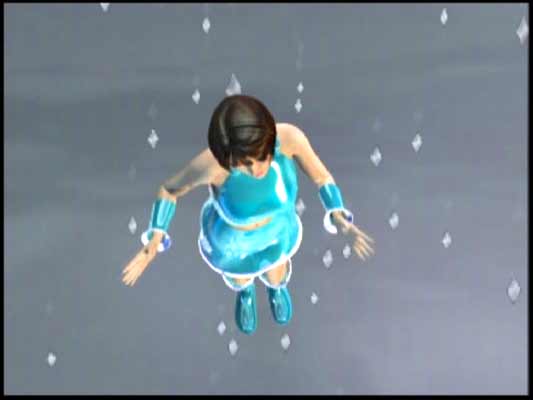
This was the least desired way to have experienced the 009 Cyborg franchise for the first time. Thankfully this was not the first time I experienced a work adapted from Shotaro Ishinomori, one of the most prolific and well regarded manga authors of his era, as I had seen 009-1 (2006) in my early years into anime, a television adaptation of his female cyborg spy character which got released from ADV Films only to disappear as a license when the company did. 009 Re: Cyborg promised an enticing work on paper, part of a push to reinterpret these legendary characters of Ishinomori, a band of people (and one Russian baby) turned into superpower cyborgs, for a grand scale computer animated film which even joined the bandwagon for three dimensional effects films in the late 2000s and early 2010s were trying for. At the time someone like Kenji Kamiyama directing and writing the script was enticing, having gotten attention for his work on Ghost in the Shell: Stand Alone Complex (2002-3), the TV series, and Eden of the East (2009). It was clearly intended as a big event feature, and it is the first time 009 Cyborg had been brought to the UK officially too, as we never got the 2001-2 television series, nor any of the other animated adaptations since Shotaro Ishinomori first started the manga in 1964, so a good adaptation could have made any of the other titles in the franchise of interest for release.

Sadly it becomes obvious what this is, a folly in terms of a crowd pleasing theatrical animation with cutting edge graphics. Final Fantasy: The Spirits Within (2001) is evoked, and that is not a good sign. It is a chimera which cannot survive beyond its ill advised creation, a 3D animated spectacle which however has one foot in Mamoru Oshii’s more esoteric work, including lengthy discussions in bars and churches as much as action. I like esoteric Mamoru Oshii, even his live action work, but 009 Re: Cyborg even without taking this superhero team, from around the same time as the X-Men in the USA, into this tone is also an atrocious and vague mess. There is no clearness to what it was after, with a plot way too serious and ill defined for its subject, and with a questionable “have you cake and eat it” tone with the premise, which is religious and ends up being about God, but goes about it in a vague hard sci-fi tone it does not clear up.

It begins with the leader of the team from the source text, teenager Joe Shimamura (“009”) who has superhuman speed, brainwashed. In a world where skyscrapers are being destroyed by people who are brainwashed by “His Voice”, evoking a religious terrorist group at first, Joe is pulled from following the culprits blowing up a tower in Tokyo, pulling the team along into this plot. One immediate concern is that, for a reintroduction to these characters, this team consisting of nine figures does not get enough time between them for fans or for new people. One, Pyunma, has no real contributions beyond a subplot about angel skeletons, others only have cameos, and that for the plot only two have any real dynamic between them, Joe himself and Jet Link, cyborg 002 and the North American member who joined back with the American government when this film begins. For the one female member of the team, Françoise Arnoul, this film is really egregious for this, only really here to wake up Joe by jumping out of a helicopter, expecting him to save her, for a sex scene with him off-screen, and for sex appeal, least in terms of how painstakingly depicting her stockings are. This is not a good thing to raise, and even as someone who defends Rintaro’s 1996 adaptation of X, attempting an unfinished CLAMP manga into ninety minutes even if that is a lot of characters who appear and then get killed off, there was at least an animated spectacle to it like a visual dream. This is however a film which gets bogged down into an esoteric narrative it never really wants to take a risk with but is too esoteric for a mainstream audience, and also having little time to make proper use of this cast.

By halfway through, it is literally God or what is presumed it behind these bombings, never pictured and merely an abstract construct rationalized. Even in a lengthy philosophical discussion on evolution and religion in a church, “they” are only viewed as on the rational side of mankind’s thought patterns being God and now seemingly deciding to turn people to blow up society for reasons. “Reasons” is apt as eventually you are in the supernatural, in spite of the fact this should have focused on its cyborg heroes first even with a spiritual plot, made worse by the fact that this does not want to stray into the spiritual. A strange tale could be envisioned from this, a Noah’s Ark scenario with a nuclear submarine with a nuclear payload instead of the flood. Dubai is totaled in a cataclysm in the biggest set piece, but this film never wants to get into this subject in any real detail to bring real causality to even that disaster. When those brainwashed envision a young blonde girl with angel wings, and there is an angel skeleton, not of the Simpsons variety but eventually finding itself on the moon after the end credits, this is a story whose plot should have fully committed to this religious existentialism fully, but is confused and not pulling punches in any direction. It is literally the heroes versus God, but God is depicted as a vague function within the brain, so this cannot get spiritual even if a character is riding a nuclear missile in space and crying out to His Voice humanity is capable of good, nor that the ending involves a heavenly world that is never really given space to even be purely surrealistic. It is paradoxical, and this is without the fact key characters never get a lot to go with, or that this is still structured around action set pieces

Neither helping is that, in terms of animation, this is flawed to. Cel shaded three dimensional figures, it could have looked good but, with its realistic character designs, it feels restricted in what can be animated. You even see an unfortunate choice of action scene which completely undercuts a big theatrical production, showing it had compromised itself with its animation, in which Joe runs on missiles. Unfortunately there is an iconic scene from an older anime, 009 Re: Cyborg placing itself in comparison with Project A-Ko (1986), a beloved film length tale where its lead runs on missiles in the air for one of its best known set pieces. Considering A-Ko, a great work even in terms of animation and one shown theatrically, was originally meant to be an episode in an erotic series, only to be given the love and weight to stand out in that sequence of its own as great animation, it really makes 009 Re: Cyborg look worse as it really is not a good looking production at all. The one thing which is arguably great, and he is always reliable, is the composer Kenji Kawai, always reliable as Mamoru Oshii’s regular composure that can always produce great music. The resulting film however is an actual disaster, including the knowledge Production I.G., who developed this, are an acclaimed anime studio, looking even worse as a film which really does not achieve anything. I had come to this with prior warning over years for its huge flaws, but if there is a really scathing comment I can make to kick it whilst it was down, Final Fantasy: The Spirits Within was at least a fascinating misfire from its era, whilst this was not a good idea in any of its content, and is dour and obvious to be appreciated unintentionally either.

Thursday, 3 November 2022

#232: Shadow Skill [The OVAs] (1995/1996/2004)


Studio: Zero-G [Shadow Skill 1 & 2]; Tandm [Shadow Skill: Secret of the Kurudan Style]

Director: Hiroshi Negishi [Shadow Skill (1995)]; Yasuhiro Kuroda and Hiroshi Negishi [Shadow Skill (1996)]; Kazuya Ichikawa [Shadow Skill: Secret of the Kurudan Style]

Screenplay: Mayori Sekijima [Shadow Skill (1995)]; Masanori Sekijimo [Shadow Skill (1996)]; Kurasumi Sunayama [Shadow Skill: Secret of the Kurudan Style]

Based on the manga by Megumu Okada

Voice Cast: Megumi Hayashibara as Ella Lagu; Akio Matsuoka as Gau Ban; Bin Shimada as Rui Frasneel; Ikue Ōtani/Mikuni Shimokawa as Kyo Ryu; Yasunori Matsumoto as Scarface; Yuko Mizutani as Follymayer Razmatizer; Kiyoyuki Yanada as Koa Icks; Tamio Ohki as Jin Stolla; Yuko Mizutani as Fouly

All Viewed in Japanese with English Subtitles


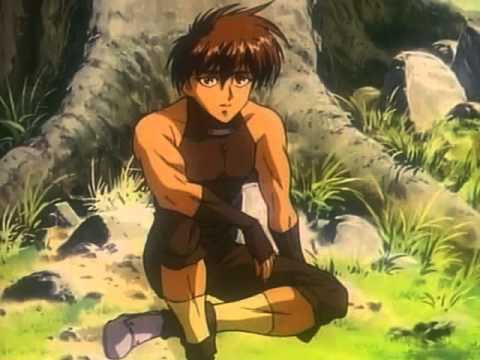
Shadow Skill was first published in 1992 as a manga. This is an interesting premise, an interesting world, but with the 1998 television series excluded from this list, for another day, the straight to video adaptations only cover a slither of something much more grander even as a martial arts action premise with a simple structure. There is also an odd chronology, in that the 1996 four part OVA is set before the first from 1995, emphasised by how Manga Entertainment makes the 1996 set "Shadow Skill the Movie", collected together as a feature as they were want to do, and the 1995 production the "Epilogue". These all set up the warrior kingdom of Kurda, part of a fantasy world where the first female "Sevaar", their title for their most powerful warriors, is Ella Lagu. A powerful figure in her "Shadow Skill" style, she is followed by her younger adopted brother Gau, who is being guided by her and Scarface, a legendary male warrior who sees he as much as her as a powerful force if nurtured. If he could ever complete the goal of defeating her in combat, Gau could become powerful, but he also loves Ella as a sister, who is just as strong and dangerous is pushed.

There is a concern that Gau, as the male character, is going to over shadow a much cooler female lead, but there is one catch which thankfully plays in to this, that she is voiced in the OVAs (and the series) by Megumi Hayashibara. Most will know her for Rei from Neon Genesis Evangelion (1995), and she is a huge figure in voice actresses, throughout the nineties, including the fact she sung many of their credit themes. She qualifies as a bonafide star in the medium in the nineties, and it helps as well as, whilst Gau is a meek figure who is tugged and pulled in emotional conflicts, still not the strongest but capable of inhuman power when pushed, Ella is memorable. There are prominent differences between the first two OVAs, one of which is that the Epilogue has her as a more serious figure for its narrative. The contrast, found in a later 2004 OVA, is better, that she is a capable figure who is serious when she needs to be, but also allowed Hayashibara, known for characters like Lina Inverse in the Slayers franchise as much as a more serious character as in Evangelion. Introduced fighting a monstrous opponent in gladiatorial combat in the Movie OVAs, an entity with acid blood and can still fight having had his head decapitated, this is contrasted by the fact she is also greedy and obsessed with boozing, the later the cause of unpaid tabs much to Faulee's disbelief.

The Movie provides the most time for the side characters too, even if sadly not as much still, not even covering a male character who briefly appears in the epilogue but never seen in any of the other OVAS. Both female, both these characters would have been more rewarding then they were if there was more stories to go with, with episodes devoted to them already in the Movie segments. There is Faulee, a former nemesis and a talisman sorceress whose intentions to kill Ella became a change to admiring her as a close friend, in spite of Ella's foibles, whilst Kyuo has a really distinct look due to the character designs by Shin Matsuo in the Movie OVAs, closer to the source manga, a Robin Hood-like green costume as the grandniece and apprentice of a beast slayer, armed with steel rings with wires that cut into monstrous flesh as well as pin them. Her episode introducing her is the best of the entire Movie OVAs, what one wished Shadow Skill as a longer tale was, as it matches its action based tone with that of high fantasy and explicit horror, of demonic entities and fighters even able to weaponize ones blood and Kyuo out to avenge her granduncle's death at the hands of the "Moon King", an awesome monster design not just for the obvious, a werewolf centaur with the ability to regenerate mortal wounds in the power of the moonlight, but because the design evokes how, like an epic high fantasy story if remade today, this world has an evocative imagination in its centre. Even as a video game with a high budget let alone as an anime, Shadow Skill has a world and style which is vivid in its imagination as it is violent and over-the-top.

Here I admit, whilst both are distinct from the pre-2000s OVA, that I prefer the Movie's look, which is very unconventional. The Epilogue looks more "conventional", whilst the Movie has more angular facial features on the characters and a costume design which, for me, befits a world that, even in very little, oozes in lore even if never seen, which neither the later 2000s OVA ever gets to. The world inherently won me over in its combination of high fantasy, even ancient Greek and Roman influence in architecture, and Japanese lore seen in slithers, and it is contrasted by the fact this is a fighting anime, where the Shadow Skill is an unnatural one of gliding in the air if however contrasted as being entirely about kicking and leg work. Said explicitly in the Epilogue anime, even the Shadow Skill as martial arts has a compelling lore as it was created by female slaves, figures tortured and raped, forced to fight with their hands bound, the show having a potent world in little details like this. Even if Gou is technically the lead, and Scarface is there in his machinations moving the players around for utopian plans, this is a violent action story dominated by women.

Combined with the action content, very well animated, both the nineties OVAs are good. In 1998, there was a television series for twenty six episodes, but unfortunately, we also got in 2004 another OVA from Tandm, a studio created to having only made this production and nothing else1. They made a very ill advised technical decision, entirely rendering it in CG created by ToonShader technology2, the technology itself and cel shading, in animation and video games, capable of incredible work, but here a huge obstacle. This is a weird creative choice and not the only time this happened, as Dominion Tank Police, another OVA franchise from the nineties based on the Masamune Shirow manga, got a one-off 2006 OVA which was designed in polygonal cel shaded animation called TANK S.W.A.T. 01,  one where looking at the screenshots alone shows it was a bad decision. In this case, the technology itself had the full potential, but in context here, the time needed to perfect it involved a budget this did not have. The follow up went the wrong direction entirely in many ways, including from the get-go with this animation change. Shadow Skill: Secret of the Kurudan Style, to give the third OVA its proper name, is an attempt to continue the franchise, with key cast members returning, and Megumi Hayashibara significantly back as Ella, but completely within an aesthetic choice that is not suitable for the production at all before you get to the plot.

A man named Death Wind wishes to acquire a MacGuffin of an unknown "Genesis technique", challenging the sevaar and her brother Gau who go to protect the land from this. Everyone looks like a doll from a different animated series I might have watched on a Saturday morning as a kid. This is not an insult to those types of shows, but here it is a really crippling creative decision, especially as you lose the elaborate onscreen world building and the character designs, alongside the fact you cannot have the elaborate fight sequences as the form makes it impossible to do. The production has its own obsolete mood, least in the environment designs evoking a Myst adventure game clone, or the music having an esoteric mix of tribal ambient and electronic noise experiments, but it comes in mind of its style being an absolute disadvantage.

There is some creativity in the art style, which shows what could be done, specifically that all the flashbacks, even if evoking graphite (or Microsoft Paint graphite) painting, are done in silhouettes with an imaginative style that I will praise. It is still an art style, with its clear budget and production restrictions, for an entirely different type of work, like a horror story with minimal kineticism and lengthy dialogue, which is pertinent as this sequel's other huge problem is that, with lengthy discussion scenes, the story even next to the simple ones of before is not good. There is interesting ideas here, such as a training golem, built with the skull of the founder to train the secret techniques, but alongside this falling into the danger of the premise's structure, of maligning Ella for the far less interesting Gau, who Death Wing wants to tempt to his side, but this became a slog. Alongside the style undercutting it, the golem not looking remotely as good as the Moon King as before, this has lengthy and tedious dialogue sequences to compensate for the restrictions, including Death Wing using arguments to win over Gau, about punishing sin before it happens, so loose a college critical thinking coarse knowledge could destroy it. This even rewrites the lore of the Shadow Skill, no longer explicitly the martial arts style created by female slaves but "slaves" in a generic way, which does fully reveal how even the simplistic plot gets everything wrong as well. The side characters only have a cameo, and even Megumi Hayashibara, the big voice actor of this production, feel maligned as well.

Sadly, this closed the book on this era of the Shadow Skill franchise, as when the manga ended in 1998, there would be no animated adaptations in the rest of the 2000s and the 2010s. Just from the OVAs from the nineties, there is a tantalising world here I wished would be remade to show its virtues. With Shadow Skill: Secret of the Kurudan Style, there is a reason few may even know it exists, and it is a damn squib to end the world on.


======

1) Tandm's Anime News Network page.

2) Shadow Skill: Secret of the Kurudan Style's Anime News Network page.

Tuesday, 4 October 2022

#226: Gregory Horror Show (1999-2000)


Studio: Milky Cartoon

Director: Kazumi Minagawa

Screenplay: Naomi Iwata

Based on an original premise by Naomi Iwata

Voice Cast:

Japanese Cast:

Chafurin as Gregory; Ayana Inoue as Nurse Catherine (1st Voice); Minako Ichiki as Nurse Catherine (2nd Voice); Nao Nagasawa as Neko-Zombie; Rei Sakuma as Angel Dog/Devil Dog; Yoko Asada as Roulette Boy; Erina Yamazaki as James; Hitoshi Takagi as Mummy Papa; Jin Yamanoi as Clock Master; Maiko Itou as My Son; Masashi Hirose as Death; Mikako Satō as Cactus Girl; Naochika Hayashida as Judgement Boy (1st Voice); Naoko Matsui as Lost Doll; Natsumi Sakuma as Mummy Dog; Ryūzaburō Ōtomo as Hell's Chef; Susumu Chiba as Judgement Boy (3rd Voice); Yoshiyuki Kouno as Cactus Gunman/Judgement Boy (2nd Voice)

English Cast:

Dave Pettitt as Gregory; Chris Simms as Angel/Devil Dog; Elinor Holt as Nurse Catherine; Kris Rundle as Neko-Zombie; Mariette Sluyter as Roulette Boy; Steve Olson as Judgement Boy Gold; Angie Beers as Lost Doll; Brendan Hunter as Judgement Boy; Brett Bauer as James; Byron Close as Hell's Chef; Carol-Anne Day as Cactus Girl / Lost Doll ; Gerald Matthews as Black Duck 1 / Bonsai Kabuki; Jonathan Love as Clock Master / Mummy Papa / The First Main Guest; Keith Hamill as Egypetit / Fat Chicken

Viewed in English Dub


Do you know who I am, they call me Judgement Boy!

Gregory Horror Show, when I first of the franchise, was merely a fascinating video game which I never got around to, only to realise a time later it was a tie-in. Ironically it is this game, a Playstation 2 survival horror game, released only in Europe and Japan, which is the first on internet searches prominently, gaining a considerate following despite never getting a re-release. The game, produced by Capcom, a much esteemed company in video gaming history, was a fascinating production, with an idiosyncratic visual style and as a horror game where you have to stalk the bizarre characters of the titular Gregory's hotel, whilst avoiding them chasing you. The anime series, a micro-series of three seasons and one spin-off, is just as idiosyncratic, the creation in premise of Naomi Iwata. A creator of many characters, also children's work, Iwata was even involved with a spin-off in the Pingu franchise called Pingu in the City (2017), a CGI show based on the claymation series that was seen on British television, as it clearly was around the world in various incarnations, about a cute penguin.

The episodes for seasons one and two are twenty five episodes, season three for twenty six and the bonus series The Bloody Karte for twelve, each episode two minutes each however. The first two follow a season long story of a person ending up at a purgatorial hotel ran by Gregory, an anthropomorphic older mouse who barely hides his sinister nature. The first series, the leads both unseen in first person with their voice over, follows a husband with child, a workaholic, who has likely fled from his life to this perverse horror show, the second series about a woman returning from the wedding of a man who broke up with her when she choose her career over an engagement offer. It is clear these reflect real life, even if Gregory Horror Show is an eccentric and ghoulish tale, all reflecting in these characters' average working life, be it the salaryman in the first season, the second in mind to the place of women in work in Japan, that of marriage and children being potential barriers of ever getting to a comfortable place in business.

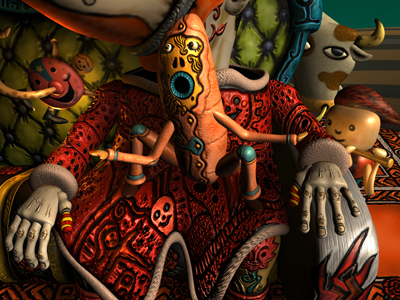
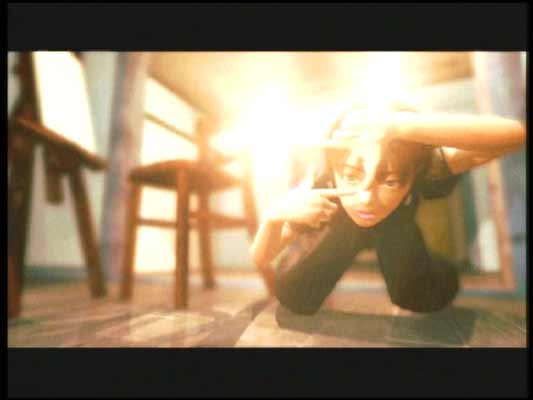
The horror show itself in contrast, however, whilst with the metaphors being there, is delightfully weird. Alongside being an early attempt at polygonal three dimensional animation, the first noticeable details is that everyone looks like box people you built from cardboard craft designs. Subsequent work, like the 2007 manga Gregory Horror Show - Another World, switched from this aesthetic, but Gregory Horror Show stands out for this cutesy box people style from, especially as it helps paradoxically for a horror tale, in how strange the denizens are, and how more morbid it becomes with this violent juxtaposition. No one is realistically human or even human baring the leads, which is creepy in its own way as much as the cast are the kind you would want as plush toys in a Hot Topic/Blue Banana Goth store, which in itself is a huge virtue to the world building and personality.

This is not a kid's show however, and that has to be emphasised, with the characters even as one episode guests are creepy bunch nonetheless. Gregory himself is a mother's boy brow-beaten by a mother who is stealing guests' souls with the intention of slurping them as a youth formula. Series two introduces James, Gregory's nephew who can be perfectly described in how he is in the game as a mechanic, that he will come to you shouting and skipping about excited when he spots you, which is not good when you are sneaking around or trying to avoid attention. There are a lot of characters throughout, too many to describe, but among the most distinct and found over the series include Catherine, a pink nurse dinosaur who, with giant needles, is not only fixated on drawing all a person's blood out of their bodies, but explicitly has a sexual thrill from this; Neko-Zombie, a horribly scared cat who is chained up near the guests' rooms and is an ally; the candle chef who hates "puff-puffs", smoking in general or anyone criticising his cooking, welding a giant knife; a young girl who is looking for her doll, which is the split personality with its own face; an angel dog who has an alternative devil side; and an assortment of zombies getting drunk in their graves, roulette wheel boys who play dangerous games of luck, a mirror who shows your real self, and even a bonsai tree man who enters your dreams for nefarious means.

One character needing a separate sentence, and part of the clear themes of the show's horror, is Judgement Boy, a sentient floating scale which weighs one's heart with materialism, clearly challenging guests and patrons with difficult moral questions based on their past transgressions as a guilt complex. There will be many Judgement Boys, and Season Two shows their factory/training camp, and they represent the themes of guilt, anxiety of work and life in general. Even the likes of Catherine represent obvious fears of needles, pain and judgement. Considering Death, actually an ally in all the episodes, has the Swedish flag on his hat, clearly a nod to Ingmar Bergman's The Seventh Seal (1957), does show that, whilst that example is a very silly tribute the Swedish auteur might have never expected, Naomi Iwata  had serious intent behind this creation of his even if mixed with the absurd.

The tone and cuteness helps more too in how the show, episodic in tone but following a progressive narrative of twists and turns in the first two seasons, has aged as early 3D animation. Baring some very dated moments which fulfil my passion for obsolete polygonal animation, it has managed to escape full obsoletion because the art style is deliberately unnatural and like a box character play set. Season Two still manages to get even more macabre than the first, between the more ghoulish content (Gregory getting an axe in his head, an attempting hanging) and the finale involving the hotel being burned down. Even if there is also a cartoonish logic, this is a creepy show of death and the grotesque, more so as it comes clear in the first two seasons the hotel is in a world outside of real life. This show has an existential side to the horror even if you do not find it "scary", with the final episode of Season One showing the real world on camera through real photos, and the drudgery within them, [Spoilers] which leads the male lead of that season to return to the hotel. [Spoilers End]

The third season of Gregory's Horror Show, with the subtitle The Last Train, takes the series in a different direction. Existing in a context out of the first two, Gregory himself is the lead, but he is not in the hotel with his mother. Instead, he is on a train, one which is sentient as he eventually has to communicate to it when things go amiss. Clearly, he is running away from his life, which becomes more increasingly obvious though the series, like before, continuing beforehand with having a gallery of unconventional figures enter through the cars of the train into his path. Moments are overtly absurd, such as that the train has to stop because the ghosts of samurai warriors, who will presume the first person they met is their master and demand orders, have blocked the rails, or that on this train, radioactive and genetically modified peanuts are available to consume even if it recommended not stick to the modified ones. The candle chef is the caterer, killing guests and serving them if they disagree with his cooking, and Gregory just finds himself bringing poison in his medical bag when needing a cure for illness. Like the other seasons, there is barring one cringe worthy sequence, where Gregory is revealed to like hip hop (which is not a bad thing) but proceeds to rap (which is a bad thing), a consistency here only matched by a very abstract conclusion as the others continued with. This has an ending, in another context, which would be called out as being a cop-out, but here makes sense to the series' logic.

The Bloody Karte was the last of these, following instead Catherine, the pink dinosaur nurse whose inability to not try to take all the blood from people is contrasted by her quest for love. For pure ghoulishness, this proved the funniest of the quartet for me, simply because, following the structure that each segment introduces a character for that moment, this becomes a cavalcade of incredibly morbid humour. Whilst Gregory gets off scot free with just being hung upside down in the cemetery off a tree continually, some of the male characters who break Catherine's heart for not being her ideal, or being gold plated rather than actually made from gold, are very dead when she has her revenge on them. It does offer the sweetest of endings, a women running the hospital eventually and bonding in their own world, the season more a series of farces about men in the end, but for pure twisted jokes, this one won me over without being too long to get repetitious.  

The main three seasons had US releases through Geneon USA, the ill fated physical media arm of Geneon who were shut down 2007. Sadly, Gregory Horror Show the series is caught in a limbo and was never re-released. Most likely knows this franchise for that video game which, paradoxically, has the same voice cast in the English dub as the animation, but never got a US release. This is a shame as, without wanting to talk of the video game, worthy of its own time devoted to it, these altogether are a unique piece of eccentric anime horror I was won over with. 

Tuesday, 29 June 2021

#191: Blue Remains (2001)


Directors: Hisaya Takabayashi and Toshifumi Takizawa

Screenplay: Hisaya Takebayashi, Masatoshi Kimura and Toshifumi Takizawa

Voice Cast: Kazue Fukiishi as Amamiku; Kazuya Ichijou as Reyju; Masane Tsukayama as Glptofane Sex; Hiroko Suzuki as Adenine Unum; Houchu Ohtsuka as Cytosine Tria; Junko Sakuma as Yuri; Kappei Yamaguchi as Mireo; Masashi Sugawara as Ryu; Norio Wakatsuki as Irigaru; Rica Matsumoto as Sari; Takehito Koyasu as Malloz; Tesshō Genda as Thymine Duo; Tomoko Kaneda as Amamiku (child); Yoshiko Sakakibara as Mayzamik

Viewed in Japanese with English Subtitles


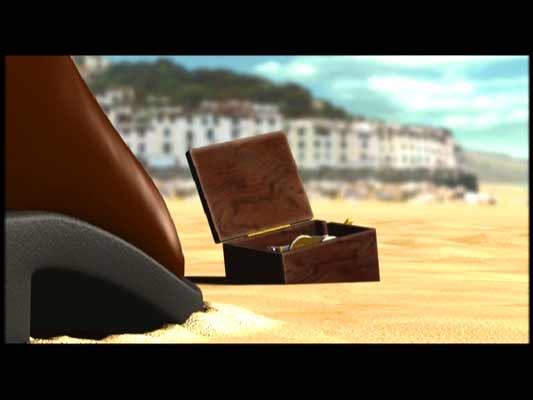
Early into the DVD era in Britain, a now defunct label, Art Magic's sub label Eastern Cult Cinema, released three very early attempts at three dimensional animation, that wordiness aware that computers were assisting anime production from the late 90s onwards anyway. They were A.LI.C.E. (1999), the first theatrical film in this form, crude but fascinating as a forgotten historical footnote; Malice@Doll (2001), an OVA worthy for rediscovery as a dark work whose only real issue is its art style, even if the production worked around the restrictions; and Blue Remains, a post-apocalyptic nautical film with an environmental message.

Here, humanity has blown itself up with nuclear bombs, which has always been the way, all watched on from a spaceship helmed by a married pair of ecological scientists with their infant daughter Amamiku. Heading back down to Earth, tragically the couples' bodies are too irradiated to go through with their goal, to plant special seeds which can reawakening the ecosystem, so they place Amamiku in cryogenic sleep with them, and the ship's computer for comfort and guidance, to carry out the goal when they are gone. At the age of fourteen, but ninety plus years later, she has to carry on with the goal to help the Earth.

The film has, from then on, to struggle with the form of its then-new animation style. The film, when Amamiku wakes up, is effectively a sci-fi submarine tale, having to work around its limitations by being almost entirely set underwater or in small environments like submarine cockpits. Amamiku finds herself between those, human and otherwise, wishing to help her in restoring the Earth's vibrancy with the seeds, and an entity known as Glptofane Sex, who believes the absolute law of life should means killing off the rest of humanity to save the planet, against all the philosophical arguments and pleas of his lookalike brethren otherwise.

The film, openly, is a lot of action scenes, of Glptofane's forces of ball-like drones (with buzz saw tummies) and a giant biomechanical squid he is housed in, trying to get Amamiku and the few humans left asked to assist her goal. The film's look is equivalent of a Playstation One era cut scene for a lower budgeted game, but I will not be mean at the film for this, more that much of Blue Remains without the style of another animated format to bring a greater energy feels stiff as a result. That it is a lot of action and dynamic scenes instead of world building neither helps, especially because of the limits of the computer animation which prevent the action from being that dynamic, of 3D animated futuristic submarines floating in a void of dark blue with little background detail baring some ruined underwater buildings and an occasional aquatic life form.

The production does feel it is straining at a budget, where even the lead voice actress Kazue Fukiishi as Amamiku, in her only ever role, plays the character with a curious reflection in lines readings you normally do not get. If we go back to those three films mentioned in the first paragraph together, Malice@Doll out of the three was the most interesting of the trio; it is still strange, struggles against its form, especially as by that point Final Fantasy: The Spirits Within (2001) despite being a box office disaster effectively killed off these early productions at the same time, but it was able to get to something profound with being a surreal and disturbing work with a style and interesting Chiaki J. Konaka screenplay. Blue Remains in contrast is pretty conventional, not elaborate in terms of depth or ideas. Environmental concerns, and villains wanting to commit genocide for environmental preservation, is common in the medium, even if it is fascinating to see the villain's own argue against him and this tale being the lone figure that is misguided. Even that, whilst barely fleshed out, no one is safe barring a couple of figures from death is interesting too.

In fact, the one aspect of Blue Remains which is rewarding is the touches of eccentricity and invention it does have. The villain, and those trying to convince him against his idea, are literally brains with eyes and nervous systems attached, a grotesque aesthetic choice which stands out more because the film looks as crude as it does, fitting a more horror based narrative and the one aspect of this production likely to catch people's attention if you ever come across it (even an old DVD copy). More touches like this, like the submarines having fins to "swim" through layers of the water, or a dolphin which is actually meant to be a robot, are more interesting aspects that could have been ran with. When the film gets more New Age in tone, it is more worthwhile as it comes more to the foreground with the supernatural involved with those seeds Amamiku protects. It is not a spoiler to say a giant life giving tree, with human foetuses growing from it for new life, is part of the conclusion, because that in itself is an abrupt tangent for the film to get to considering its average tone. The end credits, set over real footage of the barrier reefs, is a cheesy and heavy handed environmental song about the life force of the sea and needing to protect it, whose earnestness is misguided but in itself cannot help but be charming. More like this, and Blue Remains would have won me over. Even if it fought against its archaic format, a more overtly surreal or inventive aesthetic, like an old weird video game from this era, would have gained it a cult audience if anything.

Tuesday, 17 September 2019

#119: Utsu-musume sayuri (2004)


a.k.a. Striking Daughter

Director: Takashi Kimura
Viewed in English Dub

Another work in the "worst of" anime list, but unlike a Mars of Destruction (2005), which is terrible in creation but too innocuous to really hate, Utsu-musume sayuri was built up as gross and terrible. In reality, whilst a weirdo one man CGI short, Striking Daughter (as its English title is) isn't deserving of such a list accolade. It comes off instead as if a segment from a weird midnight show meant to baffle drunken viewers coming in from a night in the town, even when it comes to the incredibly broken and wooden English dialogue.

It is the initiation of a daughter of a strange family, a group of varying shaped mutants who are like the denizens of a shunting ritual from Brian Yuzna's Society (1989) if they even allowed talking cows in at the door. That reference is appropriate as, whilst sexual, the short isn't as gross as I had built it up in my mind. The ritual instead is spanking on very pronouncedly drawn buttock on a wanting, which is far from the worst thing I have heard (thankfully rather than seen) in anime. Three years earlier, the OVA/film Malice@Doll (2001) would tackle creepier, icky imagery of sexuality by way of a fascinating early CGI anime I wish was better known.

It's a maligned subgenre, usually held as terrible but for me a fascinating little corner in anime's forgotten history killed off by Final Fantasy: The Spirit Within (2001). Into the 2010s, very bad CGI animation still exists, where as I view this early period purely experimental, which leaves the likes of Striking Daughter instead equivalent to early experimentation. Certainly, this short also belongs in general to the type of experimental animation that comes from Japan.

In knowledge one man, Takashi Kimura, animated and directed this, I cannot hold it as terrible baring being a strange oddity, merely what resources he had and a clear sense of being deliberately "weird" at that. Certainly, its grotesque looking, but I'm fascinated by grotesque/obsolete aesthetics anyway, to which that is aplenty here in the bold colours and style, particularly as in context to its history, its better animated by one man in lieu to its apparent awfulness. The bigger concern is that, at less than three minutes, it's just a slight snapshot where I would always posit that something significantly longer is more likely to be dreadful.  

The thing which is likely to be the bigger issue, and definitely is ridiculous, is the voice acting. One male voice, who for all I know is the director, speaking in incredibly fragmented pronunciation of English dialogue which is roughly recorded. It's bad, but God knows in this era people would deliberately create work which had details like this on purpose; in this decade, it'd be considered ironic.

The length prevents Striking Daughter from being the worst. Three minutes is bearable if you have courage - we will wait when the equivalent of this plays over a thirteen episode anime, alongside the fact that whenever I encounter anything boring and/or offensive is when the reader will likely find me write something vicious and very negative. Nothing here is that, Striking Daughter practically a mole hill over built when you could not only see it online but YouTube reaction videos of others watching it.  

As for the director? He directed an episode Koi Koi Seven (2005), about the only boy in an all-girl's school whose wars are literal and silly, and that's it. Unless we've got a case of two Takashi Kimuras in existence, that's pretty small as careers go. 

From http://history.bifan.kr/upload/movie2004/
Film/04FTS_UtsuMusumeSayauri_1.jpg

Sunday, 28 July 2019

#110: Virtual-San Looking (2019)

From https://www.toxicer.com/storage/anime/visual_art_253n.jpg


Viewed in Japanese with English Subtitles

Virtual-San... has to be a real curiosity for anyone who's uncovered it on Crunchyroll. There's probably a lot of bafflement, but for someone like me, this is literally entering into alien territory, so much so it was.

One of the immediate interests about streaming that, whilst Crunchyroll and their ilk will never be able to guarantee their licenses with last or even get a Western release on physical media, they're access to the newest titles, streaming almost exactly the same time as the original Japanese broadcasts, for the most parts means they get everything. That means stuff that'll be forgotten soon after the season they started but it also means material like this that would've only been released in the past, if any, only in the USA when there was time almost everything got a DVD release, true died in the wool obscurities of fascination.

This is particular example existence is entirely based on an entirely Japanese pop cultural phenomenon, that of the virtual YouTuber. Imagine your usual garden variety YouTuber, who might have "Let's Plays" of videogames where you see their reactions in the midst of the games or opinion pieces, but with the figure using a digital avatar, voice acted and animated, usually as stereotypical anime girls; one of the earliest was Ami Yamato, and with Kizuna Ai the most famous. Virtual-San Looking feels like the wave is in their favour so, probably in the best metaphor to make on this loose and openly messy production, a group of some of the most popular got together and decided to put on a show.

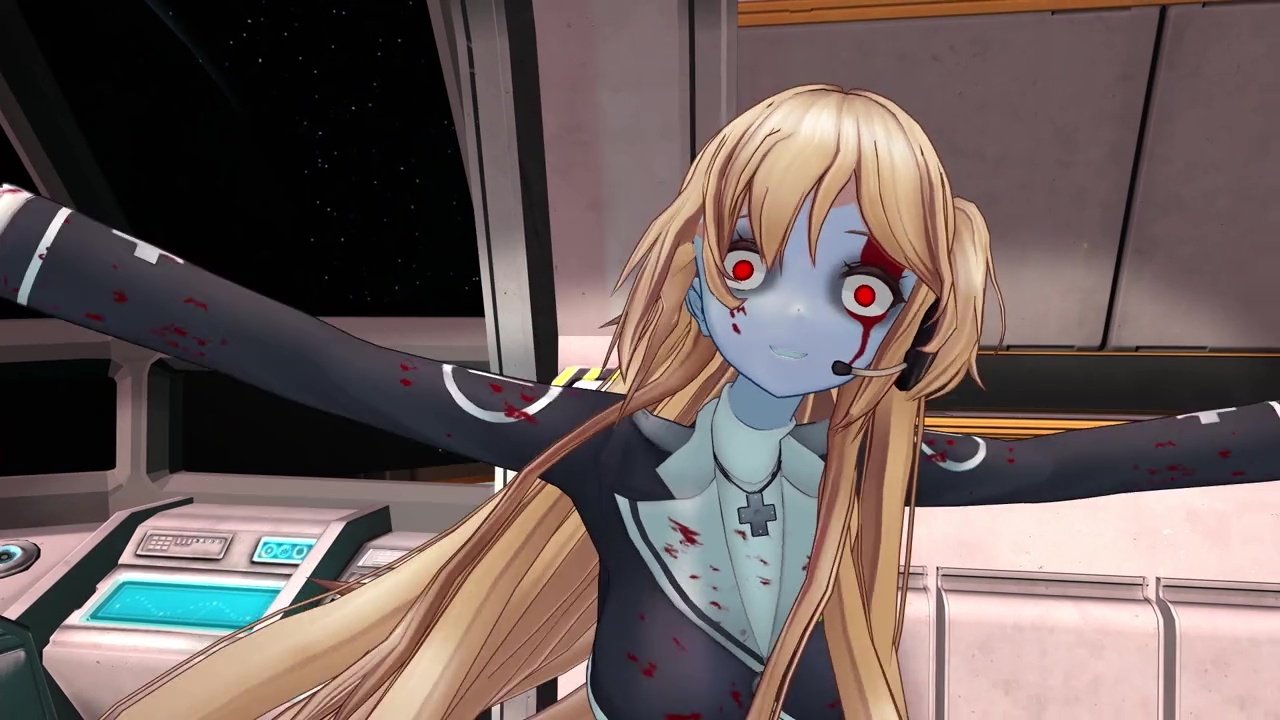
The idea is that, yes, there are real figures behind these characters but the appearances are extensions of themselves, something this even emphasises with a reoccurring segment on fans of the show having their fifteen seconds as their Virtual personalities. In complete honesty, it's a show which can be accused for many short comings but, seeing it, I found it absolutely fascinating as a cultural artefact in the making of this niche, whether virtual YouTubers become a thing or vanish within the next few years. Whatever the case, even the moments of amateurism, for more extreme then some of the series I have covered, is charming as a seven girl group and a set of additional characters and cameos participate in sketch comedy and non-sequiturs. And these are some highly viewed figures - Mirai Akari (blonde, eccentric, one of the most popular of them all), Electric Girl Siro (blue hair, quietly spoken), Nekomiya Hinata (cat eared video game obsessive), Tanaka Hime (pink haired and over-the-top in exaggeration), Suzuki Hina (blonde, calmer minded), and Tsukino Mito (black hair, meek, politely spoken stereotype of a high school girl, has a joke from her YouTube page about eating grass return here as probably one of many references I didn't get). A lot of these hosts only came to be in 2018, so this is very much a series trying to promote them to a wider audience as much as entertain the fan base for " VTubers".

For the most part the series follows a rigid template. The early episodes follows the Game Club Project, a group in a giant spaceship who keep hatching (and botching) plans to take over the galaxy, even considering their female senior's terrible fresh baked cookies as a possible candidates for military supremacy. There's Virtual Grandmother, arguably the most rewarding and consistent segment as, rather than her lame end jokes, the real virtue here is how in her talks about growing up in the sixties, she opens up a lot about details of Japan from the era for the Western viewer of great interest. The main group always gets into a life threatening situation they are doomed within, their classroom having a bad tendency to teleport somewhere like outer space. There's Fuji Aoi Park, where another VTuber Aoi Fuji interacts with a politely spoekn gorilla who can make bananas randomly rain from the sky. Nekomiya Hinata, the avid gamer, thinks of game scenarios while walking to school and solutions to them; Electric Girl Siro, meant to be an android girl, runs a food stand (with superimposed real people in the background) where she provides nourishment through trivia than actual grub; Tsukino Mito also has a 3 pm class question with various guests, subjects varying from whether one would eat grass or something else, or whether to live being able to say some words over others. Then there's Virtual Sister, a nun who provides moral support.

From https://www.goodjobmedia.com/wp-content/uploads/2019/03/
virtualsan07_premuxv2-81830023_001_6671.png

The two most prominent segments are Kerin Slayer and Mirai Akari as an agony aunt. Kerin Slayer is a running story, (clearly parodying the controversial dark fantasy series Goblin Slayer (2018)) which is as much a piss take on bad animation as it is the cast, who are animated through motion capture technology throughout the series, to muck about with an elf able to summon missiles, various side cameos and projectile alcohol; its frankly silly and definitely feels the most amateurish of the whole series in terms of segments. The other, with Akari offering advice to listeners, is actually behind Virtual Grandmother as one of the most rewarding segments for me because a) she's inherently more interesting than everyone else, without prior knowledge that the figure is  one of the most popular of them all in this very niche subculture, for being the character who is soft spoken but has the weirdest (and even disturbing) thoughts; that b) her solutions to the questions are always over-the-top; and c) she has a literal demonic and angelic version of herself on each shoulder that argue when her thoughts wander off which adds to the comedy.

The animation is noticeably a step down from usual TV anime quality, but in a sense that it was clearly considered as much part of the humour and a form of verisimilitude, feeling from the beginning like a project put together by VTubers (including end credit cameos and characters like the titular Virtual-San, a blue suited man with a horse's head). The character designs of the main cast are good, if anything helping in my theory that even with the worst in anime, female characters get more personality just from their clothes and hairstyles, pertinent here as some of the main leads would've gotten lost in the shuffle of seven figures if they didn't have either their character designs and energised voice actresses. It also doesn't deny that how VTubers work, that they are literally actors motion captured in their movements, is a really incredible example of how advanced technology is becoming, as for all the incidents of "clipping" (a digital animation term where here long hair does and will indeed past through its owner) and crude background sets, you are arguably watching a curious modern form of rotoscoping with the added virtue that the ridiculous poses and movements come from the actors having to actually move about in such comical ways. Hell, whether staged or real, one scene of the agony aunt segment has the participants moving too much for the camera to keep track of, moments throughout the show where scenes are hastily cut down or signposted by the production as being slightly off in the improvised nature of the show. The rest of the show does in a way play off its animation style is ways more common for other shows in this mould; Kerin Slayer, in particular with the "Kerin", literally has 2D cut-out characters and stock images for statues that have a tendency to fall into the story hiding new characters. A reoccurring segment is also "Unity-Chan", a curry bouquet loving gamer who is animated with Unity and is far more fluid and better animated than the rest of the show in her segments than anyone else in the cast.

Watching Virtual-San Looking was felt entirely like an outsider, not in the least combing an entire culture's worth of in-jokes from this, numerous anime and otaku references likely lost to me through the twelve episodes. Also at times it does, but in a sympathetic way, come off as very lame, its humour corny and the show frankly silly in its hazy improvised feel, from the off-the-cuff attempts absurdity to the audible flubs in the acting. Even its epic, the bombastic opening with a giant robot and a mob of faceless figures, has a sense of the redundant in it being played out with actual dialogue halfway through the show. Sometimes to its credit it has whit, surprisingly in what turns out to be a streak of edutainment - Virtual Grandmother is always interesting as is Siro's trivia bar, the blue costumed robot girl offering the surprising fact that "ero manga" is both the term for porn manga but also "Erromango", an island in the Vanuatu archipelago that is pronounced "Eromangatou" but happens to come off as "Eromanga Island" in Japanese.

For myself, the larger issue on an artistic level is more that Virtual-San Looking doesn't challenge itself, a problem I am actually going to level to anime comedy in general, somewhat spoilt in my youth by the fact that Excel Saga (1999), the series so chaotic it infamously destroyed the vocals of the main English voice actress of the titular character and lead to her being replaced midway through, ended itself by literally throwing in a kitchen sink, a serious episode without any humour, and a post-apocalypse finale that actually had drama. (Oh, and the equally infamous bonus episode that went for as much offensive content as possible and got censored before screening). In lieu to such an example, and my general thoughts of comedy from any culture, I find comedy should try to escalate to more imaginative or crazed levels, even more bold directions if entirely stand up or word play based, which doesn't really happen with Virtual-San Looking. There is a sense that, for myself, I like my anime comedy to always be creative and at least try to end on the most inventive note possible; for all my issues with Pop Team Epic (2018) being too indulgent in the most niche of references, and being loud and obnoxious, it had more risk. Virtual-San instead feels like the shy, tentative coming out party, felt in actual truth in the final moments of the final episode where the cast address the audience hoping this is the first stepping out for Virtual YouTubbers on TV. It feels openly modest, without any cynicism like a Pop Team Epic or many micro series which feel half thought-out from those I've seen.

If anything, because of this, I have become a little obsessed with Virtual-San Looking, feeling like an anthropologist to this world and, in spite of its last episode being a complete anti-climax, wanting to revisit and explore this culture until Crunchyroll's license of the show ends. Sadly, a show like this is more than likely going to disappear in the ether of anime's prolific amount of material, felt with tragedy as I have a greater investment in wanting to explore this culture of Virtual YouTubbers. This is emphasised knowing YouTube isn't as popular in Japan as Nico Nico Douga and BiliBili as video streaming sites, making the VTubers themselves the one distinct feature to help bolster YouTube's reputation. Again, even they might vanish within a few years, with a limited lifespan, as someone with an interest with outsiders and niches I have to admit I have nothing but utter curiosity here, which brought a lot of entertainment from Virtual-San Looking alongside the moments which were legitimately funny and charming. That in itself is a success on the show's part in reeling someone with no idea on the subject into wanting to learn more.


From https://image.tmdb.org/t/p/original/
d0leR2bDpJuvceM3raZ3PPFeCnt.jpg

Sunday, 24 April 2016

#24: Yuki Terai - Secrets (2000)

From https://myanimeshelf.com/upload/
dynamic/2011-11/07/211.jpg
Based on a original premise
Viewed in Japanese with English Subtitles


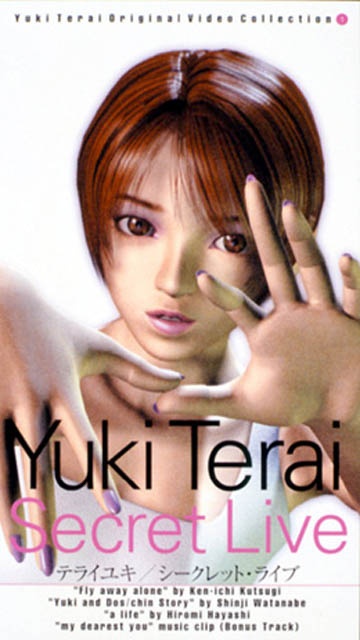
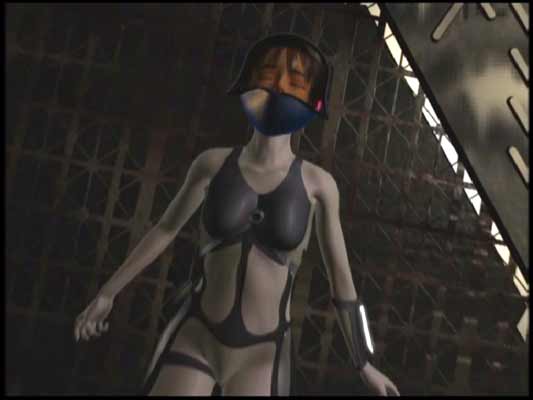
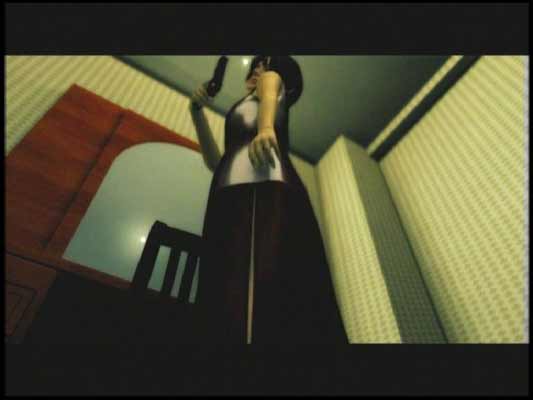
Yuki Terai - Secrets is an obscure compilation DVD, as obscure as you can get and probably for the better as in all honestly there's no real value to the set of shorts baring another curiosity in terms of early computer animated anime, another one covered for the blog but with an added factor that this is a portfolio for a fictitious female idol entirely created on a computer. This belongs to a series called Virtually Real that, in the weird early existence of DVD from 2000 and the first few years of that decade, was released in the UK alongside many a weird obscurity; in fact, from the trailers on the DTS sound enhanced disc, there are two more of these devoted to their own idols out there and can still be found on Amazon. Yuki Terai herself is a permanently seventeen year old girl who is brought to life by actresses in VR costumes and animators, able to star as multiple characters and show off many talents over the shorts contained in the disc. She is the titular figure of Comet the Thief, stealing a priceless guitar and fighting the owner over it in a fist fight, then a singer in a jazz club in Fly Away Home. She is trapped on a spaceship infected by a virus in Lazy Gui, the damsel whose love for an American is contrasted by being a spy in World War II in teaser Project BB-11. She sings, does her own action scenes, stars in a comedy with a cute robotic dog in Das/Chin or is terrorised by her own reflections in The Mirror.

From http://images.myreviewer.co.uk/fullsize/0000059814.jpg
Like the other proto-3D animated anime I've covered on the blog, this is another case of time being unkind to the material. A lot of it is clearly meant to demonstrate the graphical capabilities of the animators creating Terai, particularly an individual named Kenichi Kutsugi, a videogame visual effects and CGI cut scene designer, who overlooks this work altogether; unfortunately due to this emphasis, rather than plot or anything away from predictable stories, it lessens any chance for anything great to stand out now the animation is obsolete. Worse, this was released in the UK in 2002, after (entry #20) Final Fantasy: The Spirits Within (2001), making it look dated even back when it was first released. Comet the Thief, the first on the DVD menu, is a perfect warning of its lacklustre look, the fight scene in the middle between Terai and a male crime boss resulting in stilted character movements against basic backgrounds. It's detail in hindsight to viewing all these works - from this to (entry #3) A.Li.Ce (1999) - that is the ultimate crippling flaw of all the ones I've covered, the reason I have to flog a dead horse in these reviews of praising one called Malice@Doll (2001), an anime I need to review on the blog at one point,  for doing something different by melding 2D animated details on 3D models. This detail also has to be a personality too, which is why  The Spirits Within was bland even though the animation was innovative in its day on an extremely high budget. Particularly with Yuki Terai - Secrets I cannot help but compare it to old videogames, why once high calibre games which pushed graphics have mostly been forgotten but people still go back to old 2D Megadrive and SNES games, although from context its clear the compilation wasn't even the highest quality possible of its kind.

From http://images.myreviewer.co.uk/fullsize/0000059819.jpg
Most of this compilation is pretty bland, less than five minutes long a piece, which cannot get out of the mind set of test demos or plain old music videos in the case of Fly Away Home and especially My Dearest You, which is a clear music video with the model of Yuki Terai against what appears to be a lava lamp for a background. Whether it's the jazz club of Fly Away Home or the interior of a WWII battleship, there's little aesthetic style to these models or even a mood. Even in Lazy Gui when Terai is threatened by a virus that gets into the security system, cuts off her oxygen and even turns off the gravity, the short is mainly set in one corridor with a computer figure with no emotional draw or a quirk to make it stand out. Something like Dos/Chan only stands out because of the cute dog, with an iPhone for a face, which doesn't determine quality by itself. This is worse for a short like A Life, about Terai as a suicidal young woman, lacking any emotional connection especially as it ends with her shooting herself. The exception, which could've been utterly rewarding if polished and worked on by itself in terms of its visuals, maybe even animated in 2D rather than 3D, is The Mirror where there is a creative and bold story at hand about Terai being haunted by her mirror reflections. It's not a great short, but it manages to have a dreamlike tone where her doubles crawl from any reflective surface - mirrors, windows - they can and she can fell into a puddle of water into another reality. It goes as far as having countless duplicates pin her in the corner of a subway car, jumping out of it only to be hit by another train passing by and being absorbed into its reflective front window. The only real flaw with it is that, with a final rooftop battle between her and a double with a neon sign involved and a cheesy pop sign on the end credits, it does get a bit silly at the end, needing a drastic rewrite if it ever got remade.

From http://images.myreviewer.co.uk/fullsize/0000059818.jpg
Within all these shorts, Yuki Terai is a figure we're meant to emotionally engage with, created by Kenichi Kutsugi for a manga of his in 1997 and having a string of appearances by the time of this DVD. This is part of a long line of virtual idols that particularly exist in Japanese pop culture, the likes of Vocaloid, a voice synthesiser, can make possible, able to sustain a popular audience but contrasting with real female idols. It reminds me of Sharon Appleof Macross Plus (1994), a virtual pop idol who however could only exist, in that anime's plot, because a former idol has to implant her personality into its software. The virtual idol, especially when you get into the issue of virtual film actors th, is still stuck with being a figure that needs human life put into it to actually have a personality. The idea of actors being replaced by CGI ones, taken to its biggest extreme in the Ari Folman film The Congress (2013), has been brought up occasionally and was the case with Final Fantasy: The Spirits Within where the female protagonist, a mere 3D character design barring her voice actress, was meant to become a star in her own right who went on to other films in numerous roles. That never took place and it's an immensely failed idea as, not only was the "uncanny valley" as much a problem for a mega budget film like that let alone this compilation, but also there's the issue that these 3D figures can be completely bland and usually end up with tedious personalities as a result of their character designs and/or the narrative they're in.

From http://images.myreviewer.co.uk/fullsize/0000059827.jpg
Terai here is just a model of a seventeen year old as depicted by a male otaku, beyond a pretty face the kind of bland figure that'd sink a conventional anime TV series through her lack of personality. The character is meant, be it to the point of being exceptionally creepy or narrowly avoiding it, to personify a cuteness meant to attract male viewers; amongst the two other Virtually Real DVDs, one is of a stereotypical pin up with gravity defying breasts who in one of the scenes in her DVD's trailer is wearing only sexy underwear and body tattoos fighting zombies with katanas, thus showing that a fetishisation is as much part of the series as any other reason. Terai's lack of personality is also defined by her bland character design, which is ironic as she's clearly the only figure that has been giving some care of her design baring the robot dog. Like other 3D anime I've covered for the blog, the male side cast such as in Comet The Thief is comically rudimentary, like basic templates from a 3Ds Max programme, the obsession with bald heads probably better than the American soldier of Project BB-11's plastic blond hair. She herself is as much part of the problem with the whole compilation, neither protected by kitsch as early eighties and nineties CGI has been nor belonging in quality roles hiding behind a dated shell. Only the recognition of the animators pushing this animation really stands out for me, admiring their work despite the time that has passed, but for an anime of any sort it needs to actually engage beyond the technical details behind it. 

From http://images.myreviewer.co.uk/fullsize/0000059830.jpg

Wednesday, 18 November 2015

#12: Lensman (1984)

From http://1.bp.blogspot.com/-k-6gpDtB8AI/UyHvX9veE0I/
AAAAAAAAJoY/DQrXqiKFBic/s1600/1984+lensman+a.jpg
Directors: Kazuyuki Hirokawa and Yoshiaki Kawajiri
Screenplay: Soji Yoshikawa
Based on the novel franchise by E.E. Smith
Voice Cast: Toshio Furukawa/Kerrigan Mahan (as Kimball Kinnison); Chikao Ohtsuka/Michael McConnohie (as Peter vanBuskirk); Katsuya Kobayashi/Gregory Snegoff (as DJ Bill); Mami Koyama/Edie Mirman (as Clarissa MacDougal); Nachi Nozawa/Steve Kramer (as Worsel); Seizo Katou/Tom Wyner (as Lord Helmuth)
Viewed in (a good Streamline) English dub

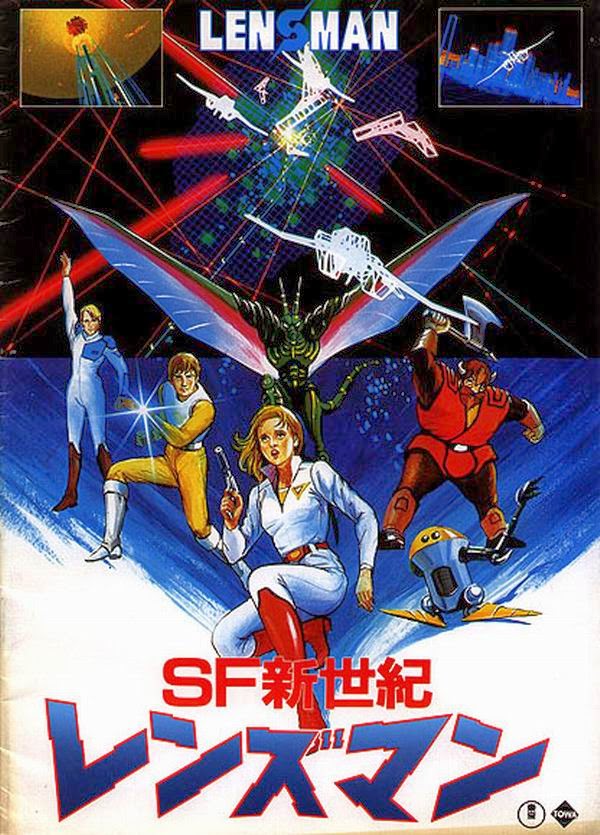
I had to cover an eighties anime. Seen as the golden age of anime, there's unfortunately a dearth of older anime in the UK that only Anime Limited and Discotek Media in the US is making amends for in a vast quantity - second hand DVDs and YouTube have had to make up for the lack of older titles for me as well as the rare release. Lensman however is a curious choice to begin the eighties on the blog however, an adaptation of a famous American sci-fi novel series that's not seen in high regard. The novels are an old statesman of sci-fi literature with a great reputation and heritage, but it's only had adaptations through anime, one this theatrical film and the other a TV series. The Lensman adaptation is about a young adolescent Kimball Kinnison becoming a Lensman by accident when a orb that imbeds itself into someone's hand transfers itself from a dying member to his after a spaceship crash on his home planet. This orb pulls him into the intergalactic organisation and embroiled in a war between the good Galactic Fleet and the evil Boskone Empire. The other aspect of this film, which is far odder, is that it's the debut of Yoshiaki Kawajiri, co-directing a film from an era before Akira (1988) that will be drastically alien to many casual anime fans, an era vastly different from the anime made after Akira, including Kawajiri's own, where you had uber-budgeted anime theatrical epics, many of which have been long out-of-print in the West.

From http://i21.photobucket.com/albums/b300/spacemonkey_fg/Blog%20Pictures%20III/Blog
%20Pictures%20III127/Lensman%201984%2012_zpsw4lnwgq0.jpg
Starting with then-cutting edge 3D animation to depict spaceships fleeing a hostile environment, the Lensman adaptation is clearly indebted to the original Star Wars trilogy. This becomes a severe crutch for Lensman to hobble along on. This is far from the longest film during the pre-Akira era, when anime theatrical films could be as long as two hours and a half like with Odin (1985) or Harmageddon (1983), but it manages the paradox of barely depicting enough detail for its simple plot and also being immensely sluggish at the same time. There's not a lot of plot following Kinnison and his friend - the giant, horned Peter vanBuskirk, the frankly useless female character Clarissa and the statuesque pterodactyl  alien Worsel - baring being perused by the Boskone Empire and ending up on one of their industrial planets where a narcotic is being mined. Somehow it doesn't take advantage of what's there already to add flourishes to deepen the characters' personalities or sci-fi intrigue more. Lensman misses a lot of opportunities and considering how long and vast the back story of the original novels are, this makes the narrative confusion of David Lynch's Dune (1984) a lot more acceptable when it still tried to cram so much into its feature length. This is baffling as well considering its screenwriter Soji Yoshikawa directed and scripted the Lupin 3rd film The Secret of Mamo (1978), and if there ever was a film that could've done with that one's strangeness it'd be Lensman.

Fromhttps://thedrunkenodyssey.files.wordpress.com/2014/02/untitled-5.jpg
Unfortunately like a lot of sci-fi and fantasy, Kinnison is an incredibly bland lead. Especially as the lens which makes up the film's MacGuffin is barely dealt with, a psychic contact to a whole federation which sounds similar to the Green Lantern Core's rings in DC Comics, and the lensmen themselves are barely covered, Kinnison is as bland as you can get. Even when his father's death in the first act should start an obvious character progression, signposted by him looking out a spaceship window with a J-metal song with eighties riffs playing to emphasise the growth, he's still a non-entity afterwards. The female lead is even worse, the only female character who, despite being a medic with military training, spends most of the film screaming or in vaguely dodgy situations tangled up by furry tentacles or stretched out in tendrils. Admittedly Kawajiri's female characters can by utterly objectionable in his later films, but this somehow feels worse than someone like Kagero in Ninja Scroll (1993). The film, like many sci-fi and fantasy stories, is helped by the side characters, such as vanBuskirk as the lovable giant who is entertaining in his gentle goliath personality and prayers to give up drinking or gambling when he's in mortal danger Then there's Worsel who's part of the interesting character designs for the aliens - part hand glider, part confident gunslinger - but he does unfortunately have a name which will immediately provoke sniggers from British listeners who know of Worzel Gummidge; even if they didn't, naming your Hans Solo equivalent Worsel is still going to cause Brits to giggle because it invokes that his home planet is somewhere in Yorkshire where the spaceships are tractors and everyone is drinking cider.

From https://visocki.files.wordpress.com/2011/03/lensman_graphics4.jpg
The best part of Lensman, as can be found even in the most disappointing of works, are the visuals and animation quality. Despite the limitations of the plot and characterisation there's still a vast creativity amongst the animators and cel painters where each planet, each farm land on an alien land, even of an eighties discotheque with skyscraper sized piston light shows are lovingly created. I've yet to stumble on a bad straight-to-video or theatrical anime for this blog, and while it's still early days, only if I cover a notorious example or scrape the bottom of the barrel will either lead to a terrible mess of doodles. From the Boskone Empire's biomechanical aesthetic - their various shapes to their cancer-like, Cronenbergian spaceships - to the settings across the universe, Lensman certainly has a lot to please the eye. Even the 3D computer effects, while dated, have an immense charm. In fact, during the final confrontation with the Boskone Empire leader where Kinnison is thrown through a series of hallucinations, there's an interesting mix of a 2D character design with three dimensions that's far from a mess.

From https://i.ytimg.com/vi/KSDl_t7Lrjo/sddefault.jpg
It's just a shame how predictable and plodding Lensman is as a story. It's viewed as utterly unfaithful to the original source material, so badly that this might have affected its lack of DVD availability, and the fact the plot comes off as utter derivative and disinteresting makes the decision to have made the film as it is such a terrible idea with nearly thirty years of hindsight behind it. An anime shouldn't be stuck with a plain white meat hero fighting a generic villain, and ironically whilst the plots were still as simplistic, Kawajiri's solo work including more charismatic heroes and a series of bizarre adversaries, as if subconsciously he learnt from the mistakes here for his career. As Kawajiri's debut, this is merely a curiosity when his (usually) gorier and darker material later kept the animation quality but followed his more trademark peculiarities for better results.