Finally we get to the finale of this retrospective of the first hundred anime covered, which will lead to a list of all the anime covered on this blog being set up as well. For the rest of the segments, follow the links here: Part A, Part B, Part C, Part D and Part E.
With this, the last, we get to the best of the best of various formats, as anime's history and one of its best virtues is that it comes in many shapes and sizes.
I will admit that, in lieu to the previous retrospective posts, there will be some titles here I haven't mentioned in the slightest, which is odd to think about, but not without saying these are still exceptional and worth your time.
Best ONA/ Micro-Series/Other

I will admit that, from Hiroyuki Imaishi as a victory lap for Studio Trigger, Space Patrol Luluco is the weakest anime he has helmed, with hope that with Promare (2019) he is back to his innovative and energised style. Nonetheless, that doesn't mean Luluco isn't a failure, way too charming, too full of his madcap style to not dismiss.

4. Tonari no Seki-kun, The Master of Killing Time (2014) [REVIEW]
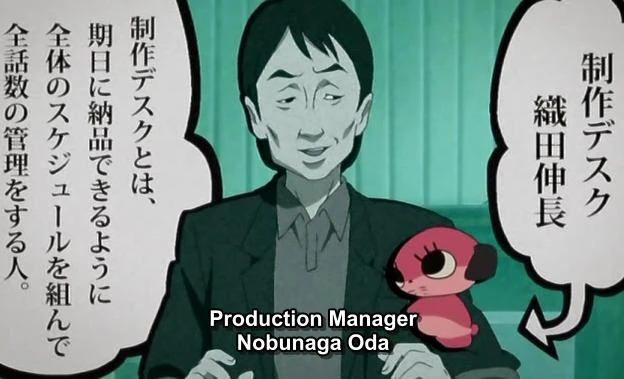
A huge surprise, as I only heard of this micro-series on a list of the strangest made and was immediately taken in by its premise. The Master of Killing Time is a great example of how anime can take any premise and breath into it life, especially as (much documented in reviews and even these retrospective posts) not all micro-series were made equal, a lot feeling flimsy to a detriment. This one, in vast contrast, managed to make a silly premise and ring as much joy from it as possible.

3. A Branch of a Pine Is Tied Up (2017) [REVIEW]
The sole short, and a stop motion one at that, but sadly there is a sad note that, due to the fact I was able to only see this through MUBI's limited time streaming of festival films, I have no idea how to ever see this incredibly poignant metaphor for the 2011 earthquake and tsunami, which made the review itself one out of guilt realizing this. Nonetheless, crafted within an inch of its life with care, I can only hope Tomoyasu Murata's work in general from what is available becomes more readily in access and that he gets to make a lot more work from this. Maybe one day, touch wood, a full feature or big project in lieu to the many legendary stop motion directors around the world like Jan Svankmajer I admire, as already he's shown his own unique style.

2. The Flying Luna Clipper (1987) [REVIEW]
A real oddity, made on a computer game console, and only learnt of due to amateur digital preservation, which means that's a potential danger of this production being lost in the future. That's a fate I hope will be avoided, even though the reality lies upon a tiny minority of people who know about the film, because this wonderful strange feature is absolutely beautiful and weird. Apparently a sequel came out in 2004, unknown whether to be true but one I wish is true and leads to said title being dug up too.

1. gdgd Fairies (2011/2013) [REVIEW]
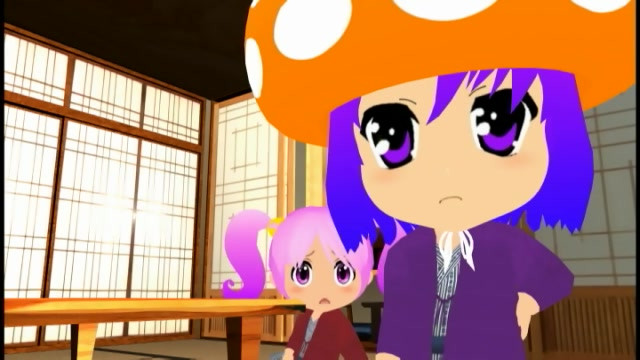
Yet out of everything, only one work could win this, one of the only shows I covered with more than one season, and one that thankfully used this to get even funnier and better. Somehow you could take the most insanely cheap looking animation, with pre-existing props, and merely three voice actresses at first and make something impressive, just because especially into season 2 it was clear the production wanted to make legitimately funny and surreal material, rather than mere otaku references, and because the voice actresses themselves were utterly charismatic. A spin-off, entirely with male voice actors, exists siince 2018 and of course the creators of this, who split ways after the first season, went on to other projects, some of which can be found. There was, however, also a theatrical gdgd Fairies film in 2014 that, again, I wish was dug up for the West as I'd gladly cover it.
=====

5. Twilight of the Dark Master (1997) [REVIEW]
Early into his career, popular anime director Akiyuki Simbo was still a working creator, but even with this 1997 Saki Okuse adaptation you can tell that, at least in style and mood, he'd eventually become the idiosyncratic stylist of the likes of Puella Magi Madoka Magica (2011). As dark horror anime from the OVA era, its sadly brief with little backstory, but you are left wanting more in its dark moodiness.

4. Dragon Half (1993) [REVIEW]
The one OVA which tragically should've been longer but only got two thirty minute episodes, particularly as what you got was this gleefully mad high fantasy parody which even throws the kitchen sink in. A silly, over-the-top work where characters exist in rubber physics and even a fantasy setting can have cyborgsm its a series which still has love in the modern day as, thankfully, the original manga was getting released in the West in the late 2010s, a moment of applause for the OVA in its own way a long time coming.

3. Cyber City Oedo 808 (1990) [REVIEW]
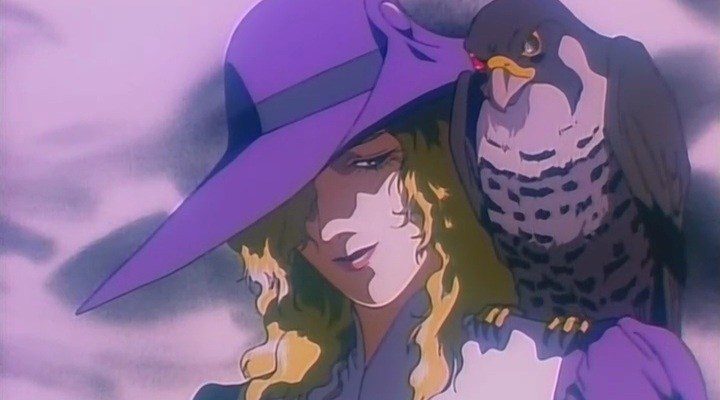
I am surprised I haven't talked about Oedo more, let alone Yoshiaki Kawajiri, but the little I have covered has been a fascinating trajectory. His debut, the notorious adaptation of E.E. Smith's Lensman novels in 1984, co-directed with Kazuyuki Hirokawa, felt nothing like his later work and didn't impress the estate when it was turned into Star Wars, likely the reason the theatrical film has never been re-released. But Oedo is an underrated OVA which is utterly ridiculous but in the right ways. Effectively three different stories set within the same premise, it gives you a great taste of Kawajiri which emphasised that, in actuality, his notoriety for sexually transgressive and violent anime is only down to Wicked City (1988) and Ninja Scroll (1993), when it just violence and style which is his usual interests. Alongside arguably his best work, Vampire Hunter D: Bloodlust (2000), Oedo was a gem to nicely put besides it for the first hundred reviews.
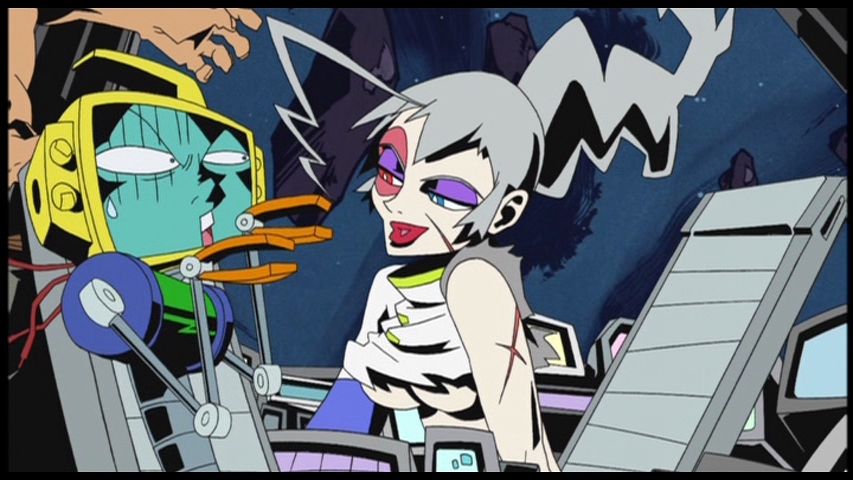
2. Dead Leaves (2004) [REVIEW]
Again, one I'm surprised I didn't cover earlier, and it says something that even on the list of strangest anime covered this oddity never even got to the bottom of that list due to all the bizarre titles I went through. But let's not ignore Dead Leaves whilst I can finally talk about it; what was once a divisive debut for Hiroyuki Imaishi as a director, with time having past, is now a wonderfully tasteless and over-the-top test run for his later style, openly in-debuted to Western pop culture as much his whims, utterely insane for its length under an hour.

1. Gunbuster (1988-89) [REVIEW]
We end this section with one of Gainax's biggest yet (in physical release) most elusive titles nowadays, the episode producing Gunbuster almost as cursed as director Hideaki Anno's other title Neon Genesis Evangelion (1995) in how, yes, Gunbuster among its virtues famously ends on an episode mostly animated in black and white due to budget restrictions. Gunbuster nonetheless, flaws and all, is another huge title I am glad to have seen, a very idiosyncratic space opera which eventually scores the emotional victory in terms of even its technical issues being used for artistic success. Its lack of release, not helped by the fact only a compilation feature is available in high definition, is baffling and a hold over whose history has to be considered. As of 2019, one of Gainax's hugest releases by the name of Neon Genesis Evangelion, that title I just mentioned, is streaming off Netflix and going to get a lot of buzz. It'd be interesting, alongside the divisive "sequel" from the 2000s, what happens to Gunbuster in lieu to this.
Best Series:
Honorable Mention:

Ghost Hunt (2006) was just a pleasure. Utterly cheesy at points and, for all its horror and darkness, without any sense of actual scariness, but I found so much entertaining in the series just for building (wisely) on narrative arcs of multiple episodes and also for the cast, stereotypes but likable ones, made more fascinating as without any contradiction individuals of numerous religious faiths alongside paranormal investigators, even a Catholic priest, team together to deal with hauntings throughout the shows as friends. Without any consideration whether this'd be good or not, I'm delighted how much I enjoyed myself.

Far more darker, but also ironically another horror series about a group that deal with supernatural entities, Requiem From The Darkness (2003) instead follows what are effectively villains (baring one innocent mortal writer who ends up with them) who offer moral punishment to those who have committed foal deeds, a series who unconventional aesthetic is matched by its unsettling content with poignant effect.

10. Samurai Flamenco (2013-14) [REVIEW]
Taking the first spot on the list, however, is a series whose reputation is surprisingly not as high as I'd thought it'd be, probably because of a) it unfortunately suffered from some terrible animation as a result of the hectic reality of televised animation, that had to be cleaned up for the physical releases, and b) it does all hedge on a plot twist which completely takes the initial premise, a male fashion model who decides to become a crime fighter, and turns the reality we start off with upside down. If you can deal with this, Samurai Flamenco as for me is an exceptional series which finds new ways, including emotional dynamics, to keep topping its spectacle over and over.

9. Kill La Kill (2013-14) [REVIEW]
In terms of spectacle and bombast, it'd be insane not to mention Kill La Kill, Hiroyuki Imaishi's giant hit and why, as their first production, Studio Trigger came out of the starting line like a King. Insanely ridiculous, with its premise of clothing as literally fascistic, with style to drown oneself in.

8. Mononoke (2007) [REVIEW]
More horror, another period horror series to be precise, whose idiosyncratic aesthetic style is thankfully matched by the content within the show that is just as distinct.

7. Puella Magi Madoka Magica (2011) [REVIEW]
I.e. the series that, even to this day, is talked about with controversial theatrical sequels which rewrite the ending (which I will have to cover one day won't I?), video games and merchandise involved, all in lieu to what is until School Days (2007) challenged it, the anime I covered that I should've described as being constantly punched in the stomach. Long after its gained its reputation, let's not forget Akiyuki Simbo's deconstruction of the magical girl genre, an increasing sub-sub-genre, was pretty much a stand out for how dark it got and how emotional it became.

6. Elfen Lied (2004) [REVIEW]
Speaking of dark material, the divisive and flawed adaptation of a Lynn Okamoto manga is still held with high regard to this day regardless of its visibly mistakes. Mainly because it touched a nerve, a juxtaposition of emotional drama from a large female cast with gristly hyper violence, the kind of show that for all its adult content, the kind that you don't even get a lot of in anime still and was somehow passed for fifteen year olds to watch in the United Kingdom, also had more in its mind and heart than the surface let on.

5. Boogiepop Phantom (2000) [REVIEW]
A show I saw early into my interest with anime, which obviously meant that I dismissed it back then sadly, only for my maturer self who prefers more idiosyncratic work to immediately admire and adore this experimental one-off over a decade later. As emphasized before in previous segments of this retrospective, I hope the reboot of this story doesn't remove this one from existence. Thankfully, dating this comment a little in that of June 2019 Funimation has picked it up for streaming for their site, the 2000 Phantom will still get attention.

4. Paranoia Agent (2004) [REVIEW]
Another show, whilst more linear in structure, which took some ambitious routes would be sadly the sole television series from Satoshi Kon. His abrupt death due to pancreatic cancer in 2010 was a tragedy in general, but it was amazing to think that from a mere desire to use existing ideas he showed himself as adapt to a longer format than a theatrical film too, suggesting so many possibilities lost. Thankfully, as many of the shows on this list attest to, there was a wonderful boom still to this day of idiosyncratic television.

3. Princess Tutu (2002-3) [REVIEW]
The dark swan of the list, as barring the US releases this title is an obscurity, an absolute shame as, in lieu to the previous post, this is an idiosyncratic and experimental work but with the added challenge that its also meant to be for small children as much as adults. What happened is fascinating and glorious, effectively two series in one - the first a normal thirteen episodes which leads to what could be a good ending itself, the second (originally fifteen minute chunks) leading to an even greater ending. Channeling a love for ballet, music and fairy tales into very emotionally rich stories, its a lovely series, as appropriate a term to use as any.

2. Yurikama Arashi (2015) [REVIEW]
Also "lovely" but "surreal" and "subversive", not surprisingly Kunihiko Ikuhara is as idiosyncratic as you could get. I confess I have only been able to track of his career since Mawaru Penguindrum (2011), as still to this day Revolutionary Girl Utena (1997) has never had a proper UK release*, but he's been two for two in success, and it looks like Sarazanmai (2019) could make this a hat-trick. It has a lot to follow though, as (yet to cover it) Penguindrum was eventually an emotionally deep work, whilst Arashi was deliberately and brazenly meant to challenge depictions of lesbian (yuri) characters in Japanese culture by way of his pop-surreal eccentricity. From the blatant - where he frankly made flower symbolism for sex pointless by just being as explicit about it as he could get away with - to the sweet and devastating, his work is a one-off too, and absolutely magnificent.

1. Haibane Renmei (2002) [REVIEW]
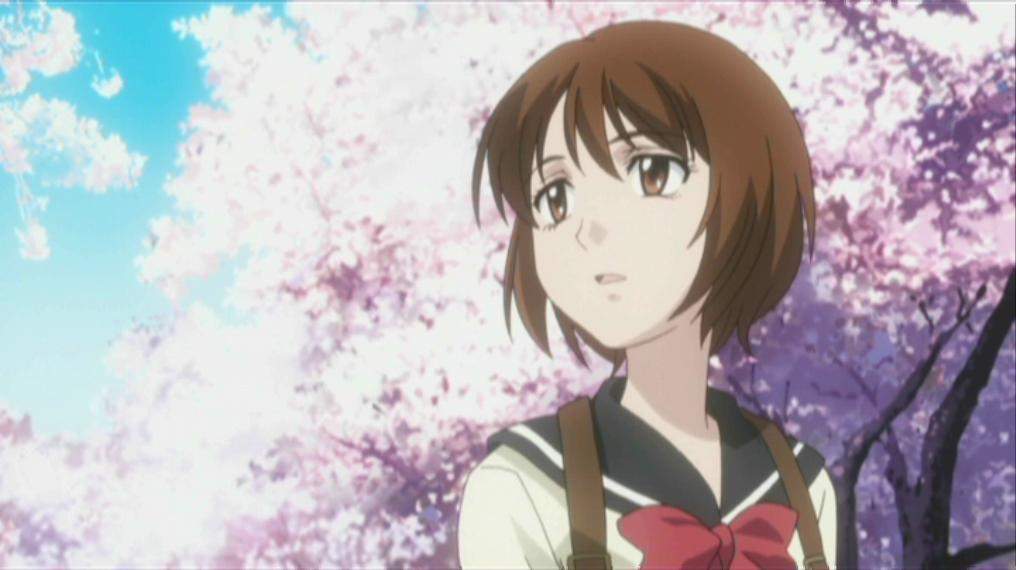
Yet our winner is a series I've yet to cover on this retrospective, which I fell sad about. Thankfully I can now, a title that has thankfully had some reputation at least in the United Kingdom because MVM, possibly the unsung heroes of idiosyncratic licenses, have released this thirteen episode twice now on DVD. Haibane Renmei, from a dōjinshi manga by Yoshitoshi ABe, has been painted as a slice of (after)life, a completely unconventional fantasy tale which is entirely rooted in ordinary banalities, the small pleasures in life, but with explicit hints at a spiritual edge as our characters, including the lead, are born from eggs with angel's wings, characters who, living alongside the regular community following set rules of living, eventually travel over the wall of the town they are in as long as they recognise a past in another life. With themes uttered in lieu to this series like being about the afterlife, and suicide, it sounds difficult and convoluted, but is instead as slow burn and serene as you can get. Its a title that emphasizes how unique anime (and manga) is for these titles and how even a work like Haibane Renmei got commissioned for television, one which is thankfully still accessible and deserves it.
=====
Best Film:
Honorable Mention:

Whilst it is a very odd film in the Lupin 3rd franchise, especially if you presumed the character was family friendly and found yourself witnessing the complete 180 degree opposite, Lupin The Third: The Mystery of Mamo (1978) is definitely a memorable one. Dark and weird, sexually explicit and completely silly at times, Mamo was meant to be a call back to the original Monkey Punch manga, and with the quality of said production being as good as it is, it definitely was a tribute to that source that has to be admired.

Your Name. (2016) is a title many will recognize and, yes, its great. Probably the best aspect is that, like how Masaaki Yuasa has suddenly become so popular over the 2010s, the director is Makoto Shinkai, who started back in 2002 with Voices of a Distant Star, an animated short made entirely by himself as an outsider of the anime industry, and has built a steady reputation as a dramatic auteur only to suddenly create the highest-grossing anime film of all time at the time of release, and one of the most recognisable anime outside of anime fandom probably around the world, all whilst not sacrificing his auteurist obsession with the communication between people in the slightest. That's impressive and deserved success.

One title that sadly didn't get even an ounce of that film's praise, but thankfully is highly regarded still, is period samurai action film Sword of the Stranger (2007), which is a success not just for being incredibly animated with impressing action scenes but, even with pulp storytelling, making sure you care about characters even on the side meant to be the villains so that, when someone does get killed in battle, you wince for these mere drawings and have emotional engagement. That again deserves applause.

Finally, whilst I have banged on about Masaaki Yuasa's Night is Short, Walk on Girl (2017) throughout the retrospective, its not in the top ten but only because there was a lot of a other titles to mention. Its still a great film.

10. Robot Carnival (1987) [REVIEW]
Speaking of a great film, by way of smaller segments, anthology anime Robot Carnival is a testament to the incredible talents who were creating animation in the eighties as even the cheesiest of moments in this film, based around tales involving robots but with full creativity allowed, look stunning and are memorable. From legitimate drama, from the director of Kite (1998) of all people, to eighties sci-fi action and period set slapstick, there's never a dull moment and like a great anthology plenty of choice to choose from.

9. Midori (1992) [REVIEW]
On of the opposite end of the eighties, though taking years until an early nineties release, Hiroshi Harada quit the animation industry to work by himself, eventually after many years creating this controversial but admired piece of art. Its not for the faint hearted though as, based on the work of Suehiro Maruo, its a disturbing ero-guro tale with a feel bad ending, the reputation confounded (despite a French DVD release and being accessible on the internet) by the fact Harada only allows Midori to be screened in his homeland as part of an elaborate carnival. It is however, if you can stomach it, a remarkable animation achievement.

A joint entry as, whilst drastically different in aesthetic, Vampire Hunter D as an adapted franchise (despite only two anime existing so far) has been treated well. Hence I hold the 1985 adaptation, including its more cartoonish visuals, as still being a good anime sci-fi horror tale; its just that, with Yoshiaki Kawajiri and the last hurrah of hand drawn animation, Bloodlust is an incredible piece of pop art, but the pair don't undermine each others' existences in the slightest.

5. Paprika (2006) [REVIEW]
Satoshi Kon's last completed project, his most well known film, has been a slow burner in appreciating it for me, but now I have grown fonder of his adaptation of a Yasutaka Tsutsui novel, I find as well a bitter sweet experience of his last project ending in a glorious spectacle of dream logic.

4. Roujin Z (1991) [REVIEW]
An underappreciated gem - in which Katsuhiro Otomo, post-Akira, teams up with director Hiroyuki Kitakubo to tackle the still-pertinent issue of Japan's growing elderly population, where in another time a method for care of said elderly is a nuclear powered Swiss Army Knife of a bed/living space with artificial intelligence, naturally going amuck in this light hearted action farce. It still works as satire, still works emotionally, and is as that sounds wonderfully animated and utterly fun.

3. The Girl Who Leapt Through Time (2006) [REVIEW]
As Mamoru Hosoda's reputation grows, its nice to look at his first big spike in attention, another adaptation of a Yasutaka Tsutsui novel, and see how he takes the unnatural (a girl who finds she can travel through time by jumping from a large height) and creates an accomplished drama from it. Even the third act, which originally ruined the film for me, has grown as an appropriate and emotionally fulfilling one; and of course, this is also a beautifully made theatrical film which looks like it was made with love.

2. Belladonna of Sadness (1973) [REVIEW]
Made with a sense, as the studio (Mushi Productions) was a capsizing ship about to close, of finishing a studio that under legend Osamu Tezuka helped create modern anime with something truely innovative, Belladonna of Sadness has gone from an obscurity only anime fans knew of to, in complete irony, a one-off probably talked about more at points in the 2010s by cult and art house cinema fans who may not watch as much anime as the anime fans to. Its not a discredit, only to thank Cinelicious (now Arbelos) for choosing to restore this film's negative, when they are more known for art house cinema, and pushing it into the public consciousness, befitting a truly radical work that for all its uncomfortable content has also gained a lot of traction for its ideas of gender politics and incredible production. Thankfully as well, in a wonderful moment, the United Kingdom got the two films that predated Belladonna of Sadness in an informal trilogy (A Thousand and One Nights (1969) and Cleopatra (1970)) on Blu Ray and DVD, their easier access meaning that with fingers crossed they will be covered soon...

1. Royal Space Force – The Wings Of Honneamise (1987) [REVIEW]
Finally thought is a film which has become divisive, all for one single scene which is dramatically complicated and with careful moral thought to it but is disturbing and capable of completely ripping a viewer out of engagement with the material. Said film is also, as Studio Gainax's first major production, an awe inspiring achievement in creating an alien world, wrangling serious existential drama in science fiction where, whether it was the right way to depict a character's disconnect with the events around them or not, even that notorious scene was meant to deal with the follies and achievement of humankind, metaphorically shown through a humanoid race that may finally get a man up in space but, alongside tensions between warring countries and poverty on the streets, the chance that person will die from its failure. Sci-fi is usually nowadays consigned to spaceships exploding, even Star Trek never something I held any interest to engage with (despite growing up with it in childhood) as it never caught me on an emotional and artistic level. This aesthetically gorgeous, aesthetically unique, and dramatically complex and even spiritual attempt at big questions shows what science fiction can achieve, and its stayed with me the most of even all these incredible films I've covered.
======
Conclusion
Hopefully however this is not the end of such gems covered though, as this self indulgent retrospective concludes. Hopefully there are more great anime, more weird anime, more curious oddities too.
Whilst I have though how pointless a retrospective is for such a tiny personal blog, it helps remind me what anime I should return to, actually purchase and love. To find out what I like in anime, and also see what is ahead to still look into for number #100 to number #200.
There is still issues, in the time between 2015 to 2019, in terms of accessing anime in the United Kingdom as it has grown to an advantage. Streaming is a virtue for so much anime to see, but with Funimation taking its ball from Crunchyroll to start their own site, and Netflix grabbing even the Neon Genesis Evangelion franchise, the cost to access all these subscriptions is going to hurt people's wallets to a potential detriment for the industry. I also find, sadly, that the UK physical media market is incredibly weak, Anime Limited having to take a while between their titles despite their licenses exiting fans, MVM thankfully plodding along but only one company, and Manga Entertainment the only other major group who may benefit from their acquisition by Funimation but before lost their personality for me personally since the late 2000s. Whilst the US has an incredible physical media market, not just Discotek but others, importation of anime titles from the US is surprisingly more cumbersome as well as my own issues with Blu Rays having region codes or not.
In terms of what is out there however, to be positive, there's so much on Crunchyroll alone, still a bit to access on DVD/Blu-Ray, and a lot of old out-of-stock work from the early years of UK DVDs, from ADV Visions' history to curiosities, to abruptly find in a second hand store.
In terms of titles, I haven't even covered a Studio Ghibli film and there are major figures I have barely touched upon. Titles from the sixties, seventies and eighties may hopefully be found and accessed, and anime from even before the modern era of the sixties have slowly appeared. In terms of genre, sports anime is an area I haven't touched at all. Family friendly anime is a large area. There's the yaoi genre, of male-male romantic relationships, which have had a few titles available, and a growing catalog of yuri (lesbian) storytelling growing since these few years. There's the vast mecha and giant robot genre, let alone the Gundam franchise to deal with now I have covered one title from the franchise**. There's the divisive but still vast genres like echii and harem anime that eventually have to be explored, as there is romance and slice of life anime. There's, if I dare to and with Britain's terrible history of puritanism we're finally trying to shrug off, hentai (porn anime) could be covered but with knowledge most of it I probably wouldn't touch even with a ten foot pole.
There's also plenty of odd and bizarre creations about premises as banal as bartending to competitive bread making that, in this day and age, could easily appear on a streaming site as a new season's programming or even an older title being released; and a lot of mediums like music videos to multi-media, which I have dipped my toe in, can be traveled further within, let alone the world of experimental and avant-garde Japanese animation, or stop motion and puppetry including the legendary figure Kihachirō Kawamoto. And of course, titles as know as Cowboy Bebop (1998) which I haven't even watched in my youth to finally get around to, let alone rewatch the anime that is in my DVD collection and covering it.
And of course bonus reviews, which comes to mind with Battle Angel Alita premiering in 2019, a case of pigs literally growing wings and flying as, even if he's only the producer, James Cameron finally got a project he has been obsessed with since the nineties off the ground and in cinemas. The madman I am I might cover Dragonball Evolution (2009); hell, maybe I can watch Dragonball the anime for the first time since my youth, as I haven't properly covered an anime which has had more than two seasons, an entire land of shonen and long form anime to dare touch. That's not including, having touched South Korean animation twice, my interest in non-Japanese Asian animation and co-productions. I mean, there are moral as well as creative decisions of issue to consider, but there is a Chinese web series now involving a young and sexy Karl Marx of interest...
Whatever I cover, and I have started covering titles in-between this retrospective, I hope at least to still have fun, still find gems, finally get to major titles in the history of anime, and hopefully learn beyond this as, so far as I look into the lives of those who create in this medium, I have learnt about many new details. Of the musicians who create the music, slowly become more in-tuned to voice acting's importance (and even for English voice acting with the curious case of Ghost Stories (2000-1) and its two varying dubs), thinking about even key animators and character designers more alongside directors, and just learning to appreciate even Japanese culture as its depicted through this material.
======
* As of 2019, we're waiting for Anime Limited to follow on from their announcement of licensing the series, but hell knows what is happening.
** And, with the knowledge Harmony Gold's license for Macross has been extended, crushing the souls of anime fans, that elusive franchise, where even the titles that aren't part of the deal exist in an as-of-yet undecided limbo, will there ever be Macross coverage on this blog in the near future?