Showing posts with label Letter: W. Show all posts

Saturday, 21 October 2023

#265: The World YAMIZUKAN (2017)


Studio: ILCA

Director: Noboru Iguchi

Screenplay: Noboru Iguchi, Oolongta Yoshida, Takashi Iizuka and Uuronta Yoshida

Voice Cast: Takumi Saitou as the Storyteller

Viewed in Japanese with English Subtitles


A micro-series of weird tales, this has made me more fascinated with its creator, studio ILCA, who come off as real experimenters with what can be described as a magnificently bleak and screwed up tale of alien abduction in less than four minutes. With a company name that literally is “I Love Computer Art”, they have worked in video games, supporting the production of the likes of Pokémon Brilliant Diamond and Shining Pearl (2021), as well as animation, specifically in terms of what I have called “micro-series”, productions where the episodes are less than fifteen minutes, where I have encountered their work before. They have worked in a variety of genres, such as with animator Takashi Taniguchi, the original creator of such idiosyncratic looking titles like Onara Goro (2016), a deeply strange set of stories about sentient farts, but have made a name for themselves in horror. Alongside titles like Kowabon (2015), their most successful franchise in terms of number of series is Yamishibai: Japanese Ghost Stories, directly inspired by the kamishibai method of story-telling, street storytellers who used illustrated miniature stages, which started in 2013 and continued into the 2020s. Yamishibai is explicitly about Japanese folklore and ghost stories, whilst YAMIZUKAN is its one-series sibling, which is affectively an interpretation, with exceptions, of American horror tropes.

To give an accurate description of what this visually looks like, most of this series is still images, clearly influenced by the kamishibai storytelling style as well – some paper cut animation is used, but mostly it is hand drawn images, set to voice acting, the score and the narrator. Each episode however takes on a different art style, something seen in the contrast from episode one to two, the later even more misanthropic in tone in suggesting the 1982 animated interpretation of Raymond Briggs's The Snowman, a Christmas tradition in Britain, if the snowman was more likely to eat the child. One aspect about YAMIZUKAN, alongside the bleakness of many of these narratives, is how ridiculous some become, and there is a sense as much of this is a pastiche, where the plot twists are more entertaining the least conventional and strange they turn out.


I think everything is explained by who the chief director is, an unexpected surprise for me as it is Noboru Iguchi, a man I only knew for his live action work and was surprised to learn has worked with ILCA with the likes of this and a season of Yamishibai. Iguchi is a man, part of the Sushi Typhoon group of cult Japanese cinema in the 2000s on, behind films like The Machine Girl (2008) and Dead Sushi (2012), knowingly ridiculous genre films which do wink to the audience. These films can be hit and miss to me over the years, but here Iguchi’s sense of the strange, writing many of the scripts with others, works entirely for me. The emphasis on American tropes, with all Western named characters, with some exceptions based on European tropes is clear, obsessions with fortean concepts of UFOs to the perils of hitchhiking, even for episode five with a very distinct art style based on American pulp illustrations the sci-fi trope of mechanical man for a gleefully nihilistic narrative. This is a really good series to show how the micro-series as I have called them, short multiple episode works, are at their best in allowing experimentation and artistic creativity. Still images, mid-show, stand out as incredible and gleefully weird here, where here you have to take a pinch of salt at how deliciously ridiculous this can get, like man-eating cars or mimicking Akane Shimizu’s series Cells at Work (2015-21) in anthropomorphising antibodies, but the art and craft behind them are magnificent.

Throughout, there are a lot of memorable episodes. Episode seven, about a dangerous clown who travels in reflections, is even live action, with actors photographed in a series of still images. One episode is the entire premise for an American horror film, about a cursed musical box, that even brings in The Exorcist (1973) and becomes an over-the-top tribute, or pastiche, of the country’s genre films, as is the throwback to older b-movies about a mad scientist turning people into a gill man army. The two inspired by European tropes make nice contrasts too, like the case of a cursed mask that sees the end of many found in an antique store, like a pulp tale from the eighteenth century, or the last episode, a bittersweet tale of an orphan girl which is actually haunting for all the content here, a great end tale and a surprise change of pace as it is one of Noboru Iguchi’s stories. For a work up to fifty minutes long altogether, these breezed pass with such a vibrancy, and sense of fun, where I have come from the end of YAMIZUKAN with a greater respect for ILCA and so much of their productions I now want to see.

Wednesday, 15 March 2023

Bonus #16: Wonderful Days (2003)


a.k.a. Sky Blue

Director: Moon-saeng Kim

Screenplay: Moon-saeng Kim, Michael Keyes, Jay Lender, Jun-Young Park, Sunmin Park (adaptation), Yong-jun Park, Howard Rabinowitz (English Language adaptation), Jeffrey Winter and Micah Wright

Voice Cast: Andrew Ableson as Zed / the Digger Leader; Cathy Cavadini as Jay / Young Shua / Cheyenne; David Naughton as Commander Locke / Dr. Noah; Bob Papenbrook as Goliath / Governor / Typon

Viewed in English


A Korean production, I wish I could more enthusiastic out of respect for a country's animation industry, especially as this was clearly an ambitious attempt for wider recognition. Sky Blue, as we got it called under in Britain, is as far further than you could get from Blue Seagull (1994) and Armageddon (1996), two Korean animated films which are strange and risible productions I admit were the first two from this country I had seen, which I admit I found enjoyment in but are two titles which struggled to come into existence. The former is an erotic thriller made recognisable in the internet era, the later one of two Manga Entertainment releases of South Korean animation in the VHS era that managed to get a 3DO Multiplayer Interactive game in its homeland, they are films I feel sympathy for the staffs on, especially as Blue Seagull ends with behind the scenes production footage over the end credits. They were titles which would have been dogged on by cruel reviewers, especially as Blue Seagull had some questionable content. South Korean cinema is a rich vein in itself to be admired, whether art cinema or genre pictures, and whilst there have been some prominent and well regarded animated work, such as The King of Pigs (2011), there is an entire culture of television and theatrical Korean animation which is not as readily available still. Sky Blue, or to use its original name Wonderful Days, was a prominent title to appear even in a trimmed down form with an English dub back in the 2000s, and could have been a chance for wider recognition if it had succeeded, certainly coming with a significantly bigger scope in visual design and animation than the two films I have mentioned.

There was even a theatrical push in Britain when it was licensed by Tartan Video. Tartan Video, when they existed, were a big name, especially when it came to helping the push for cult Asian cinema, the people who brought us in Britain the likes of Takashi Miike's Audition (1999), Ring (1998) and Park Chan-wook's Oldboy (2003), a huge proponent for how we learnt of South Korea's rich genre and cult cinema, introducing the likes of Park Chan-wook to us in the West. Even with the DVD release of Wonderful Days, as I acquired cheaply second hand, it was sold on two DVDs, in a deluxe set with a three hours worth of extras on another disc, in the same way they had with the likes of Oldboy, pushing it as a big title in the day. It has a premise which has been readily sold before. Still evoking uncomfortable issues about climate change, Wonderful Days is set in a post apocalypse where the environment collapsed, toxic rainfall and all. The first and only living city, the Echoban, was built to protect civilisation from this, but even as it stands proudly in the midst of this as a bastion of hope, there is rife class divide, where the elite live in the Echoban, and everyone else is outside in the slums, workers to mine resources for the living metropolis and keep it alive. It is a story told many times before, and that is not a bad thing, with class war and a romantic triangle divided between sides, as Jay, a female law enforcer, is connected from childhood to the man Shua from the slums trying to activate a secret Echoban system meant to save everyone, all whilst her male superior Cade wishes to prevent this but also loves her since they all know each other from childhood before Shua was forced out of Echoban. Add in this a kill crazy superior from the elite in the midst of this, and everything here can be made into something great.  Truthfully, the biggest problem is entirely that this is just okay, something we will get into later into this review, that this just in terms of making a lavish production, and making sure it has a story which gets from A to B well, was a goal that it cleared but Wonderful Days does not get further from.

It is staying safe, so much so with its narrative it is within the slithers of this plot where you see something more dynamic occasionally appear. I find myself more concerned for the petty thieves introduced, especially when they are revealed not to be villains but merely denizens of the slum wasteland who can be sympathetic, like a tiny rat like member who I had sympathy for over the traditional leads, all because he was made less a thug but someone who can be scared, be brave, and when he went from a dubious figure to one with sympathy for when he laments for his fallen comrades. Whilst it has aged, the film's visual palette even with obvious use of computer animation is to be admired too. Attempts at blending this into interesting directions can be seen onscreen, such as a chase into the Time Capsule in the Echoban, one of the few moments where world building, which is not as fully seen as it should have been, appears; a museum presuming what has survived in human culture from before, it mixes live images with the likes of Roy Lichtenstein and Gustav Klimt's art for a set piece with idiosyncratic visual choices. The production team were clearly trying their hardest, and one sequence does suggest what could have been; in context it is still a curious choice, a nightmarish dream of biblical images and multi-eyed rams closer to a Ken Russell live action film, a British director acclaimed (and notorious) for this type of hyper intense imagery, including actual Biblical images with multi-eyed rams in Altered States (1980). That scene is disturbing and abrupt in Wonderful Days, but shows an attempt at characterisation, that for Shua it is symbolic in his fear for Jay's life, and the state of the situation for him, showing how the production team for this film, as they continued making films or animated projects in other formats, could have taken this further. In fact, prominently, the production was more than just animation of the 3D and 2D form, as additional work included filming real model sets which the animation was layered over, even using real shots of clouds and the sky, symbolically meaning for the film's story, and layering animation over them1.

Sadly, beyond two short films after this, director-writer Moon-saeng Kim has not done anything else, and there is the unfortunate sense that Wonderful Days, even with its shortened length for global release, was a production with many issues in spite of these clear visual virtues. Even in mind to Tartan Video putting their weight behind it in Britain, even the esteemed Japanese animation studio Gainax creating a dub for the Japanese market which was less "alien" rather than merely adapting it to distribute it in Japan2, Wonderful Days was always going to struggle with how conventional the plot proves to be. An expensive production1, all the problems really come from the fact that its story is quite conventional and not even that particularly idiosyncratic either. With knowledge of numerous individuals being involved with the writing process, even unaccredited work by Micah Wright, a prolific American writer for the likes of comic books, and Jay Lender, a prolific American writer especially in the Spongebob Squarepants franchise, it was clear that whilst visually the film, even with its aged CGI, was ambitious and is still to be admired, the production's story needed that much strengthening of ambition. Especially when some of the more idiosyncratic touches, like the blind girl, are clichés which really are not that distinct when they have been seen before, this film whilst having so much still I appreciated also suffers from this lack of personality. Sky Blue as we got it in the British Isles is okay, a case of a production which just goes to show how much of a struggle it is just to get an animated theatrical film off the ground, where the challenges are not just the visuals but even making sure to have something in its story to tell to last.

=====

1) Take with a pinch of salt, as it comes from one perspective for a film, but this chronicle My Beautiful Korean Movie written by Micah Wright, for his personal website on April 9th 2003, does raise some poignant aspects that, if confirmed, do raise up a lot of the issues with Wonderful Days, as an unaccredited co-writer with Jay Lender, which undermined it.

2) Gainax to Adapt Wonderful Days, written by Christopher Macdonald for Anime News Network and published on November 5th 2004.

Sunday, 24 July 2022

#219: Wicked City (1987)


Studio: Madhouse

Director: Yoshiaki Kawajiri

Screenplay: Norio Osada

Based on the book series by Hideyuki Kikuchi  

Voice Cast: Toshiko Fujita as Makie; Yūsaku Yara as Renzaburo Taki; Ichirō Nagai as Guiseppe Maiyart; Mari Yokoo as Spider Woman; Takeshi Aono as Mr. Shadow

Viewed in Japanese with English Subtitles


This is a significant film for me to reach - one of the key films of Yoshiaki Kawajiri, a director who became a name in Western anime fandom in the nineties, but one painted for me getting into the medium as a notorious one. Kawajiri in truth, getting into anime in the 2000s, was once for me the director known for sex and violence, but when it comes to actually viewing his work, which is not a lot of his career. Action anime and a high quality to the work with his collaborators, as a studio Madhouse director, is more his trademark. The infamy I heard second hand of him came from Wicked City and Ninja Scroll (1993), and even then, Wicked City was a title available in the United Kingdom, as in the United States, but Ninja Scroll was more freely available and a stock title for Manga Entertainment to have into the early DVD days. Ninja Scroll has held up well, and whilst it is transgressive in a lot of its content, it feels like a pulp narrative whose content was trying to be more thoughtful even if it dealt with gore and sexual violence. This is something to consider as, whilst of its era, anime in the decades afterwards even if not more explicit in these subjects, or having to work around television censorship, have tackled just as extreme content to this day, whilst Ninja Scroll's shock nowadays in how it tackles it explicitly as a high budgeted production. Wicked City was the title I hesitated to get to from the director, and for all its virtues, you cannot ignore that just ten percent of the film's content, some of its more controversial aspects, are going to be off-putting and unacceptable for anime fans. The irony is that, yes, it is only a part of the film altogether and that Wicked City itself has more to consider even beyond what I considered it would have been.

A factor to consider with Kawajiri's career is how significant author Hideyuki Kikuchi is to parts of it for source material, especially with some of the more adult work in content. His most well known work is the novel series Vampire Hunter D, which has now become a multi-medium franchise and has not stopped since the first novel in 1983, but he has worked on other titles, Wicked City based on the novel series of the same name from 1985 to 2016. Barring Ninja Scroll, more of the overtly horror and violent titles in Kawajiri's career come from Kikuchi source material, and Wicked City would have been released after the third novel came out, set in a world where demons and humans co-exist in a treaty skating on thin ice. A new treaty after centuries is to be signed, with a demon terrorist group wishing to snuff out the demon representative, Guiseppe Maiyart, sent to our side to sign it. He is to be protected by a human member of the Black Guard, secret agents guarding the "Black World" of the demons against ours, called Renzaburo Taki, with Makie, a female demon member of the Black Guard as his mirror to also protect Guiseppe. In terms of the Wicked City itself, it has a basic plot, which is traditional for a few Kawajiri titles, although in terms of his career, this one does feel the weakest. Compared to Ninja Scroll's, which is surprisingly more complex in back story, this does have a huge contrivance that, to get Renzaburo and Makie to fall in love, which is the real goal for peace, this film does have to work around some abrupt emotional whiplash and contrivances which other Kawajiri productions avoid.

You also have to accept that Guiseppe Maiyart's main characteristic, despite being someone revealed to be wiser and being a diminutive man with thunder abilities, is also having a horniness bordering on a suicidal streak in the risks he takes to please this. Among a curious duo with Ninja Scroll's Dakuan of Kawajiri having a fixation on short old men who are cocky tricksters, It has humour as well. You also have to accept that Guiseppe Maiyart's main characteristic, despite being someone revealed to be wiser and being a diminutive man with thunder abilities, who is also with a horniness bordering on a suicidal streak in the risks he takes to please this. This will put viewers off too, among a curious duo with Ninja Scroll's Dakuan of Kawajiri having a fixation on short old men who are cocky tricksters, but thankfully this does succeed with some light humour as much as it feels like another aspect Wicked City as an early work from Kawajiri does feel like a template for his later work, including the fact the villains in later stories would stand out more than the one here.

Wicked City also has a huge caveat already hinted at which cannot be ignored, even in mind to this being a film which I will talk about having incredible aspects to it, and has left a lasting legacy alongside other Kawajiri productions which influenced Todd MacFarlane for the creation of Spawn1, to being admired by Hideo Kojima2. That being, that in representing its transgressive sexual body horror content, where sex is used as a weapon including rape, this has the exact same problem you deal with in Urotsukidôji; that being, whether you think those subjects in transgressive depictions would still be defendable or not, how this is depicted is with having this subject always involving a female victim, and is clearly lurid for the sake of it with no reason to be there. The problem is worse when the sole figure of this content is Makie herself, the sole female character of note, which makes the content more problematic. This is worse here as, alongside undercutting a character who is a demon who has inhuman abilities that should make her powerful, she is the figure who exists to mirror Renzaburo Taki as well as emotionally connect to him, someone too who like Jubei in Ninja Scroll, is deliberately the male lead who scrapes by and gets maimed in scenarios as much as he succeeds.

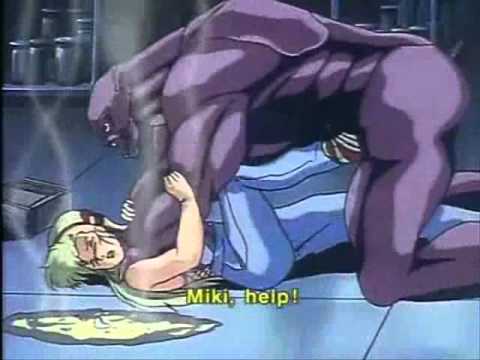
Some may actually be offended by the suggestion you can tackle sexual violence in a way in art or even pulp storytelling which can be transgressive on purpose, but the problem is that, before you can either get to the subject of whether it can be defended or not, Wicked City alongside other anime fall into the issue that these subjects this same way. Always involving the victimisation of female characters, and always feels like it is done for shock value than with note. That this is just a fragment of Wicked City makes this worse, making this a difficult film to defend, even with aspects involving the sexual body horror, whilst grotesque, which are startling in a way without these issues and can be defended. It was not as explicit as I had feared, but with one scene in particularly reaching a fine line, this ten percent or so of the film's content of how Makie is victimised is uncomfortable. We did get Wicked City for VHS and for even cinema releases back in the nineties from Manga Entertainment, but is was censored for these scenes, only coming to us uncensored in 20223. These scenes once censored neither have any real weight to the content or narrative of Wicked City either, making them pointless to even have had.

Beyond this, Wicked City is still a very violent and very grotesque film from Kawajiri, and it is infamous as much for its body horror, yet I feel I can defended this even if, on purpose, they are startling too with the advantage of the production being as highly crafted as it is. This film has the most infamous moment of his career, within the first scenes, where Renzaburo Taki is introduced courting a lady for a one night stand, only for her to have been knocked unconscious and had a demon spider woman masquerade as her in the hotel room. Explicit vagina dentata is involved, starting this film's melding of sensuality with the perverse, where he just avoids death as she casually scuttles out the window on her spider legs out the hotel room. This is where Wicked City, like Urotsukidôji, is still extreme, but has transgression be the ero-guro (erotic grotesque) which has artist merit, flourishes in its imagination to striking effect as much to horrify. An argument can be made most of these have the theme of the female body being dangerous, with a couple of womb-like metaphors and one blatant one, but these scenes will make the men just as likely victims as the women to these horrifying threats. One literally involves a giant stomach vagina and Renzaburo Taki literally return to the womb before he snaps out of it. Some anime fans, understandably, will find this scene disgusting, but rather than alien the viewer with transgression of the sexual kind which is exploitative, this is the kind of perversity that at least has more meaning to it, significantly in this example as it transpires within the same scene as some of the problematic sexual violence, which does not have these virtues.

Some will not be able to get through Wicked City because of some of its content, which is tragic as well as, one of Kawajiri's earliest productions by himself in the director's chair, this also has incredible artistry, the horror contrasted by a lot of the film even in its quietest moments which are startling to see in the modern day for how more subtle it can even be. A lot of Kawajiri's work is very simplistic in their characterisations, even in how they are structured around figures the protagonist has to fight to reach the main boss, like a video game template, but his productions, especially with the original character designs by himself, are incredibly ornate and aesthetically beautiful even in spite of how some are very gory and nasty. One of the biggest surprises for me as I became more a fan of Yoshiaki Kawajiri has been how  mood plays a role in his films, even when the action stops and the characters are allowed to breathe in his narratives. Wicked City embraces the horror genre even in terms of eeriness within sequences, and it is also a film, unlike the reputation it has been painted for me, with a willingness to stop and contemplate. It is a film only eighty minutes long but stops for Renzaburo Taki, when they initially have Guiseppe Maiyart secured in a hotel with a security barrier, playing chess with the hotel owner and contemplate his place as a bachelor.

As mentioned earlier on in this review, it feels Yoshiaki Kawajiri is still early in his career here, and Wicked City feels as much a prototype of Ninja Scroll. This is not to downplay the virtues of this film, which is a gorgeous production, possessing an atmosphere which, whilst not redeeming its major problems, which is compelling. It looks gorgeous, the music is gorgeous with Osamu Shoji's moody score, leaving Wicked City a fascinating production unlike other lurid and controversial anime from the eighties in that its artistic value is higher than the likes of Violence Jack from the decade. Kawajiri, even for his OVA work, had a high bar of quality of work, which makes the sad fact he stopped having directorial work in the late 2000s onwards more tragic, if thankfully contrasted by the fact, even if in the storyboarding credits later on, he still had his mark on big television series in the 2020s. Finally seeing Wicked City, my concerns which caused me to hesitate watching this were proven, and it is entirely per individual viewers if they feel comfortable sitting through the scenes whether to watch the film or not, rather than say whether it is recommended. In terms of the film's virtues beyond these scenes, this for horror anime shows the director's talents and those of Madhouse altogether exceptionally.

=========

1) Examining the Work of Anime Director Yoshiaki Kawajiri, written by Padraig Cotter, published for Den of Geek on May 26th 2015.

2) My Favorite Films by Hideo Kojima, translated by Marc Laidlaw from METAL GEAR SOLID naked (2004), published by Kadokawa Shoten and with the translation from Junkerhq.net. For a side tangent, for fans of Kojima's, and speaking of a huge cineaste myself, this is a fascinating selection of films, including some obscurer gems like Burst City (1982), even I would dig through for the titles I have missed over the years.

3) "Wicked City... 1987 Japan anime horror previously cut but now released uncut on DVD and Blu-ray", published on December 21st 2021 for Melon Farmers, a site dedicated to documenting film classification, censorship and censorship of culture in general. Their name, before anyone asks with curious bafflement, is based on the infamous "TV Edit" of Alex Cox's punk genre film Repo Man (1984), for another tangent about a film (and that infamous edit) worth looking into.

Thursday, 31 December 2020

#174: Wonder Momo (2014)


Director: Yutaka Kagawa

Screenplay: Ayumi Inabe

Based on the arcade game by Namco

Voice Cast: Yuka Fujiwara as Momoko; Atsushi Imaruoka as Glooder; Atsushi Tamaru as Natsuhiko; Misaki Komatsu as Akiho/Amazona; Anju Inami as Yumi; Halko Momoi as Momo/Original Wonder Momo

Viewed in Japanese with English Subtitles


But secretly eradicating aliens after school and not telling me?

This is an example of an extremely short anime, one whose back story is probably more significant than the anime itself. Wonder Momo is based on a Namco arcade from 1987 - a parody of the legendary Ultraman franchise, with a female lead, which involved playing an actress who played the heroine in a live stage show. It does predate the type of risqué stuff you would find in anime about female heroines, as it had a bit of fan service in pixel form; interestingly, whilst it suggests as much in the character designs and costumes, this anime adaptation is surprisingly restrained and not the title it suggests on the packaging. Instead, and more interesting, is that it was part of a project by ShiftyLook, a subsidiary of Bandai Namco Holdings that was focused on revitalizing older Namco franchises, starting with web comics for the likes of this, Klonoa, even a less obscurer title like Katamari Damacy among others. Wonder Mono's web comic began in 2012 with Wonder Momo: Battle Idol by Jim Zub, Erik Ko, and Omar Dogan, also one of the ones before the company's eventual closing to get a hardback published release.

From there, we got an online net animation for Wonder Momo1, which does have the immediate issue to deal with that, over five episodes long, each episode is only seven minutes long including opening and end credits, making the entire thing less than thirty minutes long. The premise is pretty obvious - a high school girl Momoko wishes to become an idol singer, but is approached by a weird green man who shots a super powered orb into her body in a subway. Thankfully, this is not for any nefarious reason, as he is one of the two aliens concerned to protect the Earth from another alien race. This abrupt intervention on Momoko's life allows her to be able to turn into a super heroine when the Putty Patrol, genderless goons in skin-tight black body costumes with red masks, terrorise the high school basketball players soon afterwards.

There is the inevitable problem of trying to review this when this is as short as it is. Even in mind to some of the bizarre short works I have seen you can cover a lot within, around this length, Wonder Momo at this length includes all the same opening and end credits footage you excise, followed by a lot of conventional plot moments you would expect in a longer version of this premise of a high school super-heroine. Suffice to say, if a long form title over thirteen episodes had existed, this would have been a goofy parody, where the super weapon is an energised hula hoop ("Wonder Hoop") and the monsters, in mind to this premise's clear debt to tokusatsu storytelling, look like weird creature costumes or toys. There is a potential love interest Natsuhiko, a student news photographer at her school who catches her first transformation and becomes a close confidant, and Akiho, a popular idol figure who is also Amazona, a loner super heroine who thinks Momoko butts in and is inept, the rival figure who together would inevitably have to team up to fight the big evil of the narrative at the ending.


Then there is the one character where Wonder Momo, if it had been a longer work, could have been inspired. Suddenly, in the midst of watching this, I had a thought about the magical girl genre, which this is also effectively a part of, a genre in which teen girls are able to become heroines like Sailor Moon. Sometimes the mind wanders and likes to imagine plot lines that would intrigue me, like whether an show or manga even as a joke imagined when any magical girl reached their thirties or even older, only for this anime the suddenly tease me with something brilliant in that similar idea. Actually revealed to be a sequel to the video game, it clearly read my mind when Momoko's mother Momo appears. Representing the original Wonder Momo from the video game, she could have been a central character to a premise herself, and in another longer title would have immediately delighted many anime fans if they have executed the character perfectly. An entire series of a mother who was once, or still is, a magical (woman) girl with her daughter now following her footsteps is a funny or even memorable premise in itself, barely covered here beyond getting her daughter and Akiho to stop arguing, and getting Momoko to do sit-ups at night to improve her cardio.

But, this is a short little titbit. In terms of its reputation, Wonder Momo was not held in high regard, but low expectations for me coming into viewing this title. I was surprised that this was not as bad as its reputation suggests. I feel as well Wonder Momo is excessively short to ever be able to shoot its own feet off with terrible creative decisions unless it did something insane bad, and that whilst we are on this decision, Namco with ShiftyLook could have done worse with a project. My mind went to Arcade Gamer Fubuki (2002-3), an OVA adaptation to a Mine Yoshizaki manga where Sega were perfectly happy to have their licensed titles shown in the three episodes. Some of it was actually funny, usually involving the figure of Mr. Mystery, a masked hero whose bravado is countered by moments like actually feeling the pain of jumping through a plate glass window. But it was also a show fixated on very young teen girls' panties among content which would make you embarrassed to be an anime fan, which makes Wonder Momo positively Shakespeare in comparison.

Wonder Momo's shortness is confounded by the fact it does not even have an ending. Even the recorded press conference for the series, included on the Crunchyroll streaming site alongside the five episodes, was over forty plus minutes long, double the length of the project itself. Even in terms of animation, I will argue there has been worse. Premise wise, it may have likely spun its wheels if longer but could have worked. Some of the humour means it would have been funny (even the Putty Patrol, actually called the Waru Soldiers, need to use pay phones to get backup). It could have likely indulged in a lot more fan service then it did, though it likely may have been tamer than most even when one of the gags was one of the good aliens finding a bikini photo of Akiho. (Dodging around one villain being a creepy octopus headed monster, a dime-a-dozen in anime, shows the series would have not likely have gone in that direction too far least to defeat the point of this reboot). Mom being an older Wonder Momo, with even her own retro attacks, is a funny idea especially as she is never mocked as being older, just as good if not the strongest of the three female leads who just has a cheery demeanour, with the unexpected thing (as no one probably thought about it) being her also being a single mother to Momoko. Even the show, for its modest animation and fights taking place under very cheap CGI purple haze, having the touch of on-screen sound effect text for attacks, even ones for "Victory" after battles, would have been fun to see if this had embraced its goofball antics and videogame origins.

That there is no ending or length means it is more a test run, and ShiftyLook themselves would be closed down by Namco only two years after its founding in March 2014, only a month after this show premiered in February of the same year. That proves a much more tragic and perverse ending for the series, than if we actually got to see the heroes, after entering an impromptu space portal, into the villains' headquarters, but it is memorable. Thus, we end this review with looking at a weird anomaly which blipped into existence and left; certainly, reading up on all this detail, this show has become a lot more fascinating just reading up this detail from when I was expecting this to be comically short as a piece.


======

1) A piece of a news announcement, which elaborates on the back story of this multi-media reboot, can be found HERE.

2) As disclosed HERE.

Sunday, 22 July 2018

Bonus #8: Wolf Guy - Enraged Lycanthrope (1975)

From https://ireallyhavenothingtosaybutiwanttosayitallthesame.files.
wordpress.com/2017/05/wolf-guy-poster.jpg?w=750


Director: Kazuhiko Yamaguchi
Screenplay: Fumio Kônami
Based on the manga work of Kazumasa Hirai
Cast: Sonny Chiba as Akira Inugami; Etsuko Nami as Miki; Kyôsuke Machida as Kato; Saburô Date as Tsukada; Kôji Fujiyama as Seizo; Tooru Hanada as Inoue

Synopsis: Akira Inugami (Sonny Chiba) is a journalist who becomes embroiled with a string of inexplicable murders by an invisible force, connected to a woman Miki (Etsuko Nami) left traumatised and vengeful by a corrupt businessman, and a shady organisation interested in her and Inugami. Inugami however is also the last surviving member of the clan of people who were lycanthropes, Inugami able to gain invincible power during the full moon.

[Author's Note: This will be a convoluted review in terms of choice of subject. I usually cover live action adaptation of work that had anime of them, be they the original source material or not. Kazumasa Hirai's character of Akira Inugami, among the legendary manga author's other creations like 8 Man, was written of within two different titles, one about him as an adolesent and as an adult, not to mention a remake of the manga character decades later that is more adult. There are adaptations of these multiple versions including a 1993 anime also called Wolf Guy. The 1975 Sonny Chiba film is based on Adult Wolf Guy.]

Wolf Guy, or my preferred title Enraged Lycanthrope, does promise the legendary Sonny Chiba will turn into a werewolf. That sadly never happens, but when you have one of the most charismatic and hardest working men in Japanese cinema in his prime, eyes burning through the viewer as he moves onscreen, so no one should complain, especially as he looks like a half-wolf man anyway with his giant eyebrows and mass of black hair. Wolf Guy itself is a deeply flawed but curious example of adaptation manga, showing how even the most pulpiest of material is belied by the advantage the original printed material has in having more time to tell its story than a film. That's not to say Wolf Guy doesn't try. For all my issues with the film, for three-quarters of the length, you have a lot to take in as an inventive and imaginative production. When a psych rock guitar solo blares over the iconic crashing waves title for Toei studios, it at least shows the enthusiasm was there even if it was too ambitious in the end.

From https://uphinhnhanh.com/images/2017/06/02/Wolf.Guy.1975.1080p.BluRay.x264-RedBlade.mkv_snapshot_00.16.39_2017.06.02_13.01.24.jpg

It fully envelops itself into the style of many Japanese genre films from the seventies. Dutch tilts of the camera throughout, a vibrant aesthetic matched by shooting between the neon drenched, Japanese cityscape for most of its length and a killer soundtrack. Chiba is a magnetic figure who can even make the ridiculous moments credible, watching on as a person is mauled by an unknown force, with gruesome practical effects, and show shock that is credible, or show slow burning rage when learning of the tragic back-story of Miki that is subtle. Able to make regenerating his own guts back into his stomach credible, able to make himself look credibly like a half-wolf man without turning Lon Chaney into one. It emphasises why he became a phenomenon not just in his homeland. So much so it probably explains why this film's first ever DVD release is not in its home land but the UK and USA in 2017, because Chiba has made so many films just in the seventies that Wolf Guy was probably lost among the herd.

To the film's credit, for an hour or more its completely plot orientated and manages to juggle its various strands with interest. There's the inherent absurdity there, common in Japanese pulp cinema, but fans of these type of films like myself come to them for this exact reason. Its a form of pressurised pulp storytelling created by short deadlines and having to keep the viewer engaged even if it will be bizarre. Sometimes it falls into the potentially tasteless or even offensive, but Wolf Guy is an interesting example of a weird action film which never falls over that line. Moments are of their time, when a mysterious female motorcyclist rescues Inugami from yakuza only to reveal she is wearing nothing under the biker leathers for an abrupt sex scene, but other details like the whole invisible tiger subplot, which has to be done with a superimposition of one and eerie music, are timeless in their strangeness, always able to raise an eyebrow without coming off as idiotic. More so when, as the Arrow Video interview with director Kazuhiko Yamaguchi revealed1, he had reservations with adapting the material and had no idea how to go about making a werewolf film, which even if this is not viewed by him as one of his best productions, says something positive about his working director's style when it's still exceptionally well made.

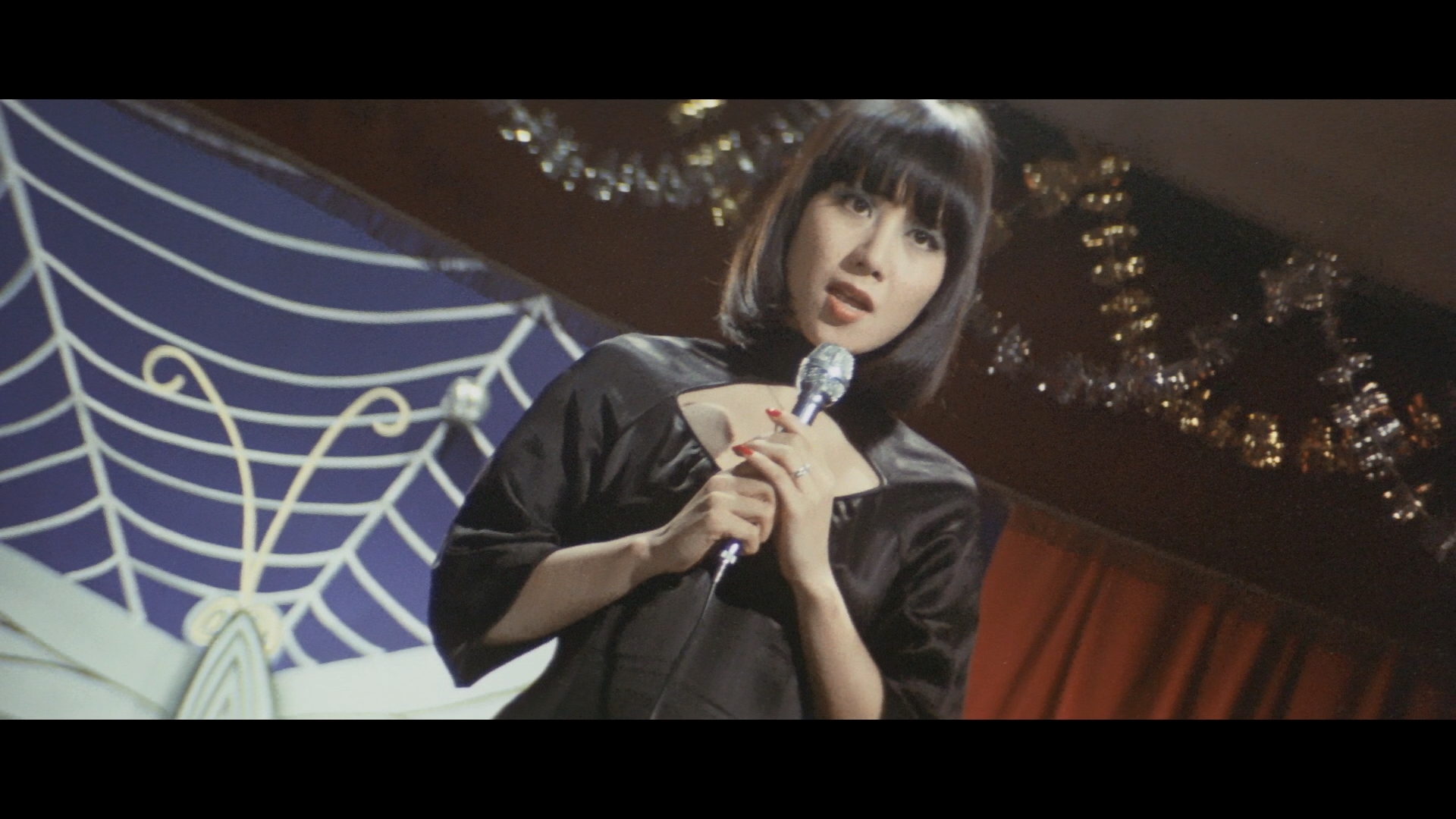
Surprising Wolf Guy is very serious in tone too. Only when the secret group planning to weaponise the hero come into the fray fully does the more openly ridiculous moment increase. Most of the plot before, even with the invisible tiger, is a pretty bleak crime story with supernatural elements. One of the most fascinating details about Wolf Guy is the character of Miki, set up as a major character who was left with syphilis and traumatised after a gang rape, a completely sympathetic figure even as she mercilessly kills her aggressors with the invisible tiger, a manifestation of her trauma emphasising her state of mind especially when the shady governmental group plan to use as it a literal weapon to assassinate political figures gruesomely, even more sympathy for her and emphasising their evil. Helped because the protagonist becomes bend on helping her get revenge, Etsuko Nami gets a lot with the character to work with,  just from her proper introduction performing a song about scorn at a strip club to the bemusement of the patrons as they rain money on her prone body laid on the stage. (And thankfully, compared to other Japanese films from the seventies, the rape scene is both done tastefully and is entirely depicted as awful, emphasising the trauma involved). It evokes, once there is the brainwashing involved, an entirely different work named Elfen Lied, at least the 2004 TV anime series, of female characters with unnatural invisible forces capable of destructive tendencies, most if not all of them traumatised towards violent behaviour by a shady, morally abhorrent group usually consisting entirely of men.

From https://www.mondo-digital.com/wolfguy4.jpg

For the first hour or so Wolf Guy's perfectly paced. Even within the limits of its less than ninety minute running time it feels properly put together. Inugami's own back story, done in the opening credits and in flashbacks as a monochrome depiction of his clan's massacre, is appropriately sombre and economic in their storytelling by visuals. The constant warnings to the viewer in text of when the next full moon is about to appear emphasises his unnatural power, a ticking clock to them, whilst throughout what begins as Chiba doing crime story narration has an appropriately pulp philosophy to it to match the more sombre tone. Clearly the film was trying to marry the more fantastical manga elements to his history of gritty action films, and the result works to its favour in mixing the two sides. This is of course an action film too. Chiba's style, involving his Japan Action Club stunt team, is not the graceful martial arts of the Chinese and Hong Kong films but a nastier, Japanese martial arts closer to brawls, flourished by quirks like Inugami using coins as projectiles, a trait of manga heroes but also a trope in a character needing a fighting style gimmick found in countless Japanese pulp stories of any form.

There's of course, when the government group is involved, a change to when Wolf Guy gets stranger. The immediately greater amounts of gore, when it was already explicit with giant claw marks appearing on victims out-of-the-blue, and in a queasy and strange moment to get Inugami on their side, torture by performing surgery on him without anaesthetic, done with grainy and very real surgery footage spliced in. It is illogical why they would act it out, but its compelling and somehow makes senses in a nonsensical way. There's even a touch of the even more overtly symbolic, literal blood rain during a wolf guy versus wolf guy that is the kind of evocative moment, the little touch, that stands out in Japanese pulp cinema and gives much more of a thrill as a result.

The problems arise with how the film ends and resolves plot details. A new plot event happens very late in the film which has the potential to work, where Inugami flees to the woodlands of Japan and meets a potential new love interest, an emotional context as she is connected to his clan's past. It does contain one of the strangest sex scenes I've seen in a while, next to a subterranean lake, where it intercuts the scene with flashbacks to him as a baby being breastfeed by his mother, the dialogue explaining her as both his love and new mother figure even liable to make Sigmund Freud roll his eyes in response. Unfortunately, there is only ten minutes left to Wolf Guy when it gets around to concluding the film. Ten minutes is enough to conclude a straight forward action film but there's been a lot of build up of more idiosyncratic and interesting details which get abruptly ended. The girl in the refrigerator phenomenon, coined in comic books to denote female characters killed merely for the sake of an emotional register from male characters, plagues the ending as does the entire discarding of Miki's subplot, the most engaging in terms of a vaguely complex, tragic plot but rushed and completely wasted. It turns into generic action when Wolf Guy was much more interesting than this even as mere pulp, and as a result it spoils the virtues found before immensely.

From http://blueprintreview.co.uk/wp-content/uploads/2017/05/wolf_guy_ee_3_758_426_81_s_c1.jpg

===
1. From the 2017 Arrow Video Blu-Ray release.

Monday, 8 February 2016

#18: Wanna-Be's (1986)

From http://www.newmoviesondvd.co.uk/wp-content/themes
/newmoviesondvd/posters/wanna-be-s-334724-poster.jpg
Director: Yasuo Hasegawa
Screenplay: Toshimichi Suzuki
Based on the manga by Toshimichi Suzuki
Voice Cast: Eriko Hara (as Miki Morita); Miki Takahashi (as Eri Kazama); Akio Nojima (as Oki Sonada); Demon Kogure (as Himself); Eiko Yamada (as Bloody Matsuki); Shozo Iizuka (as Dr. Sawada); Shuuichi Ikeda (as Tetsuma Kidou); Urara Takano (as Buster Horiguchi)

I was a devoted fan of wrestling as a kid. Still to this day I have fondness to it but, paradoxically, whilst I keep up with everything that happens I don't actually watch that many shows or matches at all. Time management is an issue alongside the fact that the main provider of wrestling, the WWE, is a rollercoaster of peaks and valleys in terms of quality that I hesitate to dive back into. This means however that I come into a one-off anime like Wanna-Be's, no matter how silly the premise is, with a great interest because of its wrestling premise. Besides, consider wrestling has had Satanic cults, men being buried alive or placed in coffins, evil Christmas trees as wrestlers and anything up to, and possibly beyond, aliens the story of Wanna-Be's, about the secret conspiracy to splice monstrous DNA into female wrestlers to test its effect, is merely a walk in the park from some of the more absurd things that have taken place in real wrestling. Stuck in the centre of this is Miki Morita and Eri Kazama, the Wanna-Be's, a rookie tag team of female wrestlers - Miki the stubbon red head, and Eri the more calmer and noble green haired partner - who have to contend both with being guinea pigs for the experiments funded by a corrupt businessman and facing the Foxy Ladies, the crooked and vicious tag team champions who destroyed their friends the Dream Angels before.

From http://www.subeimagenes.com/img/imagen4-wanna-834000.jpg
The one distinct claim to fame Wanna-Be's has is that the character designs are by Kenichi Sonoda, who'd be more well known for hits like Bubblegum Crisis (1987-1991); in fair due to this particular anime these character designs are memorable and are missed in modern anime if just for their distinctness, the feminine grace of the female characters in particular, even as tough wrestlers, and the bright colours as depicted in them and their environments appealing. It's not surprising however, while I find this anime entertaining, that this is a case of something far more fun if viewed in context of being an oddity rather than a great work, never to be held up as a lost classic but brief and incredibly silly entertainment. What's surprising about Wanna-Be's returning to it is how violent it is, especially because of how it adapts professional wrestling to anime without exaggerating it far from the real thing. If there's one legitimately good thing about the anime, it's clear someone or a few people on the production staff were clearly wrestling fans who had knowledge on it, bringing a few missed snippets of the energy of such shows when you see the hordes of fans with handmade posters cheering the teams on. Particularly when you see the Foxy Ladies, and have knowledge of real female wrestling like and know of female wrestlers like Aja Kong and Bull Nakano, it's clear fans of female wrestling, which would've been popular in Japan when this anime was made right into the nineties, were on the production. This also means that the brief wrestling matches are pretty nasty to sit through.

From http://img.animeblog.ru/data/27148/265/Wannabes_OVA_1
_of_1_ru_jp_E_Rotic_Trina_D_AnimeBlog.ru_shot_00053.jpg
Even if they are fighters  it's pretty nasty to see the heroines actually fighting the Foxy Ladies in the central scene of this short anime, with chains let alone backbreakers being used, even a fork appearing as if a character has been taken inspiration from the infamous American wrestler Abdullah the Butcher. As much of the wincing of mine I confess is due to my upbringing where, even if we live in a more progressive society where men and women are equal, we're still brought up seeing women being involved in violence as a taboo even if they are the instigators of it. In wrestling it still causes one to wince, especially when American wrestling for its attempts at making women just as strong as men is undercut by making them eye candy, has the kind of brutal matches between women that are a lot more common in Japan when such matches were taken as seriously as with those with men squaring off. Unlike other types of anime where fireballs and punches are thrown, but I never wince when a heroine is hurt during the brawl, I confess here it does hurt because the anime goes right to having character having trickles of blood come from the forehead and going for the type of moves that are done in real wrestling and, whether the participants are male or female, are meant to look nasty and down someone.

From http://www.subeimagenes.com/img/imagen10-wanna-834002.jpg
It also enforces how a female wrestling anime would be awesome to see. Anime has a few wrestling anime in existence, one so popular that its central figure Tiger Mask became a real wrestler whose lineage includes five Tiger Masks up to today. For Western fans of anime as well they might have caught up with Ultimate Muscle, aka. Kinnikuman, which I caught a few episodes of as a kid. Female wrestling stories are less common unfortunately, a shame as the legendary nature Joshi female wrestlers in Japan have is a huge one, one where incredibly dangerous and/or innovative moves were originally created by women and a serious tone existed that drastically contrasts with the glamour model template the WWE unfortunate have in the West of female wrestlers. One recent show exists called Wanna Be the Strongest in the World (2013), but by all accounts it's an anime whose existence is entirely for a limited audience whose fetish is scantily clad animated women writhing is sexualised pain as another woman applies a camel clutch or ankle lock on them. Whilst ideas of dominance and pain are a common sexual fetish, alongside women wrestling each other, it's understandable that wrestling and anime fans aren't necessarily going to like this presentation. Wanna-Be's is likely one of the only known anime about female wrestlers whether you like it or not, an irony considering its low regard.

From http://i2.ytimg.com/vi/hHG3cr-n6e0/0.jpg
The silliness of the story is another reason I like the anime too. Without spoiling it, it effectively turns into a final two-on-one brawl against a monstrous creature kept in a lab just as violent as the wrestling matches, and amongst the many things to learn from this anime, despite its minor nature, is that I come to anime as much for strange ideas like the entire of this story as I do for good stories. Wanna-Be's was as much a creation of the eighties when the Japanese economy was at its peak. Video, when it was introduced in the early eighties, needed product and like live action films so many odd anime were created back in this era that Western fans are only just learning of and placing VHS-rips of online. The amount of money in the economy allowed many peculiar creations to be animated, many I'll likely cover on the blog, as it did artistic endeavours and popular franchises.My regret with what was effectively the death of straight-to-video anime from the 2000s onwards was that, alongside the high artistic quality of many, it allowed a lot of oddities to inexplicably exist. Such absurdities that are fascinating to watch, even if they're lewd and crass, some even masterpieces, are still made today but not at the same level as when straight-to-video anime was a popular market that needed product for it. The reduction of such odd miscreants like Wanna-Be's is a sad thing worth mourning for.