Tuesday, 9 April 2019

#95: The Special Duty Combat Unit Shinesman (1996)

From https://childrenoftheburningfist.files.
wordpress.com/2011/11/index1.jpg


Director: Shinya Sadamitsu
Screenplay: Hideki Sonoda
Based on the manga by Kaimu Tachibana
Voice Cast: Daiki Nakamura as Shi Nakamura; Hekiru Shiina as Princess Hekiru Shiina; Hiroko Kasahara as Hitomi Kasahara; Kenichi Ono as Shotaro Ono/Shinesman Sepia; Kōichi Yamadera as Shogo Yamadera/Shinesman Grey; Noriko Hidaka as Riko Hidaka/Shinesman Salmon Pink; Nozomu Sasaki as Sugura Sasaki; Rica Matsumoto as Youta Matsumoto; Sho Hayami as Ryoichi Hayami/Shinesman Moss Green; Toshihiko Seki as Shujin Seki; Yasunori Matsumoto as Kosuke Matsumoto/Shinesman Red; Yoshiko Sakakibara as Kyoko Sakakibara
Viewed in English Dub

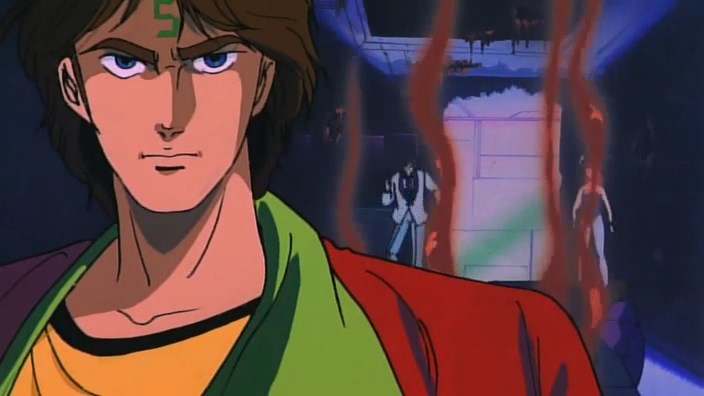
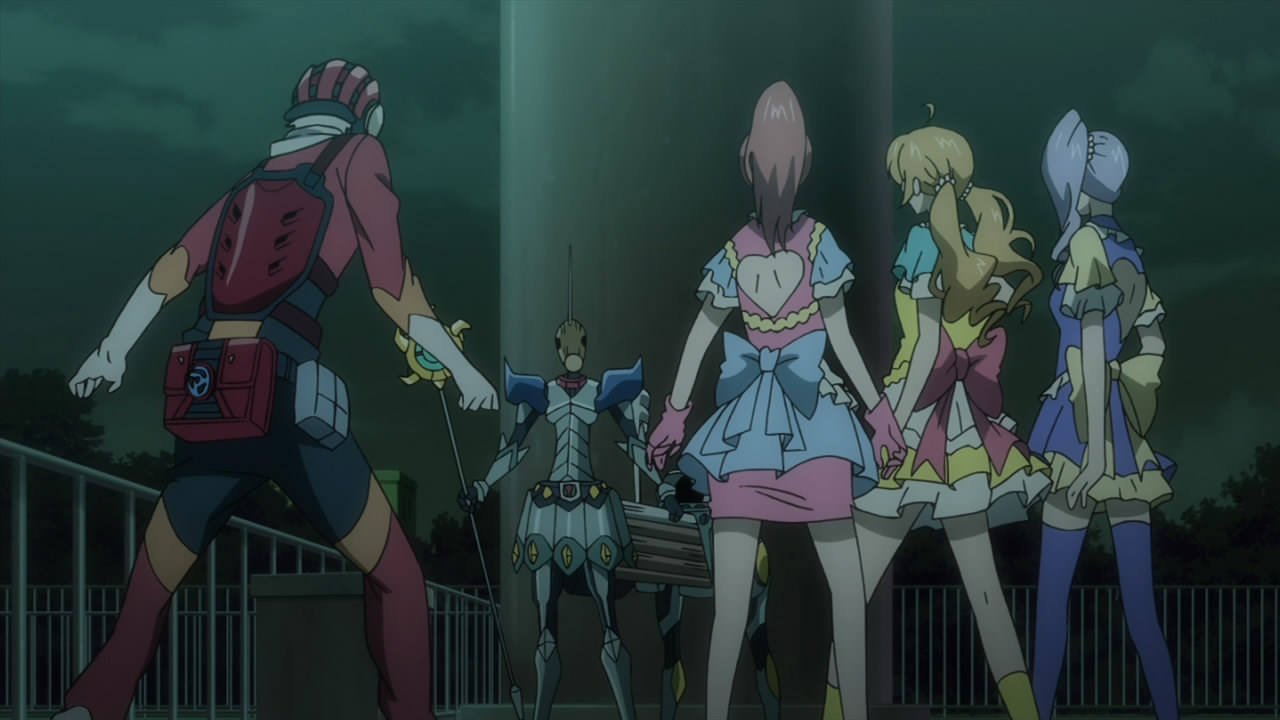
Synopsis: Kosuke Matsumoto, when he joins the Right Trading company as a paid employee, is surprised to learn that, alongside his normal salaryman responsibilities, he's also hired by the head of human resources Kyoko Sakakibara for the Shinesman project, as a super sentai team with four co-workers who don costumes and fight evil.

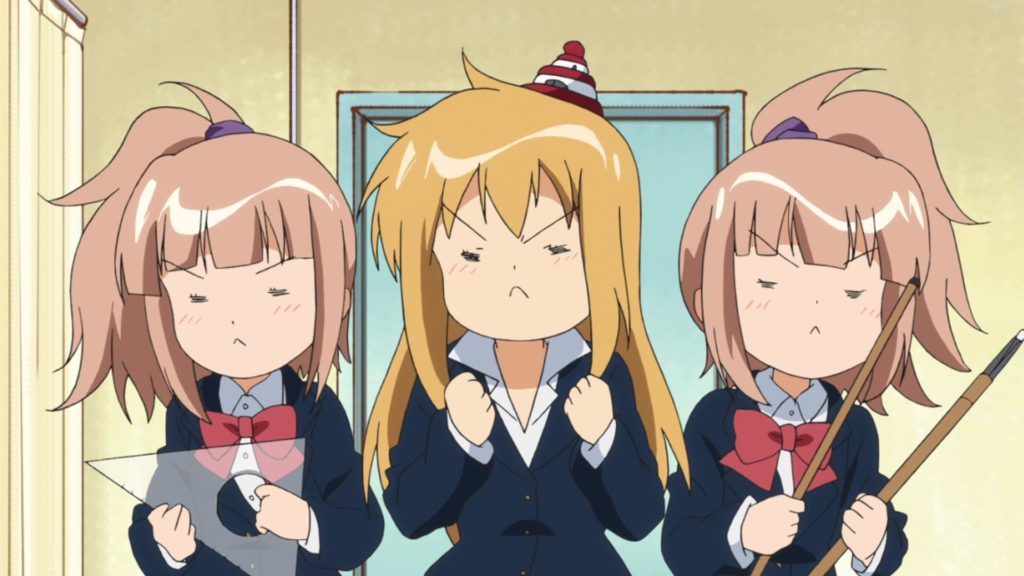
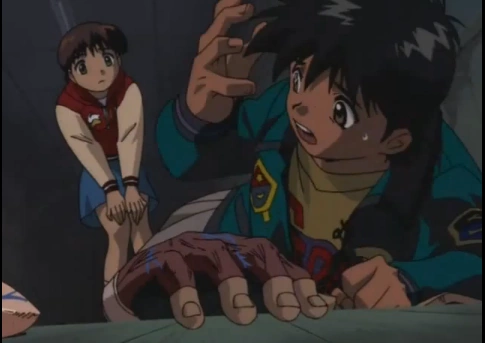
Director Shinya Sadamitsu has had some bad luck - Dragon Half (1993), a beloved piss take on high fantasy, only got two half hour episodes before it was canned, and Shinesman whilst not cancelled also only got two half hour episodes. Sadly, whilst it has its moments, Shinesman (about a corporate superhero team) suffers more from its brisk length, never taking full advantage of its premise as I'd wish. It starts off well, with the team fighting a horrible monster that was stealing/sabotaging corporate information, but sadly, the show drifts off into a simplistic tale against two aliens, posing as humans, trying to take over the world that isn't taken advantage of for its slight length.

A shame as, in the twilight years of OVAs in the late nineties, brightly coloured and so very different to modern anime in style, there's a lot here of promise and that shines through occasionally. The heroes, baring lead hero Kosuke Matsumoto in red, are fellow office staff in ill-advised colour choices even their leader, head of human resources Kyoko Sakakibara, hates, the co-workers fitting stereotypes - Riko Hidaka (Salmon Pink) is the only female member, an office girl stuck constantly getting drinks and cigarettes at the vending machine for staff when she's a lot more tougher than she looks, or Shogo Yamadera (Grey) whose passion and romantic life is entirely for his car, a Montero, not to mention the others have for costuming sepia and Moss Green. There's even a fake in-anime ad for Shinesman themed bath merchandise, where the two episodes should've gone in less than sixty minutes in terms of playing up to this absurd premise, alongside the fact that their business themed weapons (like the business card cutter) are bemoaned as usually being useless.

It's all reminiscent of Samurai Flamenco (2013-14) in all honesty, where this type of hero was taken on a much more serious and expansive version with the humorous contrast between the heroics and banal life even more creative and fleshed out. The length didn't stop Dragon Half cramming enough jokes (and a Beethoven piece with new lyrics about lunch over the end credits) to thus become an iconic work even in the 2010s, but Shinesman decided to try to have a story when there wasn't enough time to without feeling paltry. A shame as, as part of the tone, the villains are also set up with ripe comic potential - posing as business men for another corporation, an alien overload and his assistant are trying to take over through corporate tactics. Unfortunately, in the biggest plot piece, the overlord's sister has appeared and presumes the Earth is like the cartoon recordings sent back, emphasising that whilst its broad and wooden at times, the English dub was regarded well for good reason for how it played up Shinesman's moments of comic goodness, particularly with playing up how these villains, stuck as unthreatening figures in truth, have to get around their own banal problems.

From https://i.ytimg.com/vi/dSZDimSu6IQ/hqdefault.jpg

It's a shame that, to pinpoint where the two episodes falter, the second episode tries to focus on plot knowing all too well there's not enough time to care for it in investment. Episode 2, where the villains try to take over a fairground exhibition, goes for a conventional story with jokes, weaving plot threads left unattended to like the minion's sister being secretly part of the hero's side, an alien herself trying to snap him out of being brainwashed, or the sister being romantically connected to the hero. Dragon Half managed to survive, and even get a Discotek re-release in the 2010s, because in spite of its stunted length its legacy was managing to pull off so much with what was there to stand out. Shinesman in hindsight should've followed this same template, and it's a wise reference to make as, not only are they from the same director, but Dragon Half's reputation is enough that the manga from 1988 was finally being released in the West from 2017.

Shinesman instead belongs to that period especially in the nineties of OVAs which were made as manga tie-ins, with the problem that without the source material being released in the West, they were merely references, like apocrypha for a sacred anime text. A shame as, considering Samurai Flamenco promised and executed it perfectly, this idea of combining superheroes ordinary lives had legs; hell, even Excel Saga's 1999 TV anime has a sub plot about a corporate superhero team too, the idea of marketable heroes a joke that is practically money on the table for anyone to do a story upon. What little of Shinesman got to this, like the Shinesman soap and towel set, showed what we should've gotten.

Even more interesting, and barely covered, is knowing that this was a shoujo manga, meaning that its target audience was initially for women, an interesting detail as, whilst the men in the hero and villain sides are all very handsome, even the older father with a daughter who is Shinesman Sepia, there's a sense here of demonstrating just how diverse a genre tag like "shoujo" actually is as would be its mirror Seinen, targeted to young men. It offers a nice bow to know that a great premise like this has no defined bias for its target audience.


From http://3.bp.blogspot.com/-b0pqnF-T0iY/UxaMDqynPLI/
AAAAAAAADoc/JGhSwPdlAJw/s1600/Shinesman+1.jpg

Saturday, 6 April 2019

#94: Ai City (1986)

From https://m.media-amazon.com/images/M/MV5BZjgxMDM2NjQtZDY2Zi00Nj
UzLWE0MGMtYTQyOGQ3ZTdkZTQ0XkEyXkFqcGdeQXVyMTA1OTEwNjE@._V1_.jpg


Director: Kōichi Mashimo
Screenplay: Hideki Sonoda
Based on the manga by SYUFO (Shuuhou Itahashi)
Voice Cast: Hirotaka Suzuoki as Kei; Yuki Ueda as Ai; Mami Koyama as K2; Banjou Ginga as Ii; Ichirō Nagai as Rai Ro Chin; Issei Futamata as Ryan; Jouji Yanami as Ti; Kenyuu Horiuchi as Mister J; Kiyoshi Kobayashi as Kuu Ragua Lee; Nachi Nozawa as Raiden; Seiko Nakano as S; Takeshi Watabe as Aroi
A Cinema of the Abstract Crossover

Fancy something strange and (frankly) batshit from the eighties? Covered HERE on my other blog, full spoilers but not in the slightest capturing the experience of viewing the directorial work of studio Bee Train's founder Kōichi Mashimo, Ai City is what happens when in the midst of a craze for psychic and ESP stories someone decided to make the eventual anime which is as mad as a box of frogs. No way near as difficult as I have heard it be, gorgeous to look at certainly, but I'm not going to suggest it's anything but incomprehensible at times.


From https://cdn.animenewsnetwork.com/thumbnails
/max1000x1500/cms/feature/106042/image08.jpg

Tuesday, 2 April 2019

#93: Samurai Flamenco (2013-14)

From https://static.tvtropes.org/pmwiki/pub/images/
samurai_flamenco_1705.jpg


Director: Takahiro Ōmori
Screenplay: Hideyuki Kurata
Voice Cast: Tomokazu Sugita as Hidenori Goto; Toshiki Masuda as Masayoshi Hazama/Samurai Flamenco; Chie Nakamura as Sumi Ishihara; Erii Yamazaki as Moe Morita; Haruhisa Suzuki as Haiji Sawada; Haruka Tomatsu as Mari Maya; Jūrōta Kosugi as Joji Kaname; Kenn as Anji Kuroki; Kōji Ishii as Shintarō F. Okuzaki; M.A.O as Mizuki Misawa; Satoshi Mikami as Akira Konno
Viewed in Japanese with English Subtitles

Synopsis: By day, Masayoshi Hazama is a model, by night (fixated since a child on superheroes) a wannabe crime fighter helping to fight even against littering. Thankfully with the help of Hidenori Goto, a policeman he bonds with after a chance encounter, his work starts to become more meaningful. Starting with the idol singer Haruka Tomatsu wanting to join in however, the story of his secret identity as Samurai Flamenco is going to get a life that is more elaborate, threatening and strange as he becomes a media sensation.

Spoiler Friendly Review
Samurai Flamenco is a gem - I'm surprised to learn it has been divisive for many. One detail that influenced this opinion, the notorious struggles the production had on a low budget and a deadline to animate each episode, leading to some notorious gaffs on the broadcast version, is just the unfortunate nature of televised anime, someone clearly cleaned up for the Blu Ray version I saw. The other issue is that Samurai Flamenco wrong foots its viewer, abruptly doing a hairpin turn from its modest, amateur vigilante beginning into something over-the-top and changing the reality of the world depicted onscreen.

I know where, in episode seven to be precise, the series "jumped the shark" for many, but from the beginning Samurai Flamenco is a tribute/meta commentary/pastiche of tokusatsu storytelling, in which even the West will recognise the imagery of a colour coordinated team that appears in various forms through the Power Rangers, a series adapted from the Japanese franchise Super Sentai and still chugging along in Westernised versions since the nineties. As a result, the idea of a character like Samurai Flamenco, and the various ones that pop up, can be grasped and even then, with some noticable differences from the American superhero, even that get briefly referenced in a character, and exists within the concept that, for all the times Flamenco gallops proudly through every clichés and plot twist it can sometimes pull out of its backside, it's also playing with the trope of imagining these heroes as regular folks and the world around them as a banal one, the titular Samurai Flamenco, Masayoshi Hazama, still having to work  as a model alongside the growing pains of his awkward first attempts to stop crime. He doesn't even begin the series with fighting abilities and how he finally does is as much because he ended up with a crazed showboat, posing as him, as his mentor.

Screenwriter Hideyuki Kurata is known for some hyper imaginative work; I know him warmly as the premise creator and writer on Read or Die (2001), an inspired smash hit which combined superhero action based around unlikely (real) historical figures for such a work like entomologist Jean Henri Fabre and aviation pioneer Otto Lilienthal. It's not a surprise, in lieu of this, he'd go for this series' whiplash inducing shifts and ambition.

Thankfully, director Takahiro Ōmori was hired too, the man who made Baccano! (2007) - a show difficult to reveal a lot of too in case of spoilers, but an ultraviolent  gangster farce in 1920s America with a non-liner plot structure for most its length - perfect for keeping things together. And he's helmed other work like Princess Jellyfish (2010), a complete tonal shift as a comedy about female nerds and a young man who dresses as a woman who befriends them, so he's as capable of dealing with the grounded, everyday banality Samurai Flamenco has in character building and for comedy.  
He's turning into a director of an underrated virtue, especially as he comes off in a work like this as an all-purpose figure able to work in any context. The production crew in general, in spite of the known issues with getting episodes completed, were also clearly inspired with a desire to make a great work, right down to the right soft jazz piece in the score to contrast the abrupt and bombastic sentai theme tune to proudly appears halfway though, everyone involved humanising the material. The series, as a result, is absolutely worth tracking down; any further detail would be spoiling it for the reader of this review.

From https://caraniel.files.wordpress.com/2013/11/commie-samurai
-flamenco-06-a38f6e35-mkv_snapshot_19-54_2013-11-16_13-00-19.jpg

Spoiler Heavy Review
Not bad for a series where, when episodes even introduces actual monsters after just ordinary hoodlums, Samurai Flamenco goes into full blown villain of the week twists with breakneck plot twists, but also contrasting it to ordinary life in a Japanese city. Even in a series where Masayoshi Hazama later encounters God, effectively so in the form of the voice of the galaxy who points out (with a literal shelf of Samurai Flamenco DVDS in a metaphysical store) his life as a hero is itself a story to be viewed by other dimensions, the unpredictability is contrasted by the bureaucracy of dealing with this even when they celebrate the heroes like Samurai Flamenco. Even the conspiracy plot point of government corruption is skewered in what can only be described as poll powered super armour. That sense of the banality behind the story is a risk, alongside having episodes which then switch between actual deaths and injury taking place against humour, but it works as it imagines how, even when a monster is vanquished, the police still have to do the paperwork. Where the final plot line, after literally invoking reality itself, is based on our hero facing the idea of love for himself and others to fight another figure.

And its kept together because the characters in the centre of it all are sincere and deep, potential one joke characters having newer layers to them as the series progresses with the advantage that, playing off the averageness of the world in spite of the plots, they have ordinary internal lives and all the emotionally baggage that comes with it, just in the midst of dealing with crazy (frankly silly) monsters.

Alongside Masayoshi is his friend and grumpy straight man Hidenori Goto, not only an implied homoeroticism played upon throughout, but with the added fact they are utterly lovable figures, Goto as a cop having his own right plot trajectory, both where his law enforcement changes depending on the circumstances of heroes and monsters appearing, alongside a huge subplot twist about his girlfriend and his mobile phone that turns Samurai Flamenco into even psychological drama. They're followed in tow by various great side characters - Sumi Ishihara, Masayoshi's strict but ultimately caring female manager, Joji Kaname, his mentor and eventually revealled as the leader of the Samurai Sentai Flamenger, a group of sentai heroes who (introduced halfway through) could've been too many additions weren't it the fact they all have fascinating aspects to them, from the stereotypical hot blooded anime lead if he was now nearing his thrities, and the open animosity between the sole female memeber and Kaname's wife visibly from a previous adulterous relationship. Even the Q of this series, Jun Harazuka, is working in stationary, basing Samurai Flamenco's tech on office supplies.

And then of course there is my favourite characters Mineral Miracle Muse, an idol trio who starts with main member Mari Maya, growing up with magical girls, deciding to become one by way of a magical wand/cattle prod/spike mallet hybrid and kicking men in the testicles a lot, eventually roping in Mizuki Misawa (serious minded) and Moe Morita (shy, explicitly romantically attracted to Mari). Their plot trajectory, even when they are sidelined for a chapter, are a great example of how the series in general succeeds; immediate jokes about them subverting magical girl tropes into violet interpretations, alongside the explicit yuri references and Mari's uniform fetish, give way to Mari's own existential crisis, some of the darkest material in the show, and the complex relationship between the three women that, in them being just as complex and diverse, keeps the viewer on their toes.

The subversion of the genre tropes allows Samurai Flamenco to get away with its whiplash inducing plot threads, a fleshed out world with ordinary characters that merely exist in this particular realm. It also, in among ridiculous villains who look like children's show rejects, a lot of serious moments and questions made of the tokusatsu genre itself. What it means to be a hero and fight for good, enhanced by the fact that not only is there real deaths, and even torture and psychological damage, but that two of the main villains throughout were even influenced by these heroes, one from growing up with sentai shows wanting to instead become a villain, the other inspired by Samurai Flamenco himself to become his ultimate nemesis. Even the humorous aspects of the jokes have weight to them, an early episode where a ransom being made on the internet to unmask Flamenco leads to one night becoming a nightmare for him, another in the From Beyond chapter, about such an evil group, eventually leading to so many monster fights in the metropolis that everyone becomes bored and apathetic.

As a result, I loved the series, an utter spectacle which was cleverly written and with a sense of its hecticness deliberately used to keep it being inventive and never slacking like many anime series, especially in their middle chapters, can get. Major plot threads in this series get finished in one episode in a way that's almost hilarious, and yet I never dismissed anything throughout Samurai Flamenco as anything but inspired.  


From https://caraniel.files.wordpress.com/2013/11/horriblesubs-samurai
-flamenco-08-720p-mkv_snapshot_13-10_2013-11-30_14-41-48.jpg

Wednesday, 27 March 2019

#92: School Days (2007)

From https://pics.filmaffinity.com/sukuru_deizu_
school_days_tv_series-259854327-large.jpg


Director: Keitaro Motonaga
Screenplay: Makoto Uezu
Based on the adult visual novel videogame by 0verflow
Voice Cast: Daisuke Hirakawa as Makoto Ito; Shiho Kawaragi as Sekai Saionji; Tae Okajima as Kotonoha Katsura; Chiaki Takahashi as Nanami Kanroji; Haruka Nagami as Otome Kato; Keiko Imoto as Setsuna Kiyoura; Megu Ashiro as Kokoro Katsura; Ryouko Tanaka as Hikari Kuroda; Yoshiaki Matsumoto as Taisuke Sawanaga
Viewed in Japanese with English Subtitles

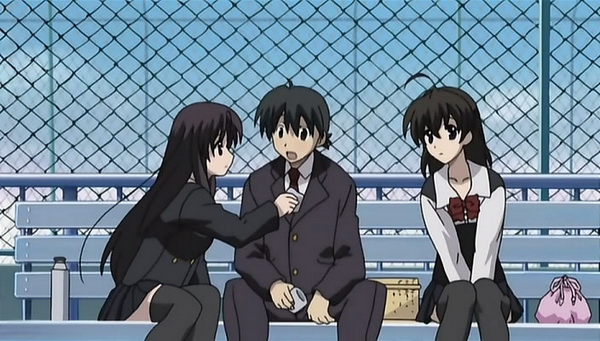
Synopsis: In high school, Makoto Ito is encouraged by his female friend Sekai Saionji to start dating Kotonoha Katsura, a timid girl in another class. Sekai however has feelings for him herself, and Makoto is not your usual male anime protagonist when he starts getting bored with courting Kotonoha.

[FULL SPOILERS throughout; whilst a warning will be added to where they are, this is an immediate warning you don't mind knowing the full details of the plot.]

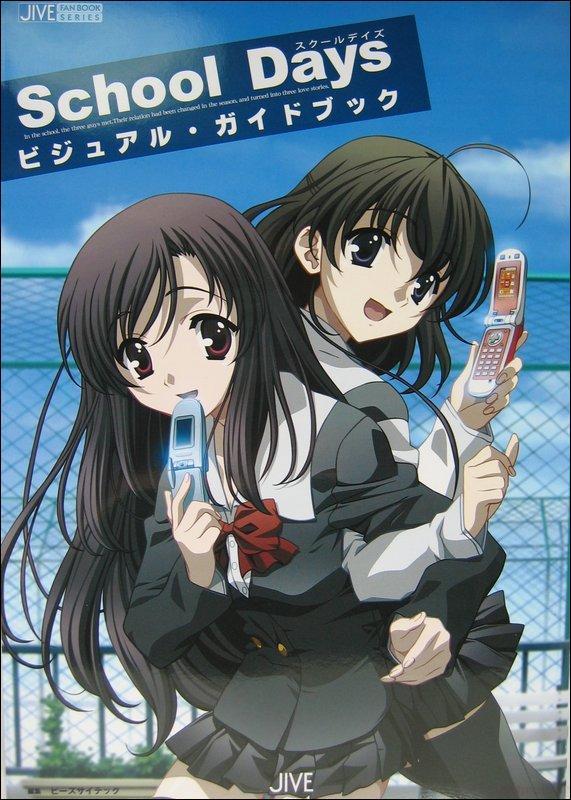
School Days is notorious for a good reason, though appearances for this anime series can be deceptive. Its original based an adult visual novel published in 2005. Visual novels are a popular medium especially in manga and anime culture, interactive novels which are popular in Japan that have multiple narrative paths and endings, and are entirely played by multiple choices (like a choose-your-own adventure book) inter-spliced with animation or visuals. "Adult" as, a sub genre in visual novels known as "eroge" (erotic games), the original work was pornographic with explicit sex scenes (barring Japanese censorship laws). The series was in lieu of a multimedia bonanza after the original work did very well.

The surprising thing with School Days the animated adaptation is that, with alarm bells ringing due to the series' erotic origins and its initial tone in the first three episodes, it changes into a dark chimera eventually of interest. Makoto Uezu is a prominent screenwriter, and to my absolute surprise, director Keitaro Motonaga also helmed Malice@Doll (2000), a work that I hold in high regard, though with the caveat that it's an odd creation as an early computer animated body horror sci-fi work which is truly peculiar; I viewed that one screenwriter (and premise creator) Chiaki J. Konaka's work more, but it was nice to see Motonaga again, though barring co-directing the Rayearth OVAs with Toshiki Hirano in 1997, he's not got a lot in his career that stands out and a bit of porn up until helming the recent Digimon Adventure tri. films, which create a large single work out of six films between 2015-2018, which is definitely a BIG deal for him alongside working in the background on a load of other prominent work.

The premise itself could've easily descended in something bad on just the synopsis though, just a de-eroticised melodrama if you never heard of the game. School Days, with its conventional (stereotypical) TV look of bright colours and conventional characters designs are matched by a stereotypically bland male protagonist and many close-ups of female characters' figures, for more lurid and questionable in terms of a problematic male gaze and weirder because these are characters still in school.

Kotonoha, the girl he is initially pushed into dating by his tomboy female friend Sekai, is depicted as a voluptuous big eyed girl who is quiet and shy around men, all whilst Sekai herself spends her time arguing with him through exchanged notes in class. So for, it's a stereotype of anime plotting that also is part of the "harem" sub-genre. Harem, originally a term from ancient Muslim culture of a separate part of a household for wives, concubines, and female servants, as well as eventually turning into a completely sexual term for a group of women with one male lover, is its own anime/manga sub-genre which usually denotes one male surrounded by multiple female suitors; there is the "reverse harem", one woman and multiple male suitors, and LGBT variations, but harem stories that are the most famous (and divisive) include the Love Hina franchise where its one male, and many potential female suitors. Whatever one's opinion on the subject - whether polygamy (or polyandry) are morally acceptable or even practical, whether harem stories can be great or fall (especially with those with multiple female suitors) into crass or just badly written stories - School Days thankfully changes its tune soon into itself when the tale it sets up immediately goes sour.

[MAJOR Spoiler Warnings here]

And by sour, as in our male protagonist, eventually turning out to be a chronic womanizer with an ease in cheating on multiple girls, is murdered by one character, whilst another is disembowel. The diagram for the beginning to the ending, from the initial romance with light comedy at the beginning to where his head is severed and kept as a possession for a heartbroken suitor, is as jarring a tonal shift without a lot of context to how this happened.

[MAJOR Spoilers End]

Notoriously, and where the fascinating reward in School Days is found, even if it feels like being in a meat grinder for all twelve of its episodes, the original visual novel when it came to the "bad endings" got violent. Visual novels, due to their nature, have "good endings" and "bad endings" like some videogames, where the choices made in options will dictate where the story will progress.  So an inspired decision was clearly made to make a show based on the worst type of ending whilst, on purpose or with unintentionally greater weight, to turn this property into an anti-harem story.

From https://canime.files.wordpress.com/2010/01/school-days702.jpg

Mainly because it shows the worst in its cast, as our male lead Makoto, as mentioned, is a womanzier, his friend Sekai, despite pushing him to another girl, has a crush on him, and the school (especially the girls) is full of bullies and individuals who think by their hormones or are cruel. The only innocent characters are Kotonoha, the initial romantic interest, and arguably a female character named Otome, who likes Makoto and has sex with him even when he's dating others, but is fleshed out as being more complicated in this dicey predicament, as is Setsuna, Sekai's own diminutive female friend also revealed to have a crush on him, and does some problematic things, but has the issue that about to leave for France, as a plot thread reveals, she's concerned for her friend Sekai's well being when she is no longer there. No one else, however, is above whale manure in some of the things they do; even Sekai, whilst the conflicted main female character with Kotonoha, is willingly dragged into a romance that is a disaster from the get-go.  Even Makoto's horn dog but wholesome male friend Taisuke eventually does something in a later episode which is horrifying.

The worst thing, and why for how ridiculous and way too cruel the story goes School Days actually succeeds, is that it's not morally black and white, but with everyone including Makoto himself being confused hormone driven teenagers. It's definitely gotten a reaction for viewers who expected clichés; the comments section of Crunchyroll added to my viewing experience, a curious tale in itself of viewers wanting to kill Makoto, slap everyone else and vile anguish whilst those in the know, who say the series already, teased the horrifying climax of it all. I myself was aware of the ending, that Makoto would eventually be shown as a womanzier, and that the comeuppance was a nasty one, but not only did I not know the full extent of said ending, but my knowledge didn't ruin the show but arguably improved it. Especially as it soothed over the awkward first three episodes, knowing where it went brought a sense of tragic finality to the proceedings. It added to the idea that a character like Makoto is not explicitly evil, even when near the end of the series has a foursome with three female classmates when he's already sleeping around and betraying multiple girlfriends, but something worse in his banality. Far more disturbing, even if exaggerated, is that he's just an apathetic and dumb young man who thinks with his smaller head, and has little wisdom of emotions, more honest as a moral ground for the series to take as a result even if it's more agonising for a viewer to experience.

And whilst their all stereotypes, that helps because of this attitude; Sekai, complicating things as she still helps him to date Kotonoha, has a strange relationship including practice foreplay sessions which are just as problematic as they should be to a viewer, naturally leading to complications. Setsuna, Sekai's friend, has a crush on Makoto too, as does Otome, all whilst their female peers can be vindictive and backstabbing, all feeling less like sexist depictions but like many teenagers misguided behaviour. It's an attempt at least at complexity in spite of itself, even a character like Kotonoha in that her hesitance in a physical relationship, pushing Makoto away, is due to having been teased for her figure at a young age alongside a sense, taking up knitting and devoted to her younger sister, that the character's meant for a viewer's perspective to have been a meek figure, the shy girl you cheer when she does muster a bravery to be bolder in her romance only for Makoto to be an oblivious cheater who dithers. Add to this that her female peers in her class bully her, a mean streak made worse when they will even film other female students secretly in a "break room" at the school festival to humiliate them publically, and Kotonoha's turn in the end to madness, glazed look looking at her phone on the street, is the real tragedy of it all.

The effect of this tragedy, the ending itself, gained School Days its notoriety as, tragically, it had the poor timing for the final episode to be about to be aired just when a real life murder took place. On September 18th 2007, a sixteen year old murdered her father, a 45-year-old police sergeant in the traffic division at Minami Police Station in Kyoto Prefecture, with an axe. Another series, part of the Higurashi: When They Cry franchise, was also affected by this in terms of its screening on television, but how TV Kanagawa dealt with School Days transferred from a legitimate tragedy, in terms of any murder ever taking place and the gristly nature of this particular one, to an accidental internet meme. Instead of the episode, they showed half an hour of scenery, including a lake with a Norwegian ferry on it, showed with Air on a G String playing over the images. "Nice Boat", as the meme came to be, came from a 4chan user commenting on the replacement material, and it became popular in Japan; whilst the creators of the game 0verflow arranged two screenings of the edited finale at the Akihabara 3D Theater on September 27, the meme even found its way into the Melancholy of Suzumiya Haruhi-chan, a straight-to-net spin-off of The Melancholy of Haruhi Suzumiya franchise, when the Kadokawa Pictures's YouTube channel uploaded a short montage of sailboats instead of the previously scheduled premiere of that ONA.

Even without this real life censorship which overrode its infamy, even the edited version doesn't detract the results; built up to over painful eleven episodes of miscommunication, cheating and broken emotions, the ending no matter how over-the-top it ends up, actually ending up on a sailboat in some perverse irony in the final shot, does have a weight to it from the tragic circumstances that lead to it. In fact, the idea that it's both an antidote to the problematic show trope of the harem anime as well as another example proves an advantage. The look of the show helps with this, the stereotypical character designs with big eyes emphasising the darker moments in vast contrast, and the leering fan service thankfully gives way to frankness about sex even in the dialogue. The series does, to lighten the tone and offer levity between the cesspool, have humour, reaching its crescendo (before departing) at the school festival, where the mascots of the classes jostle for crowds; once it goes, so does the series manage to get even darker than before when the gloves come off completely.

In fact, the entire aesthetic is perfect - "School Days" a perfect title that sounds innocuous, but develops a weight when it's the last episode title. The light pop songs used, even the fact the end credits are centred on a mobile phone, an object which plays such an important part in the drama as a catalyst for drama (such as blocking someone off one or secretly conversing to others with) is absolutely appropriate. The result, aware of how it bruised and batted me around through the twelve episodes, was unique, like a necessary poison and incredible idiosyncratic in lieu of what was purposeful or accidental creativity. So much so that it's accidental notoriety, whilst important for the series to be known in the West, only released in the West by Discotek for US DVD release in 2014, seems like the least interest detail.


From http://behind-the.nihonreview.com/wordpress
/wp-content/uploads/2007/09/kiyoura3_th.jpg

Sunday, 10 March 2019

#91: Plastic Neesan (2011-2012)

From https://yams.akamaized.net/Assets/93/345/l_p0020534593.JPG


Aka. +Tic Elder Sister
Director: Tsutomu Mizushima
Screenplay: Tsutomu Mizushima
Based on the manga by Cha Kurii
Voice Cast: Mari Kanou as Iroe "Neesan" Genma, Marina Inoue as Makina "Makimaki" Sakamazaki, Yumi Uchiyama as Hazuki "Okappa" Okamoto
Viewed in Japanese with English Subtitles
A Cinema of the Abstract Crossover

Synopsis: Neesan, with her friends Makimaki and Okappa, sets up a model making club at their high school; instead of actually making models, they spend their time over twelve episodes, two minutes each, exposing their hatreds for each other, encountering weird students, and learning of the mating dance of a female gorilla.

Sometimes there's an anime worthy of being covered on my other blog, Cinema of the Abstract, and this curious Original Net Anime (ONA) is pretty infamous at least if the Gifs of the show in the web are anything to go by.

The resulting review contemplates the strange paradox of how an anime can be pretty normal the more deliberately weird it tries to be, whilst trying to probe the brain of its director/screenwriter Tsutomu Mizushima. All at a click at a button HERE.


From https://anime-archive.com/wp-content/uploads/2017
07/87fc4e8c17c398afae5713ce920ea6c8-1024x576.jpg

Tuesday, 5 March 2019

#90: Genius Party Beyond (2008)


Directors: Various
Screenplay: Various
Voice Cast: Arata Furuta, Akiko Suzuki, Shôko Takada, Urara Takano
Viewed in Japanese with English Subtitles.

From http://1.bp.blogspot.com/-_A1oJF-NuzQ/VJyH
Kwlt_YI/AAAAAAAAPkU/h8B_mUl1Hg/s1600/Sem%2Bt%C3%ADtulo.jpg

Gala (Director: Mahiro Maeda)
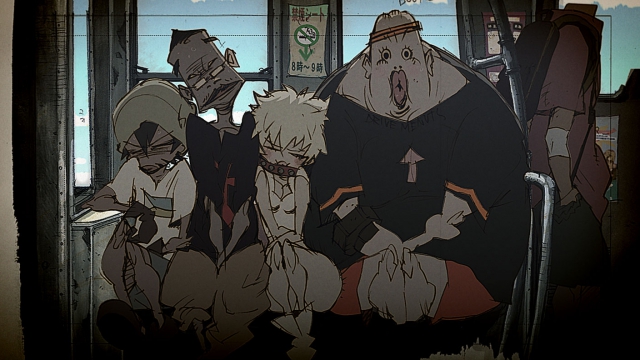
From Genius Party (2007) to Genius Party Beyond, a sequel to Studio 4°C's anthology film, and from the beginning I'll confess this is a much weaker work as a sequel than the original prequel. Gala, by Mahiro Maeda, does thankfully start off the anthology well; what feels like a generic fantasy world tale, in which a giant meteorite lands in a high fantasy period Japan where there's a general male protagonist, gets more interesting when he and his allies (a young woman and an anthropomorphic cat) are hired to be magical musicians riding on giant instruments in the sky and enchanting musical compositions to help soothe the meteorite. Descending into everyone bringing their instruments out into a mass orchestra, it becomes a full blown and beautiful cacophony of music and visuals, the closest to a lot of the motifs in the original Genius Party as a result in aesthetic exhaustion.

From https://jfdb.jp/data/photo/movie/7a/fe/da/24/
af641bb0b6c9bd2260b652deb4097151_640.jpg

Moondrive (Director: Kazuto Nakazawa)
Moondrive's director Kazuto Nakazawa immediately stands out as the man who directed the animated segment of Kill Bill Vol. 1 (2003), one of the most striking moments for anime's recognition in Western culture in the early 2000s. Moondrive looks like the work of the same director only exaggerated even further, a crude farce, set on the moon in the future, about a motley group of thieves whose attempts to find treasure are constantly undercut by pitfalls (no money, losing money in a pool game, the transport not having enough fuel). It's a fun, misanthropic romp, with a distinct visual style although it does have a tasteless running gag which will immediately put many off where one of the two female members, a buxom blonde, is constantly bartered for sexual favours for people by the headstrong male leader who she calls masters. It's a joke, even if one has her audible being a dominatrix for one "client's" masochistic tendencies, which hasn't aged well at all in just a decade.

From http://1.bp.blogspot.com/_t6rfIoGCvjs/T
FwzLawVlNI/AAAAAAAAA2M/kY_tLQZ-Cf4/s1600/wanwa.jpg

Wanwa the Doggy (Director: Shinya Ohira)
Wanwa the Doggy by is definitely the most surreal of the five segments in this film, the fantasies of a young boy as his mother is in labour with a new sibling played out as a nightmarish journey against trolls who've kidnapped her. It evokes Masaki Yuasa's segment from the first Genius Party, notions of death and strange sights from an infant's perspective. Shinya Ohira's short takes a huge risk by making the segment look like a child's drawing in motion, sharp crude images and blocks of colour, It's a style which can became a little bit of an ugly and difficult to grasp in its final version. I have to defend the ambition even if doesn't completely work, although honestly the issue is just that it could've just had a little more pacing in structure to fully work. If that'd been the case, I'd be fully onboard with this ambition being an actual success because it befits what the premise is.

Noticeably with the first three segments, sadly not carried out in the last two, there's always an epilogue which feel meta or pull the rug under the viewer, going on longer than you'd presume in each short but with purpose. I won't spoil Gala's barring it being a circle of life that enters our world, but Moonride's reveals itself as having been a musical production on a red curtained stage with an orchestra, and Wanwa... does soften its flaws when a troll is revealed to be a man in a suit, sad to have not been in the dream we saw, only to be thankful that he got some screen time at the end.

From https://m.media-amazon.com/images/M/MV5BNjY5YWFlOG
MtZTBlNC00OWVhLTkxMWMtNWZiMWM2NDM2MzI5XkEyXkFqcGdeQXVyNTAyODkwOQ@@._V1_.jpg

Toujin Kit (Director: Tatsuyuki Tanaka)
Toujin Kit by Tatsuyuki Tanaka feels unlike the other segments, the most conventionally structure and aesthetically looking but also arguably the best, entering a dystopian world of police enforcers who are literal brains in jars on robot bodies and washed out grey industrial environments are all there is to see. The story simply follows a young woman illegally breeding multi-dimensional organisms within plush toys, giving the toys life as a result, only for law enforcement to crack down on her. Whether they are right to, believing the organisms will damage the dimensional form itself if they don't stop her, or it's a metaphor for the death of imagination is entirely for the viewer's discretion. The biggest surprise is that, expecting a big crescendo, you get an abrupt and bleak ending instead, which argues Toujin Kit is the best segment just for catching you off-guard completely next to everyone else.

From https://i.ytimg.com/vi/tkUukE3xBZo/maxresdefault.jpg

Dimension Bomb (Director: Koji Morimoto)
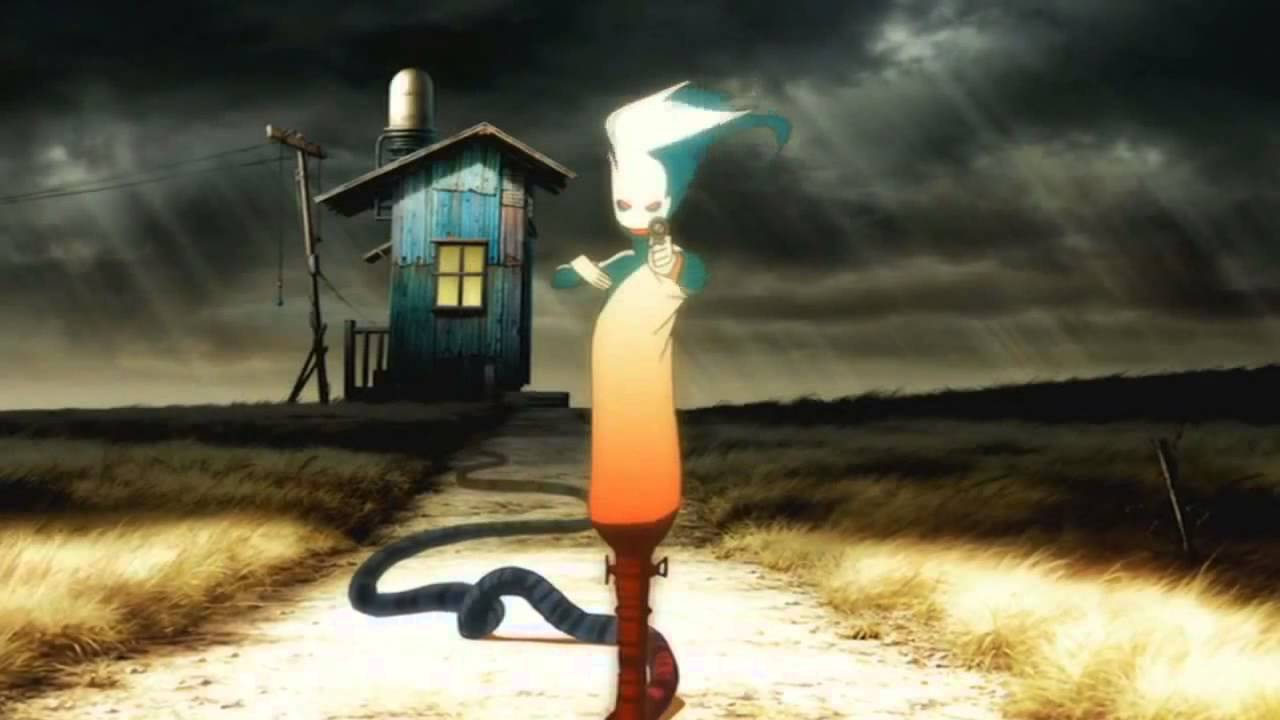
Sadly Dimension Bomb ends the short anthology on a flat note, more disappointed as its directed by Koji Morimoto, co-founder of Studio 4°C itself and a very good director himself known for stylistic innovation in his work. I'll probably warm to his segment, even understand what exactly it is about, in which you have a slightly spacey but intuitive young woman with powers and a demonic alien being she bonds with, but the immediate problem is that the short's a confusing if beautiful looking creation. Knowing how unconventional Morimoto can be, like with the short Noiseman Sound Insect (1997), the problem's entirely that of being merely confusing than compellingly vague, as well as being aesthetically beautiful in a more conventional way compared to some of his bolder experiments which stood out more.

Ultimately, Genius Party had far more rewarding pieces - as of this review, even Shinichirō Watanabe's Baby Blue (which I unfairly dismissed at first) became so much more stronger and good when thought about. In comparison, Genius Party Beyond feels like the runt of the little, charming but missing a great short in itself. As someone more sympathetic to anthologies than many, I'll warm up to it over time, but its definitely a weaker creation.

Friday, 1 March 2019

#89: Ghost Stories (2000-2001)

From https://images-na.ssl-images-amazon.com/
images/I/61byuSfXZxL._SY445_.jpg


Director: Noriyuki Abe
Screenplay: Hiroshi Hashimoto
Based on the book series by Toru Tsunemitsu
Voice Cast: Tomoko Kawakami as Satsuki Miyanoshita; Kumi Sakuma as Momoko Koigakubo; Takako Honda by Hajime Aoyama; Makoto Tsumura as Leo Kakinoki; Kurumi Mamiya as Keiichiro Miyanoshita; Ryusei Nakao as Amanojaku
Viewed in the Japanese language version with subtitles

Synopsis: In an idyllic Japanese town, Satsuki Miyanoshita moves into her new home with her father and younger brother Keiichiro. Her mother, passing away at a young age, was a gifted exorcist of ghosts and demons who captured them in various parts of the town as Satsuki learns through an old notebook she finds in an old schoolhouse. Unfortunately, as construction begins around said town, these beings start to escape and she has to take over her mother's task; all with the assistance of the cocky neighbour Hajime Aoyama, nerdy ghost enthusiast Leo Kakinoki, the meek older girl Momoko Koigakubo, and a demon named Amanojaku who has ended up possessing the body of her pet cat.

It took over four months to finish all twenty episodes of Ghost Stories, which I confess was laziness on my part. Immediately though I can explain as well this was due to the one issue with Ghost Stories in terms of its structure - that the series was clearly never meant to be marathoned, and that for a more family friendly audience in tone, it is a spoiler when you realise your cast (always at the centre of the ghost threats) will never be harmed or get even in more than mild peril until the ending. This is an issue in Eastern and Western storytelling which is going to sap tension to everything, a vast difference to anime horror series based on an anthology structure, where a central character is usually an outsider whilst the stories are depending on episode specific figures that can be written to have good or bad endings without restrictions. This was a frustrating aspect that contributed alongside my aforementioned laziness in the long time viewing the series.

From https://img1.ak.crunchyroll.com/i/spire3-tmb/
be8acd8de20518d1ec2c9f21ef7f929b1452213292_full.jpg

Passing into the early 2000s where computers were used to make animation, it has aged with the simple colourful look, the world an innocent one which just happens to have death and monsters. Death itself is occasionally talked about in depth and an important aspect of Satsuki's back story with her mother, one of the few plot threads whose ghost is both revealed to be possessing the character of Momoko, never attempted to be obfuscated for the viewer, but also having in one of the more effecting moments part of talking about death as a natural state with a semblance of weight. It does it a lot better, for example, then one episode that concludes in a monologue about the circle of life but after a young girl resurrects a school rabbit by voodoo doll only for it to become a were-rabbit, and not the nice Aardman Animations version either.

For most of it thought, it's the equivalent of a ghost ride, one which has an unintentional humour in how easy it is for the junior ghost team to come across them but still about chills for thrills in the outcome. Ghosts in this world have moved online or possessing the radio studio in the school, they're headless gang members on motorbikes, or Beethoven like psychopathic pianists, which I have to admit at least kept things unpredictable even if the plots were usually the gang of leads, together or in character specific episodes, accidentally coming across peril. It has some ghoulishness but for the most part, it's not dissimilar to the Goosebumps book series in the West by R.L. Stein that I grew up with. In fact, if it wasn't for the reoccurring jokes about Hajime constantly seeing Satsuki's underwear and her to constantly chastise him for it, or the little bit of blood which is more appropriate, this would easily play on Western television with a little bit of censorship.

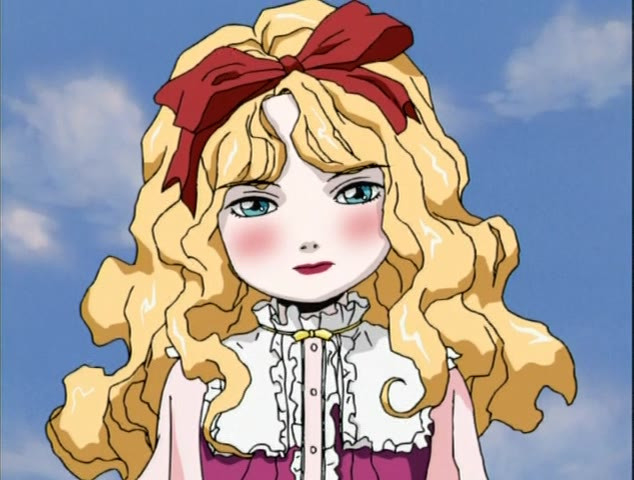
Incidentally, before someone asks, this review is entirely about the original Japanese dub version, aware that Ghost Stories' legacy is entirely about the infamous ADV English dub. The series flopped in its home land, arguably why it has the unconventional twenty episodes length rather than the usual twenty four or twenty six. As long as the character names and plotting were the same per episode, ADV were told by the series creators, Pierrot and Aniplex, to do what they wanted to this pre-existing turkey as it was already viewed as a failure, ADV turning it into an intentionally comedic dub that took the piss out of the material and deliberately went for offensive jokes. It was improvised greatly but noticeably it's also a dub directed by Steven Foster, one of the most divisive English dub directors in existence for his notoriously "loose" translations of the original Japanese scripts.  The little I have seen sides on profanity, incredibly dated jokes in the George W. Bush era mocking Republicans and Evangelicals by turning Momoko into a mad Christian zealot, and frankly a tone that might be insufferable to see all twenty episodes of even if they cast a favourite voice actress of mine Hilary Haag, when I used to like English dubs, as the lead. The first episode, to its credit, is interesting but whether it sustained a full show is an issue with this official parody dub.

From https://vignette.wikia.nocookie.net/ghoststoriesanime/images/f/f7/
Akagad.png/revision/latest?cb=20110917203545

The Japanese dub version as it is was fine, only with the paradox that this team of reoccurring leads is both a hindrance and a virtue, on the short term repetitious in plotting but in virtue in how I grew to like these characters. In general, it's hard to kick to the curb a show, for all its low production value and moments of stumbling, when it's this innocuous. If it wasn't for the few inappropriate things, it would be a show for a kid which is charming. And in terms of the story of the lead's deceased mother, there's even an episode that actually tries tugging at the heartstrings. Eventually the repetition is just an excuse to focus on a cast who are significantly more naive; the paradox is compounded that due to the cast, characters more likely to be afraid and lost in the scenarios around them, it should arguably make the material more logical in how they react to it all in spite of the series' problems.

One good move, that does help, is that the story includes an actual demon in Amanojaku, who is at heart eventually going to love them as a group but is a mischievous figure, one who will help but only when he's bothered, and is compounded by the fact that he's stuck in the body of a cat after the end of episode 1. Like any Japanese horror anime, unless it's to do with vampires and Western tropes, I'm immediately going to be intrigued as they'll be showing Japanese mythology in all its idiosyncrasies even if the screenwriters were making stuff up; if Ghost Stories had expanded episodes to multiple parts, like Satsuki becoming involved in a group of girls involved in black magic, the series might've found a bit more meat to its bones without sacrificing the tone.

Beyond this, the only really ridiculous aspect is that end credit song, infamous in itself (Sexy Sexy by CASCADE) because of its highly suggestive lyrics and a chorus including the lines "sexy, sexy", a song that has become an earworm for me and is fun, but is in the wrong show even if (again with the paradox) it adds to the personality. Sadly the reason Ghost Stories is known still in the West, and deserving its own review, is that infamous English dub that has overridden the original version in niche anime culture. Whether that version is better for me or not depends on actually viewing it all; in the original Japanese version, I'm always going to have a soft spot for anime horror, not matter how many flaws Ghost Stories ultimately has.