Showing posts with label Letter: G. Show all posts

Saturday, 17 August 2024

#279: Giant Robo - The Day the Earth Stood Still (1992-8)


Studio: Mu Animation Studio (Episode 1–6)/ Phoenix Entertainment (Episode 7)

Director: Yasuhiro Imagawa

Screenplay: Yasuhiro Imagawa and Eiichi Matsuyama

Based on the work of Mitsuteru Yokoyama

Voice Cast: Kappei Yamaguchi as Daisaku Kusama, Sumi Shimamoto as Ginrei, Akio Ōtsuka as Kaei, Iemasa Kayumi as Chief Shizuo Chūjō, Kazue Komiya as Yōshi, Kazuo Harada as Dr. Shizuma de Montalban III, Kōichi Chiba as Dr. Franken Von Vogler, Masashi Ebara as Professor Go Gakujin (Wu Yong), Norio Wakamoto as Taisō, Rokurō Naya as Kōshin Chin Sanzan, Shinji Ogawa as Genya, Shōzō Iizuka as Tetsugyū, Tadashi Nakamura as Shokatsuryō Kōmei, Takeshi Aono as Issei (Gongsun Sheng), Tarō Ishida as Hanzui the Evil Messiah, Tomokazu Seki as Kaihō, Yasuyoshi Hara as Ivan, Yousuke Akimoto as Shockwave Alberto, Yūji Mikimoto as Inspector Kenji Murasame, Akio Ōtsuka as Professor Shimure, Chikao Ohtsuka as Jūjōji the Bell of Life, Fuyumi Shiraishi as Sanny the Magican, Hiroyuki Satō as Gen Shōgo, Hōchū Ohtsuka as Gen Shōji (Ruan Xiao'er)

Viewed in Japanese with English Subtitles


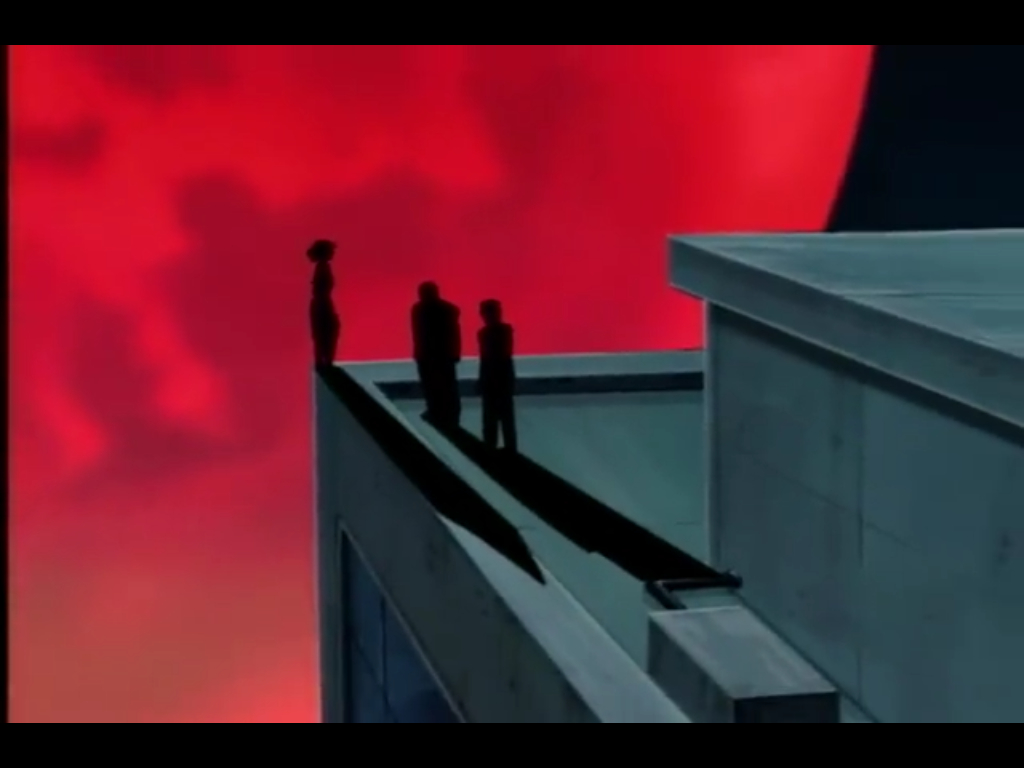
Giant Robo is not the best mecha anime ever made, but it is one of the best. That may seem a paradox, but I went into The Day the Earth Stood Still, an ambitious straight-to-video series with arguably too much build up as the best anime mecha work in existence. To those who know of this, it is a high bar for the genre, and thankfully by the final episode, it had earned that reputation, all in mind that with a protracted production length and a tragic inability to reach its intended original intentions, this could have easily become a flawed gem which we would have looked back on with a bittersweet "what if". It is more that to call something "the best" is a dangerous choice of wording, forcing a straightjacket which robs the power of the production, something that can be attested to when, to use another example from another medium, people may be put off from watching Orson Welles' Citizen Kane (1941) because when people called it the best film ever made, that forced it into a form of permanent stasis rather than the fact people love that film for a naturally developed admiration. Also it is impossible to say what the best mecha anime is as, being able to dig into the sub-genre, something as simple as a story involving a giant combat robot or two has been able to have so many idiosyncratic and inspired entries even in terms of flawed gems, let alone the canonical ones, that it seems pointless to compare them to find a superior one. The Visions of Escaflowne, a 1996 television series which finished its twenty six episodes when the final seventh episode was still being waited for from Giant Robo, is a completely different type of story set in an alternative fantasy world, making it ridiculous to compare it to Giant Robo's atompunk morality tale, or other works in their own molds, because they are drastically different to each other despite their genre tag.

Giant Robo could be called a throwback to an older school of mecha stories, but even that is not quite right, and not the same as mecha anime which were openly throwbacks, such as Masami Ōbari's Gravion (2002/4), with their own distinct touches. What I can call Giant Robo is a serious minded action tale at its heart, one that fully and totally succeeds in its conclusion, with a full narrative arch, in spite of the tragic knowledge this was always meant to continue on with more entries we will never get. This was originally meant to the second to last of a giant, ambitious tribute to the work of manga artist Mitsuteru Yokoyama. It adapts as its centre Yokoyama's 1967 manga Giant Robo, but one of the immediate things to point out is some of the idiosyncratic characters here. Set in the future, we have on Earth moved away from fossil or nuclear power to Shizuma Drive, a sustainable power source, whilst there is a war between the heroic International Police Organization and antagonists the BF Group (Big Fire) which involves a machine that can destroy this power source and send the world back into darkness. Part of the work’s idiosyncrasies is that for a modern day tale with giant robots, there are quite a few figures who have seemingly wandered out of an adaption of Chinese period epic. This is because, when the project was being put together, copyright meant side characters were not allowed to be used. Giant Robo had been adapted before, as a live action series screened in 1967 to 1968, and the confounding red tape which prevent most of the cast from the source being available lead to an inspired creative improvisation. This was that, with this a tribute to Yokoyama's work, they got carte blanche to use characters from his entire career, including so from an adaptation of The Water Margin, based on a legendary Chinese novel.

The decision had a drastic effect on the story, when the female lead Ginrei is from two manga, Wolf Constellation and The Name is 1011, which makes this an even more compelling tale if you knew of this, as this is legitimately a tribute to Mitsuteru Yokoyama‘s career. It is however not interested in pure service, but a serious story where characters do die and the stakes are legitimate in terms of dramatic tension. Even Big Fire is the same, with characters from a Romance of the Three Kingdom manga, and Yokoyama's magical girl Sally the Witch, one of the earliest examples, as the daughter of one of the villains1. With a story where even their morality becomes more complicated when facing the threat, a character from one of Yokoyama‘s period dramas, Genya1, is turned into the son of a scientist deemed responsible for destroying an entire country when experimenting with the Shizuma Drive, desiring to blackout the entire world in revenge for the distorted truth of that tragedy. Even characters from Tetsujin 28, Mitsuteru Yokoyama‘s other mecha creation, which is a huge influential entity in its own right, rock in for the story in probably the coolest nod to the show’s ambitious crossovers1.


The only characters from Giant Robo directly lifted include the main lead Daisaku Kusama, a young teen boy who has inherited the power of the titular Robo, who he can command from a wrist watch communicator. Whilst he has great power in his hands, alongside the fact it is later revealed Giant Robo is nuclear powered, causing concerns on his side of the potential threat if the machine malfunctions, he is a mere boy burdened with the chaos that will transpire. The villain has a justification for his rage, made worse as he is Ginrei’s brother, and the war to initially stop a series of experimental Shizuma Drive canisters getting into BF Group’s hands becomes one of dealing with an ultra powerful floating sphere which robs all energy sources of power in radius. Even among his side, there is the fact that, whilst she can teleport, Ginrei’s power sacrifices her life little by little using it, and that despite having a member who cannot die and is immortal, the International Police Organization throughout are fighting as the underdogs. The ironic tragedy of Genya's goal, what his father actually intended him to do with the power he weaponized, and all the sacrifices that lead up to this reveal makes this more potent. This is a case where, rather than the contrived sense that tragedy happens for upping the stakes, everything here is felt as dramatically powerful and this is where the legacy of this series is felt. It earns its drama, all through telling what a simple action story with giant robots lumbering around, all because it is taking itself seriously with the deftest of touches.

It is with knowledge the production was tumultuous. It started in 1992, and it took three years alone from episode six to get the final seventh one in 1998, enough time for director/co-writer Yasuhiro Imagawa to pen scripts for other work, including the 1997 Berserk adaptation, and direct the unconventional Gundam continuation Mobile Fighter G Gundam (1994-5), a big fifty plus episode production, whilst still helming the sixth episode from 1994. The solace is that these production issues are not seen in the slightest on the work itself. It has a strong aesthetic, arguably a “throwback” to older character designs from the decades before, but without any bias to this for me. By itself, this style is one of its own, based on its influence’s work, which provides its own distinct appearance. There is no sense that the time and budget that would have gone into this production, whilst likely torturous as was visibly a lot of resources, was compromised in the quality of the production. The closest thing to throwback it moving away from the kind of robots Gundam itself has, and whilst some in the story are more over-the-top in form, our titular Giant Robo whilst exaggerated feels like a construction built from pistons where each movement causes the earth beneath it to tremor, which adds to its own personality.

Considering what is on paper, a version of Giant Robo could have been a mess. It is a sci-fi giant mecha series with figures who have legitimate supernatural powers, from the ability to project fireballs to teleport, with the likes of a blue skinned Amazonian warrior from the Water Margins adaptation with a Monkey approved extending staff weapon among the roster, and a large amount of the cast not hidden in having ancient Chinese dress or military combat maneuvers in a story which has guns and air blimps.  Yet, it all gels together in a consistent logic of its own with spectacular set pieces and deep character telling, which is a huge accomplishment. There is of course the musical score, composed by Masamichi Amano with collaboration with the Warsaw Philharmonic Orchestra and Choir. A sweeping, appropriately operatic score to a production, it fits the tone alongside bucking trends, as it neither has any traditional pop songs for the opening and ending credits either that could have been sold off the back of the series. The gravitas of the story and how the production values is used to tell it, even in terms of how the likes of this score was chosen and put together, is why Giant Robo succeeds.

Sadly it was a work that struggled in its time, and only got the recognition it deserved as time went. My initial hesitance about the show, from all its weight of expectation, meant that it was a slow burn having to watch all seven episodes until the ending, where when the landing was fully executed perfectly in the last one. By its bitter sweet post-credits, it was a success entirely. Its pulpy veneer hides a pretty simple moral quandary – the idea of whether sacrifice is actually necessary to accomplish any event – and lets the characters and story run from this. Even if there is a nod to a future story that never came to be, it does not detract from the fact this does have a fully accomplished and told narrative by itself, and that in itself is a huge triumph.

======

1) Behind the Night's Illusions - the characters of Giant Robo: the Animation, originally published by Anime Jump in 1999. Archived from the original on 13th July 2003, and retrieved on the 1st January 2001.

Friday, 3 November 2023

#267: The Ribon Double Bill (2001)


Good Morning Call (2001)/ Time Stranger Kyoko: Leave it to Chocola! (2001)

Director(s): Masatsugu Arakawa (Time Stranger Kyoko: Leave it to Chocola! (2001))

Screenplay(s): Fumihiko Shimo (Time Stranger Kyoko: Leave it to Chocola! (2001))

Based on the manga by Yue Takasuka (Good Morning Call)/ Arina Tanemura (Time Stranger Kyoko)

Voice Cast:

Good Morning Call:

Eiji Moriyama as Hisashi Uehara; Yuka Tokumitsu as Nao Yoshikawa; Chiaki Shiino as Rumiko Ooizumi; Maki Saitou as Marina Konno; Masami Kikuchi as Kenji Asai; Masami Suzuki as Haruhi; Mayumi Honda as Nanako; Michiko Neya as Yuri Uehara; Ryo Naitou as Jun Abe

Time Stranger Kyoko:

Jun Uemoto as King; Rumi Shishido as Chocola; Taiten Kusunoki as Widoshiku; Eiji Takemoto as Subordinate B; Junko Takeuchi as Subordinate C; Keiko Toda as Akino Jiro; Makio Inoue as Toshito Kutajima; Mitsuo Iwata as Shinichi Hasegawa; Ryo Horikawa as Ranmaru Mori; Shigenori Yamazaki as Subordinate A; Takeshi Aono as Hokubei

Viewed in Japanese with English Subtitles


So much animation exists in the Japanese industry that you can dig up real obscurities, helped considered when they are being preserved online, factoring in the independent work, ephemeral work and animation done as one-offs and/or promotional content for manga. For today, the following two pieces are based on manga published in Ribon, a manga founded in 1955 for the shōjo market for young women and adolescent women, with the following two incredibly diverse and representing two different sides of the coin from the monthly magazine in terms of genre. The first, Good Morning Call, is a one-off nineteen minute story adapting the work of Yue Takasuka. This manga, interestingly, was able to return after its first arch, published between 1997 to 2002, to both have a sequel manga, but also a wider potential audience with a 2016 television series adaptation, one followed by a 2017 sequel series have been both available through Netflix, allowing for people unaware of the source to see this story in a form.

Alongside free promotion of a PSOne controller at one point, the male lead Hisashi constantly dying in that scene in an RPG to a frost dragon, this was as much a work clearly made for the fans near the end of the first manga's final chapters in 2001. It would have been a chance to see this story of a female teen Nao onscreen, finding herself living with Hisashi in an apartment due to circumstances, becoming a couple as the story proper begins. Nao is convinced to help a male friend practice his hair dressing skills on her, having forgotten the actual date of Hisashi's birthday by ten days, becoming what would feel like a single episode in a whole series we never got as she tries to get an apology for her blunder. It is a very fluffy romantic comedy where the jokes lead to the characters, especially Nao, being comically distorted (especially in diminutive "chibi" forms) for cute reactions, including reacting to good clothes and the realisation of how much an item costs. It is a very silly and light hearted toned work, with some ultra cartoonish content, such as a few female characters, such as the elderly landlady, who are insanely short next to the rest of the cast. The composer also has imported guitar solos from the nineties, varying between a 32 bit era video game score to even flamenco guitar that feels New Age.

The short's length sadly means you cannot really gauge where this could have gone, especially with the other adaptation Time Stranger Kyoko: Leave It to Chocola. It is based on a manga by prolific author Arina Tanemura, which was a fantasy sci-fi set in the 30th century. Its titular character Kyoko, the daughter of the King of the entire Earth here, is placed to the side, her story in the manga more explicitly a fantasy tale with heavier stakes, whilst this is entirely about the character of Chocola, a tiny cat girl android who had this eleven minute short all for herself. Still feeling a mere snippet to a longer work, this however shows the premise of the world, where after their anniversary dinner of their meeting, seemingly missed by the King, Chocola leaves the castle to find a new life. The world set up is an interesting mass of western fantasy tropes but said to be in the far flung future, where Chocola is seen rescued from a landfill of discarded androids by Earth's king, and yet has horse drawn carts to be attacked by thieves. It is a very silly work too in its own whimsical way, introducing clear characters from the source, the Smasher bandits the most prominent who have a member named Cream Soda. Chocola attempts to help them out, though she is not to be trusted as a cook unless, needing chocolate to power up, you want everything including curry to have chocolate as a main ingredient.

There is not much to say beyond this, though Time Traveller Kyoko has the more vibrant looking world whilst Good Morning Call is set in the ordinary world and would have to rely on the characters, if you were able to live with them for a while like in the manga, to carry the emotional weight. The transition to live action television for Good Morning Call makes sense with hindsight, even if I could have seen and hopefully enjoyed a version with its comedic animated slapstick, whilst Kyoko including its barely seen lead has a world seen in a glimpse to help its favour. There are many obscurer titles in danger of being lost, and whilst feeling like fragments of series which never came, it would be a shame to not see these titles preserved too. Quality wise, I preferred Time Stranger Kyoko, but the pair together are rewarding as historical titles.

Sunday, 30 October 2022

#231: Ghost Talker's Daydream (2004)


Studio: Hal Film Maker

Director: Osamu Sekita

Screenplay: Katsumasa Kanazawa and Kenichi Kanemaki

Based on the manga by Saki Okuse and illustrated by Sankichi Meguro

Voice Cast: Masumi Asano as Misaki Saiki; Tomokazu Sugita as Souichiro Kadotake; Yukari Tamura as Ai Kunugi; Daisuke Kishio as Mitsuru Fujiwara

Viewed in Japanese with English Subtitles


This anime adaptation had always been one of interest for me because I was a fan of the source manga. Found discounted in a British bookstore, the source manga by Saki Okuse and illustrated by Sankichi Meguro, whose work was adapted into Twilight of the Dark Master (1997), an obscure Akiyuki Shinbo helmed horror OVA. It is also lurid, about an albino dominatrix named Saiki Misaki who, in-between her sex worker career which also includes writing for a porno magazine, is using her ability to see and communicate with ghosts to help a branch of the local government exorcise buildings and environments. The source manga is violent, sexually explicit and sleazy, and tackles subjects like sexual violence. It was also however a work which looked exceptional, with the illustrations by Meguro, and had managed to be the right side of lurid by being smarter, building a world whose images could be ghoulish as much as it played to sex comedy. Sadly, published by Dark Horse, they only got to volume six before the series was cancelled for English language release, never continued up past through the remaining four volumes, and managing to end on the worse cliff-hanger as well to emphasis this fact involving a haunted apartment complex.

It will not defend its lurid content and neither makes a good case for the manga to people, as ten minutes in it depicts a near rape, involving a younger sister of a murdered woman and her male murderer, only for the lead Saiki, in S&G gear which she uses in her exorcism work for ease, to barge in and deal with this. Neither will some appreciate the blending of light comedy (including sex comedy) against the grim subject matter, as the first episode, introducing that high school girl character Kunugi Ai, a main character for the source, also deals with the murder of her older sister and the death of her infant daughter in the same incident, their ghosts haunting the world as much due to a plush bear with audio recording technology within it has compromising material recorded onto it. The premise, in spite of its lurid content and seen in glimpses here through all four episodes, is a good one in terms of how, whilst her career choice was a salacious one, Saiki Misaki's career choice is a day job which is frustrating and a chore. Some of the best moments here in the adaptation deal with how all her jobs, never touching on her writing career, are a grind, with exorcists like her quietly hired by the Japanese government, or a local government branch in the city, to deal with hauntings of public buildings and apartments as contract work, which is a fascinating premise to have just in envisioning this like a public service sector role. Even that the third and fourth episodes include a female sceptic, a cop in a certain case Saiki accidentally gets involved with, is contrasted in that this a job which is not spectacular even if the risks are dangerous.

The only unnatural aspect, never really elaborated on in the anime, is that she has a demonic rope, living, which co-exists around her body if pushed, but it feels neglected in this adaptation. Everything else in contrast is the banal struggles of being a working dominatrix or having to put up with annoying promotional work for her company like giving used underwear as a prize. It is lurid, but this banality is playfully absurd. This anime adaption, despite coming midway into the manga's run, feels like a slither of it which is also a handicap, especially as the four episodes are usual television episode lengths of under thirty minutes, which means none of the wider plot the manga was building up between episodic tales is seen, only two episodic tales and a final one taking two episodes. The anime is an adult work as its source, with explicit nudity and lot of sex comedy in-between the more macabre content, which was as much the reason this was released. Aspects from the source material are dumb and weird if anyone was to view this, like the running joke about pubic hair which is a source (or source lack of) of embarrassment for Saiki, and in the source manga there was the fact, though one which could be a compelling piece of drama, in that she is a virgin yet managed in this career alongside exorcisms. 

Like the source material never being fully released, it is a shame as inherently the show has an advantage for an episodic horror work of having a strong set of leads. Saiki herself, in spite of all mentioned, and that the manga and the anime are thirsty for her physically, is a great lead character to work with as, gimmicks aside, it is a young working woman who complains and is frank about this, stuck in a regular job which she is good at but sucks at times, or that she technically has a stalker, high school student Fujiwara Mitsuru, whose gag as a stalker may be far more tasteless nowadays, but comes off as a mere annoyance to her, one who is actually helpful in many times just in this adaptation, as well as coming off more as a frenemy for her especially in the manga. Kadotake Souichirou, the person connected to the exorcism business, is a great male lead - a scaredy-cat when it comes to ghosts, a meek and clumsy bespectacled employee and driver, but a killer in martial arts - and Kunugi Ai, when she comes in, is an idiosyncratic side character, developing her own ability to see ghosts and an eccentricity, as she carries a giant plush teddy bear with her everywhere called Popo. In the manga you had time to built this motley bunch and, one of the huge virtues of the manga was that, alongside these characters, it managed to avoid becoming offensive with some of its more lurid content and, when it wanted to be macabre and transgressive, it had the huge advantage of its illustrator Sankichi Meguro pulling the sequences off on paper perfectly.

The obvious issue is that, alongside being merely a slither of the premise, more a work to sell the source material, this is also an OVA in the post hand drawn era when the format was losing favour, so one of the hugest virtues for Saki Okuse's source manga, Sankichi Meguro, is lost as this has a very flat look.  Hal Film Maker, the studio behind this, managed some good work at this time in spite of this transitionary period - Princess Tutu (2002-3), so different to this as a sweet ballet fantasy TV series, had a distinct art style even if working around its budget, and Bludgeoning Angel Dokuro-Chan (2005), despite its stereotypical "anime" style, is not known for this, both for how gleefully perverse its premise is but also how visually the jokes, including an angel girl whose bludgeoning club does obliterate the male lead's cranium to mush as much as resurrects him, took advantage of its bright cute colours and style. Ghost Talker's Daydream does not have a memorable style, and a distinct thing for Sankichi Meguro's artwork in the manga was that black, not only in terms of a lot of night time scenes but even black outlines and detail regardless of the time a moment takes place in, is one of the first things I think of for the manga, whilst this has a brighter washed out look. Alongside that, tonal changes between the serious and humorous, and all the kinkiness, within the manga has a more concise tonal balance even if it is that manga, as pages to read, can pace itself differently and nothing else.

This is definitely the case that, for episodes three and four, this is dealing with a series of child disappearances which were clearly eventual murders, with the added complication that the person behind the crimes was a woman who was raped by her uncle, the anime carefully dancing around this even though it could be argued as purely exploitative. This is where I still hold the manga, again, having managed a daft hand, or the right tonal mood in its rich aesthetic and tone, around this, even if this is entirely of a personal opinion and can alter as I return to the source over and over This shows, like a lot of anime, that the blurring between comedy and extreme content is more common than you think, but this has the additional issue that, looking very light in colour and style, not heavy in aesthetic stylisation, the anime adaptation loses an advantage to its arsenal in being able to stand out and even get this balance between these two drastically different sides right.

It had virtues, and if biases from the admiration of the manga's virtues are here also, I will not deny that this is more a curiosity. As someone who wished as many titles were preserved, I would always be biased to have even an obscure title like this still be available, even if contrary to my initial beliefs, this did manage to get a Western release as there is an English language soundtrack. It unfortunately was a Geneon release, Geneon USA a side division of the Japanese Geneon group which, starting in 1993, closed in 2007, a DVD distributor that was entirely in the United States and, for many titles which were licensed rescued later also saw others, like Ghost Talker's Daydream, trapped in the afterlife never being recovered from it. The manga especially, whilst with content that might be difficult to defend, feels a greater tragedy just from never getting finished, falling into obscurity, to be found in cheap discounted copies on sale in bookstores and online as I stumbled onto the work. Manga especially has so many titles which never get finished for their English publications over the decades, which is miserable for anyone who was following them and collecting the volumes, a painful remainder of the business side of this art form.

Thursday, 14 July 2022

The Guyver (1991)


Director(s): Steve Wang and Screaming Mad George

Screenplay: Jon Purdy

Based on the manga by Yoshiki Takaya

Cast: Jack Armstrong as Sean Barker/The Guyver; Vivian Wu as Mizky Segawa; Mark Hamill as Max Reed; David Gale as Fulton Balcus; Michael Berryman as Lisker; Jimmie Walker as Striker

Bonus Review


Note: The version of The Guyver (1991) watched is the director's cut, which involved a flashy editing technique added to cut between scenes, but also visibly removing shots of violence which is brought up in the review.

This review will also be re-posted at my other blog Cinema of the Abstract for a little cross-promotion between them. Please take a look at a wide selection of reviews I do there as well.


Yoshiki Takaya's manga The Guyver was at one point one of the first Japanese manga and anime franchises to transition over to the West, and one of my earliest memories as a child to the idea of "manga" or "anime" involved the 1991 film itself, a small news article about The Guyver with the exceptionally deceiving poster of co-star Mark Hamill's face against one-half of the iconic Guyver helmet. In Japan itself, Yoshiki Takaya's manga started in 1985 and is still going thirty plus years on through multiple magazines, with two anime adaptations for straight-to-video, 1986 and 1989, and one I grew up with getting into anime, a television series between 2005 to 2006 which was an attempt rejuvenate the franchise. The OVAs, specifically the 1989 multi-episode one, gained an infamy when released in the West for its violence, whilst the TV series was undermined by not having ultra-violence that made the anime notorious, despite the late anime distributor ADV Films selling the series off this infamy, and that it does not have an actual ending. In the West, two live action films were made, one produced by Brian Yuzna with Steve Wang and Screaming Mad George making their directorial debuts, the sequel three years later with Steve Wang on his own in the director's chair and taking a drastically different direction in tone. Together they are curiosities.

Made as a Japanese co-production, Yuzna himself is a man I admire. Connected to Stuart Gordon, the director famous for Re-Animator (1985), Yuzna himself as a filmmaker has a fascinating series of strange and imaginative horror films, some involving Screaming Mad George, birth name Joji Tani, a practical effects designer from Japan whose reputation when he moved to the United States and worked in cinema have had a lasting legacy. Steve Wang, a Taiwanese makeup artist and creature designer who emigrated to the USA as a child, would comes into the directorial chair in his small filmography here as a co-director, and especially with a film called Drive (1997), gained himself cult recognition.

The Guyver, as the 1991 film, is however a strange mess. The plot is from the source - an evil corporation called Chronos are after an alien bio-armour, the titular Guyver. Set in the United States, a young man named Sean Barker (Jack Armstrong) finds the Guyver and is infected by it, creating living armour which grows from his body when he needs it. The Guyver is a tokusatsu influenced production, like an ultra-violent Power Rangers in the image most have of it, as Chronos has its members and test victims used in experiments where they turn into horrifying monsters. This is contrasted by the weapons the Guyver has, with its arm blades to a chest laser beam, designed to slice them the pieces.

Yuzna's Japan-US co-production decided not to follow his wheelhouse of gore and elaborate special effects in films like Society (1989) or Bride of Re-Animator (1990), but only have the special effects...at least at times. The director's cut, the more readily available version, has scenes of gore cut, but even the film without these missing fragments is incredibly goofy at times, creating a contradiction of a film you could not give to a child without causing potential nightmares, at least its most lasting moments, but other times has incredibly silly humour. The first Guyver film, the more easy to find, is a peculiar thing with its tendrils connected to Stuart Gordon and Yuzna, with the evil Chronos Corporation headed by leader Fulton Balcus, played by David Gale who is famous for Re-Animator. Balcus wants the Guyver bio-armour and sends "Zoanoids", humans who can turn into humanoid monsters, after Sean Barker.

The one success, the only success, in terms of consistency is the practical effects. Screaming Mad George is legendary and notorious for his work, from the human cockroach sequence from A Nightmare on Elm Street 4: The Dream Master (1988) to the "Shunting" scene from Society, visceral body horror which even if you can see the seams is so nightmarish and gooey that it borders surrealism. Moments show this in The Guyver, seeing him and everyone in the practical effect department having a field day with the premise. Whether it is horror film veteran Michael Berryman and various actors turning into various humanoid beasts or the spectacular Guyver armour itself, a warrior with cyberpunk and insect-like traits, they are all applaudable. It is, however, a film struggling with a premise, possible in anime and manga, which has an apocalyptic tone on a large scale, and also requires martial arts to pull off even fights between men in rubber suits. Guyver: Dark Hero will try to overcome this, to greater success, but this prequel struggles.

It is a really strange film, not in surrealism, but how it ended up as it did. Mark Hamill, the legendary Star Wars actor a year before he took on the voice of The Joker in Batman: The Animated Series, creating for him a career flourish as iconic as Luke Skywalker, does stand out, playing a cop on the edge trying to get the scope on the Chronos Corporation, with a sense of grandeur to his appearance. The late David Gale steals scenes with his bizarre intonations and wall chewing, even enraged by burning toast as he is by the incompetence of his minion. Vivian Wu, as the female love interest, is visibly struggling with her dialogue and not helped in the slightest by a wet, one dimensional female character she has. Alongside the fact she is cast as a Japanese character, which is dubious for her as it is as casting, she is a really strange inclusion as between Bernardo Bertolucci's The Last Emperor (1987), a huge film in his later career which was her onscreen debut, and Peter Greenaway's The Pillow Book (1996), Wu, a Chinese actress whose career is mostly in dramas in the West and China, found herself in this film sandwiched between a Bernardo Bertolucci film and Greenaway which is a curious tangent. Even her appearance in Teenage Mutant Ninja Turtles III (1993) at least makes sense as a second sequel to a franchise which was huge at the time and whose first feature film was a box office success.

Jack Armstrong as the hero sadly struggles out of the whole cast, in a role that, to be brutally honest, was made an a absolute charisma vacuum even by the standards of a pulp story that emphasises practical effects first, which does not help him out at all. These stories, and this is something I think of in terms of the Guyver television anime, is structured around protagonists, male leads, who are usually bland, especially in many ultra-violent anime too where the worlds and context around them are more meaningful. More so as he is put against Hamill, the advertising cynically suggesting a key Star Wars figure as the lead in some posters, as well as against Michael Berryman as the main henchmen, one of the most visually striking figure in cult cinema. Even Spice Williams, a prominent stunt actress who stands out physically here with Berryman as a physically imposing female henchwoman, gets to play out a more memorable and playful romance with Berryman in one of the few jokes of the film which do work.

Despite Steve Wang's later work such as with the Guyver sequel and Drive (1997), with fight choreography from the tokusatsu school, and of an incredibly high quality in terms of fighting and stunt work, the fights here look stilted and suffocated by the presentation, lacking what the sequel did. In sacrificing some of the practical effects in terms of beast designs in favour of men in rubber monster suits, likely injuring themselves in painful stunts but bringing an exhilarating air of chaos to the proceedings, that sequel as we get to found a kineticism which works. The result beforehand in the prequel is as stiff. More surprising is the lack of scale even by the standards of a small budget genre film, feeling like only a couple of rooms and some exterior shots were used, the script as swift in getting to its end without any sense of dramatic conflict being found.

The final issue, ultimately the creative decision which maims the film fatally at many times throughout itself, is deciding to play most of the film as a comedy, coming clearer to me now as a result of having to work around the limitations. Even if it worked on other Brian Yuzna productions like Re-Animator, the humour in those cases was incredibly grim even if there was slapstick. This has more broad, goofier with characters being buffoons, and one of the more contentious running gags being the character of Striker. Jimmie Walker, playing him, is a prolific comedian and actor especially in television, all the way back into the seventies with shows like Good Times (1974–1979), a spin-off of a series called Maude which is significant in terms of an American sitcom from that time period about an African-American family. I can see Walker's completely natural charisma here, though when he suddenly indulgences in some early nineties cheesy rap, you realise with The Guyver how tonally this is not an adaptation of Yoshiki Takaya's manga. His fish-monster character is a memorable costume, and he has one good gag of accidentally wandering on a cheap horror film scene with a Linnea Quigley cameo, but his character in general has mostly cringe inducing humour from Striker as a gag character, more an issue as his character in general and especially how his monster version looks has uncomfortable stereotyping that cannot be ignored.

This version of the concept does not really work with its material at all, and it is telling that, with a Director's Cut cutting out violence, there is a misinterpretation of the source material that undercuts it. There are moments you could not show children, and yet they are actually some of the most striking moments. Taken from the source, and recreated in the TV- series, is that the giant orb in the centre of the Guyver's head is its weakness, leading to the death of the lead and an absolutely memorable sequence of body-horror resurrection. Even if it is played for goofiness, with a knock-off Jaws theme riff, that sequence has a morbid grace, and has some humour which actually works beforehand, mainly the fact that Yuzna alumni Jeffrey Combs, of Re-Animator, makes a cameo chewing the scenery and is involved as a weird goat creature by that point. Famously [Spoiler Warning] this is the film where Luke Skywalker gets painfully turned, with Hamill submerged in practical effects latex, into a cockroach-locust hybrid, a moment that if it had been in another production would haveve been up there in Yuzna and Screaming Mad George's filmographies as being iconic. Here, the film around it does not live up to what, in between both films, is the best sequence of these American adaptations, a scene which is actually horrifying, actually tragic and adult, and is one of Screaming Mad George and the prosthetic team's best moments on this film. It is a scene which has clearly stayed with George as, alongside the woman turning into a cockroach in an Elm Street sequel, he is referring to this idea with Paranoiascape (1998), an experimental pinball game he worked on exclusively for the Japanese Playstation One market that explicitly references this as much as Society in some of the grotesque sights within it. [Spoilers End]

The Guyver is a film so painfully bad in its humour at times that it both makes little sense tonally but loses its power in context. It feels like a cheesy American action film from this era, not in terms of when they are fun, but just the clichés, whether it is the moment with a multi-ethnic gang of clumsy hoodlums, or the humour being at the expense of Michael Berryman, rather than embracing his comic timing and imposing nature more, or that no one is taken seriously even as comic characters. Jimmie Walker is even paired up with an actor named Peter Spellos as bumbling henchmen, with Spellos having a vague Eastern European accent, in scenes that undercut the actors themselves. Peter Spellos, who can go from Jim Wynorski films like Sorority House Massacre II (1990), sometimes playing the same character of Orville Ketchum, to a career in anime voice acting for work like Naruto to Cowboy Bebop (1998), is someone with clearly a lot of charisma to try to make this material work, but The Guyver is a case of a cast of fascinating individuals, from a variety of idiosyncratic areas of pop culture, not being helped by the script and tone. From anime voice acting to Star Wars to Peter Greenaway art films to prolific American sitcoms, everyone in and behind the film camera is a fascinating figure who could bring a lot to the table, but the work onscreen from the production really does not connect together.

Ultimately, it is the emphasis on the humour especially, against the paltry production, which makes The Guyver insufferable at times even when it can be charming at other times. A Jeffrey Combs goat demon, or Vivian Wu and Mark Hamill running away from what apparently is a flea monster, like characters in a one-reel silent film comedy, are charming to see, but in mind that this is The Guyver, a tokusatsu work at heart, whether you kept the gore or not, this feels like a project which grabbed at the wrong point. This is stranger considering Brian Yuzna, even if he might have not had a taste for martial arts, had a taste for horror films which got the tone for humour and the monstrous perfectly, or his fellow producer Aki Komine, who produced a series of films with Yuzna or by himself which did attempt manga adaptations with heavier leanings on action, by it Christoph Gans' Crying Freeman adaptation from 1995, or the Fist of the North Star film from 1995 which, whether good as an adaptation or not, was an attempt to get the original violent post-apocalyptic narrative to the screen1Komine, with Steve Wang, would also work on Kamen Rider: Dragon Knight (2008-9), Wang's attempt to bring the legendary Kamen Rider series from Japan to American children's television, so there was a sense of Komine being interesting in the type of storytelling The Guyver did not turn into inexplicably. With these curious names involved within its production, it feels instead a sense that, together, The Guyver whilst fascinating just did not gel at all in terms of creativity.

In contrast, Guyver: Dark Hero even with its own flaws managed to be more successful, but that is a review for another day....

To Be Continued...


=====

1) That and this Fist of the North Star adaptation has the curious mix of action star Gary Daniels, Malcolm McDowell, professional wrestler Leon "Vader" White,  Costas Mandylor, Downtown Julie Brown, Chris Penn, and African-American cinema pioneer Melvin Van Peebles involved, which is a strange cast to ever get in an adaptation of a Japanese manga.

Wednesday, 27 October 2021

#206: Genocyber (1994)


Director: Koichi Ohata

Screenplay: Emu Arii, Koichi Ohata and Shou Aikawa

Based on the manga1 by Tony Takezaki

Voice Cast: Akiko Hiramatsu as Elaine Reed/Diana Reed; Kaoru Shimamura as Rat; Kazuyuki Sogabe as Grimson Rockwell; Kouji Tsujitani as Ryuu; Kumiko Nishihara as Mel; Masako Katsuki as Myra; Seizo Katou as Kenneth Reed; Shigeru Chiba as Radneck; Toshihiko Seki as Sakomizu

Viewed in Japanese with English Subtitles


Genocyber is a notorious anime, but this is a work, over five episodes, which is a bit more complicated as a viewing experience. To be honest, even saying it is an ultra violent sci-fi horror anime of notoriety is suspect, when arguably one of its five episodes is with lasting impact, and the gore itself is a slither a production which shifts content very erratically.

I was introduced to this by acquiring an old Manga Entertainment videotape of the first episode, watching it on my grandmother's VHS player by myself with shut curtains, all transpiring in my mid-twenties but, when there was a brief moment of finding obscure VHS tapes in British charity shops, having a lasting impact with titles which felt completely inappropriate to come from somewhere you buy second hand clothing from, alongside the two mid-era Godzilla films which proved more playfully memorable. And since this was the era of the internet, firmly, finding the other episodes of Genocyber online was not an issue, but it is the first episode then, and still now, which left a lasting mark. I will talk, for all this production's huge undefendable flaws, positively of this production least for the first episode. It is of its era and was a production clearly spat into existence with warts and all, which you can guess of knowing that Manga Entertainment, who only released this in VHS only in Britain, never released episodes four and five, and not because they were censored nor offensive but likely due to what was made in contrast to the previous three episodes.

This is a Koichi Ohata production, so this has an added infamy even with Shou Aikawa on the production as a screenwriter, the future author of some acclaimed anime narratives but also a writer on the likes of Urotsukidôji and Violence Jack. Koichi Ohata is more infamous, least for my guess, in the United States because M.D. Geist (1986), one of his most well known titles, became something of a lucky rabbit's foot and an obsession for Central Park Media, an American anime distributor, and its head John O'Donnell. Koichi Ohata, whose work in this era was released in the US by O'Donnell's company, had a moment in the OVA boom of the eighties and nineties to make lurid sci-fi orientated work with mechanical and monster designs, even if the production budgets and productions themselves could be a mess in the final results. Ohata is well regarded, to bear in mind, as a mecha and mechanical designer, on the likes of Gunbuster (1988) and Mobile Suit Gundam: Char's Counterattack (1988), but he has an infamy for the likes of M.D. Geist, which got even a "director's cut" helped by Central Park Media, and Genocyber, whilst anyone who has seen M.D. Geist II: Death Force (1996), also coming into existence with Central Park Media's help, can also attest to how erratic his work is even if I admit enjoying the accused thing more than the prequel.

Episode 1 of Genocyber, which is different from the other four in being over forty plus minutes long rather than less than thirty as the others, is a curious production by itself, already setting itself up as idiosyncratic with real photos being used in the opening credits. For all the flaws with this entire work, in plot and point, a trashy cyberpunk narrative initially in the first episode set in early 21st century Hong Kong, the first episode is memorable. It is surprising in the level of experimentation which transpires here, as much likely due to budgetary reasons but creative in inspired ways, alongside its nihilistic tone. The plot is over complicated, but can be boiled down to how, as a result of an experiment into what is the "vajra", a ritual weapon in the likes of Hindu and Buddhists faiths in reality, the psychic force all human beings could tap into in this anime, one scientist created a machine to fully access this and led to two sisters being born by his wife. One called Diana has a completely disabled body, able to move through a robotic one, who is kept with a sinister scientist, responsible for her father's death and working for the Kuryu Group, in his own world working on his own obsessions and with the Kuryu Group ultimately intending to take his project away from him. This project requires the other sister Elaine, effectively the protagonist, has a fully working body but a mind close between a little girl and a feral animal, who has escaped into Hong Kong who the group want to recapture, even if the Kuryu Group will send their own cybernetically enhanced mercenaries sent to get her alive. The Genocyber of the title, the intended goal of reuniting the sisters, is a form both sisters can fuse into, a horrifying humanoid capable of wiping out a whole country as an apocalyptic entity, the creation of humanity's worse tendencies as, linked to Elaine especially with pain and agony wakening it.

What stands out is that, for what was clearly made as much for the sake of gore, this first episode has the unpredictability I want from anime. Alongside the cool ethereal score, the production was clearly working against some huge budget restrictions, but found innovative ways to work around this. Early CGI is used, but also fine pencil still drawings for flashbacks. Live action is used for memories for characters, and sometimes the animated characters are animated over real images, such as Elaine and a boy she meets over a photo of a street, or the back-story of the machine to access the Vajra being an actual handmade model in the background. The most infamous aspect of the first episode, alongside its gore and body horror, is the use of clay, actual red clay, for certain scenes. A foetus sculpted in clay is one thing, but it is used to emphasis gore scenes too, including for a scene of a mercenary after Elaine, when psychically influenced to think there are insects inside his head crawling on his brain, cutting to fake insects on a clay sculpted brain.

The gore and the body horror is extreme if not constant, including episode 2 later on, where it is obvious despite the serious tone this is a work meant to reveal in the grotesque. A detective exists in the first episode, for considerable screen time, only to just be an excuse for an ultraviolent gore sequence. One where, with the scientist having a swarm of deranged masked surgeons out of Silent Hill on his side, they completely butcher the occupants of a hospital, intestines lovingly rendered stuck on the ceiling and, for a really obscure and grotesque reference, leaving someone alive to experience being a perverted version of a Dr. Guther von Hagens display2. It is immature as an episode, but I find a work like this compelling for their tone. It is uniquely disturbing in presentation, including a brief moment of cybernetic body-horror, where the mercenaries distort and transmogrify into bio-mechanical monstrosities. That the episode takes no prisoners, with people killed off [Major Spoiler Warning] and Hong Kong being obliterated off the map entirely [Spoilers End], Genocyber for this episode does leave the screen with an impact I have to admire.

The episodes after is where Genocyber becomes complicated as, whilst the first episode could have been released by itself, the others do become less consistent. The art style of before, the experimentation, is entirely stripped away. The second episode, in its first minutes, is probably the most infamous moment of the OVA, where with Elaine in a warzone kids are graphically machine gunned down by a helicopter, still drawings but rendered in full graphic detail of organs that, traversing the taboo of killing children onscreen, can get away with mocking said taboo in animated form. It is after that, whilst with body horror content, a bog standard narrative from Koichi Ohata, where a cybernetic Vajra powered entity created to fly combat planes, as the United States is fighting the middle eastern country of "Karain", becomes more unstable and violent when Ellen is rescued and brought on the aircraft carrier it is housed on. Its creator wishes, corrupted, to further its powers, even if it means engulfing the whole ship and crew into a horrifying flesh-machine battleship, with the story becoming the third episode a kaiju monster versus monster narrative. It is of its time, still compelling for me but, even with the moments of gore, a narrative which feels like a side chapter, especially as it never gets into plot details brought up and disposed of in exposition, such as Karain having magnetic sand which makes it impossible to use modern weaponry, nor that war being of importance in the first place. Only the narrative of a female doctor on board, a figure who is connected traumatically to Genocyber's first apocalyptic attack, has a trajectory which is a little fleshed out, which can be best described as that of a Lovecraft protagonist for all that unfortunately entails.

It is a production which feels erratic, possessing aspects which made these OVA compelling for me over the years but feeling, especially as these were produced in relatively short time to each other, a work which feels abrupt in what narratives we got. As much as this is still compelling, it is a disjointed work where a lot of it is not as well thought out after the initial first episode. Even one of its virtues and a minor detail, a rocking end song, emphasises how this entire production is a mess, as the most inappropriate song to have in context, about "wishing you a rainbow" and called Fairy Dreamin', even if it is a hugely impactful song in mood to the production. This issue is more so with Episodes 4 and 5, which are the most contentious to deal with, with knowledge they were never released on the British VHS, and with only Central Park Media funding an English dub for them where they released the whole OVA series. They were episodes I was initially hesitant to revisit because, originally, these were an incredible low point to reach. Now I find virtues in them, and they connect to the entire narrative arch, what is there, with greater worth, but this is where the erratic nature of Genocyber is a huge aspect to deal with.

Because, far from being offensive, this is a huge tonal shift, a time and narrative shift with no ultra violence to speak of and feeling like an attempt at seriousness out of place. This is set in the post-apocalypse, when Genocyber finally destroyed civilisation after the Kuryu Group funded as much as it could to destroy the beast, a potentially fascinating turn of events for a larger series of narratives as a result truncated here. That at least a hundred years has passed afterwards, with humanity having rebuilt itself with a new city in the centre of the narrative called Ark de Grande. Run by a dictatorship under one politician who has secret police, it is obvious material but it has stuff of interest in this context. I have softened to these episodes for the few inspired aspects, such as the fact that there is a religious group, who is against the corrupt upper classes and with the rebels underground, who pray to Genocyber, believing them to have been a God that, if angered, will cleanse the corruption of the city, its form also petrified and kept in the further depths of their hideaway without them realising it is said God.

The issue with Episodes 4 and 5, and still is the problem, is how slow and conventional this arch is especially as this follows two new characters that are not that interesting. They are a young male knife thrower and his blind girlfriend, who he takes to the city to earn enough to help with her blindness and find themselves chewed up by the evil of the metropolis. They have no emotional investment over the two episodes to care for, and in plot terms their only real connection as is entirely how she, as a psychic, connects mind-to-mind with the Genocyber, specifically the reintroduced Diana, part of the consciousness with Elaine. Aside from this, this is very predictable and, with that lack of violence and gore, it is unnecessary. Even if I have been won over a bit more with its little lore for the whole narrative and melancholic happy ending, it feels a jarring tonal shift for a work which was already on shaky footing with what it wanted to do from the second episode. If Genocyber had lasted just its first OVA, it would have still gained an infamy even if, in the modern day, trying to sell a work only under an hour is less common in the market unless it is something very specific or a company like Media Blasters in the USA that can still release such title. It is strange to think, looking back, how this work ended up this way, and it cannot be ignored many people will find, for all this title's reputation, it becomes an anti-climax for the gorehound and is still a very erratic work in general quality.

I have a soft spot for Koichi Ohata, which is why this review even for a very nasty little work like this is still bizarrely whimsical. He is an example of a man fixated on his obsessions and an auteur in a way for anime, who got his way to produce his ideas for a brief window of time. He had an attempt at moving on in the 2000s, where I was actually introduced to Ohata as a director with Burst Angel (2004), an animated series I encountered at a formation stage as an anime fan when studio Gonzo were a thing. He works to the modern day, but bearing directing later seasons of the Ikki Tousen, a fighting show entirely fixated on softcore titillation despite its female cast being reincarnations of figures of the Romance of the Three Kingdoms, he is not commonly in the director's seat nowadays. His reputation outside of mechanical designs is not a well regarded one, truth be frank, but it is a sad tale to think that, as his career trajectory became obscurer, the type of anime made in later decades meant not even one Genocyber in a while alongside the good titles we could only get in the modern day. Again, Genocyber is a mess, but even something which kept this work's energy but avoided a lot of the mistakes would be appreciated once in a while.


======

1) The original manga is worth bringing up as, a case of one that was cancelled barely into its run, but also getting English publication in the early nineties, its author Tony Takezaki comes from this older era of the likes of A.D. Police, which he wrote the manga of, among the many "adult" titles from this era.

2) Hagens, a German anatomist who invented the preserving technique of "plastination", is controversial for both the Body Works exhibits of persevered and dissected bodies, including human beings, and for how I know of him, that he had public autopsies including ones broadcast on the British channel Channel 4, terrestrial television and not satellite, one programme called Autopsy: Life and Death (2006) likely the one my patents watched and I remember. Hence, the obscure reference that felt appropriate for that one gory scene in Genocyber.

Sunday, 2 May 2021

#185: Genma Wars (2002)


Director: Tsuneo Tominaga

Screenplay: Shozo Uehara

Based on the mangas by Kazumasa Hirai and Shotaro Ishinomori

Voice Cast: Daisuke Namikawa as Jin; Kenji Nojima as Loof; Akemi Okamura as Rei; Chafurin as Aa; Fumiko Orikasa as Meena/Mimi; Hiroshi Naka as Nuu; Kinryuu Arimoto as Dar; Mami Kingetsu as Namie/ Non; Motomu Kiyokawa as Mah King; Susumu Chiba as Akira; Tamami Kaizuka as Ran; Tomoko Hiratsuji as Parome; Wataru Takagi as Dan

Viewed in Japanese with English Subtitles


I hope they enjoy eating me

Major Plot Spoilers Throughout

After initially being penned in 1967, as a collaboration between science fiction writer Kazumasa Hirai and legendary manga creator Shotaro Ishinomori, Genma Wars would continue over multiple manga and the series has been adapted twice to animation. The first is the Rintaro theatrical feature Harmagedon (1983), of the era of eighties anime theatrical spectacles with its two plus hour length and Keith Emerson, of British progressive rock band Emerson, Lake, & Palmer, composing the score. The other is Genma Wars, a television series which did get a Western release in the United States but is forgotten, and adaptation of Genma Wars: The Eve of Myth (1979-81), a follow up from Ishinomori. It is also, hearing of its negative reputation, something I have had to chew over. Because it is definately bad, a show whose existence comes to emphasise that, for every program which develops into a success and even a legacy, there are countless which are lost in time, and some I watch where I wonder how people reacted to this show in its original context. Screened on AT-X, TV Tokyo's anime satellite channel, I wonder what a Japanese television viewer might have thought, because a lot of the experience of the show far from just a bad production was also felt as if hallucinated as much as have to witness a show so awkwardly, and in cases problematic, wander towards a narrative.

The key aspect of the franchise is "Espers", i.e. psychics and the idea of psychic abilities, a concept in consideration to the New Age and alternative belief boom of sixties on here with characters able to command great power with just their minds. In the 1983 Harmagedon film, it sprawls a narrative where humanity is under threat of a force of entropy slowly coming forth to annihilate the Earth. Genma Wars, whilst from a different piece of the source, can be understood in its own narrative. Here, post-apocalypse, humanity has been crushed. Regressing to even pre-medieval times, they are mostly a slave labour force in what cannot help but evoke Planet of the Apes, with ape people ruling over them, and the main leaders of the landscape now the Mah tribe, demonic figures from afar. The Mah tribe's powerful leader, Genma, to the rage of his own wife has been having human women brought to him to sire children with, conceived with one such women two male twins Loof and Jin. They are separated, Loof raised in the watch of his father, the other Jin with the enslaved humans and their mother, with a former servant turned into a wolf who humanely has gone to look after him.

Obviously, or you would think, the narrative are the twins going to eventually come together and, both with incredible psychic power, will either turn on each other in a tragedy or take on their father. The narrative, and where it trips along, proves one of the aspects which will confound with this production. The immediate thing, that many will be put off with by Genma Wars before you attempt to wrap through the storytelling, is how such a cheap and messy looking show this is. This, especially, is a reminder that anime's origins as a production, with time scales and made on mass for television, is something to consider. This, especially because the earliest 2000s was the era of still having to adapt to the new post-hand drawn era into digital craft, is to be considered, as there are likely so many shows like this in existence which are haphazard or had little to work with in terms of budget.

The low animation quality does become an issue at hand, where the creators have to work around characters moving in cases and its simplified environments, but I will say on my part that this was never detracting. Having adapted to shows like this, and arguably encountered even worse cases, I never had any issues with the animation personally even though I  will be upfront in saying this will be a factor that many will have. Far more the concern for me is that, with its look as much part of the strangeness of the show, it is intertwined with the greater concern for me for what a mess Genma Wars turned out to be narratively. It is far more curious, as much as the programme's downfall, where in its initial stages, it sets out as a concise plot. It has lurid edges, which I will get to later on, but there is nothing that was suggested it would jump to the odd directions it would in its narrative of humanity, kicked to the curb in terms of superiority, fighting an evil demonic overlord by way of his own children. In fact, in the very little that is in existence about this show, very little prepared me for how early into the narrative, with Loof and Jin in separate narratives for a large section after the pilot episode, things get weird.

By Episode 4, after the introduction to the initial narrative, including Loof eventually encountering a young human woman with gifted abilities, you already have the inklings of a show which is scattershot. It is not sure what to be doing, and between the storytelling and its huge artistic problems, it will bumble along. By this earliest of stages of Episode 4, you are already having to wrap around this being a world where human children are apparently a delicacy to the ruling species, with boys' brains being noticeably spicier than girls as is elaborated on in a later episode, and a random tangent for one main character, in the same episode involving a ghost ship with (vibrating) skeleton pirates in the apocalypse wastelands and a super computer, in a tall office building, with its own religious cult.

This unpredictability unfortunately does have an unsavoury touch, in which this is show that racks up a list of terrible streak of the treatment of the women in the cast. Neither is this cheap liberal political correctness either, as it really does have a terrible habit of female characters get killed off frequently, being in the background, and with a lot of rape causally skimmed past. The last is especially common alongside consensual sex scenes, both with the main villain's obsession with lusting after human women, and even one of the leads Loof raping the young woman he meets, which cannot be viewed as anything else, only with them still going on to have a romantic relationship in their journey. Adding to this issue is that, in the original version of the show, there was clearly a lot of female nudity throughout, but for the Western release, it was visibly and crudely censored even for consensual sex scenes. AT-X, alongside having acclaimed shows like Azumanga Daioh (2002) to Mawaru Penguindrum (2011) broadcast is also, because of being a satellite channel, able to show work uncensored with a lot of nudity and titillation, such as Ikki Tousen and High School DxD franchises, so it does come blatantly obvious with the misting effects or strategic use of shadow censorship was introduced for the Western release. Who was responsible for the censorship is not clearly, but it has the unfortunate effect of emphasising the unsavoury content. This stuff is the aspect that I hold as the worst of the whole experience, the sexual violence even if never explicit and arguably tacky in tone context and even existence, as whilst I will warn the reader that Genma Wars  was a farce, nothing within it proved a problem as much as this.

It is just a piece of the show, but the amount of time it is skirted into, even occasionally, is really surprising for how the show touches into dark subject matter with a context (alongside the animation quality) that is out of place. Genma Wars in general contrasts what looks and feels like a very cheap action show for children in aesthetic, with a cartoon talking wolf among the leads, with a lot of adult content for a perplexing contrast. I will eventually get into the later half, but later you even have a brief moment in an urban society where there is a "fruit garden", named such as it is a public park where everyone goes to commit suicide, hanging themselves off tree branches on mass due to being economically destitute, content that in another circumstance would have linked to something more profound, but here is among the many fragments abruptly thrown at the viewer. Contrasting this is that, with the psychic powers, there are no rules to what is possible, with clear budget limitations meaning disintegrating demons, teleporting to compensate walking animation, and some levitation, narrowing what you can depict.

Not a lot progresses for a very simple narrative, one which could have told itself in a concise form in the thirteen episodes, as Jin and Loof's journeys even in terms of being seperate could have expanded this world to emphasis the narrative. Honestly, the animation quality is the least of the issues even if detracting to a huge disadvantage, more that this story feels it has had to cram in content jarringly within itself. It goes on tangents with new characters brought in abruptly, with key ones (especially the women) killed off, even an entire team of psychic warriors abruptly recruited to attack the main villain only for them to quickly be killed off in the same episode by his wife. A psychic demon baby appears at the same time, as the true villain, and throughout this the only character in all honesty who gets anything remotely complicated is Genma's wife, a Nosferatu vampire-like woman who with her female assistant, an eyeball with wings, has now been reduced into alcoholism and trying to kill off her step sons as her husband now just sleeps around with human women, on mass even in his psychic orgies with absorbing flesh walls oblivious to her being there.

Looking like the creation of a lot of old, gaudy toys from a car boot sale in aesthetic, with this strange and adult content, it is compelling for me even if this could have jettisoned the problematic content, for the better. I came into viewing this series with mind to it being held as bad, so I was expecting in a perverse way for this as an "entertainment", even if irony disinterests me, more the experience in terms of watching something unfold. It is frankly, even then, a show many will not get through. This in itself is a shame in its own twisted way as, when many might have understandably escaped the viewing experience half way through if not earlier, Genma Wars as an experience only really exists whether still held as an unwatchable disaster or with entertainment when you actually try to follow the narrative, only for it to get progressively weirder.

Including the fact that, whilst he is the titular figure, Genma as the big villain is quickly brushed aside and for the final four episodes, we abruptly transport the heroes into a dystopia metropolis, with the elite ruling over the humans including humans complicit in the schemes. This is where the "fruit trees" come in. Episode Four was already a warning, but by Episode Eleven, you have evil monkey worshippers, another unsavoury and pointless tangent where demons (including a demon slug) in disguise drug and trick schoolgirls with dreams of being idol singers, only for them to be used for sex by powerful figures in the metropolis, and even weird details like the mayor's private army, as they patrol the streets and occasionally massacre bikers on mass, having cheerleaders in a truck for parades.

Eventually this series, after it was meant to be a post-apocalypse story of two psychic half-humans overthrowing their father to save humanity, with a narrative string as far back as ancient mythology for all its flaws, ends with an invasion by humanoid monkeys from space, from a satellite, and nuclear annihilation in another dimension which is quickly forgotten to return to the heroes' original world. A show that, in truth, ends on an abrupt bitter sweet ending where almost everyone is dead, and the world still needs to be rebuilt and with a lot of problems to sweep up with no epilogue. Yes, this series does not make sense, anywhere in-between a debate to have punched the demon psychic baby now inside a woman's womb, to the tournament to the death, abruptly included with two episodes left, that is quickly jettisoned as a mere trap, Genma Wars caught me off-guard and probably even itself in never really getting anywhere but a lot happening. Rather than the bland title lost in history, it thankfully proved to be more compelling with all its plotting inconsistencies. It is also, however, also with good reason not held with great regard even if you may have never heard of it. The United States got the series through Media Blasters, a company who has quietly chugged on and survived despite large period of absence in the country's market, but even for a company who into the 2020s in their return focus on obscurer licences, this would be an odd one to resurrect even if it would be a morbid curiosity especially in uncut form. It is definitely with mind to Shotaro Ishinomori, a legendary manga creator, and tangent Kazumasa Hirai as well an embarrassment, even in mind that Rintaro's theatrical feature was already a divisive production in critical and fan opinion. It does not look good into terms of adapting the source material, an own goal completely as a result.