Showing posts with label Short Feature. Show all posts

Tuesday, 25 October 2022

#230: Hell Teacher Nube: Summer Holiday of Fear! Legend of the Sea of Suspicion (1997)


Studio: Toei Animation

Director: Junji Shimizu

Screenplay: Yoshiyuki Suga

Based on the manga by Shō Makura and illustrated by Takeshi Okano

Voice Cast: Emi Uwagawa as Shizuka; Kazunari Tanaka as Katsuya; Machiko Toyoshima as Noriko; Masaya Takahashi as Kisaki; Maya Okamoto as Nagisa; Megumi Urawa as Makoto; Michiko Neya as Ritsuko-sensei; Miina Tominaga as Miki Hosokawa; Rumi Kasahara as Kyoko Inaba; Ryotaro Okiayu as Nube; Takayuki Inoue as Kiyoshi Horie; Toshiko Fujita as Hiroshi Tachino; Yoshiyuki Kouno as Kainanhoushi; Yuri Shiratori as Yukime

Viewed in Japanese with English Subtitles


Hell Teacher Nube is a franchise I had never heard of, yet it has a full thirty one volume manga, penned between 1993 to 1999, has a forty nine episode animated series, an OVA series and three films, including this one, though this is a short film, closer to a “special” in only being forty minutes long. It is though a Weekly Shōnen Jump title, which argues why it managed to be adapted as much as it was, one from the nineties which clearly did not cross over into the West or missed the chance to. By the late nineties, Weekly Shōnen Jump, arguably the biggest of the publications for manga if at least one of them, would get Yu-Gi-Oh!, One Piece (which started in 1997 and was still going into 2022) and Naruto, so it feels that among the titles which became popular hits for the publication, Nube just missed the boat when more Shonen titles, including Shonen Jump itself, were commodities into the West as big selling titles to promote.

This special, produced by Toei, is not an inherently great work, a forty minute “special” in the sense that it has the main characters are in a scenario, for a big spoiler, where they are not going to be in trouble, and the character specifically for this special, who never returns, is the one with the emotional trajectory. The special is a concept which is especially common for Shonen Jump titles, including full length theatrical films, but they are a type of adaptation which can still succeed. This one, even as likely a minor piece of the Hell Teacher Nube franchise, was a great way to be introduced to these characters.

The titular Nube, one of a group of teachers who, when the series started, was a fifth grade teacher for Dōmori Elementary, teaching students normally but with a demon left hand kept gloved and having to fight demonic forces to protect his students. It is a premise in itself, just as someone who likes “occult detective” stories, or narratives about supernatural figures having to deal with supernatural entities each episode, which appeals just to imagine instead “occult teacher” in this case. The opening song to this special was as much a win for the show catching my attention, the female vocal song that is jaunty yet have double kick drum percussion, which is awesome and feels like a thrash metal song, a symphonic rock song, choral backing vocals and J-pop ended up in a blender. Perfect for a tale where, going on summer vacation as a class, the class make the ill-advised decision to go where there is a nearby island shaped like a spider nearby which is cursed, one of the male students spotting what he swears is a nude girl on the rock who will become important, the special’s character of importance connected to the curse of the spider island. Considering that spider island is said by a local to have spiders with human faces that turn into demons after 200 and eat flesh, this was a bad vacation choice for everyone.

The cast of main characters, barely glimpsed include a few archetypes. Ritsuko the female teacher Nube is smitten with, the trope (if here amusing) of the lame male teacher who is horny but will be reliable in the end; Yukime, a yuki-onna who became attracted to Nūbē and followed him; and a motley crew of students, the two who immediately stood out of note being Kyoko, the “tsundere” of the class who punches any male who is a pervert (and has access to hammer space in finding mallets) and Miki, who immediately won me over in her tiny little part in the special as, for her introduction, she breaks the fourth wall, aware of the audience and flirting with them out of jealously that one of the other girls in her class is cuter than her. As a result of this, yes, there is a bit of cheesy fan service here, but the few jokes here managed to land, even the fact that Yukime, alongside sunbathing on a block of ice, is in danger of having the sun melt her figure off.

There is not a lot to the special beyond this, except that this mysterious girl is tragically connected to those aforementioned demon spiders. Again, this is a slight story, though it is to the credit to this production, and tantalizing to explore the other animated adaptations of the franchise, this has a creepy and compelling aesthetic to it - hands coming out the sea on mass; a variety of demons in gristly forms; and another in a lone of animating a person turning into a giant spider. Even when it switches to comedy, this is played to such as the unfortunate moment of someone turning their head giant and swallowing the hero up. The people involved on this production would cut their teeth on such Shonen productions, so this feels like a continuation of a type of anime they would feel comfortable with and creating over the decades before and after, used to working with these big titles with big expectations to their animated adaptation – Toei Animation were knee deep in Dragonball titles alone; director Junji Shimizu would move onto One Piece animation, and screenwriter Yoshiyuki Suga was a veteran to penning for these ultra popular franchises with Captain Tsubasa, Hunter X Hunter, Saint Seiya, Slam Dunk and One Piece titles in his career.

Junji Shimizu and Yoshiyuki Suga worked on other Hell Teacher Nube anime, and so they would have gotten these characters over multi adaptations. Again, I suspect this is a minor inclusion in this franchise, but it was a perfect introduction for me, so it worked fully.

Saturday, 3 September 2022

#223: Pale Cocoon (2006)


Studio: Studio Rikka

Director: Yasuhiro Yoshiura

Screenplay: Yasuhiro Yoshiura

Voice Cast: Minako Kawashima as Riko; Nakao Michiosu as Ura; Yuka Koyama as Yoko Yamaguchi

Viewed in Japanese with English Subtitles


In the far future, in this OVA short, a man named Riko is in an archive, chronicling a world that ceases to exist. Usually visual records, he finds among the archival debris one that has sound, becoming an obsession for him as he tries to figure out who the figure within it, a woman, is and what she is saying. It is effectively a short designed for me, as a former media archiver even in a volunteer position who once had to clear old celluloid film, the kind designed for recording holidays on cameras or for 16mm versions of the Disney short The Skeleton Dance (1929) to be sold on, or go through videotapes from attics and storage rooms, trying to sieve any possible historical worth to them and sending others without back to their owners, back to likely decimation or a bin. It was, even in this tiny role, a poignant one to consider what we record and can see from the past, as well as the issue that, unlike here with the digital preservation, we are still less likely now as Pale Cocoon has passed as an older anime to have dealt with preserving digital material properly. Here too in Pale Cocoon, in a time of huge environmental catastrophe, few are interested in the past barring Riko. There are few individuals working in the archive in this world, and the one he can interact with, a young woman Ura, eventually tells him she is quitting, not wanting to record and preserve the knowledge human beings destroyed themselves, forcing them down under the Earth to where archives like this are, or travel into colonies.

The animated equivalent to a short story, a character piece, there is not a lot further to say about Pale Cocoon in terms of plot, barring that, as he explores this video, Riko will finding himself exploring physical space into an environment beyond his comprehension, of the world before and abstract in itself. It also leads to the abrupt, but tonally appropriate, shift into becoming an animated music video, with a song, Aoi Tamago by Little Moa, which becomes the centre piece of the entire short. Its director/screenwriter Yasuhiro Yoshiura made his first steps in the directorial chair here with Pale Cocoon, a small but growing career with directorial work in the likes of Time of Eve (2008–2009, 2010) to Patema Inverted (2013), someone who is growing as a creator and notably one who is his own voice, as most of his directorial work is also crediting him as their creator. He is someone clearly with an interest in exploring science fiction in a heady way even with Sing a Bit of Harmony (2021), a theatrical film about a female AI in a body being tested in a high school in the future, even if that story among its plot details includes her habit of abrupt singing.

Pale Cocoon's themes are pretty up-front, of environmental disaster which is more pertinent, alongside the point of preserving history, both the importance of archiving but also its existential issues, whether such knowledge will benefit one, the notion of whether we learn from the mistakes of the past, or whether in a time when it is apparently too late, the past is merely the chains of our current imprisonment. The film, clearly using computer animation and melding it to the 2D characters, is showing the time when it was made, but that in itself is contrasted by how distinct Yasuhiro Yoshiura's short still looks, a bleak futuristic narrative matched by the tone of the story itself which is moody in the little time this has. As his beginning in directing, this does entice with the fact that, starting his career, Yasuhiro Yoshiura showed an interesting mind which I would like now to explore with the career he is building currently.

Tuesday, 2 November 2021

‎#207: Tempura (2014)


Director: Ujicha

Screenplay: Ujicha

Voice Cast: Enji Aoyagi, Yuichi Washio and Satoshi Okuda

Viewed in Japanese with English Subtitles


John!

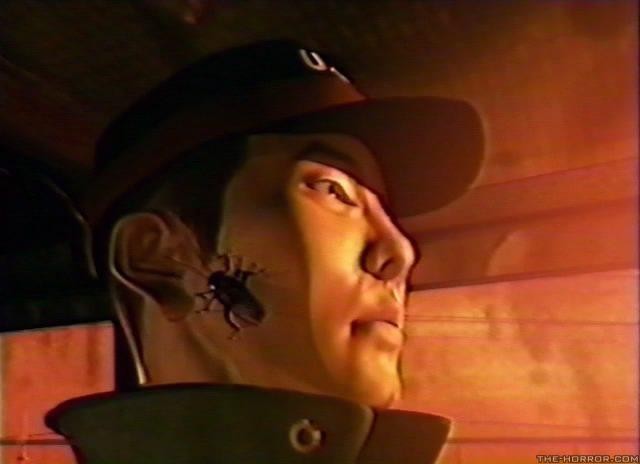
This will be a short, short review as, only a few minutes long, this piece in Ujicha's growing filmography of "geki-mation" is barely more than a fever dream. Searching for John, a dog, two men including a smoker with a robot arm enter a cave where animals are burnt to the wall with tempura batter. John the dog has tragically been deep fried alongside a variety of creatures, and the occupant of the cave has intentions for the intruders.

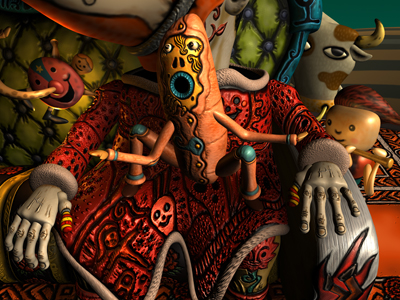
This, made before Violence Voyager (2018), definitely feels like a prototype to that feature film. A strange block headed creature is armed with small guns which fire dangerous ammo, in this case burning hot tempura batter from two guns. This short, if you had no context of its creator's career, or the fact the creator has a one name pseudonym based on "green tea", would baffle and surprise anyone. Never mind the fact one of the leads is also nude for some reason, but in mind that the art style is unique and tempura will never be viewed the same way again.

It has not really needed to evolve between The Burning Buddha Man (2013) to Violence Voyager, baring that Ujicha has jettisoned the live action sequences from the previous film, as the art style has always been strong. Based directly on a 1976 television adaptation of Kazuo Umezu's manga Cat-Eyed Boy, which was done in paper cut-outs, this is a painstaking art style to even finish for a very short work like this. Even if the animation process involves moving paper cut-outs by hand, and Ujicha (for gross effect) using liquids, the craft to draw these characters and the worlds in the background is a lot to do. It means a great deal, with his unique and grotesque style, that Ujicha can draw extremely well.

Again, this is an extremely short review, but we are dealing with a little fragment here. I am happy to have a piece here, for a little slight piece, just to repeat the virtues of this creator and hope he succeeds with future work.  

Saturday, 12 October 2019

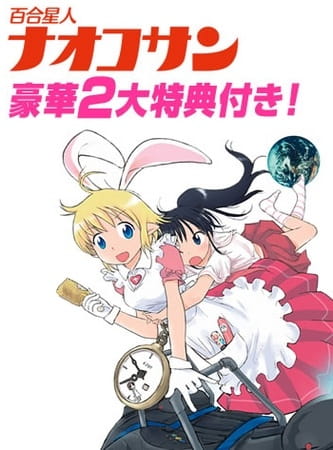
#121: Yuri Seijin Naoko-san (2010/2012)

From https://cdn.myanimelist.net
/images/anime/13/28214l.jpg


Director: Tetsuya Takeuchi
Screenplay: Tetsuya Takeuchi
Based on the manga by Kashmir
Voice Cast: Akari Harashima as Misuzu; Satomi Arai as Naoko-san; Ai Nonaka as Hii-chan; Yukari Kokubun as Ryōta; Kumi Kawai as Mother; Manabu Sakamaki as Alien
Viewed in Japanese with English Subtitles

In mind to ufotable's usual work, does this mean that Yuri Seijin, about a female alien who wants to "yurify" the Earth into a lesbian (yuri) planet, exists in the same universe as Fate/ and their other famous titles? For the uninitiated, ufotable is an anime studio whose reputation is increased by being the main adapters of the work of Type-Moon, whose Fate/ franchise and other work, originally a doujin (self-published) group who made visual novel video games and now has become a group known for having hardcore fans. Type-Moon, with ufotable being usually the studio to adapt their work, are a double-edged sword in that, with their titles interconnecting as one giant universe, to fully get the lore of their work would require reading and watching everything, coupled by the fact (whilst relevied by streaming widening access) their titles are the kind usually licensed by Aniplex, a production company whose American distribution wing in the United States can be notorious for their Japanese pricing of physical media, i.e. extremely limited editions and very expensive.

One shouldn't judge a book by its cover mind. Type-Moon also created The Garden of Sinners (2007-9), a unique theatrical film serial which, for showing their flaws, was also an incredible, grotesque and boldly unconventional genre hybrid. Likewise, ufotable adapt other titles. (They also like doing claymation sequences, which even with The Garden of Sinners they did comedy cinema ads with the cast asking patrons to not do bad things like answer phones or eat loudly, so to their credit ufotable have a charming additional bow to their cap). Yuri Seijin is not a ­Type-Moon title despite my initial joke but a curious obscurity in their filmography, but it is a curiosity.

Yuri Seijin is in fact quite a surprise, as it's something completely different, a comedy manga adaptation that gets away paradoxically with some tasteless humour yet is so whimsical and strange in its tone that I swear, even if it's merely I, it "just" gets away with it. The premise, which is only really elaborated on in the thirty minute 2012 OVA rather than the original six minute 2010 adaptation, is that schoolgirl Misuzu came home one day to be told her older sister has returned, only to meet Naoko-san, a female alien from the Planet Yuri, a lesbian planet, who is posing as her older sister. The tastelessness, implied but explicitly, is in that it has no issues with playing with taboos and strange sex jokes, like Naoko-san leaving porn magazines everywhere or the expense Misuzu's little brother Ryōta has especially in threats to his genitals, being asked to suck the snot out of her older sister's nose when its running and, despite being a young prepubescent boy, being pushed by Naoko-san in trying to pose as an adult in an adult store in a robot suit.

From https://i.ytimg.com/vi/uk82GttkBqg/maxresdefault.jpg

Also, its explicit Naoko-san likes little girls in their "cuteness", remarking on the virtues of girls playing in water any time of the year in one monologue in the 2012 OVA, or that to contact her home planet she has to pop underneath one's skirt to communicate on the receiver. Again this would be tasteless in any other context, and unfortunately anime and manga has taken this type of idea even into pornographic levels which don't help paint a good picture of Japanese pop culture even if it's merely a subculture used for unfortunate xenophobia against the Japanese. But with Yuri Seijin there's the factors that a) it's an intentionally surreal piece of weirdness in both OVAS, and b) is structured especially in the longer 2012 OVA as a whimsical, light hearted surreal comedy where these jokes are never explicit, and undercut by the sedate pleasant, brightly coloured mood of the style.

Now if this is still unpleasant to consider, don't watch these shorts, but the irony is that this is closer to an absurdist slice-of-lice tone in mood, closer to something like the high school comedy Azumanga Daioh (2002) in tone rather than a lecherous work, which is befitting as both source mangas were published in the monthly manga magazine Dengeki Daioh originally. And Yuri Seijin, even next to Daioh, where one of the female lead's father was depicted as a talking sentient cat, is deeply weird, honestly so. The six minute one, about a mysterious pervert roaming the streets that turns out to be a tentacle alien, is probably the weirdest of them whilst the 2012 one neuters this a little. It gets into slapstick where Naoko-san has succeeded the super punch further in that she can summon whole trains to run over people in the street, without killing them in cartoon logic, Misuzu is the butt of joke by being the figure on the wanted posters and thoughts in imagining who the creeper is to track them down, whilst her friend is fascinated by the aliens and relaxed about, porn mags are left on the street like leaves fallen off an Autumn tree, and the completely bizarre tangents that top what strangeness was already there before.

One the ending credits scene sat on one of those trains Naoko-san summons, and the cut to Misuzu's internal monologue which, involving a male voice in English going insane in existential despair, led to me thinking I had accidentally watched a fan re-edit for a moment like those you find on YouTube. That audio cut in particular is a bar further, in another dimensional space as height or depth are beneath it, than most anime I have covered in terms of true bloody weirdness and it was a surprise. 

From https://i.ytimg.com/vi/7Y0Pq1eMBzM/maxresdefault.jpg

The 2012 OVA builds a bit more drama and charming comedy which, yes, is strange against the deliberately provocative comedy; its candy coloured tone neuters it, adding as much a general sense of absurdist comedy in just having an eccentric new house guest in with idiosyncratic behaviour. This longer version softens the experience, making it merely eccentric, be it the subplot about Naoko-san having food from her home planet which makes all television sexier under the influence, which you never see the example of but naturally gets the interest of the entire male population in the city in earshot of this, leading to communal viewings of the Japanese morning news in droves. Young pubescent girls also apparently wander around this world in groups being paid to play in the background of festivals nonchalantly, which is part of the tasteless humour but was admittedly funny when Naoko-san has to cancel their hiring and still pay them nonetheless. In any other circumstance, this would be off putting, but there's no fan service to speak of, which a huge virtue for balancing the tone, and the show's overt strangeness makes these aspects a complete joke.

It softens the blow and a sense that the content is being written by someone who wants to take on this type of humour but is aware of the line not to cross, prodding at it on purpose, is felt throughout. If anything, the biggest surprise with the 2012 adaptation is how it even becomes sweet natured in the end, the life of Misuzu and Ryōta with a new big sister figure there for an absent one who may have accidentally been swapped onto Planet Yuri is one piece of dialogue suggests the truth. These two works also happen to be another blessing for female voice actors as even the younger brother is voiced by an actress, and everyone gets to stretch their comic timings. I'll eventually come to great examples of male voice acting roles in anime more, but especially with comedy, anime to its merit allows for this bizarre material a great range to work from, allowing actresses to be weird, to put on strange voices, and generally here get into some crass stuff on purpose, like the blasé attitude to the Misuzu's mother and Naoko-san over the porn mags starting to be left over the house. It really has grown on me how good you have to be for the work, and comedy be it improvised (which I have seen quite a bit of within only a couple of years) and normal scripted dialogue really is a pleasant challenge that helps you come to appreciate actresses' craft.

Is it any good? It's oddly charming, building from an utter non-sequitur of a first version to a lighter hearted one where you even get a skit about Naoko-san providing technology that allows people to see their fantasies; it does play to some dark comedy, but when it leads to people just sleeping through the entirety of summer, it's still whimsical of all things, like a warm hug to end the OVA on.  Neither short is better than the other, as their tones are very different, but it depends on whether you can get past some of the perverse humour and their general oddness. Between them, the first 2010 is a thing of just pure intentional madness, but it proved a virtue to have the longer, tonally different one run with the same material. It is a surprise duo that I wished had a longer form version; it might've lost its lustre but there is just the question to ask in what would've happened to try to stretch this premise out, which would've been fascinating to see.


From https://i.ytimg.com/vi/PhigifLwV_E/maxresdefault.jpg

Tuesday, 17 September 2019

#119: Utsu-musume sayuri (2004)


a.k.a. Striking Daughter

Director: Takashi Kimura
Viewed in English Dub

Another work in the "worst of" anime list, but unlike a Mars of Destruction (2005), which is terrible in creation but too innocuous to really hate, Utsu-musume sayuri was built up as gross and terrible. In reality, whilst a weirdo one man CGI short, Striking Daughter (as its English title is) isn't deserving of such a list accolade. It comes off instead as if a segment from a weird midnight show meant to baffle drunken viewers coming in from a night in the town, even when it comes to the incredibly broken and wooden English dialogue.

It is the initiation of a daughter of a strange family, a group of varying shaped mutants who are like the denizens of a shunting ritual from Brian Yuzna's Society (1989) if they even allowed talking cows in at the door. That reference is appropriate as, whilst sexual, the short isn't as gross as I had built it up in my mind. The ritual instead is spanking on very pronouncedly drawn buttock on a wanting, which is far from the worst thing I have heard (thankfully rather than seen) in anime. Three years earlier, the OVA/film Malice@Doll (2001) would tackle creepier, icky imagery of sexuality by way of a fascinating early CGI anime I wish was better known.

It's a maligned subgenre, usually held as terrible but for me a fascinating little corner in anime's forgotten history killed off by Final Fantasy: The Spirit Within (2001). Into the 2010s, very bad CGI animation still exists, where as I view this early period purely experimental, which leaves the likes of Striking Daughter instead equivalent to early experimentation. Certainly, this short also belongs in general to the type of experimental animation that comes from Japan.

In knowledge one man, Takashi Kimura, animated and directed this, I cannot hold it as terrible baring being a strange oddity, merely what resources he had and a clear sense of being deliberately "weird" at that. Certainly, its grotesque looking, but I'm fascinated by grotesque/obsolete aesthetics anyway, to which that is aplenty here in the bold colours and style, particularly as in context to its history, its better animated by one man in lieu to its apparent awfulness. The bigger concern is that, at less than three minutes, it's just a slight snapshot where I would always posit that something significantly longer is more likely to be dreadful.  

The thing which is likely to be the bigger issue, and definitely is ridiculous, is the voice acting. One male voice, who for all I know is the director, speaking in incredibly fragmented pronunciation of English dialogue which is roughly recorded. It's bad, but God knows in this era people would deliberately create work which had details like this on purpose; in this decade, it'd be considered ironic.

The length prevents Striking Daughter from being the worst. Three minutes is bearable if you have courage - we will wait when the equivalent of this plays over a thirteen episode anime, alongside the fact that whenever I encounter anything boring and/or offensive is when the reader will likely find me write something vicious and very negative. Nothing here is that, Striking Daughter practically a mole hill over built when you could not only see it online but YouTube reaction videos of others watching it.  

As for the director? He directed an episode Koi Koi Seven (2005), about the only boy in an all-girl's school whose wars are literal and silly, and that's it. Unless we've got a case of two Takashi Kimuras in existence, that's pretty small as careers go. 

From http://history.bifan.kr/upload/movie2004/
Film/04FTS_UtsuMusumeSayauri_1.jpg

Friday, 28 December 2018

#81: Biohazard 4D-Executer (2000)

From https://m.media-amazon.com/images/M/MV5BMzczNTBkYTAt
YjhhMy00NTYwLTgzZjAtMmJiYWMyNTNjNGQwXkEyXkFqcGdeQXVyNjMwODY0MTg@._V1_.jpg


Director: Koichi Ohata
Screenplay: Daisuke Okamoto
Based on the video game franchise Biohazard/Resident Evil
Voice Cast: Masaki Aizawa as Claus; Hiroto Torihata as Roger; Hideto Erihara as Ed; Tadasuke Ohmizu as Robert; Yoshyiunki Kaneko as Norman; Yurika Hino as Dr. Cameron
Part 1 of the Koichi Ohata Power Hour

Synopsis: Originally, a 3D interactive experience at theme parks and in booths, Biohazard 4D follows in the world of the legendary videogame series as a group of soldiers are sent to locate a female scientist Dr. Cameron, someone who has been working on the T-Virus.

Ah, Koichi Ohata...that's a name that both strikes both fear in to the heart and yet pricks up the ears of many an anime fan from an era before my own.  Fear because, whilst it has a fan base, the notoriety of M.D. Geist (1986) exists as much because it, infamously, was the pet obsession of Central Park Media's head John O'Donnell, who helped get it released, paid for a newer Director's Cut and a 1996 sequel, and was rewarding with the OVA selling hotcakes on VHS despite being a bad anime. Bad to the point, as well, even in regards of ridiculous, lurid anime from the same era it stands out as being terrible in comparison to others which are defended.

Pricking up ears however because, whilst it has its detractors and the last two episodes of the five are dreadful, Genocyber (1994) has its defenders who I'll pitch my tent alongside with, defendable just for the first episode for its lurid and grotesque body horror nonetheless having a nihilistic nuisance, even going as far as using shots of wet clay in just that first episode because Ohata clearly felt drawn gore was woefully inefficient. Arguably as much of its interest comes from Shou Aikawa during his nasty era as its screenwriter, a man behind some deplorable material, some controversial work (Legend of the Overfiend (1989)), but who also went on with acclaim to pen the scripts for the likes of Full Metal Alchemist (2003).

From http://s019.radikal.ru/i608/1603/0c/cf446d6a5d9b.jpg

After the nineties to today, though, Koichi Ohata like many from the OVA era have had odd careers as working anime directors. Ohata did have Burst Angel (2004), a briefly successful if not highly regarded series which existed; after that, well, Ikki Tousen sequels and far less ultraviolent schlock, more otaku bait shows with lots of titillation. You can map the history of anime, in aesthetic and trends, easily with directors as infamous as Ohata, not viewed as a great director, viewed more as a curious one-off, and with the caviets that you'd have to dare watch everything that came after his infamous career high. But he's still someone you can track anime's history with from the nineties with some legitimately interesting tangents.

However, for a mere taster, a bite sized snack of a review, how interesting it was for me to discover in 2000 he worked, with Capcom directly, on a Resident Evil tie-in. Now, Biohazard 4D (a far superior name than Resident Evil ever was) was an interactive movie you saw as a ride, so I confess not only of the dubious nature of seeing the short; but I know I'm missing out on it being in 3D and with other interactive aspects that were included, including a gimmick chair William Castle would be proud of that blew air at the back of a viewer's neck and moved.

From https://img.youtube.com/vi/u44WcBZi-XY/0.jpg

Unfortunately, whenever you have these unique examples of the motion image which have unconventional aspects (3D, even Smell-O-Vision) which are not easy to replicate, companies effectively lop off the ability to see a work over a long time and not even by their own fault. Unless a true archival action is taken so even a country bumpkin like myself could one day see an old 3D production like Disneyworld's Captain EO (1986), directed by Francis Ford Coppola and starring Michael Jackson, in its original context outside a large metropolis we're stuck into an accidental cultural elitism where few (if many) can see these productions. This'll be worst when Biohazard 4D, despite being part of a major and global franchise, was only available in its home country, in a Japanese dub only, with the added issue that bootlegs that exist don't recapture the full experience unless you get friends to move your chair and use a hairdryer.

Not helping in terms of historical virtue for some potential viewers, and immediately feeding into my obsession with obsolete polygons, is that it's part of the very early stage of three dimensional CGI animation in anime. This is a budget higher, clearly, than early pioneers like A.Li.Ce (1999) [Reviewed here], but nowadays it does look like a Playstation One cut scene. Old CGI is more difficult to sell than old hand drawn animation or sprites and naturally, Biohazard 4D has a stroke unfairly against it in terms of critical opinion. Ironically, considering this was Ohata's first try with polygons, and the two MD Geist anime are a t r o c i o u s in terms of their animation and production, he did quite well here to my surprise for what was always a schlocky haunted house ride.

From https://i.ytimg.com/vi/rHtRPbgGLrc/hqdefault.jpg

In fact, for what is for twenty minutes pure and un-defendable body horror schlock full of grossness, getting the director of Genocyber was actually a creative and clever staff choice. Executer proves the premise of Resident Evil is ridiculous, as no sane villain (even the Umbrella Corporation) should consider an uncontrollable and easily spread virus which regenerates and zombifies any living creature a wise financial investment, but Ohata for a large part of the film literally takes a viewer through the first person perspective of a zombified cockroach among the treats on offer, which is quite funny and awesomely inventive, clearly someone who wasn't going to take the project seriously and thankfully playing it up to the ghoulish delight of viewers like myself seeing it a decade or so later.

For a director who infamously, on the first M.D. Geist, just put together cool scenes with the screenwriter without logic and pissing off the animators as a result, giving him an interactive spectacle and telling him he can be as gory with sprite figures as possible was like giving a child access to a perverse chocolate factory. This is a major spoiler, but it shouldn't spoil the experience if you locate it, that when our soldier lead finally meets the elusive Dr. Cameron, her face growing out of another's say by him, it does evoke the second and third episode of Genocyber when an entire military warship becomes a living Lovecraftian horror who absorbs crewmembers, all arguing that Ohata should've with some helping hands become a much more well regarded figure if he either just provided the ideas for these images or you have Sho Akiwara and well regarded figures involved to spin the material out. Ohata's too nihilistic for his own good, man eating centipede robots in MD Geist II for no reason and an obsession with humanity destroying itself including the innocent in ridiculous ways, but he's clearly someone who with good screenwriters and animators to guide him along should've made some of the most striking body horror anime he could get his hands on.

From https://i.ytimg.com/vi/ugdW2MY4pHA/maxresdefault.jpg

Sadly, whilst gore anime is still made, his brand of gore anime with lovingly rendered split intestines dried out by the 2000s, another fascinating cultural trend is that for every infamously nasty production that still appears (many like Blood-C (2011) not well regarded for other production reasons), they don't have the same sticking power in the conscious. Or, for another theory, they've been replaced by the logic that it's acceptable to spill a lot of blood but a sense of being wildly less of interest just for the fact that, in his own career and for others, its more bankable for Ohata to draw nubile schoolgirls with physically impossible figure shapes rather than a niche he made. Usually I'd advocate more love, less violence in creative art in general, but when it's an uncomfortable sexualisation of underage characters and blinkered sex comedy without an ounce of eroticism, I might be mad enough to want someone to fund MD Geist III instead for a change of pace.

And yes, in lieu to referencing Captain EO, it's perverse in a funny way that, exhibited (probably) at theme parks Japan, a nasty and gory film short like this, with demonic crows pecking at people and spiked dismemberment, was once an interactive ride experience for a large public even if there were edited down versions to trim the gore. Its why in this case, I now wonder if Biohazard was a far better name in context as well as preference for a franchise than Resident Evil, one which is respected and acclaimed (especially after Resident Evil 4 (2005) and 7 (2017)) , but also wallowed in the schlock until the cows came home.


From https://kinolexx.ru/files/film/2017/9/5/39438/
obitel-zla-4d-palach-004.jpg

Wednesday, 22 August 2018

#63: A Branch of a Pine is Tied Up (2017)


Director: Tomoyasu Murata
Screenplay: Tomoyasu Murata

Synopsis: Following on from a major disaster, one half of two female twins contemplates the loss of her sibling.

It seems a rotten thing to cover this short, especially as after I'll praise it, you the reader will curse me as it'll be difficult to see. But to write about anime, I feel you have to step outside that term to also include Japanese animation in general, not only encompassing experimental work but areas like stop motion and puppetry. There's an unexpected delight in seeing eggs made from clay, painstakingly motioned into cooked ones in a tiny handmade pan, and as I hold animation above even most live action cinema, little details like this which have to be relied on to be made from imagination, reference and what materials are at hand are to be admired. To focus an image in movement to life is special in two dimensional animation, and likewise stop motion from any country is a tactile, arduous medium which ultimately rewards the creators.

From https://d32dm0rphc51dk.cloudfront.net/
KoAtSTsBDWwAnjLqHU_twA/larger.jpg

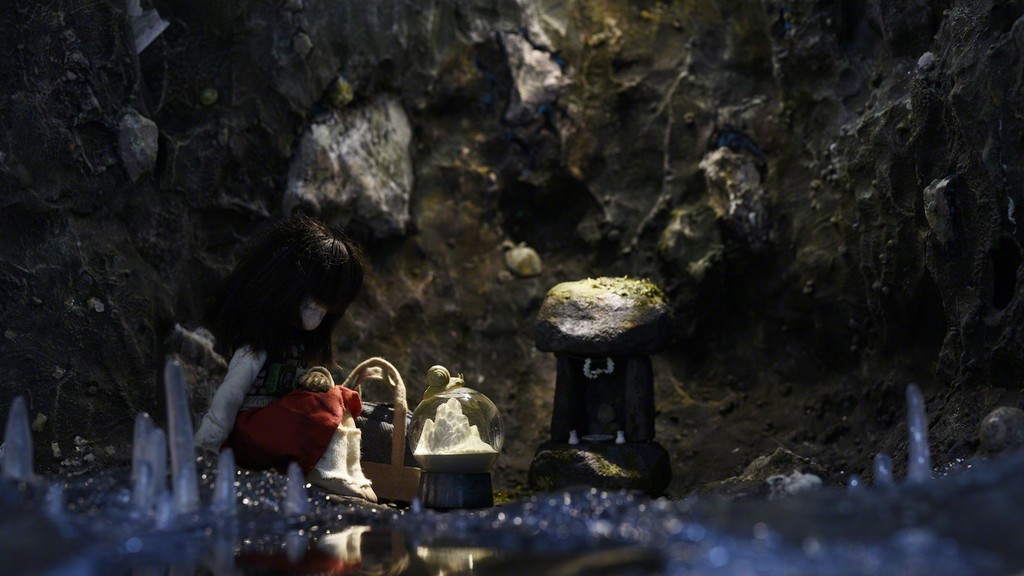
And in this particular case, seeing the literal gray sludge hand animated to subsume a model village, director Tomoyasu Murata is using the medium to touch upon centuries long history in Japan of natural disasters, the 2011 earthquake and tsunami one which is immediately evoked by the story of the film. That incident, and all the fallout from it including the Fukushima power plant crisis, has been burnt into foreign viewers' minds just from news images. But imagine actually being Japanese, seeing these images in a place on the other side of your country, or living where one of many entire towns that were swept away into nothingness were, or losing a loved one in such a town. Such images clearly had a direct influence on Murata's short, which uses a fairy tale aesthetic to deal with the loss that such an event would cause. Through two twin girls with doll like appearances - no lips until, when see using makeup in a fail, they're painted on, big eyes and identical appearances behind black hair - they are expressed as archetypes of curious, youthful figures caught in the midst of this.

Enough is painted about them to have sympathy. A mother briefly seen, with a haggard grey doll mask used enough before her disconnected sitting position is, and throwing an ashtray at one of the daughters' head when they squabble over a jigsaw, revealing more of her before that single scene leads to her immediate departure. The crammed, murky home with a full sink and dripping tap, tiny representations of junk food when the girls are left by themselves for a long time, representing their world isolated together before the disaster comes. A sense of playful joy when they spray paint on an outer wall, or when they are in the woodlands. Even a pastiche of the type of anime on their handmade television, involving a giant robot, normally thought of as Japanese animation briefly seen.

From http://voltashow.com/fileadmin/_processed_/
5/1/csm_MOMO2_38ced85d43.jpg

The fantastical elements feel less like escapism but part of the symbolism of loss and Murata's clear interest in the spiritual in terms of the material. A humanoid rabbit who, when we first see him, is actually performing a prayer ritual when the girls find him in a flower enriched woodland field. The giant snow globe of a mountain, connected to a realm one of the girls ends up in after the disaster, becomes as much a fairytale McGuffin as it tragically causes the separation, after a violent argument, between the girls. What the ending actually means, with one being with the humanoid rabbit, and shots of someone between them floating in the air, is entirely subjective but it cannot help but feel like a happy ending in spite of the tragedy that took place.

The resulting short, only seventeen minutes long, is beautiful. The music by Tatsuhide Tado, ethereal with tradition Japanese influences, helps as much as a marriage of visuals to sound, enough spoken without any dialogue. Again, it is a shame the short will be more difficult to find as it is the sort of work that many could love, maybe even find more accessible than more easily available "anime", but gets stuck in a festival cycle and never leaves it. Sad as it touches upon a deeply serious subject matter in a sensitive, exquisite animation style. Enough that I hope Tomoyasu Murata will eventually make a feature work or at least have a healthy filmography even of merely shorts, whichever way getting a wider access beyond his homeland.


From http://voltashow.com/fileadmin/_processed_
/3/0/csm_MOMO3_133793003b.jpg

Tuesday, 20 June 2017

#43: The Flying Luna Clipper (1987)

From https://www.msx.org/sites/default/files/news/2017
/04/tumblr_nz510npb8C1unpujno1_1280.jpg

Director: Ikko Ono
Viewed in English Language with Japanese Subtitles

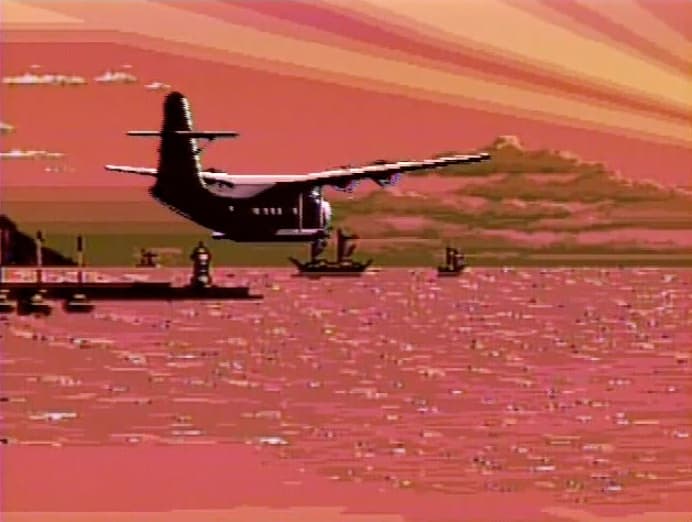
Synopsis: Having acquired a rare boat plane from the early 20th century, a Martin M-130, and renovated it to flyable again, a company offers a luxurious holiday trip in the Hawaiian Pacific for those who are the "deepest dreamers". Made with the graphical capabilities of a MSX game console, this film follows the flight patrons through a compilation of lessons and strange experimental shorts within its near hour length.

While this blog is meant to cover Japanese anime, it's be a crime to ignore the other areas of animation(1) that come from Japan alongside anime. The Flying Luna Clipper's existence, as a near hour long film made in glorious 8-bit game console graphics, wouldn't have even been known outside of obscurity in Japan if a blogger by the name of Matt Hawkins hadn't had found a second hand laserdisc copy. The result's a fascinating curiosity; the MSX is one of many Japanese video consoles from an early period of video gaming that would've only been known in its homeland, where the Metal Gear franchise began in fact, used here as an example of creative individuals experimenting with video game consoles beyond merely playable games to outright artistic experiments, be they interactive or not.

From https://i.ytimg.com/vi/6uD6pfH4q1s/hqdefault.jpg

Sadly, like many before and after, these experiments tend to end up doomed to obscurity or beloved cult works that are hampered by archival preservation yet to be publically provided to videogames, especially those which required idiosyncratic controls or require actually being re-released again rather than tracking down second hand, rare copies or online uploads of. It's a shame here as this is a proto-vaporwave head trip to experience, where the 8-bitera of illustration and character design created a colourful, Tropicana world of snowmen wandering around sunny Honolulu and palm trees at dusk. In spite of the limited animation, there's a lush charm from the incredible (and painstaking) detail, an old arcade game in its bright lights and sincerity. Adding to its strangeness and its warm hearted sense of accessibility is that it was likely made to appeal to Western viewers as its dialogue is mostly in English, moments of odd pronunciations in the voice acting against more solid performances which yet come from the mouths of moving portraits of cartoonish oddness. A black bird business tycoon, an air hostess whose a bespectacled banana, Polynesian bananas in coconut bras and grass skirts, a green haired chimp or living singing Hawaiian volcanoes =part of a more sexualised version of a Fantasia (1940) musical number.

From http://68.media.tumblr.com/9d5cdcc78b0362fc3059812988af41ac/
tumblr_nz510npb8C1unpujno5_1280.jpg

Japanese pop surrealism, the type of bubblegum surrealism not just found in videogames but in all their media, is absolutely charming. Unless you're viewing the spectrum which follows the traditions of the original movement in being transgressive, there's no sense of the more eccentric side of it of being merely commercial product, instead of cornucopia of full of cute anthropomorphic animals, talking plants, bright colours and spectacle, something I grew up with having a port of the scrolling shooter parody Parodius (1995) for the Sega Satan and hazy memories of episodes of Samurai Pizza Cats (1990-1). For all the darker, illicit areas of Japanese horror and dark fantasy which cross into the unreal and the mind bending, there's this opposite even when its occasionally morbid and full of sexual innuendo that's cute, silly and playful. The Flying Luna Clipper becomes a literal series of dreams for both the passengers of the ship and the viewer them self, the director of the animation literally one of the co-pilots of the clipper as it travels across the pacific ocean and even into outer space briefly. Barring one unfortunate image of a blackface character, on a TV in the background of a single scene, it's a surrealism that's a playful escapade.

From https://www.msx.org/sites/default/files/news/
2017/04/tumblr_nz510npb8C1unpujno6_1280.jpg

Alongside a lesson on the Holose taught by a seahorse with a Germanic accent, to music numbers, you also have material that could be shorts by themselves, one of the most memorable likely an older project by the director in 1986 which is live action, a playful music video of babies falling over, waterfalls and diving women that's charming as its strange, feeling the most dated of the whole work but not a detraction to its value. The whole film in general makes an argument, now becoming known again in a post-vaporwave world, for a period of late eighties and early to mid nineties pop culture as escapes for audiences that shouldn't inherently be dismissed outright for that reason, a lot of anime to videogames even in commercial industries that emphasised escape, dreamscapes and the purely fantastical. Far from cynical, The Flying Luna Clipper feels sincerely fun, more so as its brazenly (proudly) weird even next to a lot of actual anime, its end playing as a series of dreams as the closet to an actual protagonist swears the clipper has been a giant pelican for all this time in the tourist trip.

From http://68.media.tumblr.com/7fcd20cdd7e96eec6fabbbf2d048ac01/
tumblr_nz6uvp8CYj1unpujno1_1280.jpg

It's sadly a work that, unless a drastic re-evaluation takes place and enough people keep bringing it up in online topic, will be only known in a YouTube presentation, eternal gratitude to the man who pull the film again out of subterranean cultural memory but with an unknown time period of how long the upload will exist. Whilst from a period just before my birth let along childhood, it revisiting it for this review is why it was fitting to have moved away from videogames by the end of the PlayStation 2 to my permanent love for cinema instead. Less brightness and unexpected weirdness, the joys of childhood playing videogames scored by the soundtrack of Daytona USA (1993) and set in fantastical elaborate worlds, replaced by more "realistic" turgid aesthetics and a restriction in how games are meant to present themselves. I occasionally flick over reviews and clips online of new games, and alongside the cost and space required for new consoles, most of the actual games now are uninteresting for me to return to the medium. In spite of the apparent maturity of the medium in terms of storytelling, which I have to admire, as an outsider I'm put off by the mirrored sense of the bloated, store brand tone that also exists in mainstream cinema having infected the industry as well. In spite of its strangeness, there's a greater knowing sense of playfulness here in The Flying Luna Clipper I'd gladly recommend people explore if just as an antidote of this issue.

-------
(1) The last time something different from the mould was covered was number #24 Yuki Terai - Secrets (2000), a compilation of shorts and music videos for an entirely fictional female star which you can read the review of HERE

Thursday, 29 October 2015

#10 - Kakurenbo: Hide & Seek (2004)

From http://pics.filmaffinity.com/Kakurenbo_
Hide_and_Seek-632001110-large.jpg
Director: Shuhei Morita
Screenplay: Shiro Kuro
Based on an original idea
Cast (English/Japanese): Dan Green/Makoto Ueki (as Yaimao); Michael Sinterniklaas/Junko Takeuchi (as Hikora); Sean Schemmel/Rei Naitou (as Noshiga); Tom Wayland/Mika Ishibashi (as Tachiji); Veronica Taylor/Akiko Kobayashi (as Suku); Veronica Taylor/Masami Suzuki (as Sorincha)
Viewed in English dub version

From http://i.ytimg.com/vi/AR3AyHa7jzY/hqdefault.jpg
Continuing on with the discussion of (blog entry #3) A.LI.CE (1999) and three dimensional animation in anime, there's also the subject of cel shading, a technique which offers another visual palette in itself, turning computer generated images into what looks like 2D comic book illustrations. Its more well known for video games, making itself known through Jet Set Radio (2000), but it's been used in other media and has been seen a few times in anime. Kakurenbo, in only twenty plus minutes, follows a group of children who go to an abandoned and haunted city to play Otokoyo, a game of hide or seek where one is safe if you follow the neon signs and escape the various back alleys and tightly knit streets. Those who lose the game are supposedly snatched away by demons. One boy Hikora joins this particular game to find his sister Sorincha, who went missing after a previous game of Otokoyo. What's found in the city for the players are legitimately monstrous.

From http://www.fahrenheitmagazine.com/wp-content/uploads/
2015/01/KAKURENBO_FAHRENHEIT_4-620x300.jpg
In terms of the animation style, while it does show itself as being three dimensional animation on a lower budget, this is a very good example of practical and imaginative use of such a technique. Cel shading allows three dimensional animation to have a character to it, vivid in primary colours or at least the look of a cartoon with a visual dynamic to it. While a work from around the same time like Galerians: Rion (2002, which was released in the West in 2004) was already doomed to become dated, using the three dimensional animation style of A.LI.CE, Kakurenbo despite some blemishes still looks very good now through its distinct appearance. Wisely, to avoid the problems in trying to animate small but complicated details, the children all wear fox masks as part of the game of Otokoyo that are never taken off, reducing the problems trying to animated facial movements could've have. The demons are enormous or at least inhuman entities which don't need tiny, intricate movements or details to them either, reducing the struggle the production team has. The detail instead in found in the setting, a ghost town fully evoked as the characters trapped between the various corridors and areas trying to escape the monsters.

From https://bizarrocentral.files.wordpress.com/2012/09/kakurenbo19.jpg
As for the film itself as a short story, it's a moody piece, where urban lights of a rundown city have a pervasive atmosphere to them and the story ends with a creepy twist. It feels like a fairy tale and especially with what happens with the children caught by the demons, you get a story that isn't adult at all but does have a suitably ghoulish premise without an ounce of blood being shed or any physical harm being fully depicted. The fact that Japanese mythology paints the film in terms of its visuals is inherently a good thing. Like any country, the horror stories made within it are going to be influenced by the culture surrounding them, and from the costumes including the fox masks to the looks of the demons, it saturates Kakurenbo immensely. You get enough to tantalise but are still fed by what exists in the very short feature. Even if most of the demons are actually giant monsters, including one ridden by two smaller twin demons, they're suitably scary for the story.

From https://40.media.tumblr.com/tumblr_lu7arnfouq1r4h0ipo1_500.png
After this, director Morita made Freedom (2006-8), what is for some a sci-fi folly I'd gladly watch for the blog. It attempted to take the cel shading 3D animation here to a larger scale story, but Freedom was unfortunately stuck with people only knowing it for Katsuhiro Otomo being involved with it and the amount of product referencing for Nissin Cup Noodles throughout its frames. Morita has however helmed the television adaptation of Tokyo Ghoul in 2014, a new and very popular work whose visibility is clear when my obscure neck of the woods has volumes of the original manga on sale at WHSmiths. It's good to see that Morita went from this great start, even if it took eleven years from Kakurenbo, and might be on his way to a healthy directorial career. That it involves Tokyo Ghoul means his beginning with a horror story comes full circle with another horror story as his latest which is nice.