Showing posts with label Letter: H. Show all posts

Thursday, 3 October 2024

#280: Hellsing (2001–2002)


Studio: Gonzo

Director: Umanosuke Iida

Screenplay: Chiaki J. Konaka

Based on the manga by Kouta Hirano

Voice Cast: Crispin Freeman/Jōji Nakata as Alucard, K.T. Gray/Fumiko Orikasa as Seras Victoria, Victoria Harwood/Yoshiko Sakakibara as Sir Integra Wingates Hellsing, Bill Morgan/Unshō Ishizuka as Peter Ferguson, Ralph Lister/Motomu Kiyokawa as Walter, Steven Brand/Nachi Nozawa as Paladin Alexander Anderson, Isaac C. Singleton Jr./Takumi Yamazaki as Incognito

Viewed in English Dub


Hellsing, the original TV adaptation, was felt as a big deal in the day with hindsight, running with the Kouta Hirano manga that would gain traction in the West through its initial Dark Horse publication and a premise easy to sell, that set in Britain, vampires exist and the country has a group known as the Hellsing Organisation, lead by Sir Integra Wingates Hellsing, to stop them. This is in mind that, however, she does have one vampire initially on the payroll under her command, Alucard, a true anti-hero if one who has less interest in terrorising humanity, but gleefully waiting to fight powerful vampires whilst hating those who act like damned ghouls than the lineage he comes from. The original series was also part of a big moment for the studio that made it, Gonzo, who were properly founded in 1992 in a previous form working on animated cut scenes for video games, but started animated productions in 2000. This was an important point, as after the initial projects, Hellsing began in October 2001 at a time to prove themselves on not only a title like this, but also a huge franchise crossover with Final Fantasy Unlimited (2001-2002), a tie-in to the legendary RPG video game franchise from Square Enix.

Unlimited was cancelled from its intended fifty plus episode run, to trying to complete itself in twenty five, whilst it is telling Hellsing Ultimate (2006-2012), existing as an ultimate retelling of the source manga, left Hellsing 2001 as an abridged curiosity. Gonzo in its original form would survive up to 2009, before being absorbed into its owning company and be refocused as an animation studio, but even in spite of surviving, that initial version was lost which was a huge name. One which made a music video for Linkin Park, one which had big titles announced over the years in the 2000s, and made crossovers like Afro Samurai (2007), which was a collaboration with the West directly with Samuel L. Jackson in the lead role. Brutally, the flaws which made them also very divisive back in the time when I got into anime in the 2000s, as their titles were prominently released in Britain through the late distributor ADV Films, can be found with revisiting the thirteen episode Hellsing series.

Hellsing when it started was a nostalgic trip when it began, to the point this was a rare case of watching the English dub on purpose. A huge factor for this decision was that, alongside voice actor Crispin Freeman as Alucard, a role he became beloved for among others, this had the inspired idea which continued to Hellsing Ultimate that, since this is set in the United Kingdom, the dub would have British voice actors and regional British accents. Even the "fifteening" done here, infamously what Manga Entertainment did in adding additional swearing to multiple English dubs of theirs to up the age rating, befits the tone. If moments do feel shaky, there is, however, something very appropriate in general for this series and that added a nice additional layer reproaching the first episodes. Some of the actors are British, prominently Victoria Harwood as Sir Integra, who began her career in British television in one-off episodes of the likes of Auf Wiedersehen, Pet, whilst you have K.T. Gray as an American actress performing in an accent for another important figure established in episode one. That is the second female lead with Seras Victoria, a police officer who is sent out without realising it with her team to a vampire disguised as a priest rampaging in Cheddar, only to be turned by Alucard in one of his humane moments when he realises, to kill said vampire, he has to shot through her and offers the chance to live as his servant if she wishes not to die.

The series has a distinct style, a mood with interesting use of colour and having shots which feel more abstract for the "cool" tone, an action-horror at heart rather than meant to be scary, and whilst the later adaptation as straight-to-video episodes was ultra-violent, this can still be lurid. The music as well is very idiosyncratic, very good and very distinct, particularly in mixing in more electronic pieces. Sadly, composer Yasushi Ishii's career in animation is not as large as one would hope, considering how striking the score here was that he was brought back for Hellsing Ultimate if just for one episode. The use of Shine by Mr. Big, an odd choice of a US band who got big in Japan, has always stayed with me as actually suiting the tone, almost charmingly ironic for its lyrics and jaunty tone. Probably some of the best moments of this entire production is just the style, in terms of playing to the more overtly abstract images with its characters - be it drenching the screen in pure blood red, or decorating environments in just primary colours and some silhouettes. Alucard is revealed to be so powerful his body deforms to produce dog-like entities from his own body, or to melt and/or reconnect even from severe injuries, and in times when the macabre nature of the supernatural is played with, alongside its score, are some of the strongest scenes in terms of style for its own sake. The sense of freewheeling style is found in the next episode previews which take on a more goofy humour, breaking the fourth wall as Seras is interrupted hosting them, offering where this spin could have had more overt ambitious within its limits in story options.

There is the immediate sense Hellsing should have been twenty plus episodes long. This is not helped by the fact this was being adapted as the manga had not reached far enough major events for Kouta Hirano's story, which is felt in how the original promo video has the real antagonists of the later Ultimate adaptation and the manga, the Millennium group, a group never seen in the 2001 anime series who are literally Nazis with vampires and werewolves among their rank. Personally, however, this would have not necessarily been a problem for this adaptation, even if a blasphemy to fans of the source material, if it had managed to tell a story of its own with some interest. I have always felt Gonzo's true curse was always slipping in the midst of their productions, be it slipping in pace or rushing their finales, something which could not be blamed on a case like Final Fantasy Unlimited where outside circumstances were also involved, and is felt here.


Chiaki J. Konaka is an odd choice for the main screenplay. There are flashes of his career style, a very unconventional storyteller who esoteric plot structures and details, but for me this is arguably one of his weakest works. Even in mind he had been involved with some unconventional work by his standard by this time - namely Futari Ecchi a.k.a. Step Up Love Story (2002-4), four episodes of an erotic romantic comedy about a newly wedded heterosexual couple figuring out their love life. That at least had only four episodes to work with, and was interesting as a real tangent for him, an imperfect work in some gender politics but mostly a wholesome comedy about adults who love each other that, even if for a targeted male audience, was horny in a positive way. Hellsing in contrast is something he could have worked with to interesting areas, as it could involve conspiracies involving the Vatican, who are antagonists to the Hellsing Organsization, and the weird place a vampire or two are within working with vampire hunters, let alone Seras' position as a vampire who refuses to drink blood and feels complicated emotions of her place. This is in mind that, least to stay faithful to the source, it is a violent work, but also one about bombast. The tone of the source can be summed up that, when Seras gets a new weapon from Walter, a butler who is a former (still dangerous) vampire hunter who uses razor sharp wires, the aforementioned Harkonnen is both a direct reference to the version of the character from David Lynch's 1984 adaptation of Dune, and uses depleted Uranium shells, only possible to be carried by a super strong undead officer like her. The tone of the source which would be emphasised for Ultimate - a story which can get really nasty and gory, but is also a story created by a manga author with a thing for fire arms, wacky comedy and vampires with guns being cool - could still have Konaka's voice. There are moments of idiosyncrasy as he is having to create a new story by the midway point, but this is instead a compromise.

He does introduce for this version of the story a microchip turning people into artificial vampires, which is interesting as a concept, or the likes of a snuff film episode, but this is absolutely a case of a work which could not adapt the intended version, because it was not put to page yet, and the issue Gonzo were faced with here of only thirteen episodes to work with, likely with the possibility they could have continued on but not earning a second season. They have to paradoxically adapt as much as they can from the source but not enough time to complete their attempt to close this narrative off cleanly afterwards. This is felt with one of the other prominent details which yet has to be abruptly ditched by the last episodes, that in this world there is a Catholic versus Protestant slant, where the Vatican has their own vampire fighting forces, including their own agent Paladin Alexander Anderson, an artificially superhuman killing machine, and are openly antagonistic of the Hellsing organisation. This as what happened with Chrono Crusade (2003), a work which helped me get into anime but, also having read the manga, was effected by not having the whole work and needing to take liberties, some of which may make revisiting the adaptation be an example of nostalgia failing. That at least had a good twenty plus episodes even if it had to rush in the final episodes a new plot, so Hellsing is in a worse place attempting to compensate with orchestrating a new narrative, but struggling with few episodes to get to this.

It adapts up to the attack by the Valentine brothers, two vampires who storm the Hellsing headquarters, becoming the whole more fleshed out massacre in the second Hellsing Ultimate episode, and afterwards is fully on its own narrative rails after establishing the plot threads beforehand. The set up for a new narrative does promise a lot of interesting details if this had been its own show - a female vampire, permanently a child yet wise beyond her physical years, shows the moral issue of the Hellsing Organisation's goal to eliminate vampires when she lives in peace, a brief flicker of Konaka's style. Then there is the new villain, another vampire in human servitude of actual power named Incognito. He is a cool concept, a figure with idiosyncratic markings, body paint, and a long limbed figure who is a really cool character design. He comes with a huge caveat that he is meant to be a vampire from the African continent, and in the 2000s of all times, there are details in his portrayal which have not aged well at all. Alarm bells ring, alongside tribal music in his introduction, where a term (I apologise for having to quote) is brought up of him coming from the "dark continent", evoking all the problematic stereotypes of African black magic and occultism as depicting by white racist colonialism. It is a shame as, even as a villain, a vampire from a drastically different world to Gothic Carpathian Europe is distinct. With tribal paint that is part of his ability to even distort environments to cut people to ribbons, and as someone who can produce a grenade launcher attached to him by a gold chain that has magically touched spikes in shells as ammo, Incognito is a really fascinating concept to have, appropriate too for the tone of the source. It is a shame he fell into some tasteless nods to old problematic culture and gets little time, either, to be fleshed out.

Hellsing is okay, even if it just eventually ends up with vampires shouting at each other as they use super moves, its many flaws not dissimilar to so many anime before and after. Ultimately, and this is not an intended nod to the Hellsing Ultimate adaptation, this project was always going to struggle with the hindsight. This just belongs to a long list of anime over the years where the production tried, and whilst there are virtues, I can say it does not become iconic. Alongside the fact I like horror anime, so titles like this do stand out more, the knowledge that this kept happening for Gonzo is more tragic. They would have the likes of the Full Metal Panic franchise for the first season in 2002 and titles which are held in good regard, such as Gankutsuou: The Count of Monte Cristo (2004-5), held as their best animates series and one of the most distinct of the 2000s even aesthetically, but from the shows I remember growing up with and revisiting, they struggled reaching the finish line for the series they produced. Saikano, known in the West as She, The Ultimate Weapon (2002), which came a year later to Hellsing, is an admirably strange and bleak anti-war story, but that also has a strangely rushed ending, and then there are the likes of Yukikaze (2002-5), their celebration of their own anniversary which spun out of control, taking a long time for a few episodes to be created, and also ended up with a rushed ending despite being a straight-to-video production where a tight schedule for release would have not been an issue.

Gonzo always had a sense of being cursed, the curse for me always that they struggled at some point within productions to be able to finish their narratives and pace them carefully, or simply that in the timeline of 2000s, their titles which got prominent advertising were not the ones people fondly remember as even hidden gems from the decade. I got into anime in the 2000s in my teen/young adult years, so Gonzo as mentioned were a prominent name thanks to ADV Films, and my youthful memories, whilst acceptable to properly critique these series nowadays, is that I found myself viewing a show like Trinity Blood (2005) or a Burst Angel (2004) and finding them not sticking to memory, which is alarming as Gonzo were a company sold as prestigious in terms of the look of their shows and, ultimately to their fall, with a lot of higher budget productions in their schedules. Hellsing itself has virtues but it was clear from the get-go this project's pace to just thirteen episodes was against itself, and considering its premise even without the burden of the source material, there were many times here too for the good moments where this felt like a sedate take of a more wildly over-the-top horror-action story. This version of Hellsing clearly meant enough for me as I owned the old ADV Films collected version back in the day, but watching that exact set for the first time in a good decade, I held no nostalgia in terms of a high bar, always with knowledge this was a flawed production. Revisiting it, I realised this from the first episode.

Tuesday, 22 August 2023

#259: Hell Target (1987)


Studio: Nakamura Production

Director: Keito Nakamura

Screenplay: Kenichi Matsuzaki

Voice Cast: Akira Murayama as Kitazato McRoe; Katsunosuke Hori as Hans Kruger; Kōichi Chiba as Yura Treyanov; Gara Takashima as Meryl Brown; Hirotaka Suzuoki as Harry Howard; Ikuya Sawaki as Rico Fernandez; Kaneto Shiozawa as; Jean Müller/Jean Myaura ; Shingo Hiromori as Chan Li; Sumi Shimamoto as Tiki Carmack

Viewed in Japanese with English Subtitles


In the far-flung future, a space ship ventures out to a strange red world where a previous crew were lost upon - looking like copper art at times where you need to scratch the black surface of for the image created underneath, especially due to the history of this one-off straight to video work in terms of preservation. It is pretty much an early warning of what they are in for when one of their male crew members dreams of a monster perusing them on the landmass they will land on.

Note, out of many OVAs, Hell Target can be found in a version best described as shot through a dirty sock, a title which strangely never got a Western release despite the fact even Roots Search (1986), a notorious sci-fi horror one-off, managed to in the day. Travelling to this planet, the ominously named Inferno II for mission, obviously you get the vibes of this being another anime riffing on Alien (1979), as did many live action films in the day too. In truth, this is probably riffing on one of the films trying to capitalise on Alien's success in the ultimate irony, as the premise here, of a place of monsters who attack and kill their victims by psychically filling their minds with hallucinations based on their fears, evokes the Roger Corman produced Galaxy of Terror (1981), of a similar premise.

It is a curious touch in terms of what inspired this - compare this to Lily C.A.T. (1987), a feature length one-off which was released in the West and was openly a remake of Alien in its own way - and as a result, this has its own idiosyncratic mood, of a strange gigantic monsters who yet kill by causing hallucinations, such as snow falling inside a cockpit despite being also on a desert planet. There is a satanic mood or at least a demonic one too to these figures, with supernatural edges to them, and fittingly, in the best way for any anime from this era, it gets stranger in its aesthetic choices in depicting this which stand out. The acidic blood is taken from Alien for one of the few ultra gory scenes, a reminder of what era this horror tale comes from, but there are definitely gorier titles from the time, and eventually you do see some idiosyncratic touches which this can proudly say managed to make its own. Zombies of former victims is obviously expected but a Valkyrie attacking a space ship on a flying horse is not a sentence I would have had to include for science fiction, nor one eyed spirit God birds. Credit the anime, it goes for a weird mash-up of ideas than just remake Alien, if structured around the simple template of a slasher in picking the crew off one-by-one.

In terms of the story altogether, Hell Target can be accused of being very simplistic as the cast do fit the term "disposable" filly, which is going to be something you have to accept though with the advantage this is at least less than fifty minutes. They do not even really fit stereotypes either, barring the two who matter, the female lead who is stereotyped as more "feminine" and in peril a great deal of the work, and the stoic male lead, and barring the abrupt moment the pair have a sex scene, to clear their heads after witnessing their colleagues get slaughtered on mass and terrorised by the likes of a sentient tank, there is nothing that remotely ludicrous or distinct about this cast beyond that moment. One of the obvious issues that you can see in a lot of animated and live action works inspired by Alien, all in spite of the fact that film explicitly went out of its way to make its characters idiosyncratic, is how you can end up with a lot of pure "canon fodder" which you cannot even appreciate as stereotypes, a risk also the slasher genre can suffer from, and this anime production does as well.

It helps the work has an ending you could find in a macabre horror tale, bleak in outcome, Hell Target a work that has to be appreciated as part of a moment of single entry productions which allowed their creators to improvise original stories and flex, even if as full narratives they are not all perfect. This title came from Nakamura Production, a company who are prolific in areas like in-between animation to 2nd key animation, a studio who deal with working on productions for others in a vast number of titles, from entries in the Gundam franchise to the series adaptation of JoJo's Bizarre Adventure. Work like this is important for animation, but they themselves only produced one work of their own in Hell Target, which is strange to consider, that for a company founded in 1974, they exist more as a support studio for others and only expressed themselves this once. This title, again, surprisingly never got a release in the West despite not having any specific cultural traits as a Japanese production, and found itself in danger of potentially being lost were it not for amateur online perseveration, making it a legitimately curiosity thankfully preserved in some way even if not necessarily a masterpiece in its context.

Wednesday, 23 November 2022

#235: Hantsu x Trash (2015-16)


Studio: Hoods Entertainment

Director: Hisashi Saito

Screenwriter: Keiichirō Ōchi

Based on the manga by Hiyoko Kobayashi

Voice Cast: Maaya Uchida as Chisato Hagiwara; Yūma Uchida as Yōhei Hamaji; Kenta Matsumoto as Nakajima; Saki Yamakita as Maki Hayami; Shizuka Itou as Manami Miyoshi; Yurika Kubo as Mai Shinozaki

Viewed in Japanese with English Subtitles


Hantsu X Trash is not really defendable. It is neither a full work, as these are three episodes (two over twelve minutes, the third over fourteen) are part of a trend of creating tie-in anime that comes with the manga, the first bundled with the 8th volume of the manga on October 6th 20151, the second bundled with the 10th volume of the manga in June 6th 20162, and the third and final one bundled with the 11th volume of the manga on November 4th 20163. Together, they are not politically correct a sex comedy about the high school male water polo team who is more interested in the female water team, though maybe it is my cynical nature, but considering some of the far more tasteless and sexist content I have unfortunately come across, the less of two evils argument is here. It is still indefensible, as jokes include spying on the female team bathing, which is sexual harassment in real life, but somehow pales next to worse content.

It feels like a throwback, the source manga published originally in Weekly Young Magazine, a young men’s publication which published the likes of the original Akira magazine, but also in the 2010s with this published titles with names like Does a Hot Elf Live Next Door to You? (2019–2021) by Meguru Ueno, sex still something which sells as in the past and still now, only with this one feeling like it has inherited clichés that came from decades earlier. Episode One introduces Yōhei Hamaji, a poor guy doomed like many male protagonists in these sex comedies to have constant head trauma, a young man who has one clear love, his senpai Chisato Hagiwara4, one of the committed members of her team, even if like the other men in his team, he is also one with a fixation on breasts, as those making these shorts clearly were. Hoods Entertainment made their bread and butter on titles like this, whether explicit in content or implied. From them are the likes of The Qwaser of Stigmata (2010), infamously the animated show about breast milk powering one’s super abilities, or Mysterious Girlfriend X (2012), a truly bizarre series for me to experience in that, for all its sex comedy, it is actually a sweet romance between a guy and an unconventional introvert of a girl, which however involves her saliva having addictive qualities to it. They are an animation studio who has no qualms in the slightest to even unconventional fetishes let alone lewdness, this in comparison tame even if it does not help defend the content either.

These are part of the modern OVA movement, the straight-to-video era into the 2010s involving for more tie-in extra episodes or specials for existing shows, or tie-ins to manga we never get over in the West, rather than adaptations or unique titles we were still getting into the 2000s but have dwindled out. A lot, as here, are also entirely for the sake of animating nudity, these three episodes not even lewd ecchi, neither hentai, but devoted entirely to bared animated breasts. TV series are censored for television, they sell their physical releases for this content being uncensored, in this case only the sense this was a far obscure work which someone felt was not able to sell for a full television series. What is also is, even if of a different culture, is the equivalent of the American high school sex comedy into the 2000s, like Road Trip (2000), tame works baring their brief scenes of nudity, and with all the potential issues of sexism and their tones to consider upon actually watching them.

Episode One warns of this in the content, though as I will get to, this is following the trope that, whilst still objectifying the women, the men are punished painfully for comedic effect, which has always been a curious side to Japanese anime and manga in their sex comedy in that they constantly undercut their male characters, in work targeting men in their gazes, in being completely immature figures. Even what could be seen as a gay panic running gag undercuts itself in presentation, where Yōhei keeps imagining erotic fantasies of Hagi-chan, whilst recuperating in the nurse’s room, only to keep envisioning Nakajima, a team member looks in his late thirties with sunglasses permanently on, because of the strange tone to it. The main joke for that first episode, whilst Hagi-Chan is the woman he loves, Yōhei is someone clearly who has both an obsession with large breasts, and that due to the tone of this joke, far from homophobic it comes off like he is denying his bisexuality. If not latent desire to buff his team leader’s nipples, his super ego denying his sexual desire is a really unconventional, a mind which envisions Chisato being seduced by one of her teammates Shinozaki, someone who is very physical with her friends, and in a more complex show than the fragments we got would have been compelling, even if tasteless, for imagining the sexual id of a guy who is confused in a lot of ways about his sexuality even if there is one girl he loves dearly. That is as much trying to stretch out a sex gag which most would roll their eyes by excusing it through a layer of amateur interpretation, but that becomes the most interesting thing, even if by accident, how much of this does become a curious gag anime about the strangeness of the male libido, even if the work is not great.


This is still an anime about the male water polo team being perverts, even with episode three having them trying to spy on the female team so Yōhei learn the nipple colour of the woman he loves, words I cannot believe (or defend) recording as dialogue. This follows however clichés common in anime, including that this always leads to the men being punished as already mentioned, one going too far in his delirium seeing one girl naked he even gets a baseball bat up a painful area. It is a strange paradox of getting away with behavior in real life with these fictional characters which would not be (rightly) justifiable, more problematic by the time these episodes were being released, with explicit nudity here shown to the viewer, only to punish the male characters for their libido. The female teacher for both teams is neither helping in breaking teaching ethics too. In Episode Two, she even made a promise to let the male team touch her breasts if they won a match, three seconds only each, and has a desire for Yōhei beyond the boundaries of teacher-student relationships, only with the issue that he loves Chisato and wants to keep his virginity except for her undercutting this.

None of this has aged well as, least in the English speaking world, content like this is considered more and more taboo even if this title is from the 2010s and was an obscure title which is not commonly available. Most would rightly not want to watch this, which comes up just past the thirty minute mark only, but it is here too though, so I do not come off as a hypocrite, where I admit I did laugh. Every time it was entirely when a clear theme was up front as the joke, of how every male character here is as thick as a brick, even Yōhei, whose obsession entirely to breasts is to the point they all believe touching them is enough for an orgasm for a woman, which is comical and in an actual relationship would been the most embarrassing reality check they all could have. It is the kind of premise which, for all the content here with is clichés from previous anime and not aging well, still hits close to home as a joke at mocking the male heterosexual libido. More so, as I have seen titles which have casual edged into sexual violence and far more misogynistic content, this feels more antiquated and with this Super Ego slant to how the joke always punished the male characters, even if the plots here are not defendable and yet reward with their explicitly topless nudity, Here there is a scene of all the swim team on the floor just from touching their teacher’s breasts, or that she has beaten them all up for not following the three second rule, the exaggeration here of these male character coming off as something itself ridiculous to laugh at, that image in itself the encapsulation of what is clearly the joke but also unintentionally the theme, even a neurosis, running through this.

It is sexist? Yes, though this crude OVA accidentally nods to this paradoxical tug of war between titillation and punishment which is interesting if perverted. A story is also here if there ever was a sense of trying to tell one out of this, the romance between a sex fixated Yōhei who yet wishes to be a good person for Chisato, a romantic triangle set up in the finale episode with another girl on the water polo team with a crush on him. Not many of the cast are set up beyond this, though the premise of a sap like Yōhei trying to balance between water polo and his libido is a premise that could be good, as most could, is focused and were trying for more than clearly here. That this is not really a water polo genre story, and likely is not in the source manga, is itself disappointing because, as a genre hybrid, a sports show combined with absurd sex comedy and romance would work, or least be something really original.  

What you get here, just over thirty minutes, could have been a pilot if released separately into three parts. Its content, even if I found aspects funny, does come with my own guilt that, absolutely, and that episode two does at times look rough. It is fascinating though, as a lot of shows still had this tone of sex comedy, even the badly aged content, over the decades before into the modern day, this one fixated as much on the stupidity of its male leads as much as clearly exist to sell its titillation. I cannot help but contrast this too, back to the concern of the lesser of two evils argument, in mind to other anime I have seen which have more problematic content, where this is still not the place I wish sex comedies were in, but with far worse out there. I think of the first season of High School DxD (2012), which I once watched to cover for a cult film blog I wrote for anime rated for eighteen year olds in the British Isles, where alongside one of the female characters (at least one) being uncomfortably young looking, there was an extensive Pokemon parody within one episode with tentacles that I could have done without. I think of the shock of an obscure series like Sakura Diaries (1997) when I returned to it; for the most part a sweet natured toned sex comedy even if about cousins, it abruptly (including its ADV Films English dub) enters some horrifying misogyny and the male lead nearly considering raping his cousin, only to brush that aside for the rest of the premise. No, the gag of spying on the female water polo team bathing is not justifiable as a joke, but it is antiquated like an American Pie film inexplicably appearing in the cinemas in the 2020s, rather than just uncomfortable to sit through.

Instead this evokes Colorful (1999), a micro-series anime. Whilst the question of whether its content is defendable means revisiting it, its humour was less sex humour, vignettes about men trying to see women in their underwear, or the garments under their clothes, but the jokes entirely about how ridiculous these men were, and the punch lines making them look like egits. Whether that has aged well or not is to debate, but you look to these works which are as much the joke is a guilt reflex of the creators, and they are fascinating even if Hantsu x Trash is very conventional even in the genre. In the perfect world, these types of sex comedies would not involve this type of sexual harassment humour – where even Hood Entertainment with Mysterious Girlfriend X, with its fetish some will find off-putting, managing to have at its center a pair who really liked each other and embraced this quirk of the relationship. Yet that is the only sin of Hantsu x Trash, a slight production, one which will likely be forgotten as an actual anime production, but managing to produce far more here on paper than what these thirty plus minutes should have produced because there is stuff here of note it accidentally spells out. That, and because one wishes there was an erotic water polo sex comedy out there which was more wholesome and progressive with this tone even if still breast fixated.


======

1) Hantsu x Trash Manga Bundles Original Anime DVD, written by Karen Ressler and published by Anime News Network on August 23rd 2015.

2) Hantsu x Trash Risque Water Polo Manga Bundles 2nd Original Anime DVD, written by Karen Ressler and published by Anime New Network on April 24th 2016.

3) Risque Water Polo Manga Hantsu x Trash Bundles 3rd Original Anime DVD, written by Rafael Antonio Pineda and published by Anime News Network on September 9th 2016.

4) Maaya Uchida and Yūma Uchida, the voice actors for these lead characters, are siblings, which is somewhat an odd casting choice as romantic leads. That is not a slight against either of them, Maaya the older sister, both prolific in their careers, just an odd choice which I hope they found funny in hindsight to what happens in the show. 

Friday, 30 July 2021

#195: Hi-sCool! Seha Girls (2014)


Director: Sōta Sugahara

Screenplay: Sōta Sugahara and Masayuki Kibe  

Voice Cast: M.A.O as Dreamcast; Minami Takahashi as Sega Saturn; Shiori Izawa as Mega Drive; Yuji Naka as Center

Viewed in Japanese with English Subtitles

The immediate thing to talk about, re-interested in video games again, is in mind that I missed a great deal of the history of gaming even in my childhood, but especially after the mid-2000s onwards when I left video games in favour of cinema as a hobby. If I decided to invest in a console whose content interested me, it would also have to be a console that took to my tastes, or if a PC was able to be sustained to play idiosyncratic games, as even in my childhood I was more inclined to odder and more colourful games. Only limited pocket money undercut me, missing out on a lot of titles which are sadly very expensive to buy second hand, the kind due to an unfortunate habit of the medium being young and archiving not fully invested by all by admirable individuals (or publishers), are titles that would have to be sustained on emulation to preserve and play them whether a good thing or not. Some thankfully are restored and re-released, hopefully something that will grow as a sevrice, but a lot of videogame history is still out of reach.

This is of note as, whilst the past is full of deceptively hard games, and some terrible games regardless of age, what we call "retro" appeals particularly in the nineties, a time I barely sat through, is important in both the background of today's review and place in its history I have growing fascination with. This was the fifth generation of consoles came to be, and this is actually worth bringing up in this review as, whilst one of the consoles talked of in the show comes in the sixth generation, this was the time in the nineties which would tragically lead to Sega's downfall, the video game software company who was once a hardware developer too here celebrating itself here by collaborating with Sōta Sugahara, one of the creators of gdgd Fairies franchise.

It is impossible to think of their legacy in this odd premise, to use anthropomorphism to their hardware as cute girls. Entering Sega Highschool, where their anthem is as short as can be if you know the famous "Sega!" musical cue in front of their old games, they are Mega Drive, Saturn and Dreamcast. They represent a history where Sega would leave the hardware race. Under the shadow of Nintendo, whom had a chokehold on gaming, Sega found a success especially in the West with the Mega Drive, here portrayed a bookworm who is intelligent but cannot dance to save her life. Saturn, portrayed as the straight faced figure aghast at the absurdity, has a complicated history as a gaming system: the fifth generation was when three dimensional polygons over sprites became a factor, leading to the future but also leading to great sprite based 2D art being dismissed, and a lot of consoles like the Saturn awkwardly having tech added to have 3D games, a console which was a failure in my home country of Britain but has a cult legacy of a longer time in Japan. Dreamcast, here the eccentric and silly one, whose ability to access the internet sadly comes with a long load time, probably deals with the most tragic of the three real consoles, a console which innovated in the likes of internet connection, but only lasted between 1998 to 2001, leading to Sega giving up hardware fully.

There is a lot of this show, a farce where the trio have to win over a hundred medals in games to graduate, that requires knowledge of Sega to get the jokes, but also one which paradoxically does not do this enough or not embrace this in the end fully. I think, in hindsight, this would have been a much better show, alongside the issue of how quickly and abruptly it concludes over thirteen episodes over eleven minutes each, if it had really stuck to being a time capsule to Sega's rich gaming past, and its weirder productions, with the gdgd Fairies template allowing for affectionate parody and a lot of deeply surreal results of mangling old properties or them straight faced.

The first episode continues the trademark of gdgd Fairies of inane conversations between the main cast, but it is immediately followed up by one of the two best episodes, parodying Virtual Fighter (1993), a game I did have growing up with the Saturn. You do not really need to know the game for the jokes, though they went as far as reference famous real players in competitions; instead, the humour about when the game fails or what can be exploited. You can still find it funny when the episode mocks certain moves being so destructive they can be spammed, Dreamcast borrowing a Virtual Fighter character's diving head butt for wiping out most of the opponents, or when the game has to drag in unexpected competitors. You learn, with a giant beetle getting involved, that Sega did make a game based on the (problematic) Japanese activity of capturing beetles and having them wrestle each other, or an anime connection, that alongside the Saturn in Japan being a well of tie-in video games, Sega and the console were the genesis of Sakura Wars, a franchise originally in video game form, set in an alternative 1920s Japan, which in still going and has animated adaptations.

The other great episode does not even need references to be funny, its subject Space Channel 5 (1999) already an eccentric product, a musical story with sixties sci-fi space pop aesthetic about a female reporter stopping an alien invasion of a space station by dance. Already it is strange, it is stranger when the main leads have to worry about ratings as her fellow co-reporters, and then the game malfunctions, when a fighter from Virtual Fighter (the Australian Aboriginal character Jeffrey) becomes a ratings hit with just being shirtless and only able to say "I win!", and when Saturn gains the affections from a dwarf character from the fantasy game Golden Axe. It is weird, in a perplexing way, that part of the running jokes is Saturn being forced into a bikini to increase the ratings; it is funny she is docked medals in the end due to offending family standard groups, but again throughout the series having a console I did have become the gazed over female character is weird. That she is the one, in the series' running gag, viewed as the most attractive one and sexualised, that did become strange for this and raising a completely awkward question about these shows about anthropomorphising an object probably not wise to delve into for the sake of taste.

The thing of note is that, at thirteen episodes, there is not a long time to really delve into this premise, especially as no sequel or spin-off was ever commissioned as an immediate tie-in, a huge issue with many of these micro series. This, with its ultra obscure references, had enough to parody for a longer time, causing one to think this had to be cut hastily in production by its swiftness in closure, or the more likely issue, that micro-series in their nature really have an issue of being too short to stick out unless you have something really idiosyncratic on your hands. gdgd Fairies was a one-off in many ways, from others I have seen, just for having a second season, let alone a theatrical film and spin-off, where they already established the premise and could run into stranger and more creative directions, even a multi-episode arch involving time travel paradoxes. The humour is curious here as well as after a while, it does not jump fully even into the videogame structure baring recreating gaming scenes as action sequences. Automatically you would think a lot of it would be hard Sega references, including titles never released outside Japan, such as one episode being around the arcade mecha game Border Break that never came to the West, but instead a lot is light hearted slapstick and silly dialogue you would get into other shows. It never gets as weird as gdgd Fairies sadly, nor as weird as Sega could be, as we never even get a reference to Seaman (1999), a virtual pet simulator if you had a human faced fish creature you could talk to and had Leonard Nimoy as your guide.

Neither is there the dubbing pond from gdgd Fairies, where the voice actors for real adlibbed over footage of pre-existing computer models, and many of the games covered are eventually Sega's more modern games rather than ones famous and included in the opening credits, even divisive ones like Altered Beast (1988) which, whether you think is good or overrated, is also among the weird things that company made worth intentional humour. The Sonic the Hedgehog episode, as the company's main intellectual property, is played as a straight faced Sonic animation. It clearly was a moment where the production cannot go with its flow, in case of mocking the blue hedgehog character, but also presents the annoying fact Sega is known for most people only for Sonic. That is not to dismiss that character's lasting impact, to kids and fans, but aside from some retro titles, sadly Sega in terms of archive is not as easily assessable as one would hope. It is also not a great episode, evoking the issue I have seen in micro series and this one has that it really does not get a lot done, and in the time it does have available squanders episodes to material not as funny as its earlier highs.

Even in spite of its energy and moments of funniness, this does creep over the show, and neither can it help to still be melancholic for an odd climax. Deliberately so as it refers back to the main trio not being young women but the video gaming hardware, which is impossible to look back onto without the actual history. You can call it a nostalgic celebration of their glories, which is admirable, but it is stepped in knowledge that, history being recorded by the winners it was not even their rivals Nintendo who beat them in the fifth generation nor the sixth, but upstarts Sony. A technological company, Sony struck gold with the Playstation One and then had a juggernaut called Playstation 2 that maimed the Dreamcast. Nintendo survived, but Sega eventually made and produced software for other companies, and whilst games still appear which are distinct, many of their idiosyncratic choices have had to be put on the wayside. Alongside disappointment in the final production's slightness, one cannot help but also feel a little depressed by its finale too, only tempered by the fact that, even if a lot is rarer to come by, people still talk of Sega's legacy in all its vibrant idiosyncrasies. 

In terms of my own history, I transitioned very quickly to the original Playstation after the Saturn, both consoles with weird titles I wish I then had the money, space and wherewithal to horde even if, honesty, I was not even a great gamer in skill back then. Looking back, this era in general the show mostly nods to, even the Dreamcast released within this period, was an era of incredible flux. That Playstation I transitioned to was the console which off most of the competition in this weird time of doomed endeavours, companies like Atari dying after their Jaguar console failed, full motion video and digitized characters being seen as a good idea, and only getting re-evaluated by a small minority of indie games of note decades later, even Nintendo making the bad creative decision to have a Virtual Boy, and a lot of historical dead ends. This sympathy for the losers of the era, the games never released outside Japan, the doomed spectrum of cult hits and oddities, also includes how Sega bungled through this time. That sadness cannot help to permeate what is just an okay micro-series, one which when worked was funny and sweet, but could have been a lot of inventive and had more episodes in the end.

Thursday, 30 July 2020

#152: Hanebado! (2018)

Director: Shinpei Ezaki

Series Composition: Taku Kishimoto

Based on a manga by Kōsuke Hamada

Voice Cast: Hitomi Ohwada as Ayano Hanesaki; Miyuri Shimabukuro as Nagisa Aragaki; Ai Kayano as Yuika Shiwahime; Arisa Sakuraba as Nozomi Ishizawa; Asami Shimoda as Kaoruko Serigaya; Konomi Kohara as Erena Fujisawa; Mariya Ise as Conny Christensen; Mikako Komatsu as Miyako Tarōmaru; Nobuhiko Okamoto as Kentarō Tachibana; Sayaka Ohara as Uchika Hanesaki; Yuuna Mimura as Riko Izumi

Viewed in Japanese with Subtitles


With this, I begin my first foray into sports anime, a genre I had never really dived into at all until now. Sports shows in Japanese animation are numerous, and with cases like Star of the Giants (1968-71), a baseball series, they are important parts of the medium which have been neglected as in that particular case, that was a major mainstream success but has never been a title talked of in the West. In the West, few if any were imported into the United Kingdom, whilst they were never really financial successes for DVD runs in the United States. Now streaming exists this has opened the doors for them, and a title like Yuri on Ice (2016)¸ an ice skating series that also happened to be an LGBT drama, which managed to even gain recognition from professional ice skaters and be a cross-over hit, has helped considerably. I can see how sports titles can be sold to a Western audience, particularly now we do not have single disc releases of a couple of episodes like in the 2000s, but streaming and box sets.

Note the word "drama". That is the secret little detail, and that is where I am enticed now by this genre. I come to Hanebado, for example, expecting a badminton story about teen female players. Hanebado is actually a melodrama which drips with dark psychodrama, merely set in a world of girls' badminton, and it is compelling when this pulled the rug out from under me only a few episodes in. Premise wise, it sticks to two female leads Nagisa and Ayano. Both are traditional archetypes. Nagisa is the super tall and muscular tomboy, the powerful striking player who can hit the shuttlecock hard and would normally be the boss or minor boss in any other premise who joins the good guys, whilst Ayano is a quiet and meek girl who has to be dragged back into playing badminton by her best friend, quitting in spite of the fact she is insanely talented.  

Nagisa does at first have a withdrawn, cruel attitude to her fellow players in their badminton club, unresolved collateral damage to how Ayano beat her soundly, which she eventually overcomes to became a better person. Ayano, when returned to the game, turns out to be a monster, as seen in the first episodes, and psychologically damaged. Her mother, an international badminton champion, left her as a young girl, even currently in the story raising a protégée named Connie instead in another place, causing a huge psychological shock on Ayano where, when she fully absorbs herself into badminton again, she is remorseless and egotistical to even members of her own team. The show's hugest issue is that even at thirteen episodes, there is a lot that could have been fleshed out as well as it could have, particularly her relationship with her mother, but it is a surprise to find Hanebado is as it is. A huge factor to consider is that this anime takes drastic artistic license with the original source material, which is also liable to provoke controversy. Even without this detail, much to the horror of the Crunchyroll users following the comments section, this shows gets far more anguished then its light and artistically vibrant opening and ending credits suggests.

Inherently sports as a narrative, just seeing this, allows for stories of psychological growth. Nagisa, shaken by her defeat, is confronted for her selfishness early on by her best friend Riko, growing and preparing for a tournament in hope for facing Ayano again, also part of the same badminton club. Despite her size and prescience, Nagisa is an outsider, everyone from childhood presuming she had an innate advantage in games rather than from skill, significant as she has to overcome speed disadvantage and that using her power to win would not work against trickier opponents. Ayano is so insanely good, and having suffered emotional damage, that she almost has a split personality, the shy and almost childlike innocent who yet in wanting to symbolically abandon her own mother turns into a figure from Gothic literature plonked into a badminton story. She is still capable of being sweet and thoughtful, a simply signifier the cute whale keychain found on her sports bag, but like a succumbing poison, whenever she has a racket in her hands she gets intense and antisocial, even the production using creepy faces normally found in a horror anime. Whilst, again, the show does rush, this even gets to her best friend realising when it is too late how her own decision, playfully forcing Ayano's hand to join the club, has caused this to happen.

Ayano in particular, in my research, is one of the biggest changes from the source material. In taking a very big risk, turning a potential fan favourite into an at-times unlikable character, the production clearly wanted to take on the idea of how one's talent, and how one strives to win as is common sports drama, can actually turn one into a villain. A comment asked a few times between characters is why they actually play badminton, and whilst this is likeably to be even a cliché in the sports anime genre, it is already fascinating that this show tackles something arguably existential. One character, in the position of the ends justifying the means, becomes an innately sweet figure who yet when pushed turned into a demon, worse as Ayano, this aforementioned demon, is tragically a lost child, not that different from the young girl who kept wanting to play badminton even when her mother got tired and wanted to stop, seeking attention and ultimately love from another person. The gothic literature reference is not a joke in the slightest, as this kind of character whose fear of being isolated has added a toxic side to her personality, is a figure that has yet ended up in badminton, where it does make sense and not feel out of place. The character is likely controversial to fans of the manga this way - a depressed and emotionally broken one now - but as an outsider, her characterisation even if over-egged at times in the creepy faces is inspired.

Whilst badminton is still front and centre, there is a lot of drama alongside the doldrums of the activity. Here, when people loss they have to hold back tears. That there are members soon the graduate, with only one last chance to play the central narrative's tournament, comes to mind, alongside there still being practice and that, whilst the focus is on the female players, their club does have two male members who have to compete and ask whether they would want to keep on playing the game to a greater skill. There is one character who does stick out like a sore thumb, though I do like her, just because the figure of Kaoruko, with bright long pink hair and the demeanour of a cartoonish villain as Ayano's childhood rival, does suggest a figure from a more light hearted show (again) plonked into a more serious badminton show. Particularly as, alongside this show likely to enrage real sports players with a lot of the bad sportsmanship on play, the drama is central, so this figure who gets a little bit of time onscreen in the centre is a curiously flamboyant figure to even cross in real life if she ever was to exist.

Production wise, it is slick. A high bar has been reached in anime for me arguably, where unless you witness something really stumble, (cough, My Sister the Writer (2018)), there is not a chance of anything particularly dreadful appearing for the most part in the streaming era. It does mean that, if there is one potential issue for Hanebado entirely out of its hand, it is that, unlike Maasaki Yuasa's Ping Pong The Animation (2014), also a drama from the lens of male ping pong players but also wildly idiosyncratic in aesthetic, it does have to compete against other shows with similar character designs and high quality production even outside the sports genre, an annoyance as this does a lot of good things. I do have to admire the work Liden Films put into this project as an animation studio, and as they have only existed since 2012, they have a lot of potential in the future. I have to admire in particular the work they put into the actual scenes of badminton as, thankfully, there are no egregious attempts to work around movements, just a lot of hard work which was clearly put in. Those opening and ending animations are actually sumptuous too, the opening especially, more so as I have not really seen a lot of shows in my fandom where they have been really elaborate, a case of where even by itself as a mere music video, it looked like it had to be extensively constructed. It also works even in terms of drama, especially as even for all its lightness it does play to the psychodrama. I mean, with Ayano facing a figure on the other side of the net who is fragments of various characters' faces, including her own, before it turns into Nagisa, the badminton show is already getting in psychological metaphors 101 before it even started.

 Beyond this, the show baring Kaoruko's pink hair is fully grounded in naturalism, certainly staying to its drama and the excitement of the games contrasting each other. The only real aesthetic risk takes place in the last episode, when Nagisa and Ayano are playing each other finally over a three episode game, suddenly switching everything in terms of how the show has been presented as. Barring the requisite if absurd scenes of the cast at the sides, watching, explaining each person' special badminton techniques like fighting styles, the finale does escalate with their strain and anguish, going for everything and at their breaking points in the match, before suddenly everything shifts. Flashes of etched animation on white instead appear onscreen, the soundtrack entirely replaced by their breathing instead until the resolution abruptly happens. It is exceptional artistry pulled off fully, and it became the show's high point as a result.

[Major Plot Spoilers]

Those issues with the rushing of the plot do not help, but they could have been worse, and knowing this show actually took the risk to rewrite the source material, I suspect half of the issue is them having to adapt a long form manga, and also having to work with new ideas over only thirteen episodes, which for me is still not that many depending on the show. It is nice that, whilst she is still cocky at the end of the show, Ayano has her demons exorcised by losing the final game and is not just a bad person, just one needing a healthier environment, whilst Nagisa gets to prove herself with the drama around an injured knee meaning she has also had to overcome real adversity. Nagisa and Ayano softening can be seen for some as a cop-out happy ending, but it is established Ayano is a gentle figure, frankly a shy and damaged girl, the demonic personality only stemming when badminton became no longer a game but a psychological prison, both fed on a sense of superiority but mingled with fears of abandonment.

Her mother is the plot thread which could have done with more time - I can see where people are mortified when Ayano effectively forgives here, though it is not really forgiveness, just Ayano declining going out of Japan with her mother to stay with her team, arguably a subtle and more psychologically healthy form of distancing herself from her mother as she now has friends there for her. Her mother is also explicitly single, the father never seen, Ayano raised presumably by the grandparents, and admitting her failure, done to try to help Ayano become a better player but felt as a misguided action from an imperfect figure. She can still be seen as the most matter of fact of worst parents possible, a villain whose motivation is merely really bad parenting, but it is leading to the attempt by Hanebado to be psychologically complex. The commonts on Crunchyroll wishing Aynao had symbolically (or literally) slain her "evil" mother, enraged by the plotting, would have been childish and not fulfilling. Whilst I feel the show needed more time, it at least tried complexity and succeed for the most part. More so because the studio behind this show decided to write off the page, which was a bold risk and made the more darker, psychological melodrama actually more rewarding for me learning of it.

[Major Plot Spoilers Ended]

There could have been more episodes, to extrapolate and fill in potential narrative gaps especially for all the psychological wounds exposed. Hanebado as an anime was adapted considerably different from the source material which does actually bring a new question mind to how it could have extended the series without compromising its virtues. All this enticing drama is, by all accounts, not in the manga, so an extra episode or two from a source originally a sixteen volume manga could have scuppered the best aspects of the show. It also does the inspired decision of making Nagisa eventually the true protagonist and the most likable person once she grows, despite her appearance and demeanour a noble figure having to struggle through an existential crisis to becoming a better person and player. If Ayano was a more optimistic poster girl and a bigger central character in the manga, that could have lost me as a fan the way the show does make Nagisa earn that true protagonist moniker with a great final episode. So, I can live with what we got. What I got thankfully was a great introduction to the sports genre. Even next to giant robots, with all the sports (including made up ones) you could depict, this is a genre now that has a lot of common plotting tropes clearly visible, but a lot of ways you can tell them which is going to excite me, especially when one like this can improvise with its material and take a few risks. It has taken some knocks of derision, but those risks I have to admire.


Saturday, 24 August 2019

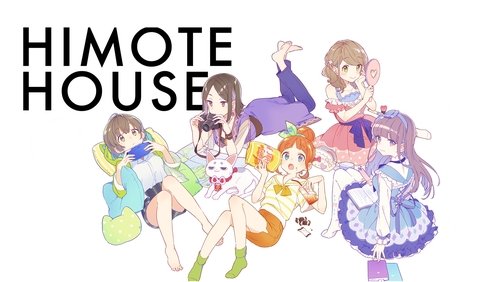
#114: HIMOTE HOUSE - A share house of super psychic girls (2018)

From https://image.tmdb.org/t/p/w500_and_h282_face/
8PNfYheXnMKD1CBu3HxNxYN5OmK.jpg


Director: Kōtarō Ishidate

Voice Cast: Kaoru Mizuhara as Tokiyo Himote; Satomi Akesaka as Kokoro Himote; Suzuko Mimori as Kinami Himote; Asuka Nishi as Enishi; Aya Suzaki as Tae Hongō; Sumire Uesaka as Minamo Arai
Viewed in Japanese with English Subtitles

On paper, I had great excitement about Himote House - Kōtarō Ishidate, one of the creators of gdgd Fairies (2011-13), comes back with another show about a group of women, three sisters and a couple of friends living in the same house, with the added delight that the sisters are voiced by gdgd Fairies' main cast. The trademark of that show, that the episodes eventually turn into improvised sketches where the actresses will amuse and bemuse themselves for real, is also to be found which promises a great deal. The truth is that, whilst there are some gems in terms of the comedy and an unexpected political commentary, this is definitely the case of a twelve episode show that, like a lot of anime comedy, can feel erratic without any structure.

Before we continue to the actual work, that's a crux which has appeared with a lot of these "micro-series", shows where the episodes are less than fifteen minutes long which is becoming more available in the West through the likes of Crunchyroll. Any of them, as I have found writing these reviews on this topic, is going to lead to the exact questions stand out as those here, so this is a long gestation question about their artist potential.

The initial premise is that Tae Hongō, a quiet girl starting school, is invited by her friend Kokoro Himote to live with her, meeting up with her sisters, another friend Minamo Arai and Enishi the talking cat. With each episode lasting fifteen minutes, they are usually divided between episode long skits and an ad-libbed conclusion where, with the cast sat in the lounge at the night playing games, the voice actresses had to improvise on the spot over idiosyncratic scenarios that the production team would animated based on what they say. Animation wise, this is not necessarily the best of productions, cel shaded digital figures, but the uninitiated gdgd Fairies deliberately was made with the crudest of CGI digital models for humour, which makes a work like Himote House a noticeably more slicker work on an aesthetic level.

The structure of the series this is where Himote House falls into a few problems. For starters its subtitle suggests a house of women with super powers, even Tae Hongō (the de facto lead) accidentally discovering her own ability to multiply herself at the end of the first episode by thinking hard. But after a few episodes where it's used, such as finding the able to read minds doesn't help with dating, and Hongō multiplying herself as a team for an indoor game of very convoluted baseball, its sadly discarded soon after. Even if I like the episodes found later, this turns into a disappointment as it's an amusing premise, taking gdgd Fairies' magic powers further into the real world. It also could've been used as an excuse for gags to happen, as the magic of those aforementioned fairies was the reason many of the funny gags with public domain digital models came from in terms of logic to their world.

From https://i.ytimg.com/vi/0AhbZBoXqyU/maxresdefault.jpg

To be honest, the cast really feels more alive in the ad-libbed sequences even if they still try to bring in their character traits into it, merely because the sketches do fall into stereotypes for the most part, all whilst the improvised sequences just allow the actresses to riff on the characters and silly things. In terms of the cast, the exceptions truly are Tokiyo Himote and Enishi. Enishi as she's a talking cat with a bit more than the annoying mascot role, even having two improvised endings where they went to actual locations around Jaopan and animate the staff as cats too for awkward (but funny) gags about going to a massage clinic. The other is Tokiyo Himote, who just perfectly follows the mould the likes of gdgd Fairies did of idiosyncratic characters, the oldest Himote sister whose distinct voice comes from the fact that, whilst Japanese, she's speaking in a broken Japanese accent. As a figure who uses quotations that go over everyone's heads and, is learned to be turned on by seeing Senegalese wrestling on her world travels and the idea of living near a volatile volcano like one village she references in small talk, she's the kind of person you'd actually want to date just befriend in real life just for the conversations that'd take place.

This is somewhat a shame as, when you get to the improvised sections, everyone's on fire, causing one to wish the whole character cast was as idiosyncratic or had enough time to grow. There's a joy to have in these actresses pissing about between the worst things to hear whilst spoken with a helium voice to imagining a former female otaku with her boyfriend awkwardly meeting an old friend from the past. (They even have one about a female employee trying to avoid a sleazy male member of management, which seems quite a surprising dig at the industry). And yes, even the cat gets a gem, a few times having hypothesized skits in humanoid form , playing out the awkward phone conversation with another actress about a boyfriend wanting nude photos, commenting on the fact with hesitance that she is quite hairy.

There are thankfully interesting moments. Not just bitcoin, as probably the weirdest moment of the series is the penultimate episode, a hot springs episode that leads to the voice cast, as their characters bathe and do odd things (unseen) like "breast massages", moan as erotically as possible to the point of fake orgasms while promoting a pseudo-bitcoin to the viewer. To me, it's nonsensical, but reality is stranger as apparently advertisement of anime girls promoting bitcoin does indeed exist. (There's even a BitGirls TV show, a Japanese show where ten young women are voted on by the audience purchasing her personal tokens, known as "Torekabu", thus teaching the concept of crypto currency and blockchain to a consumer audience. Thus, for this review, I've also informed myself how irony is possibly dead). A personal favourite is the cast in a strange cramped office environment, taking part in a ritual that is never explained and with them playing new characters, such as ramming paper violently through a slot at the other end of the room by running at it, until you realise they're the inside of an office printer.

Then there's the Yuri Game of Life episode, which begins (in playing the literal game) with begins with parodying the yuri genre by every romantic longing between girls leading to turns being missed to ridiculous number. Then there's the option of going to Europe, as the women are split into pairs when they marry in the game, and suddenly Himote House for all its flaws suddenly gets a crowning jewel by suddenly taking a shockingly honest and dark humoured glance over the inequality of LGBTQ people in Japan. I normally find political commentary simplistic and beneath art, but if you're going to do so, challenging your country's attitudes to LGBT people, in the most abrupt ways and in a bluntness rarely found in anime as its probably deemed inappropriate, is as ballsy as you can get and incredible. It's surprisingly sad, even if it's still funny, and throwing it in the middle of a sketch micro-series like this where you least expect it is something to admire.

Unfortunately, the show does feel too short, and whilst it thankfully ends in a fun way, an utter anti-climax with the cast just playing a card game, the last episode is terrible, a clip show posed as a game show which is painful to sit through. I don't blame the show barring the fact that, as it was what they were apparently forced to create when it wasn't their original plan, that just emphasises that sadly Himote House didn't plan itself as well as it should've. And that is a huge issue with a lot of micro-series like this in that, especially if many will be gag or sketch based rather than structured around long form plots, they need to structure themselves well or they will fall into passing on a flat note, never pushing for a memorable climax. And this is going to be a deterrent for me as the idea of a show you can turn your brain off to is an anathema for me. I'd rather have my fifteen minute long episodes, or even shorter, stand out in a memorable way, so whilst there is some gold in Himote House, it's a slightly disappointing follow-up from someone, Kōtarō Ishidate, who did make one of the oldest and most rewarding in gdgd Fairies. Considering the invention of that older series, you could've run into some new and rewarding concepts just from Himote House's premise alone. 

From https://remyfool.files.wordpress.com/2018/11/vlcsnap-
2018-11-19-22h56m34s706.jpg?w=924&h=0&crop=1

Wednesday, 20 December 2017

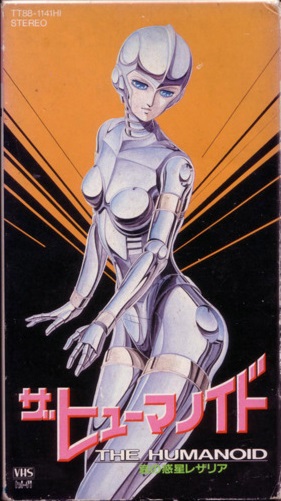
#51: The Humanoid (1986)

From http://www.silveremulsion.com/wp-content/
uploads/2013/08/thehumanoid_1.jpeg

Director: Shin'ichi Masaki
Screenplay: Koichi Mizuide
Voice Cast: Kazuki Yao as Eric; Yoshiko Sakakibara as Antoinette; Yumiko Shibata as Sheri; Eiji Maruyama as Libero; Hidekatsu Shibata as Dr. Watson; Hikari Akiyama as Ignasia; Kazuyuki Sogabe as Governor Proud
Viewed in Caffeinated English

[SPOILERS THROUGHOUT]

Synopsis: On a distant planet, the ironically named Governor Proud desires to use a forbidden spaceship to take his people and their princess back to their home on the other side of space. Even with the various warnings of the spaceship's destructiveness, he still goes ahead with this plan and requires two keys, one which will involve two Earthling pilots and a female android named Antoinette.

How do you create an anime as generic and un-dramatic as The Humanoid? Well, first you bear in mind the Japanese economy at the time of its production was riding high. In the eighties, in the midst of their economic upturn before violent economic depression downwards, excess also meant a lot of money was available in the animation industry, not just the super theatrical productions like Odin: Photon Sailor Starlight (1985) but also the amount of straight-to-video productions created when the market came to be and needed product. Also bear in mind that even after this into the modern day there's still stuff inexplicably being produced, but that a work like The Humanoid gained infamy because it was released in the West and developed an anti-cult. In the case The Humanoid, part of the many licenses US distributor Central Park Media released. These licenses would linger even into the early DVD age where I can have an ILC release with the original English dub available in the UK, thus ensuring another series of viewers witnessing its infamy before it gets lost to nostalgic blog posts.

From https://blogger.googleusercontent.com/img/b/R29vZ2xl/AVvXsEhpDroSldU51jQBpsa_2f7vfzbr2dQ6m85b1YVQ02uFT0t7Edgl-2xtToMBLV19ccCsiSAaRsbdot490RqVaSGaLrqjV61NE1cYcEBPM_9nTifPXPUVbGB3Sm7JCGRHZtUq_9NUZpw0nwU2/s1600/
The_Humanoid_%2528OVA_1986_Kaname+Pro%2529.mkv_001831037+copia.jpg

At forty or so minutes you manage to see when there's a lot of time to fill and not enough at the same time with a generic sci-fi story like The Humanoid, as rudimentary as you can get with its simplistic tale. Its opening text crawl, likely added for the English release, imitates Star Wars but is completely superfluous to a story where the villain's name gives away what happens, when he fancies piloting a spaceship a former governor keeps warning him against only for the expected to happen. The heroes are stock types, one the stereotypical anime male protagonist with a love interest, the other memorable both for Burt Reynolds quality facial hair and his coffee fixation. The one character who gets anything remotely close to detail is Antoinette, a female android clearly inspired by the work of artist Hajime Sorayama, whose work on sexualised female robots even made its way onto an Aerosmith album cover. Her story, that she is a synthetic creation who eventually learns the human emotion of love, is agonised over through the anime. Not only is her story in truth cut short by the length of the anime, only having time to learn of love through the younger hero and his love interest splashing each other in the sea at one point, but even when it's played out with her heroic sacrifice in the ending there's a monologue at the end that stresses a very simplistic and obvious concept with great concern.


How it is The Humanoid is still entertaining with this in mind is just as complicated. Nostalgia for an era of anime I wasn't even born within let alone able to appreciate. Where even the rudimentary animation and colour palette of this, as low budget as you can get, is still aesthetically pleasing even if it's an embarrassment for hand drawn animation. How television anime, stretched over hours of episodes, is so much more painful to stand through than a single forty or so minute animation, which unless its unbearable is tolerable in any extreme. How this eighties kitsch - from the animation to the music - is significantly more pleasing than the pure dirty nastiness of more infamous anime from this era, and is especially more tolerable than later post-digital anime as bad as this, which don't have necessarily the same notoriety both for their lack of availability or not hitting the right notes to stand out. Paradoxically for one of the blandest anime I've ever seen, that's actually a virtue in how The Humanoid manages to actually succeed in doing this. I haven't even gotten to the coffee obsession either. From the original Japanese script or added in the English dub, it's the most well known trait of the series in how the cast are obsessed even as aliens to Earth coffee. Not since Devin Townsend's Ziltoid character as outer space been defined by coffee, so much so the English dub sneaks in a reference to an old American advertisement at the end. Only an anti-tea sentiment would emphasis this quirk, the sort of thing that alongside the complete ineffectual anti-virtues of The Humanoid made is harmless. Not defendable, just watchable. Not in the least bit the "bad" anime you need to go out and see, but a reminder that anime once which this cheap sci-fi malarkey.

From https://cdn.animeherald.com/aniheraldcdn/wp-content/
uploads/2014/06/Humanoid-Header-20140618.jpg