Showing posts with label Studio Gonzo. Show all posts

Thursday, 3 October 2024

#280: Hellsing (2001–2002)


Studio: Gonzo

Director: Umanosuke Iida

Screenplay: Chiaki J. Konaka

Based on the manga by Kouta Hirano

Voice Cast: Crispin Freeman/Jōji Nakata as Alucard, K.T. Gray/Fumiko Orikasa as Seras Victoria, Victoria Harwood/Yoshiko Sakakibara as Sir Integra Wingates Hellsing, Bill Morgan/Unshō Ishizuka as Peter Ferguson, Ralph Lister/Motomu Kiyokawa as Walter, Steven Brand/Nachi Nozawa as Paladin Alexander Anderson, Isaac C. Singleton Jr./Takumi Yamazaki as Incognito

Viewed in English Dub


Hellsing, the original TV adaptation, was felt as a big deal in the day with hindsight, running with the Kouta Hirano manga that would gain traction in the West through its initial Dark Horse publication and a premise easy to sell, that set in Britain, vampires exist and the country has a group known as the Hellsing Organisation, lead by Sir Integra Wingates Hellsing, to stop them. This is in mind that, however, she does have one vampire initially on the payroll under her command, Alucard, a true anti-hero if one who has less interest in terrorising humanity, but gleefully waiting to fight powerful vampires whilst hating those who act like damned ghouls than the lineage he comes from. The original series was also part of a big moment for the studio that made it, Gonzo, who were properly founded in 1992 in a previous form working on animated cut scenes for video games, but started animated productions in 2000. This was an important point, as after the initial projects, Hellsing began in October 2001 at a time to prove themselves on not only a title like this, but also a huge franchise crossover with Final Fantasy Unlimited (2001-2002), a tie-in to the legendary RPG video game franchise from Square Enix.

Unlimited was cancelled from its intended fifty plus episode run, to trying to complete itself in twenty five, whilst it is telling Hellsing Ultimate (2006-2012), existing as an ultimate retelling of the source manga, left Hellsing 2001 as an abridged curiosity. Gonzo in its original form would survive up to 2009, before being absorbed into its owning company and be refocused as an animation studio, but even in spite of surviving, that initial version was lost which was a huge name. One which made a music video for Linkin Park, one which had big titles announced over the years in the 2000s, and made crossovers like Afro Samurai (2007), which was a collaboration with the West directly with Samuel L. Jackson in the lead role. Brutally, the flaws which made them also very divisive back in the time when I got into anime in the 2000s, as their titles were prominently released in Britain through the late distributor ADV Films, can be found with revisiting the thirteen episode Hellsing series.

Hellsing when it started was a nostalgic trip when it began, to the point this was a rare case of watching the English dub on purpose. A huge factor for this decision was that, alongside voice actor Crispin Freeman as Alucard, a role he became beloved for among others, this had the inspired idea which continued to Hellsing Ultimate that, since this is set in the United Kingdom, the dub would have British voice actors and regional British accents. Even the "fifteening" done here, infamously what Manga Entertainment did in adding additional swearing to multiple English dubs of theirs to up the age rating, befits the tone. If moments do feel shaky, there is, however, something very appropriate in general for this series and that added a nice additional layer reproaching the first episodes. Some of the actors are British, prominently Victoria Harwood as Sir Integra, who began her career in British television in one-off episodes of the likes of Auf Wiedersehen, Pet, whilst you have K.T. Gray as an American actress performing in an accent for another important figure established in episode one. That is the second female lead with Seras Victoria, a police officer who is sent out without realising it with her team to a vampire disguised as a priest rampaging in Cheddar, only to be turned by Alucard in one of his humane moments when he realises, to kill said vampire, he has to shot through her and offers the chance to live as his servant if she wishes not to die.

The series has a distinct style, a mood with interesting use of colour and having shots which feel more abstract for the "cool" tone, an action-horror at heart rather than meant to be scary, and whilst the later adaptation as straight-to-video episodes was ultra-violent, this can still be lurid. The music as well is very idiosyncratic, very good and very distinct, particularly in mixing in more electronic pieces. Sadly, composer Yasushi Ishii's career in animation is not as large as one would hope, considering how striking the score here was that he was brought back for Hellsing Ultimate if just for one episode. The use of Shine by Mr. Big, an odd choice of a US band who got big in Japan, has always stayed with me as actually suiting the tone, almost charmingly ironic for its lyrics and jaunty tone. Probably some of the best moments of this entire production is just the style, in terms of playing to the more overtly abstract images with its characters - be it drenching the screen in pure blood red, or decorating environments in just primary colours and some silhouettes. Alucard is revealed to be so powerful his body deforms to produce dog-like entities from his own body, or to melt and/or reconnect even from severe injuries, and in times when the macabre nature of the supernatural is played with, alongside its score, are some of the strongest scenes in terms of style for its own sake. The sense of freewheeling style is found in the next episode previews which take on a more goofy humour, breaking the fourth wall as Seras is interrupted hosting them, offering where this spin could have had more overt ambitious within its limits in story options.

There is the immediate sense Hellsing should have been twenty plus episodes long. This is not helped by the fact this was being adapted as the manga had not reached far enough major events for Kouta Hirano's story, which is felt in how the original promo video has the real antagonists of the later Ultimate adaptation and the manga, the Millennium group, a group never seen in the 2001 anime series who are literally Nazis with vampires and werewolves among their rank. Personally, however, this would have not necessarily been a problem for this adaptation, even if a blasphemy to fans of the source material, if it had managed to tell a story of its own with some interest. I have always felt Gonzo's true curse was always slipping in the midst of their productions, be it slipping in pace or rushing their finales, something which could not be blamed on a case like Final Fantasy Unlimited where outside circumstances were also involved, and is felt here.


Chiaki J. Konaka is an odd choice for the main screenplay. There are flashes of his career style, a very unconventional storyteller who esoteric plot structures and details, but for me this is arguably one of his weakest works. Even in mind he had been involved with some unconventional work by his standard by this time - namely Futari Ecchi a.k.a. Step Up Love Story (2002-4), four episodes of an erotic romantic comedy about a newly wedded heterosexual couple figuring out their love life. That at least had only four episodes to work with, and was interesting as a real tangent for him, an imperfect work in some gender politics but mostly a wholesome comedy about adults who love each other that, even if for a targeted male audience, was horny in a positive way. Hellsing in contrast is something he could have worked with to interesting areas, as it could involve conspiracies involving the Vatican, who are antagonists to the Hellsing Organsization, and the weird place a vampire or two are within working with vampire hunters, let alone Seras' position as a vampire who refuses to drink blood and feels complicated emotions of her place. This is in mind that, least to stay faithful to the source, it is a violent work, but also one about bombast. The tone of the source can be summed up that, when Seras gets a new weapon from Walter, a butler who is a former (still dangerous) vampire hunter who uses razor sharp wires, the aforementioned Harkonnen is both a direct reference to the version of the character from David Lynch's 1984 adaptation of Dune, and uses depleted Uranium shells, only possible to be carried by a super strong undead officer like her. The tone of the source which would be emphasised for Ultimate - a story which can get really nasty and gory, but is also a story created by a manga author with a thing for fire arms, wacky comedy and vampires with guns being cool - could still have Konaka's voice. There are moments of idiosyncrasy as he is having to create a new story by the midway point, but this is instead a compromise.

He does introduce for this version of the story a microchip turning people into artificial vampires, which is interesting as a concept, or the likes of a snuff film episode, but this is absolutely a case of a work which could not adapt the intended version, because it was not put to page yet, and the issue Gonzo were faced with here of only thirteen episodes to work with, likely with the possibility they could have continued on but not earning a second season. They have to paradoxically adapt as much as they can from the source but not enough time to complete their attempt to close this narrative off cleanly afterwards. This is felt with one of the other prominent details which yet has to be abruptly ditched by the last episodes, that in this world there is a Catholic versus Protestant slant, where the Vatican has their own vampire fighting forces, including their own agent Paladin Alexander Anderson, an artificially superhuman killing machine, and are openly antagonistic of the Hellsing organisation. This as what happened with Chrono Crusade (2003), a work which helped me get into anime but, also having read the manga, was effected by not having the whole work and needing to take liberties, some of which may make revisiting the adaptation be an example of nostalgia failing. That at least had a good twenty plus episodes even if it had to rush in the final episodes a new plot, so Hellsing is in a worse place attempting to compensate with orchestrating a new narrative, but struggling with few episodes to get to this.

It adapts up to the attack by the Valentine brothers, two vampires who storm the Hellsing headquarters, becoming the whole more fleshed out massacre in the second Hellsing Ultimate episode, and afterwards is fully on its own narrative rails after establishing the plot threads beforehand. The set up for a new narrative does promise a lot of interesting details if this had been its own show - a female vampire, permanently a child yet wise beyond her physical years, shows the moral issue of the Hellsing Organisation's goal to eliminate vampires when she lives in peace, a brief flicker of Konaka's style. Then there is the new villain, another vampire in human servitude of actual power named Incognito. He is a cool concept, a figure with idiosyncratic markings, body paint, and a long limbed figure who is a really cool character design. He comes with a huge caveat that he is meant to be a vampire from the African continent, and in the 2000s of all times, there are details in his portrayal which have not aged well at all. Alarm bells ring, alongside tribal music in his introduction, where a term (I apologise for having to quote) is brought up of him coming from the "dark continent", evoking all the problematic stereotypes of African black magic and occultism as depicting by white racist colonialism. It is a shame as, even as a villain, a vampire from a drastically different world to Gothic Carpathian Europe is distinct. With tribal paint that is part of his ability to even distort environments to cut people to ribbons, and as someone who can produce a grenade launcher attached to him by a gold chain that has magically touched spikes in shells as ammo, Incognito is a really fascinating concept to have, appropriate too for the tone of the source. It is a shame he fell into some tasteless nods to old problematic culture and gets little time, either, to be fleshed out.

Hellsing is okay, even if it just eventually ends up with vampires shouting at each other as they use super moves, its many flaws not dissimilar to so many anime before and after. Ultimately, and this is not an intended nod to the Hellsing Ultimate adaptation, this project was always going to struggle with the hindsight. This just belongs to a long list of anime over the years where the production tried, and whilst there are virtues, I can say it does not become iconic. Alongside the fact I like horror anime, so titles like this do stand out more, the knowledge that this kept happening for Gonzo is more tragic. They would have the likes of the Full Metal Panic franchise for the first season in 2002 and titles which are held in good regard, such as Gankutsuou: The Count of Monte Cristo (2004-5), held as their best animates series and one of the most distinct of the 2000s even aesthetically, but from the shows I remember growing up with and revisiting, they struggled reaching the finish line for the series they produced. Saikano, known in the West as She, The Ultimate Weapon (2002), which came a year later to Hellsing, is an admirably strange and bleak anti-war story, but that also has a strangely rushed ending, and then there are the likes of Yukikaze (2002-5), their celebration of their own anniversary which spun out of control, taking a long time for a few episodes to be created, and also ended up with a rushed ending despite being a straight-to-video production where a tight schedule for release would have not been an issue.

Gonzo always had a sense of being cursed, the curse for me always that they struggled at some point within productions to be able to finish their narratives and pace them carefully, or simply that in the timeline of 2000s, their titles which got prominent advertising were not the ones people fondly remember as even hidden gems from the decade. I got into anime in the 2000s in my teen/young adult years, so Gonzo as mentioned were a prominent name thanks to ADV Films, and my youthful memories, whilst acceptable to properly critique these series nowadays, is that I found myself viewing a show like Trinity Blood (2005) or a Burst Angel (2004) and finding them not sticking to memory, which is alarming as Gonzo were a company sold as prestigious in terms of the look of their shows and, ultimately to their fall, with a lot of higher budget productions in their schedules. Hellsing itself has virtues but it was clear from the get-go this project's pace to just thirteen episodes was against itself, and considering its premise even without the burden of the source material, there were many times here too for the good moments where this felt like a sedate take of a more wildly over-the-top horror-action story. This version of Hellsing clearly meant enough for me as I owned the old ADV Films collected version back in the day, but watching that exact set for the first time in a good decade, I held no nostalgia in terms of a high bar, always with knowledge this was a flawed production. Revisiting it, I realised this from the first episode.

Friday, 1 September 2023

#260: Nyanpire - The Animation (2011)


Studio: GONZO

Director: Takahiro Yoshimatsu

Screenplay: Natsuko Takahashi

Based on the manga by yukiusa

Voice Cast: Ami Koshimizu as Nyanpire; Jun Fukuyama as Nyantenshi; Noriaki Sugiyama as Masamunya Dokuganryū; Yuko Goto as Chachamaru; Nozomi Maeda as Komori-kun / Mōri-kun; Shinnosuke Tachibana as the Vampire; Shion Hirota as Misaki-chan; Shion Hirota as the Narrator / Katsuo

Viewed in Japanese with English Subtitles


To be continued, meow.

Nyanpire is tragically slight, a cute premise for a longer series which is only four minutes long per twelve episodes, not allowing it to stand out let alone burn out a silly premise to the point it does not work. A kitten, as explained in the pre-credit prologue, was left abandoned and hungry, only for a male vampire to show empathy and save it from death by giving them eternal life, thus creating a "Nyanpire". Thankfully a human girl Misaki took him in and is aware of his need for blood, as she is able to talk to him, one who is precocious and can find, whilst not a suitable substitute, that ketchup is delicious even if Tabasco sauce is to be approached with caution. Baring the final episode playing on a sad idea, Nyanpire considering his friends' mortality against his immortality, this is a fluffy show which plays on skits involving our undead cat lord in his misadventures with mostly cat friends. It is absolutely as silly a premise as it sounds too if adorable.

Surprisingly for me, this is a production by studio GONZO, made after a time when they were a huge producer of titles as I was getting into anime into the 2000s. They still exist, producing titles throughout the 2010s from this, but by 2008 and 2009, they had huge financial issues which lead them to be absorbed into their parent company, GDH K.K., in 2009. There is a brief melancholia to Nyanpire because of this, despite its cuteness and GONZO's sporadic track record in quality, in how they are making this micro-series under the shadow of those events, a company who seemed to be everywhere prominently in their releases from ADV Films when I was getting into anime, even making a music video for Linkin Park, only to be less prominent in their status as an animation studio. Beyond this however, there is a sense the production was made with fun and that history means little barring the recognition of their name on the end credits, one which went out of its way to be a full live action band musical number with cat puppets, Gothic Lolita costumes and a blood I.V.

The shortness of the show, like many micro-series, leave a lot on the table for a Halloween appropriate series, Garfield for the Goths, in how this is a motley crew of characters surrounding an impulsive but adorable lead. This breaks from a lot of vampire traditions, like the fact he can go in the sun, but many are for jokes, like his love of garlic ramen, or how there is a theory the vampire that turned him may be an obsessive collector of cats who keeps them in a void in his person. It is a fun cast around him too, beginning with an ex-angel cat, kicked out of heaven and a little cad, making up stories of being thrown out for loving a female angel, to the adopted and more sensible little brother to Nyanpire. Two bats, more like trolls in their behaviour, make up non-feline figures, but the character of interest is Masamunya Dokuganryū. Likely a parody of Date Masamune, he is an unexpected joke to include if for a figure even played by Ken Watanabe in the 1987 historical television series Dokuganryū Masamune among many other appearances in Japanese popular culture: Masamune in reality was a magistrate, tactician and a regional ruler of Japan's Azuchi–Momoyama period through early Edo period who was known for his missing eye, dubbed the "One-Eyed Dragon of Ōshū". It may be a stretch, but considering Masamunya is a cat with an eye patch too, I would not be surprise if the joke is revolving around a real Japanese historical figure of a similar type. More unexpected is that the samurai cat is initially introduced trying to banish Nyanpire, only to end up with a smitten crush and realises he is gay when he learns Nyanpire is actually male. I was not expecting, on the bingo card of anime, a positive gay character within a show about a cartoon cat vampire, but with Nyanpire, here we go, and whilst Masamunya is the butt of jokes, the only ones in regards to this is Masamunya struggling with trying to express his love to Nyanpire, who is oblivious and his jealously that the angel cat does feel any harm if Nyanpire bites him for blood.

Micro-series, unless we are talking about gdgd Fairies (2011-2013) or Teekyu (2012-17), which got many series, unfortunately feel like the equivalent of old school forty minute OVAs, enticing little snippets of a premise which, in the most rewarding, at least present something interesting with a personality of its own. Even something more questionable in its production quality, like Sparrow's Hotel (2013), a micro-series about a female staff who uses her ninja skills to keep a hotel at five stars in quality ratings, can still entice with a ludicrous premise. Personality is something I can attest to for Nyanpire. Nearly forty minutes, the equivalent of an old straight-to-video project, this shows enough to appreciate the content but also leaves me wishing it had more to the project, both a real positive, but sad in that as a 2011 project, this never had a follow up throughout the 2010s.

Friday, 31 March 2023

#245: Yukikaze (2002-5)


Includes a review of Fighting Fairy Girl Rescue Me Mave-chan (2005)

Studio: Gonzo

Director: Masahiko Ōkura

Screenplay: Hiroshi Yamaguchi, Ikuto Yamashita, Masahiko Ōkura, Masashi Sogo, Seiji Kio and Yumi Tada

Based on the novel series by Chōhei Kambayashi

Voice Cast: Jōji Nakata as James "Jack" Bukhar; Masato Sakai as Rei Fukai; Masako Ikeda as Lynn Jackson; Miho Yamada as Edith Foss; Youko Asagami as Rydia Cooley

Viewed in Japanese with English Subtitles


You want me to psychoanalyze a fighter plane?

Thirty three years before this straight-to-video anime begins, the “JAM”, an alien race, invaded Earth through a wormhole from their planet to ours via the Antarctica. Now, based on the series of novels by Chōhei Kambayashi, the human race pushed them back through the passage, back to their planet “Fairy”, and keeps guard on that side. Yukikaze’s author, Chōhei Kambayashi, is a prolific author in science fiction, with this series one of his most known. It is neither the only one to have had an anime adaptation, as an obscure OVA series The Enemy's The Pirates! (1989) is based on another of his works, imagining a space cop duo where one of them in an alien talking cat.

Yukikaze is a considerably more somber premise, but to factor in as well, this was a ten year anniversary for the animation studio GONZO, which could seem odd as they were founded in 2000 as the studio most known them for. This ten year anniversary is because, whilst the animation studio most will known was founded in the year 2000, the original company Gonzo K.K. began in 1992, working with other companies and on video game cut scenes. Whilst they still exist, financial problems between 2008 and 2009 eventually led to the company being merged with Gonzo K.K., taking them out as a prominent animation company even if they still work to this day. GONZO before them, between 2000 to 2005 at least, were a prominent company for me as I got into anime at that time, as the late ADV Films released so many of their productions over in Britain, nostalgic to think of but with a sensibility to know their flaws. They had shows like Chrono Crusade (2003) I loved, but hesitate to return to, and others like Hellsing (2001-2) were works with were divisive to viewers. One of their biggest issues which was obvious even back in my barely developed years of taste, and is found with Yukikaze, is that they were a company cursed by the journey it took to keep a long form production consistent in narrative and quality, even in terms of pure sod’s law as both of the titles mentioned, for example, were cases where the source manga were unfinished and they had to create new endings within only a handful of episodes. They were once a high profile name, even to the point that arguably one of their most successful and highest profile productions was not a series but a Linkin Park music video, Breaking the Habit, which with the nu metal band was something non-anime fans would have seen at a time when anime and other pop culture crossed over multiple times.

Yukikaze however is an example of the problems with organizing and pacing their projects. For years my only knowledge of the show came from one of the longest lasting and running anime podcasts since 2005, Anime World Order, where the five part straight-to-video production was buried as a sci-fi story which absolutely failed. The build up over a decade plus means that I actually found material in Yukikaze of virtue, and what was once jokes on that podcast1 have by accident been more salient as this presents one of the most  (accidental and at times intentional) and compelling psychodramas one could have wished was in a better managed project. Truthfully the bar was set so low I found so much to enjoy here, something compelling but an undeniable mess that, could have actually succeeded. Even in terms of the unexpected content, the fact that the central relationship between its male leads, James "Jack" Bukhar and Rei Fukai, has moments beyond platonic friendship but potential romantic readings is something you are likely to find in a lot of anime. Sometimes it is deliberately placed in shows even if with its own moral questions, as this can be done in anime as a way to appeal to certain female audiences attracted to “yaoi” and subtext of possible relationships between male characters, something with its own questions as that means it is not necessarily for a gay viewer’s benefit first in characterization. What is unexpected, and was merely presumed a joke in that podcast I listened to many times, is how even if unintentional, this platonic relationship ends up being a triangle between these two men, struggling through this battle against an alien menace.. and a sentient fighter plane.

It feels less like a joke either to say that, as there are two sides to the Yukikaze project in terms of the production, and one of them (the most compelling) falls further into this even if an exaggeration of the actual content seen. One side, despite its sci-fi setting, is realistic aerial dog fight scenes which made this an expensive project, using what was cutting edge CGI animation for the sequences, and the other is a drama. The latter’s character dynamics became, even if by mistake, in certain dramatic choices more psychologically idiosyncratic and deeper than intended. Rei Fukai, our lead, is clearly written in script and in depiction as psychologically disconnect from the world, close to the point of becoming a savant who would not be able to function in the ordinary society back on Earth, but found harmony helming the Yukikaze, a fighter plane which has such advanced A.I. It and Rei have developed a bond, strong enough that he follows its advice to even shot what it consider an enemy without question.

Considering dreams Rei has include depicting him in a jail cell and Yukikaze itself, which means “snow wind”, depicted as a female fairy creature on the other side of the bar he yearns for, the production may have accidentally loaded so much more meaning to his bond to the plane, especially as the tension with his senior officer James Bukar reads too closely to a crush between them even if it was just meant to be a close friendship in dialogue. Even if pure accident, this is the material which is the strongest of all of Yukikaze because it is at least memorable, and aspects that are clear in dialogue suggest even Chōhei Kambayashi’s source writings had an unconventional characterization for Rei himself. One of the odder details is how the two met, James meeting Rei in a canteen mashing peaches and peas together in a meal, a bizarre touch showing Rei’s unsociable form, and there is a lot to Yukikaze which I would not be surprised is from the books and in a fully fleshed out form would have more eccentric but compelling to witness. Even if meant to be platonic friendship between the two, their drama is still interesting even if the result in this anime makes Yukikaze extremely weird. That would clearly be the idea of James being the one person who cared to help Rei, finding friendship with him, and the constant fear for his safety as Rei is attached to the Yukikaze more to ordinary life. It is obviously a metaphor for the dehumanization of war, where Rei only feels alive in the peril of danger and aerial combat, but when a female superior, Rydia Cooley, tells James he is losing Fukai to Yukikaze, you get one of the multiple moments where the show may have unintentionally made Yukikaze more compelling as a story by making that plane a rival for Rei’s heart and mind. The plane, thought it downloads its consciousness into another machine, even has a sad send off in Episode 1 to emphasis their place as the third main character of this material even over human characters.

The project without this idiosyncratic melodrama has a compelling premise which could have breathed into something truly engaging. It is a well worn one, an invading forced known as the JAM which are totally unlike human beings, but only seen as horrifying sentient goo, the plot also brings in an enticing twist in terms of a Body Snatchers concern, that the JAM are replacing members with copies to infiltrate their higher ranks. Even without the central relationship with James and Rei, the psychodrama of a plane’s A.I. being able to understand Rei more, this could have been an anime that could have knocked it out of the park as an intense sci-fi drama, set with some realism, where the war in the alien world has a greater paranoia as more members are said to be “taken”.  The anime can also be batshit with some ideas. I can just mention the character who has a plutonium powered atomic heart which prevents him from entering certain countries, never mentioned again after his episode, but the kind of idea out-of-nowhere that wins me over as well in terms of how imaginative this could have been.

The issue with Yukikaze is that it is neither fish nor fowl. The post digital animation look of the time, a muted realistic one of grays, is a contentious aesthetic touch to consider in itself, but the show also lacks energy, crossing over from a mood piece with an unintentional level of what you can read into it, with James’ fears for Rei in safety and psychologically the one thing keeping this for me from becoming sluggish. The aerial battles themselves are also the weakest segments of the entire production. Aging is less than issue with them but that, expensive to produce, they are not interesting and there are times where you will struggle with whom is who in the alien skies without combing through the scenes, not telling the plot visually well. Flaws creep in more and more into the script, and it is clear the show, with episodes two to four being thirty minutes long each, that the span of time was a bad sign to how it was moving along, only being fully released between 2002 to 2005 rather than taking a lot quicker to complete.

Basic explanation of the premise is not done, such that whilst it is explained at the beginning this is set on an alien planet, you forget in the seemingly normal desert this is set in an alien world, and a lot of characters are left with not enough given time to stand out. Rydia the female chief or Edith the psychologist (who is also her niece) are two examples, but more jarring is a figure who gets a lot of time for herself back on Earth, Lynn Jackson the journalist and acclaimed novelist who we get the back-story of. She is the face of the normal person who witnessed the JAM invasion as a child, by the news on Christmas with her parents, and devoted herself to researching the events when an adult. She has become the figure now standing out as someone who devoted her life to documenting the JAM invasion which many are wary in believing in nowadays, an enticing concept in how human beings do not learn from the past and become complacent. Her story is closed abruptly on Episode 4, when the story returns to Earth fully, and how her tale is a candle randomly snuffed out shows the problems this project had, considering how much time was devoted to her with one or two prominent scenes by herself. It shows one of GONZO’s biggest flaws as mentioned, not being able to finish a work without struggles in the plotting and pace.

Episode 5 is weird as suddenly the production trying to become The End of Evengelion (1997), where everything goes to hell, whilst everyone is having tea and cakes on the veranda as everything explodes. It is not this truthfully in a twist, which abruptly brings in fictional reality when never evoked before and makes this episode even messier in execution. It is by this point, whilst Yukikzae became entertaining for many reasons beforehand, why this production was forgotten, where even by this final episode there are key details it has to suddenly explain, the heavy burden also with the disappointment that this also includes tantalizing ideas it will now not be able to flesh out, such as that the portal would have been closed long before to the JAM if it was not for human greed, and the JAM’s ability to both tempt humanity with possible resources and to complete manipulate reality. It is a work which fascinates throughout its length but also left so much on the table. Even the unexpected sense of platonic love between your two male leads, arguably one of the few things that reaches a proper conclusion, could have been fleshed out even further then what we got.

Yukikaze got released through Bandai Visual, an ill-advised off-shot to Bandai Entertainment started in 2005 for the USA, and merged back into Bandai in 2008, which tried to bring Japanese pricing schemes to the West, which only Aniplex in the United States have managed to get away with, i.e. much more expensive cost for physical media like for Japanese anime fans. In Britain, Beez Entertainment, Bandai’s late European division, released the series. Sold by itself, despite being less than thirty minutes long, is a tie-in production called Fighting Fairy Girl Rescue Me Mave-chan which should be brought up too. This follows in a genre of anthropomorphizing non-sentient objects, like vehicles to even soda cans, into characters with a trend for cute girls if occasionally cute guys too. This is an early one, and it is a slight production, an ode to otaku promoting both Yukikaze and Stratos 4 (2003) to an audience who would have likely bought the DVDs in Japan beforehand.

A nervous teenage boy, braving himself to go to an anime convention, steps into a bathroom to calm a panic attack only to end up on Planet Fairy from Yukikaze, where the sentient planes are now young women who can fly and fight aliens. It is slight, though promises sequels and like Yukikaze, this has an abrupt aspect to it which is explicitly part of itself in script and meaning. This is not likely accidental thought, and is explicit in this case, as it has a very cynical idea that these characters know they are merely characters from an anime, brought to life by fans but knowing that when they are constantly under threat of obscurity. Once the fans are more interesting in a new show, they like other characters (like a blurred out parody of Lum from Urusei Yatsura) are to be forgotten and to disappear from existence into a literal void. It feels like Toy Story if you envision the toys discarded in the attic, and it is a bleak idea to centralize in a one-off episode, even if having a happy ending. Though it is clearly made to sell Yukikaze, even by cynically having a busty blue haired female character the most prominent even over the one (Mavi-chan) named after the show, you also cannot help but read into the creators through this premise. Made by GONZO too, it feels like a response to how for all the work into Yukikaze that took three years, a work to celebrate GONZO itself, it was going to disappear and be discarded by the new shiny animated production afterwards. It feels abruptly frank from the production team even if meant to be a cute tie-in.

It is even more ironic now as poor Mavi-chan is forgotten, whether the homicidal one who attack strangers with knives or the plane in a deep bond with its male pilot, a deeply flawed and messy production that was meant to celebrate an entire studio not one of the titles you bring up talking about GONZO. GONZO themselves, as mentioned, are still producing titles but are no longer upfront in their name being promoted alongside their anime productions, and it is perversely a review like this which talks of the deep flaws with Yukikaze which will also however nod to it out of respect too. There were ideas here which worked and some which probably hinted at a level of unconventionality it never likely intended. It managed to have the least expected psychodrama one would presume from this title, between two people in a bond and the combat plane which divides them, and I only wish that I could have said it managed to be this successfully. What could have been legitimately great in terms of its production and storytelling, if it had taken some radical steps to focus, is instead just a curiosity.

=====

1) Anime World Order Show # 81a – Rei Fukai, You Are Worse Than Michael Jordan, published on July 2nd 2009. I will warn that aspects of the podcast from this time, in humour and tone, have dated badly or may offend, which the hosts, who have started from 2005 into the 2020s, have admitted to. They have become a significantly better podcast into the 2020s just in terms of the quality of the reviews, but if you can step beyond some of the humour, older episodes like this one are still rewarding and in this case are apt to refer to. Listening to this episode over years perfectly sums up the lowered expectations until I finally saw Yukikaze myself.

Monday, 15 March 2021

#183: She, the Ultimate Weapon (2002)


a.k.a. Saikano

Director: Mitsuko Kase

Screenplay: Itaru Era

Based on the manga by Shin Takahashi

Voice Cast: Fumiko Orikasa as Chise; Shirou Ishimoda as Shuji; Miki Itō as Fuyumi; Shinichiro Miki as Tetsu; Tetsu Shiratori as Atsushi; Yuu Sugimoto as Akemi; Atsushi Ii as Kawahara

Viewed in Japanese with English Subtitles


[Major Plot Spoilers Throughout]

Returning to She, the Ultimate Weapon it is amazing to think of how heavily publicized this show was especially in the United Kingdom for its release. A big license for Manga Entertainment, it has effectively disappeared despite also having a lot of praise for it at the time. Whilst this may be odd considering so many anime having these tropes and plot threats this has, She... is also quite a peculiar animated series in hindsight, which in itself becomes part of why it still clings with something of note for me and likely why the tide turned to its obscurity.

Set in a coastal city of Hokkaidō in Japan, this is set up like a conventional anime romance. A shy young woman, technically a teenager but older than most in other stories, named Chise is clumsy and awkward but is lovable. She finally gets the courage to date Shuji, a reserved seventeen year old boy in her school, and they blossom immediately together. She... is however a war story, set in a world where Japan is at war. The touch, adding to the strangeness of how the story is told, which stands out is that this entirely focuses on the world of these characters rather than focusing on the war. We see the battlefield in Japan, soldiers fighting on their own soil in an invasion, and the aftermath, but the show is entirely focused on the effect of the war on the ordinary people from the soldiers to the leads, living in Hokkaidō. This is also a science fiction show where Chise is also a figure of great importance to protect Japan, which is bizarre for an outsider to consider, of a story of a teenager being the ultimate weapon, expect that anime and manga have always had teenagers in war stories like this, as much to appeal to the emotions of a target audience as an obsession to have youthful characters, so we fans accept the logic.

The strangeness and uniqueness is the tone. Completely sober, a lot of the world is never explained. An spin off OVA called Saikano: Another Love Song (2005) explained more detail to why Chise is the titular weapon, in a side story on another human weapon, but in the series we learn little context. We never learn what the war is, with only a few of the opposite side as actual human beings seen, and the war itself is ultimately an apocalyptic one. Chise's use in the war, whilst conventional in any other narrative, emphasises this as she herself is literally the weapon, with body horror tropes that she can even produce heat seeking missiles from her body even against her will which can be painful. The sombreness of the narrative, and how little is explained on the science fiction plot, emphasises the distinct way the show is told, a tragedy where from the get-go the show's subtitle "The Last Love Song on This Little Planet" emphasises that this will become a bleak show in terms of humanity, once mysterious earthquakes hit the country and Chise herself becomes more inhuman to the point she can accidentally obliterate whole cities from existence.

The show does have some levity - even some cartoonish distortion of the characters when Chise and a soldier named Testu she befriends decide to have a day out away from work, including liberal attitudes to going "shopping" by blowing doors open - but this is melodramatic and tragic to an extreme. Eventually by Episode 9, titled after a side character named Akemi, Chise and Shuji's tomboy friend who becomes the latter's consciousness, this show is ill-advised to binge for how bleak it gets. This tone is one of the more divisive aspects of She... as it has no qualms even beforehand of emotional gut punches over and over in-between its very quiet dramatic tone and moments of war which, never depicted as action scenes, are dramatic in their pointlessness. Some of it in hindsight is ridiculous - in mind to how this type of scene makes some viewers uncomfortable, having Shuji slap Akemi twice in the series in a moment of emotional distress is absurd if likely to upset viewers. Some of it is heightened with an appropriate tone, befitting a show where you have to accept this premise of a seventeen year old girl with robot wings as the ultimate doomsday weapon.

The people behind the show are worth looking into to think about the series. A rare female director, Mitsuko Kase has mostly a career of Episode Directors and other positions on projects, but she has been at the helm of a couple of titles. That you have a female director on this project does cause one to think of how she would handle this material very differently from someone else. In mind to this, if this is the same figure and there is no confusion by accident between two people, screenwriter Itaru Era has also worked with Takeshi Miike, of all people to hire for this project also the figure who has worked with him sporadically over the years including on Visitor Q (2001). A notorious film in Miike's career, it is however also a reinterpretation of Teorema (1968), a subversive Pier Paolo Pasolini film, which means Visitor Q is not just a film notorious for having disturbing taboo scenes of incest and breast milk but a social critique. I cannot help but think, in particular with the screenwriter, that She, The Ultimate Weapon was much more carefully built that it may suggests, especially with mind to someone whose career has been focused on a lot of genre and pulp narratives, deciding to bleed them into a much more idiosyncratic narrative.

Some of it falls into the history of the animation studio which created it as well. Studio Gonzo, even before financial struggles eventually kneecapped them in 2009, is a divisive studio from when they started in 2000. At least for Western anime fans, when I got into anime in the early 2000s and companies like Manga Entertainment but especially ADV Films released many Gonzo releases in the United Kingdom. Gonzo has some titled held as gems - particularly the experimental Alexandre Dumas adaptation Gankutsuou: The Count of Monte Cristo (2004) - but alongside titles which never succeeded, they had a few where how they were told and put together became divisive. Some was bad luck, as they adapted titles where they could not finish them as the manga were ongoing (Chrno Crusade and Hellsing) and had to improvise anime exclusive narratives. Others, like Trinity Blood (2005), were just shows which (least to my younger self's eyes) merely fell hard over a long stretch of episodes. She, The Ultimate Weapon is a fascinating title, but one where I completely understand an individual viewer being divided between the moments where it succeeds as a risk in storytelling but also can be both manipulative and as awkward as its leads. It befittingly has a premise about a young woman, shy and innocent, struggling with a sinister dehumanising weapon part of herself now, and about a boyfriend who is the same age and not as mature as he thinks he is, as that is a perfect metaphor for a show which has tenderness and yet also so much darkness. One with characters dying with ease and an ultimately hopeless scenario for the war, exaggerated with the naive earnestness of teen leads in how it emphasises the one true love of one's life, something which may cause viewers to roll their eyes, but also with complete sincerity to it.

At least the show also does not beat around the bush too. It does have these characters be imperfect. Chise is a stereotype, but appropriate a person stuck in a horrible position where she can obliterate so many with ease, mandatory for the military. Shuji is not perfect, and in a subplot, with an older woman he had a crush on as a child comes into his life, there is the danger of him breaking Chise's heart as appropriate angst ridden rather than the show being sleazy, more of him being tragically controlled by lusts when the dehumanisation of Chise physically has an influence. The bluntness of the show to eventually be more than platonic love, but also a physical love between the leads, is a damn sight better than a childish one most characters can have in other anime, with no fan service but eventually a consummated romance. This is surprising rare in anime even if this one has many unsettling aspects surrounding it, not least when the woman you love's arm falls off just beforehand and she is clearly not human anymore.

Another factor, which is merely hindsight, is the look of the show. Tragically, time has changed a lot, so an early digital animated work like She... looks of its era. Neither helping is that, whilst there was progression in sound (such as 5.1. stereo which became a huge thing for Manga Entertainment licenses on DVD), this is in standard definition, which still does not mean not watching the show, but together means the show was struggling with limitations even for an animated show avoiding action sci-fi narrative tropes. This was actually an early title in Gonzo's history, and this becomes obvious to see again even if, thankfully, there is style of its own. It tries in spite of this, helped considerably by the character designs adapted from the source material, softer in features and almost even for the adult characters more likely to evoke a happier story, one which intentionally feels against the tragedy of the show's progressing narrative. The music as well, both composer Takeo Miratsu with various versions of the main theme but also the ending song Sayonara by Yuria Yato, really adds a lot of sincere emotional weight to the show too that is admirable. It is hilarious, adding to the curious history of the show, the composer for a Violence Jack OVA, Hell's Wind (1990), can progress to such a good score based on love and tragedy, but sadly they have not done a lot in their career either. Mostly working in the OVA era, if this was one of the last projects before retirement, it was a great way to bow out and defy expectations.

Returning to this series, as I got into She, The Ultimate Weapon when it was released in the United Kingdom, the obvious point of interest now revisiting the series was its ending. She... to its credit, least for this viewer, has characters that I was connecting to. Even the emotional gut punches could have been worse, though there is a reason this review from the get-go has huge spoiler warnings. The narrative even for a character like Akemi, very likable but with an entire episode dealing with the awful deathbed conclusion, is at least aware to give these moments the time for these characters' sake. The show for me became notorious in my mind, instead, for all these years for how unexpectedly it ends.  

When I said apocalyptic, I was not joking, as this ultimately does become The Last Love Song on This Little Planet. How this comes about in the final episode is still to this day the exclamation mark for how peculiar the show, for good and bad, is. When I first watched this show, engaged with it, the ending did enrage me and to this day, I can still see why. She... is definitely a show that could only work in the heightened, melodramatic world of anime and manga especially with having to make this look credible, something I wonder of now learning a 2006 live action film from Japan exists but has likely disappeared from existence. Even when the obvious is there, that Chise is literally turning into an immortal weapon of God-like power, what happens in pace is perplexing. Even if you see the obvious metaphorical concept not meant to be explained, that the war as a global one that ultimately destroys humankind is there to emphasise the stakes of the central romance, you have to try to depict this and everything ends quickly in the midway of the final episode. The sky is red like this will turn into The End of Evangelion (1997), with Chise apparently now with mechanical tentacles independent of her in the sky, and the world literally being washed away, the earthquakes throughout the series never directly connected to anything in the war or Chise herself. Gonzo is a studio I will evaluate as time goes, but I can immediately see how they developed the notoriety they had for titles for good and bad, stumbling to their finales with an erratic nature, and She... lunges into the world being plunged into total end as abruptly as you can get.

The ending still works, with a bittersweet one, even if the outcome if left open to what will happen to our leads, or that there is some vagueness, such as the possibility this is all due to Chise deciding to kill everything else, something which if the case is definitely vague in its depiction. [Manga Spoiler]] Thankfully, they did not follow the manga by having Chise left as a giant spaceship with Shuji the last human being, though that might have been fascinatingly weird to see animated. [Spoilers End]. If anything, it does emphasise that whilst this is truly a show to divide viewers on its virtues or lack of, I wish She, The Ultimate Weapon was critically evaluated as an example of when anime takes risks. If Gonzo's back catalogue was sadly full of bland titles, which ultimately left them as a studio still in existence today but with less of their status as back then, that would a sad conclusion. Thinking back to when I drifted to Japanese animated television away from Western shows however, live action and otherwise, She... still emphasises why I did as even this deeply imperfect show is taking risks in tone and its curious genre mixing I have to admire. It is a mess in hindsight, but a fascinating one to see again as an adult. One I cannot help but still admire and even, honestly, feel an attachment to. Obviously, nostalgia to seeing this title has to be admitted, as I saw it at an impressionable time. At the same time however, I thankfully liked a show whose actual content even today is very unconventional and still rewarding.

Friday, 19 June 2020

#148: Calamity of a Zombie Girl (2018)


Director: Hideaki Iwami

Screenplay: Kenichi Kanemaki

Based on a Light Novel written by Ryō Ikehata and illustrated by Hagane Tsurugi

Voice Cast: Saori Hayami as Euphrosyne Studion; Yui Ogura as Alma V; M.A.O as Yui Minagawa; Miyuki Sawashiro as Sayaka Kamoshida; Mugihito as Miyake; Ryoko Shiraishi as Mako Takanashi; Takahiro Miwa as Hiroshi Azuma; Tatsuhisa Suzuki as Masahiro Abe; Tomokazu Sugita as Shūichiro Takanashi; Yurika Kubo as Noriko Sudo

Viewed in Japanese Subtitles


Your text book kung fu won't work!

[WARNING - Some major plot spoilers are to be had in this review.]

Calamity of a Zombie Girl is an odd creature. Undoubtedly, this ONA (original net anime) feature length tale is one of the few modern titles to edge close to the old school era of adult, lurid OVA titles of the yesteryears, back when it was for videotape. Titles with that old school attitude, usually the gore, are rare nowadays. Most OVAs focus on extra story or selling nudity of the female cast, whilst even a throwback like The Island of Giant Insects (2020) does this (and in a version on Crunchyroll which warns of adult content) even censors the gore. It has been a while since I have seen a newer title which even renders spilt brains and detached eyeballs. Call it prurient, but it has a distinction for the tone and immediately stands out.

It is not quite a work like Genocyber (1994), because this light novel adaptation, which has surprisingly gained a UK blu-ray release in 2020, does feel of two sides. It is split between those old weird and lurid one-off genre titles Manga Entertainment used to release, who have now become more mainstream and safer for the most part in their releases whilst this is the release of Anime Limited, and a skewered tone that is partially because the tastes of the target audiences have changed over the decades. It is also because this is its own trashy and perplexing curiosity most have dismissed.

It is also a GONZO production. Co-made with studio Stingray, it is oddly befitting that this company that once dominated anime in the 2000s when they began, only to fade when finances eventually dealt a fatal blow, returns to the ONA format, something they did early in their first years with obscurities like Zaion: I Wish You Were Here (2001). Seeing Kadokawa in the credits, the Japanese publishing company to which the light novel was a release of their Kadokawa Sneaker Bunko imprint, also raised a smile as they have had an interesting relationship with anime over the years, specifically when Haruki Kadokawa, son of its founder Genyoshi Kadokawa, inherited the presidency of the company and stepped out into the film anime industries. In the eighties, his name as an executive producer can be found on titles like Rintaro's Harmagedon (1983), a figure of the era where he had so much money that he could have a full-size replica of Christopher Columbus' flagship Santa Maria built, sailed from Barcelona to Japan, in his free time before his unfortunate 1994 conviction for drug smuggling. Seeing the company here felt appropriate, considering that this is evokes old anime titles from the time despite being very much of its own period.

The premise begins with an old but necessary cliché. A group of young adults, part of an occult club, break into the secret room in a university library to steal a valuable object; said object, which one of the female members secretly pockets, is a gem from inside a female corpse, one of two preserved in a mummified state in caskets held in the room. Obviously, this is always a bad idea, and whilst it confuses what these two figures are (Mummies? Zombies? Revenants?), it does play to the idea that tampering with the past for greed is always of a dangerous game. It was also a stupid idea as, upon waking up this figure Euphrosyne Studion, with her maid/friend Alma V, she is revealed to be an immortal homunculus from the past. From the "Holy Roman Empire" explicitly in dialogue, meaning she comes from a multi-ethnic complex of territories in Western and Central Europe that originated during the Early Middle Ages and dissolved during the Napoleonic Wars in 1806, she is in flashback shown to be the daughter of a baron who, when she died, was brought back by supernatural black arts and continued on with each Baron who succeeded her father. With what residue energy from the gem left inside her, she and Alma want it back, and she is superhumanly strong and thus able to acquire the object keeping her immortal back even if it means things will get bloody.

We however are in a surprising position though that Euphrosyne and Alma are clearly meant to be sympathetic as we follow them the most. Whilst their European origin does undercut the point, it feels befitting that, rather than follow the old and problematic chestnut of the foreign and exotic form attacking the status quo, the individuals who are behind the theft have instead made a terrible mistake, and are not as innocent for many of them as you would presume from the initial prologue. Consider that this plot point of the ancient form, which could have been found in an old thirties or forties American b-picture, has inherent issues of this sinister exoticism, it is befitting this Japanese production decided to show some love to that exotic figure just in her costume design over everyone else. Euphrosyne is also a goof as, constantly, there is a lot of comedy which undercuts the presumed nature of this film, such as her research into Japanese culture when she just wakes up involving a gag of Alma noticing she was on a gaming website. However, there is also a curious tonal and emotional position with these two too...considering that, by this point upon waking up, they will have already killed a harmless janitor. Accidentally from Euphrosyne because of her superhuman strength, but Alma deliberately knowing this would happen, as his cranium gone flying into a pillar in the library Euphrosyne is doing research in when she swats him away.  

This film also has death by toilet mind, which is abrupt when it suddenly flied into shot and crushed a man's head, clearly humorous in a ghoulish way. The context of the film changes constantly as it goes along as, unlike the ultra serious OVAs in the past like Violence Jack (1986-1990), this has a lot of comedy throughout it which tonally is a 180 degree turn from the more serious moments. Euphrosyne in particular can be a klutz and even has to superglue her head back on at one point, all whilst Alma has that awkward moment when, knocking on a possible victim's door, she is caught off guard, has to apologise in a shirt sizes too long for her, with the sleeves hanging down, and leave to try again later embarrassed. Considering Euphrosyne was the Greek goddess of Good Cheer, mirth and joy, it is befitting (if strange) the monster is voiced and acted as a light hearted, sweet figure who yet happens to be able to swing a grown human being around by a mere leg and bash their brains in if provoked.

Yet Calamity of a Zombie Girl can be serious and lurid. There is nudity, some very explicit and detailed violence and, in one scene that viewers would understandably find uncomfortable, we see how evil the real villains are, a scientist and his maleficent young sister, as their experiment to turn her pet dog into a zombie involves first strapping it to its distress on a medical table and bashing its brains in with a cartoonish giant mallet, the closest to those older anime nasties of yore which had scenes like this in them for shock value. Even Alma, as she and Euphrosyne are not precisely defined to what type of undead they re, eats corpses, even able to bite a piece off someone alive or dead to be able to turn into them for a temporary time period. Even the nudity story wise is connected to Alma's ability to shape shift and that clothes naturally do not change sizes, diguising as these figures so she can help her friend.


Is this meant to be sickly funny? Well, aspects are serious, such as one character's death being humiliating and a betrayal by those they thought were with them. We also however witness someone have his arm ripped off clean in one distressed reaction to him perving on Euphrosyne, yet run away and go crying for help despite the fact even in terms of adrenaline he should be in shock and suffering from extreme blood lost, barely reacting to an appendage being missing. That the Occult Club is more complex in who they are then initially expected adds complication. Students still at the dorms where this story transpires, in the middle of Summer, they have made the ill advised mistake to rob the secret room in their library but they are not necessarily evil. One is proven an arrogant coward, one succumbing to lusts, and one woman in the group tragically is being toyed with. It is early on established they are all being used - as the door one is meant to unlocked is done so from a control panel by the real villains - but as the stereotypical leads usually found in an anime, they are the normal mortals who have accidentally crossed into a world that they will be maimed and killed within.

Call it nihilistic, but with the actual heroines in a realm of the supernatural different to our world, this is a common trope in Japanese anime horror, of the world in its own rules, that befits a country where spirituality and the mythological is still relevant to their culture. Instead, it is sad that the home schooled kung fu girl, who is likeable, makes the mistake to goad a figure to protect friends, only for that to be her undoing, whilst another female character, the innocent of the bunch, is to be left traumatised by her encounter with emissaries of the dark for all her life.

So yes, this is a weird experience if you dissect the film, particular as this film cuts from a church, lingering on those who have died within one scene in a sobering moment, to abruptly being at an indoor basketball court where basketballs are being thrown hard enough to dent walls and Euphrosyne getting her head stuck in a basketball net. Bear in mind, dear reader, I have an undeniable obsession and taste for anime horror even when it is trashy, and unlike The Island of Giant Insects, which was tedious and felt like you needed a bath afterwards, this is lurid but far more interesting than a lot of reviews suggest of it. Animation wise, it is adequate. There is a curious nature to the character designs where everyone has a big saucer eye; that sounds ridiculous when the stereotypes of anime include schoolgirls with big eyes, but Calamity of a Zombie Girl has characters that are on one hand more realistically drawn, yet their eyes are big and wide. I suspect a bit of digital touch-up has been used, which gives everything a surprisingly clean aesthetic in spite of the content.

In fact, if I have one real issue with this ONA, whilst I am happy with the realistic look of the film, and that they will go as far as lovingly depict a ripped out heart in anatomical detail, everything is too clean and lit. One aesthetic, for how indefensible some nasty anime OVAs from the past can be, I wish was taken back from them is that they almost all had a rich and intense atmosphere, even in terms of their use of shade, a lot of use of the colour black and shadow. A problem with some horror nowadays in anime is the crisp, post-digitally animated work is without texture or mood with some cases, and this is unfortunately one such case. The music at least, whilst updated to current day instruments than the synthesisers, is appropriately atmospheric with a leaning of electronica, but this aesthetic is the one actual detriment to a project I had low expectations for.

Which is a shame as, unlike a title like The Island of Giant Insects, this manages to have a ghoulish nature which stands out. Those sickly comedic moments or the completely nasty ones do work. There is even a scene, where Alma has to reattach Euphrosyne's head to a spare body, which does bring in an ero-guro tone perfectly, between eroticism and perversity of a headless body that is sensual in its nakedness but the host's head having to be sutured on, especially as it can move by itself and the neck has a perfect cut at the top like a piece of cartoon steak. Certainly this could have been ickier, more creative and so and so, but coming to this thinking I was going to sit through a terrible, bland attempt at a horror story from yore (again, burying The Island of Giant Insects a third time), this was a surprise.

In fact, the entire nature of the story, murkier in its very simple pulp narrative, is still a hell of a lot more compelling compared to an example of this from live action American cinema which would never want to dare play this tone. And, again, when I said I came to this anime ONA with low expectations, I was thinking low expectations. In fact this type of production, Calamity of a Zombie Girl initially announced in 2012 and only being released in 2018, is the type I wished was more common still alongside the bold and unique productions in any format for anime. Whilst we thankfully moved on from the more problematic aspects of the old OVAs, this type of adult material which is not just to titillate the fan base would be more welcome once in a while just to keep us on our toes, the mad and constant production of OVAs leading to a lot of strange and idiosyncratic productions as much as junk. Certainly more one-off titles, the kind which do not need to have time invested in them for a television series length, were vital for encouraging the fanbase to grow back when Manga Entertainment focused on them, and I would not be surprised in between major hits like Makoto Shinkai's Your Name (2016) or canonical titles like Perfect Blue (1997) that Anime Limited acquired the license out of this mentality.

Because someone would spot this on a shelf or on Amazon, would be intrigued by it even though its Goth Lolita dressed protagonist would appeal more for an anime fan base, and buy it out of curiosity whilst it had caught their eye. This is a common practice in anime, be it the rental era for the American fan base or even the DVD era here in Britain when companies like Manga Entertainment especially where releasing one-shots, not necessarily gory horror either, which caught the eye. That in itself is a wise attitude to return to, and this thankfully scratched an itch of mine that I enjoyed. Even as cheese, such as the jump scare with a cat which bookmarks the start and post end credits of the film, it was enjoyable to have the experience I have had recovering second hand old licenses, many I have covered, only for this to be a brand new title that was released for once.

Wednesday, 11 March 2020

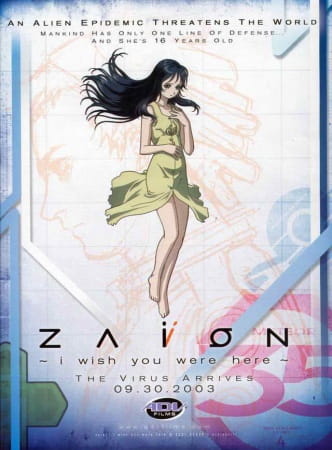
#141: Zaion: I Wish You Were Here (2001)


Director: Seiji Mizushima
Screenplay: Hiroyuki Nakamura, Manabu Ishikawa and Natsuko Takahashi
Voice Cast: Joe Odagiri as Yuji Tamiya; Yukari Tamura as Ai; Daisuke Gouri as Domeki; Hiroaki Hirata as Chanpua; Isao Yamagishi as Tatsumi; Jin Hirao as Kurosawa; Katsuyuki Konishi as Kaneshiro; Kotono Mitsuishi as Mitsuki; Nobuo Tobita as Satake; Romi Park as Tao; Tesshō Genda as Kudou
Viewed in Japanese with English Subtitles

Zaion is very much the project of a new company with too much ambition, not enough resources. Studio Gonzo were the anime studio I grew up with at their height in the 2000s as I got into anime, so there is a certain aura to them that I cannot help to have in spite of the obvious issues they had. The common idea, whether true or not, is that they always start strong on the first episode of their TV series, a company striving for the slicking productions, only for projects to suffer from budget or having to create original material when the manga sources weren't finished, something to attest to twice from my experience from Hellsing (2001-2) and Chrono Crusade (2003-4). This narrative should be held to debate in reality. What I can however say with true is how it's amazing to think that by the 2010s, whilst they're still around, they crashed and burned due to financial difficulties, having been founded in 1992, started anime production in 2000, and ended up having to delist themselves in 2008 and being merged with another company in 2009.

The best way to answer this question for myself, whether Gonzo were a good animation studio or one which failed, is only answerable by actually watching their work from their main period, in which between 2000 to 2008 they were very productive.  Zaion is a little different as, made in 2001, this is very early for the studio, just breaking into the industry in the 2000s as they originally began in video game animation, the same year as one of their earliest big titles Hellsing. It is also an "ONA", an early original net animation streamed directly on the internet.

Zaion also unfortunately has similarities to Mars of Destruction (2005), a notoriously "bad" anime OVA, if on a higher budget which is still a bad comparison for it. Like Mars of Destruction later, this is about a meteorite landing on Earth and causing an alien outbreak to transpire, in this case a virus that creates monsters from those infected. Unlike the later anime where it's a group of schoolgirls with guns inexplicably having to deal with them, this has a team pumped with nanobots in the blood stream that allow them to transform into effectively a sentai team. A new project, a girl called Ai with tremendous psychic powers, is planned to be the new secret weapon, but alongside a burgeoning relationship between her and Yuuji, a member of the team, the virus is evolving and starts to surpass the nanobots that protect from them.

A four part ONA, it is pretty standard material for a plot, but with the notable detail being that it's directed by Seiji Mizushima. I liked Dai-Guard (1999-2000), a real surprise in the transition to computer assisted animation about ordinary office employees having to operate a giant robot, and he's known primarily for the first adaptation of Full Metal Alchemist (2003), which was a colossal boundary passing hit. Zaion, honestly, does feel like a job for hire, particularly as Zaion's biggest weakness is that story wise and in available resources, it's incredibly bland and doesn't do anything of interest with its basic material.


Even in knowledge that this was an attempt at something from a newly created studio, it cannot be denied the OVA feels impoverished. The plot is very conventional for anime, but if you add style, any can grow in quality even in four TV episode length parts. You can make even a generic premise grow. Zaion isn't that anime, not particularly investing any real pathos for the cast, including a bland snarky male lead, whilst the only character of note is one of the scientists being a middle aged slob who eats a lot of junk food for his main diet. Even the aliens aren't that inspired as, whilst a threat when they can melt together into one giant alien or infect anyone who survives them, there's a lack of any distinction between them.

Production wise this is felt too, not in the obviously dated early effects, which stand out jarringly even in terms of frame rate, but for how generic it is. This is particularly felt as, barring one shot of a crowded city of pedestrians (in the day), this exists in some of the most empty locations possible. Not since Mars of Destruction or even Ai City (1986) have I seen such empty environments, where skyscrapers were just background to the film. Zaion follows a pretty obvious plot you can guess from what I have already described, which leaves little space for this bland aesthetic to be deliberately changed.

The only aspect which stands out is that the production hired composer Kenji Kawai, a regular collaborator with Mamoru Oshii and a talented creator who brings his a-level talent here. Zaion to its credit, when everything else isn't interesting, has a great soundtrack, touching upon New Age and electronica with an incredible atmosphere.

Aside from this...yeah, this is difficult without just recounting how the story ends which defeats the purpose of the review. It ends with some tragedy and a happy ending, but I didn't care. There's generic plot points here that could grow and blossom into good stories - that the sentai team are a multinational steam willingly risking their lives by punching infected mutants when the remote controlled combat robots don't work, or the military are both covering up these alien outbreaks, and emotionally isolating a sixteen year old girl to turn her into a hologram projecting laser weapon - but they are the most basic interpretations of them. As a result, this isn't an artistic failure, just an insignificant production which is worse as people worked hard on the episodes only for this to be the result.