Showing posts with label Samurai. Show all posts

Friday, 25 September 2020

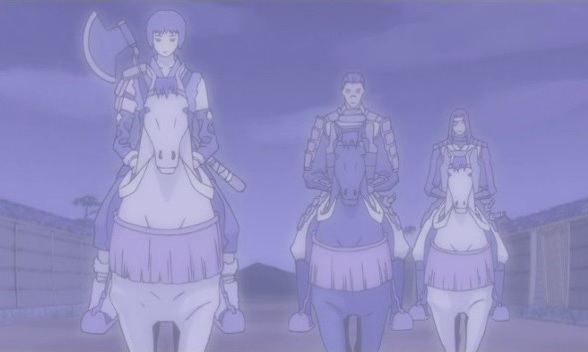
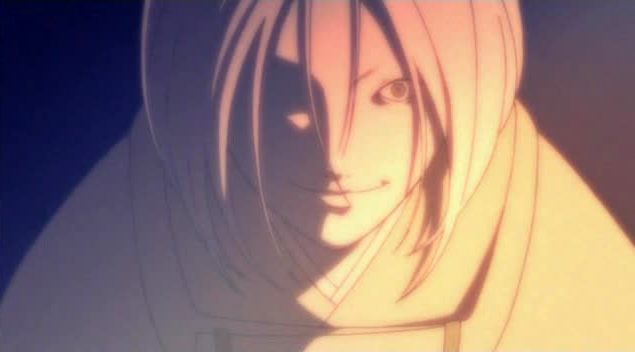
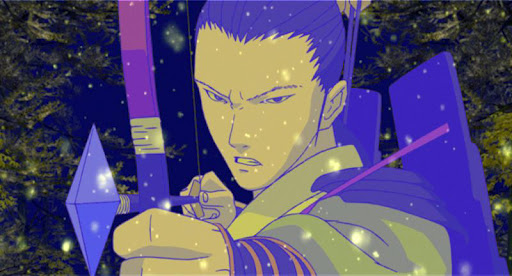
#160: Otogi Zoshi (2004)


Director: Mizuho Nishikubo

Screenplay: Yoshiki Sakurai

Voice Cast: Fumie Mizusawa as Minamoto no Hikaru; Kan Tokumaru as Abe no Seimei; Kenta Miyake as Watanabe no Tsuna; Shinichiro Miki as Mansairaku; Kumi Sakuma as Urabe no Suetake; Ooki Sugiyama as Usui no Sadamitsu; Shinichiro Miki as Minamoto no Raikou; Wasabi Mizuta as Kintarou

Viewed in Japanese with English Subtitles


[Major Plot Spoilers Throughout]

Otogi Zoshi is of note, for me personally, as this is from a period where Manga Entertainment, still going strong in their home country in British even into the 2010s from the nineties, changed as an anime distributer considerably in the early-to-mid 2000s. Just purchasing the rights to multiple animated series is a change as, beforehand, they rarely did baring the curious decision to buy Virus Buster Serge (1997), a very unpopular Masami Ōbari helmed show, and focused on OVAs and films instead in their initial heyday in the nineties. This period Otogi comes from has, up to the 2020s, never been fully re-released from those original Manga Entertainment ones, probably with the huge technical issue that, tragically, most anime by this time for television was not made in high definition or on film, in the transition era of digital drawn animation from handdrawn. This means that a lot if in Standard Definition that, unless piled onto Blu Rays as the American company Discotek is want of doing, leaves them ostracised in the world of high definition even over the quality of the work on the discs.

Baring Ghost in the Shell: Stand Alone Complex (2002-5), a very popular show spun off from an original 1995 film, this has left a lost sector of the company's slow and eventual change to a changing audience fading into the past. Imagine picking up Neo Magazine, which started in Britain as a publication in 2004 and devoted itself (alongside other Asian culture) to anime and manga, and seeing the titles the company once behind Ninja Scroll (1993) and Urotsukidôji: The Legend of the Overfiend (1989) had now acquired - She, The Ultimate Weapon (2002) (an odd mix of body horror, war and tragic romance with an abrupt finale), Tetsujin 28-go (2004) (a 2000s reboot of the 1960s series which Discotek did release as a Standard Definition on Blu-Ray set1), or Heat Guy J (2002-3) (a hyped series which instead became a running gag by accounts on the defunct podcast ANNCast). And also among these is Otohi Zoshi, a period chambara action drama on the surface which does throw back to the older titles Manga Entertainment had released. Still action based, also by Production I.G., a big gun in anime as a studio because they worked on Ghost in the Shell. This period was, in hindsight, a tentative step still with the action and science fiction of yore, but eventually as the market changed and the audience, edging close to one day into the 2010s titles and genres they released would dynamically change.

Ironically, Otogi is a very idiosyncratic creation, because it is literally two very different thirteen episodes shows which just happen to share the same characters and plot. The first half is how I knew of the show and the only way people likely knew of Otogi Zoshi in promotion. In the Heian period, the sister of (real life figure) Minamoto no Raikō, Minamoto no Hikaru, has to pose as him for a mission, accompanied by her aide and samurai Watanabe no Tsuna, in a quest to protect the capital of Kyoto by acquiring magical objects, five magatama that represent the five elements (Metal, Wood, Water, Fire and Earth) scattered across the country. It becomes clear that she is in a plot of greater machinations, on her quest and acquiring other allies, based on real figures or folklore ones - Usui Sadamitsu (a noble ladies man samurai), Urabe no Suetake (gender swapped into a mysterious woman sent with them they are initially distrustful of), and Kintarō (a super strong boy they abruptly meet who is obsessed with food, based a folklore hero). The first half of Otogi Zoshi is very narratively straightforward as there are three magatama left to collect the series, with the only other details being a growing bond between Hikaru and Mansairaku, an acclaimed performer travelling the country too, and that everything is under suspicion the more they travel, and the more people they encounter in their quest to acquire the magatama back whose perceptions cloud her initial one.

It is for the most part grounded within the logic of a materialist world, at least in mind of a super strong young boy in the cast based on Japanese folktales. When one character abruptly turns into a demon in a fight, it does set up how, eventually, the show will fully embrace the supernatural. In terms of the look of the show, it is very realistic with the character designs defined as such, alongside the aesthetic naturally befitting a period chambara tale with extensive research involved by the production. Learning that the figures in the show are based on real people for the most part from this era, who became folktale figures with various interpretations, provides the series with a greater weight to where it virtues will eventually lay. Personally, for me though, it is difficult to talk about Otogi Zoshi without spoiling it immediately, as this show only can be explained with what its structure is meant to be and what the goal of the project was. Narratively the first thirteen episodes charge through this samurai narrative very quickly. It is engaging when watched, but in all honestly, if it had been all there was, Otogi Zoshi would have be immediately forgotten.

Normally when you have twenty six episodes, the thirteenth is the time of the second act, plot twists changing the show considerably if they had not already. Well, Otogi Zoshi takes the biscuit as by them most of the cast is killed off and the capital is left a burning wreck by conflict. What happens is that in the next episode preview, you the viewer are informed that next story is set in modern day Japan, with reincarnation meaning the cast all returns in the shadow of their past lives. By itself, the first half of this show would have been a frankly generic show for me. Where things get potentially controversial, but interesting for me, is that the second half is now an entirely different genre and tone, as the cast have to deal with the results of centuries before for karma's sake.

A breezy modern day aesthetic, even Hideki Taniuchi as the main composer replaced by the legendary Kenji Kawai, brining in New Age influenced smooth jazz, and an episodic structure of Hikaru, with her friends, now a teen landlady who helps investigate supernatural phenomena around Tokyo whilst looking for her missing brother. Arguably one factor in my preference for this, honestly, is that one of my favourite types of plot structures are supernatural/horror ones involving figures investigating weird incidents and folklore over episodic tales, building sometimes to a main narrative. The show completed changes tone from it action heavy tale of sword fighting and intrigue, with an energised opening song changing to another over real footage of Tokyo street life, rotoscoped, whilst the cast are animated mouthing the lyrics to a lighter hearted song. The only real detraction, by accident, to this change is that Hikaru arguably is a less proactive figure as a result. Forced to be her brother in the Heian period, handy with an archer's bow and having to fight, you can make the argument she is a weaker figure in the second act, the one major flaw which personally could have been written better.

It does feel more interesting however as a series through the modern Tokyo setting as, for all the research, the first act charged on so quickly with the plot you do not have time to really absorb the world. Here, every episode is named after an environmental location or landmark in Tokyo. Real ones, turning this show into a geographical tour as one episode can actually be about Kourakuen Hall, the famous arena, where a character comes across the ghost of his late boxer father, or at Shibuya, a district where a giant ghost dog is wandering about disrupting ATMs and cash machines in lieu to the folk believe of wolf figures representing good luck in economy. This becomes, if all real folk and anecdotal tales, an actual snapshot of Tokyo painstakingly researched and drawn onscreen. If some of them are spiced up, they do not feel contrived and out of place. As the characters' past literally haunts the modern day, the ghosts and supernatural realms can be found even in the underpass of the Tokyo railway, or how, near the iconic Tokyo Tower, the urban legend of white noise on television showing the dead is explored in one episode, entirely in lieu to the tower being just above a cemetery and caused by disgruntled ghosts.

It as a turn offers a problem mind in how to sell the show as, not able to spoil such a major direction in the whole narrative, it also means Otogi Zoshi is no longer an action samurai show with a steady pace, but becoming a different genre with a sedate and even playful tone. I half wonder how viewers reacted to this, especially as these were the days every anime distributor, in the United States and Britain, followed an insane distribution method of releasing individual discs with a handful of episodes on them separately rather than whole series (or a couple) of box sets. Imagine those who were buying each DVD release for this, full price per disc, and I wonder how many liked this change or not. Otogi Zoshi by accident also feels like a symbolic eye at how Manga Entertainment was at a cross roads. Perversely its first half is like those older titles they licensed, the second like the titles they would be more open minded to as the market place changed. In fact, the later half feels closers to something the late ADV Vision would have licensed, or frankly MVM Entertainment, one of those titles they might release, having survived into the modern day, alongside the type of titles which would become popular in the 2010s.

Just the show itself, without any other context, is imperfect but I liked quite a bit. Not the best of the genres it is tackling, but this type of story by the second act is that I gain great pleasure from. As a structurally risky work, it also does deserve praise for the experiment, especially as it embraces by the final act when a supernatural train that floats in the sky needs to be ridden, a reminder in itself that now I have least seen the 1985 animated adaptation of Kenji Miyazawa's Night of the Galactic Railroad, I would not be surprised if I keep falling over explicit references to it over these reviews and even anime I grew up with. It even negates a need for a villain as, in a poignant touch, said villain of the first half now returns in the second as a changed man, wishing to alter a history caused by him to protect Tokyo.

In fact, the second act is only eleven episodes. The last two are bonus episodes, one of Urabe, now a fortune teller who gets to do more here, before reencountering the group in a story of a haunted hospital and a cat. The last is a self reflective and philosophical tale of the former villain encountering an old man with greater wisdom then many of the nature of time and how Tokyo has existed as an entity almost immortal over centuries. A befittingly obscure conclusion to a surprisingly unique television series, worthy of rediscovery as a fascinating curiosity just for the tonal shift and how that changes the work.


========

1) Sadly, a concept not brought over to British anime distribution. As always, we get barely a lot of titles over here as a result, which is a pain.

Thursday, 11 October 2018

#75: Kai Doh Maru (2001)

From https://m.media-amazon.com/images/M/MV5BNjIzMTBlNTktNTNhOC00NDk0LTk0
Y2EtY2Q4NjQ5ODVhZDE1XkEyXkFqcGdeQXVyMzM4MjM0Nzg@._V1_.jpg


Director: Kanji Wakabayashi
Screenplay: Nobuhisa Terado
Voice Cast: Mitsuki Saiga as Kintoki Sakatano, Showtaro Morikubo as Raikou Minamotono, Yurika Hino as Princess Ouni/Shuten Dohji, Ai Orikasa as Douji Ibaragi, Fumiko Osaka as Fuji, Hikaru Hanada as Sadamitsu Usuino, Ikue Kimura as Yamabuki
Viewed in Japanese with English Subtitles

Synopsis: In the Heian period, a girl named Kintoki is rescued by Raikou from being killed by her uncle, who intended to take over from her family. Years later, treated as a boy as her family intended to, she is trained as a member of Raikou's band of warriors; unfortunately a figure from her past named Princess Ouni, who fell in love with her presuming her to be a boy, has come forth with vengeance in mind against all those on Raikou's side, with black magic and villains to assist her.

Kai Doh Maru was an OVA anime I once watched and had a really scathing view of; I had no idea why revisiting this years later, compelled by the work upon this revisit years later, until by the ending where the one major flaw with Kai Doh Maru appears. If anything, what likely annoyed me back long ago was that contrary to what the old Manga Entertainment UK DVD says, suggesting it is eight minutes long, Kai Doh Maru is only under fifty minutes, a usual OVA length from a decade earlier in the nineties but not obviously over feature length. Manga Entertainment's old style of anime distribution, for all my nostalgia, is also with awareness of how I despise the many things they did like "dubtitles", and how they were capable of this type of hucksterism, presuming the additional minutes are the extras, even into the 2000s, even into the 2010s when they're now respectable distributors of Pokemon films when I return to their old catalogue second hand.

Kai Doh Maru is nonetheless fascinating - long before (over) expensive Blu Ray releases for the USA, Aniplex was helping to produce what is as much a technical demonstration of new artistic flourishes as well as a very interesting and entertainment anime. Some might find it slow and dialogue heavy for an action samurai story, but for me the slow burn tone of introspection punctured by action was better in itself. Immediately intriguing, after showing Kintoki's rescue at a young age in the beginning, is that this follows a female character in the lead, raised as a boy and taught to be a soldier in a group including a former Buddhist monk who still wears the sacred garb and a cocky womaniser, treated as an equal if a younger member and once being called their princess who has teeth. Her gender is not used as a cheap emotional ploy. When it is of importance it's for more fascinating reasons - her clear unbridled love for Raikou, and the issue that the lead villainess is romantically in love with her but, rather than a homophobic slant, that its tragically a romance without her knowing Kintoki is a girl, desiring to possess the heroine as flashbacks show a naive childish love poisoned by her own clan being massacred and driving her to revenge.

From https://alchetron.com/cdn/kai-doh-maru-8cdcfaee-
3378-4406-aae6-e9ce5f6c7a1-resize-750.jpg

Action wise, when there is action, its solid and with a touch of the gorier samurai stories, where losing a hand doesn't incapacitate anyone just slows them down. The supernatural bent, veering near ninjas and other groups as supernatural beings as with the likes of Ninja Scroll (1993), is fascinating as the plot ramps this side further and further as it goes along. Kidnapping and brain washing children, using their bodies to house malicious spirits, is the start but it then turns into an entire town's population through masks becoming mindless, fire starting minions who move as if like zombies. All it is compelling, helped that, noticeably, there's a sense of the production tapping into their country's own spirituality and folklore, especially as Kintoki is a female interpretation of the folk heroine figure Kintarō. Even if, for a foreigner like me with little knowledge, this story made up details for artistic effect, there's still the better sense that the production was not pulling fantasy clichés out of their arses but using more carefully influenced supernatural and folklore material.

This drawing of culture is to be found also in the most divisive aspect of Kai Doh Maru, its art style. Washed out and light in tone, enhanced with CGI, the style is still unique for me immensely, still with a great idiosyncrasy especially in its combination with realistic character designs. It's revealed to be openly inspired by Japanese classical art, as the ending credits include tableaus, still paintings, of where the characters end up in a form of epilogue, with poetry drawn on and spoken at the same time.

From https://www.animeclick.it/images/
Anime_big/KaiDohMaru/KaiDohMaru7.jpg

The issue with Kai Doh Maru? An abrupt ending. [Spoiler Warning] now - it leads to Raikou facing one of his own, possessed by the evil group as a puppet, and Kintoki with the Princess. Even if Manga Entertainment didn't dupe me for a second time, thinking this was feature length, the conclusion is still brisk. Ironically, it didn't have to be over ten or twenty minutes longer, or feature length, just even five minutes in this case enough to have fleshed everything out. Five more minutes, in a rare case here, would've been enough for the emotional impact to fully succeed. One moment, Kintoki staggering out stabbed in the gut as she finds Raikou dead, is enough to suggest all that has taken place, but a minute longer in dramatic height for both sides, a snippet of a fight with Raikou even if its deliberately left ambiguous what happened, more weight on the Princess discovering Kintoki was a girl and the built to what happened to them inside, would've been enough. Literally, for this OVA another draft of this ending, just to clarify without even dialogue but just images, would've been enough for me to say Kai Doh Maru is a very underrated and neglected OVA from when straight-to-video anime was sadly passing out in popularity. [Spoiler Ends]

Now it's a case of a very underrated and neglected OVA from when straight-to-video anime was sadly passing out in popularity with one little caveat in terms of a vague shrug of an ending.  


From https://silentdivergence.files.wordpress.com/2012/05/121608-11.jpg

Friday, 6 April 2018

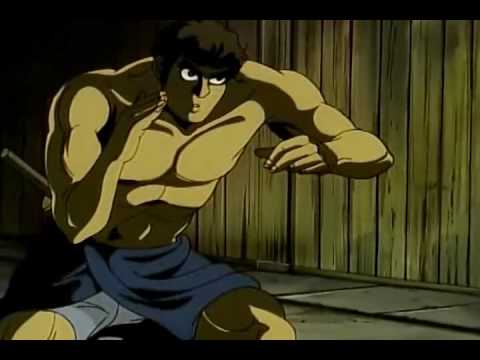
#53: Sword for Truth (1990)

Fromhttps://image.tmdb.org/t/p/w600_and_h900_bestv2/
Awa1uGji7kcv3iHI1E2BYFy4Cgi.jpg


Director: Osamu Dezaki
Screenplay: Takeshi Narumi
Based on the novels by Takeshi Narumi
Voice Cast: Eric Flynn as Shuranosuke Sakaki; Alan Blyton as Kagairo; Bill Roberts as Dogen; Frank Rozelaar-Green as Marouji; Garrick Hagen as Daizen Imura; Julia Brahms as Princess Mayu; Sarah Wateridge as Oren
Viewed in English Dubbing

Synopsis: In period era Japan, the purple clad swordsman Shuranosuke Sakaki is assigned to rescue the princess of the Nakura from the Seki ninja in exchanged for a priceless sword. Things are not as simple as this especially when various monstrous and supernatural warriors get in his way.

Whilst Manga Entertainment is still the largest anime distributor in the United Kingdom, who now release the new Pokemon films and Dragonball series, I cannot help miss their old lurid side. To the point they have lost their personality nowadays. It was an awkward transition back in the late 2000s, the moment the company who released violent anime like Ninja Scroll (1993) and Urotsukidôji: The Legend of the Overfiend (1989) stepped away from their reputation when they released family friendly material like Professor Layton tie-. Yes, even in the VHS days Manga Entertainment did release great work, like Akira (1988) to Macross Plus (1994), but they were notorious for their trashy releases. For being the company who coined "beer and curry" anime, expecting young men to watch anime on Friday nights like straight-to-video Steven Segal flicks. That they relied on the OVA and theatrical market, TV series an alien term for them barring less than esteemed series like Tokko (2006) and Virus Buster Serge (1997). And I confess that, now Anime Limited exists and other companies take up the small British market, I miss this lurid side of Manga Entertainment even if I only got into it in the DVD era. Back in the early 2000s when I was getting into anime, the now defunct ADV Pictures was the other primary source for the medium, Manga Entertainment were still releasing their old catalogue titles onto DVD, including the less than spectacular evidence of their past like Sword for Truth. As much of this is nostalgia but there was at least a personality at hand too.

From https://ia.media-imdb.com/images/M/MV5BOTZlZDRm
ZWMtNTNjZi00ZjZjLWI5ZGItZTUzZmRj
Njk3ODQxXkEyXkFqcGdeQXVyMzM4MjM0Nzg@._V1_.jp

The irony is that its director Osamu Dezaki, up to his death, is one of anime's most well regarded craftsmen. A working director who yet, over his prolific career, had auteurist flourishes and was responsible for incredibly well made and beautiful projects. Paired with character designer and animator Akio Sugino, he did a lot of magic as well. Their pairing on Sword for Truth, after Dezaki's stint making American animation in the late eighties, was not one of those magic moments. It was released in the West a long while after its initial Japanese release as well. When the aforementioned Ninja Scroll became a very popular hit for Manga Entertainment  in both the United States and the UK, naturally there were attempts to capitalise on its success. ADV tried to openly promote Ninja Resurrection (1997) as a sequel by also having a protagonist named Jubei, probably less likely to anger fans than the fact of it, over the two episodes, having no ending whatsoever. Manga Entertainment itself released Sword for Truth, made in 1990, many years later.

The anime, based on the novels of Takeshi Narumi and with said author scripting the plot, has all the fantastical absurdities of the others but is more openly explicitly in its use of real Japanese history, none of which is taught in the West unless one openly studies it, and neither is explained in this anime. Set in the Tokugawa era, the villains for starters are meant to be Christians, mostly hidden in the English dub. A plot point which has a bad taste in the mouth as, depicted in Masahiro Shinoda's 1971 film Silence and Martin Scorsese's own attempt on the same material also called Silence (2016), the history of how Christianity was outlawed in Japan is not one to be proud of. This era is depicted in a lot of chambara pulp stories, like Lone Wolf and Cub, but is rarely depicted as such. It also raises questions who the big bad you only see in the last act is and never contributes anything else to the actual material. A hairless mountain of a man who worships at a burning cross whilst naked writhing women orgasm around him, it's as if the Pope was an evil warlock on steroids and best not to try and explain.

From https://i0.wp.com/operationrainfall.com/wp-content/uploads/
2013/05/Sword-for-Truth-Screen-4.png?resize=610%2C464

The history, as is common in a lot of pulp samurai tales, is background content that you do not fully need to understand. Or that would be the case were it not for how many names are badly pronounced, Manga Entertainment's dubs varying wildly in the mid-nineties, and that story still scatters in historical context and maps through its narrator, enough for a Japanese viewer to possible get in nods to, virtually nonsensical without context to Western viewers without the context. Infamously the English dub confuses things further in one scene, thus sabotaging the entire structure in places. In one of the more infamous scenes, whilst the narrator gravely talks about how opium was used to brainwash members of an assassin's cult, explicit animated lesbian sex is taking place onscreen where one of the participants is being brainwashed. That the English dubbing script confused them for the kidnapped princess causes a huge plot hole when these female ninja attack the villainous ninja at one point. If the very stern male voiceover explaining how opium was used to indoctorate assassins over a sex scene wasn't "tasteful" already, this mistake and its effect is the exclamation mark.

From https://i0.wp.com/operationrainfall.com/wp-content/uploads/2013/05/
Sword-for-Truth-Screen-5.png?resize=610%2C465

It's not a high point in Osamu Dezaki's career in the slightest. Even Golgo 13: The Professional (1983), whilst based on a manga with problematic gender depictions and a luridness to violence and sex, at least had incredible style and a nihilism that had effect on the silly material. Sword for Truth is a chambara Golgo 13, in which our anti-hero is a stoic warrior who wins every fight and has sex with a lot of women. Not well made, not helped by the significant budget limitations and few of Dezaki's artistic flourishes. It is the perfect definition of a guilty pleasure and if anything softens its tastelessness and huge problems, it's the complete lack of story context and general strangeness. These characters exist in a lot of Japanese pulp stores, but this one has the quirk of dressing in lovingly purple clothing and having, like Ninja Scroll, to fight various freakish ninjas (harpoon throwing frog men, old ghost men who skip on top paper lanterns, even a giant tiger). Where the first women he has sex with is a female pickpocket who inexplicably has a demon eating babies tattooed onto the whole of her back. Material so over the top that, because its told with such stoicism, it's ridiculous. Even the English dub helps with this, as the princess asks whether he can ever love her on a battlefield. Or when an assassin asks a target whether he has a family before suplexing him to death.

Also at under fifty minutes, there is no ending. The kidnapping plot is resolved, but it barely scrapes into this world. Especially when there is a cameo by what clearly is a character from the source material, an assassin with the potential for an afro who kills his targets with martial arts rather than weapons. The Christian Big Boss if presented as an oversexed version of Sauron, but never contributes anything to the actual material. This is testament to an issue with OVAs that, whilst missed, the straight-to-video anime industry for every great release was also notorious (especially by the nineties) of work that never had actual endings to them or were just made to encourage people to read the original manga to get the endings.

From https://i.ytimg.com/vi/-yahG7DCjkI/hqdefault.jpg

Is there any worth to Sword for Truth then? Actually yes, in the sense that, in reference to a discussion with a friend on Letterboxd that came from musicians but could also apply to cinema and anime, any great artist who never has an egregiously bad period in their career is playing it too safe. Thankfully Dezaki would go on to adapting Osamu Tezuka's Black Jack into anime throughout the nineties, given us the incredible 1996 theatrical movie that redeems for this completely. A one-off, getting back from the American animation industry can be shrugged off especially as the material is still entertaining and so bad, its compelling. Barring the music, which is actually good, this is the mad trashy side to anime which thankfully isn't the norm nowadays but whose unpredictable energy could be stolen back and applied to better written and animated productions. It is not as if we've escaped from this type of material either - and I'd argue some anime now is more insidiously worse for their gender politics and ideas especially when you get to the underbelly of Moe. If anything, as dumb as a brick and the English dub has howlers as Manga Entertainment's dubs could be infamous for, is a side of the company that should still be celebrated even if laughing at it at the same time. Manga Entertainment helped finance Ghost in the Shell (1995), so their reputation was never fully trash merchants either at the period. In fact - whilst this is possible fed on watching the old Manga Entertainment trailers scored to Mad Capsules Market too many times - the company even in the early DVD era when Sword for Truth was released at least still had a distinguishable personality unlike in the 2010s.

From https://i2.wp.com/operationrainfall.com/wp-content/
uploads/2013/05/Sword-for-Truth-Screen-8.png?resize=610%2C466

Tuesday, 3 January 2017

#37: Samurai X: The Motion Picture (1997)

From http://pics.filmaffinity.com/Rurouni_Kenshin
_The_Motion_Picture-125599913-large.jpg

Aka. Rurouni Kenshin: Requiem for the Ishin Patriots
Director: Hatsuki Tsuji
Screenplay: Yukiyoshi Ohashi
Based on the manga by Nobuhiro Watsuki
Voice Cast: Mayo Suzukaze (as Kenshin Himura), Miina Tominaga (as Yahiko Myôjin); Miki Fujitani (as Kaoru Kamiya); Takehito Koyasu (as Sadashirô Kajiki); Yuji Ueda (as Sanosuke Sagara); Akihisa Soukuchi (as Ken Ikeuchi); Harî Kaneko (as Aritomo Yamagata)

With any long lasting, exceptionally popular franchise, there's the issue for people who've yet to jump ship onto the franchise when it's gone through many spin-offs, feature length stories, sequels and prequels of where one starts. Naturally most would immediately go to the first piece, the one which gained the popularity in the first place, although there's a problem as can be attested to Rurouni Kenshin where, if not everything is released or in this case has been long out of print in the UK, one is forced into a corner. It's nice to find Rurouni Kenshin: Trust and Betrayal (1999) second hand, said to be the most rewarding and artistically satisfying of the entire franchise, but having a DVD with only the last two episodes out of four is an utter pain in the arse.1 Rurouni Kenshin, about the titular samurai Kenshin Himura during the early Meiji era with red hair, red clothes and a distinct x mark scared on his cheek, has had a lot of media built from the character, live action films the most recent and easily available examples, so there's another issue as well that, with so many continuations with the character, whether all the spin-off media is actually any good and worth keeping on one's DVD shelf is an issue. As much as one wishes every sequel for a franchise was great, be it books to moving pictures, there's a constant example of bad or utterly pointless tangents which ultimately aren't worth the time in having seen, marring the series as someone's first experience with the beloved character is such a bad or dull story, more so not worth spending ridiculous amounts on the special edition releases with various bits of tinsel and gloss on them.

From http://cdn.anisearch.com/images/anime/screen/3/3192/full/161545.jpg

Samurai X the Motion Picture
follows the franchise mid-way into its existence as a one-off story, already establishing main characters to follow - Kenshin himself, Sagara Sanosuke a martial arts fighter and general lovable lunkhead, Kamiya Kaoru the sole female member and the more diplomatic, and Myōjin Yahiko a young boy established as being an orphan in a few lines of dialogue in the film - but setting them against a feature length long story that can be work by itself in spite of the background you'd need to get the most out of it. On one hand it's an advantage for myself as it means this being my first experience of the franchise isn't marred with being lost by context fans would already know of but meaning, without any risk and all narrative consequences taking place to characters only existing in this film, a story like this is fraught with merely doing the bare essentials.
It's interesting to see another period chambara anime in such a long while on the blog - not since entry #5 Sword of the Stranger (2007) - where in this case Western influence is modernising the nation of Japan that's survived civil war but conflicts are still taking place. The narrative is entirely about the lingering wounds of this and backlash against the western presence, a figure Takimi Shigure (Kazuhiko Inoue) secretly plotting to take drastic action, not knowing of how double crossing is involved or how Kenshin has a significant part in his motives. That and the woman who loves him as well, Toki (Yuko Miyamura), having emotional conflict as she bonds with Kenshin and his friends with a Sword of Damocles hung over her love for Takimi.

From http://images.static-bluray.com/reviews/5141_4.jpg

The problem is entirely about the story being perfunctory. Not wanting to drastically effect the main characters, long form pulp storytelling is fraught with having to either keep coming up with more imaginative stories or keeping the wheels spinning to a dull repetition, an issue which becomes more problematic with the tie-ins for long standard series like feature films which should be more dynamic considering how important a film or a special should be in ideal. It's possible to have one's cake and eat it, especially as this particular story has enough to run with story wise in terms of politics and a character drama between two figures never featured again that can go in any dramatic conclusion, but it feels like mediocre samurai cinema, one which feels shockingly flat too in terms of an animated work one would hope had more flair to it. Part of its cardinal sin is that a lot of its plot is signposted and sanitised, that Kenshin will not use the sharp end of his blade at all and harm anyone, or that there's no dynamic conflict to test his good virtue and show its best, merely what can damningly be argued to be an average episode length story stretched for over ninety minutes. Neither does it help that the most rewarding moment, a pre-credit prologue, when Kenshin was still a cold blooded hired warrior, of a night time fight is constantly repeated over and over again as flashback padding that it loses its impact eventually.

From http://sia1.subirimagenes.net/img/2013/12/26/
131226073003112137.jpg

Without any tension for the main characters -  Myōjin flirting with joining the anti-Western rebels but with the script cheating so he doesn't get permanently affected by this decision - nor any real dynamic to the new characters for this film, Takimi reduced to clichés of honour and Toki as a worse cliché of the meek woman who only cries and has no affect on the story around her, no amount of sad music or crying, of manly tears as much as Toki's, can help as neither the corrupt member of the Western military helps add spice or the many things you have here that you find in other anime before it done better. Affectively it's the worse way to get into Rurouni Kenshin, as someone who had never seen any part of the franchise before it, and if I do continue on with entries of it, if they're available, I hope this was one of the unfortunately cases of a pointless cash-in.

=====================
1Thankfully Trust, while second hand, looks easy to pick up online, so even if the video quality's aged badly there might be a review in the future one day.

Tuesday, 15 September 2015

#5: Sword of the Stranger (2007)

From http://images.moviepostershop.com/sword-of-the-
stranger-movie-poster-2007-1020434785.jpg

Director: Masahiro Andō
Screenplay: Fumihito Takayama
Based on an Original Premise
Voice Actors: Tomoya Nagase (Nameless); Yuuri Chinen (Kotaro); Kōichi Yamadera (Rarou); Akio Ōtsuka (Shogen Itadori); Atsushi Li (Master Byakuran)
Viewed in Japanese with English Subtitles

There are numerous period stories in anime. Samurai are as popular in animation as they are live action cinema. Straight ahead stories. Action. Drama. Comedy. Generals of ancient wars depicted as cute girls. Even Akira Kurosawa's Seven Samurai (1954) remade as a futuristic tale. Sword of the Stranger is an underrated action drama where a nameless ronin, Nameless, encounters a young boy Kotaro and his dog, developing a cautious relationship that becomes protective when Nameless soon realises Kotaro is being pursued by others. A group of Chinese travellers, known as the Ming group, want to capture the boy to sacrifice for an immortality ritual, a contingent who use powerful pain killing drugs and have members like Rarou, a blond and blue eyed foreign warrior, that can cleave through an entire raiding party even when severely injured. There is also a Japanese contingent housing the Ming group who eventually find the Chinese suspect, desiring to get involved when they discover what they are up to, leaving Nameless to protect Kotaro and deal with a war time past that haunts his dreams and leaves his sword tied up to never draw the blade out.

From https://canime.files.wordpress.com/2009/04/sword_stranger03.jpg
It's a brutal anime. Very visceral and gore where no one is safe - men, women, even horses. What's different from an ultraviolent anime at its schlockiest from the early nineties is that, applying to the film as a whole, time is managed perfectly and every character is given time to breath and have concerns outside the main plot.  Even the Ming group, technically the villains, have moments of doubt and pause to think even if the film can brutally cut short characters' lives within an instant. For a film much about the bloody sword combat, there is a surprising amount of humanity in depicting the characters as it does, a masterstroke that helps elevate the film from the danger of being a generic chambara story. The artistic quality of the film in terms of design and its muted look helps as well, giving Sword of the Stranger a calm tone even though it has a foot occasionally in the more exaggerated samurai stories by having major or minor characters who, even if they cannot fly or have bee hives growing out of their back, have their own signature weapons or a quirk for the few brief minutes they appear onscreen.

From http://freakengine.com/wp-content/uploads/2012/01/stranger1.jpg
This willingness to have time in the film's short length devoted to minor characters is refreshing; helped by the simplicity of the narrative, you can devote additional time to suddenly cut to minor details, such as a minor villager character talking to another after his importance to the plot is done with, closing the parts of every character with respect rather than abruptly pulling them off screen. Even if the deaths can be sudden and most aren't dwelt on at all, especially in the finale where opposing sides and Nameless cross paths, it doesn't feel like a glib decimation of the character ranks but the harshness of battle taking place, with enough having been made of even a bow woman or a minor soldier for you as the viewer to take up the missing shock hardened ronin and warriors don't have time to think about.

From http://freakengine.com/wp-content/uploads/2012/01/stranger2.jpg
The fight scenes are the most important part of the film though in the end, and if they didn't work, the film would've been handicapped badly. Though the film altogether is methodically paced, these scenes are numerous and exhilarating. They skirt the border between realism and a hyper exaggerated fiction, where there is nothing outlandish and the magic talked of by the Ming group doesn't consist of people being able to fly, but it's not an issue to have a character running across roofs and an unstable wooden structure as fast as he can. Anime can have fight scenes that are realistic or the completely ridiculous, but in the case of the most memorable examples they all build up their characters' personalities even in their gait and how they sling fists or swords as much as their super moves. Sword of the Stranger fits comfortably amongst live action brethren like the Lone Wolf and Cub series (1972-4) and other samurai films I've seen in how the pauses and stillness before a sword is drawn and after when a participant falls down dead are as important as the clash itself. Like the American western there is usually a ritual to the combat and in terms of characterisation, something which is important to cinema let alone as much as for this blog's future entries, the samurai genre is as interesting for me as the western as it both a) deals with morality plays and have so many entries that various genres, plots and moods have been dissected in them, and b) the fight scenes we love in these films and in Sword of the Stranger all have distinction between each other during the narrative length. The first encounter between Rarou and Nameless randomly on a bridge, tense and set alongside the blissful unawareness of a fisherman just under the bridge, to the violent climax all stand out differently from each other even if the fight scenes all have a sword or bladed weapons being brandished.

From https://canime.files.wordpress.com/2009/04/sword_stranger06.jpg
Samurai films in particular too, though there can be exceptions, have had less issues dealing with the white hat/black hat definitions that have been westerns throughout the decades, morality in general a lot more grey here even if Nameless is a good man. The willingness to show the villains in a more complex light is different from other samurai films I've seen, but regardless of historical accuracy or not, an ambiguity without becoming sophomoric nihilism pervades many of the chambara tales and does here as well. Heroes have to be ruthless in films like this to Lone Wolf and Cub, and Nameless certainly belongs to the group of anime protagonists who have dark pasts, a cliché that works here because, quite sensibly, he's shown to be a noble man with a moral code through good writing.

From https://animereviewers.files.wordpress.com/2010
/02/sword-of-the-stranger-screenshot-5.jpg
Ninja Scroll (1993) this is not, not only in the lack of the fantastical but also that the villains aren't inherently monstrous bad guys despite wanting to ritually sacrifice a young boy. It makes my lack of knowledge of Japanese history embarrassing in that, seeing a depiction of the country's past in this action yarn, like many of the samurai films, it would be great to know how much accuracy there is. The samurai films, like the westerns, not only tell interesting moral stories even in a rip roaring tale but a depiction of worlds straddled between chaos and order, mythological ideals that are universal of law, survival and honour dealt with in these films. Even in a film like Hanzo The Razor: Sword of Justice (1972), an exploitation movie, you can have these issues brought up directly or in the background. I wouldn't be surprised even if clichés which litter Sword of the Stranger are partly based on things taught in Japanese classrooms but its self defeating, having enjoyed this anime sleeper immensely, that I've been too lazy and not read up on my period Japanese history for context.

From http://www.theicecave.org/damage_control/
multimedia/swordofthestrangerpic2_011810.jpg