Showing posts with label Studio Pierrot. Show all posts

Tuesday, 21 November 2023

#269: Maris the Chojo (1986)


Studio: Pierrot

Director: Motosuke Takahashi

Screenplay: Tomoko Konparu and Hideo Takayashiki

Based on a manga by Rumiko Takahashi

Voice Cast:

Japanese: Mami Koyama as Maris, Jouji Yanami as Murphy, Junpei Takiguchi as Colonel, Sumi Shimamoto as Zombie Sue, Toshio Furukawa as Koganemaru Matsushita

English Dub: Sharon Holm as Maris, Dominic Taylor as Rogane, Harry Ditson as General, Kerry Shale as Murphy, Stacey Jefferson as Sue

Viewed in English Dub


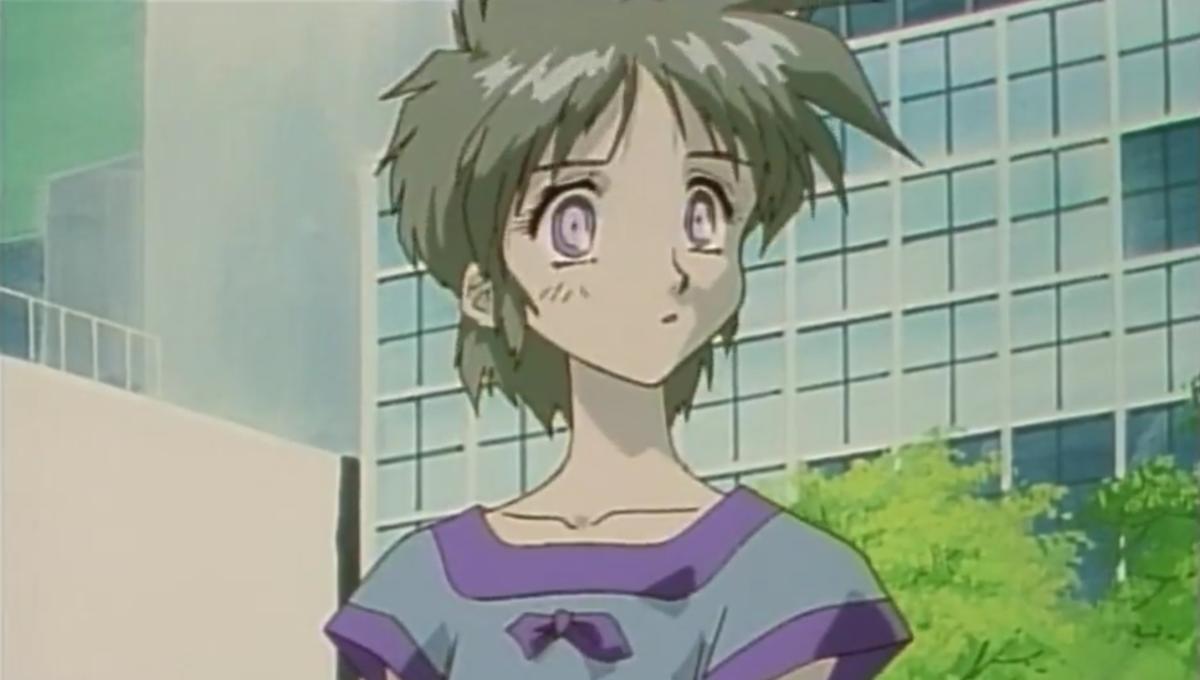
Rumiko Takahashi is one of those huge names in Japanese pop culture, a huge author in manga since her beginnings from 1975 under the guide of Kazuo Koike and 1978 professionally, and like so many like Go Nagai to Koike himself, there are the titles which became her calling cards and other obscurer ones which also managed to get animated adaptations due to the status Takahashi gained. For Takahashi, obvious bigger hitters include the Ranma ½ and Urusei Yatsura franchises, whilst Maris the Chojo, also known as Maris the Wonder Girl or Supergirl, was a one-shot manga from 1980, part of titles which would be collected under the Rumic World reprinted sets of short stories years later. A beautiful looking opening in outer space introduces the titular Maris, causing one to presume this is a serious action sci-fi story in which this figure, a space bikini wearing space cop who has to stop crimes across the galaxy in this well animated eighties production. What it also turns out to be is a comedy as Maris has the worst of luck despite her talent for terrorizing evil doers.

Maris does have a tragic back story, a riff on Superman to befit an alternative title for the Central Park Media release when they sold this on VHS, where her surviving species were forced to become intergalactic refugees when their planet imploded, but mostly this follows a trope that works exceptionally in anime when it succeeds, that of the hero/heroine who is hopeless and out of luck we sympathize with. With the strength of more than six humans, as all her species, the choice of bikini is less of note than the bindings she has to remove to be able to use her full strength, allowing her to kick alien goons to the other side of the room and causing villains to literally urinate themselves in fear, but also leading her to accidentally break her entire ship when she forgets to put the restraints back on. With a talking seven tailed fox helper named Murphy at her side, able to transform into anything if in sevens only, and amusingly given a broad Irish accent in the English dub, this is clearly more playful in tone when the story proper begins, and I find it sad this was never expanded beyond its one-shot nature originally, as these characters immediately have a lot to work with.


Including two extended music video sequences, the first on an intergalactic beach resort with a Jaws parody and a bandaged mummy enjoying their sunbathing, this is a farcical action comedy where our space cop Maris is sent after a kidnapped son of a billionaire. It is more of a character piece as this is a trope as old as time in anime, that of the hapless hero constantly in debt, her family all having restraints which they forget to keep on, leading to property damage their daughter has to pay off alongside her mother’s shopping sprees, whilst her diminutive (i.e. pixie sized) boss has debts from every spaceship they have lent her she keeps breaking or letting get destroyed. Maris is sympathetic, even if her fantasies of marrying the kidnap victim are less romantic but for all the money he has. She is someone forced to take other jobs on vacation because she is constantly broke, even tricking horny male customers with her good looks to actually pay for a human taxi service where she just carries them, and even in her imperfect form, she is the kind of lead you get so much sympathy from as a lovable goof. This is added to by both being ahead of her time as an ultra strong female character and also because, metaphorically, characters like this in anime even in fantasy settings cannot help but suggest their real life counterparts. More so this as the daughter and sole breadwinner to a family constantly being hassled by phone calls from her parents needing money, Maris is s single woman having to put up with debts, even with the equipment for her job that gets damaged by pure accident, and finding it sucks like if for anyone else in a less fantastic job who could have read the first ever one-shot manga.

She is of that time as well as, visibly, another influence on this story was female (joshi) professional wrestling, which was a previous job for Maris alongside the villainess making the reference explicit; stuck with a broad southern accent in the English dub like too many did, this figure of Sue is noentheless another sympathetic figure from the same planet as Maris, who for her scheming just wants to buy her own elaborate lair, a former in-ring rival to Maris who also like to get payback from previous loses likely involved in their history. This has aged like fine wine as a joke, as the legacy of women's wrestling in Japan has gained more recognition and burns brightly still decades later, but it also plays to the fact that, as another eighties franchise Dirty Pair was explicitly inspired by female wrestling too, when coming up with two female space mercenaries, Maris also shows when this spectacle in Japan was a huge pop cultural phenomenon too that was influencing other mediums too. There is a rematch in the squared circle in the climax between the two female figures central to this story, and what little we get here from Studio Pierrot is clearly them having fun. A studio with a long history in the medium, the creators were indulging here in the positive way like so many of these one-shot productions, getting in references like to Star Wars characters in the background you would not be allowed to get away with in later decades, due to the stricter copyright practices that would come in, to the end credits having faked outtakes, all of Maris and other characters tripping, getting injured or even blown up. As a one-off OVA, sadly, you cannot go further than this in speculating where this could go with the central character, and in this case, there is also the knowledge Rumiko Takahashi only wrote and drew one single manga story for this, not a vast volume of chapters. As with so many of these titles we could have gotten a longer OVA series if not a TV series, only with the knowledge that the material this adapts was not as long either to consider, there is enough to admire, but it leads to feeling like a taster to a work you can only imagine the vaster adventures of.

Friday, 10 March 2023

#241: Baoh - The Visitor (1989)


Studio: Pierrot

Director: Hiroyuki Yokoyama

Screenplay: Kenji Terada

Based on the manga by Hirohiko Araki

Voice Cast: Hideyuki Hori as Ikurō Hashizawa / Baoh; Ichirō Nagai as Dr. Kasuminome; Ikuya Sawaki as #22; Noriko Hidaka as Sumire; Shūichi Ikeda as Dordo; You Inoue as Sophine; Yūsaku Yara as Walken

Viewed in Japanese with English Subtitles


Before JoJo's Bizarre Adventure started in 1987, manga author Hirohiko Araki had an attempt beforehand at an action manga in 1984 for Weekly Shōnen Jump, one which was cancelled into 1985. This forty plus minute straight-to-video production retells this, made when JoJo's Bizarre Adventure had already had a good start to its legacy defining existence that lasts to the modern day. This story begins with a nine year old girl with psychic abilities named Sumire fleeing members of Doress, an evil scientific organisation, on their own personal train when she uncovers Baoh. Baoh, and his host Ikurō Hashizawa, is a biologically created parasite that, for the host, makes them supernaturally strong. Too strong, too powerful, too dangerous, and one that is said to eventually kill the host and find a new body to survive in, which like so many evil scientist plans involving super soldiers or weapons was exceptionally stupid with hindsight. Only its allergy to fire and shooting the host in the head offer any sense to the creation of this worm-like blue parasite.

Baoh: The Visitor is a lurid little shocker, one I am surprised we never got in the United Kingdom in the VHS days, one which was never even a Manga Entertainment release but AnimEigo, whose modus operandi was more for sci-fi titles like Bubblegum Crisis (1987-1991), still to the modern day preserving and re-releasing titles in the United States, a real homemade company founded by Robert Woodhead and Roe R. Adams III, but one whose titles rarely were the gory productions Baoh belongs too. Credit where it is due, Baoh at least comes without any slouch and enough style to make itself over-the-top, in which Doress want to stop Baoh getting away, some style to be found such as in ominous premonitions Sumire has which allow some dream-like artistic flourishes to stand out, one with a sketchpad she has suddenly conjuring a violent horror a stand out for animated invention. This is not a surprise considering this is a studio Pierrot production, a long standing and ongoing animation studio who have worked in multiple forms and would be adapt even to bring some style to this production.  

But you see why the manga likely did not catch on too. Baoh and Ikurō as the lead are broken in how unstoppable they are, with Baoh able to come up with new ways to escape events, but that is less of an issue next to how the personality is not there. Something significant with even the first JoJo's Bizarre Adventure manga, christened Phantom Blood, and the second Battle Tendency is how he had figures out its most enticing aspect. Before Hirohiko Araki came up with the Stands, a concept for the whole franchise of spiritual entities hosted in characters who assist them in combat and in peculiar powers, he had already found the personality and eccentricities which would make the series legendary, not just his idiosyncratic habit (with Western copyright issues) of naming characters after bands and musicians. There is a lot of manga where the hero will always be powerful and able to overcome hazard, but Araki got everything right with JoJo's even down to how, to win a fight, the leads had to figure out their opponents like a chess game of how to overcome an unnatural ability. He ditched the tone Baoh suggests of having to be straight faced all the time, openly embraced being goofy as it was being serious, something you do not see in the stoicism of Ikurō here as his later acclaim came with protagonists who could be utter doofuses as they could be noble and heroic.

Baoh the anime, as a hyper-violent eighties anime for the video market, is more interesting than because of how ridiculous it is. It sets this up with the least competent assassin who guts a man yet lets him slowly wander off across the road and acquire a motorbike to escape, just standing there and letting him get away. In mind to this being at the time the Stardust Crusaders arc of JoJo's was being penned in manga, the high watermark for getting the series its legacy, creating the Stands, and some of the franchises' most iconic characters and aspects, Baoh: The Visitor was likely to be produced off the back of this, but I would not be surprised that this was made for the video market like many titles for its lurid pulpy content. It feels as much an excuse for the many heads here alone being melted or exploded in full animated detail, where one of Ikurō's opponents is a cyborg with a gun for a hand who yet can weld a gun in both before hand in his human skin. Its problems are entirely in mind that the world is not that interesting, beginning with Ikurō Hashizawa not being a distinct lead. His Baoh form is certainly memorable, a prototype one of the "Stands" introduced in JoJo's Bizarre Adventure, and certainly in terms of body horror, the concept of Baoh as a manga is sound in imagining, not matter how dumb an idea for evil scientists to have done. A biological weapon that transmogrifies a person or animal beyond their original form, and could multiply, is fascinating as a concept. It is however telling that the most interesting character for me is Walken, a Native American working for Doress' side, a giant who can re-boil a cup of coffee or melt faces off with his tremendous psychic powers.

Barring a female lead that has her alien squirrel-cat creature as a friend, there is not a lot among this cast unless Baoh was worked on greatly for more manga volumes in terms of idiosyncratic figures, most of them cliches with not enough time to stand out. JoJo's, which can be serious, found in having French bulldogs named Iggy as supporting heroes or naming a villain Vanilla Ice both added a deliciously strange personality to the work but also added so much more to engage with the material with. Even in the first arches of that manga, you see Hirohiko Araki had brought in likable protagonists, distinct and memorable figures even in the one-off enemies, and a sense that as his influences showed themselves, including his fascination with aesthetic be it ancient Greek art to fashion, clothing and the poses models make wearing such clothes, the sense of style was going to add to the personality as much. Araki's world that in which the goofier you are and ridiculous your clothing and/or personality is, the more you are allowed to get away with it because you could punch an actual hole through someone with your powers, the charisma onscreen and in person. Ikurō here has his knitwear sweater, even in Baoh form, but among generic soldiers, occasionally one robot and a psychic whose powers are regulated by a bandana, this is quite a generic roster from a creator who got how to make everyone stand out, literally and figuratively, after this perfectly. What this becomes is the prototype for that manga, where Baoh ended in 1985 and JoJo's began in 1987. Touches suggest where Araki was going, and they are funny in an absurd way here, such as overcoming a hazard by severing one's arm then reattaching it afterwards. There is the added humour in this anime, which befits the many of this time period full of gore and over-the-top action, where the villains, whilst generic scientists, are also professor exposition in literal form, which will mean more as the English dub AnimEigo produced for their release may help with appreciating the title more, far more over-the-top than the professional if subdued Japanese one.

It is credit to the fandom and legacy of JoJo's Bizarre Adventure that Baoh was not forgotten, even if this OVA is a curiosity, for Ikurō Hashizawa found his way as a cameo playable character in a beat em up videogame for the JoJo's franchise, JoJo's Bizarre Adventure: All Star Battle, both for the 2013 version and the 2022 remaster, where the developers CyberConnect2 added a respectful nod to Araki's past creation, who certainly sat nicely among the later heroes of the manga author visually. It is also with hindsight that, whilst having created other stories before and after, Araki's career has been JoJo's Bizarre Adventure since 1987, but with the huge advantage that each arch is its own period, with new characters, even having reset the timeline for the world with Steel Ball Run (2004–2011). Araki literally made his name on one title, but one which will never get stale because its world, originally set up around the continuing family tree of the Joestar family of the JoJo name, can go throughout history and place, from the 1920s to futuristic Florida in a women's prison. That in itself softens Baoh's flaws as an anime in itself as, alongside being too short and too entertaining to dismiss, this is the collection of all of one manga where Araki first made a try, and then afterwards got it right and became a cultural institution.

Wednesday, 27 November 2019

#127: Key the Metal Idol (1994-7)

From https://images-na.ssl-images-amazon.com
/images/I/51278GVX1AL.jpg


Director: Hiroaki Satō
Screenplay: Hiroaki Satō
Voice Cast: Junko Iwao as Tokiko "Key" Mima; Hiroshi Yanaka as Tomoyo Wakagi; Jūrōta Kosugi as Sergei / "D"; Miki Nagasawa as Sakura Kuriyagawa; Sho Hayami as Jinsaku Ajo; Toshiyuki Morikawa as Shuuichi Tataki; Akio Ohtsuka as Aoi; Chiyako Shibahara as Beniko Komori / Miho Utsuse
Viewed in Japanese with English Subtitles

If you look at Key the Metal Idol altogether, this was such an ambitious and peculiarly project for the better. In anime, straight to video work (OVAs) could be multiple episodes released on multiple videotapes; Key the Metal Idol took a huge risk when at over fifteen episodes, it gives me wonder on what prices the viewers would have paid for all the tapes1. Whatever the practical nature of the release, this was at least an ambitious tale of androids and robots, idol singing and conspiracy. The one catch to mention is that, after an initial set of thirteen episodes which are structured at a usual anime TV length of twenty five to thirty minutes, Key the Metal Idol eventually leads to two feature length conclusions, which meant many drastic changes.

With the time available for animation to be slicker than most television and for a more detailed plot than OVAs which have significantly less time to play with, it layers on an odd mix of science fiction, spirituality and all in the midst of a premise which initially suggests robot idol singers. Whilst there are episode directors, the chief director of the OVA is Hiroaki Sato, the animation director of the legendary Akira (1988) who sadly didn't helm much at all or even work in a lot of anime next to his peers, only directing one other thing in Yoshimune (2006), an utterly obscurity.

The titular Key herself is by all accounts, least for most of the show, a robot girl created by Dr. Murao Mima. On his deathbed, he passes on a message to his granddaughter Key she can become human by finding over 30,000 friends. Going to a metropolise, she encounters Sakura, who comes form the same rural village, but also the Ajo Heavy Industries and Production Minos led by Jinsaku Ajo, who are responsible for her grandfather's death ultimately and happen to be ran by a madman, one whose corporation is later revealed to be harvesting "gel" from unwilling victims, the homeless and their enemies, the solidified life force of human beings used to power robots which are remote controlled by people. In a curious plot choice, which is openly known before the details mentioned above in the narrative, is that their best way to test the robots is Miho, an idol singer who is actually remote controlling a robot version of herself, a pawn kept by Ajo as a pet who demonstrates some really creepy sexualised obsessions with robotics and playing God. Key herself, unaware of any of this, upon discovering Miho considers, despite being a timid and quiet figure, this the best director to find 30,000 people.

It's such an odd premise, if a compelling one, one which hangs on a huge cultural aspect that exists in Japan of idol singers. "Idols" don't necessarily have to be singers, but it's the most commonly known version, manufactured icons for managers and talent agencies. Idols have a dark underbelly too - they can be controlled by their management even to the point of any concept of romance and personal lives, not to mention that when it involves female idols (including teenagers) there's a really uncomfortable aspect to consider in this too. Satoshi Kon's 1997 film Perfect Blue was a fascinating take on this from the perspective of a member of an idol trio who, trying to grow as an actress in a new career, lead to a psychodrama which looked in the darker side of idol fan culture too. (And how fitting, without realising the connection at first, that voice actress Junko Iwao, who plays Key, also voices that idol singer protagonist in Perfect Blue). Here, there's a perverse metaphor, whatever your opinions of various idol groups and singers' managements, of a company who are literally controlling women, making robot versions of them, and with Ajo going as far as even assaulting their backup lead singers with violence or draining them emotionally until they are on death's door constantly.

Another factor of significance is that, in lieu to probably the original plan, the series until the final feature length episodes drip feeds its plot and never really explains a lot towards the final two pieces, which make up most of the OVA leaving many questions. Key when she briefly turns human throughout the series, in emotionally intense moments or in crowds, has incredible psychic powers. This leads to the introduction of Prince Snake-Eye, a cult leader whose characterisation takes a fascinating path, but to keep some secrets involves trying to sabotage Key's idol singer career, and leads to her literally healing a child from near death, which does raise some new issues at hand with who she is. The show, despite its science fiction plot, jumps fully into spiritual themes, especially in Key's back-story as a shrine maiden is a memory she has, from a curious slant as its going eventually be interpreted through science fiction details.

There's also the inherent fact that there's a very idiosyncratic attitude here to characterisation which at first requires a lot to get used to, might even be perceived as wooden or characters not actual like regular people, but I came to realise was individuals on the production staff trying to actually write characters who were more realistic even if it has to contrasts an inherently over-the-top plot. The character of Sakura is the best example of this, a figure who bites her tongue a lot despite having the brash and confidence attitude, one which leads her to conflict with Key's apparent robotic nature and nursing a growing affection for Shuichi Tataki, a handsome guy who is the head of the Miho fan club who slowly begins to realise something is very amiss with the star. Even the apparent villains have idiosyncrasies, figures having darker layers to them, where even if he is the outright villain Ajo is a former World War II veteran whose obsession with the opportunities with robotics became a violent God like mania. The dance choreographer and general artistic talent Hikaru Tsurugi, who is an abusive and cold man, is one of a figure distant to people, who attaches himself to Key when he considers her like him. Even Ajo's right hand man, a hulking former soldier named Sergi, is a man who thinks himself smarter than his employee, a man who can literally be described as superhuman but at a cost in his career of having becoming an addict to gel, which considering its solidified human life force really has a curious undercurrent meaning to it.

From https://www.syfy.com/sites/syfy/files/styles/1200x680/public/syfywire_
blog_post/2018/10/key-the-metail-idol-key1.png

Complicating the series was that, with the clear sense something happened in the production that forced the creative team to work on these and release them in 1997, which they had to have two feature length final episodes.  Before, not a lot of back story was explained, to which this means the first film is a giant exposition dump, where it becomes quite obvious the original plan had to be scrapped and this was the result. It's fascinating when you learnt the context, reaching as far back as 1950s Japan back into the story's modern setting in a web of characters like Key who get fully formed, but its sudden and involves two characters having a long conversation in a park to explain this all. A whole new character is even introduced just to add context to one side even, so I would not in the slightest hold back any person, if they go out to find this series, really has issues with episode fourteen, as it's such a sudden lunge into so much plot detail, even if it gets into a lot of fascinating material including a sub current theme of women being dominated by men and the inherently horrifying nature of it.

The final episode does do a lot though that succeeds after the fact, even against the obvious jarring change in pacing. It ultimately reveals as well how sad the story really becomes - only one major character dies in the whole OVA, but it's one you come to love, a normal person, and it's treated with the immense sadness even if the others have to move on quickly in dangerous circumstances. The result is one of the best attempts at depicting a death bed scene or a death when anime can bungle it so badly or, in the midst of an ultraviolent one, it just becomes a ghoulish background noise. The series altogether, even when it may come off as haphazard, does make the success of not pulling punches. Even when there are some contrivances when characters might've reacted fasted, most of the series thankfully has it there's a reason acts don't take place, like Sergi being too injured to actually continue, that a location when finally learnt of is immediately acted upon, or that it's known that, as the series progresses, Key's unseen abilities even scare Ajo and his lackeys. The show doesn't hide how dangerous the villain is, but there's reason to why he acts the way he does, even if the explanation like using his own scientists for gel extraction is the act of a lunatic. It is, in all honestly, a nuisance filled production that'll develop layers if I revisit the whole series.

The show is also elusive and slow burn for the better. I cannot help but think of the shadow of influence Neon Genesis Evangelion (1995-6) had on this series and others as, whilst the OVA originally started in 1994 and is its own unique creation, the ending of Key the Metal Idol when it becomes a phantasmagorical head-trip, and a concert hall is entirely filled with purple life force gel, feels like something that could only exist after Neon Genesis Evangelion, and the unleashing of The End of Evangelion (1997) on Japanese cinema goers, took such strange and surreal risks with anime. As a result of when this OVA start, it technically doesn't belong to the school of unique and risky anime productions, mostly in television, that Neon Genesis Evangelion encouraged the creation of by being so popular, from Serial Experiments Lain (1998) to argubly the original Boogiepop Phantom series from the year 2000. I'd gladly put Key the Metal Idol as a prototypical entry, not to suggest that there wasn't this type of idiosyncratic animation before the mid nineties, but that as of yet my only knowledge comes from it usually being in theatrical work or experimental anime. The OVA market, when it first started in the early eighties, really helped the encouragement of idiosyncratic productions. Key the Metal Idol is nonetheless a curious being even here as, due to the structure, it's a lot longer than most OVAs I have encountered so takes on the pacing and structure of a regular anime series2.

The OVA was created by Pierrot, a company whose track record includes a lot of huge mainstream hits in anime, some like the Naruto franchise probably known even outside of hardcore anime fan circles. A higher animation quality over TV is here as there was significantly less restrictive time scales per episode allowing for more. It also allowed for more mature content but its wisely used; there's nudity, but its matter of fact, and the violence is not always there but a sudden shock, surprising in how nasty it is whilst making sense as, if there was a super powered robot involved in a scene, it could crush a human head like a grape.

There's also a wonderful dark mood, one which is helped by the richness of the style in colour and character designs. Character designer Keiichi Ishikura's work is very idiosyncratic here, which helps provide the show its own tone, and even if there's a lot of day scenes, the style of Key the Metal Idol can definitely be seen in its very rich use of dark colours and a very slow burn pace. The main opening song is also beautiful, a jazz pop ballad whose moody female vocals about lovesickness befit the show perfectly. For a story where music is going to be of importance, it executes as well the music and the visual depictions of performances with considerable affect - the Miho performances, even the behind the scenes moments we see throughout the story, have their own strangeness to them, anything from giant unused plants to a robotic cello group among the artistic touches. And of course, for anyone who has seen the show already reading this review, a huge plot point involves a song called "Lullaby", initially a mere incomprehensible mummer when Shuichi acquires it through his sources, but is built towards with considering nuisance.

It's together a flawed but utterly admirable piece for me, where even the aforementioned flaw (mainly the fourteen episode) instead becomes part of its personality and thus no longer a detraction for me after contemplating the show. This OVA series is something definitely (sadly) not as well known despite having an English dub, licensed by a company named Viz in 2000 for the American market, although thankfully in 2017 another named Discotek released it in the United States again for DVD.

It's a series, honestly, that should be more wider known beyond this, to which why I will also give credit to Crunchyroll making the OVA series available in Britain in 2019, the time when I saw the show. To not time stamp this review, sadly a lot of Discotek titles, or older anime in general even from the 2000s, were not as easily accessible in the United Kingdom in 2019 as one would presume or hope, dominated naturally by new titles advertised to bring forth revenue. One of Key the Metal Idol's virtues is good old elegant hand drawn animation, and its time stamped by the era it comes from, just in one of Sakura's night jobs being a videotape rental store, it is nonetheless timeless because it's still a fascinating one off, something difficult to categorise in terms of genre or expectations, whose presentation is even idiosyncratic and eventually, yes, embraces the unconventional fully. That kind of work, even outside of Japanese anime, I fall hard for.

From https://i.redd.it/k56xzhgmpx331.png

=====
1) Of interest, considering how anime has notoriously been too expensive from what I have heard in terms for Japanese fans, price gouging to us Westerners if we looked at the prices and in comparison to content, Key the Metal Idol may have had its first episodes released at a significantly cheaper price if the Wikepedia page is right. Sadly this is unsubstantiated information, without a reference source, so I had to take this piece of the review out and warn you of its potential falsity.  

2) There have been longer OVA works if you are curious. Legend of the Galactic Heroes is probably the most famously long OVA work, starting in 1988 and ending also in 1997, with its main series being over a hundred and ten episodes. That's not including side stories, feature films and remakes.