Monday, 17 September 2018

#69: Thunderbolt Fantasy (2016)

From https://m.media-amazon.com/images/M/MV
5BYWJiMTQyYzItZWU3Yy00OGM0LWJkYz
ItOTE1NzAzMzIxMTRhXkEyXkFqcGdeQXVyNDU
xNjc5NjY@._V1_SY1000_CR0,0,712,1000_AL_.jpg


Director: Chris Huang and Jia-Shiang Wang
Screenplay: Gen Urobuchi
Voice Cast: Junichi Suwabe as Shāng Bù Huàn, Kousuke Toriumi as Lǐn Xuě Yā, Mai Nakahara as Dān Fěi, Tomokazu Seki as Miè Tiān Hái, Kenichi Suzumura as Juǎn Cán Yún, Nobuyuki Hiyama as Shā Wú Shēng, Rikiya Koyama as Shòu Yún Xiāo, Sayaka Ohara as Xíng Hài
Viewed in Japanese (and Taiwanese Hokkien and Mandarin) with English Subtitles

Synopsis: In a world of period fantasy, where the world has been split by a war between human beings and demons, a vagabond named Shāng Bù Huàn finds himself dragged into a conflict when Dān Fěi, a female member of an order known as the Seal Guardians, is the last surviving protector of an ancient sword of incredible power lusted over by the evil Miè Tiān Hái. With Shāng Bù Huàn forced to help by a mysterious and possibly untrustworthy trickster called Guǐ Niǎo, who brings in a demoness and warriors to help, they find themselves on a goal to go directly to Miè Tiān Hái himself and defeat him rather than let him acquire both necessary pieces to gain the sword.

Ah, I've delayed this review enough. I was excited by the idea of Thunderbolt Fantasy when I heard a series had been commissioned using puppetry. For an Englishman like myself who at least has seen one scene from Thunderbirds and such works which used marionettes, this piqued my interest in seeing an older style of entertain be resurrected, but actually starting the series this idea became even more enticing when I knew the full context of Thunderbolt Fantasy. We tend to forget animation includes stop motion and puppetry, and they deserve to be covered whether a Japanese anime steps into this1. Thunderbolt Fantasy, when I started it, is even more intriguing as its a Japanese-Taiwanese co-production based on Taiwanese glove puppetry. Not only is it a case, as the show proudly shows, that this craft in the modern day creates some incredible pieces who move and interact as living characters but is it keeping a tradition alive, one which is not a Japanese one but a Taiwanese cultural staple being brought to a Japanese (and Western audience). It also means Thunderbolt Fantasy wasn't the Japanese action series using puppets as I thought it would be, but Taiwanese wuxia storytelling told with glove puppets, which is an entirely different tone and style to deal with, and is certainly unique for a thirteen episode series to have in terms of standing out from the crowd of anime productions.

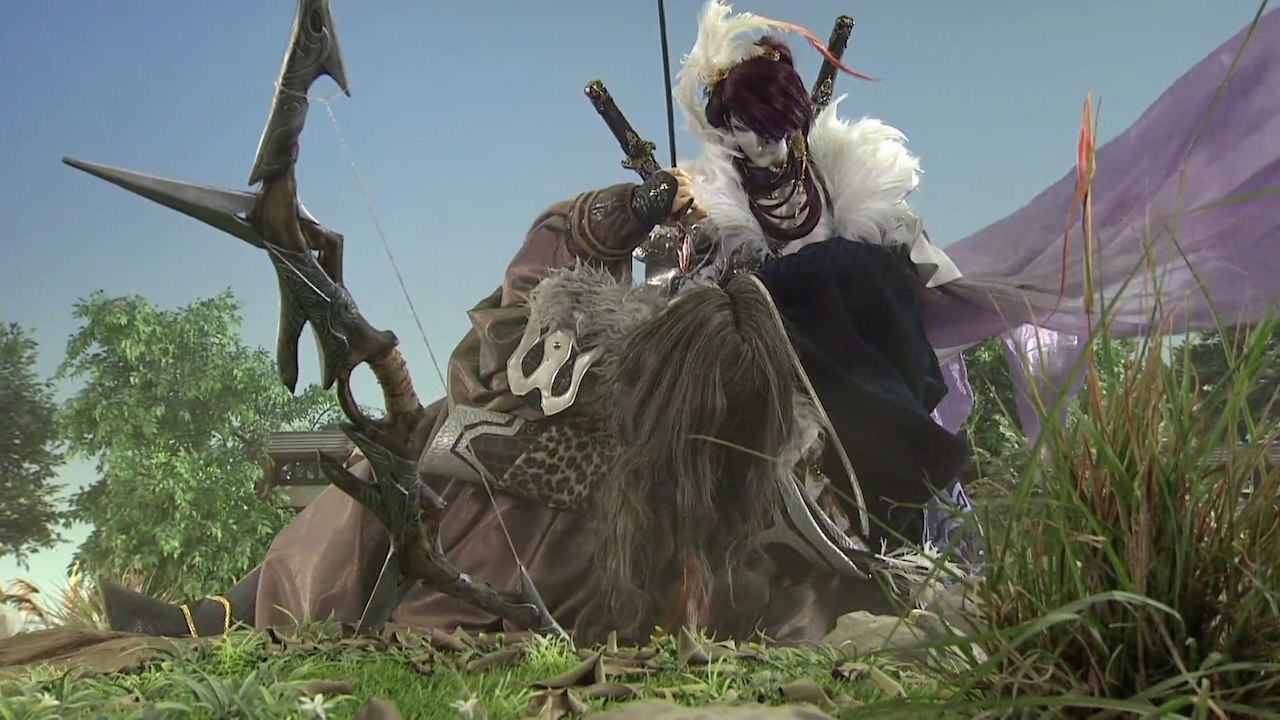
If anything, even if the liberal use of CGI and magical projectiles over actual combat is annoying, you cannot argue stylistically Thunderbolt Fantasy is exceptional. The puppets themselves are incredibly well made creations, lavish and in spite of their fixed faces very expressionistic. Screenshots will give you a great idea that; as elaborate hand puppets rather than on strings as I'd originally presumed them to be without context, they move very fluidly within how they are used rather than the other traditional, and particularly for this type of magical fantasy, they are as recognisable and flamboyant as their various names and alias are in their poetry. In either case, the sense of verisimilitude is found so you can fully invest in them as characters regardless of what they actually are. The additional factor is that this is a wuxia story. Not just martial arts, but wuxia, a very specific form of storytelling which allows for more elaborate, even exaggerated events to transpire. Its carte blanche for all the ridiculous fight scenes, even if I wanted more puppet-on-puppet sword fights rather than them calling out special moves, but this is bearing in mind this is about style as much as a descendant and fantastical form of storytelling that can still be appreciated. One that is melodramatic and where martial artists and sword fighters here can perform superhuman feats.

From https://rosesturnblog.files.wordpress.com/2016/07/
thunderbolt-fantasy-for-article.jpg?w=750

Set in its own fantasy, quasi-Asian world, where a war between humans and demons have left a split in the land, it doesn't completely explain the world but thankfully it never becomes about convoluted world building either. It uses its setting for character, which helps, such as it being enough for vagabond, grizzled member Shāng Bù Huàn and his claim to have passed over demonic wasteland to even lead to the murderous sociopath named the Screaming Phoenix to question and feel wary of the statement. The characters are interesting in themselves especially as Thunderbolt Fantasy gladly undercuts expectations by having flat-out villains being recruited into the party trying to defeat the main villain. If anything it's a motley and amoral group worthy of dramatic weight, the one pure figure in heroine Dān Fěi, a sect member protecting an ancient sword, the moral centre without becoming as wet as a dishcloth. A grumbling, out of place vagabond Shāng Bù Huàn, who actually has the most rewarding character arch when you finally figure out who he is. The utterly distrustful, trickster Guǐ Niǎo, whose place in this story becomes a huge crux of the narrative. One eyed archer Shòu Yún Xiāo and his cocky, headstrong apprentice Juǎn Cán Yún. A literal demoness Xíng Hài, who hates Guǐ Niǎo but still decides to join in when knowledge of the ancient sword in the centre of concern is of interest for her. And plenty of other circumstances, screenwriter Gen Urobuchi playfully undercutting expectations - one of the best [Spoiler alert] involves the serial killer Screaming Phoenix being a figure the heroes are forced to work with, when he kills Guǐ Niǎo's master, the stereotypical old and wise martial artist, easily and refuses to give the magical flute required for their task back. [Spoiler Ends].

This is plenty to work with, even when the story's a simple one where they have to try to work together, get to the main villain Miè Tiān Hái's skull lair past three obstacles - a landscape of undead, a stone golem and a labyrinth of death. Unfortunately screenwriter Urobuchi, one of the few that have developed named recognition for anime fans, was on an off-day for me with this series. This review will be controversial, as many liked the series, but Thunderbolt Fantasy suffers from Urobuchi's taste for plot twists in this particular case undercutting all the ripe, potential adventure and suspense this initial plot suggested. He likes plot twists a lot, and when he succeeds, he pens Puella Magi Madoka Magica (2011) [Reviewed here], which was a constant gut punch and bleak take on the magical girl trope, but one with compelling storytelling and an emotional devastation behind every plot point, making all of them worthy of inclusion. Unfortunately the creative decisions completely undermine expectations in ways that fail.
From http://www.bostonbastardbrigade.com/wordpress/wp-content/
uploads/2016/08/Thunderbolt-Fantasy-2.jpg

Characters promoted heavily in the opening credits, in fights more elaborate the show, die quickly on both sides and abruptly. Once or twice would be okay, but it happens a lot robbing a lot of great action scenes, strange to say as someone normally interested in drama. Many don't get as much detail of them when that would've helped the dramatic context grow, or are not given enough time to. In terms of the plot, obstacles in the heroes' quest like the rock golem are used in funny ways, others like the aforementioned labyrinth of nightmares are completely brushed aside and not used. The show eventually feels rushed when it gets to the latter half, not feeding off its potential plotting fully, the ending falling onto a generic demon god whose existence becomes an actual punch line. And its clichéd. As much as this is embracing tropes of wuxia, many don't feel like the right ones appropriate for this genre but from Urobuchi himself.

Ultimately, this emphasises that even though I view animation with such high admiration for the hard work behind them even over live action productions, there is a difference between being able to appreciate the good work even over ridiculous content and when a product becomes so flawed you are distracted from these artistic virtues. Even when thrown about as they are, the puppets deserve better than what happened. The same is for the music; I didn't like the opening credit theme by T.M.Revolution, but the score by Hiroyuki Sawanois eclectic and constantly inspired, deserving more than the clichéd materials here. When Thunderbolt Fantasy comes off as a predictable action fantasy, it feels like a waste of something even more significant as these glove puppets are works of art. It feels worst especially as the storytelling, which is the sole crippling flaw, does detract from the visuals, which makes it difficult to have pleasure in said aesthetics as well.

From http://www.jaydotdee.com/poptardsgo/wp-content/
uploads/2016/11/thunderbolt-fantasy-73.jpg
======
1) One, Star Fleet (aka. X-Bomber) (1980), which is inspired by a Go Nagai manga  is a prominent example worthy of being covered.

Friday, 14 September 2018

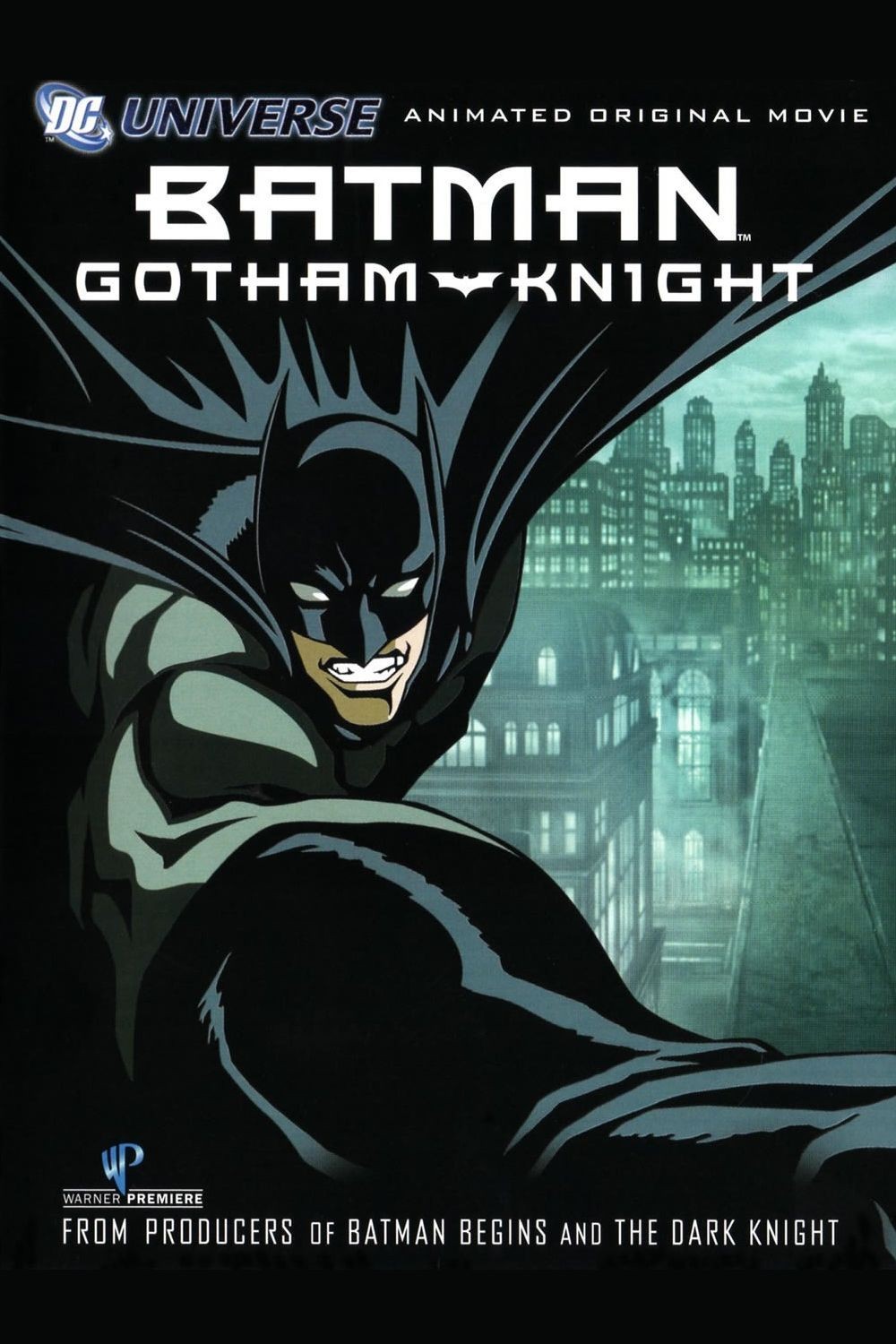
#68: Batman - Gotham Knight (2008)

From https://m.media-amazon.com/images/M/MV5BM2I
0YTFjOTUtMWYzNC00ZTgyLTk2NWEtMmE3N2VlYj
EwN2JlXkEyXkFqcGdeQXVyNTAyODkwOQ@@._V1_.jpg


Directors: Various
Screenplays: Various
Based on the comic book character created by Bob Kane and Bill Finger
Voice Cast: Various
Viewed in English Dub

Synopsis: An anthology - commissioning four acclaimed animation studios from Japan (Studio 4°C, Madhouse, Bee Train and Production I.G) - to tackle the legendary comic book character Batman.

Finally seeing Gotham Knight after all these years, even my enjoyment of it as is has to be tempered by the fact that it not only did it not fully exceed the expectations I had back when it was first being talked of as a project but also, to bastardise Hunter S. Thompson, this was where the wave broke for "cool" anime being a big trend in the West in the early 2000s, something we are waiting to come back for still slowly. This is particularly as, after Batman: Gotham Knight, there have been many attempts at adapting Western properties into anime, which you'd expect to have some notice, but I seriously doubt have made an impact.

The wave rose around the early 2000s with many examples - Cowboy Bebop (1998-9) being a hit in the West, Daft Punk taking inspiration from Leiji Matsumoto for Interstella 5555: The 5tory of the 5ecret 5tar 5ystem (2003), Production I.G. being commissioned to animate a flashback sequence in Kill Bill Vo. 1 (2003) , just to name a few. But the most pertinent in this case  for a comparison was The Animatrix (2003). Say what you want for those sequels, which killed the franchise, but just beforehand when people were first excited about them someone had the inspired idea to get famous animation directors, not all of them Japanese but most of them, and have them direct shorts which could be their own ideas or even based on ideas from the Wachowskis themselves, fully involved as anime fans who were inspired for The Matrix franchise itself. It turned out a great idea because not only was the anthology seen as a success, but people like myself have fond memories of it still to this day. So logically, adapting Western material should equal success, yes?

Well, heard of the Supernatural anime, based on the famous American show? The Dragon Age, Halo and Mass Effect adaptations? Maybe, but are they seen as actually being good? Did you even realise Marvel had four series commissioned on Iron Man, Wolverine, the X-Men and Blade? Are you sure you know they exist, and why aren't they available in countries like the United Kingdom on DVD considering Marvel Studio films do so well here as well as in the States? I sense, with Spider senses tingling, Batman: Gotham Knight merely being another animated DC work, rather than an Animatrix, was a bad omen of this...

From https://i.ytimg.com/vi/XOJS-nCkXCY/maxresdefault.jpg

Have I Got a Story for You
Director: Shōjirō Nishimi (For Studio 4°C)
Screenplay by Josh Olson
Voice Cast: Kevin Conroy as Batman, Scott Menville as B-Devil, Corey Padnos as Porkchop, Crystal Scales as Meesh, Alanna Ubach as Dander

Noticeably unlike The Animatrix, where it emphasised huge names like Shinichiro Watanabe and Yoshiaki Kawajiri were involved, virtually little is talked about of the creators of these segments on the final version of Gotham Knight. The directors are obscure and its instead the studios themselves chosen who have recognition, based on scripts all by Western writers and meant to exist in the same world as the Christopher Nolan Batman trilogy, set after Batman Begins (2005) and just before The Dark Knight (2008). If anything the anthology being more studio driven is interesting, especially as Studio 4°C probably got the best out of this project, their segments the best and starting the anthology off on a high note here. Following four teenage skaters spinning tales of Batman, describing him between a shape shifting shadow to a literal bat creature, it very much follows the studio, known for being independent and unconventional, having their distinct aesthetic, where everything is malleable and rich in colour, not to mention off-model character animation here.

Immediately, whilst the project altogether misses this point a little, the idea of Batman being given to various anime studios isn't absurd. The character's lasting impact since his creation in 1940s, for myself, has partially been, but of great importance, because he can be adapted into any tone, be it Adam West or Christian Bale. (This isn't the first time Batman has been interpreted by a Japanese creator, and certainly not the last, either as Jiro Kuwata worked on a Batman manga during a craze for the Adam West series in Japan between April 1966 to May 1967). And this is apt as Have I Got a Story for You is entirely about various different versions of Batman being shown, all versions which have been depicted in other stories or the villain Manbat effectively in one case. In fact there's an added sense of metatextuality as screenwriter Josh Olson openly admits his premise can be traced all the way back to a 1973 Frank Robbins penned comic called The Batman Nobody Knows, which was adapted for the animated series The New Batman Adventures (1997-9). This context, far from undermining the script, just adds to this nice commentary on Batman being one of the only American comic characters who has been able to evolve and change with ease for any genre and style, appropriate as the character is a superhero who yet came from a film noir and pulp era of pop culture originally and has kept, due to his plasticity and compelling back-story, being arguably the most iconic of all superheroes ever drawn.

From http://s3-us-west-1.amazonaws.com/dcn-wp/wp-content/
uploads/2017/07/18172413/czQkRBzV.jpg

Crossfire
Director: Futoshi Higashide (For Production I.G)
Written by Greg Rucka
Voice Cast: Kevin Conroy as Batman, Jim Meskimen as James Gordon, Ana Ortiz as Anna Ramirez, Corey Burton as Yuri Dimitrov, Gary Dourdan as Crispus Allen, Rob Paulsen as Sal Maroni

In comparison, Production I.G.'s entry is more pedestrian, following two minor characters part of the Gotham Police both caught between warring Italian and Russian gangs. The issue with Crossfire, in terms of a plot beyond this, is that it's a necessary chunk of the whole project but one for a studio known for famous work like Ghost in the Shell (1995) that is the least dramatically invested work of all the segments. This is sad as, from this point on, one of the best aspects of the entire anthology starts to begin, the segments in non-chronologically order actually build a narrative with characters and plot points spilling over to other segments in spite of being aesthetically different from each other, but that Crossfire is the only segment the studio gets to animated in the entire anthology. Shame that, whilst Crossfire is an interesting action pieces, its merely a pretty looking action piece when every other one has a dramatic or aesthetic quirk of greater interest.

From http://www.theicecave.org/damage_control/multimedia/batmangkpic3.png

Field
Test
Director: Hiroshi Morioka (For Bee Train)
Written by Jordan Goldberg
Voice Cast: Kevin Conroy as Bruce Wayne / Batman, Corey Burton as Yuri Dimitrov, Ronald Marshall, Will Friedle as Anton, George Newbern as Guido, Rob Paulsen as Sal Maroni, Kevin Michael Richardson as Lucius Fox

Returning back to the Russian and Italian gangs of the previous segment, Field Test weaves multiple plot strands over the segments with Bruce Wayne and the character of Lucius Fox, the man behind his tech in the Nolan films, field testing a method of bullet proof armour only to emphasis Wayne's moral code. This arguably is the most divisive looking of all the segments, which might be strange considering the others can have very exaggerated, cartoonish styles, but in terms of how Bruce Wayne is depiction. After Arkham Asylum: A Serious House on Serious Earth (1989), one of the most artistically bold and acclaimed of the franchise, nothing is strange unless you decided, as here, to have a Bishōnen Bruce Wayne who looks nineteen. Bishōnen, defined as a young and elegant male character, is popular in anime and fits perfectly with the idea of Wayne as the young playboy. I think for myself why it's the least conventional choice is because, in another inspired idea, the production has the most famous and beloved voice actor for Batman in animated series, Kevin Conroy, voice the character in all the segments, which is startling as even back in the nineties when he became famous for the role, I remember him sounding like an adult, and here as a much older man, I still picture his Bruce Wayne as a slightly more mature figure in his thirties, not nineteen year old looking Wayne. A minor comment, not even a criticism, just amusing when this, not the more unconventional looking depictions of Batman, raises the most eyebrows from fans.

Anyway, after that ridiculously long tangent, here the segment's of interest for the story. Bee Train (aka. Bee Train Productions) are a company known for critically divisive action anime like Noir (2001) or Madlax (2004), so I had apprehension with little context for their work. Working with their bread and butter here, they do well, though ultimately the tug-and-pull of Gotham Knight, a virtue as much as a flaw, is that you can feel this work rigidly put together per segment with each anime studio having to work with what they had already been provided with. It doesn't allow breathing room in terms of writing the scripts so Bee Train merely had to do what was perfunctory here.

From https://i.ytimg.com/vi/tKtqdv0lTQE/maxresdefault.jpg

In Darkness Dwells
Director: Yasuhiro Aoki (For Madhouse)
Written by David S. Goyer
Voice Cast: Kevin Conroy as Batman, Gary Dourdan as Crispus Allen, Jim Meskimen as James Gordon, Ana Ortiz as Anna Ramirez, Frank Welker as Killer Croc, Corey Burton as The Scarecrow

Instead wiggle room is to be found with the better segments in terms of art style and appearance, to which the first entry by Madhouse finds greater breathing room by having a very exaggerated and even at times grotesque style. What is a generic plot, following on from Batman Begins (2005) with the Scarecrow villain with Killer Croc added on the side, gets meat to its bones with a very cartoonish atmospheric style, all with a sense of the gothic by way of the type of art found in the Superflat aesthetic. Madhouse are a legendary studio behind the likes of Ninja Scroll (1993) to Perfect Blue (1997), and they always get the job done in terms of handsomely animated work.

And that's not to dismiss the script either. Noticeable this is the one script by David S. Goyer, one of the collaborators on the Christopher Nolan films, and whilst this does stretch the realism of that series with Killer Croc, even in lieu here of being a man with a rare skin disease who was experimented on would still be an extreme if he had made it into the actual films, it's one of the grittiest of the segments. Certainly the darkest, The Scarecrow now targeting and murdering Christian priests and developing his own cult of nihilistic fear in the sewers of Gotham, compelling for a story even for a short. In fact that argubly makes this border on horror, the kind of genre bending that anime has always been rewarding with. If anything it actually makes, from memories of The Dark Knight, that sequel slightly disappoint in how the character was merely a cameo. Heath Ledger's The Joker is a part we talk of it nowadays, but imagine if Cillian Murphy was allowed to continue on, moving the Scarecrow away from a " Worzel Gummidge" figure to something legitimately dangerous side-by-side with Ledger? Armchair re-writing but, unfortunately, comic book films do have a villain of the week mentality to them in many cases, making this follow-on here actually necessary for the film's plot line too as well as entertaining.

From https://i1.wp.com/www.bateszi.me/wp-content/uploads/2008/07/
vlcsnap-1060662.jpg?resize=500%2C273

Working Through Pain
Director: Toshiyuki Kubooka (For Studio 4°C)
Written by Brian Azzarello
Voice Cast: Kevin Conroy as Bruce Wayne / Batman, David McCallum as Alfred Pennyworth, Parminder Nagra as Cassandra

If Studio 4°C were lucky enough to have the best two segments, it's because not only do they bring their strong aesthetic game but had the most interesting scripts to work with. Batman as a character is inherently flexible in any genre and story. In this case, bookmarked with the character trying to crawl out of a sewer with a gunshot wound to the stomach, this is a back-story tale where his failed attempt to convince a Fakir in India to teach him methods to overcome pain leads him to Cassandra, an Indian woman who posed as a boy to learn those same techniques only to lead to her being ostracised as a witch as a cost. Voiced by Parminder Nagra, who some will know from the British film Bend It Like Beckham (2002), the short's arguably the best as, even if she exists as a character in this one short, you have a fully developed figure and narrative, a short worthy of canon as a Batman tale even if the others weren't. This has emotional weight to it as, in spite of Batman's belief of fighting back, that ultimately proves an example of his flaws morally as part of his virtues. The short, alongside looking great, also as an unexpected artistic weight as the ending to the current day aspect has a metaphorical, even expressionist, tone to it which has still resonatea with me. In fact because of that ending, and Working Through Pain's qualities in general, this could be the one short that makes revisiting Batman: Gotham Knight worthy as a Batman work.

From https://entertainmentnow.files.wordpress.com/2008/05/
batmangothamknight-s6-ds_martini-502.jpg

Deadshot
Director: Jong-Sik Nam (and Yoshiaki Kawajiri?) (For Madhouse)
Written by Alan Burnett
Voice Cast: Kevin Conroy as Bruce Wayne / Batman, Gary Dourdan as Crispus Allen, Jim Meskimen as James Gordon / Floyd Lawton / Deadshot, David McCallum as Alfred Pennyworth, Jason Marsden as Thomas Wayne, Doctor

In contrast, the finale of Gotham Knight is an action piece introducing the titular villain from the comics, an assassin who is so insanely accurate he can, as seen here, hit a wasp with a cocktail stick with ease. There's however a noticeable controversy that, for those who've watched certain titles, there is a very idiosyncratic but realistic character design here that bare the mark of Yoshiaki Kawajiri, a director permanently employed at Madhouse, the studio behind this short. Kawajiri's time from this period on, making his name as a director in the West with the likes of Ninja Scroll and Vampire Hunter D: Bloodlust (2000), is actually sad. Whilst he made very simple plotted action tales for most of his career, he is mistakenly an incredible character designer and animator when working with his own or other people's work. Around this time was his last directorial feature, an adaptation of a Western property called Highlander: Search for Vengeance (2007) that was severely compromised and not held up beyond being a guilty pleasure. Even a project like Ninja Scroll 2 cannot even get off the ground in the 2010s despite that original film, back in the nineties, being such a hit in the West. I vividly remember Kawajiri having involvement in Deadshot, only to have his name completely erased. The character designs are too close to his own that only a really good mimicry could suggest otherwise, a simple action story to close that sadly shows in the production back-story how Gotham Knight was sadly a compromise on the anime studios rather than an exciting project that succeeded.

Even as a fun anthology, with two great segments, that fact comes to mind in the end, as this should've been a better production. Even if DC Comics has numerous animated productions, crossing the character with Japanese anime should be by all rights a splendid idea. Hell Warner Brothers even returned to the idea with Batman Ninja (2018), letting an anime studio send the character and others to Feudal Japan. The original attempt, Gotham Knight, has moments but it's a compromised anthology whose flaws are as visible as the good parts.

Monday, 10 September 2018

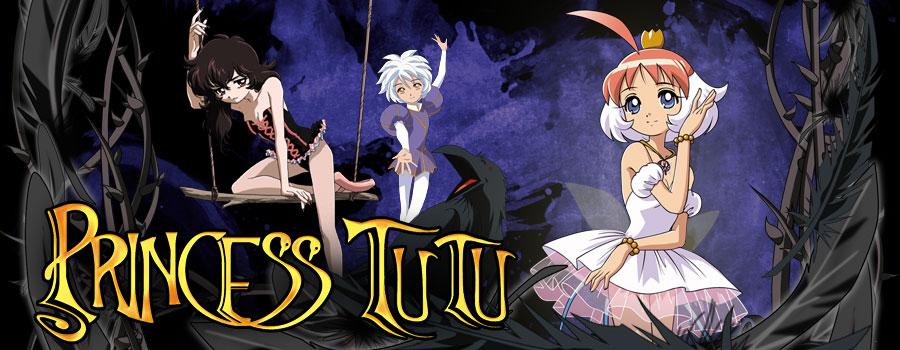
#67: Princess Tutu (2002-3)

From https://cdn.animenewsnetwork.com/thumbnails/crop900x350/
video/category/410/key_art_princess_tutu.jpg


Director: Junichi Sato (Chief Director), Shogo Koumoto (Series Director)
Screenplay: Chiaki J. Konaka, Mamiko Ikeda, Michiko Yokote, Rika Nakase, Takuya Satō
Voice Actors: Nanae Katou as Duck/Princess Tutu, Nana Mizuki as Rue, Naoki Yanagi as Mythos, Takahiro Sakurai as Fakir, Akiko Hiramatsu as Edel, Erino Hazuki as Uzura, Kyōko Kishida as The Narrator, Noboru Mitani as Drosselmeyer, Sachi Matsumoto as Pike
Viewed in Japanese with English Subtitles

Synopsis: In a fairytale town, a storywriter named Drosselmeyer, even after death, strives forward to complete the tale of the Prince and the Crow in real life. The original story, so far, had the evil crow defeated by at the cost of the Prince sacrificing his heart, shattering it into pieces and as a result losing his emotions. Becoming the emotionless Mythos, he is warded around the ballet school by Fakir, a very protective confidant, and Rue, the girl who loves him. There is also Duck, a literal duck Drosselmeyer turned into a girl with a magical necklace, one which also allows her to become Princess Tutu, a magical figure with the sole intention of recapture all of Mythos' heart shards for him.

The best way to describe Princess Tutu? Magical. An obvious comment but in awareness that head writer of the two season series Michiko Yokote first came up with her premise of a fairy tale, a tribute to ballet with a girl who was once a duck, long before the series finally came to be in 2002. Encompassing ballet and fairytales, it explicitly references countless examples of both in plot and music, even referencing material outside of them like A Midnight Summer's Dream. Even Drosselmeyer, the mysterious old man beyond death living in a clockwork filled netherworld, is named after a character in the Nutcracker. As a result, its innately a commentary on itself, of these characters and this material because of all these reference, as much as it is  a sweet fantasy series of the age and gender of the viewer. Thankfully, ultimately why Princess Tutu is an underrated gem from the 2000s which deserves wider recognition, what could've gone up its own navel with trite meta commentary is more interesting than that. Instead it's a proper fairytale heard many times before, only the crux being a tale of when these characters realise their positions in the story and overcoming the archetypes they were initially written as.

From http://4.bp.blogspot.com/-KligJQXnjVs/VLL7vuq8THI/
AAAAAAAACDY/KBBisBJ-Ots/s1600/tAG_1097.jpg

Bright, elegant and using very recognisable classical pieces -  segments from Swan Lake appear in most of the episodes especially as Duck becomes a white swan in the opening credit sequence for every episode - it's also effectively a magical girl show. A subgenre which began with Mitsuteru Yokoyama's Sally the Witch, where (stereotypically) a young girl gains the abilities to transform into a magical figure, most well known even outside anime fandom through the Sailor Moon franchise. This never becomes a critique of magical girls - darker examples of that include Puella Magi Madoka Magica (2011) - instead merely a catalyst for the plot. Where, instead, a knight finds himself questioning his position to weld a sword, the villains are not doing a great job and have an existential crisis, and Duck, a squawky klutz in human form, an angelic dancer as Princess Tutu, finds herself conflicted by Mythos regaining his heart shards, the task fraught with him suffering from newly acquired emotions and the other players in Drosselmeyer's story interacting with her.

Whilst it does have the look of a 2000s production, including notable compute effects, its helped considerably by the colourful, openly fantastical world which evokes European culture right down to German translations of the episode titles. Openly fantastical too, as members of the cast are also animals. Humanoid hippo students with birds dressed and talking like schoolgirls. And Mr. Cat, one of the funniest side characters whose portrayal by Yasunori Matsumoto is above the god-awful attempt in the English dub completely, the ballet teacher and anthropomorphised cat who threatens every female student with marriage. It never becomes weird in an abstract way, honestly, but that doesn't matter. Instead everything feels appropriate for what a fairytale is, where the unpredictable happens but in a way logical to its own world.

From https://ibdp.videovore.com/video/50081810?size=600x400

Where it gets more unconventional is as much through the split between its two seasons. The first is very straight forward and could be a great series in its own right with a conclusion. After is where things become much more interesting. Noticeable, the other half was originally split into fifteen minute episodes before they were recreated for the West by ADV Films as regular twenty minute plus episodes. They're where the characters really begin to question and undercut the storytelling tropes being pushed upon them. That the writer is a character in the story, Drosselmeyer a Greek chorus in himself and already established as a bastard in the first season, desiring a tragedy with his cast, immediately raises the stakes. When characters don't follow his plans, due to being emotional complex people, the plan he has falls off the rails. The mix of drama, comedy and occasional moments of grim consequences is sustained throughout both halves but the later half gets more esoteric. When one character briefly turns into a tree, this is definitely the closest the series as a whole gets to be strange.

Especially when they hired Chiaki J. Konaka, one of my favourite screenwriters known for his unconventional storytelling, where it gets at its strangest, with puppets dancing and wormholes into the clockwork netherworld, my beloved screenwriter's touch to be found. If anything Princess Tutu proved that, whilst a distinct voice in the director's seat is still important, writers for individual episodes are as much guides for the show's personality as I learnt with this series. In general the project, whilst having to explain a lot more than usually for a show like this due to being a series for an audience of all ages, does a lot of heavy lifting perfectly, particularly  as it does have "situation of the week" style stories for single episodes, having to tie up a narrative with characters only appearing in that one story and make their contributions justifiable. In fact what I presumed, early into the second season, would dangerously become tiring actually gets to the point of the exasperation the villains eventually have with themselves as well as their task. Somehow a narcissitic lothario who feels he cannot love as many women as he'd want and has his man servant gore him with bulls continually, another of the funniest characters of the series despite being in one episode only, manages to have a vital point to him in the story of Rue, the secondary female character who's isolation away from Mythos due to Princess Tutu plays to the tragedy of her own life. This broad, conventional storytelling technique of a short story per episode is actually used in clever ways as a result, little moments having a lot of use from even its most comedic characters - one of the best little moments, from a Konaka scripted episode, has a joke of Mr. Cat trying to ward away a goat woman who likes him help two characters in their series long concerns by overhearing him at the right moment, examples like this bound to grow in rewarding upon rewatching Princess Tutu multiple times.

From https://nerdloveshop.files.wordpress.com/2017/11/tutu11.png?w=663

I also learnt more so with Princess Tutu an even greater appreciation of Japanese voice actors.  Snippets of the late ADV Film's English dub causes me to wonder how my younger self could stand them, a over- sugared recreation of stereotypical anime voices that feeling hollow from what I heard. Everyone in the Japanese dub however feels natural in their roles. Nanae Katou as Duck in particular is perfect, right down to a mallard's squawk to her voice. In a series like this, which is playful and still has humour even into its last episodes when the story gets serious, where it is a family friendly fairytale, there's a lot to admire in hearing characters who are taken serious, even the comedic ones having moments of seriousness to admire them. (And anyway, even that humour's to be loved, characters like Duck's best friend Pike (Sachi Matsumoto) and Lilie (Yuri Shiratori) so easy to make awful if they are played too broadly, more so when Lilie's running gag is that she is so enthusiastic about Duck constantly failing to a fetishishtic degree.)

So whilst not abstract, right from its beginning to an ending that is both bitter sweet but also joyful, Princess Tutu triumphs by being very unconventional. Where it goes to in the second half leads to so many curveballs that, as an anime series should, it feels like you've ended up in an entirely different series from the first episodes and it was built up to fully. And especially as a story that is both a fairytale children could watch, but also is a tribute to fairytales and ballet for adults to learn from, it means a lot. In the former, it's a great story. In the later, Princess Tutu also succeeded for me by introducing this particular viewer to references I hadn't known of. Each episode starts with a female narrator using an existing story, from those you'd recognise to obscurer choices like Hans Christian Andersen's The Red Shoes being twisted into unconventional direction mid-narration. As someone with no knowledge of ballet, its grown my interest considerably. If anything the success, even if as a cult series, of Princess Tutu must've be a wonderful experience for head writer Michiko Yokote and the entire production staff.


From https://vignette.wikia.nocookie.net/princesstutu/images/3/
38/Duck.png/revision/latest?cb=20120624205833

Thursday, 6 September 2018

#66: Armitage III - Poly-Matrix (1997)

From https://shinden.pl/res/images/genuine/201476.jpg


Directors: Hiroyuki Ochi, Satoshi Saga, Takuya Satō and Yukio Okamoto
Screenplay: Chiaki J. Konaka
Voice Cast: Elizabeth Berkley as Naomi Armitage, Kiefer Sutherland as Ross Sylibus, Dan Woren as D'anclaude, Barry Stigler as Asakura, Bryan Cranston as Eddie, Dorothy Fahn as Kathy/Kelly McCanon, Ellyn Stern as Rosalind

Synopsis: The moment he steps into a space port on colonised Mars, a member of Earth's police force Ross Sylibus (Kiefer Sutherland) finds himself immediately involved with a conspiracy when a female country singer is not only found murdered, but revealed to be a highly advanced form of bio-mechanical robot. Amidst Mars and the growing anti-robot sentiment among the human populous, he also meets the mysterious and cocky police officer Naomi Armitage (Elizabeth Berkley), a ball of fiery energy whose emotional investment in the case, as more advanced robots are targeted by a lunatic, is of great significance.

[Major Spoiler Warnings]

Armitage III: Poly-Matrix is a fascinating curiosity of earlier Western anime fandom. This is, significantly, a theatrical re-edit of a four episode 1995 OVA series where the run time is at least over two hours, making this a ninety minute production which still works as a story but had to excise a lot to get its length. It's also very well known for the casting of known Hollywood actors in the leads. The female lead Naomi Armitage by Elizabeth Berkley, post Save By The Bell and just after the infamy of Showgirls (1995), and as male lead Ross Sylibus by Kiefer Sutherland, son of Donald Sutherland and an underrated actor in his own right. As a result, I can review the original OVA version, which was released before and after the alternative English language cut, as a separate entity. When it comes to the feature version, there's both the virtues of the original material, and their problems, which ultimately stand out the most, the decisions to make the film marketable to English speaking countries afterwards merely slurring material that is curious and not perfectly explained in this version's form.

From http://www.capsulecomputers.com.au/wp-content/
uploads/2012/07/armitage-III-review-2.png

The story of Poly-Matrix is both interesting but scuppered. It does offer a fascinating idea that there are robots in this futuristic world so advanced to the point they both have real emotions but, mostly female, they can also even conceive children in their bio-mechanical forms. This leads to the one theme which could've been more interested if dwelt more carefully on but, especially in the truncated version, has severe flaws which could be accused as problematic. Its revealed just near the end of the film, which doesn't allow enough time to delve into this, but Earth has become a feminised society, with a female leader, who in potential talks with Mars are severely concerned with how the Martians, in a decadent dystopian future-scape, have female robotic sexbots and servants everywhere, for added touch many looking like stereotypical Moe anime heroines with big eyes and multi-coloured hair in contrast to ordinary human women. It has to be asked whether it's the truncation or the original story which is an issue as, once the conspiracy is revealed, it adds an unintentionally problematic spin on feminism by accident of the theatrical version not providing enough time to clearly define its ideas.

At the same time that leads to a fascinating spin that could've worked. That even Earth, with a female leader and meant to be progressive, can yet be being a conspiracy with deeply problematic moral sliding has a darker, more poignant touch in real life when the #MeToo movement and attempts at helping women, even by other women, sadly has been punctured by issues which harm women, even has women harming other women through unintentional means. (A good example I thought of in the middle of Poly-Matrix was when Meryl Streep, Kate Winslet, Emma Thompson and Lena Dunham challenged Amnesty International to withdraw support for decriminalisation of sex work, only for female sex workers to challenge these major figures back by arguing Amnesty International's decision would actual protect them, signing their own petitions back to have Amnesty stick to their choice1).

From https://static.anarchivism.org/cyberpunkreview-
archive/www.cyberpunkreview.com/images/armitage3-13.jpg

There is also the film tackling, as many sci-fi works, the relationship between human beings and machines.  There is a sobering nature to the Martian populous massacring robots in protests, the protests done with understandable reasons of losing work to the robots, but made horrifying as humanoid figures who are built to look like them are torched alive and their machinery piled up in morbid decorations around graveyards. The added issue that the robots seen punished are all female those which are generic machines already having uncomfortable connotations before you get to those in the story with actual emotions. Their deaths makes this intentionally more mortifying, one figure shown briefly to have a life and relationships, a romance with her female model as a painter, only to be a burnt husk on a pyre next to less advanced robots regardless of her real humanity. The end, where female robots watch on at a battle onscreen between the leads and an army sent to silence them, turning their heads with their big eyed gazes despite being merely functioning machinery, has a power to it as if hinting of a potential revolution.

Unfortunately the material is not as refined and expanded upon as one would hope. It is built as well in a generic sci-fi action anime, like many from the era and not as unique as them. The issue that Poly-Matrix isn't that unique, baring it mind it was once a longer length production, is more surprising when its screenwriter is Chiaki J. Konaka. One of my favourite screenwriters, argubly an auteurist voice in his own right, who is known both for being esoteric and having frustrated many an anime fan with deliberately ambiguous endings and his work eventually undermining reality against unreality without defining which is which. For a very interesting screenwriter, a literal auteur in his penmanship, even a superfan like myself for every good idea this has confesses this is pretty conventional and sluggish by his standards. Barring an occasional taste of his unconventional style - eventually Sylibus and Armitage are in a desert compound where hulking robot-tree hybrids lumber around like gardening Ents - but he could've gone further to his weirder tendencies and especially clarified the themes he was tackling more carefully of gender politics.

From https://static.anarchivism.org/cyberpunkreview-archive/
www.cyberpunkreview.com/images/armitage3-17.jpg

There's also the elephant in the room called Ghost in the Shell (1995), which undercuts this production immensely. Mamoru Oshii's adaptation of the Masamune Shirow manga is difficult, in spite of being a seminal work in Japanese animation, long before Oshii became even more difficult and idiosyncratic with the 2004 sequel, but between hairpin turns from action to heavy philosophy he is a very good auteur when it comes to diving carefully into these type of ideas and tackling the likes of robotics and the nature of the human soul with very thoughtful ideas. Poly-Matrix relies on a lot of clichéd tropes common in sci-fi anime, such as the touch but scantily dressed heroine, and throughout you have to wade through an anime that feels significantly more dated than the two Oshii helmed Ghost in the Shell for said clichés. Oshii would've at least taken the potentially problematic gender politics and refined them to actually have a more pointed, morally thorough take with teeth. He would've even gone far, like his later work, to having an action sci-fi story abruptly stop for a long scene of characters sat down discussing gender politics and robotics, even if it enraged most anime viewers and lasted over ten minutes, just to make sure he was as thorough as possible on said subject2.

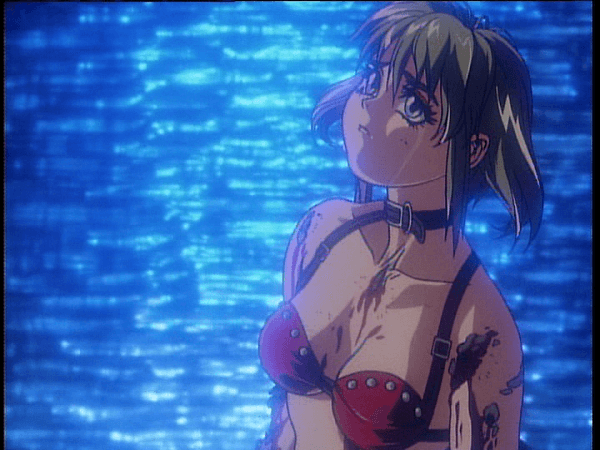
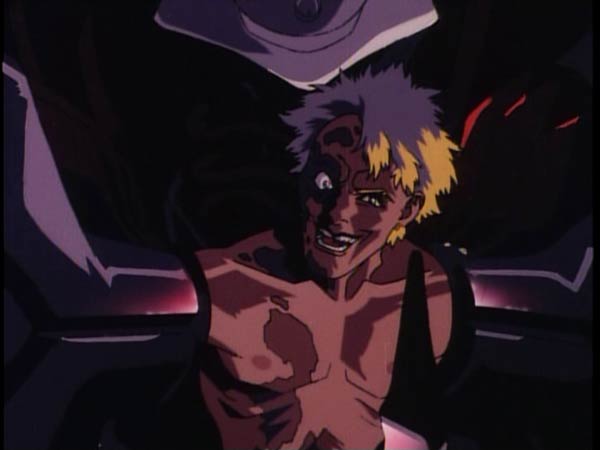
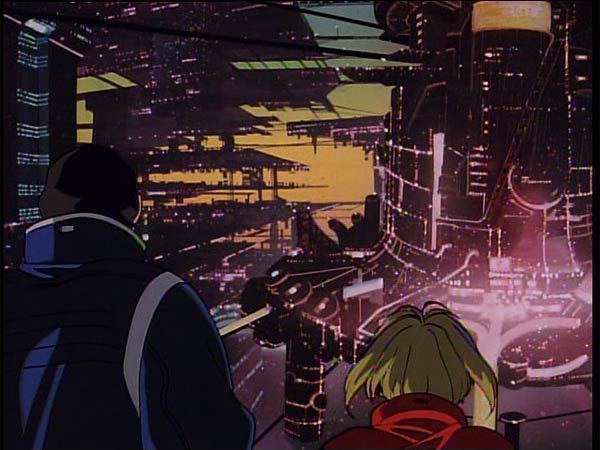
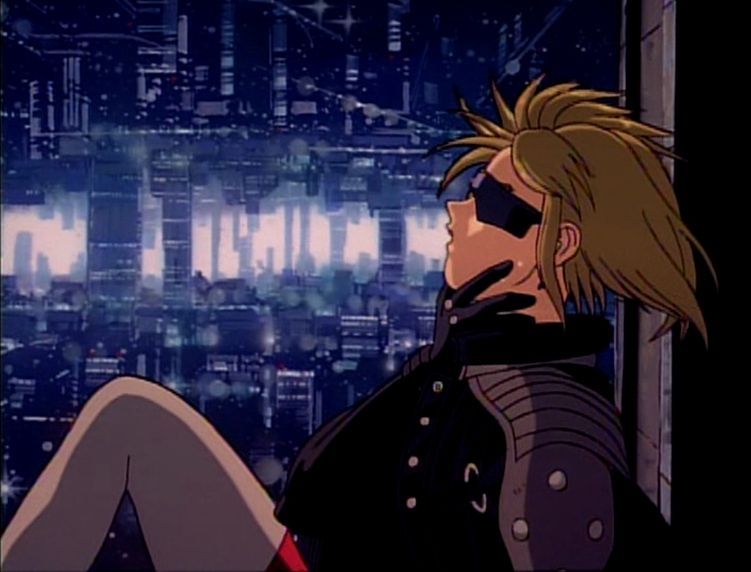
Production wise, the OVA quality artistry is good, missed dearly (when it was once so common) to have this type of insanely detailed, colourful dystopian cityscape of the future. Mars, as what we see, is already swollen with urban sprawl unless you go to a desert that has already had the atmospheric process from Total Recall taking place to allow breathable air. The lead characters are an issue though, in script, design and (English) voice acting. Not surprisingly, as individuals who work in this medium for their careers, the regulars of English anime voice acting like Steven Blum blend in perfectly. Ironically, or maybe not as they would have experience with anime voice acting, it's the regulars of a production like this like Steve Blum who blend in perfectly. Elizabeth Berkley, I confess, at least tries. We find her character Naomi in Showgirls to be ridiculous, but it suits the character of Naomi Armitage to have casted her. As with Showgirls, where Joe Eszterhas' script was as much an issue for Berkley to overcome, the same issue is here with Armitage being a paradox. Both the tough cop yet like a teenager in size and obsession with things like ice cream, a confusing figure for anyone to have to work with. The hot red leather shorts and shades are a giveaway Berkley was already dealing with the ridiculous tough yet sexy anime heroine stereotype from this era that would handicap anyone. If her performance is broad, its only because the character in spite of her dramatic narrative, being one of those bio-mechanical robots with her own consciousness, is a broad figure anyway.

From http://www.anime-kun.net/animes/screenshots/armitage-iii-3897.jpg

She at least tries. What happened to Kiefer Sutherland, and how he seems to be sleepwalking through his lines, is another thing entirely. It's an embarrassing vocal performance from an actor at this point in his career, even if he had loss his lustre of earlier work and had to wait until the 24 series to become known again, showed he was actually a great actor in oddities like Freeway (1996). For me, like his father Donald, Kiefer Sunderland has always been a character actor, the best kind who could front a major picture but like in Freeway could radiate pure, incredible acting chops in any circumstance. How lifeless his voice sounds as Ross Sylibus here is embarrassing. It neither helps his character is stricken with boring male protagonist syndrome, a plague in anime. This isn't even the worse example, when creators try to appeal more to otaku with blank and shy adolescents in the male lead roles, blank slates for viewers to place themselves as vicariously surrounded by many cute girls. But it's not a credit to Sylibus still as a lead, the stereotypical cop on edge who hates robots because one murdered his female partner, yet even with that or his growing romance with Armitage coming off as mandatory due to Sutherland's performance and the scriptwriting.  One of the most pertinent observations I've found as an anime fan that, even if it's in a fan service heavy and objectifying work, in most anime the female characters are the figures you remember with the most personality even when they are crass stereotypes, whilst the males meant to be protagonists have the personality of papier-mâché. Sylibus is effectively the protagonist, and even if Sutherland  wasn't sounding like he has dazed, that wouldn't be helped by the blandness of said character.

All in all, Armitage III: Poly-Matrix, followed by a sequel called Armitage: Dual-Matrix (2002) where Juliette Lewis took the titular role over, is fascinating as a curiosity. It earns enough to justify a revisit in terms of its ideas, but does with noticeable flaws both in its original material and the Western adaptation that cuts the legs off some of its best moments considerably. It does suffer under the weight of other anime which have tackled this material better or with more idiosyncrasies, but when there is a stand out moment, it does shine. The decision to compile it into a feature was, likely, a detriment and it's not a surprise that this is a rare case nowadays when the faithful, original versions of anime usually are released in the West too.

From http://www.capsulecomputers.com.au/wp-content/
uploads/2012/07/armitage-III-review-3.png

====

1) Whilst this strays far from this being a review of Armitage III: Poly-Matrix, and is likely to be controversial, I felt including articles discussing that example I gave will give you ideas of why I felt the comparison was apt:


2) Another tangent, but considering Oshii's own spin off of Blood: The Last Vampire (2000), a light novel named Blood: The Last Vampire: Night of the Beasts (2000), abruptly halts a vampire horror story halfway through for a prolonged, chapters long segments of characters at around  a table discussing mythology of vampires, Oshii even to the point of unintentional comedy or to deliberate screw with an audience would draw the philosophy out for a long, long period of time more than most if he felt like it was necessary.

Monday, 3 September 2018

#65: Dragon Half (1993)

From http://images2.static-bluray.com/
products/20/31313_1_front.jpg


Director: Shinya Sadamitsu
Screenplay: Shinya Sadamitsu
Based on the manga by Ryusuke Mita
Voice Cast: Kotono Mitsuishi as Mink, Mariko Kouda as Rufa, Rei Sakuma as Vena, Yasunori Matsumoto as Dick Saucer, Akio Ohtsuka as Damaramu, Kaneto Shiozawa as Rosario, Kenichi Ogata as King Siva, Kikuko Inoue as Mana
Viewed in Japanese with English Subtitles

Synopsis: In a fantasy land lives Mink the Dragon Half, father a dragonslayer and mother the red dragon he fell in love with, who desires to find a "People Potion" that'll allow her to be fully human, in love with the dragonslayer/pop idol Dick Saucer who, unfortunately, is a mortal enemy of dragons like her. Neither does it help the evil king Siva wants her mother, involving both his incompetent advisor Rosario, and a greater danger of his own daughter and a slime half, half girl half slime, named Vena who has magical abilities and hates Mink with a vengeance.

As mentioned in previous reviews1, one of the most frustrating experiences with anime is an older title, usually an OVA with an enticing premise, which barely covers the source material, has no ending and never got a follow-up and/or remake. Usually they were planned as mere tasters for the source material. Dragon Half, however, was originally meant to be longer but was one of the rare cases of a straight-to-video work clearly cancelled only after two episodes. It would've barely covered the Ryusuke Mita manga, but in its current form as only fifty five minutes altogether, these episodes are a paltry amount. Dragon Half nonetheless is clearly loved in the West even to the point it was got brought back out again on DVD in the 2010s by Discotek.

From https://fantasyanime.com/anime/
images/dragonhalf1/dragonhalf1_shot03.jpg

Seeing Dragon Half finally, that's not a surprise. This is a slice, common as a delicacy in anime, of mad and hyper energised comedy. The difference is the premise, taking the piss out of the tropes of Western high fantasy. Japan has anime based on tropes more common the Lord of the Rings series and Dungeons and Dragons - usually serious work like adaptations of Berserk or Record of Lodoss War (1990-1), literally adaptations of D&D campaigns turned into their own fantasy books, the franchise that OVA started even including its own comedy spin-off Rune Soldier (2001). However Dragon Half goes further, not only in this fantasy world inexplicably having pop idols and CDs and television, despite being medieval, but in archetypes defying expectations. The dragonslayer, rather than killing the female dragon, took her hand, ran off together and sired our protagonist Mink, who is a little ditzy but a strong girl who just happens to have dragon traits like a tail. Her friends include an elf whose ancestral wand is practically a friendly fire weapon, and the diminutive dwarf girl whose pet hamster turns into an enormous monster if enraged. The evil wizard who helps the king brings his own bucket of dried ice for introductions, the King having married a slime who took the People Potion and sired Vera, a slime half born like a blob like her mother only for magic to assist her. Even Dick Saucer, the Bishōnen (beautiful young) male who sings his own theme tune and is voiced by Yasunori Matsumoto as the debonair and heroic heartthrob...only to be constantly undermined, even by a laxative slipped to him by complete accident.

The character designs, transferring the manga's, help. Elegant to the point of being absurd - large eyes, wildly vivid colours, eyelashes so pronounced they're visible beneath hair. Appropriate for fantasy, until the characters constantly distort shape for the gags. Following the principles of animations of the nine old men of Walt Disney2, and making them proud, the cast of Dragon Half are practically made of elastic but never lose their distinct character silhouettes or appearances. Another form of gymnastics comes from the voice acting. Whilst you can occasionally hear an awkward transition, Dragon Half for the most part really emphasises the incredible talent of Japanese voice acting. Case in point, Mink's voice Kotono Mitsuishi is more well known for Misato Katsuragi, a very important character from the Neon Genesis Evangelion franchise who functions as a comedic character early on, usually due to her constant alcohol consumption, but especially by The End of Evangelion (1997) is a character from Mitsuishi radically different in genre and tone from Mink. The best actual example however of the vocal gymnastics comes from Rei Sakuma as Vena, the feminine villainess who's elegant in manner, only to turn to a raspy shout when angered and the character design distorts. As the character designs change shape, the voices do and are as much why the anime is funny. As I watch more anime again, I am even learning to appreciate the original Japanese voice actors' work, especially in comedy, in spite of language and referential differences.

From https://m.media-amazon.com/images/M/MV5BNTQ0Mm
Y4YmQtNTI1NS00ODI3LTk1MDMtZDAy
ZWQ3YWE2NGNiXkEyXkFqcGdeQXVyMzM4MjM0Nzg@._V1_.jpg

The fact, sadly, Dragon Half is so short however means this is all a slither. Episode one is meant to introduce all the characters including Damaramu, the warrior sent to kill Mink who, alongside the strange quirk of a couple of characters here being able to pull light sabre swords from their temples, can even survive the circumstances of the conclusion due, as described in Episode 2, to his unique anatomy about a small brain. However the abrupt end of this series does leave this the only episode a lot of these characters have, such as Mink's parents, introduced playing dragonslayer vs. dragon much to their daughter's annoyance, who are interesting in themselves. The whole subtext of Mink's mixed heritage, blatantly there, is also neglected as the series never went any further than Episode 2. It's an obvious issue dealing with ethnicity even if through the backdoor of fantasy - when there are moments in high fantasy which are deeply problematic for myself (such as how orcs have ended up, usually the villains, being portrayed as sinister "others") anime has had a nice, applaudable side even if it's not clearly intended, of dealing with protagonists who are half human and half being. Dragon Half's not the only work, even outside the comedy fantasy drama, that has had a "halfbreed" protagonist, and whilst many don't have a literal People Potion, which can turn a slime into a woman and marry a king, stories have nudged this topic a lot. Sadly, only two episodes long, even a series meant just for humour cannot deal with this plot point integral to the story, as Mink goes on a quest for said potion, any further than hint at it.

The second episode, Mink having to enter a tournament of death to earn money for a transport ticket, is where the virtues of a full series as a comedy are hinted at, manic slapstick and everything else possible on the table. A character, the son of a villain we never see, even has to watch the first episode on video mid-scene to realise his accusations against Mink were deleted from that previous episode, which is where you learn nothing would've out as a gag in this series. All alongside one of the best executed diarrhea gags possible, which isn't below the episode but succeeds, and further proof of Rosario being an utterly useless magician. It does also have fan service, the final shot of the whole work Mink topless, but for all the complicated issues with sexuality to write about in anime, this is at best someone who is only annoyed the circumstances happened in front of a large crowd and still punts someone off into a lava pit like a badass regardless of her embarrassment. Dragon Half isn't different in the pace and type of humour of a lot of anime comedy, but especially with the constant character distortions, OVA level of quality animation, and the general sense of lunacy at hand, it's a tragedy that its only in existence as two episodes.

From https://fantasyanime.com/anime/images/
dragonhalf2/dragonhalf2_shot17.jpg

If at least for the end credits as well, which is immortalised within only two episodes by itself, the anime should've lasted longer. Composed by Beethoven with new lyrics, the lengthy song about what Mink is going to have for dinner, not to eat her egg and offering the calamari instead, is an earworm to admire, especially when it has a kabuki break in the middle, than another with a choral hymn and weird bird flying over in the credits animation. Its indulgent, exceptionally silly but itself exemplifies the creative and immensely funny material at hand.

=
1) Examples like Five Star Stories (1989) which was reviewed HERE.

2) Research them and their rules of animation, as it'll make what an anime like Dragon Half does an actual art form as well as more fun.

From http://img1.ak.crunchyroll.com/i/spire3/
be6a9bcab5819f4f454bddd2e93bd2d61465040186_full.png

#64: Night is Short, Walk On Girl (2017)

From https://dx35vtwkllhj9.cloudfront.net/gkidsfilms/
nightisshort/images/regions/us/200x200.png


Director: Masaaki Yuasa
Screenplay: Makoto Ueda
Based on a novel by Tomihiko Morimi
(Voice) Cast: Kana Hanazawa as The Girl with Black Hair; Gen Hoshino as Senpai; Hiroshi Kamiya as The School Festival Executive Head; Ryuji Akiyama as The Underpants Leader; Kazuya Nakai as Seitarō Higuchi; Yūko Kaida as Hanuki-san; Hiroyuki Yoshino as The God of the Old Books Market
Viewed in Japanese with English Subtitles
A Cinema of the Abstract Crossover

One of the latest projects of Masaaki Yuasa, one of my favourite directors work series like The Tatami Galaxy (2010), which this is set in the same world of. Its own story, but very much continuing on from the original material, it makes a nice circular experience when the early television series was one of the few titles available in the West for a long while, and was the only title of his I had ever seen originally.

You can read the full review, on my other blog, HERE. 

From https://gkids.com/wp-content/uploads/2018/
06/night_sAp_0199-1024x576.jpg

Wednesday, 22 August 2018

#63: A Branch of a Pine is Tied Up (2017)


Director: Tomoyasu Murata
Screenplay: Tomoyasu Murata

Synopsis: Following on from a major disaster, one half of two female twins contemplates the loss of her sibling.

It seems a rotten thing to cover this short, especially as after I'll praise it, you the reader will curse me as it'll be difficult to see. But to write about anime, I feel you have to step outside that term to also include Japanese animation in general, not only encompassing experimental work but areas like stop motion and puppetry. There's an unexpected delight in seeing eggs made from clay, painstakingly motioned into cooked ones in a tiny handmade pan, and as I hold animation above even most live action cinema, little details like this which have to be relied on to be made from imagination, reference and what materials are at hand are to be admired. To focus an image in movement to life is special in two dimensional animation, and likewise stop motion from any country is a tactile, arduous medium which ultimately rewards the creators.

From https://d32dm0rphc51dk.cloudfront.net/
KoAtSTsBDWwAnjLqHU_twA/larger.jpg

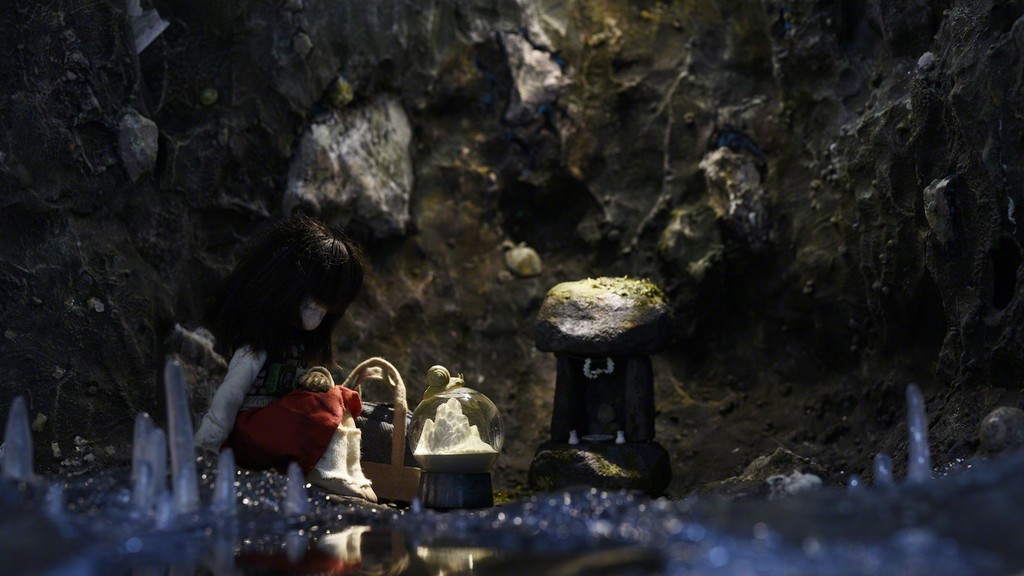
And in this particular case, seeing the literal gray sludge hand animated to subsume a model village, director Tomoyasu Murata is using the medium to touch upon centuries long history in Japan of natural disasters, the 2011 earthquake and tsunami one which is immediately evoked by the story of the film. That incident, and all the fallout from it including the Fukushima power plant crisis, has been burnt into foreign viewers' minds just from news images. But imagine actually being Japanese, seeing these images in a place on the other side of your country, or living where one of many entire towns that were swept away into nothingness were, or losing a loved one in such a town. Such images clearly had a direct influence on Murata's short, which uses a fairy tale aesthetic to deal with the loss that such an event would cause. Through two twin girls with doll like appearances - no lips until, when see using makeup in a fail, they're painted on, big eyes and identical appearances behind black hair - they are expressed as archetypes of curious, youthful figures caught in the midst of this.

Enough is painted about them to have sympathy. A mother briefly seen, with a haggard grey doll mask used enough before her disconnected sitting position is, and throwing an ashtray at one of the daughters' head when they squabble over a jigsaw, revealing more of her before that single scene leads to her immediate departure. The crammed, murky home with a full sink and dripping tap, tiny representations of junk food when the girls are left by themselves for a long time, representing their world isolated together before the disaster comes. A sense of playful joy when they spray paint on an outer wall, or when they are in the woodlands. Even a pastiche of the type of anime on their handmade television, involving a giant robot, normally thought of as Japanese animation briefly seen.

From http://voltashow.com/fileadmin/_processed_/
5/1/csm_MOMO2_38ced85d43.jpg

The fantastical elements feel less like escapism but part of the symbolism of loss and Murata's clear interest in the spiritual in terms of the material. A humanoid rabbit who, when we first see him, is actually performing a prayer ritual when the girls find him in a flower enriched woodland field. The giant snow globe of a mountain, connected to a realm one of the girls ends up in after the disaster, becomes as much a fairytale McGuffin as it tragically causes the separation, after a violent argument, between the girls. What the ending actually means, with one being with the humanoid rabbit, and shots of someone between them floating in the air, is entirely subjective but it cannot help but feel like a happy ending in spite of the tragedy that took place.

The resulting short, only seventeen minutes long, is beautiful. The music by Tatsuhide Tado, ethereal with tradition Japanese influences, helps as much as a marriage of visuals to sound, enough spoken without any dialogue. Again, it is a shame the short will be more difficult to find as it is the sort of work that many could love, maybe even find more accessible than more easily available "anime", but gets stuck in a festival cycle and never leaves it. Sad as it touches upon a deeply serious subject matter in a sensitive, exquisite animation style. Enough that I hope Tomoyasu Murata will eventually make a feature work or at least have a healthy filmography even of merely shorts, whichever way getting a wider access beyond his homeland.


From http://voltashow.com/fileadmin/_processed_
/3/0/csm_MOMO3_133793003b.jpg