Thursday, 10 January 2019

#84: Abunai Sisters: Koko & Mika (2009)

From https://cdn-images-1.medium.com/max
/712/1*Htn7Pp3RJturXaeBLg_mlA.jpeg


Director: Hiroyuki Nakao
Screenplay: Hiroyuki Nakao
Voice Acting: ???
Viewed in English

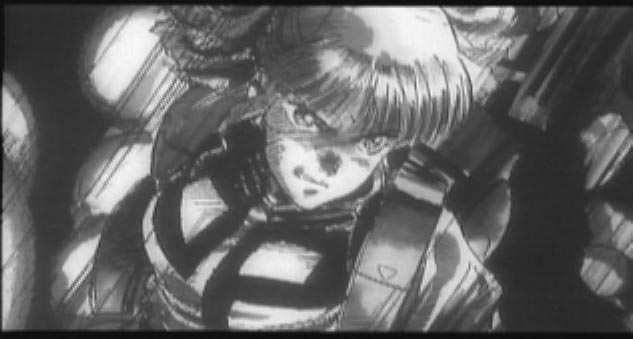
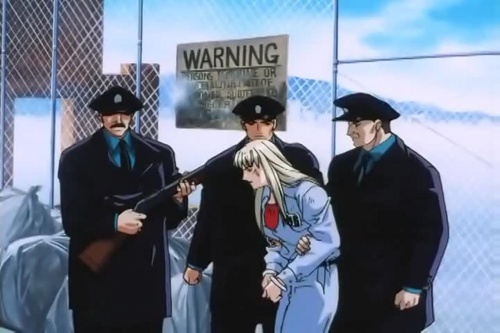
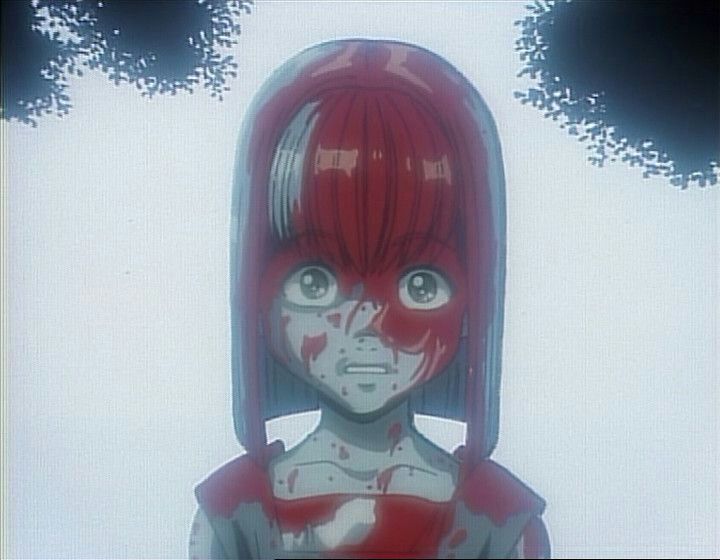
Synopsis: The Abunai sisters Mika and Koko are two female secret agents who must protect the "Booby Stone" [sic] from Paparazzi Matsumoto and his evil boss Madam Hokuroda.

Urgh...if, after Gunbuster (1988-1989) and the myriad of good anime I've covered, this is my decision to surf the drain downwards further than even the M.D. Geist double bill. Even by my standards, this is a low bar, practically on the floor, and with the added menace that even Japan didn't want it in the end. The story goes that Production I.G., who are famous from great productions like Ghost in the Shell (1995), worked on a project with the Kano Sisters, who had the desire to have a production that would be of international interest starring them, at least in the sense that the pair even travelled to the 2008 Otakon anime convention in Baltimore USA to promote the project.

The Kano Sisters, before the reader asks who exactly they area, are the half sisters Kyoko and Miko who are professional celebrities, in the exact same way for Japan at that time that Paris Hilton and the Kardashians are in the USA. Unfortunately, the Abunai Sisters series never had any success and only two episodes were ever aired in Japan on channel AT-X, the rest of the eight mini-episodes seemingly lost to a void even obscurer anime of better regard survived from thanks to bit torrent. Thankfully, or unthankfully depending on your viewpoint, Abunai Sisters resurfaced or hence this review wouldn't have even existed.

From https://www.watchcartoononline.io/thumbs/
abunai-sisters-koko-mika-episode-2-english-dubbed.jpg

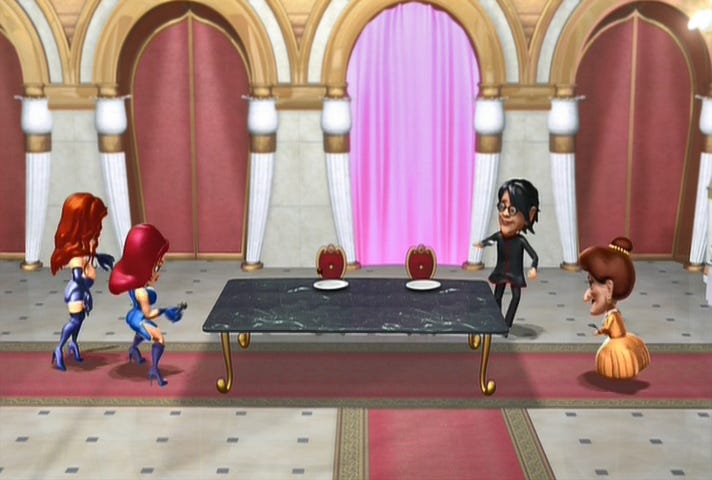
Consisting of ten x three minute episodes, it's not a surprise who it's been covered up as it's a garish CGI animated series with an utterly lobotomised sense of humour and probably more filthier to sit through than ecchi anime. The premise, just because of the series McGuffin being literally a Booby Stone, is enough of a warning alongside the minimal quality of the animation. The Kano sisters, openly using plastic surgery in real life, are unflatteringly depicted as two lewd caricatures made of plastic and treated at times as being air headed; surprisingly dubbed in English in squeaky voices (though that is likely a change from the original pitch of the recording), with no Japanese VA track in existence, they're in a vague position of being celebrities but clearly having licences to kill as they pack pistols.

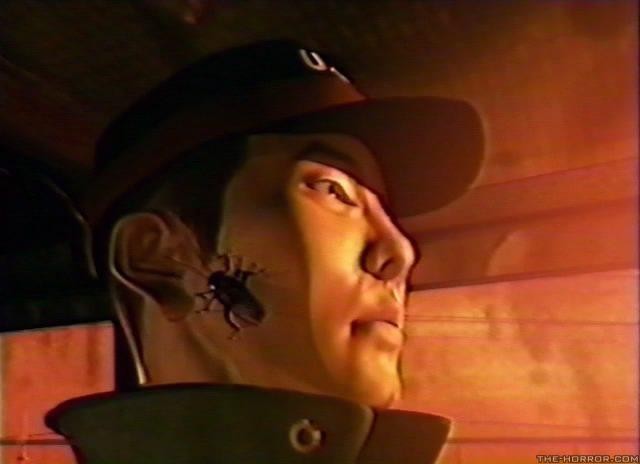
In terms of super abilities, the noticeable buoyancy of our leads is a deliberate theme as, designed like Jessica Rabbit in portions, (I kid you not) not only do their well endowed chests vibrate at any sign of danger like Spider Senses tingling but can expand in size as a literal pair of personal air bags or a nice super punch. The last episode even ends with their secret super weapon being the fact their own nipples are detachable grenades, just adding to this weirdness. In comparison, their enemies are just as odd, an older woman who surprisingly looks like Yubaba from Hayao Miyazaki's Yubabawith her geeky bespectacled male henchman dubbed Paparazzi, constantly doomed to his mistress's displeasure to be distracted by the sisters' figures rather than complete his goals. These villains, the ten episodes set around the same recycled beach house, are doomed like Hanna Barbara cartoon villains to constantly try to capture the Booby Stone and fail.

From https://www.watchcartoononline.io/thumbs/abunai-
sisters-koko-mika-episode-7-english-dubbed.jpg

They even follow the Hanna Barbara style of having ridiculous plans, starting the series off with a giant mechanical shark which fires machine gun bullets from its maw. Eventually it gets to Paparazzi wearing a handsome masseuse mask or dressed as a Chinese food vendor with a stereotypical accent trying to lure the sisters to eat a pair of poisoned meatballs that get used in an improvised table tennis game. This would actually be funny or at least compellingly weird weren't it not for the fact that, like a lame Saturday morning cartoon with blatant sexual references, it's the most generic of slapstick that's awkward and sluggish, these figures drawn ugly and cheaply animated, in generic slapstick scenes that usually would be pandered to five year olds against their wishes.

And honestly, that's the real issue with these ten episodes, in which they have the bad animation and tone of a bad children's show but also have completely inappropriate to show to such an audience due to the sex humour. Also as Gdgd Fairies (2011-13) proves, "bad" animation is subjective if you can use it to humorous advantage, but that's not the case here; the sexual humour itself is crass as much because it's as asinine, marvelling over the ample figures of the heroines (or showing one using a special butt attack to break open a locked door of a shack) but with the tone of adolescents writing it, without actual explicit sexual content or maturity to it. The repetition, closer to children's television than the view western anime fans have that anime has an ongoing narrative, is that these characters will be doomed to an endless cycle of trying to acquire a McGuffin, an overlarge pink diamond, until someone loses the will to live or when in real life the production gave up after ten episodes.

From https://www.watchcartoononline.io/thumbs/abunai-sisters-
koko-mika-episode-1-english-dubbed.jpg

Arguable why the series vanished even in Japan is that it was just a job for Production I.G. and not one to be particularly proud of; the anime industry is an industry, where even animation companies known for incredible artistic work have to pay for its company and have profit, so they'll work. Many will work other mediums, such as Studio 4°C being known for a lot of commercials and music videos, but other times they're probably forced to churn out rubbish to without enough time to construct it into gold. Neither should one expect all anime to be available, only because of the internet and anime fandom why even a lost title like Abunai Sisters gets out of the animated necropolis.

Irony is once and a while a factor to these mistakes getting another chance (in the West, Chargeman Ken! (1974) getting a Discotek licence after it already developed an infamy in its homeland for example) but if it never gets a cult or a real release, there's the likes of Abunai Sisters which will sink through the cracks until someone is mad enough to put it online and someone else (i.e. myself) to watch it all and review it. Just another job that reminds you the anime industry is one that creates product like any business market especially in the 2000s onwards where more produce was being made to an alarmingly growing extent, not all of it meant to be archived anyway. Now Abunai Sisters has (through bootlegged form) achieved god like form of all things, you still have to deal with the fact the entire series, at less than thirty minutes long, is still more insufferable than a sole episode of one bad anime series because of how bland it is.

The Kanno sisters themselves? As of 2018 cosplaying between them, especially as a lot of female characters whose proportions they themselves can credibly portray, going to anime and manga conventions like AnimeJapan 2018 with the likes of Go Nagai. And in 2017 Mika Kano was even searching for love by way of very provocative Instagram uploads. Honestly, whilst I dismiss the Abunai Sisters anime, I'd never demean myself to cheap attacks at anyone even when it comes to the world of professional celebrities and tabloids, so I'm actually glad they have more interesting things to do; as long as they're happy giving otaku nosebleeds, all the power in the world to the pair and hopefully this series will be a comical side note.
From https://cdn-images-1.medium.com/max/1600/
1*dVztT-TtJ2xFx3O52go3Ig.jpeg

Friday, 4 January 2019

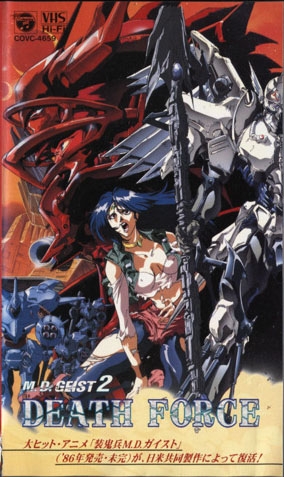
#83: M.D. Geist II - Death Force (1996)

From https://media.fstatic.com/QH9lyhbsTpagQwRZ
fYJDjVlCKZQ=/fit-in/290x478/smart/media/movies/covers/
2014/12/m-d-geist-ii-death-force_t112526_3.jpg


Director: Koichi Ohata
Screenplay: Koichi Ohata
Based on the original script by Riku Sanjo
Voice Cast: Jason Beck as M.D. Geist, John Hollywood as M.D. Krauser, David Fuhrer as Eagle, Greg Stuhr as Breston, Joan Baker as Vaiya, Vincent Bagnall as the Major
Viewed in the English Dub
Part 3 of the Koichi Ohata Power Hour

Rather than write the usual synopsis, let us combine the synopsis of the sequel to the infamous M.D. Geist (1986) and the real life story of its creation together. Ten years after M.D. Geist was made and became a successful release for Central Park Media in the US, head John O'Donnell alongside being a huge fan of the original helped both a Director's Cut of the original to be funded, fixing major animation and plot hole flaws with questionable success, and allowing Koichi Ohata to make a sequel. Obviously, spoilers come ahead now as for the sequel itself, but as a viscous sociopath with an erratic behaviour spectrum, super soldier M.D. Geist set off a Death Force of robo centaurs to destroy the world of Jerra in the prequel, and everything's worse than before.

Now robo centipedes which eat human beings for an unknown sustenance reason exist, and the last vestige of humanity is a fortress ran by M.D. Krauser, a blue skinned former super soldier whose nobility is unfortunately matched by a God-like ego. Things are already signposted to get very silly and actually worse in quality from the first anime just from the first scene - a car fleeing from robo centipedes, messily animated with the set-up exposition in the English dub a words-per-second stream of consciousness from a character we never see again. This first sequence alone enforces just how this can top any incompetence and hilarity of the first anime completely.

From https://oavwatch.files.wordpress.com/2018/
06/r1.png?w=620&h=253&crop=1

If the first M.D. Geist represented the notorious anime OVAs of the eighties, then befittingly its sequel is the representative of trashy poor taste nineties equivalents, where it belongs to the kind of gruel and absurdity that would get replaced in the 2000s onwards by fetishes and the OVA market being phased out. The English dub arguably adds a great deal, especially as Krauser has all his lines e m o t e d as to reach the back of the theatre. Of the pair of M.D. Geist anime, Death Force is the more entertainingly bad anime. It has the convoluted plot trajectory of whatever Geist himself is meant to be, the villain destroying everything in the end yet at times presented as meant to be an anti-hero, alongside M.D. Krauser in contrast, who has erected the last bastion of hope for humanity, a moving fortress, but is doomed for the hubris of believing himself to be a God alongside hiring a scientist who unfortunately wants to capture Geist to experiment on. Vaiya is still useless as the lead heroine too, now with amnesia and with a sense of more rudimentary existence despite having a lot more to do with her romantic relationship with Krauser than she did last time.

Death Force, with its jarring plot twists, is the true epic of the awful pair for unlike the expected rules of sequels this feels the more ambitious, with a larger plot by Ohata yet more magnificently awful in comparison. More vivid characters populate the environment (such as an evil scientist or his henchmen, a mere torso who uses robotic limbs that can be attached and detached to him), and just more gruesome in lieu of Ohata's reputation. It does thankfully return with a score that (sincerely) is good in its jazz epicness too; it wasn't necessarily the sax that lead to M.D. Geist getting a sequel ten years later, but the music is still the strongest aspect of the entirely lot and thankfully returned too.

From http://i.imgur.com/bS9EV5l.png

Death Force
even does a Gunbuster (1988-9), its last act abruptly cutting to black-and-white animation as M.D. Geist and M.D. Krauser have their final fight. It's significantly worse than the prequel - ending in an abrupt child impalement that shouldn't be funny weren't it not for the voice performance in the English dub, followed by an even more abrupt death as the animation budget is even less existent, all of it is completely bad but compelling, this sense of trying to force out excitement when, from the first shots, its already doomed. The sense of struggle in production is as much visible here but without the context of before of the prequel; however unlike the first M.D. Geist, the ramshackle nature feels far more interesting here. Certainly it has the bright, gaudy colour of the era, not comparable in the slightest to the original's eighties production even if the character designs and world hasn't changed drastically. The irony is how far later the production was funded, not because it was ten years exactly after or so, but because by the late nineties OVAs were past the boom of them during the bubble economy of eighties Japan and were about to see the righting on the wall the decade soon after.

As much of it is a sympathy for its weird history too why I liked this sequel over the other - some of it has to be derision from my part by in an affectionate way, wondering how the hell the original M.D. Geist got a wider legacy than better or schlockier OVAs, even without John O'Donnell's involvement still selling tapes. Even if O'Donnell's the reason the sequel even exists alongside the Director's Cut, the prequel even if it was the sole release of a non-existent franchise still sold well in the USA. Some of it is admiring the car crash as a whole; all with a bad taste as its childish nihilism with an anti-hero whose morality is entirely absent barring about killing people, who makes Violence Jack look positively chivalrous of all people. And it's ridiculous - so silly, amazing to think Ohata made bad anime like this when Genocyber (1994) (for most of it) succeeded, and that even now Central Park Media is gone their more infamous catalogue titles like this even without a Discotek re-release yet are still known and could actually get one.


From https://positroniko.files.wordpress.com/2012/05/m-d-geistii-02.png

Tuesday, 1 January 2019

#82: M.D. Geist (1986)

From https://www.dvdplanetstore.pk/wp-content/uploads/
2018/01/l0FyuJB44dnpPHmXBH3BKMFII2n.jpg


Directors: Hayato Ikeda and Koichi Ohata
Screenplay: Riku Sanjo
Voice Actor: Jason Beck as M.D. Geist, Dave Couch as Colonel Kurtz, Joan Baker as Vaiya, Kip Kaplan as Marsh
Viewed in the English Dub
Part 2 of the Koichi Ohata Power Hour

Synopsis: On the futuristic planet of Jerra, a member of an experimental super soldier project, christened M.D. Geist, reappears on the lands in the midst of a full blown war between the Nexrum Army and the Regular Army, alongside the threat of a robotic doomsday weapon called the Death Force being unleashed.

Ah, this is as momentous to cover as a Studio Ghibli production, only in the spectrum of suck. And I speak of this as a fan of Koichi Ohata's Genocyber (1994), but M.D. Geist is infamous for a reason. In fact one of the biggest surprises with the original M.D. Geist, bearing in mind its complicated production history, is how slight it actually is when seen by some anime fans as one of the worst anime ever made, or how it was a very successful release from Central Park Media in the videotape era.

Truthfully, the head of CPM John O'Donnell LOVED M.D Geist and used his influence to push the OVA, even turning the titular Geist as the company's mascot. It's a sympathetic thing - we all have favourites that baffle others or you'd be cold blooded - but O'Donnell had a company which he used to fund a director's cut, fund a 1996 sequel and create the equivalent of a Criterion Collection DVD release even when many (including actual CPM staff) thought it was garbage1. And, personally, M.D. Geist is really nihilistic, dumb trash. Now, it has to be established that I viewed the Director's Cut, the original version from Japan Ohata's debut with a co-director (Hayato Ikeda) arguably included in the credits to contrast the perceived inexperience of Ohata. The original version was haphazardly put together with screenwriter Riku Sanjo to the complaints of the animators themselves, and also had some notorious animation faults, all of which the Director's Cut was meant to pad over.

From http://www.otakuusamagazine.com/uploads/
public/images/anime/mdgeistvault1.jpg

The Director's Cut draws out an actual plot and corrects the animation mistakes, but with jarring changes in the type of animation, adding to the fact that M.D. Geist originates from the vast production line of 80s OVAs that this was another half delirious, scribbled mess where there was enough money around to allow them to be made. Arguably, though, even with explanation to what's happening it's not one of the most entertaining from that category at all. It's, at only forty seven minutes, not a long OVA and barely covers a lot, and barely really rises to the level of truly wonderfully bad anime let alone anything good. It's instead a generic post apocalypse tale, openly riffing on what the Mad Max films and Fist of the North Star brought to the table earlier in the eighties, but trying to justify a bland blond grunt named Geist as a badass. We'll get to the murkiness of his characterisation when I cover the sequel in another review, but tough macho figures are common throughout this era, Geist a cipher, but he's not even interesting in terms of absurd stoicism either barring the American football-like body armour.

More underserved, and an unfortunate to be honest in the entire franchise, is Vaiya who is a female leader of a gang who becomes enamoured to Geist for some unexplained reason, trying to seduce him only for this to be the rare chauvinistic anime to not have a male character with a libido and sex scenes. Her character, through both parts, is one of the most trodden on in terms of how visibly useless she's made, her monologue of the idiocy of war and soldiers as hyenas not exactly touching Toshiro Mifune's rant against the samurai in Seven Samurai (1954) no matter how hard it tries. At this point, it's worth emphasising that the English dub, though it gets funnier and worse in the sequel, is dreadful and ridiculous as well which just adds to the absurd lack of seriousness to the material no matter how it tries to be cool. It of course leads to the infamous "Brain Palace" moniker, where the Death Squad hides and launched a thousand memes out to sea on the internet, the dub probably adding a lot more to the material itself in terms of infamy amongst other things.


M.D. Geist
itself only gets interesting with its action scenes, which are a little competent as they're also a mess too, especially when you get to the finale becoming utterly shambolic, the sole plot drive inevitably the Regular Army (sic) attempting to stop their own doomsday device of killer robots (who look like robo centaurs) from wiping out the planet. All, as documented, from the context the creators came up with cool scenes without any particular sense of logic at all, especially in the ending where, for the hell of it, Geist turns the Death Force back on for an abrupt twist. I don't want to bother with a spoiler tag for it either; it'll not rob the context for how absurd it is and an almost deadpan comedy to the scene in the English dub.

Viewed in lieu of its reputation, M.D. Geist is pretty average even in the annuals of badness. As I'll get to in the review for the sequel another time, its far more glorious a car crash whilst the original prequel feels like a generic OVA that were dime-a-dozen back in the eighties, only standing out because of O'Donnell's obsession with the title got it a wider reputation. One legitimate piece of praise, however, is the music. The songs by Hironobu Kageyama, famous for the Cha-La Head-Cha-La theme from the first Dragonball series and throughout that franchise, are bombastic, especially in the one solidly entertaining scene of Geist fighting the robotic death machine equivalent of a Russian stacking doll. I didn't expect though, in the one real surprise of M.D. Geist, is legitimately interesting synth jazz in the score, graphic moments of intestines being split and robots exploding being set to eighties saxophone and a nicely dense, odd score that is better and more original than anything else here. It probably wasn't that however that led to the sequel in 1996 however...

From http://www.rq87.flyingomelette.com/RQ/C/MD/2/60.jpg

======
1) As documented Justin Sevakis - Anime News Network founder, a former employee of Central Park Media, and founder of video/DVD/Blu-ray production company MediaOCD - about M.D. Geist's reltation in the company HERE.

Friday, 28 December 2018

#81: Biohazard 4D-Executer (2000)

From https://m.media-amazon.com/images/M/MV5BMzczNTBkYTAt
YjhhMy00NTYwLTgzZjAtMmJiYWMyNTNjNGQwXkEyXkFqcGdeQXVyNjMwODY0MTg@._V1_.jpg


Director: Koichi Ohata
Screenplay: Daisuke Okamoto
Based on the video game franchise Biohazard/Resident Evil
Voice Cast: Masaki Aizawa as Claus; Hiroto Torihata as Roger; Hideto Erihara as Ed; Tadasuke Ohmizu as Robert; Yoshyiunki Kaneko as Norman; Yurika Hino as Dr. Cameron
Part 1 of the Koichi Ohata Power Hour

Synopsis: Originally, a 3D interactive experience at theme parks and in booths, Biohazard 4D follows in the world of the legendary videogame series as a group of soldiers are sent to locate a female scientist Dr. Cameron, someone who has been working on the T-Virus.

Ah, Koichi Ohata...that's a name that both strikes both fear in to the heart and yet pricks up the ears of many an anime fan from an era before my own.  Fear because, whilst it has a fan base, the notoriety of M.D. Geist (1986) exists as much because it, infamously, was the pet obsession of Central Park Media's head John O'Donnell, who helped get it released, paid for a newer Director's Cut and a 1996 sequel, and was rewarding with the OVA selling hotcakes on VHS despite being a bad anime. Bad to the point, as well, even in regards of ridiculous, lurid anime from the same era it stands out as being terrible in comparison to others which are defended.

Pricking up ears however because, whilst it has its detractors and the last two episodes of the five are dreadful, Genocyber (1994) has its defenders who I'll pitch my tent alongside with, defendable just for the first episode for its lurid and grotesque body horror nonetheless having a nihilistic nuisance, even going as far as using shots of wet clay in just that first episode because Ohata clearly felt drawn gore was woefully inefficient. Arguably as much of its interest comes from Shou Aikawa during his nasty era as its screenwriter, a man behind some deplorable material, some controversial work (Legend of the Overfiend (1989)), but who also went on with acclaim to pen the scripts for the likes of Full Metal Alchemist (2003).

From http://s019.radikal.ru/i608/1603/0c/cf446d6a5d9b.jpg

After the nineties to today, though, Koichi Ohata like many from the OVA era have had odd careers as working anime directors. Ohata did have Burst Angel (2004), a briefly successful if not highly regarded series which existed; after that, well, Ikki Tousen sequels and far less ultraviolent schlock, more otaku bait shows with lots of titillation. You can map the history of anime, in aesthetic and trends, easily with directors as infamous as Ohata, not viewed as a great director, viewed more as a curious one-off, and with the caviets that you'd have to dare watch everything that came after his infamous career high. But he's still someone you can track anime's history with from the nineties with some legitimately interesting tangents.

However, for a mere taster, a bite sized snack of a review, how interesting it was for me to discover in 2000 he worked, with Capcom directly, on a Resident Evil tie-in. Now, Biohazard 4D (a far superior name than Resident Evil ever was) was an interactive movie you saw as a ride, so I confess not only of the dubious nature of seeing the short; but I know I'm missing out on it being in 3D and with other interactive aspects that were included, including a gimmick chair William Castle would be proud of that blew air at the back of a viewer's neck and moved.

From https://img.youtube.com/vi/u44WcBZi-XY/0.jpg

Unfortunately, whenever you have these unique examples of the motion image which have unconventional aspects (3D, even Smell-O-Vision) which are not easy to replicate, companies effectively lop off the ability to see a work over a long time and not even by their own fault. Unless a true archival action is taken so even a country bumpkin like myself could one day see an old 3D production like Disneyworld's Captain EO (1986), directed by Francis Ford Coppola and starring Michael Jackson, in its original context outside a large metropolis we're stuck into an accidental cultural elitism where few (if many) can see these productions. This'll be worst when Biohazard 4D, despite being part of a major and global franchise, was only available in its home country, in a Japanese dub only, with the added issue that bootlegs that exist don't recapture the full experience unless you get friends to move your chair and use a hairdryer.

Not helping in terms of historical virtue for some potential viewers, and immediately feeding into my obsession with obsolete polygons, is that it's part of the very early stage of three dimensional CGI animation in anime. This is a budget higher, clearly, than early pioneers like A.Li.Ce (1999) [Reviewed here], but nowadays it does look like a Playstation One cut scene. Old CGI is more difficult to sell than old hand drawn animation or sprites and naturally, Biohazard 4D has a stroke unfairly against it in terms of critical opinion. Ironically, considering this was Ohata's first try with polygons, and the two MD Geist anime are a t r o c i o u s in terms of their animation and production, he did quite well here to my surprise for what was always a schlocky haunted house ride.

From https://i.ytimg.com/vi/rHtRPbgGLrc/hqdefault.jpg

In fact, for what is for twenty minutes pure and un-defendable body horror schlock full of grossness, getting the director of Genocyber was actually a creative and clever staff choice. Executer proves the premise of Resident Evil is ridiculous, as no sane villain (even the Umbrella Corporation) should consider an uncontrollable and easily spread virus which regenerates and zombifies any living creature a wise financial investment, but Ohata for a large part of the film literally takes a viewer through the first person perspective of a zombified cockroach among the treats on offer, which is quite funny and awesomely inventive, clearly someone who wasn't going to take the project seriously and thankfully playing it up to the ghoulish delight of viewers like myself seeing it a decade or so later.

For a director who infamously, on the first M.D. Geist, just put together cool scenes with the screenwriter without logic and pissing off the animators as a result, giving him an interactive spectacle and telling him he can be as gory with sprite figures as possible was like giving a child access to a perverse chocolate factory. This is a major spoiler, but it shouldn't spoil the experience if you locate it, that when our soldier lead finally meets the elusive Dr. Cameron, her face growing out of another's say by him, it does evoke the second and third episode of Genocyber when an entire military warship becomes a living Lovecraftian horror who absorbs crewmembers, all arguing that Ohata should've with some helping hands become a much more well regarded figure if he either just provided the ideas for these images or you have Sho Akiwara and well regarded figures involved to spin the material out. Ohata's too nihilistic for his own good, man eating centipede robots in MD Geist II for no reason and an obsession with humanity destroying itself including the innocent in ridiculous ways, but he's clearly someone who with good screenwriters and animators to guide him along should've made some of the most striking body horror anime he could get his hands on.

From https://i.ytimg.com/vi/ugdW2MY4pHA/maxresdefault.jpg

Sadly, whilst gore anime is still made, his brand of gore anime with lovingly rendered split intestines dried out by the 2000s, another fascinating cultural trend is that for every infamously nasty production that still appears (many like Blood-C (2011) not well regarded for other production reasons), they don't have the same sticking power in the conscious. Or, for another theory, they've been replaced by the logic that it's acceptable to spill a lot of blood but a sense of being wildly less of interest just for the fact that, in his own career and for others, its more bankable for Ohata to draw nubile schoolgirls with physically impossible figure shapes rather than a niche he made. Usually I'd advocate more love, less violence in creative art in general, but when it's an uncomfortable sexualisation of underage characters and blinkered sex comedy without an ounce of eroticism, I might be mad enough to want someone to fund MD Geist III instead for a change of pace.

And yes, in lieu to referencing Captain EO, it's perverse in a funny way that, exhibited (probably) at theme parks Japan, a nasty and gory film short like this, with demonic crows pecking at people and spiked dismemberment, was once an interactive ride experience for a large public even if there were edited down versions to trim the gore. Its why in this case, I now wonder if Biohazard was a far better name in context as well as preference for a franchise than Resident Evil, one which is respected and acclaimed (especially after Resident Evil 4 (2005) and 7 (2017)) , but also wallowed in the schlock until the cows came home.


From https://kinolexx.ru/files/film/2017/9/5/39438/
obitel-zla-4d-palach-004.jpg

Friday, 21 December 2018

#80: Landlock (1995)

From https://images-na.ssl-images-amazon.com/
images/I/51AH17D1Q6L._SY445_.jpg


Director: Yasuhiro Matsumura
Screenplay: ORCA
(Voice) Cast: Ally Coyote as Agahali; Darryl Borden as Luda; Howard Chen as Nosaku; J.F. Searle as Zanark; Mike Pustil as Volk; Sarah LaFleur as Ansa
Viewed in the English Dub

Synopsis: In the world of Zer’lue, a young boy named Luda (Darryl Borden) is assigned the power of the red eye of the Wind God, only for Zanark of the Zul’earth kingdom to invade and kill his father as a plan to have the red and blue eyes of said God for himself.

[Spoilers Throughout]

Landlock? Somehow in watching this generic 90s fantasy anime, part of the Manga Entertainment DVD collection of old licenses, I pine for Violence Jack (1986-1990) again of all things. I cannot even make the comment, admittedly cruel, that I'd never thought Ghost in the Shell author Masamune Shirow could pen a bland sci-fi fantasy anime...only to learn he only contributed to the (admittedly nice) character designs and Landlock has little beyond that in notoriety.

Being able to fish virtues out of any anime, even Landlock has moments of visual vibrancy, originally a two part OVA but put together as a theatrical length one-off by Manga Entertainment, who also (unfortunately) created a terrible English dub, one of the least worthwhile in a while from The Collection series. Visually, the anime at least has a colourful, sci-fi folk world of ancient period dress but with floating sky fortresses, mech robots and the sort of visual styling you would find on a prog rock or power metal album cover, which isn't a bad thing at all. Even the decision, based on providing a contrast between two halves of a godlike power based on red light/eye or blue light/eye, has a nice aesthetic appeal as well as being for an anime (by some unconfirmed and debatable source) that was going to have a Sega Saturn game tie-in that never came to be, thus would've been part of the power up aesthetic if it came to be.

From https://www.onthebox.com/wp-content/uploads/2015/11/Landlock-1.jpg

Unfortunately this in service of the most generic of properties; Shirow merely designing the characters is a shame as, whilst by all accounts as mad as a box of frogs from what he apparently went on to (weird porn and all) in his career afterwards, he would've gone somewhere interesting in ideas even if the results were a car crash. Instead this emphasises the dangers of fantasy as a genre, its reductions of Hero's Journey plotting, and bastardising mythology and religious tales continuing until it's the flavour of cardboard.

Only that sense of visual spectacle occasionally stands out among a really generic cast of characters - standard teenage male hero, quirky anthropologist who is pulled into the tale and does little, the hero's sister and so forth. The only real drama is to be found with the villainess who kill's the hero's father, revealed to be related, thus making her decisions in murder to have a horrible new context, all whilst one of her male squad members working under her is willing to changes sides with her as he is in love with her. It is in itself a fascinating side plot that, in another context, would have been fascinating to see even if there's the absurd notion that she's managing a squad despite being a teenager. That and the fan service nudity, which is creepy when its signposted the main characters are teenagers; it is one of those constantly bizarre decisions in anime found even into the modern day that, even as a fan of anime, has always baffled me when it made far more sense to have characters in their twenties instead of, even without shifting into Hubert Hubert territory, having a tasteless choice and a clear fear of aging.

From http://1.bp.blogspot.com/_Uk-HUnWYqN4/TT-raHqW85I/AAAAAAAAAKg/
-mk54AlQugw/s1600/vlcsnap-2011-01-22-21h58m14s3.png

After that, it's low in choice to find anything to fill a review up further from. The issues with The Collection, this reoccurring series that only a madman like myself will be obsessed with, is that as with any company Manga Entertainment licensed titles to push out product, and in any era of the anime industry they'll release material that you'd look back on with bafflement if you came across old VHS and DVDs as much as hidden gems, a phenomenon that exists still in the streaming world and probably is worse now. The OVA market, which fed into much of The Collection, is one that for every compelling work (for good or bad) also includes product like Landlock which feels like it squandered artists and ideas.

And Landlock, especially if you can cut a trailer set to Mad Capsule Markets as Manga Entertainment did, would have easily worked as a curious sci-fi tale which yet emphasises a medieval/possible Mesoamerican influenced world, one of a wind god and ritual statues of deities you can use to teleport over vast distances if you have the power, evoking Dune in the blurring the fantastical and the intergalactic. Plus no one would argue with the dynamic meat of a villain, female in this case, who is scarred by what she has been tricked into doing to changing sides for a legitimately profound reason, something more morally superior (and common in anime) than the Western tendency to kill  them of in revenge. Especially more so, as the hero himself is your generic male non-entity, that the female characters have a hell of a lot more cared for it their designs than any of the male characters in their own, another peculiar trait of anime I have less concern of even if there's a fear of a creepy fetishisation in a female character's hair colour.

From https://i.ytimg.com/vi/_Af2YLu2e1k/hqdefault.jpg

Instead, it's bland, that aforementioned dub terrible and also makes me pine for Violence Jack which, for all the horrible content removed from it, at least had a memorable dub. If anything at this stage going through The Collection, the closer to the mid-nineties and onwards the more interesting observations are to be found in the tropes that'd take over, like that weird fan service, and the increasing emphasis on bland male teenage heroes over gruff men. Distinctly, in its sense of colour and style, it's of the nineties only, looking very different from the eighties but different from the modern day after the transition to digital animation techniques.

There's also the sense that, if one is going to appreciate trash or have tropes that I am immediately smitten with, Landlock's too set on telling its generic tale without any sense of surprise or the fun of slightly going insane, a killjoy stubbornly telling an obvious story straight. There's not even a scene of the protagonist ending up in a phantom realm of swirling colours and objects, whilst a supernatural entity providing an exposition dump, that became a personal obsession of mine as a result of viewing The Collection titles, all in spite of the opportunity to in a story which gives you carte blanche for it to happen, and eventually leads to giant hands being summoned that can smash whole miles of forest canopy underneath them....that it wasn't included and could've just makes me feel more disappointed.


From https://i.ytimg.com/vi/s9vQifilWqo/hqdefault.jpg

Thursday, 13 December 2018

No 79: Gunbuster (1988-89)

From https://www.mobygames.com/images/covers/l/254841-
cybernetic-hi-school-part-3-gunbuster-msx-front-cover.jpg


a.k.a Aim for the Top! Gunbuster
Director: Hideaki Anno
Screenplay: Hideaki Anno, Hiroyuki Yamaga and Toshio Okada
Voice Cast: Noriko Hidaka as Noriko Takaya; Rei Sakuma as Kazumi "Onee-sama" Amano; Kazuki Yao as Smith Toren; Maria Kawamura as Jung Freud; Masako Katsuki as Kimiko Akai/Reiko Kashiwara; Norio Wakamoto as Kouichiro "Coach" Ohta; Tamio Ohki as Captain Tatsumi Tashiro

Synopsis: In the future, Noriko Takaya (Noriko Hidaka) is a young student at a high school that trains robot pilots to protect the Earth from a hostile alien race. Hoping to follow her father's example, lost to outer space, she strives to become the best regardless of any doubts and handicaps in front of her.

[Major Spoilers Throughout]

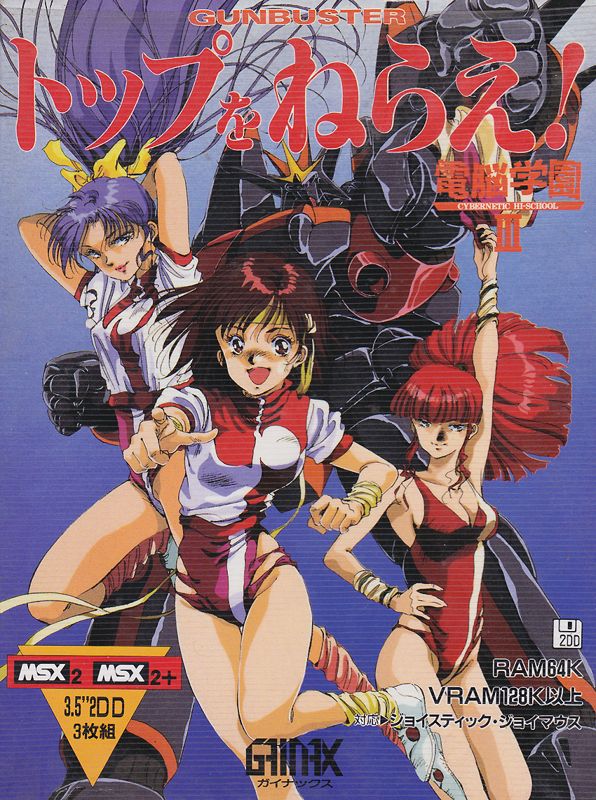
Gunbuster has not been helped by its chequered history in terms of availability in the West, nor the potential and pointless handicap in terms of marketability of never having an English dub, is nonetheless a legendary work from Gainax. I will state, outright, that any flaws that I find in the work are subsumed by the lasting thoughts of all Gunbuster does right and what an ambitious project the then-fledgling studio was with hindsight. Being sandwiched between Royal Space Force: The Wings of Honnêamise (1987), arguably Gainax's most intelligent and ambitious projects, and the cultural behemoth that was Neon Genesis Evangelion (1995) doesn't help either as whilst Gainax's legacy is strong due to so many idiosyncratic titles, it does unfortunately mean they have to be jostled in competition for superiority when they're all good.

Six episodes is actually not a lot in terms of length for Gunbuster as, thirty minutes each, they aren't a lot of time for a work which had a bit of ambition beyond its initial premise. In particular it is a curious hybrid of genres and styles that is definitely of the eighties with its synth pop music and style but visibly leaning towards the next decade in themes and tonal shifts. The first episode of Gunbuster however always completely betrays what your expectations are, and also prepare you for the brave if erratic structure of the OVA, that it is entirely an extended parody of the sports drama, in which protagonist Noriko Takaya is the plucky heroine who is chosen to go into outer space, much to the derision of other students, and thus must prove herself to "Coach" Kouichiro Ohta. That it's entirely through giant pilot robots we see using giant skipping ropes, jog across the track and field, and do push-ups is inherently (and deliberately) humorous, right down to a pastiche of Vangelis' Chariots of Fire (1981) score that was removed in subsequent releases.

From http://animuze.com/blog/wp-content
/uploads/2017/01/gubusterscreepcap3-1024x773.jpg

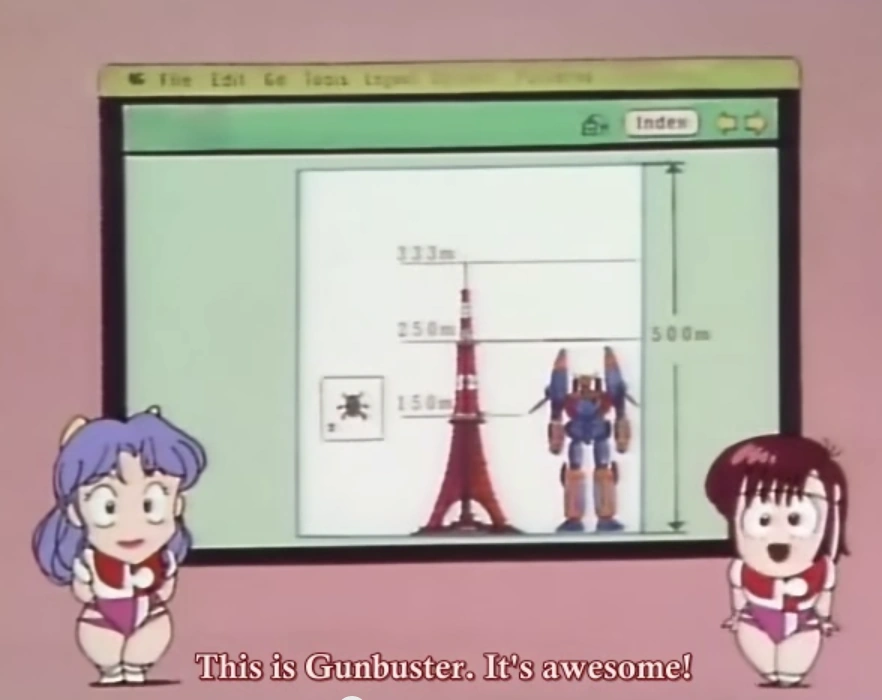
This belies Hideaki Anno's directorial career, how he juxtaposes tones to an extreme. The eighties aesthetic, alongside incredible and painstakingly hand drawn animation, even includes a vibrant and frankly un-cool sweetness to the proceedings, the opening and ending credit songs even into the darker later episodes cute synth pop about striving to be the best, the end credits one even set over crayon drawn comedy gag stills for emphasis. The sense of humour is to be found as well in the omake, made for the series during its production and even with a few additions for later releases, which are parodies of short science lessons where the science by the cast, all drawn in "chibi" form (squat, exaggerated versions like gnomes), is detailed and realistic but utterly made-up. The gag in Episode 3 of having a character's full and convoluted scientific dissertation in white text on a black background, whilst a karaoke duet about a man and a woman getting drunk takes place between the casts' off-time, is just a cherry on the cake for this playfulness. Between these and the first episode, Gunbuster starts off as a light hearted sci-fi romp but it's already establishes clues to where the plot will go.

And in taking such risks, Hideaki Anno having to sacrifice pace for this tonal shifting, there are issues to be had. There is something very unique, in context of when the OVAs were first released in the late eighties, where this even in the early episodes can still have the humour and titillating fan service, introducing a space station and characters like the Russian female pilot Jung Freud with additional space bathing, whilst there's still the gravity of the threat, the alien forces truly monstrous multi-coloured bio-mechanical masses who implant eggs into suns and planets destroying them, the plot emphasising that this feels like humanity fighting against a natural process of the universe in desperation. Some of the risks haven't aged well, mainly episode third to be honest because it falls on a trope, introducing a character only to kill them off in that same piece, that's been done better elsewhere. It's famous for calling a character for that episode Smith Toren, named after the Canadian manga translator and founder of Studio Proteus who had first hand interaction with Gainax staff through his contributions to Western anime and manga fan culture. It's a wonderful tribute to the late Toren, but as the first crush of Noriko's it does have to be compared to other examples of one character being introduced to an episode and a tragedy taking place, to which Kaiba (2008) and a very early episode of Full Metal Alchemist (2003) show a lot more nuisance to this risk.

From https://sqwabb.files.wordpress.com/2013/07/gunbuster-dilation.jpg

It certainly predates by decades Christopher Nolan's Interstella (2014) in terms of the idea of time dilation, an irony that Nolan's career is practically cursed by anime works which predate his films (Paprika (2006) < Inception (2010) for another example) and does the ideas better. The entire plot of Noriko's trajectory, in lieu as well to the time dilation, becomes one of Gunbuster's greatest successes. Bear in mind, whilst it's named after a monolithic robot that is Earth's secret super weapon, one of the largest in anime still until Gainax's own Gurren Lagann (2007) got ridiculous, is only introduced in action in the last minutes of episode four. Instead, alongside a sense of hope and courage against dire situations, it's the emotional drama which Gunbuster tries its damndest with and succeeds with completely.  

It gets melodramatic, plot twists exposed as it weaves Noriko's own conflicts with her abilities with her senior and co-pilot Kazumi Amano's romanctic longings for Coach, Noriko's own doubts and fears fighting the aliens especially confounded by the time dilation, where merely a few hours in space are months on Earth, those she loves like her high school friend aging as she is still a teenager. The swipe at Christopher Nolan's Interstellar is actually appropriate, as, its legitimately arguable Gunbuster is a more subtle work that tackles the subject more fully, as characters' lives beyond the story are what Hideaki Anno actually deals with rather than the giant robot versus alien plot the likes of me expected. And yes, it absolutely sets up Anno's own career trajectory as Neon Genesis Evangelion, even having the silly humour in early episodes, would do the same thing. The marvel is that the proud otaku who by all accounts still plays with Ultraman toys in the bathtub was always interested in human emotions for his pulp characters from the get-go in his career.

From https://deculture101.files.wordpress.com/2008/12/vlcsnap-5083404.jpg

Also in terms of production, Gainax cannot be accused of being poor, even into the 2000s when their reputation weathers financial and political strife in-house and questionable projects are started, because they always have had very distinct works in premise, aesthetic and. Fully embracing high sci-fi here, there's an attention to detail in even the mechanics of spaceships of the imagination that even a laymen to animation would applaud. As the story takes risks, so the hard work on the production is likewise the same.

Then episode six, the last, appears and whilst its one of the best of any OVA or TV series, it makes a case that whilst he's one of Gainax's best voices before departing for his own studio called Studio Khara, Anno at least to the 2000s was cursed for real, as his output from here to the late nineties shows. Nadia: The Secret of Blue Water (1990-1), a NHK/Toho/Korad co-production, took a turn when the infamous "island" episodes had to be made to pad out the series, filler so bad it traumatises viewers to this day. Neon Genesis Evangelion's production history is very well documented, Anno's mental health issues so bad that later next episode previews were actual sketches rather than animation and the more overt experimentation came in as much for practicality. Anyone who has seen The End of Evangelion (1997) can attest to where that went to traumatise viewers and His and Her Circumstances (1998-9) had the unfortunate scenario where the original authoress hated where the series went with her source material, affecting it as it went along. Anno is a good argument for the auteur theory even in terms of how this streak of bad luck, the chaotic production histories, helped shape the final materials as much as his hard work.

From https://vignette.wikia.nocookie.net/gunbuster/
images/a/a6/It_big.png/revision/latest?cb=20150820201753

Gunbuster's
no different as it immediately starts in monochrome; the last episode barring the final moment is entirely animated in black-and-white and the result is a drastic change in tone because of this. It is stylish but it's clearly a production or financial issue which caused this as for a major space battle between the aliens and Earth's space fleets, it's depicted entirely in a montage of still shots and a text scrawl documenting the survivor numbers afterwards1. And yet, in spite of this, ultimately Gunbuster succeeds as it rakes the viewer over the coals in sadness yet is actually a triumphant, happy ending on display, one of the few examples in any art where a story justifies its happy conclusion by making it a worthy thing succeeded in acquiring. And that's why, flaws and all, I see Gunbuster works and know why it's beloved, a very idiosyncratic work that would be a breath of fresh air back in the late eighties, still idiosyncratic today.

Admittedly that's in mind of it being a show of such a status that's not easily available, the existence of a theatrical cut which removes material that was also released in the West complicated things. As even Evangelion has been picked up by Netflix and to be made available again, Gunbuster is one of the last jewels in Gainax's crown that is harder to glimpse, not helped that whilst worthy of its own stature, the ill-advised decision to effectively sell Diebuster (2004-6) as Gunbuster II in the West didn't go down so well, a show set in the same world (and in hindsight, mirroring the ending of Gunbuster with its own ending with a greater meaning now for me) but an entirely different animal. The talk about Diebuster however is for another day...Gunbuster, the prequel, is something that needs to return back in availability.

From https://www.forbiddenplanet.org/Gunbuster/Visual/Episode6/gb604.jpg

======
1) And not necessarily because the black-and-white ink instead of colour being used was a cost cutting measure either...either way, the final episode finds a way to overcome material limitations as is another trademark of Hideaki Anno's.

Wednesday, 14 November 2018

#78: Psycho Diver - Soul Siren (1997)

From https://myanimelist.cdn-dena.com/
images/anime/1/1767.jpg


Director: Mamoru Kanbe
Screenplay: Tatsuhiko Urahata and Toshiaki Kawamura
Voice Cast: Michael Scott Ryan as Bosujima, Kate T. Vogt as Yuki (singing), Sherry Lynn as Yuki, Iona Morris as Angelica, John Demita as Kuroiwa, Julia Fletcher as Kyoko, Kerrigan Mahan as Kunimitsu, Matthew K. Miller as Funky, Michael Forest as Kudo, Scott Weil as Sawada
Based on the novels of Baku Yumemakura
Viewed in English

Synopsis: In the distant future, Bosujima is a "psycho diver" skilled in entering people's subconscious, brought out of retirement to help with a very young female pop star named Yuki plagued by nightmares. The assignment, as he learns more however, is clearly a trap.

[Spoilers Throughout]

From http://www.imfdb.org/images/thumb/e/e3/Psycho_Diver_Soul_Siren_shotgun_2.jpg/500px-Psycho_Diver_Soul_Siren_shotgun_2.jpg

It was a disappointment, expecting this to be a horror anime over all these years of learning it, that Psycho Diver isn't really horror. Neither in only forty nine minutes is it actually focused on the world of entering the mind, by way of advanced technology and a superhuman will to prevent ones' head exploding, the enticing premise of the anime OVA unfortunately of less concern to the creators than a conspiracy tale filled with seinen clichés.

And that's ultimately the issue with Psycho Diver that the production instead follows the kind of lurid crime story you could easily remove the more interesting pieces from and change little. A shame as, with its moody anime cyberpunk future and psychic treatment existing in this world, there's a lot to work from in even less than fifty minutes. What you get however is all the clichés - the tough hero involved in a conspiracy; the love interest who immediately, after they finally consummate their love physically, is killed for cheap emotional weight soon after; the post noir tropes and all - without a lot of interesting dynamic meat to them. This is particularly surprising as this is a story which brings in a religious cult who it awakening pop idol Yuki's psychic powers for their own means, the heir of the group, so alongside the barely used dream tech you have a very unconventional story at hand which is squandered instead.

From https://i.pinimg.com/originals/4b/f1/e8
/4bf1e8a519a7309b075619f7e8c73bad.jpg

That and having a bland protagonist, beginning with how Bosujima looks like an utter dork despite the noir-like voiceovers in the English dub version. Hirohiko Araki and Akira Toriyama characters, which exist in a world where ridiculous hairstyles and vampires wearing love kneepads make sense to the tone, would point at him and mock him for having a pineapple on top of his shoulders. Spiked is one thing, this rigid is not only incongruous to his suits and debonair style, not to mention you could use his as a human javelin and hurt someone. How he barely registers his beloved dog being killed but screams to the heavens over another, like a tonal mess in one body, is another matter entirely.

He belongs to the ciphers, alongside sci-fi metropolises, I miss from older anime having never felt the same since the 2000s onwards, but is definitely not done as well here, the cool tough heroes of yore who represent the male target audience and their fantasies. However to make them work, whether rightly or not, the plots have to be dynamic and its disappointing how Psycho Diver barely covers that titular premise. When it does the anime I thought I'd get is briefly there, and where most of the interesting and rewarding moments are too. The strangeness, the stylised use of blacks and minimal colours like violent bloody red, alongside strange psycho visions such as a figure knocking over mirrors representing her memories or the very euro-guro moment where Yuki, the idol, uses Bosujima's severed but conscious head to pleasure herself, no way around that blunt description but as with ero-guro at its best more elegant and compellingly strange in its transgression on the screen than in text.

From https://assets.mubi.com/images/film/113308/
image-w1280.jpg?1445945803

Those sequences also evoke, now realising who directed the film, Mamoru Kanbe's later career. It's strange such a bland production comes from him as he also directed the notorious TV series Elfen Lied (2004), an anime I accept is deeply flawed but would defend to the death for its complex and uncomfortable content, let alone the greater nuisances in style including the Klimt referencing opening credits he was able to do with a TV series rather than an OVA which presumably had more creative control. That's the oddest thing is how Psycho Diver is not an anime which stands out in spite of its premise, its plot in a nutshell, and how people behind the production went on to have long and diverse careers. That it's a Madhouse co-production from the nineties makes this even stranger in its inaneness, even at their worst always striking out memorable material from this era into the 2000s in terms of their catalogue. It's a paradox nothing more vaguely interesting came from this raw material coming together. More time is actually spent, in terms of care, on the full music video with a film Yuki has where, Madonna-like, she is a rebel sent to jail. Sadly, the rest of the production isn't as unexpected as that entire sequence abruptly playing out.

Because of all this, Psycho Diver is going to have another short review, probably shorter than anime which lasts for even shorter length of time than Psycho Diver itself, who pads itself out with an elaborate music video but skimps on the nightmarish nightmare sequences, whilst stylish as they are, the story promised. There's really a sense that the production was stuck between Crying Freeman (1988-1994) in terms of action absurdity, pulp crime clichés set in the future, and the more interesting horror-science fiction premise, and not prioritising the best moments from one of these or all the base influences. Psycho Diver is still entertaining, in the lurid 90s anime OVA way, but there's far more worthwhile anime and far worse anime that's more rewarding in its awfulness, leaving Psycho Diver in the unfortunate middling middle. Even in terms of Manga Entertainment scraping the bottom of the barrel, as Psycho Diver is an obscure MVM DVD release in the UK, it's not even as memorable as those oddities and failures. A part of me says this knowing my reptilian brain might look back on the OVA and think it wasn't as bad as I thought, still horde the disc, but for you the reader just be aware that whilst a part of me might one day recant this review and wish Discotek re-released it, Psycho Diver even among its ilk from the nineties OVA era is not one of your priorities to begin with.


From https://pm1.narvii.com/6305/
b21b28950ce2306657f9800d6ff2048bced30e16_hq.jpg