Saturday, 22 June 2019

#105: Serial Experiments Lain (1998)

From https://image.tmdb.org/t/p/w500_and_h282_face/
oM55x1xvdqfW9rJ48Dl7wEkBPC9.jpg


Director: Ryutaro Nakamura
Screenplay: Chiaki J. Konaka
Voice Cast: Ayako Kawasumi as Mika Iwakura; Rei Igarashi as Miho Iwakura; Ryunosuke Ohbayashi as Yasuo Iwakura; Yoko Asada as Alice Mizuki
Viewed in Japanese with English Subtitles

When Neon Genesis Evangelion (1995) became a massive cultural supernova, including its 1997 theatrical alternative ending End of Evangelion, there were many attempts to ride its coat tails in terms of more adult anime. There were many attempts at an "Evangelion Killer", mecha shows which tried to follow varying from highly regarded work like RahXephon (2002) to failures like Brain Powrd (1998). The other aspect about Evangelion is that it almost became a giant flag held aloft for more unconventional and experimental anime television series to appear even if it never had any direct influence. Certainly though, between the controversies surrounding some of Evangelion's content and that, in the last half, Hideaki Anno's known personal and mental health issues were literally leading to episodes using line drawings, the fact Envangelion actually succeeded rather than crashed and burned would've allowed braver work to appear more easily if other production companies wondered if there was now a market to start creating them. Certainly experimental OVAs and theatrical films existed, but in terms of television series before Evangelion? A question to consider, mainly due to the difficult in watching every show that came before and after Evangelion to plot out a history, especially as under its shadow into the modern day, there's been many odd and bold creative works in existence even in micro-series comedies that have appeared. One of the earliest to appear immediately after Evangelion, which can be confirmed, was the cerebral sci-fi series Serial Experiments Lain, which still has a warm reputation in the West to this day.

Lain's story is incredibly relevant in the 2010s, amazingly prescient on issues we are coming to terms with about the internet and the potential existential and sociological problems with it, all in mind that whilst the internet is briefly references, this exists in a world where it's been replaced with the Navi instead of computers and its own form of the internet called the "Wired". Thankfully, this means, regardless of visual details, there's no concern of this having dated anyway since the technology already looked alien to any world and the ideas are of greater concern. It helps, from this, the series never tried to create an accurate vision of the future, instead looking at the fears and concerns of this machinery even in terms of spirituality as we follow the titular Lain, a teenage girl stuck in perpetual childishness at first and utterly computer illiterate until she and the girls in her class start getting texts from a classmate who had commit suicide previously. As she becomes obsessed with the Wired, head screenwriter Chiaki J. Konaka nosedives as she does into a world of philosophy, a potential God on the Wired communicating to her, and some sobering and accurate predictions on concerns we are getting to twenty plus years later from Serial Experiments Lain.

Identity theft and the obscurity the web allows? Lain finds there's an alternative version of herself online who is much bolder and even evil. Data security and personal information being compromised? Said version of Lain leads to Lain herself being accused as a peeping tom at school. Secret online groups and computer hacking? The Knights of Eastern Calculus, eerily similar to the semi-fictional organisation of expert Lisp and Scheme hackers called the Knights of the Lambda Calculus, a hacking group who will even lead people to being harmed or maimed by attacking any technology, such as traffic light systems to blurring a children's tag game with a shooter, who want to break the barrier between the "Real" World and the digital one. Existentialism and post-humanism? The idea some individuals want to evolve human beings to leave their bodies and becoming permanent consciousnesses online. Hell, throw in conspiracy theories in general too, though the only weird detail, which is weird and the only one which dates the series to back when the nineties run of The X-Files was, is where the hell the cameo by a literal green alien came from in Konaka's mind.

Lain as a series does eventually become esoteric; at first, it skims the waters of horror so much it feels like it's going to become a permanent resident, with literal phantoms haunting Lain even in the day and the telephone lines bleeding. It also emphasises how good the show was aesthetically. Now, probably the biggest surprise for me returning was that, having always been available on DVD through MVM, the original version was incredibly muddy in hindsight to the point it added to the mood, leaving the experience of seeing this thirteen episode series again on a recent restoration looking like a brand new work. Its emphasised how even on a television budget the production took its potential restrictions as an advantage, boldness in its natural look contrasting heightened colour and lighting choices. Of note too, more pertinent now in comparison to each other, the character designer is Yoshitoshi ABe, creator of the original dōjinshi of Haibane Renmei, adapted into a 2002 anime which also feels like it's in the shadow of Evangelion in terms of very creative and utterly unique animated television, a very unconventional afterlife parable with the same muted style and slow burn pace Serial Experiments Lain has1.

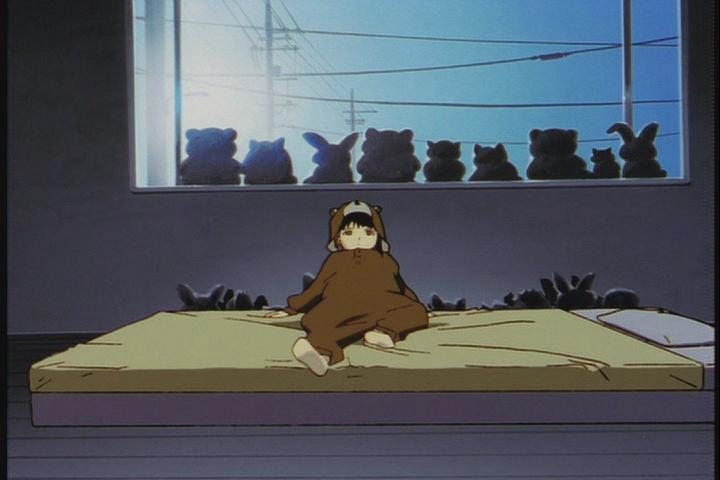
Again, as I've rightly remembered for years, the first few episodes feel like sci-fi horror, the images of humming electrical wires and the sense of desolate streets even in ordinary busy Japanese streets evoking what Kiyoshi Kurosawa would later go with for Pulse (2001). Contrast this with the night time scenes, with heavy neon green lighting, or the increasing influence of the computer technology through the plot, even turning into an almost bio-mechanical entity in Lain's bedroom, the floor wet in coolant, covering the entire room where once she still had plush toys everywhere. The world of the Wired is just as distinct and strange, metaphor and symbolically doing its best to perfectly imaging  an internet chatroom by representing gossiping avatars by being merely lips or eyes, or how in fear of others taking her identity, the same figures have mannequin heads of Lain on their shoulders in a darkened room in cyberspace. In knowledge that in this world, Lain herself practically enters the Wired beyond symbolic meaning, these literal visitations around unique environments are as much there to get to Chiaki J. Konaka's obsession with constantly breaking reality into pieces in most of what he writes, he both notorious and distinct in how the literal and the metaphorical are deliberately blurred in his work even for live action films like Evil Dead Trap 2 (1991); even for a children's show like Princess Tutu (2002) about ballet and fairy tales, when it gets to an inter-dimensional clockwork world where the "author" of the show exists, you can tell which episode Konaka was writing among other script writers when it's the one with the most meta and unconventional philosophy even if the target demographic was kids first.  

From https://i.imgur.com/a6PYSkO.jpg

Sound is also of importance, and not just for the inspired choice of a song by a British band on the opening credits, Bôa given a lasting cult reputation just from anime fans who had their song ] become an earworm, but on the emphasis too on sound design that crawls under the skin. It's completely comparable to Boogiepop Phantom (2000), another highly experimental show fromn this era, between them offering nuisance noise and electronic effects.

[Major Spoiler Warning]

As mentioned, this series is from Konaka, an incredibly divisive screenwriter who leads Lain to becoming difficult at points, early into the series shattering reality when even a giant deity like Lain, to her own surprise, appears up in the clouds for children to stare up to. Later episodes get into even arguments about the existence of God, an entire episode on intermingling real history of the internet and the likes of Project Xanadu with UFO conspiracy and the introduction of "Deus", a figure (Eiri) formerly human who has become a self proclaimed God of the Wired, and one episode (Infornography) whose first half if a compilation of images from previous episodes, all to represent Lain downloading an entire Navi system into her own brain, matched by a guitar riff you could grow a mullet from. Probably the biggest factor, though, which might divide viewers, is when Lain is shown not to merely by an ordinary character, who is brought into these strange events, but is part of a character arch of a unique one-off figure rediscovering her own abilities, a being (possibly through an ESP experiment talked of halfway through) capable of going beyond the Wired to actual God-like abilities. This is controversial as a plot point as, as shown in the worst examples of modern franchise blockbusters in fact, it does limit the connectability of the story from the viewer. I feel however that, especially as the first few episodes feel random, the narrowing of the narrative not only helps the show and but, as it focuses on specific characters, the real virtue of the characterisation appears.

[Spoilers End]

Another thing I forgot, for all its esoteric and eerie shenanigans, was how emotional the show eventually is. Here I admit, for its entire cool atmosphere, and general sense of complete strangeness, actually the real virtue turns out to be the bitter-sweet tale of Lain trying to find happiness. Only close to Alice Mizuki, a school friend, her isolation in the world and how attempt to grow on the Wired (literally) is fraught with further isolation, here a tale which does anchor the entire series with a greater meaning. All the philosophy is weighted ultimately by how as much it connects to her too, evoked when rather than the usual opening before the credits (a male voice over text) she opens the final episode talking directly to us about whether she actually exists or not. All the eccentricities are softened by how utterly emotional the show finally is within the final scenes.

This means Serial Experiments Lain earns its pretensions. Chiaki J. Konaka is notorious for his clear hatred for conventional linear storytelling, but there is so much about the dangers of the physical world against the digital one which have become ever more salient. It also makes sure the characters are of interest around Lain too. Her family, very disconnected, are so for a reason and builds itself to one single scene of emotional resonance; even two men in black, with cybernetic eyeglasses which stalk outside her house, get personalities and enough humanity to why they are there that their fate as everything turns pear shape is significant. That's ultimately, upon returning to this show, why I still love Serial Experiments Lain.

I once, on the first viewing, dismissed it with the same misguidedness I dismissed Boogiepop Phantom, another of these bold and innovative works from under the shadow of Neon Genesis Evangelion. Second time, many years later, it was the surreal and unconventional tone, on the borderline to horror and sci-fi, completely introspective and psychological, which won out. Now, this is in mind still but the drama is all what's left at the end and actually touching in the end. Certainly for me, when you start most series, you should hope for a progression where the final episode is that you'd never expect it to end as from just the first episode, said progression felt throughout natural or at least an escalation in drama, emotional and/or spectracle. Certainly, with Lain this is as good as you could get with this natural progression.
From https://ilarge.lisimg.com/image/754723/
740full-serial-experiments-lain-screenshot.jpg

=====
1) It would be an utter disservice not to mention producer Yasuyuki Ueda, who helped put together this show knowing the risk. He produced Lain, Haibane Renmei (working with Yoshitoshi ABe a lot), and a lot of work between the experimental to more adult, from Texhnolyze (2003) to Hellsing Ultimate (2006), that have been pretty well regarded and even successful.

Friday, 14 June 2019

#104: Strait Jacket (2007)


Director: Shinji Ushiro
Screenplay: Ichirō Sakaki
Based on a light novel series by Ichirō Sakaki
Voice Cast: Ai Maeda as Nerin Simmons; Kei Shindou as Kapel Theta; Shinichiro Miki as Reiot Stainbarg; Akira Sasanuma as Isaac Hammond; Asami Imai as Rachel Hammond; Kōji Ishii as Brian Meno Moderato; Mayumi Asano as Filisis Moog; Tatsuya Kobashi as Jack Roland
Viewed in Japanese with English Subtitles


By the release of Strait Jacket in the US and UK, Manga Entertainment changed a great deal onwards. They've released a lot of big titles and franchises over the years to still be a major influence on the British anime industry (Dragonball, Pokemon etc.) but for every idiosyncratic title like Satoshi Kon films and Mawaru Penguindrum (2011) they've also lost their personality for me, more so as within these few decades MVM (appearing in the 2000s) and Anime Limited (appearing in the early 2010s) have gained dominance in UK anime distribution. It'll be interesting, fingers crossed, how the fact they've been purchased by Funimation, as part of anime streaming and distribution companies have been gobbled up by major companies, will affect them as they'll exist with their brand name, hopefully leading to a much needed personality injection.

A lot of this old personality is that, honestly, their reputation over the years was from a male audience dominated era of violent anime or increasing the amount of swearing within their titles, something we should probably never return to even I'd like that aesthetic to appear again. However there was more to them beyond this thankfully which did blossom, and was even found in some of those ultra-violent or adult titles they got over the years. What is missed, sadly in lieu to the OVA (straight-to-video) anime industry diminishing from the 2000s, is that Manga Entertainment gained their popularity and reputation as much from acquiring far few series originally but one-shot titles like Strait Jacket, films or OVA series which could be sold as done-in-one releases into the DVD era or a few tapes that did not need any long length of time to ingest, could hook people in and kept being of financial reward for them. Even in this still having their annoying tendency to excise the opening and ending credits, to create a "film" from all three episodes, Strait Jacket just feels like one of the last hurrahs of this great tactic of theirs.

And bear in mind, for all their lurid title choices and "beer and curry" anime, even into the early 2000s Manga Entertainment would also pick titles which could be of any genre, as long as they were action packed, getting a huge cult following for Read Or Die (2001) as one of their last big successes. Strait Jacket, whilst not perfect, feels like a title that released earlier would have done well to them rather than sadly fall into obscurity. The OVA does have an interesting premise which never became a franchise annoyingly: set in an alternative history, when magic was turned into a viable power in 1899, in the turn of the 20th century, this new resource is used both for anything from construction to medicine but with the issue that, even with protective suits and charms, it can turn people into monstrous demons that gibber and slaughter anything in their path. Those sent to deal with this issue, using magic containing armour, are nick named Strait Jackets, fraught careers that could lead to death or mutation.

From https://blogger.googleusercontent.com/img/b/R29vZ2xl/AVvXsEjWg7Fdqft8DX5TbdyxdwJ34JHnPAZRjbiEdSFMUlSESO8t6lNvkPaKhyphenhyphen11Q6wi1vyzflLYb9lnP503FeiMS_PBl4e-t4l_p1kk3ZP9RA6SC1O6dpm8fgTykpUz9sZlqXXPphYuPWwUKqKn/s1600/straitjacket01.jpg

For me personally, some improvements could have been made, but it is perfectly fine as it is and has many interesting details. Not only is there the period chosen, with a steampunk (disealpunk?) aesthetic but also the detail that these demons are also being deliberately created by a terrorist group, noticeably in a line of dialogue emphasised to be far left wing, which rather than being problematic conservative messaging from the material strangely invokes the likes of the Red Army Faction in real life, which brings about some really interesting details if this story ever wanted to move beyond fantasy action into something far more complex and enticing. Also there are both the licensed military hired Strait Jackets and the unlicensed mercenaries like Leiot Steinberg, your stereotypical loose cannon anti-hero for anime whose main character distinction here is that he's followed around by a young woman (girl?) with four eyes revealed to actually be part demon, part of a complex relationship between them that hints how he owes her his life for killing her parents.

From there it's a very simple plot, adapted from a light novel series, which could be built from with ease, where even the clichés (the anti-authoritarian hero jaded by all the death he's witnessed etc.) at least have the building blocks within them to evolve into something interesting. Not all the ideas work, notable that the Strait Jackets (their proper name " Sorcerists") use giant magical guns instead of throwing magical spells, which could've easily gotten generic and difficult to work around for a longer series, and some are shown but never used, such as a female Strait Jacket who never gets in her armour but lives in luxury as a madam of a manor, but a lot also stands out. A muted but fascinating turn-of-the 20th century setting has a lot of intrigue and, with a bit of dark fantasy, this OVA is still a throwback to the old work Manga Entertainment used to release, not as violent but still gory with body horror predominant. The "demons" in particular are inspired, horrifying monstrosities of bulbous mass (or strange shapes like an upside down flower man) which, when an unfortunate person turns into one, gibber and rant about the last things on their mind in ecstasy as they rip anyone to shreds.

Wrapped within this is a generic plot but, thankfully, one that has a better pace and structure than longer works (this only one hour and sixteen minutes in this compilation version). Baring the story of our titular anti-hero, the show eventually turns into the downward spiral of a military Strait Jacket which is interesting; it's not perfect, as one character the moment they're introduced I guessed right would be killed off for cheap emotional effect, also sick humoured in how blatantly telegraphed it is if it wasn't cruel to a drawn figure like them, but it at least works as a plot with a dynamic to latch onto. The creators of the production, Feel, have not really made a name for themselves however, having also fallen into making notorious work like Kissxsis (2010)1 and Bikini Warriors (2015) and complete obscurities. Strait Jacket as a result is one of their most prominent titles in the West, which seems a tragedy as they could've easily worked on from this title or just invest in this type of work rather than a lot of fetishitic material. Again, as with the wish for Manga Entertainment to return to this, even if nowadays there's more likelihood for a TV series to be these idiosyncratic rather than even any actual OVAs to be laying about needing to be picked up, any influence that could lead this animation studio to go back to interesting material like this would be highly rewarded.

From https://sturdypine.files.wordpress.com/2013/08/strait-jacket.jpg

====
1) Ah, incest in anime and manga, why is this topic surprisingly common and only tackled seriously, by all accounts, in Koi Kaze (2004) rather than for titillation for their target audiences like for most?

Tuesday, 11 June 2019

#1 to #100 Retrospective: Best Song/Best Opening and Ending Sequences

Mainly the domain of the TV series, barring two inclusions, the opening and ending credit sequence have developed their own importance in anime to the point they are celebrated by themselves. With good reason as they can show invention or be memorable too, examples of artistic creativity or in a few I've chosen, appropriate for the tone even if they are not the most flamboyant possible. 

As well, musical themes are important, particularly in terms of how they are a way to promote songs but also important for establishing the tone, something of importance as I am not particularly fond of the more traditional type of songs chosen but like the more unconventional choices. 

Due to the nature of YouTube links easily disappearing, it's best for you the reader to research these yourselves.


Best Song/Theme

Honorable Mention does have to go to Ergo Proxy (2006), a messy but interesting dystopian anime series, using Radiohead's Paranoid Android as the end credits theme, apt considering the show is a lot about robots and cyborgs among its many themes. Even better, and showing how cool the band were, they gave permission for the song to be used entirely, something of note as historical pre-existing licensed songs have had to be excised for cost reasons, when Eden of the East (2009) could only use Oasis' Falling Down once for the first episode, and Speed Grapher (2005) had to have its use of Duran Duran's Girls on Film replaced with a new instrumental piece. I can only give this an honorable mention, though, as in all honestly it doesn't completely suit the tone despite being thematically apt. Neither is this a case, like my guilty delight for Mr. Big's Shine thanks to the TV version of Hellsing, where the song somehow just adds to the personality. 


14. Gomen ne Iiko ja Irarenai - Miku Sawai (Kill La Kill (2013-14))

I had to mention, even this low down, at least one song from Kill La Kill, which is only down here due to fault of memory. The one track I have always remembered however, just for the opening seconds, is this, which does turn into J-Pop. Controversially, despite my love of anime, I hate a lot of J-pop, finding it incredibly bland and sadly used a lot in anime productions; thankfully, bursting out of the gates, Studio Trigger wisely invested in a good song in the genre, with the appropriate bombastic energy needed for this type of show.. 

13. Red Fraction - mell (Black Lagoon [Season One and The Second Barrage] (2006))
I am surprised I wasn't as big a fan of Black Lagoon, considering its reputation; originally I had it due to the final arch being a let down, but honestly I think the word of mouth and the weight of expectation was arguably the barrier to fully appreciating the series. This is the only time sadly I am going to mention what, in hindsight, was an admirable production from a man, Sunao Katabuchi, who has surprisingly went on to make the acclaimed In this Corner of the World (2016), a work just to be admired (before even seeing it) for a level of historical accuracy even live action productions would look amateur next to, something which would make revisiting Black Lagoon of interest as that level of accuracy and production design is likely found in this gory, American action film influenced double series. 

The one place I mention Black Lagoon, though, is here for Red Fraction, a song many will know as its an absolutely banger. Even the "Engrish" lyrics actually add to the experience. 


12. Mutual Universe/A Parallel Universe - JYOCHO (Junji Ito Collection (2018))
The Junji Ito Collection was a divisive series which had a lot of expectations - finally a full series devoted to adapting the stories of Junji Ito, but one which did not go down well with many. One reason was unfair, that none of his comedy manga with a character named Souichi Tsujii, a teenage who likes to curse his class mates who has the most episode apperances including through the entirety of the pilot. The other however, less than high budget and stellar production and animation, was admittedly a major flaw. I did like the series, as someone who can never hate a horror anthology (show or film) unless its atrocious. The other little virtue is that, in the ending credits, the production chose (of all things) a math rock song, the type of music I'd never conceived being used in an anime. The full song is beautiful, as it was even against Ito's brand of freakish horror, so I have full admiration for whoever chose it for street cred and good taste.

11. Set Them Free - Akira Jumbo (Tonari no Seki-kun, The Master of Killing Time (2014))
I am a growing fan of jazz over the years, so I was immediately won over by this little ditty. The version in The Master of Killing Time is actually merely a little fragment, humorously (and perfectly) played over one of the lead characters managing to improvise a drum kit from his school stationary; researching the actual song for this list, the full version is a beauty itself too. 

10. Hashire Jitensha" ("Run, Bicycle Run") - Mishio Ogawa (Roujin Z (1991))
Again, not a huge J-pop fan, but the ending theme of Roujin Z is a great example, a fun song that perfectly matches the tone of a deeply underrated anime feature - legendary Akira director/writer Katsuhiro Otomo penning a satire in tandem to actual director Hiroyuki Kitakubo about the Japan ageing crisis even back in 1991, with absolutely emotional sympathy for the elderly but imagining a nuclear powered sentient bed for an elderly man going on a rampage to the seaside. Considering how jaunted and ridiculous the film is, how apt the song is this appropriately energetic and heartwarming. 


9. Sexy, Sexy - CASCADE (Ghost Stories (2000-1))
Any mention of Ghost Stories has to bring up the end credits theme, one of the most infamous details even before the English dub, a song clearly about sex even in the title so deeply inappropriate for a children's horror show. Here's the thing though, its still a great pop rock song, as catchy as hell and arguably bringing some much needed energy to this infamous series of yesteryear. It's just, yeah, weird considering the translated lyrics, this was used for a children's show.

8. Evening Shower - Shikao Suga (Boogiepop Phantom (2000))
Not the last time this list will include a horror series with a sultry, lounge ballad, which is a bizarre thing to say, but in terms of getting the right mood for this experimental, grungy and odd adaptation of the acclaimed light novel series, strangely this kind of melancholic romance song is actually fully appropriate for this downbeat and melancholic series.

7. Hateshinai Tabi - Hajimari no Toki by Ryoko Tachikawa (Bubblegum Crash! (1991)
Bubblegum Crash!, the belated sequel to the 1987-91 hit Bubblegum Crisis, was not a good OVA in the slightest, but it did have this killer opening theme which has salvaged some positive thoughts on the anime. Its, despite being released in 1991, the most eighties entry on the list from the guitar riffs, the synthesizer sounds and just the tone, the type of rock/ballad that you'd find in eighties anime productions if not pop. The kind that if you listen to long enough either spouts a mullet or causes one to want to fight out-of-control robots in super-powered sci-fi armour. 

6. Watashi no ai wa Chiisaikeredo ("Although My Love is Small") - Ritsuko Okazaki (Princess Tutu (2002-3))
Not surprisingly a show devoted to ballet and classical music would have good music, least this be an absorlute artistic tragedy. Yet its not the opening theme, a masala of an original song with famous classical pieces, that sticks the most but this quiet little ballad. Again I don't really like a lot of pop in anime, but usually because it feels incongruous and so bland it feels inappropriate; this, for what was a passion project, feels far more sincere as a quiet little ballad that just causes one to feel warm and fuzzy inside. 

5. Watashi no Tamagoyaki by Ludwig van Beethoven  and Kotono Mitsuishi (Dragon Half (1993))
You don't get stiff enough competition as from Beethoven, the legendary German composer contributing to this OVA series from the dead a century or so later, so adding lyrics about what one wants for dinner, alongside probably a bridge from another famous classic song, is just going to make the work even more epic. It's better alongside the ending images to be perfectly honest, but as a song I have to admire something this ridiculous, actually well done and a bloody catchy ear worm too.


4. Lilium by Kumiko Noma (Elfen Lied (2004))
Speaking of themes that take a risk, and give one the chills on the back of the neck, this classical piece from the controversial series Elfen Lied whether your opinion on the show emphasizes the importance of taking a different tact with production to stand, opera singer Kumiko Noma adding a layer of gravity to the material that is stunning before you get the orchestral accompaniment. I'll get into the opening credits as a whole later, but certainly in lieu of the notorious levels of gore and transgressive content the show is initially known for, the attempt at emphasizing how serious the show is meant to be, rather than lurid trash, is immediately sign posted with this. 

3. The Flame - Keiko Lee (Requiem From The Darkness (2003))
More sultry lounge ballads for horror series, but arguably out of a lot of these songs Keiko Lee's work here is great example of something suiting its material so perfectly. Completely from a different era of time to the anime itself, but in mood and ominous (yet sensual) atmosphere perfect to the material. Considering its source is a dark yet aesthetically rich work, its befitting, and usually these more riskier (and less commercial) works tend to really choose some utterly brilliant choices just in terms of their themes.

And the biggest surprise for me? All these years presuming the two songs from Requiem from the the Darkness as from a male singer, researching it for this trifle of a list, something just to please me, revealed that Keiko Lee is actually a veteran female jazz singer with an incredibly husky and deep voice. If anything a new layer discovered to anime I love makes it much more rewarding, in a case like this, then merely enjoying the cartoons.

2. Magia - Kalafina (Puella Magi Madoka Magica (2011))
Nearly forgetting Madoka Magica for these self-indulgent rankings was such a bizarre moment of amnesia, particularly as nothing is going to immediately bring chills than this theme. There is a fascinating and uniquely Japanese trend to take heavy metal riffs, pop vocals usually from female singers, electronic synths and a level of gravitas that leaves the term "epic" to be an understatement. Actually the second ending theme, let's just say that after matching this dark and emotionally reanching show musically and lyrically, God only knows what happens if I cover The Garden of Sinners franchise, and keep to this aforementioned self-indulgent rankings, where the female group Kalafina are all over the end credits. 


1. "Yume no Shima Shinen Kouen" and "The Girl in Byakkoya - White Tiger Field" by Susumu Hirasawa (Paranoid Agent (2004) and Paprika (2006))
Imagine Peter Gabriel, experimental synth pop and what appears to be even some yodeling, and is it not a suprise that, whilst tragically none of his commercial albums are available in the West (or even most his soundtrack work), Susumu Hirasawa has at least had the whole soundtrack for Paprika available in the West to this day, something that even most of the talented musicians and composers here may have sadly not?  

I was sincerely considering leaving him off as an honorable mention just to be fair, but that'd be ridiculous....


=====


Best Opening (Opening)

Honorable mention has to go to both Samurai Flamenco (2013-14), which is a great way to match the tone of the series and reel viewers in (as well as being a lot more funnier and meaningful after seeing the entire show) and Tonari no Seki-kun, The Master of Killing Time (2014), which only got knocked off to let an underdog in, but deserves mention as, following its titular character Seki managing to sneak animation equipment into a class room and work much to his fellow student Rumi's bafflement, its a fun way to start a fun micro-series.


5. Vampire Princess Miyu (1997-8) [REVIEW]
Vampire Princess Miyu, the second time director Toshiki Hirano (with his wife Narumi Kakinouchi) visited this character of theirs in a 1988-9 OVA, their own creation in a manga, is an odd duck. I gave it a negative review, but it has lingered on me, even its misguided moments like the villain being a character you only see once in an early episode, like a slasher film twist, or an entire episode about the souls of cats being forced into a bed of flowers strangely memorable. The ending, where a plot takes place and a character relationship becomes incredibly dark, as characters you've known are killed off and one has a bitter sweet ending with the protagonist, has also lingered on me as an utter godsend to what is an erratic anthology horror series wrapped around the titular monster slayer.

The series also has a great opening. The song is good, but what really adds is how, including a strategic cut from the song to a mouthed word of dialogue, the opening plays on Miyu's utter loneliness as a vampire as well as turn the opening into a character building aspect. It's something to admire and, notably, I've not necessarily included this opening as a great piece of animation but more for its use of minimal resources to build something that gets the right mood. 

4. Princess Tutu (2002-3) [REVIEW]
Possibly the weakest on this list, mainly on here because the song is beautiful, but I have to admit if you're going to try to sell a show about ballet, which also subverts fairy tales and is also meant to be appealing to a very young audience, Princess Tutu does it well. Showing the dancing, having the combination of the song with a recognizable classical motif, alongside little details in the background also showing clues to what at points becomes a very unconventional show. 


2. Elfen Lied (2004) [REVIEW]
Elfen Lied, whilst I love it, is a divisive show, much due to its uncomfortable mix of gore with cuteness, some questionable decisions in luridness, and (my own real flaw with the series) a lack of an actual ending even if it completes the main character arch emotionally. Yet the show still gets re-released, has a surprisingly large audience still and, despite all the nudity and gore, its fan base includes a lot of women who have attached onto the show, something you can learn just by searching cosplay and Deviant Art on the show online.

Elfen Lied, flaws and all, was also a show I'd defend to the death because moments showed it was made with some nuisance and intelligence, evident immediately as the opening credits, subverting the art of legendary painter Gustav Klint with characters from the show taking the original positions. The song sends chills up the spine, but the entire aesthetic choice has become one of the series' most iconic visual motifs despite never appearing in the episodes themselves, an accomplishment entirely in admiration of just the opening credits by themselves. 

1. Paranoia Agent (2004)/Paprika (2006)
A double barrel entry, including one film, as its hard not to think of both of these Satoshi Kon without thinking of either Paprika's incredible opening credits sequence, a bold and stylish as you can get following its protagonisr's titular alter-ego frolicking around a metropolis, whilst Paranoia Agent's is incredible both in how it matches the theme song in its oddness, juxtaposing characters laughing in incongruous environments, as well as how the images are secretly hinting at what is to come through the series. Masterful. 

=====

Best Ending (Closing)

Honorable Mentions include: the Junji Ito Collection (2018), which decided to have fun with characters from each episode's two stories interacting in spite of very limited animation; Requiem From The Darkness (2003), which does go for cheap cheesecake by having main female character Ogin nude in strategic ways but, in contrasting her figure with giant centipedes, feels appropriately a mix of the erotic and grotesque for such a dark show; and Yurikama Arashi (2015), which has a tiny bear dancing to the end song in the corner but, to be honest, is still merely a pan out of a still illustration.


5. Samurai Flamenco (2013-14) [REVIEW]
Out of two, the second with the idol characters Mari, Mizuki and Moe surrounded by floating plastic balls is the best as not only does it cover the most entertaining characters of the entire series, which is saying something when you're invested with a diverse and lovable group of individuals, but it emphasizes that whilst this underrated series does get dark at points, Samurai Flamenco is a playful show subverting and enjoying the superhero/sentai tropes by showing this particular trio's day job, referenced in an early scene filming a music video, against them dressing up as weaponised magical girls with cattle prod wands and a taste for kicks to the male groin. These ending credits also emphasis that, come 2010s, there's something about modern anime productions of how, even if its difficult to describe, their aesthetic in terms of colour and style is entirely its own in this post-digital animation era. I love the old era hand drawn animation, where it would have to be painstaking just to animate the floating plastic balls shown here, but the vibrate plastic style of this show, in spite of its initial notoriety of animation slips in its original broadcast, is still a craft to admire. 

4. Paranoia Agent (2004)
Remember a few spaces back my critique of another show for being merely a pan from a still illustration? I may be a hypocrite but in the case of Paranoia Agent, contrasting eerily calm music from Susumu Hirasawa, with the images of every character laid around the central cute dog character who plays a huge philosophical part of the series, and Satoshi Kon's show can get away with being here for how it adds to the story building of the show.


3. Tonari no Seki-kun, The Master of Killing Time (2014) [REVIEW]
The Master of Killing Time was a lovely gem, mainly because for a one-joke premise (your fellow student dabbling in every bizarre hobby in class he can try instead of studying) it went to the best quality for everything from the voice acting to even the end credits. The song is wonderful, but the end credits in their simplicity, playing along to the music as well as adding a nice flourish of characterization, is perfect especially as the episodes are so short and these credits have little time to do much in...

2. Princess Tutu (2002-3)
...and if a lot of these choices are less spectacular animation and more about appropriate mood, even if they are minimal in what is on screen, then its a case that less is sometimes more for me in terms of appropriate content. The simple animation of the titular character of this bold children's fantasy, in her real duck form, starting to fall asleep on a pond in what looks like its drawn in crayon is such a more effecting and suitable tone for a show. For all its moments of darkness, moments of strangeness, and moments of zaniness, Princess Tutu is a quiet and self reflecting show originally meant for children and meant to ponder fairy tales and dance thoughtfully. So it fits...


1. Dragon Half (1993) [REVIEW]
Befitting one OVA, whilst tragically only getting two thirty minute episodes before getting canned, managed to have the end credits match a fantasy piss take in a way that's spectacular. Considering the second episode even has a character watch the tape of the first episode only to realise his scenes were deleted from it, said credits throws everything in but an actual kitchen sink. Beethoven, lyrics to a song debating what the characters are going to have for dinner, everyone getting a cameo on screen and, simplistically put together, still utterly funny by itself, more so as they feel long for credits which, considering each episode is less than thirty minutes, is amusing in itself. 

Monday, 10 June 2019

#103: Magnos the Robot (1976/1983)

From https://www.iansvintage.online/wp-content/
uploads/DVDR1/P1180035.jpg


Director:  Tomoyoshi Katsumada
Screenplay: Hiroyasu Yamaura; Hiroyuki Hoshiyama; Keisuke Fujikawa; Toyohiro Andō
Based on Magne Robo Gakeen and Re-Edited by International Media Group and Century Video
Voice Cast: John H. Mayer as Sir Miles Nevers/Xerxes Tire-Iron Dada; Marla Scott Frumkin as Mai Lady Ester Nevers/Estroydia/Yuri Petrakov; Paul Ross as Janus; John H. Mayer as Gordo Starkey; Paul Ross as Brain/Stretch Landis
Viewed in the English Dub Version

This is a curious one to review, usually the realm of a bonus review, but in this example Magnos the Robot is more than likely known over here in the West not for the original 1976 giant robot series Magne Robo Gakeen but as a ninety minute compilation film. Now, for the uninitiated, giant robots (where heroes, usually teenagers for some reason, pilot giant militarised machines as a form of hero fantasy) had a heyday through the seventies. This genre, whether super robot or attempting to be more realistic, still exists to this day usually in throw backs to this earlier era (Tengen toppa gurren lagann (2007)), more serious interpretations of this material (Neon Genesis Evangelion (1995), bearing in mind co-creator Hideaki Anno was more inspired by Ultraman than robots), or a curious meshing of fan service and other aspects (Godannar (2003), by all accounts actually a cool show, but rife with enough giant breasts, nudity and skimpy costumes just on the DVD covers it's been hurt from having a wider cult audience). The seventies, however, was very important as, whilst much of this genre was targeted for young boys with the intention to promote toys, it was when legendary manga author Go Nagai innovated in the genre, director Tadao Nagahama and the staff of Toei (under the collective name of "Saburo Yatsude") created the Robot Romance Trilogy, three shows between 1976 to 1979 that started striding to add more dynamic storytelling to them, and Mobile Suit Gundam (1979) whilst initially unsuccessful would eventually become a franchise and draw the serious giant robot show into being.

In the midst of this, I highly doubt Magne Robo Gakeen is a big license. Someone probably likes it - probably one of the coolest videogame crossover series Super Robot Wars, when not a version with original characters, grabs robots and characters from every licensed anime from known titles like Neon Genesis Evangelion to Gundam, to ultra obscure titles like Hades Project Zeorymer (1988-1990), so I'd be baffled if Magne Robo Gakeen never appeared in a future title. However, in terms of actual historical context, this is a franchise who in the West in more infamous for this re-edited version in from International Media Group and Century Video, the kind which deliberately removes any Japanese text with crude text blocks onscreen, renames characters and was clearly meant to sell to a Western family audience for profit. The biggest distinction of the premise left in this version is that, as male pilot Janus (originally Takeru Houjou) and female pilot Lady Ester Nevers (originally Mai Kazuki) need to combine their robots into a super machine, they have to jump out of their cockpits in mid-air, join hands and, in an unexplained transmogrification that would become Cronenbergian if depicted in explicit detail, they turn into the belt buckle of the final machine. It's deeply silly and by all accounts, it's the one gimmick of the series, something somewhat tragic as sadly the original series has never been licensed for the West to confirm where this show would go.

From there, Magne Robo Gakeen was presumably a monster-of-the-week show, a new antagonist each episode; hailing from the once dominate species the Paleo-Goths, the villains are a group led by Xerxes Tire-Iron Dada, a glorious name if ever there was one, a vague form whose visibility are his henchmen and women take centre stage, creating synthetic giant monsters to take back Earth. There is a dark twist, mind, in that they're doing this because their world is about to be destroyed, slowly the moon and the planet about to collide, a detail left in the English script that adds an unexpected moral complexity so out of place for this material. Not that this is meant to add dramatic complexity like the Robot Romance Trilogy is said to do mind, just a jagged edge as you're supposed to boo the villains.

From https://i.pinimg.com/originals/49/02/6d/49026d92#
faf60be8bbbcdbdcfe816e4f.jpg

Helped by Lady Ester's scientist father John H. Mayer, on the mobile battle fort Ft. Liberty with three male teammates of useless backup, Janus and Ester must defend the Earth. Janus belong to the list of stoic but frankly boring leads, even if as a karate champion there is even a flashback image to the fact he once fought a bull. Ester on the other hand is in danger of being the useless female protagonist, gender discrepancy sadly an issue here for the male power fantasy for boys. Baring in mind the original context of the series, meant as entertainment for young children, this is an issue but I have to bear in mind how the U.S re-cut has taken this material as, for all I know, there is many character beats even for a conventional premise which are probably lost. Of course, what we get also has a ridiculously broad English dub, peppy and exaggerated which does drastically change these characters a great deal even if it is amusing.

Thankfully, whilst the prospect of thirty nine minutes being condensed into ninety minutes sounds an absolute nightmare, the work is a breeze to sit through is utter cheese. The production wisely just turned this into a few vignettes as our villainous henchmen, lead by the giant Brain (with his exposed brain), who keep trying to get the jump on the heroes. Credit where its due, they try (for an anime) wise tactics like two-on-one assaults or exploiting how Magnos' feet overheat if overused, just silly mistakes or the heroes pulling contrivances out of their backsides preventing them from winning. I confess my love for the gaudy designs as well, the monsters in particular animal hybrids christened with glorious names like Batroacher III, emphasising that whilst many of these shows regardless of country of origins were toy tie-ins, which has always been problematic, they had a creativity even if bizarre that can be appreciated if this commercial aspect is separated from the images. As someone who has no shame in still having old toys from his childhood, now as room decorations no matter how banged up some are, there's an art to vivid and creative designs even at their gaudiest that I have to appreciate here.

In the end, I couldn't help but find a lot to like even if there's the innate issue that, as a compilation of an episodic series, this has a rinse and wash style to it, escalating in terms of what is done but never building to greater detail even if a (presumably) episode rather than story driven show. Thankfully there is some sort of escalation, when the battle fort is hijacked, but you are watching segments from episodes, with their own dynamic beats and resolutions, be cut down to swifter paces and connected together tangentially. In fact, having seen a bit of giant robot anime, I can see plot points that have been used in future work like when Janus briefly quits, something that even Neon Genesis Evangelion used but with a greater psychological complexity. Mazinkaiser (2001-2), an OVA series based on the Go Nagai property Mazinger Z, was arguably in style of this compilation, as a series of event-of-the-week incidents and vibrant robot/monster designs, but (with Nagai's history and the production) more knowing in its bombast, from the opening rock song by JAM Project having lyrics like "Crush on crush!" to gratuitous nudity just for the hell of it.

Characters learnt of looking up the series are gone completely, and at least one villain who has shape shifting abilities here is barely used, a figure likely of greater prominence in the original series, just emphasising how this whilst in its own little bubble is still a piece of a bigger puzzle. Nowadays we'd condemn this type of compilation, even if editing of shows for Western tastes was still happening into the nineties. Ironically, what really drives the enjoyment of Magnos the Robot, regardless of the version deliberately trying to scrub away any sense that it is a Japanese production, is the original work even in a truncated form. Seventies anime is not that commonly seen still over this side of the globe and, from its hand drawn animation to the funky music about to turn into full disco, the entire aesthetic and wholesome tone is charming. It's enough that, if I had the luck to see the original Magne Robo Gakeen show, I'd take a chance on it.


From https://www-animeherald-com.exactdn.com/wp-content/uploads/2017/
04/Magnos-001-20170406.jpg?strip=all&lossy=1&ssl=1

Monday, 3 June 2019

#102: Gundam Reconguista in G (2014-15)


Director: Yoshiyuki Tomino
Screenplay: Yoshiyuki Tomino
Voice Cast: Mark Ishii as Bellri Zenam; Yu Shimamura as Aida Surugan; Akio Hirose as Cumpa Rusita; Atsuko Tanaka as Wilmit Zenam; Ayahi Takagaki as Manny Ambassada; Minako Kotobuki as Noredo Nug; Ryota Ohsaka as Klim Nick; Takuya Satō as Luin Lee / Mask; Yukari Fukui as Raraiya Monday; Ami Koshimizu as Kun Soon; Atsuki Tani as Lorucca Biskes; Ayahi Takagaki as Nobell; Michelle Yumiko Payne as Steer; Michiko Kaiden as Mick Jack
Viewed in Japanese with English Subtitles

My first Gundam title...probably not the best way to ever get into this series, started in the 1979 series and ongoing in TV series, films, compilation movies, video games and parodies set across multiple different versions of the same premise, but I was completely aware of what I was getting into. Another will be spent with the original series, another with the likes of 0080: War in the Pocket (1989), another with Char's Counterattack (1988), another with a Cartoon Network favourite Gundam Wing (1995), maybe Gundam Unicorn (2010) one day, maybe even the controversial and camper reboot G Gundam (1994)...but for the first I choose a ridiculous one, yet befitting as one of the men integral to the original 1979 series is Gundam Reconguista in G's director/main writer Yoshiyuki Tomino, who this is also my first work of.

Tomino is a veteran, held highly for the likes of Space Runaway Ideon (1980), and an integral part to Gundam when it became a franchise in the eighties. He's also, into the nineties onwards, a divisive and perplexing figure, the same man behind the infamous OVA Garzey's Wing (1996), The Wings of Rean (2005), the notoriously bad attempt at a Neon Genesis Evangelion beater named Brain Powerd (1998) and this series. Reconguista in G is his attempt a light hearted romp part of Gundam's 35th anniversary, clearly meant to be set thousands of years after the 1979 series and its own sequels, at least in terms that (aware I have no knowledge of Gundam as an outsider) characters use the term "Universal Century" for the ancient past, also the same name uses for the franchise for any story set in the original 1979 show's timeline rather than an alternative dimension version or this, set in the Regild Century1.

Tomino's Reconguista in G, aware of what I was getting into, it too weird to live but too rare to die, a good honest eccentricity matched by a plot structure which is absolutely not recommended to follow in practice as a budding screenwriter. Let's get out of the way that, regardless of what I get into, this is still a TV series better made and better produced than many I have probably covered as, due to Gundam turning into a cottage industry, its rights owner Sunrise wouldn't let any title be too bad. Despite the many bad business decisions they've made, especially in importing the series to the West, it would've been a black eye if they let something shoddy be released. Even if Reconguista in G was a critically divisive and unsuccessful work, something I'd argued is that on a technical and creative level it's an absolute joy, but is being helmed by a figure that is absolutely erratic in this particular tale.

Notoriously Toshio Okada, a co-founder and former president of Gainax who became an anime scholar by the time he talked of this show, took this series to task in terms of being in comprehensible. The issue is not the premise, which is complex but easy to go through. In the far future, after wars decimated the Earth, the surviving society rejects technology and embraces a religion that (through the "Capital City") runs the space elevator which brings all the vital supplies (photon batteries, water and air balls etc) down to Earth. Ameria, the least subtle American stand-in possible, want to liberate this elevator for all Earth, and unfortunately, the Capital's own army (unlike their guards of the elevator) are going against the protocols against advanced military technology. Later on, who is above the space elevator on the Moon and Venus intervene, rebel factions within them wanting to commit a Reconguista again Earth itself, desiring to reclaim it.

Where things get weird and Okada's concerns came is that Tomino, the mind behind this story, has a view of plotting and characterisation which is utterly convoluted at times to say the least. As a result, two sides of the coin, he can be maddeningly pedantic in strange tangents or a uniquely alien experience I did enjoy, sometimes in the same scene. It's probably both, for as my first Tomino work, it's one thing to try to describe his clipped, abrupt manner of characters thinking aloud their thoughts, to quickly discarding them (even when a beloved one has died) for another, or for points to be brought up as plot or motivation only to be disposed of, but it's another to witness this in motion. The issue is that he likes to negate transitional dialogue and scene structure that would explain and/or clarify plot points as you'd find another anime work. He has characters whose emotions swing wildly, allegiances changing per same episode, and many characters shaking of deaths as mentioned with alarming ease. Even if a large portion of the show is meant to be fun and for kids, which means abrupt and sometimes random comedy moments, this is against some deeply adult plot ideas and some incredibly blunt (even unintentional humorous) deaths befitting the man once nicknamed "Kill 'em all" Tomino.

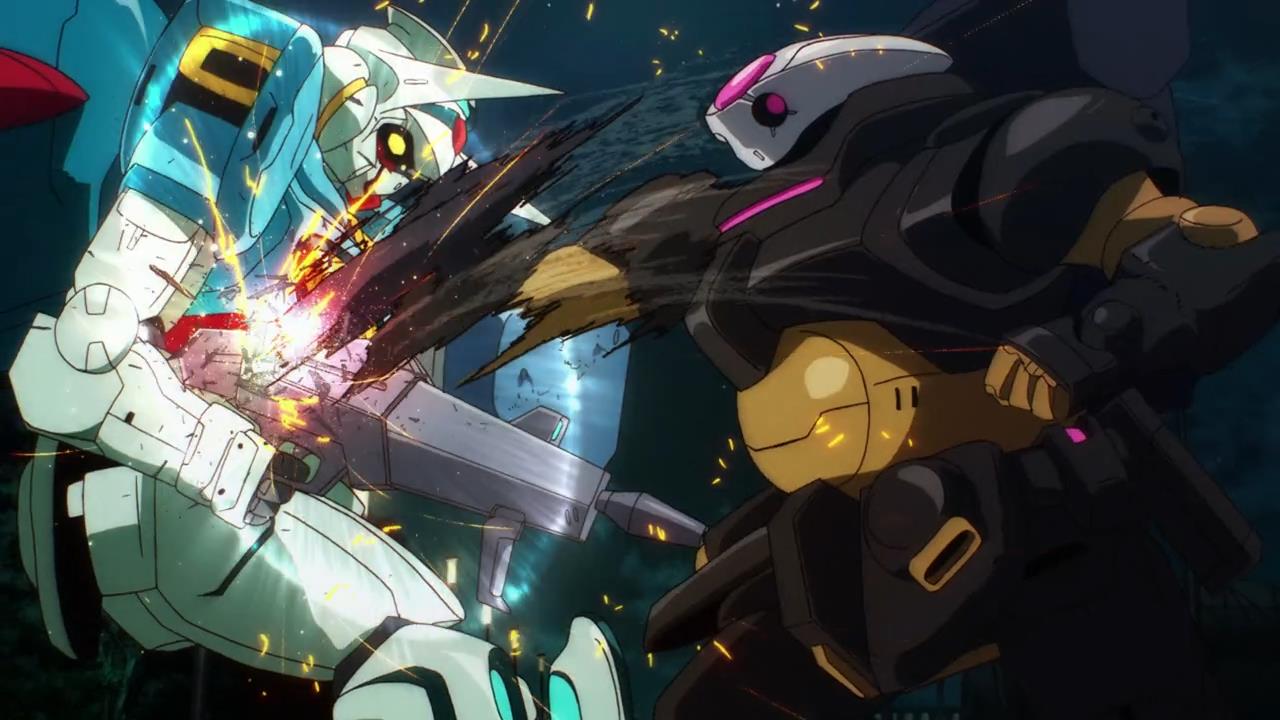
The plot is denser in terms of all the characters thrown in, Tomino as much influencing this by his tendency for whiplash plotting and how he clearly likes to surf plot holes like currents here as much as good ideas. Protagonist Bellri Zenam, son of Space Elevator manager, is a Capital guard trainee who find a mech called a G-Self that came from outer space, the design in aesthetic the trademark "Gundam" of the franchise. He finds himself kidnapped by space pirates; strangely, though the show takes liberties to justify it and the pirates are soon shown to be good guys, he soon joins sides with them, even if it means attacking and even killing his former guard members2. The space pirates, on the Megafauna, do have some of the most memorable characters, from the ship steerer named Steer to the lonely technical wizard who is this world's Q, alongside Aida Surugan, the daughter of a major Amerian general who, as the pirates are original working for Ameria, has a lot on her mind in terms of liberating the space elevator whilst finding her own life in intertwined with Bellri's then they both presumed.

From http://i.imgur.com/tCUtCWI.jpg

There are many characters to mention. Noredo Nug, a capital guard cheerleader, who ends up friends with Raraiya Monday, a person from space who for the first half of the series, due to oxygen deprivation, has the mind of a small child for a while (and is named because she was found by the Capital Guard on a Monday). The Amerian forces include Klimton Nicchini, son of the president who claims himself a genius, but comes off as a cocky ass, with his more interesting female second in command Mick Jack (whose name just brings to mind Mick Jagger every time she's named). The opposition include, alongside renegades on the Moon and Venus, Colonel Cumpa Rusita, leader of the Capital Army and Luin Lee, a classmate of the protagonist who as a Kuntala, formally the lowest caste of people once eaten, who uses his power under Rusita now as "Mask" to show his talent for the sake of his caste even if at cost of his morality. Yes, despite being a kid's show, and never being a major plot point, this world once had people whose function was to be eaten, with the adding adult nature that, as Kuntala is used as a slur, the show's digging into issues of bigotry it never gets around to.

It's a lot to digest, but it's all interesting even in a less than perfectly used state. The real issue for me is not Tomino's scattergun, abstract take on pace but how the series procrastinates, taking thirteen episodes to get to the top of the Space Elevator and to the Moon, only in the last few episodes getting to the crux of the show where all the sides are introduced and are hastily brought into conflict. Remaking the show would lose all the hard work and style, alongside its quirky charm, but it'd also use the plot points rather than squander them. I haven't even mentioned details like a 200 year old leader of Venus, with his incredibly clumsy princess, or that the Reconguista of the title that isn't that elaborated upon as you'd expect. Aspects of this show are fun for me, but I won't lie that alongside the sense of glee was still in the midst of a twenty six episode show that left me at times wondering where exactly Tomino was going, long periods that would only take four episodes in another series stretching even longer with various robot skirmishes especially in the first quarter.

Is it actually good? Probably not, though this is a curious case where so much onscreen is better than most anime series, actually exceptional for me in style, but with a director/main scriptwriter in the centre of the production who leaves it a mess; many would understandably hate this, but I for one admit there's so much that's going to be impossible to forget. The show is, as mentioned, incredible looking and for all the mad tangents, it does build a fascinating world worth exploring. One which has had to change as a result of major cataclysmic damage, where the anti-tech religion is openly Catholic in aesthetic to having a Pope, and its own idiosyncratic cultures and costumes, even members of the Venus groups looking like they've wandered from a JoJo Bizarre Adventure's narrative arc. Many of the characters are just memorable from how they look, character designer Kenichi Yoshida an integral part to this series coming to be, having worked with Tomino before, and doing a damn fine job. The robot designs are just as interesting, as someone who hasn't seen many shows like this, from the conventional designs of the franchise to the increasingly stranger ones, like a literal death pyramid or ornate space ships meant for ritual transport. Hell, even the Capital Army's mechs called Mack Knives, who legs split asunder to fly, whilst potentially ugly for long time fans befit that faction's lack of morals with a willingness to fund ugly and quickly manufactured machines just to got on to business.

This is in mind too there's a lot I find charming in the quirks as well, both Tomino's and the production's. His proclivity for odd names, whilst not as ridiculous as other work, is to be found here even in terminology, naming the terminals of the space elevator "nuts", with the first the "under nut". The details which are interesting or good ideas, like abruptly including cheerleaders to cheer on the Capital City robot pilots, are still imaginative even if sadly discarded, the cast (such as Barara Peor, a femme fatale with robot bunny ears) befittingly eccentric for this material. Even if it means some utterly risible and silly dialogue, the tone if the plot was clarified would still be appropriate, a sense of flourish and style right down to clever (and visibly eye catching) transitions to pilots in their mechs or the end credits that, in contrast to the tedious two opening credit sequences, is at least memorable in depicting characters regardless of allegiances springing up in the air with smiles and even can canning in unison.

This is all in knowledge of the many visible flaws that, really, means this is a true case of a "guilty pleasure", not that I felt any guilt but I am aware that, unless you used this style deliberately with a better precision3, there's many issues that are a pain to sit through. Those plot issues. The occasional streak of sexism that thankfully is undercut by so many strong female side characters but means some of the main ones, especially Aida Surugan, are made useless in favour of a dull male protagonist less interesting than his merry band of eccentric friends.

There's a whole sense that Tomino's not actually making any coherent sense for moments as a result; in terms of message, Tomino despite his Amerian bashing does have the hippy-like idea of peace not war, something to his credit is emphasised, particularly on Earth, whenever the robots are contrasted with shots of nature and animals during skirmishes. This was in the end, though, meant to be a fun show, and it wasn't successful; many would struggle with it and it's definitely not appropriate for children in how dense it is. Arguably, it's the worst place to start with Gundam, only for the hardcore fans to try, but willingly choosing it, I got what I desired.

From https://wrongeverytime.files.wordpress.com/2014/10/horriblesubs-gundam-
reconguista-in-g-02-720p-mkv_snapshot_20-11_2014-10-03_14-45-24.jpg

=======
1) Yes, that sounds confusing but is the same thing as when American superhero comic books need to create new alternative realities for their characters so they can write new stories without stumbling over the canon lore.

2) Even if he tries for large part of the series to not kill anyone, as much to do two incidents early on, he's an odd duck just for his dialogue to say the least.

3) The Samurai Flamenco technique to christen the term.


Thursday, 30 May 2019

Bonus#11: In the Aftermath (1988)


Directors: Carl Colpaert (Based on a film by Mamoru Oshii)
Screenplay: Carl Colpaert (Based on a film by Mamoru Oshii and Yoshitaka Amano)
Cast: Katie Leigh as Angel (voice); Tony Markes as Frank; Rainbow Dolan as Angel; Kenneth McCabe as Goose; Kurtiss J. Tews as the Psycho Soldier; Bryan Ellenburg as the Soldier; Ian Ruskin as Jonathan (voice); Lisa Maxwell as the Older Angel (voice); Filiz Tully as Dr. Sarah; Mike Hickam as the Officer

Let's begin with the obvious - how Mamoru Oshii's original version of Angel's Egg (1985) isn't available in the West but this notorious American reinterpretation from Roger Corman's New World Pictures is baffled me as it has for many. I don't blame those who licensed this version mind, neither Code Red in the United States or Arrow Video in the United Kingdom, as its likely the sad case the license for Angel's Egg is difficult to acquire or priced too high. (If by any chance it's due to New World Pictures or Lakeshore Pictures, the later owning this license, then someone would've grumbled about it by now, but bear in mind anime has been notoriously pricy at times to license from Japanese companies). In contrast, In the Aftermath was, from the looks of things, an entirely different license as a New World Pictures creation, Lakeshore Picture owning the rights since 2002. And honestly, whilst it's a ridiculous train wreck at many points and inferior to the original Angel's Egg, I'm glad we still have a 2k restoration of In the Aftermath, even if my own idealised version would'e been as an extra to the superior Japanese production.

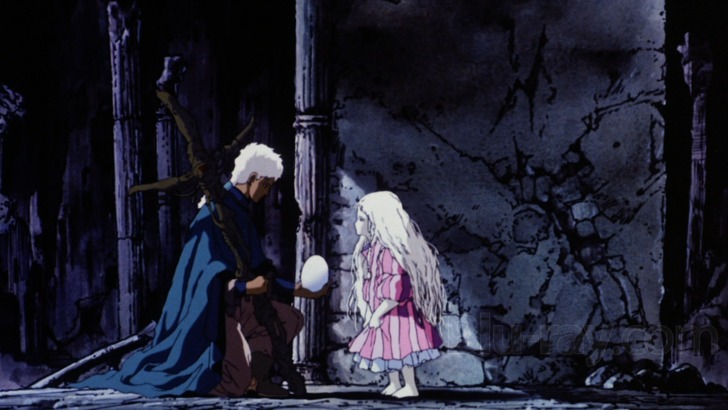
As it goes New World Pictures ended up with the license for Angel's Egg, to which the likes of producer Tom Dugan thought it was an incomprehensible work. Angel's Egg, for those who don't know what it is, is an experimental theatrical animation by Mamoru Oshii, cult anime/live action director of the likes of Ghost in the Shell (1995), in collaboration with the legendary illustrator Yoshitaka Amano, who'd become acclaimed enough to have his work in art galleries after a career starting in anime production in the late sixties. Oshii, originally desiring to become a Catholic priest, clearly made Angel's Egg as a parable about religious doubt, with what you do see in In the Aftermath in terms of original footage enough to show it was very open in the conclusion without ever drawing a line onto either side, the title referencing an egg the iconic animated girl character had which either was an angel's or had nothing inside it. The New World Pictures version still also includes the sequence of fishermen trying to catch shadows of giant fish which cling to their city walls, only destroying what they try to hit with harpoons, a metaphorical sequence that, even if Oshii views the film more of a mood piece nowadays, still has this visible message within itself.

A lot of Angel's Egg is understandably abstract, intentionally so and soaked in a post-apocalypse built around the best representation of Amano own work and some of the best animators on staff from the eighties anime boom. It could've, however, been sold to an American audience by New World Pictures, rather than making an even less comprehensible version in In The Aftermath, if you'd just sold it to the art house crowd Roger Corman once did with Federico Fellini and other European films. Hell, for the visuals alone, this could've appealed to the cult film crowd even if the original film has very little dialogue and a lot of slow, languid scenes as it's a trippy, strange film even without the visible existential message.

Somehow, trying to make the film more sellable, another issue being that at seventy or so minutes Angel's Egg was seen as too short, the people behind In the Aftermath making something even less coherent at times just to fit their perceived parameters. To see it to the VHS market (though it did have an Australian theatrical release), the animation is used as an alternative world overlooking ours, actually like the angels of It's A Wonderful Life (1946) where the original protagonists, the white haired girl and a young male soldier, are now siblings and with the young girl to be sent to Earth, in live action, which is a wasteland where the ozone is poisoned and clean air is a precious resource.

It's actually not as disastrous as the reputation is. The infamy is how not only someone thinking this was a good idea, not helped by the original film not being available in the West still, but that to "make sense" Colpaert, an apprentice to Peter Bogdanovich, wrote a new script of utterly ridiculous (and quotable) dialogue about men crying about a world without fish and the girl being spanked by her older brother with asteroids as punishment for falling asleep. The project, even if I wished an English dubbed version of Angel's Egg was the version released rather than this misbegotten belief of trying to make a more "sellable" version to the West, is still compelling now we know it's an utterly perplexing creative decision, a time capsule to this bizarre cultural reinterpretation to sell films that still happened into the 2000s, whenever Miramax got hold of work like martial arts films for example, but is also alien to many world cinema fans as a practice. In 2K resolution on a Blu Ray, Angel's Egg as an animated production is incredible, causing one to weep that it is available outside Japan barring bootlegs; it is a project of the era, a box office failure whose production was only possible due to how the bubble economy grew in Japan during the eighties and, before the bubble burst at the end, there was enough money going around including in the animation industry to fund these bold projects.

From https://images2.static-bluray.com/reviews/14844_1.jpg

Oshii
himself, whilst he can be difficult for many, is an intellectual auteur, who even when he now claims the film is vague in meaning laced the film with too much clear symbology of his own spiritual crisis. This, as mentioned, is the only project to fully capture Yoshitaka Amano's art style too, so it is painstaking in capturing his gorgeous yet highly detailed illustration right down to the difficulty the animators would've had in just animating the movement of the clothes and hair of characters. The production team, with individuals who'd go on to the like of Akira (1988) to My Neighbour Totoro (1988), were not slouches either.

The live action isn't, even if low budget, letting the side down however in ingenuity. I will mock the point of even creating the film as it was, and mock the script, a really bad case of presuming an audience couldn't catch the vibe of the original or even just admiring the pretty pictures in spite of finding it slow, but I won't deny it's a great example in terms of clearly having so little to work with, two locations for sets and a few actors, and trying with some damn good ideas to make something interesting even if the script is gleefully gibberish at point. The two locations were chosen well, the factory in particular also used for Terminator 2: Judgement Day (1991), the kind of evocative set you could find in Andrei Tarkovsky's Stalker (1979) to a b-movie; by all accounts, an actual closed factory, it might've been dangerous to film there with those dust clouds onscreen looking too irradiated in chemicals abandoned there for comfort. Cinematographer Geza Sinkovics does his hardest to help the live action sequences, but its score composer Anthony Moore who deserves a moment of praise. An experimental composer who has worked with the likes of Henry Cow and Pink Floyd, he's a vital element in improving this film, in tandem to some of the other visual tricks at hand the person who comes close to matching the original source material in evocative mood.

Even when the animation is spliced into the live action, to try to make it work, there's also an eeriness that works. The premise, an "angel" sent to save Earth from environmental devastation is depicted by only six cast members (including lead Tony Markes), groans under trying to rationalise an art film into a pulp b-flick, but there's a sense of the unnatural to still appreciate because of this. The anime still has power even in this bastardised form, and the live action is appropriately eerie when you ignore the story.

Instead, the script, by the director, should be appreciated for going into non-sequiturs even weirder than the source, which was strange for its open ended ideas and the psychedelic dialogue but, when characters actually spoke, was very precise and sombre, building to the themes of spiritual ambiguity. Some of what is found here is potent whilst still strange, Markes in a gas mask playing a piano to a female doctor (Filiz Tully) he encounters, but spanking people with asteroids is just the kind of line screaming for baffled reactions. Angel's Egg had limited dialogue, a lot of silence that was clearly seen as unsellable considering the decision to cram voiceover to sell it, all of which adds an unintentional absurdity. Thankfully, it wasn't dull, pedestrian sci-fi exposition; instead, its lore that makes no sense but is fascinating in how this is an attempt to make the original work "makes sense" but becoming something gloriously off. The largest monologue in Angel's Egg, the young soldier retelling the tale of Noah's Ark with the boat drifting on an ocean never finding land, is turned into a nonsensical tale of deception where fish floating in the air on a planet are stolen that has to be heard to be believed.

It makes no sense why this executed plan was meant to be more marketable, but whilst I imagine an alternative world where Angel's Egg was sold as a more avant-garde Ingmar Bergman movie to art film audiences, In the Aftermath was what we got and is still rewarding for how odd it is. The real tragedy is that, whilst it helped introduce Westerners to Angel's Egg, it never lead to Angel's Egg actually being released; New World Pictures, among their work, also released an "Americanized" version of Nausicaä of the Valley of the Wind (1984) as Warriors of the Wind, the original pre-Studio Ghibli film now available whilst that version has vanished, yet nonetheless for a certain generation probably thanked for letting them still see anime for the first time. We thankfully left this need for alternative versions of foreign titles, but considering how extreme and peculiar In the Aftermath is, I am glad it's still available. That it's not an extra to the source and the only restored version in the West of the two films is tragic, but the oddity shouldn't be blamed for that.


From https://admitonefilmaddict.files.wordpress.com/2019/01
/In-the-aftermat-2.jpg?w=672&h=372&crop=1