Saturday, 18 March 2023

#242: Pop Team Epic Season 2 (2022)


Studio: Space Neko Company

Director: Jun Aoki

Screenplay: Jun Aoki

Based on the manga by Bkub Okawa

Voice Cast:

Aki Toyosaki, Asami Sanada, Aya Hirano, Fumihiko Tachiki, Hiroya Ishimaru, Ikue Ōtani, Junko Minagawa, Junya Enoki, Kazuhiko Inoue, Kenyuu Horiuchi, Kōichi Yamadera, Kumiko Watanabe, Mayumi Iizuka, Megumi Han, Megumi Ogata, Nobuhiko Okamoto, Nobuyuki Hiyama, Romi Park, Takaya Kuroda, Tasuku Hatanaka and Toshiyuki Toyonaga as Popuko

Akio Ohtsuka, Atsushi Abe, Hekiru Shiina, Hidenari Ugaki, Inuko Inuyama, Kōichi Yamadera, Kumiko Nishihara, Kyoko Hikami, Mariya Ise, Minako Kotobuki, Minori Chihara, Mugihito, Rie Kugimiya, Ryo Horikawa, Shintarō Asanuma, Toshiki Masuda, Toshiyuki Morikawa, Yū Mizushima, Yuki Kaida, Yūko Miyamura and Yūma Uchida as Pipimi

Shōta Aoi as Shouta Aoi, Shunsuke Itakura as Popuko (Bob Epic Team), Toru Adachi as Pipimi (Bob Epic Team)

Viewed in Japanese with English Subtitles


Why don't we settle this peacefully with some violence?

It was four years, notwithstanding a TV special, before the pair of Popuko and Pipimi returned for a second series. Less anime schoolgirls and more personifications of pure id, their return to television naturally within the first minutes of the first episode befuddles the audience by being a live action parody of a tokusatsu show. Starring everyone favorite time travelling pixie of a male idol singer Shōta Aoi, ever since the last season heroics, it is a straight-faced opening credits sequence using up all the budget, and it will return by the final episode with a vengeance. The fact this was set up with TV special back from 2019, and you see how this series, and the franchise in general, has played with expectations from its beginning.

Speaking of that TV special, it deserves its own review, but it does feel like a necessary aspect to cover as it feels like the gateway between seasons, showing what has changed. That special says goodbye to the sprite based video game parodies from pixel artist Makoto Yamashita, and French animator Thibault Tresca. They are missed, and missed for myself is Hoshiiro Girldrop, one of the strongest candidates for the best anime show to only exist through end of episode previews and one opening. It also marks the first glimpses of Square Enix, in a tie-in that would continue with the video game publisher working with the production onwards in season two, and the tokusatsu parody, which was first hinted at within it. It is own weird beast that can be viewed as Pop Team Epic season 1.5, only imagine a forty minute double episode, which is technically two episodes repeated twice, that repeats four times and has a recreation of a scene from First Blood (1982), the first Rambo film.

Those sadly missed for season two are honored by the new season's tone, as by the second episode Pop Team Epic has broken out a super robot parody. Already they are cracking jokes about going over the budget, with co-producers King Record tolerant again of being joked as being the villains, and the nerdiest of anime references comes in with “Obari'd”, openly making a humorous tribute to Masami Obari, who whilst an anime director is legendary as a key animator and robot designer too, someone who was brought in for said parody because he is that capable of doing robot sequences, and does indeed show (even with the character redesigns for the segment) his talent. Pop Team Epic is still a show of obscure references, jokes which does place it in the reference comedy anime which could age greatly into obscurities in the time passing, if one where the sense of being weird for the sake of weird was also a huge part of its attitude. The references are so prominent they even have to beep many out to keeping on the right side of Japanese parody law or standards, and that will always be a factor which, to an outsider, will put them off this franchise.

For those that viewed this like pure catnip to them, season two does carry a swagger, even if the same as before in structure, of a victory tour from the first season succeeding. The Obari robot parody, with one of the first jokes depicted of Popuko and Pipimi resigned in other character design styles (and genders), is very much alongside the live action tokusatsu parody of the first episode the immediate signs of this. Like before, this follows the template of a fifteen or so minute episode repeated with a female voice duo, and then a male one for the repeat episode, voice actors here including some big names, from the Yakuza videogame franchise from Sega to Neon Genesis Evangelion (1995) alumni, meaning Shinji (Megumi Ogata) and Asuka (Yūko Miyamura) for those who know that series have a very weird reuninion even next to times in their original franchise. As we will get to, the voice actors for the Japanese dub, even if you do not know their best work, prove a huge virtue for me this time round, but for those who know them, this in itself a big aspect for the series, especially as it leads to the surrealism of voice actors iconic for many for the Yakuza games, playing gruff men in the criminal underworld, playing a schoolgirl being tickled to death by her friend.


Even in terms of the opening credits, with its mind boggling take on multi verses of Popuko and Pipimi, and a head banger of an opening theme (PSYCHO:LOGY by Shota Aoi) which you would expect for a far more serious show, Pop Team Epic is gunning for more elaborate and weirder spectacle. The hugest advantage this series already had, like the most interesting of these referential comedy shows, is that even if you do not get ninety per cent of the references, they linger and can last beyond their popularity in worth for how the non sequiturs and ambition is as much the humour. Case in point, I have no idea what playing PlayerUnknown's Battlegrounds (2017) is like, a first person shooter game which is entirely centered around multiplayer elimination death matches, baring an inkling of its content and that it was the likely influence  on one episode's main segment. The joke still works however because, alongside all its action beats, the punch line is that Pipimi will punish cheaters with the ruthlessness of a contact assassin.

The humour when it works and I think is truly ambitious is not the parodies, such as the Final Fantasy parody which comes part of a clear licensing agreement with Square Enix; it does lead to the show parodying deep-only released cuts from their video game history, which has to be still admired, and those who get the Final Fantasy parody should enjoy it with mirth. The more ambitious joke in a fantasy parody though comes without needing even the obvious references, and is absolutely ambitious and ridiculous at the same time, being a recreation of an English language education show that diverges into a power metal music video following the exploits of “Shining Shoulders”. Effectively Pipimi‘s heroic knight alter ego whose shoulder armor gleams brighter than the sun and whose feet smell of citrus, it is hilarious even in the one reference to something that went out of pop culture relevant in the four years from the first season, fidget spinners, that joke becoming funnier with less relevance in a mere name drop at the strangest time.

Sadly there are fewer experimental aspects in certain areas, such as the complete lack of stop motion this time round, but thankfully, the segments in this series become more elaborate to compensate, even an ending credit becoming charming when the main theme is joined by a recorder for a one-off remix. A parody of a romantic visual novel (specially a franchise called Tokimeki Memorial), in which a nameless boy enters high school, takes the joke even further in how, for the repeat of the episode, it drastically changes far more than other examples within the series by turning into an otome, a genre of visual novel video games with female protagonists and male love interests, gender swapping the entire segment, changing the faceless lead to a woman, and even changing jokes for the punch line which involves name checking the original manga Bkub Okawa's romantic life. That is not even mentioning the parody of boys-love/yaoi anime, with gender swapped Popuko and Pipimi; already showing a level of closeness throughout the series that manages to be sweet, even as characters meant to be sarcastic and irrelevant, this obviously plays to the idea of boys romance with recreating old jokes in a new content.  Even the cruel joke, early into this season, that the segment is cancelled mid-segment and will never appear again hits perfectly, particularly as they at least take a building with them.

There are a surprising amount of surprises to be had here – one for me is how a French illustrator and animator famous for his work on his Twitter page, Kéké a.k.a. Kévin Gemin, gets to recreate his style of bouncing cute animals in a cartoonish form with more censored hand gestures here one of the end credit animations. There is also the actual endings where, whilst they are choreographed around the same text, the voice actors working together can sometimes go off script; the best of these proves to be the two actresses from Hunter x Hunter (2011-2014), Megumi Han and Mariya Ise, who openly admit they were hired because new material was coming at the time, deliciously cynical without undercutting either property. Voice actors Junya Enoki and Yuuma Uchida in particular for me, for episode 3 part b, manage to out power even actors from Neon Genesis Evangelion, The Melancholy of Haruhi Suzumiya, and Horiuchi Kenryu and Otsuka Akio, voice actors famous from the Metal Gear Solid games, for completely going off script at times including the penis trauma references. You can see the talent in the voice actors on display, more so for me this season with a huge level of the laughter, even in stuff which makes no sense in any context, coming from how the actors say or shout the line out. Even the fact that there is significant more cursing in the English subtitle translation suggests a sudden energy to this series even next to the magic of the first one.

Then there is Kōichi Yamadera and the AC-Bu, who steal the show even next to great competition, the later duo artistic team of Shinsuke Itakura and Toru Adachi the heroes of the franchise from both their Bob Team Epic segments, returning here, and their Hellshake Yano segment from the first series. AC-Bu, an animation team know for working a variety of fields, managed to top that segment by having the entirety of episode 7 being the return of the Hellshake Yano character, all depicted in sketchbooks with incredible illustrations, the duo voicing the still images and moving the sketchbooks, some cut and changed for certain moments. The fact the segment is also nearly in one take, starting with one member in a locked public toilet and returning to it in the end, with the exception of closing remarks of theirs, is in itself exceptional too. Adding to this achievement is how, for the part b segment, the entire story is told by prolific voice actor Kōichi Yamadera, doing every character in a variety of voices. From the Lupin the 3rd franchise to Donald Duck, and too many roles including dubbing Western actors to count here, Yamadera is a veteran, and his performance here is incredible in how one voice actor can produce so many voices as a single person. He makes the best episode even better, and that is not forgotten the virtues of the show before, after, and how the tokusatsu parody returns with a vengeance by the final episode. Almost entirely a live action episode with it very clear, in the production value, those who work on such shows, from the on screen fighting to the costumes to the CGI effects, were brought in and were gun-ho to commit to the joke, it is an incredible way to end a series. Baffling the viewer whilst presenting a climax bringing live action and animation together in a way that makes Marvel Cinematic Universe films seen bog standard in comparison, this is what Pop Team Epic always was, the pretext of for self-referential, sardonic and reference heavy jokes really an excuse to be as ambitious and ridiculous as it can be. The littlest jokes, not just that final episode, like a Bob Team Epic segment where the leads mock an alien for a terrible crop circle from their UFO, made the series better and anything too strange for me was still that, deliciously bizarre. As someone who really felt cold for the first season, even for its virtues, returning to it allowed me to appreciate the show, and by God, they managed to improve and top themselves with the content here.   

Wednesday, 15 March 2023

Bonus #16: Wonderful Days (2003)


a.k.a. Sky Blue

Director: Moon-saeng Kim

Screenplay: Moon-saeng Kim, Michael Keyes, Jay Lender, Jun-Young Park, Sunmin Park (adaptation), Yong-jun Park, Howard Rabinowitz (English Language adaptation), Jeffrey Winter and Micah Wright

Voice Cast: Andrew Ableson as Zed / the Digger Leader; Cathy Cavadini as Jay / Young Shua / Cheyenne; David Naughton as Commander Locke / Dr. Noah; Bob Papenbrook as Goliath / Governor / Typon

Viewed in English


A Korean production, I wish I could more enthusiastic out of respect for a country's animation industry, especially as this was clearly an ambitious attempt for wider recognition. Sky Blue, as we got it called under in Britain, is as far further than you could get from Blue Seagull (1994) and Armageddon (1996), two Korean animated films which are strange and risible productions I admit were the first two from this country I had seen, which I admit I found enjoyment in but are two titles which struggled to come into existence. The former is an erotic thriller made recognisable in the internet era, the later one of two Manga Entertainment releases of South Korean animation in the VHS era that managed to get a 3DO Multiplayer Interactive game in its homeland, they are films I feel sympathy for the staffs on, especially as Blue Seagull ends with behind the scenes production footage over the end credits. They were titles which would have been dogged on by cruel reviewers, especially as Blue Seagull had some questionable content. South Korean cinema is a rich vein in itself to be admired, whether art cinema or genre pictures, and whilst there have been some prominent and well regarded animated work, such as The King of Pigs (2011), there is an entire culture of television and theatrical Korean animation which is not as readily available still. Sky Blue, or to use its original name Wonderful Days, was a prominent title to appear even in a trimmed down form with an English dub back in the 2000s, and could have been a chance for wider recognition if it had succeeded, certainly coming with a significantly bigger scope in visual design and animation than the two films I have mentioned.

There was even a theatrical push in Britain when it was licensed by Tartan Video. Tartan Video, when they existed, were a big name, especially when it came to helping the push for cult Asian cinema, the people who brought us in Britain the likes of Takashi Miike's Audition (1999), Ring (1998) and Park Chan-wook's Oldboy (2003), a huge proponent for how we learnt of South Korea's rich genre and cult cinema, introducing the likes of Park Chan-wook to us in the West. Even with the DVD release of Wonderful Days, as I acquired cheaply second hand, it was sold on two DVDs, in a deluxe set with a three hours worth of extras on another disc, in the same way they had with the likes of Oldboy, pushing it as a big title in the day. It has a premise which has been readily sold before. Still evoking uncomfortable issues about climate change, Wonderful Days is set in a post apocalypse where the environment collapsed, toxic rainfall and all. The first and only living city, the Echoban, was built to protect civilisation from this, but even as it stands proudly in the midst of this as a bastion of hope, there is rife class divide, where the elite live in the Echoban, and everyone else is outside in the slums, workers to mine resources for the living metropolis and keep it alive. It is a story told many times before, and that is not a bad thing, with class war and a romantic triangle divided between sides, as Jay, a female law enforcer, is connected from childhood to the man Shua from the slums trying to activate a secret Echoban system meant to save everyone, all whilst her male superior Cade wishes to prevent this but also loves her since they all know each other from childhood before Shua was forced out of Echoban. Add in this a kill crazy superior from the elite in the midst of this, and everything here can be made into something great.  Truthfully, the biggest problem is entirely that this is just okay, something we will get into later into this review, that this just in terms of making a lavish production, and making sure it has a story which gets from A to B well, was a goal that it cleared but Wonderful Days does not get further from.

It is staying safe, so much so with its narrative it is within the slithers of this plot where you see something more dynamic occasionally appear. I find myself more concerned for the petty thieves introduced, especially when they are revealed not to be villains but merely denizens of the slum wasteland who can be sympathetic, like a tiny rat like member who I had sympathy for over the traditional leads, all because he was made less a thug but someone who can be scared, be brave, and when he went from a dubious figure to one with sympathy for when he laments for his fallen comrades. Whilst it has aged, the film's visual palette even with obvious use of computer animation is to be admired too. Attempts at blending this into interesting directions can be seen onscreen, such as a chase into the Time Capsule in the Echoban, one of the few moments where world building, which is not as fully seen as it should have been, appears; a museum presuming what has survived in human culture from before, it mixes live images with the likes of Roy Lichtenstein and Gustav Klimt's art for a set piece with idiosyncratic visual choices. The production team were clearly trying their hardest, and one sequence does suggest what could have been; in context it is still a curious choice, a nightmarish dream of biblical images and multi-eyed rams closer to a Ken Russell live action film, a British director acclaimed (and notorious) for this type of hyper intense imagery, including actual Biblical images with multi-eyed rams in Altered States (1980). That scene is disturbing and abrupt in Wonderful Days, but shows an attempt at characterisation, that for Shua it is symbolic in his fear for Jay's life, and the state of the situation for him, showing how the production team for this film, as they continued making films or animated projects in other formats, could have taken this further. In fact, prominently, the production was more than just animation of the 3D and 2D form, as additional work included filming real model sets which the animation was layered over, even using real shots of clouds and the sky, symbolically meaning for the film's story, and layering animation over them1.

Sadly, beyond two short films after this, director-writer Moon-saeng Kim has not done anything else, and there is the unfortunate sense that Wonderful Days, even with its shortened length for global release, was a production with many issues in spite of these clear visual virtues. Even in mind to Tartan Video putting their weight behind it in Britain, even the esteemed Japanese animation studio Gainax creating a dub for the Japanese market which was less "alien" rather than merely adapting it to distribute it in Japan2, Wonderful Days was always going to struggle with how conventional the plot proves to be. An expensive production1, all the problems really come from the fact that its story is quite conventional and not even that particularly idiosyncratic either. With knowledge of numerous individuals being involved with the writing process, even unaccredited work by Micah Wright, a prolific American writer for the likes of comic books, and Jay Lender, a prolific American writer especially in the Spongebob Squarepants franchise, it was clear that whilst visually the film, even with its aged CGI, was ambitious and is still to be admired, the production's story needed that much strengthening of ambition. Especially when some of the more idiosyncratic touches, like the blind girl, are clichés which really are not that distinct when they have been seen before, this film whilst having so much still I appreciated also suffers from this lack of personality. Sky Blue as we got it in the British Isles is okay, a case of a production which just goes to show how much of a struggle it is just to get an animated theatrical film off the ground, where the challenges are not just the visuals but even making sure to have something in its story to tell to last.

=====

1) Take with a pinch of salt, as it comes from one perspective for a film, but this chronicle My Beautiful Korean Movie written by Micah Wright, for his personal website on April 9th 2003, does raise some poignant aspects that, if confirmed, do raise up a lot of the issues with Wonderful Days, as an unaccredited co-writer with Jay Lender, which undermined it.

2) Gainax to Adapt Wonderful Days, written by Christopher Macdonald for Anime News Network and published on November 5th 2004.

Friday, 10 March 2023

#241: Baoh - The Visitor (1989)


Studio: Pierrot

Director: Hiroyuki Yokoyama

Screenplay: Kenji Terada

Based on the manga by Hirohiko Araki

Voice Cast: Hideyuki Hori as Ikurō Hashizawa / Baoh; Ichirō Nagai as Dr. Kasuminome; Ikuya Sawaki as #22; Noriko Hidaka as Sumire; Shūichi Ikeda as Dordo; You Inoue as Sophine; Yūsaku Yara as Walken

Viewed in Japanese with English Subtitles


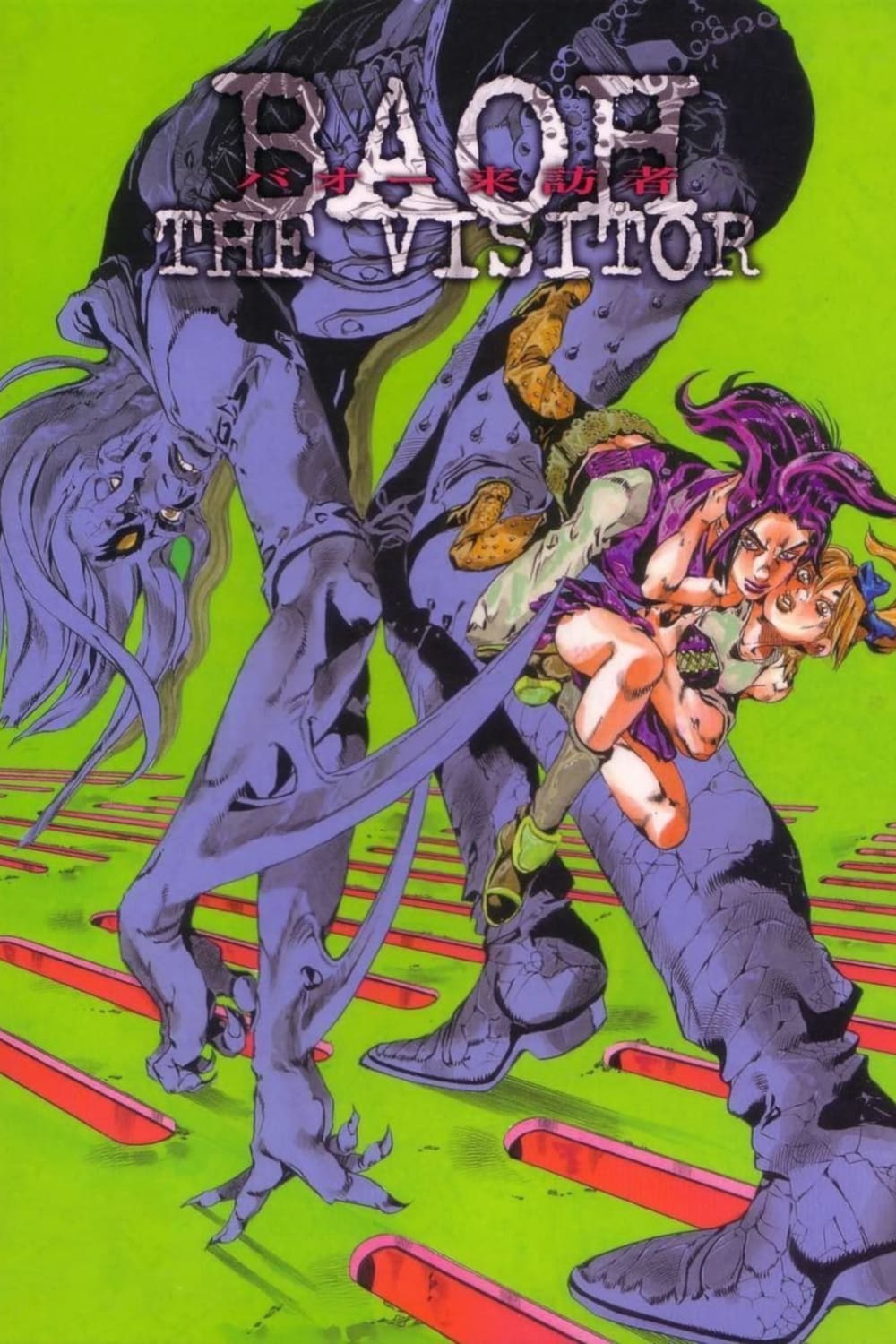
Before JoJo's Bizarre Adventure started in 1987, manga author Hirohiko Araki had an attempt beforehand at an action manga in 1984 for Weekly Shōnen Jump, one which was cancelled into 1985. This forty plus minute straight-to-video production retells this, made when JoJo's Bizarre Adventure had already had a good start to its legacy defining existence that lasts to the modern day. This story begins with a nine year old girl with psychic abilities named Sumire fleeing members of Doress, an evil scientific organisation, on their own personal train when she uncovers Baoh. Baoh, and his host Ikurō Hashizawa, is a biologically created parasite that, for the host, makes them supernaturally strong. Too strong, too powerful, too dangerous, and one that is said to eventually kill the host and find a new body to survive in, which like so many evil scientist plans involving super soldiers or weapons was exceptionally stupid with hindsight. Only its allergy to fire and shooting the host in the head offer any sense to the creation of this worm-like blue parasite.

Baoh: The Visitor is a lurid little shocker, one I am surprised we never got in the United Kingdom in the VHS days, one which was never even a Manga Entertainment release but AnimEigo, whose modus operandi was more for sci-fi titles like Bubblegum Crisis (1987-1991), still to the modern day preserving and re-releasing titles in the United States, a real homemade company founded by Robert Woodhead and Roe R. Adams III, but one whose titles rarely were the gory productions Baoh belongs too. Credit where it is due, Baoh at least comes without any slouch and enough style to make itself over-the-top, in which Doress want to stop Baoh getting away, some style to be found such as in ominous premonitions Sumire has which allow some dream-like artistic flourishes to stand out, one with a sketchpad she has suddenly conjuring a violent horror a stand out for animated invention. This is not a surprise considering this is a studio Pierrot production, a long standing and ongoing animation studio who have worked in multiple forms and would be adapt even to bring some style to this production.  

But you see why the manga likely did not catch on too. Baoh and Ikurō as the lead are broken in how unstoppable they are, with Baoh able to come up with new ways to escape events, but that is less of an issue next to how the personality is not there. Something significant with even the first JoJo's Bizarre Adventure manga, christened Phantom Blood, and the second Battle Tendency is how he had figures out its most enticing aspect. Before Hirohiko Araki came up with the Stands, a concept for the whole franchise of spiritual entities hosted in characters who assist them in combat and in peculiar powers, he had already found the personality and eccentricities which would make the series legendary, not just his idiosyncratic habit (with Western copyright issues) of naming characters after bands and musicians. There is a lot of manga where the hero will always be powerful and able to overcome hazard, but Araki got everything right with JoJo's even down to how, to win a fight, the leads had to figure out their opponents like a chess game of how to overcome an unnatural ability. He ditched the tone Baoh suggests of having to be straight faced all the time, openly embraced being goofy as it was being serious, something you do not see in the stoicism of Ikurō here as his later acclaim came with protagonists who could be utter doofuses as they could be noble and heroic.

Baoh the anime, as a hyper-violent eighties anime for the video market, is more interesting than because of how ridiculous it is. It sets this up with the least competent assassin who guts a man yet lets him slowly wander off across the road and acquire a motorbike to escape, just standing there and letting him get away. In mind to this being at the time the Stardust Crusaders arc of JoJo's was being penned in manga, the high watermark for getting the series its legacy, creating the Stands, and some of the franchises' most iconic characters and aspects, Baoh: The Visitor was likely to be produced off the back of this, but I would not be surprised that this was made for the video market like many titles for its lurid pulpy content. It feels as much an excuse for the many heads here alone being melted or exploded in full animated detail, where one of Ikurō's opponents is a cyborg with a gun for a hand who yet can weld a gun in both before hand in his human skin. Its problems are entirely in mind that the world is not that interesting, beginning with Ikurō Hashizawa not being a distinct lead. His Baoh form is certainly memorable, a prototype one of the "Stands" introduced in JoJo's Bizarre Adventure, and certainly in terms of body horror, the concept of Baoh as a manga is sound in imagining, not matter how dumb an idea for evil scientists to have done. A biological weapon that transmogrifies a person or animal beyond their original form, and could multiply, is fascinating as a concept. It is however telling that the most interesting character for me is Walken, a Native American working for Doress' side, a giant who can re-boil a cup of coffee or melt faces off with his tremendous psychic powers.

Barring a female lead that has her alien squirrel-cat creature as a friend, there is not a lot among this cast unless Baoh was worked on greatly for more manga volumes in terms of idiosyncratic figures, most of them cliches with not enough time to stand out. JoJo's, which can be serious, found in having French bulldogs named Iggy as supporting heroes or naming a villain Vanilla Ice both added a deliciously strange personality to the work but also added so much more to engage with the material with. Even in the first arches of that manga, you see Hirohiko Araki had brought in likable protagonists, distinct and memorable figures even in the one-off enemies, and a sense that as his influences showed themselves, including his fascination with aesthetic be it ancient Greek art to fashion, clothing and the poses models make wearing such clothes, the sense of style was going to add to the personality as much. Araki's world that in which the goofier you are and ridiculous your clothing and/or personality is, the more you are allowed to get away with it because you could punch an actual hole through someone with your powers, the charisma onscreen and in person. Ikurō here has his knitwear sweater, even in Baoh form, but among generic soldiers, occasionally one robot and a psychic whose powers are regulated by a bandana, this is quite a generic roster from a creator who got how to make everyone stand out, literally and figuratively, after this perfectly. What this becomes is the prototype for that manga, where Baoh ended in 1985 and JoJo's began in 1987. Touches suggest where Araki was going, and they are funny in an absurd way here, such as overcoming a hazard by severing one's arm then reattaching it afterwards. There is the added humour in this anime, which befits the many of this time period full of gore and over-the-top action, where the villains, whilst generic scientists, are also professor exposition in literal form, which will mean more as the English dub AnimEigo produced for their release may help with appreciating the title more, far more over-the-top than the professional if subdued Japanese one.

It is credit to the fandom and legacy of JoJo's Bizarre Adventure that Baoh was not forgotten, even if this OVA is a curiosity, for Ikurō Hashizawa found his way as a cameo playable character in a beat em up videogame for the JoJo's franchise, JoJo's Bizarre Adventure: All Star Battle, both for the 2013 version and the 2022 remaster, where the developers CyberConnect2 added a respectful nod to Araki's past creation, who certainly sat nicely among the later heroes of the manga author visually. It is also with hindsight that, whilst having created other stories before and after, Araki's career has been JoJo's Bizarre Adventure since 1987, but with the huge advantage that each arch is its own period, with new characters, even having reset the timeline for the world with Steel Ball Run (2004–2011). Araki literally made his name on one title, but one which will never get stale because its world, originally set up around the continuing family tree of the Joestar family of the JoJo name, can go throughout history and place, from the 1920s to futuristic Florida in a women's prison. That in itself softens Baoh's flaws as an anime in itself as, alongside being too short and too entertaining to dismiss, this is the collection of all of one manga where Araki first made a try, and then afterwards got it right and became a cultural institution.

Sunday, 5 March 2023

#240: Starship Troopers (1988)


Studio: Sunrise

Director: Tetsurō Amino

Screenplay: Tsunehisa Ito and Shō Aikawa

Based on the novel by Robert A. Heinlein

Voice Cast: Yasunori Matsumoto as Juan "Johnnie" Rico; Akira Kamiya as Sgt. Charles Zim; Hirotaka Suzuoki as Greg Patterson; Kazuhiko Inoue as Alphard "Kitten" Smith; Masahiro Anzai as Cherenkov; Mika Doi as Captain Yvette Deladrier; Rei Sakuma as Carmencita Ibañez; Saeko Shimazu as Claire; Shingo Hiromori as Sgt. Dunn

Viewed in Japanese with English Subtitles


I think you can sum up why few may know of the first adaptation of Robert A. Heinlein's 1959 sci-fi novel, a six part animated straight-to-video production from the legendary Japanese studio Sunrise no less, from watching what is in some episodes the opening credits animation or the end credits one. It is of Carmencita, the lead female character and love interest for Johnnie Rico, the good old son from New Buenos Aries joining the Mobile Infantry, frolicking on the beach contrasted by a song sung in English called WE CAN MAKE IT by Tsunoda☆Hiro, with her even turning into a seagull at some point between constantly cutting to the avian figure multiple times flying. Nothing perfectly encapsulates Heinlein's tale of Earth protecting itself in the far future from giant insects than an inspiration eighties Japanese lounge song of believing yourself and jump cut transmogrification into another species.

Starship Troopers is a work I really know from Paul Verhoeven's 1997 film adaptation, which you need to take with a pinch of salt as it is the result of the transgressive Dutch filmmaker attempting to read the novel itself, hating it and giving up part of the way through, and the final film reflecting an unfaithful adaptation and a deliberate sabotage of the source's ideals1. It is an epic which I was allowed to get away with seeing at a much more early age than one probably should, appreciated then as a sci-fi fiction spectacle from the time, and still admired as an adult. When I became an adult too, it was also so visible that a layer of satire, and even loading in fascist readings of the human characters, was there all alone adding to the fun of the film. For me, you cannot hate a film with the line "I'm from Buenos Aires and I say kill them all!", but neither is this a faithful Starship Troopers adaptation, though the straight-to-video sequels attempted to move past the humour. More appropriate for a teenager was Roughnecks: Starship Troopers Chronicles (1999-2000), a CGI animated series which, just going from hazy memory, was an ambitious and admirable attempt at a serious sci-fi work, with a continuing narrative and even legitimately dangerous stakes for its cast, one I was glad to also see at this time and I have always wished to return to. Sunrise's adaptation though, even next to Verhoeven's, is weird in that until the sixth episode, you never get a proper moment of Rico, our lead, in the battlefield, whilst most of the show is a science fiction tale of learning to adapt to being in the army, not Starship Troopers' main story.

This is weirder as Starship Troopers presents an important influence on anime. Only seen in the third film in the live action adaptations, 2008's Marauder, the novel includes personal combat suits, giant robots for individuals to pilots, arguably among the earliest in science fiction. Those suits, and how publications of the source novel in Japan had illustrations of them designed, have a legitimate claim to having influenced a certain section of anime science fiction when it came to designs for personal combat suits2, which makes Sunrise's decision to adapt the book at this time for them enticing to consider how it could have gone differently. Starship Troopers the anime (not to be confused with Shinji Aramaki's Starship Troopers: Invasion (2012) and Starship Troopers: Traitor of Mars (2017)) is a surprise in how the power suits and combat with the extraterrestrial threat in this adaptation is kept to about a minimum in favour of a story of Rico's progression through the Mobile Infantry to being combat ready, which is an acquired taste for taking up most of this three hour narrative altogether.

It is compelling, mostly because I have had such a low bar of expectation to this mini-series when I first heard of it. It is fascinating as this mix of almost light hearted drama, in which Rico and his band of miscreant fellow soldiers, from one with headphones always on to another obsessed with a nude photo of his older girlfriend he keeps with him, try to survive through the gruelling training with the Mobile Infrantry and try their hardest, only to cut to how Buenos Aires is attacked by the alien menace, leading to loss in Rico's family, or when cast die. The opening and ending songs, also one called BELIEVE by Tsunoda☆Hiro, also include animation set to Rico against the cosmos like a space exploration yearning towards the deep space, which does not suggest the peril of war which the source was about. Even Paul Verhoeven's piss take was, on the surface, an epic science fiction action film full of action that could still be appreciated for that. Able to get away with the gore it had alongside his interest in sexuality and brazen vulgarity, the bug menace in that film could decimate and render a human being into pieces, and the spectacle even with nineties CGI needing to be used is still impressive decades on.

The one sense of threat is in how, deciding against the bug aliens of the novel, these aliens are freakish in a credible way in their anime interpretation. Like crustacean, or something from the bottom of the sea, mixed with living pink bacterium, they are freakish and compelling as a truly alien form, which to travel in space (and even create their "bases" of operations) form together into mass of pink entity and can split off, including latch pieces onto human ships to than attack innocents on Earth. There is, as a result, enough here even as a lower budgeted production to have made this more of an action or intergalactic work, but instead emphasis was placed on the drama. This feels less like a compromise, or that this show was cancelled before it could progress, but a deliberate choice. This choice is going to make the show off-putting for some, simply because most of the 1988 Starship Troopers is a military training drama which, in context of its world and source, is a mistake for only three hours of a work, even if the scenes of contemplation or Rico being back on Earth, even fighting with local ruffians at a bar, were entertaining for me at least if for no one else.

I found it interesting in spite of this, even if details of the show do show a foot forward was not always the best in other areas as well, such as how, whilst the figure who keeps Rico strong, Carmencita was unfortunately drawn with eyes that can burn holes into people even when she is relaxed. Without the dramatic tension this animated work eventually brought in with the vast number of aerial combat scenes still within it too, what this feels like was Sunrise were taking a page from what Area 88 (1985-6) did perfectly, in terms of emphasising the human drama first, but here with the scene that it takes too much of the adaptation, even if I respect what this is as a strange curiosity. This is stranger knowing that half this series, arguably at some of the more interesting moments, is written by Shō Aikawa; infamous at one point for being the man penning the likes of Urotsukidôji to Violence Jack at this point, he became a well regarded screenwriter in the decades after, and he would have been the sort of person who would have cut to the chase and made this a more pulpy and dynamic work, alongside the virtues he showed as a writer in his career, with the sense here that was a choice left off the table.

The turnover between episodes, from October to December 19883, also sadly suggests that the production was under the gun, undercutting the potential for the elaborate spectacle this adaptation could have provided. But this did not hurt anyone. This was just a script co-written by Shō Aikawa, who was working with Tsunehisa Ito, a prolific writer from anime before this adaptation as well such as Sherlock Hound (1984-5). Director Tetsurō Amino is prolific and would go on to his biggest work with Macross 7 as a franchise; starting with the 1994 TV series, this franchise entry, where music is literally the weapon in its take on the science-fiction and music from the Macross franchise, is one of the largest in quantity of material and did well. Sunrise is, well, Sunrise, prolific and making Gundam and non-Gundam shows and animation to the current day, and Robert A. Heinlein's source text, beyond the Paul Verhoven film, has had other adaptations even into video games. (There are the Shinji Aramaki anime films too, but that is for another day.) Suffice to say, no one lost any sleep about this barring the lost promise of an eighties hand drawn and lavish Starship Troopers adaptation from Sunrise, who were big even then, which is a disappointment. It is not going to cause me to lose sleep when, knowing this was the warning about this show, I came with nothing expectations and found joy here in spite of the creative decisions.

=====

1) Triple Dutch: Paul Verhoeven’s sci-fi trilogy, written Adam Smith and Owen Williams for Empire Online, published on February 12th 2014.

2) In Pursuit of the Powered Suit: The Class of '83, written by Sean O'Mara for Zimmerit, published on July 14th 2022.

3) Anime New Network's Episode listings for Starship Troopers.

Monday, 30 January 2023

#239: Pop Team Epic Season One (2018)


Studio: Kamikaze Douga

Directors: Aoi Umeki and Jun Aoki

Screenplay: Jun Aoki

Based on the manga by Bkub Okawa

Voice Actors for Pipimi and Popuko:

As Pipimi: Akiko Yajima, Akira Ishida, Akira Kamiya, Asami Imai, Atsuko Tanaka, Ayana Taketatsu, Azusa Tadokoro, Banjou Ginga, Bin Shimada, Chisa Yokoyama, Daisuke Namikawa, Haruka Tomatsu, Houchu Ohtsuka, Jouji Nakata as Pipimi, Jun Fukuyama, Kaito Ishikawa, Kaori Fukuhara, Kaori Nazuka, Kenichi Ogata, Kensho Ono, Kikuko Inoue, Koji Yusa, Kotono Mitsuishi, Kousuke Toriumi, Mamiko Noto, Nao Tōyama, Noriko Hidaka, Norio Wakamoto, Rei Sakuma, Satomi Satou, Shigeru Chiba, Sumire Uesaka, Suzuko Mimori, Takehito Koyasu, Yousuke Akimoto, Tomokazu Sugita, Wataru Takagi, Yū Kobayashi, Yui Horie and Yuuki Kaji

As Popuko: Aoi Yūki, Emiri Katō, Eriko Nakamura, Etsuko Kozakura, Hikaru Midorikawa, Hiro Shimono, Hozumi Gōda, Junko Takeuchi, Kana Hanazawa, Kappei Yamaguchi, Mami Koyama, Mariko Kouda, Masashi Ebara, Masaya Onosaka, Mikako Komatsu, Nana Mizuki, Nobuo Tobita, Rikiya Koyama, Ryusei Nakao, Sakiko Tamagawa, Satomi Koorogi, Sho Hayami, Showtaro Morikubo, Sōichiro Hoshi, Sōma Saitō, Sora Tokui, Sumire Morohoshi, Takahiro Sakurai, Tesshō Genda, Tomokazu Seki, Tomoko Kaneda, Toshihiko Seki, Toshio Furukawa, Yōko Hikasa, Yūichi Nakamura, Yuji Mitsuya, Yukari Tamura, Yūki Ono, Yuko Sanpei and Yumiri Hanamori

For Bob Epic Team: Toru Adachi as Pipimi; Shunsuke Itakura as Popuko

For Japon Mignon: Christine Bellier as Pipimi; Fanny Bloc as Popuko

Viewed in Japanese and French with English Subtitles


If I am to be truthful, Pop Team Epic is as scattershot as a musket round exploding from a gun, but that comment itself even feels absurd knowing the creators of this made the series with this intention, and that the work based on a manga mocks itself as being “shit” throughout the first animated season multiple times. Already as time has passed, until 2022 when the second series was unleashed, references this has cracked have become more obscure or less current to that moment the show was released, and the amount of censorship just of certain images, due to how Japanese parody laws work, means there are some curious insights to be gleamed as a time capsule, such as how in the first episode (for the Crunchyroll version) the Pokemon parody stays intact but they felt blurring the My Neighbour Totoro (1988) one was wiser in fear Hayao Miyazaki might frown at them. By now the parody in the first episode of Your Name (2016), Makoto Shinkai's blockbuster success of an anime film, is now a canonical hit rather than the sudden shock surprise, and yet at the same time, even as a show with a lot of parodies, it makes a joke about a viewer writing a disgruntled letter to Pipimi and Popuko, our leads, about them relaying too much on parodies for the jokes. This show always had the sense of being deliberately irrelevant, knowing the jokes could be cheap, and this also, especially for the video game parodies, gets really esoteric. How else do you explain a parody of Death Crimson (1996), one of the most notorious video game productions for the Sega Saturn console, a perfect example of the labour this show puts in for what is, to be blunt, a thirteen episode shit post disguising itself as a sketch anime comedy like gdgd Fairies (2011-13).

Pop Team Epic, and its school girl leads Pipimi and Popuko, closer to goblin personifications of ids than teenagers, were birthed into the world in 2014 by Bkub Okawa, creating the 4koma manga for Takeshobo. Pipimi (taller and more sedate) and Popuko (shorter, more prone to violence and flipping the bird) are less characters in a sitcom than forces of misanthropy in a series of strange and even nonsensical gags. Openly preferring surreal jokes or moments which are weird without an apparent punch line, imaging these two with more "conventional" designs is actually one of the jokes the series keeps coming back too. There is even a joke that, set up in the first and last episode as the closest to a plot, the evil cabal behind the show (parodying Neon Genesis Evangelion (1995)) regret their moe schoolgirl show with more cute designs for the pair turned into the equivalent of taking a dump on viewers’ television. In fact one of the funniest jokes, one I admire, is that the next episode previews are not for Pop Team Epic in season one but for Hoshiiro Girldrop, a show which does not exist which is parodying a stereotypical one, about a schoolgirl who is also an idol singer in her other life and has a crush on her male senpai. [Spoilers] The joke is funnier for the abrupt punch line, that this even has the abrupt tonal shift out of nowhere for the final preview that our heroine died and the male love interest resurrected her afterwards, as abrupt to what is a cute idol programme as what may actually happen in an actual thirteen episode show or two. [Spoilers End]

The first series was divisive for me when I had first seen the episodes, and even now, it is a show of what does not land, what does and what hits with complete success, completely unpredictable in where it is in either of these categories even in just one episode. The first episode, still, is weak, more of a series of parodies which does not fully get to the weirdness the others from the second get to quickly. One of its best virtues, which grow returning to the series, is how to even depict the dumbest of jokes, this brings a murderer's row of talented and imaginative creators and animators in a variety of formats, even crafts with sewn felt dolls, to depict them. To mock itself as merely shit again for a joke is not enough when this can parody Isao Takahata's The Tale of the Princess Kaguya (2013), his last film and an incredible animated production which used incredibly lavish digital animation to depict watercolour-like images. Not merely to pastiche it is enough for a joke but, knowing even for a minute or two it would take a lot of resources, copy the exact animation style from that film's lavish production.

The collaborative nature is a huge virtue of Pop Team Epic. Barring the first and last episode having a story, the episodes baring one prominent segment, usually a parody, is a series of small skits of a variety of different art styles and tones. There is also only fifteen minutes of them including opening and ending credits, as one of the strangest touches, which I was first pushed away back but watched properly finally, is how this replicates the same episode to make up the full twenty plus minute length. There are differences between them - usually tiny touches, some major one offs which are different to the same scenes, and subtitles for the Japon Mignon segments about French culture - but the biggest differences are is that different voice actors in Version 1 and 2 are used for Pipimi and Popuko. And they can be male and female, over the two versions of the same episode and allowing a huge variety of prominent figures in voice acting to try even ad libbing, not even taking into consideration the English dub took the same attitude. For a great example, if you wished for the titular Madoka, of Puella Magi Madoka Magica (2011), to play Popuko, then Aoi Yūki is one such figure here, in a parody of a high fantasy anime which has not even been finished where Popuko/ Yūki is forcing the voice actors in character to perform impersonations upon threat of grievous implied harm.

There are reoccurring segments, and one of the season's best aspects is that, even if jokes do not land, this let anyone create idiosyncratic segments in their own ways. The most infamous is the "Bob Epic Team" segments by AC-bu. The creators Toru Adachi and Shunsuke Itakura, who also do the voice performances, created these garish and surreal splatters of visuals with carte blanche, and these works for all their notoriety in their ugliness were intentional aesthetically. A duo who was working in commercials and music videos since the late 1990s, they came to this production knowing what to do, and getting some of the strangest and funniest moments as a result even if also replicating material from the original manga. (Such as finding an alien in the cat bed, posing as one, and having none of it.) The parodies of numerous obscure video games (and some big hitters like Undertale (2015)) in exact pixel styles, were done by an amateur pixel artist Makoto Yamashita who was still a student at the time of the production1, and UchuPeople, who use a variety of different multi-craft tools, are stop motion specialistis responsible for the felt and knitted versions of one collaborator provided coquetted versions of Pipimi and Popuko, used for music numbers (including a Earth, Wind and Fire parody) that usually are sweet sounding songs about wanting to kill the subject being sung to. This becomes the best aspect of this deliberately scattershot production, which embraces a variety of figures and allows them to be creative, something attesting to how one entire reoccurring segment Japon Mignon, was handed to French born 3D animator Thibault Tresca2, living in Japan, who was allowed to create (mostly) wholesome 3D animated stories with fluent French speaking voice actresses about the clichés of French culture.

Its scattershot nature is its biggest vice, as surreal comedy in anime is something that is bountiful and in a variety, meaning that there are many others in this format including with more elaborate stories to embrace and compare to. Its scattershot nature however too, when it lands, leads to some brilliant moments. “Hellshake Yano”, a talented guitarist and originally a joke character from the manga itself, is probably the thing that will be brought up for Pop Team Epic’s first season, enough that in 2022, Stephen Lee "Thundercat" Bruner, a Grammy Award winning bass guitarist/singer/producer/musician, is proclaiming his love for the show and him by rocking out on a paper craft guitar designed like Yano’s on social media3. AC-bu were tasked in season one to use kamishibai, a form of street theatre and storytelling from between Japan in the 1920s/1930s to the time television became popular, even as far back as 9th-century emaki (picture teller) scrolls4. Telling stories with paper images, with a storyteller voicing the characters, this format even past the growth of television in the 1950s found its way to continue. (Ujicha, the cult film maker of the likes of Violence Voyager (2018), is effectively doing paper theatre himself with his cult and sometimes shocking work). AC-bu, when approaching this tradition in their own way made an utter epic by itself which could even outlast the rest of the show, the duo operating a painstaking put together, drawn and cut sketchpad depicting Hellshake Yano having to appease the crowd at a concert as they voice the performance onscreen. It was an incredible production which won me over back even when I was cold to the series, and it stands out still but as a gem in a show which had a lot of inspired moments. Even then, I have to also credit that, returning to the series, countless other jokes are just as funny: the ghost story parody where a group of young adults rent a cabin which suspiciously have a pair of guns and axes mounted onto the walls, and end up killing each other; the second version of this with a seemingly random man doing audio commentary that, whilst not fully successful as a joke, is bold and does have the hilarious moment where he finds them having a watermelon out of season suspicious; that sudden attempt at a sad ending, using the repeated episode format on purpose, which is resolved by Shōta Aoi, voice actor and singer, looking like a cosmic pixie as he puts everything right again through his dapper dress sense and ability to travel back in time; that one random time, whilst acting out orgasm, one of the actresses uses “Marilyn Monroe” over and over, or the abrupt shout out by a male actor to neoclassical metal guitarist Yngwie Malmsteen; and way too many else to count.

There is one which fully encapsulates the show and its entire attitude, which is that aforementioned parody of Death Crimson, faithfully recreating its entire opening full motion video even with a fuzzy image of a red door. A game never released outside its home country, though the sequel did, Death Crimson was an attempt by the company Ecole Software as part of their transition into video game software as outsiders. A light gun game, it is held as one of the worse games ever released for the Sega Saturn, but instead of destroying the company it was loved by those who played it, sold very well when eventually the notoriety started to be passed on, and developed a cult around them. Proclaimed “Emperor of Kusogē”5, and something those who made the game are proud of in spite of its notorious low production qualities, bear in mind “kusogē” does mean “shit game”, even if the term is for notorious Japanese productions in the medium which are loved even without irony; that in itself makes the perfect encapsulation, for good and for moments which do not work, of Pop Team Epic itself, proudly calling itself shit, made with complete love of the art form of anime through the talented people in various positions on the production, and spending its resources, including a large portion of the climatic episode, parodying a notorious Sega Saturn light gun game.

========

1) The Alternative Faces of Pop Team Epic, or How a Shitposting Cartoon Became an Experimental Animation Stronghold, written by KViN for Sakuga Blog, published on December 20th 2022

2) The About page for Thibault Tresca's personal site.

3) Thundercat Won't Let You Stop Thinking About Hellshake Yano, written by Kim Morrissy and published on Anime News Network on January 5th 2023.

4) Kamishibai - A Brief History, written by Tara McGowan and published on Kamishibai.com.

5) The (loving) article on Death Crimson's production history and legacy, including the Pop Team Epic parody, from Bad Game Hall of Fame.

Tuesday, 3 January 2023

#238: Patlabor 2 – The Movie (1993)


Studio: Production I.G.

Director: Mamoru Oshii

Screenplay: Kazunori Itō

Voice Cast: Jinpachi Nezu as Yukihito Tsuge; Ryunosuke Ohbayashi as Kiichi Gotoh; Yoshiko Sakakibara as Shinobu Nagumo; Daisuke Gouri as Hiromi Yamazaki; Issei Futamata as Mikiyasu Shinshi; Michihiro Ikemizu as Isao Ohta; Miina Tominaga as Noa Izumi; Naoto Takenaka as Shigeki Arakawa; Osamu Saka as Seitaro Sakaki; Shigeru Chiba as Shigeo Shiba; Tomomichi Nishimura as Detective Matsui; Toshio Furukawa as Asuma Shinohara

Viewed in Japanese with English Subtitles


Moving on from the first 1989 Patlabor film, a great deal changed even in terms of character designs, the original character designs of Akemi Takada from the first film (with Masami Yūki contributing here) moving to a notably more realistic tone alongside the mood of this sequel. That is not to say all has changed – humour is still here, as this franchise follows Tokyo Metropolitan Police Special Vehicle Section 2, Division 2, consisting of a large lovable nitwits kept together by Kiichi Gotoh.

This film’s story however feels like a proper start to director Mamoru Oshii’s serious era as a director, in mind to the likes of Angel’s Egg (1985) in-between his comedies beforehand, with a huge emphasis needed to for how screenwriter Kazunori Itō is an integral part to the film’s virtues and deserves his credit greatly. The tonal shift is noticeable though, in mind that over the three films for this franchise, let alone the OVA series and the other entries, the Patlabor project created by Headgear - a group consisting of manga artist Masami Yūki, director Mamoru Oshii, screenwriter Kazunori Itō, mecha designer Yutaka Izubuchi, and character designer Akemi Takada - the franchise has juggled multiple tones over the multi-media formats it has been adapted into. There has been an emphasis on different characters in Division 2 over these different tiles. Noa Izumi, the plucky female member who loves her Patlabor manga, was central to other entries, whilst over the three films you have Asuma Shinohara central to the first 1989 film's action mystery, and WXIII: Patlabor the Movie 3 (2001) focusing on police detectives Kusumi and Hata in what becomes a monster film. Patlabor 2 follows Kiichi Gotoh himself with Shinobu Nagumo, the female captain of Division 1, as the central leads in a political thriller.

A cerebral political thriller, which just exists in a future 2002, this begins in a prologue set in South America for a military skirmish, where a man named Yukihito Tsuge as the last survivor of his squad who intends his revenge a long time later on his homeland of Japan. This revenge is a terror campaign on Tokyo which, in its many stages, exploits all the flaws in the bureaucracy. How this is show is startling and where the themes come in, dealing with a post World War II Japan which has lived in peace, Goto representing this and Tsuge becoming a figure who wishes to bring the terror of war to the Japanese public. Tsuge's plan uses something as seemingly simplistic as exploding a car on a bridge, without casualties, to start the domino effect where everything starts to collapse to his advantage. There is a heightened piece of melodrama as, disgracing her early in her career and undercutting her ability to progress, Nagumo had a romantic affair Tsuge when he was married and teaching her in the early stages of her career, causing a drama in how she will have to be the one to catch Tsuge when possible, the emotions hanging over her head.


The Japanese Self-Defense Force is a target of the film, the film created in the aftermath, in 1992, when the National Diet, the legislative branch of Japan’s government, passed the U.N. Peacekeeping Cooperation Law that permits the JSDF to participate in U.N. operations under strictly limited conditions, which led to the JSDF participating in U.N. peacekeeping and monitoring operations in Cambodia and Mozambique1. Oshii and Kazunori Itō's film clearly viewed this in a very negative light, as the prologue is set in such a peacekeeping operation where, not allowed to directly attack the enemy, former JSDF member Yukihito Tsuge as a captain found his entire squad wiped out, and his revenge involves using the resulting power struggle he creates between the Tokyo Metropolitan PD and the JSDF to his advantage. This story, and how it becomes part of the discussions on war as a concept against peace in Patlabor 2, is more meaningful when one is aware of this history footnote.

How the plan Tsuge has goes is fascinating, including the film still tapping into salient details of how organizations can make huge mistakes, all timeless in spite of this film being set into the 2000s. Hubris and a terrorist group able to exploit this come into mind here, such as deliberately bringing suspicions to the military for the car explosion, or having the police and military at each other’s throats in a misguided power flex from the police’s leaders. Other tactics, like blowing up bridges or finding a way to take out military vehicles with ease, i.e. causing martial law to have to be brought into place so they are on the streets like sitting ducks, are uncomfortable realistic as tactics if there were enough resources for someone to use. Even more overtly tropes from action films, like blimps which fake out mock chemical gas attacks when shot down, come with the theme in this of Tsuge to cause terror on a public who have never seen conflict. This is obvious but prescient in mind to how, when in a war back in the 30s and 40s, Japan was utterly destroyed and required to be rebuilt from the ground up decades, leaving lasting scars anime like this have tackled as a theme decades later.

It is an Oshii film as an auteur, his focus on contemplative scenes and dialogue exchanges fully here. Even the one playful touch of including a Bassett hound in a cameo throughout his career at this point onwards, a breed of dog he is obsessed with, appears here near the end. This is however a team effort and screenwriter Kazunori Itō just with this film would have won currency from fans of the medium for how well done this is. Production I.G. is on top form here, and whilst there is a noticeable change in the character designs, it is not as drastic as presumed. The characters are far more realistic in appearance, but it is credit to the film, alongside some of the intricate mechanical animation here, that it feels not as abrupt a change between two films. Again as well, there were three films, and the third film, not involving Mamoru Oshii nor Itō, looks just as different as a film into the 2000s where the switch to digitally animation techniques is noticeable on productions, so the franchise has always had an edge of letting each of the stories, least for these films, be different. The music by Kenji Kawai, as with the first film, shows as well why he was as integral to the image of Mamoru Oshii films, or more aptly also how they sound, adding an additional depth to what has gained significance as one of the best anime films from the nineties with considerable reason.

This is more so as, in another team’s hands, it would be still a good film if done well, an action anime which could still tell this story but in a more overtly comedic and over-the-top fashion. This could work as a more pulpy narrative, and still could have been a great anime, and it says a lot that when the humour is here, such as the sudden mission to buy everything edible in a store from Division 2 members, it still matches Patlabor 1 because the characters were established as a team of miscreants who just happened to be a police force. The decision, even with these characters, to take this cerebral tone which Oshii himself would run with from Ghost in the Shell (1995), the lengthy contemplative visual scenes, the extended philosophical discussions between characters, and match it with action scenes, when they happen, which was distinct and effective at its best. Together both films are admirable in their virtues, and it is not a surprise as well how greatly regarded the sequel is just by itself.  


======

1) Patlabor: The Movie 2 (1993) Movie Review, written by Erick Kown for Beyond Hollywood, published on October 11th 2004.