Showing posts with label 1970s. Show all posts

Monday, 10 June 2019

#103: Magnos the Robot (1976/1983)

From https://www.iansvintage.online/wp-content/
uploads/DVDR1/P1180035.jpg


Director:  Tomoyoshi Katsumada
Screenplay: Hiroyasu Yamaura; Hiroyuki Hoshiyama; Keisuke Fujikawa; Toyohiro Andō
Based on Magne Robo Gakeen and Re-Edited by International Media Group and Century Video
Voice Cast: John H. Mayer as Sir Miles Nevers/Xerxes Tire-Iron Dada; Marla Scott Frumkin as Mai Lady Ester Nevers/Estroydia/Yuri Petrakov; Paul Ross as Janus; John H. Mayer as Gordo Starkey; Paul Ross as Brain/Stretch Landis
Viewed in the English Dub Version

This is a curious one to review, usually the realm of a bonus review, but in this example Magnos the Robot is more than likely known over here in the West not for the original 1976 giant robot series Magne Robo Gakeen but as a ninety minute compilation film. Now, for the uninitiated, giant robots (where heroes, usually teenagers for some reason, pilot giant militarised machines as a form of hero fantasy) had a heyday through the seventies. This genre, whether super robot or attempting to be more realistic, still exists to this day usually in throw backs to this earlier era (Tengen toppa gurren lagann (2007)), more serious interpretations of this material (Neon Genesis Evangelion (1995), bearing in mind co-creator Hideaki Anno was more inspired by Ultraman than robots), or a curious meshing of fan service and other aspects (Godannar (2003), by all accounts actually a cool show, but rife with enough giant breasts, nudity and skimpy costumes just on the DVD covers it's been hurt from having a wider cult audience). The seventies, however, was very important as, whilst much of this genre was targeted for young boys with the intention to promote toys, it was when legendary manga author Go Nagai innovated in the genre, director Tadao Nagahama and the staff of Toei (under the collective name of "Saburo Yatsude") created the Robot Romance Trilogy, three shows between 1976 to 1979 that started striding to add more dynamic storytelling to them, and Mobile Suit Gundam (1979) whilst initially unsuccessful would eventually become a franchise and draw the serious giant robot show into being.

In the midst of this, I highly doubt Magne Robo Gakeen is a big license. Someone probably likes it - probably one of the coolest videogame crossover series Super Robot Wars, when not a version with original characters, grabs robots and characters from every licensed anime from known titles like Neon Genesis Evangelion to Gundam, to ultra obscure titles like Hades Project Zeorymer (1988-1990), so I'd be baffled if Magne Robo Gakeen never appeared in a future title. However, in terms of actual historical context, this is a franchise who in the West in more infamous for this re-edited version in from International Media Group and Century Video, the kind which deliberately removes any Japanese text with crude text blocks onscreen, renames characters and was clearly meant to sell to a Western family audience for profit. The biggest distinction of the premise left in this version is that, as male pilot Janus (originally Takeru Houjou) and female pilot Lady Ester Nevers (originally Mai Kazuki) need to combine their robots into a super machine, they have to jump out of their cockpits in mid-air, join hands and, in an unexplained transmogrification that would become Cronenbergian if depicted in explicit detail, they turn into the belt buckle of the final machine. It's deeply silly and by all accounts, it's the one gimmick of the series, something somewhat tragic as sadly the original series has never been licensed for the West to confirm where this show would go.

From there, Magne Robo Gakeen was presumably a monster-of-the-week show, a new antagonist each episode; hailing from the once dominate species the Paleo-Goths, the villains are a group led by Xerxes Tire-Iron Dada, a glorious name if ever there was one, a vague form whose visibility are his henchmen and women take centre stage, creating synthetic giant monsters to take back Earth. There is a dark twist, mind, in that they're doing this because their world is about to be destroyed, slowly the moon and the planet about to collide, a detail left in the English script that adds an unexpected moral complexity so out of place for this material. Not that this is meant to add dramatic complexity like the Robot Romance Trilogy is said to do mind, just a jagged edge as you're supposed to boo the villains.

From https://i.pinimg.com/originals/49/02/6d/49026d92#
faf60be8bbbcdbdcfe816e4f.jpg

Helped by Lady Ester's scientist father John H. Mayer, on the mobile battle fort Ft. Liberty with three male teammates of useless backup, Janus and Ester must defend the Earth. Janus belong to the list of stoic but frankly boring leads, even if as a karate champion there is even a flashback image to the fact he once fought a bull. Ester on the other hand is in danger of being the useless female protagonist, gender discrepancy sadly an issue here for the male power fantasy for boys. Baring in mind the original context of the series, meant as entertainment for young children, this is an issue but I have to bear in mind how the U.S re-cut has taken this material as, for all I know, there is many character beats even for a conventional premise which are probably lost. Of course, what we get also has a ridiculously broad English dub, peppy and exaggerated which does drastically change these characters a great deal even if it is amusing.

Thankfully, whilst the prospect of thirty nine minutes being condensed into ninety minutes sounds an absolute nightmare, the work is a breeze to sit through is utter cheese. The production wisely just turned this into a few vignettes as our villainous henchmen, lead by the giant Brain (with his exposed brain), who keep trying to get the jump on the heroes. Credit where its due, they try (for an anime) wise tactics like two-on-one assaults or exploiting how Magnos' feet overheat if overused, just silly mistakes or the heroes pulling contrivances out of their backsides preventing them from winning. I confess my love for the gaudy designs as well, the monsters in particular animal hybrids christened with glorious names like Batroacher III, emphasising that whilst many of these shows regardless of country of origins were toy tie-ins, which has always been problematic, they had a creativity even if bizarre that can be appreciated if this commercial aspect is separated from the images. As someone who has no shame in still having old toys from his childhood, now as room decorations no matter how banged up some are, there's an art to vivid and creative designs even at their gaudiest that I have to appreciate here.

In the end, I couldn't help but find a lot to like even if there's the innate issue that, as a compilation of an episodic series, this has a rinse and wash style to it, escalating in terms of what is done but never building to greater detail even if a (presumably) episode rather than story driven show. Thankfully there is some sort of escalation, when the battle fort is hijacked, but you are watching segments from episodes, with their own dynamic beats and resolutions, be cut down to swifter paces and connected together tangentially. In fact, having seen a bit of giant robot anime, I can see plot points that have been used in future work like when Janus briefly quits, something that even Neon Genesis Evangelion used but with a greater psychological complexity. Mazinkaiser (2001-2), an OVA series based on the Go Nagai property Mazinger Z, was arguably in style of this compilation, as a series of event-of-the-week incidents and vibrant robot/monster designs, but (with Nagai's history and the production) more knowing in its bombast, from the opening rock song by JAM Project having lyrics like "Crush on crush!" to gratuitous nudity just for the hell of it.

Characters learnt of looking up the series are gone completely, and at least one villain who has shape shifting abilities here is barely used, a figure likely of greater prominence in the original series, just emphasising how this whilst in its own little bubble is still a piece of a bigger puzzle. Nowadays we'd condemn this type of compilation, even if editing of shows for Western tastes was still happening into the nineties. Ironically, what really drives the enjoyment of Magnos the Robot, regardless of the version deliberately trying to scrub away any sense that it is a Japanese production, is the original work even in a truncated form. Seventies anime is not that commonly seen still over this side of the globe and, from its hand drawn animation to the funky music about to turn into full disco, the entire aesthetic and wholesome tone is charming. It's enough that, if I had the luck to see the original Magne Robo Gakeen show, I'd take a chance on it.


From https://www-animeherald-com.exactdn.com/wp-content/uploads/2017/
04/Magnos-001-20170406.jpg?strip=all&lossy=1&ssl=1

Friday, 17 May 2019

#100: Lupin III: The Mystery of Mamo (1978)


Director: Sōji Yoshikawa
Screenplay: Atsushi Yamatoya and Sōji Yoshikawa
Based on the manga by Monkey Punch
Voice Cast: Eiko Masuyama as Fujiko Mine; Gorō Naya as Inspector Zenigata; Kiyoshi Kobayashi as Jigen Daisuke; Kō Nishimura as Mamo/Howard Lockwood; Makio Inoue as Goemon Ishikawa XIII; Yasuo Yamada as Arsene Lupin III

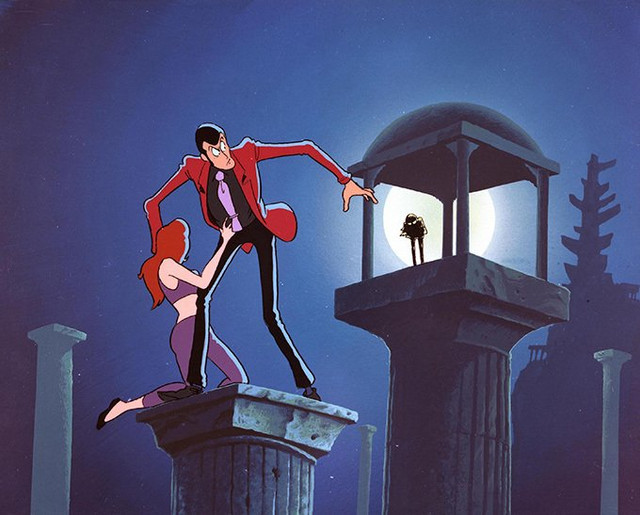
Monkey Punch, the late Kazuhiko Katō, create a few characters in his career as a manga artist. Since his 2019 death, a greater curiosity has swung, thanks to the 2003 TV series adapting it was released by Discotek, to Cinderella Boy, in which due to supernatural shenanigans a male detective and his female partner end up in the same body, turning into one another and switching gender. Also, there's Musashi Gundoh (1997), which infamously had a 2006 animated series so bad the Japanese fans demanded their DVD releases to include the original TV broadcast mistakes to be intact, thus helping export irony to the country. But Monkey Punch will be known for Lupin III, a character who, since his 1967 manga debut, has become a cultural pulp phenomenon in Japan who is still having animated tales made for, like Batman to the Americans and Sherlock Holmes to the British. This is ironic knowing the character is explicitly meant to be the grandson of Arsène Lupin, the legendary French pulp character of Maurice Leblanc, which for a while was a huge sore spot in terms of copyright until recently1. Thus from one cultural institution we got another in an entirely different country.

Like Batman, various versions of Lupin exist, and it's apt in lieu to how The Mystery of Mamo, as the first theatrical animated film in the franchise, turned out how it did. Note with this that, barely knowledgeable with the franchise and with an outsider's gap, I am at least aware of these versions are divided by the colour of Lupin's jacket. As much of it is based on the various TV series - "Green jacket" the original 1971-72 series, "Red Jacket" 1977-1980, "Pink Jacket" for 1984-1985, and "Blue Jacket" for the 2015 series on. But as much of it is based on tone too even if there are examples which do affect this, a loose framework for each. The 1971-2 series is famous for Hayao Miyazaki working on it, but it was only by his own theatrical debut The Castle of Cagliostro (1979) the Green Jacket version was cemented, the more family friendly version of the character with Lupin a more serious, debonair figure. Pink jacket, emphasised by the Seijun Suzuki co-directed The Legend of the Golden Babylon (1985), was divisive in that, knee deep into the eighties, it changed the character styles and also started including explicit sci-fi and supernatural material, something to bear in mind with The Mystery of Mamo. The Blue Jacket is one I need to see to make thought of, but from the 2015 Italian-Japanese co-produced series, I am aware the 2010s Lupin III deals with new details for the character like modern technology and is in lieu to modern animation production. Again, this is from an outsider delving further into these versions, so none of this is entirely canon in the slightest.

But it's important to point out as, whilst there are possible exceptions, Red Jacket has always been connected to the original Monkey Punch creation. More slapstick, but also adult, the idea at least with The Mystery of Mamo and other depictions that the Red Jacket version of Lupin III is the darker and edgier version of the character. Lupin in the manga was a cruder figure, has been depicted in adaptations as a literal id, a thief with an obsession with sex particularly with female thief and fatale Fujiko Mine. This is poignant knowing that in terms of the seventies version of Lupin, and the version most well known of the entire franchise, it's probably Hayao Mizayaki's The Castle of Cagliostro that is the most seen, the truest gentleman thief and good guy with none of this darker content thus making the experience likely to be completely jarring to change to this version.

Basically, like Arsène Lupin, Lupin III is a thief who scours the world for valuable objects. On his team includes Jigen, a grizzled crack shot of a gunslinger, and Goemon, meant to be a decendent of the real life figure Ishikawa Goemon, who is a wandering samurai in the current day. Fujiko Mine, who has the most fascinating revision when female anime director Sayo Yamamoto and female scriptwriter Mari Okada got to create the series The Woman Called Fujiko Mine (2012), is the female thief who has Lupin wrapped around her little finger, as in Mystery of Mamo as much likely to be on the opposite side as on his, whilst finally there's detective Zenigata, who is so obsessed with catching Lupin that, as Mamo has in a subplot, the fact you learn he has a daughter but has been outside of Japan all this time shows a pathological obsession with catching his prey.

Like many other stories in the Lupin III franchise, there is a valuable object in the centre, in this case a philosopher's stone Lupin has to acquire from an Egyptian pyramid, and an antagonist but The Mystery of Mamo is an odd one in how it is, whilst a great film, a curious piece in lieu of the way the character was being adapted to animation2 and in context to over decades of the character existing. With its villain being the titular Mamo, imagine Paul Williams in Phantom of the Paradise (1974) without the glasses, the story is already a peculiar mix of slapstick but with adult content at the start, in-between Fujiko having a lot of nude scenes to scenes incredibly rare in the franchise of people being gunned down in the French streets by a helicopter, all whilst adding upon this a schism dramatically between Lupin's rational scepticism of Mamo's claims but streaks of over surrealism dominating the tone. Literally, in one case as Lupin literally flees from goons through Salvador Dali's The Persistence of Time among other famous Surrealist paintings in one sequence, melted clocks and all ran over. In the midst of Mamo claiming to be a thousand year old godhead, you have cameos by Napoleon and Hitler in the then-modern day, a subplot which never goes anywhere in which a Lupin is publically executed (in the opening shot) by hanging, and a lot of Looney Tunes cartoon physics, where a giant American truck meant to run Lupin off the road makes French cop cars look like ants and Lupin himself moves about as a perverted Bugs Bunny.

From http://img1.ak.crunchyroll.com/i/spire2/12dff1132994
5762e26bc255ffd079961500987250_full.jpg

In lieu to that plot, where a large part of the story is Lupin dismissing Mamo as a charlatan who really only uses his wealth and goons to cause strange phenomena, all as Mamo tries to claim both the philosopher's stone and Fujiko for himself, what happens in the film concludes this schism in the strangest way possible. Without spoiling the ending, the final reveal of what Mamo is after the other twists twirls over the line into the fantastical with glee, a level of ridiculousness that is to be applauded but really feels like a peculiarity, when before this franchise kept in its own grounded (but cartoonish) format. It even more so jars with the later Castle of Cagliostro, released a mere year later, and feels like a prelude to future tales having actual UFOs and magic when you get to the Pink Jacket scenarios.

The other aspect is that, until the last decade, it'd probably be a shock to see a much more violent and sexual version of the characters despite being closer to Monkey Punch's source material. One of the greatest virtues of this franchise, like Batman to Sherlock Holmes, is that these characters all have their distinct personalities but can exist in any form. Lupin III is a trickster thief, Jigan the grumpy old veteran, Goemon in this film a literal monk in attitude, Zenigata relentless and obsessive, and Fujiko the gorgeous lady out for herself. They have versions in films, TV specials and series which can vary from a more wholesome adventure, to explicit excuses to nudity, to crossovers with other famous characters or a feminist revision of Fujiko in The Woman Called Fujiko Mine which is actually even darker, more sexually explicit and nastier in tone than The Mystery of Mamo. But it is a shock if you aren't prepared for The Mystery of Mamo.

Probably one of the more fascinating things is that, despite a really uncomfortable moment of Lupin trying to "seduce" Fujiko which is of its era, a huge subplot which comes to a boil in the end is that he and Fujiko are always meant to be with each other, actually the one emotional aspect to a bizarre, psychotronic romp.  At one point, witnessing the inside of Lupin's mind, this is emphasised when his mind consists entirely of real photographs of nude women, Fujiko naked and Zenigata like a super ego constantly interrupting this by threatening to arrest him3.

As a production, The Mystery of Mamo is an impressive production, as seventies as you can get in its style alongside the clear sense, even in its ridiculous escalation, that everyone on this project was a risk. Copyrighted objects are drawn onscreen, the aesthetic and style is this aforementioned mix of cartoon logic and grittiness, and the music lays on the jazz with disco influence in a way, just for the trademark Lupin III theme, that'll melt the heart of even the detractors of this film. Even the fact the film, whilst naming them as something else in the version I watched, effectively has Henry Kissinger, in the cast, as the Americans intervene on the plot and blown everything up, has a sense of a caustic, scattergun sense of satire and playfulness on the production.

Again, it's an odd circumstance that sandwiched in a period where the franchise was gaining steam, this film was made.  Despite being originally unsuccessful, repeats of the original series allowed a second to be made and the motion to begin in continually adapting the source material; this, a deliberate attempt at briefly capturing the original source material, stands out a lot in lieu to the various versions you'd get immediately in 1979 onwards. As much, a factor is knowledge that, in the decades to pass, many TV specials and other anime productions would be made and, for every one which might be a lot more explicit, those specials up to The Woman Called Fujiko Mine became more of an institution rather than something remotely as jarring and transgressive as this. It does feel a unique premiere to have seen in the cinema and, as the first these characters will have in my writing to be talked about, aptly emphasises how much the franchise has changed over the years. Certainly, for the one hundredth review, it felt appropriate to cover this.

From http://analoghousou.com/wp-content/uploads/2014/05/mamo_bottom.jpg

======
1) The irony is not lost, referencing these characters, that Maurice Leblanc infamously wrote Sherlock Holmes into one of his Lupin stories without permission, thus for a period having to change the name barely to not get Sir Arthur Conan Doyle on his back. It's a hilarious history to have when all three (Holmes, Lupin, Lupin III) are all immortalised pulp figures in the current day.

2) That's not even mentioning the 1974 live action Lupin the Third or the 2014 live action Lupin III, which are their own entities.

3) One of the biggest surprises, uncovered after Monkey Punch's death, is that he did actually make a manga Lupin Kozō (1975-6), about the son of Lupin and Fujiko, as a spin-off that adds dimensions to the parents in their relationship (canon or not).

Sunday, 22 July 2018

Bonus #8: Wolf Guy - Enraged Lycanthrope (1975)

From https://ireallyhavenothingtosaybutiwanttosayitallthesame.files.
wordpress.com/2017/05/wolf-guy-poster.jpg?w=750


Director: Kazuhiko Yamaguchi
Screenplay: Fumio Kônami
Based on the manga work of Kazumasa Hirai
Cast: Sonny Chiba as Akira Inugami; Etsuko Nami as Miki; Kyôsuke Machida as Kato; Saburô Date as Tsukada; Kôji Fujiyama as Seizo; Tooru Hanada as Inoue

Synopsis: Akira Inugami (Sonny Chiba) is a journalist who becomes embroiled with a string of inexplicable murders by an invisible force, connected to a woman Miki (Etsuko Nami) left traumatised and vengeful by a corrupt businessman, and a shady organisation interested in her and Inugami. Inugami however is also the last surviving member of the clan of people who were lycanthropes, Inugami able to gain invincible power during the full moon.

[Author's Note: This will be a convoluted review in terms of choice of subject. I usually cover live action adaptation of work that had anime of them, be they the original source material or not. Kazumasa Hirai's character of Akira Inugami, among the legendary manga author's other creations like 8 Man, was written of within two different titles, one about him as an adolesent and as an adult, not to mention a remake of the manga character decades later that is more adult. There are adaptations of these multiple versions including a 1993 anime also called Wolf Guy. The 1975 Sonny Chiba film is based on Adult Wolf Guy.]

Wolf Guy, or my preferred title Enraged Lycanthrope, does promise the legendary Sonny Chiba will turn into a werewolf. That sadly never happens, but when you have one of the most charismatic and hardest working men in Japanese cinema in his prime, eyes burning through the viewer as he moves onscreen, so no one should complain, especially as he looks like a half-wolf man anyway with his giant eyebrows and mass of black hair. Wolf Guy itself is a deeply flawed but curious example of adaptation manga, showing how even the most pulpiest of material is belied by the advantage the original printed material has in having more time to tell its story than a film. That's not to say Wolf Guy doesn't try. For all my issues with the film, for three-quarters of the length, you have a lot to take in as an inventive and imaginative production. When a psych rock guitar solo blares over the iconic crashing waves title for Toei studios, it at least shows the enthusiasm was there even if it was too ambitious in the end.

From https://uphinhnhanh.com/images/2017/06/02/Wolf.Guy.1975.1080p.BluRay.x264-RedBlade.mkv_snapshot_00.16.39_2017.06.02_13.01.24.jpg

It fully envelops itself into the style of many Japanese genre films from the seventies. Dutch tilts of the camera throughout, a vibrant aesthetic matched by shooting between the neon drenched, Japanese cityscape for most of its length and a killer soundtrack. Chiba is a magnetic figure who can even make the ridiculous moments credible, watching on as a person is mauled by an unknown force, with gruesome practical effects, and show shock that is credible, or show slow burning rage when learning of the tragic back-story of Miki that is subtle. Able to make regenerating his own guts back into his stomach credible, able to make himself look credibly like a half-wolf man without turning Lon Chaney into one. It emphasises why he became a phenomenon not just in his homeland. So much so it probably explains why this film's first ever DVD release is not in its home land but the UK and USA in 2017, because Chiba has made so many films just in the seventies that Wolf Guy was probably lost among the herd.

To the film's credit, for an hour or more its completely plot orientated and manages to juggle its various strands with interest. There's the inherent absurdity there, common in Japanese pulp cinema, but fans of these type of films like myself come to them for this exact reason. Its a form of pressurised pulp storytelling created by short deadlines and having to keep the viewer engaged even if it will be bizarre. Sometimes it falls into the potentially tasteless or even offensive, but Wolf Guy is an interesting example of a weird action film which never falls over that line. Moments are of their time, when a mysterious female motorcyclist rescues Inugami from yakuza only to reveal she is wearing nothing under the biker leathers for an abrupt sex scene, but other details like the whole invisible tiger subplot, which has to be done with a superimposition of one and eerie music, are timeless in their strangeness, always able to raise an eyebrow without coming off as idiotic. More so when, as the Arrow Video interview with director Kazuhiko Yamaguchi revealed1, he had reservations with adapting the material and had no idea how to go about making a werewolf film, which even if this is not viewed by him as one of his best productions, says something positive about his working director's style when it's still exceptionally well made.

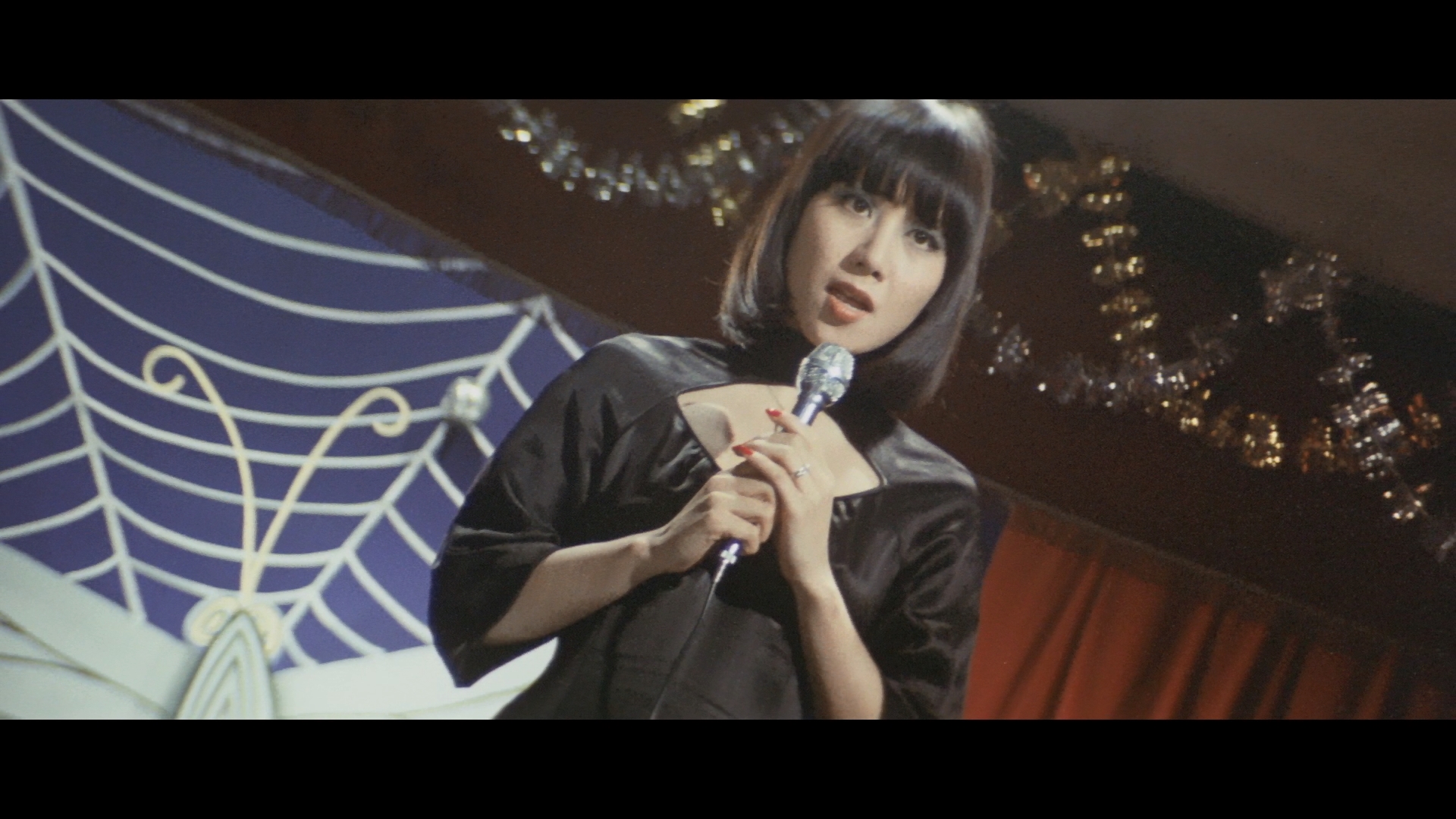
Surprising Wolf Guy is very serious in tone too. Only when the secret group planning to weaponise the hero come into the fray fully does the more openly ridiculous moment increase. Most of the plot before, even with the invisible tiger, is a pretty bleak crime story with supernatural elements. One of the most fascinating details about Wolf Guy is the character of Miki, set up as a major character who was left with syphilis and traumatised after a gang rape, a completely sympathetic figure even as she mercilessly kills her aggressors with the invisible tiger, a manifestation of her trauma emphasising her state of mind especially when the shady governmental group plan to use as it a literal weapon to assassinate political figures gruesomely, even more sympathy for her and emphasising their evil. Helped because the protagonist becomes bend on helping her get revenge, Etsuko Nami gets a lot with the character to work with,  just from her proper introduction performing a song about scorn at a strip club to the bemusement of the patrons as they rain money on her prone body laid on the stage. (And thankfully, compared to other Japanese films from the seventies, the rape scene is both done tastefully and is entirely depicted as awful, emphasising the trauma involved). It evokes, once there is the brainwashing involved, an entirely different work named Elfen Lied, at least the 2004 TV anime series, of female characters with unnatural invisible forces capable of destructive tendencies, most if not all of them traumatised towards violent behaviour by a shady, morally abhorrent group usually consisting entirely of men.

From https://www.mondo-digital.com/wolfguy4.jpg

For the first hour or so Wolf Guy's perfectly paced. Even within the limits of its less than ninety minute running time it feels properly put together. Inugami's own back story, done in the opening credits and in flashbacks as a monochrome depiction of his clan's massacre, is appropriately sombre and economic in their storytelling by visuals. The constant warnings to the viewer in text of when the next full moon is about to appear emphasises his unnatural power, a ticking clock to them, whilst throughout what begins as Chiba doing crime story narration has an appropriately pulp philosophy to it to match the more sombre tone. Clearly the film was trying to marry the more fantastical manga elements to his history of gritty action films, and the result works to its favour in mixing the two sides. This is of course an action film too. Chiba's style, involving his Japan Action Club stunt team, is not the graceful martial arts of the Chinese and Hong Kong films but a nastier, Japanese martial arts closer to brawls, flourished by quirks like Inugami using coins as projectiles, a trait of manga heroes but also a trope in a character needing a fighting style gimmick found in countless Japanese pulp stories of any form.

There's of course, when the government group is involved, a change to when Wolf Guy gets stranger. The immediately greater amounts of gore, when it was already explicit with giant claw marks appearing on victims out-of-the-blue, and in a queasy and strange moment to get Inugami on their side, torture by performing surgery on him without anaesthetic, done with grainy and very real surgery footage spliced in. It is illogical why they would act it out, but its compelling and somehow makes senses in a nonsensical way. There's even a touch of the even more overtly symbolic, literal blood rain during a wolf guy versus wolf guy that is the kind of evocative moment, the little touch, that stands out in Japanese pulp cinema and gives much more of a thrill as a result.

The problems arise with how the film ends and resolves plot details. A new plot event happens very late in the film which has the potential to work, where Inugami flees to the woodlands of Japan and meets a potential new love interest, an emotional context as she is connected to his clan's past. It does contain one of the strangest sex scenes I've seen in a while, next to a subterranean lake, where it intercuts the scene with flashbacks to him as a baby being breastfeed by his mother, the dialogue explaining her as both his love and new mother figure even liable to make Sigmund Freud roll his eyes in response. Unfortunately, there is only ten minutes left to Wolf Guy when it gets around to concluding the film. Ten minutes is enough to conclude a straight forward action film but there's been a lot of build up of more idiosyncratic and interesting details which get abruptly ended. The girl in the refrigerator phenomenon, coined in comic books to denote female characters killed merely for the sake of an emotional register from male characters, plagues the ending as does the entire discarding of Miki's subplot, the most engaging in terms of a vaguely complex, tragic plot but rushed and completely wasted. It turns into generic action when Wolf Guy was much more interesting than this even as mere pulp, and as a result it spoils the virtues found before immensely.

From http://blueprintreview.co.uk/wp-content/uploads/2017/05/wolf_guy_ee_3_758_426_81_s_c1.jpg

===
1. From the 2017 Arrow Video Blu-Ray release.

Friday, 21 July 2017

#47: Belladonna of Sadness (1973)

From https://dustyreels.files.wordpress.com/
2016/06/bellaofsadposter.jpg

Director: Eiichi Yamamoto
Screenplay: Eiichi Yamamoto and Yoshiyuki Fukuda
Based on the non -fiction book Satanism and Witchcraft by Jules Michelet
Voice Cast: Aiko Nagayama as Jeanne; Katsutaka Ito as Jean; Tatsuya Nakadai as The Devil; Masaya Takahashi as Milord; Shigaku Shimegi as Milady; Chinatsu Nakayama as Narrator; Masakane Yonekura as Catholic Priest
Viewed in Japanese with English Subtitles

Synopsis: Set in Medieval France, a farmer's wife by the name of Jeanne is lead towards Satan, spurn to him when originally raped by the Lord of her village and furthered to  the Dark One when trying to survive within the context of a poverty stricken environment under said Lord's thumb. Further incidents - the growing suspicions against her attempts at a better life with her husband John, the pressure of war and the need to fund it taking its toll on the village, the jealousy of the Lord's wife when Jeanne does command power - eventually lead Jeanne to fully embracing the Devil, becoming a fully formed, nymph-like witch of great power.

Belladonna of Sadness is unique. Ditto, an obvious assessment dumb to repeat but it's worth mentioning because of how idiosyncratic it is next to what anime is today. Subtle influence does exist - Kunihiko Ikuhara, the director of Yurikama Arashi (2015) (reviewed as #41 on this blog) and Revolutionary Utena (1997) is a known admirer deeply influenced by the feature - but like experimental animation from Japan from the same period its utterly alien next to what anime stereotypically means in the West. It feels like a project that threw caution to the wind and was, the last film created by Mushi Productions before its death. Founded by manga god Osamu Tezuka, his studio would innovate in terms of animation, but before 1973 he'd already left the sinking ship to start creating some of his darkest, adult manga like Ode to Kirihito (1970-71) in response to the more adult manga others were creating, the likes of director/co-writer Eiichi Yamamoto back at Mushi deciding, rather than play it safe, to finish off what was a trilogy of erotic animated films with an openly experimental and politically minded work. It's even alien to what the trilogy originally started as, attestable having seen Cleopatra (1970), a frankly bizarre take on the Egyptian figure full of surreal tangents and flourishes that I love but understand led to it being a box office bomb, the kind that helped led to Mushi Productions sinking financially in the first place. With that in mind, it emphasises how radically different Belladonna still is within anime when its different next to already unconventional productions from Mushi.

From http://files.offi.fr/evenement/61158/images/600/
14bbb3181bd3f29623d937ddb99fe0e0.jpg

The result with Belladonna is a period set erotic drama which sensualises witchcraft and occultism but inherently from its source text is about a figure kicking back at the world that pushes her down. Plenty of softcore, live action films from Europe from this period did the same to varying qualities, but whilst it has the gender politics of its time on the surface, Belladonna of Sadness is still exceptional when considering the period it originates from. Japanese cinema by this period and before reflects a vast conflict in terms of gender depictions, flip-flopping between films about women and their place in the world, from Kenji Mizoguchi to this, to the more problematic erotic and dramatic exploitation films. Even if trigger warnings may be appropriate to bring in when discussing Belladonna, its pertinent that for every individual who views it as being dated there's yet as many male and female to praise Belladonna regardless of it being a seventies film made by men with very explicit sexual content. A lot of the issue is a modern conundrum where inherently the idea of sexuality is immediately bias towards objectifying of women, that nudity and sexuality equals a male gaze, when pro-sexuality feminism and female writers, commentators and academics are pushing back on this bias and emphasising the greater complexity with this view in terms of films like it and how women, as viewers and/or fans of these movies, digest them. Whilst there are plenty of moments in Belladonna which are extreme and purposely transgress, it's a significantly more complicated narrative which, between the sensuality, eventually leads to a figure becoming a dominant, powerful female figure, muddying a response one can have to its attitude.

Jeanne, as merely a drawing of womanly perfection given life by art director Kuni Fukai's obsessive detailed and Western influenced illustration, and voice actress Aiko Nagayama's emotional tenors, is a sexual figure, found in many states of undress but feeling far less a figure of objectification than a figure of purity slowing gaining individuality in a patriarchal and utterly unfair world. Even if it's by means of an openly phallic Devil who starts as a little phallus than turns into a giant mushroom shaft - voiced by one of the greatest actors of all Japanese cinema Tatsuya Nakadai for added startlement - its only because of the evil of the world around her and hierarchal power that Jeanne becomes a witch, not openly embracing her sensuality but becoming a literal forest entity who transformation, much to her initial surprise, isn't the vindictive croon she wished to become but the figure of beauty and love. Paradoxically her hatred is channelled into helping the villagers when the Black Death arrives, the cost for them merely to join her in the bliss of countryside Satanic orgies where everyone is happy and is transmogrified into enough blatant imagery to give Sigmund Freud an aneurism. In fact, for a slight spoiler, the only reason her tale is a downfall is because Jeanne refuses to play ball with the hierarchy and stubbornly refuses to bend to them.

From http://www.theoasg.com/wp-content/uploads/2016/07/Belladonna.jpg

All of this is not something that can just be dismissed as merely erotic animated porn. Its openly sexual and willingly perverse, able to slide into utterly weird sequences of literal beast-human sexual organisms and conga-line coils of human sex trains that are strong images even in the current decade, but like the best of erotica (or porn, mincing terms) it's also utterly gorgeous and sticks a middle figure up to a lacksidasical ideal of this type of material being merely base or without meaning. It's too gorgeous, now restored when thought to be a mere obscurity, the weird uncle in erotic anime's closet, to view as anything but art; having known Belladonna when it was an obscurity covered on a podcast like Anime World Order as a mere fascinating dead-end in anime's history, only viewable on YouTube, seeing its resurrection by Cinelicious is utterly awe-inspiring because the artistry is so pronounced and successful. The story, while rich in meaning, is told (in the best decision) through its simple fairytale-like narrative that leads to tragedy, the focus instead in how to show its story onscreen.

Belladonna was a low budget production when Mushi Productions was on its last legs but used this context as its aesthetic template. The elegance of Fukai's work alongside the animators is helped by the fact most of Belladonna is actually still images, scrolls of illustration where time passes within the same canvas, bleeding through each other as the camera usually pans left or right along like a comic strip. When elaborate movement is done, legendary animator and director Gisaburō Sugii as the animation director for the production it's for the most subtle of facial or body language, or for the most extravagant and/or extreme moments. The willingness to push the form of the film goes as far as even breaking the historical context, suddenly breaking out a mad collage of modern sixties/seventies symbolism like cars and flairs suggesting Jeanne's full transformation into a witch allows one to see the enlightened pop art future centuries later. Keeping all of this sewn together is Masahiko Satoh's music, an academically trained jazz musician and musician who like many of his field willingly experimented into other genres, his here full scale acid rock that, far from feeling out of place as an anachronism, actually fits like many period genre films who flirted with this type of music because of its openly occult, hallucinogenic qualities appropriate for tales of classical mysticism and emotional melodrama you can synch up to wailing cosmic guitar solos.

From http://1125996089.rsc.cdn77.org/wp-content/uploads/2016/
12/BelladonnaofSadness_1973_belladona_hedder1.jpg

Altogether Belladonna of Sadness is an incredible film, one that I am grateful to see properly available and in restored form. Now what was for me a mysterious, vague film in the annuals of anime - like Angel's Egg (1985), a more well known but still difficult to access experimental anime from Mamoru Oshii, another person openly inspired by Belladonna of Sadness - is now available for more to see and had the kind of retrospective premieres and screenings one would find for legendary art house films. Having only known it as a weird cult oddity before, its lush artistry grows in 4k form as does its theme, a greater power in its finale where it suggests many women will become like Jeanne in the end, climaxing in a finale still image originally from a later cut of the film Cinelicious kept in, realising that as a finale, touching upon a legendary piece of French artistry, there was a sincere coda, a meaning, to the production that does strike the heartstrings. It may have taken decades to get to that point, barring its Berlin Film Festival premiere and its box office failure nailing the coffin for Mushi Productions, a least a DVD release in Japan and maybe Germany beforehand, but the wait was entirely worth it. 

From https://mattystanfield.files.wordpress.com/2016/08/use.jpg