Showing posts with label Rintaro. Show all posts

Tuesday, 3 October 2023

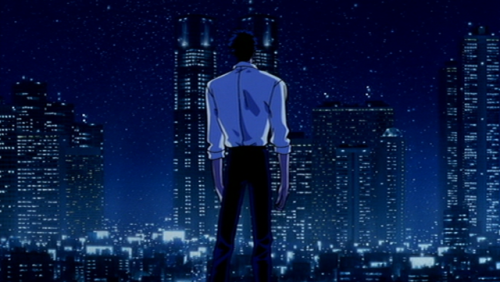
#262: Doomed Megalopolis (1991-2)


Studio: Madhouse

Director: Rintaro

Screenplay: Akinori Endō, Masayuki and Rintaro

Based on the novel Teito Monogatari by Hiroshi Aramata

Voice Cast: Masaaki Okabe as the Narrator, Kouichi Yamadera as Jun'ichi Narutaki, Kyuusaku Shimada as Yasunori Kato, Gorou Naya as Yasumasa Hirai, Kan Tokumaru as Dr. Makoto Nishimura, Kaneto Shiozawa as Youichirou Tatsumiya, Keiko Han as Yukari Tatsumiya, Ken Yamaguchi as Kamo, Kenichi Ogata as Shigemaru Kuroda, Kouichi Kitamura as Junkichi Amano, Naoki Tatsuta as Torahiko Terada, Osamu Saka as Viscount Eiichi Shibusawa, Takaya Hashi as Noritsugu Hayakawa, Youko Asagami as Keiko Tatsumiya, Yuusaku Yara as Shigeyuki "Rohan Kouda" Kouda

Viewed in Japanese with English Subtitles


Before this adaptation, there were two live action films adapting Hiroshi Aramata's book series, Teito Monogatari, a single narrative across Japan in the 20th century broken up into volumes in its various publication forms. The first was the 1988 Tokyo: The Last Megalopolis, which with Doomed Megalopolis adapts the earlier parts of Hiroshi Aramata's story, whilst Tokyo: The Last War (1989) adapts the volumes dealing with the final days of the Pacific War. With Doomed Megalopolis, animation director Rintaro, who started in the beginning of the modern anime industry in the early sixties, came to this adaptation with great interest in the source material1, and took interest in depicting the more fantastical nature of its premise1, in which an alternative Japanese history of the 20th century involves immortal magician Yasunori Katō, a figure who wishes to destroy the city of Tokyo with his craft. Contextually it is important to realise its source author Hiroshi Aramata, a polymath and natural history researcher, whose career varied between translating classic Western fantasy literature to bringing Western natural historical texts to Japan, used this multi-volume work that cemented a legacy to focus on both Japanese history and real Asian occultism, the central theme of three of these episodes being Kato's desire to reawaken Taira no Masakado, until March 25, 940 when he was betrayed and decapitated. His head, with stories of it still being alert after assassination, was buried in Edo, the future Tokyo, where in real life, stories have suggested a curse that has lasted over decades to the point that, even in the modern day, his shrine in Tokyo is still held with great respect.

In Doomed Megalopolis, Kato wishes to awaken him even when Masakado himself wishes to be allowed to rest in his grave. He will even call forth a shrine maiden, Keiko, to represent him in episode three to get Kato to leave him alone, instead becoming almost a duality of Kato representing the real figure's rage of authority, wishing to level Tokyo fully, something which the film Tokyo: The Last War emphasised as him being thousands of years of slain and dead peoples' angers coming together to bring him back in 1945. Doomed Megalopolis' narrative begins in 1908, and in both the first live action film and this anime, all three adaptations include Kyuusaku Shimada, whose first film role was Kato, playing this figure at the end of the Meiji era going into the Taisho era of emperors beginning this quest to destroy Tokyo, connected to the real 1923 Kanto earthquake in both adaptations.

When I had heard of Doomed Megalopolis, it had a notoriety for being lurid, and in comparison to Akio Jissoji's adaptation of the 1988 live action film as a director, Rintaro's take here with studio Madhouse is a lot more explicit in both the horror content as much as gore and transgressive sexual content, though Tokyo: The Last War, bringing in legendary practical effects artist Screaming Mad George (Joji Tani for his birth name), had already brought in more overtly gory content itself to the adaptations. I also have to admit that, whilst I admire the 1988 feature film, and both adaptations have their virtues, Doomed Megalopolis has a huge advantage with its fantastical content as animation, a freedom to be vivid and vibrant with its phantasmagorical content fully. From the get-go, you have a work oozing in style, be it the idiosyncratic use of colour and framing scenes, to actually depicting the supernatural elements, such as the fact, when introduced, one of the initial leads by the name of Yukari, a maiden, is able to see the future, a target of Kato's goals whose visions and nightmares over the first two episodes would not be possible to depict in the live action film as vividly as this.

The Last Megalopolis to its credit used practical effects, including stop motion, but here you can have the horror grow and be fluidly animated, be it shadow demons formed of eyes and mouths in wrong places, like ink well creatures, to one of the more infamous moments I had heard about with this mini-series, the openly phallic stomach worm being vomited out of a victim's mouth which has an appropriately horrifying execution due to the animation quality. The work is more tonally appropriate for its medium - more action based - and not as entirely focused on the smaller details other adaptations did. The Last Megalopolis really made a deal of a key plot point, that this is a time when there is an attempt in the government to make Tokyo a capital city influential even outside the country, whilst here there is a lot more emphasis on the horror as well as more psycho dramatic plot turns for characters you never got in the live action film. There is significantly more rock guitar solos from Kazuhiko Toyama here in the score, but I will not complain about one of the anime's best aspects, that score, for this.


Moments are more explicit, but never feel tasteless for the sake of it. Probably the most extreme aspect is a subplot entirely jettisoned from their live action counterparts in Yukari and her brother, which becomes explicitly incestuous on his side in a bleak narrative stroke, one despite the luridness of the content becoming more the tragedy of how her character, bright and charismatic when introduced, is psychologically broken between Kato and her own brother, her daughter inheriting a greater weight of power and struggle as a result in this perverse psychodrama between brother and sister. Even this violent overtone never feels tasteless as, by episode two when we skip to 1923, this is allowed to breathe as a narrative in a way The Last Megalopolis was not able to, able to have greater emphasis on characterisation in ways that The Last Megalopolis could not even if that adaptation has touches of its own more fleshed out.

There are differences between both adaptations, which mean both have their virtues. By episode three, the character of Keiko here is a much more significant character than in the film, but in contrasted by how her introduction in the episode is a much abbreviated take on what becomes the finale of the film, including far less emphasis sadly on Gakutensoku, a real life robot, the first built in the East of the globe,  who is far more elaborated on in this fictional context in connection to the building of the first subway in Tokyo, shown here even with actual photos and designs from it but less focused on as a narrative concern in the anime adaptation.

This still however feels like its source, taking real spiritual and occultist beliefs, and melding them with history, even if details like a giant flying manta ray was not expected at all in context. You can argue that in terms of telling the history of Japan itself, Tokyo: The Last Megalopolis was doing more, especially as episode three here feels significantly more expanded in the live action film where it made the perfect conclusion for that story. There is however the fact this adaptation has additional content that continues after this for episode four, where never was mathematical sums and equations made more menacing as we enter alien territory, narrative beyond the film in which Lagrange’s equation of motion is brought in and you would have struggled with depicting its plot even with practical stop motion effects with where it goes. Here, Kato figures out that his solution is to move the Moon closer to the Earth and literally cause it to awaken a spiritual dragon, something even a big budget film from the Japanese movie industry would have had a hard time depicting but animation can. It definitely ends the animation at its most phantasmagoric and certainly with a left turn to conclude the mini-series, as unexpectedly love defeats the monster, something which with credit to a production adds a weight to it. For what is the most extreme in content from the three Teito Monogatari adaptations that came first, there is emphasis throughout on how, if you viewed these stories from afar, Yasunori Kato is a figure who will never succeed, in any other context a weak villain but in context to this adaptation by himself someone more symbolically complex in how he is inevitable, more a force that comes and will always fight with Tokyo itself as a symbol of the unrest that built the capital of Japan over a turbulent century.

Doomed Megalopolis was a surprise, a gravitas even among brethren in the more lurid horror anime coming out straight-to-video at this time, and won me over. Certainly next to the other live action films, this feels an entirely different take in terms of tone despite all that is clearly carried over from the original films, Kyuusaku Shimada notwithstanding, the pulpier take which however inherited the weight of the others’ taking on Japanese history and esotericism with an admirable attitude in depicting them. It is out of the three a striking work as pure horror anime too, with sights like a woman splitting open into a giant insect creature to a nightmare sequence involving a cat monster, something which when these titles have questionable content still retain incredible artistic flourishes and mood to the productions to admire in this genre.

=====

1) For the 2021 Blu-Ray release from Media Blasters, a small anime and live action distributor in the USA who have managed to continue over decades of changes in the US anime distribution industry, it includes fascinating short documentaries made for the Japanese audience, three of them about locations around Tokyo with spiritual and esoteric lore around them, whilst the forth contains promo interviews with actor Kyuusaku Shimada and briefly with Rintaro, though it is clear how the director came to this with admiration for the source novel and wishing to bring what was possible in animation against the two live action films already released by that point.

Tuesday, 12 October 2021

#203: Bride of Deimos (1988)


Director: Rintaro

Screenplay: Etsuko Ikeda

Based on the manga by Etsuko Ikeda and Yuuho Ashibe

Voice Cast: Mayumi Shō as Minako Ifu; Nachi Nozawa as Deimos; Kaneto Shiozawa as Kaname Ōba; Reiko Mutoh as Ohniwa Tōko / Tōko Ōba; Bin Shimada as Masao; Hiroshi Masuoka as Detective Imamura; Takeshi Aono as Mr. Ōba; Takeshi Kusao as Hisamatsu; Toshiko Fujita as Venus

Viewed in Japanese with English Subtitles


Bride of Deimos, a straight-to-video title that is only thirty minutes long, is an abrupt piece by itself. Like a few OVAs from this era, you have a fragment of a property never fully explained, because these were made and sold with mind to their source materials. This case is tantalising in what could have been because, with one of the original creators behind the script, this is based on a manga of the same name, released in the West at one point by Comicsone, that is a shōjo title, for a young female audience, attempting to meld a horror anthology of multiple tales with a larger narrative with central characters. This explains how oddly structured the OVA is, but sadly we never got any more of this elaborate, atmospherically morbid little taster of a premise we could have gotten a whole larger work from in a better world.

Set up with a female figure, rotting but alive, underwater, held in vines with skulls around her, she wishes to be reborn through a female body by Deimos, the Greek god of fear and terror of the name same, whose choice for bride and new form for this figure Venus is revealed to be the character of Minako, an ordinary young human woman. At first, without context, you would presume from this one-off tale, which begins and closes very conclusively, that Minako is just a character for this, with a young male friend looking into the home of a talented female orchid grower who never appears in public. In becomes obvious, however, that Minako is a bigger protagonist from a significantly larger narrative, as Deimos follows her around as a supernatural onlooker. The original manga, in synopsises, even suggests he was in an incestuous relationship with his sister, punished for this, and now is caught in a triangle with her and this mortal female in Minako, who he wishes to come to him into the underworld as his lover, for added stakes. This is where context helps, as Deimos himself, despite being a demon, is not connected to the plot at all but watches on for Minako. Over seventeen volumes, the manga followed an ongoing narrative, intertwined with one-off tales, of him wanting Minako to become his bride.

The result is a concept I have seen in anime a lot of any genre - small one-off tales with central protagonists which connects to an eventual final narrative - but in horror especially is an effectively way to structure a narrative, by having a central figure, be they a supernatural figure or one who deals with supernatural issues, even a crypt keeper entity who does step into the stories they tell as a Greek chorus. I have found my own personal brand of catnip in horror tales where a supernatural entity, who will follow through each episode with their own narrative, traverses or interjects in one-off episodes where characters just for those tales meet their varying fates. I love these type of anime, and with cases like Mononoke (2007), an artistically experimental period version, you can make this innovative as a story structure too. Bride of Deimos as a short, by itself, has enough to make one wish it had been more episodes, particularly when you factor in its director being Rintaro. Born Shigeyuki Hayashi, Rintaro worked in the beginning of the anime industry, in the later fifties when he was just seventeen, and kept going into the 2010s. He is a figure, just for seeing the beginning of the industry and continuing through its evolving decades, you can consider an institution.

He is also a curious case that, even with acclaim of a work like Metropolis (2001), he is unpredictable in how his work is. Sometimes it has been doomed - such as adapting the CLAMP manga X in a 1996 theatrical film, with only ninety minutes to finish an unfinished series - and others are divisive, but I have never found him predictable. Even the shift to Bride of Deimos, from his high budget early eighties theatrical work, to straight-to-video productions like this or Take the X-Train (1987) is fascinating to look at. In the case of also adapting a shōjo horror manga, you can tell as well you had someone with the right attitude for this short's elegant fin de siècle-like macabre, alongside the production team, just for the fact that in on a wall in a scene when someone is killed with a bow and arrow, you have Edvard Munch's Madonna replicated on the wall.

This is definitely melodrama as it is dark, as Minako's journey to locate the unseen grower of the "Blue Lady" orchid, a difficult flower to cultivate, leads to her realising her male friend has vanished, having gone ahead of her to the home, as she meets a brother and sister living there. The sister is wheelchair bound, and the brother warning her to leave. It is not a surprise where this goes but a spoiler warning is required. [Spoiler Warning] Theirs is a tragic tale of the sister's lover, a servant, being killed by the father with a bow and arrow, repeating the act and burning the corpses of others in the incinerator over the years afterwards, using the ashes to grow the orchids. [Spoilers end] It is a slight tale, but just because of the elegant and sinister atmosphere, I wish Rintaro had been able to make an extended project from this. The source material by accounts could get insanely over-the-top in its tone, which immediately fascinates to imagine where this would have gone, particularly as what we get here is an emotionally driven narrative of a doomed romance and a sibling love which has become morbid, if still perversely loving, where the horror is what happens to the corpses left in the emotions' wake.

Whilst anime is for everyone, the fact this was originally for a female audience also entices, which you see a bit in with the anime adaption itself, as enticing in imagining the ghoulishness of the original source material but seeing how this thirty minute short still contrasts a lot of anime horror from the eighties I have seen in tone. This has a distinct air of elegance and emotion mixed with the grotesque, even getting enough menace from a tiny (beautifully rendered spider) being waved about on a stick to make the viewer feel creepy. It is not horror of jump scares, not even the gore and ero-guro of other anime of this era, but something different, evoking what the likes of even Toshiki Hirano, none for making ultraviolent work, attempted to evoke with his wife and manga authoress/animator Narumi Kakinouchi with the Vampire Princess Miyu franchise for a comparison point.

The sense that the source material, vaguely felt here, is melodramatic too, with Deimos in his small part still a dashing dark eyed stranger, with his long hair and demeanour that could attract as much as scare, is a compelling tone to have next to the more lurid and hyper violent anime of the time. Again, we only have this one off short, and unfortunately, OVA releases have been something not as well preserved at times depending on the title. Even to mind that some of Rintaro's work in the theatrical medium has not been readily available over the years at all either, this is an obscure title for him in danger of being lost. This is such a shame as this, if viewed instead as a short animated film, is impressive.

Thursday, 4 July 2019

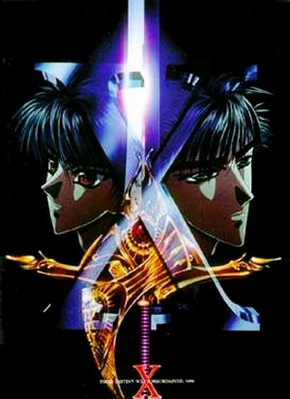
#107: X - The Movie (1996)

From https://media.fstatic.com/k4LYngYddm5-DOg8ex-MXfSiCCo=/fit-in/290x478/smart/media/movies/covers/2009/12/25fe3547f4adaf3b85f41d88fe495d88.jpg


a.k.a. X/1999
Director: Rintaro
Screenplay: Nanase Ohkawa and Asami Watanabe
Based on the manga by CLAMP
Voice Cast: Junko Iwao as Kotori Monou; Ken Narita as Fuuma Monou; Tomokazu Seki as Kamui Shirou; Atsuko Takahata as Kanoe; Emi Shinohara as Arashi Kishyuu; Hideyuki Tanaka as Seiichirou Aoki; Issei Miyazaki as Subaru Sumeragi; Jouji Nakata as Kusanagi Shiyuu; Kazuhiko Inoue as Yuuto Kigai; Kōichi Yamadera as Sorata Arisugawa; Kotono Mitsuishi as Satsuki Yatoji; Mami Koyama as Karen Kasumi; Rica Matsumoto as Nataku; Tohru Furusawa as Seishirou Sakurazuka; Toshihiko Seki as Shougo Asagi; Yukana Nogami as Yuzuriha Nekoi; Yuko Minaguchi as Hinoto
Viewed in Japanese with English Subtitles

X - The Movie was a damned project from the get-go. It is a notorious tradition to adapt anime, even a theatrical film here, from unfinished manga as a tie-in, but the further irony is that, even with direct interaction from a member of the original authors CLAMP for the screenplay, this is a project that came from a manga, started in 1992, that was postponed in 2003. Despite its lasting reputation in CLAMP's back catalogue, no one's picking up a pen to finish its dark action fantasy tale, something even Kentaro Miura with Berserk, despite starting in 1989, can at least be ahead of in that he still (intermittingly) carries on with new chapters. It's a surprise as CLAMP - a group of four women (Nanase Ohkawa, Mokona, Tsubaki Nekoi and Satsuki Igarashi who started as doujinshi (self published) manga - are still held as monolithic force in manga just for titles like Cardcaptor Sakura.

Madder still, and probably the decision that kneecapped X - The Movie when it was taking the risk to even have its own conclusion with a CLAMP member's involvement, is that it's merely ninety minutes. That little length, with the number of characters and plot involved, is the death kneel to a high reputation over these years, and its only because we have Rintaro, who has been working since the start of modern anime in the sixties, at the helm with an all-star team of animators, and his (if divisive) history of adapting long form works into little lengths, that we got anything remotely worth returning back to and in need of some admiration for all the glaring issues. What we got was a film whose scars, abridged, are as part of its beauty as well as its detriments, a gorgeous and insanely dark, incredibly violent and melodramatic spectacle.

The film is about two sides, the Seven Dragons of Earth who, viewing the Mother Earth as dying, wish to rid human society to heal it and begin anew, whilst the Seven Dragons of Heaven have to stop them, protagonist Kamui Shirō in the middle as a chosen one whose allegiances is as effected as another like him being found, dragging in childhood friend Fūma and his younger sister Kotori. It's a gory, hyper melodramatic tragedy, as angst as an emo goth hybrid album but with teeth as CLAMP, whilst purveyors of beautiful illustration and gorgeous characters in their elaborate costumes, were also fan girls of seinen work like JoJo's Bizarre Adventure which are insanely nasty and melodramatic (not to mention the known influence of Go Nagai's Devilman manga on X). Unfortunately, with over fourteen characters and ninety minutes to spare, that's many characters that are likely fan favourites appearing and then being dispatched. And dispatched as in death, no bullshit involved, which is the infamous part about X - The Movie in both it quickly jumping through the story, killing off characters (sometimes nastily) and even more controversially for fans had to create an ending involving Fūma's turn to evil that might've not been the desired goal if CLAMP ever got to an actual ending for the manga1.

But returning to the production, it's a creative dream, a legitimate (with emphasis) darkness permeating the work, mostly set at night or in moody atmospheric urban or symbolic locations, a cast who have supernatural powers and exaggerated costumes but can vary from a former female sex worker to a father who works as a salary man; even the stereotypical fourteen year old school girl, with a magical wolf only she and her own kind can see, is such but with a teenager's naivety and everyone on her side very protective of her. Even the villains, as barely scratched but absolutely fascinating, are only wanting to destroy civilisation, by breaking seals set under certain important Tokyo landmarks, to both save the Earth and with the female leader, a "dreamgazer", whose sister as the leader of the other side plays an emotional part of their goals. When it goes over to top aesthetically top, X hits for pop Gothic delirium; giant dragon ghosts fighting over the Earth in outer space, love one's sacrificing themselves to create magical swords out of their chests, crucifixion with razor wire over a lake of blood, insanely psychotropic in imagery.

From https://vintagecoats.files.wordpress.com/2014/07/x-the-movie-x1999
-kamui-shiro-running-to-kotori-monou-crucified-river-of-blood.jpg

And not surprisingly, with the talent on hand behind the images, X is gorgeous. Rintaro is a divisive director, but with a career most well known in the West for Metropolis (2001), a highly regarded anime known a bit outside of anime fandon, his long (and ongoing) is that of someone whose been in these tough day jobs before to have an idea of what to do. Yoshiaki Kawajiri is more famous for directing anime like Ninja Scroll (1993) but, like here, he's been on other's productions into the modern day and, whether your opinion of his directorial work, he is held as an incredible animator; his protegee Takeshi Koike, who learnt from his master well and later made the incredible sci-fi racing anime Redline (2009), is on the team too and that's not ignoring people in the production like Yutaka Minowa and Yoshinori Kanada either, the former the character designer whose trademark style gave Kawajiri his trademark character designs,  and Kanada an acclaimed key animator who even had Hayao Miyazaki singing his praises after his death.

Musically, Yasuaki Shimizu's score can be potentially divisive, a very unconventional genre leaping one switching between sombre saxophone over a premonition of ruined Japanese metropolis or use of traditional Japanese instruments, but it worked perfectly for me2. Hell, they even got X-Japan to compose the end credits song, possibly (alongside the divisive nature of this film) an issue for a re-release, but arguably the biggest metal band in Japan at the top of their career; this is however potent as, whilst a different versions, it's from their last album (Dahlia (1996)) a year before the band would breakup due to their lead singer being brainwashed by a religious cult to leave the band, said band splitting up and the tragic death of lead guitarist hide dying in 1998, the potent melancholia added to the film's ending having more resonance knowing this real life history.

Also worthy of mention is lead voice actor Tomokazu Seki in the Japanese dub, as Kamui, doing his damndest for a character (in spite of the limited plotting) to wrench an incredible emotional core in his performance. So there is a lot of talent here. If anything, X was also an admirable attempt, something which in premise at least has so much in terms of a sober, sadder take on this type of dark fantasy. It's pertinent, in what little we learn of the Eight Dragons of Earth, that they intend to destroy human society because of environmental reasons, a really chilling detail in the 2010s which emphasises the greater moral complexity in manga and anime even in the villains. The tone is closer to Ancient Greek drama in its sense of scale and inevitable tragedy - individuals who fight for their causes thinking they are right; each lead by women who are siblings; friend against friend. Unfortunately the length and pace cuts out so much detail that could've added greater meaning, but the drama is still disquieting at least because the production is so gorgeous.

Adding to its odd history is that, just a year before the manga was put on hiatus between 2001-2, Yoshiaki Kawajiri himself, still under the banner of the studio Madhouse, directed an entire television series based on the series which is more highly regarded in terms of getting the story told from a beginning to an ending. That, however, is for another day...

From https://66.media.tumblr.com/168d94688bcbe537e60d95c11943877
e/tumblr_p72iu7oi111qzqnxxo7_500.png

======
1) We'll leave what was actually done in the manga for you the reader to decide, as the manga did reach an important dynamic point and was being released in English.

2) Growing in my knowledge of music still into my thirties, I have become already acquainted to Yasuaki Shimizu by, of all things, Music for Commercials (1987), his proto-vaporwave compilation of music designed for actual commercials which is gorgeous. A composer, saxophonist and producer, it's amazing the longer you dive into the production credits what fascinating figures worked on these animated films.