Showing posts with label Surreal Comedy. Show all posts

Tuesday, 15 August 2023

#258: Pani Poni Dash! (2005)


Studio: Shaft

Director: Shin Oonuma (Series Director); Akiyuki Shinbo (Director)

Screenplay: Kenichi Kanemaki

Based on the manga by Hekiru Hikawa

Voice Cast: Chiwa Saito as Rebecca "Becky" Miyamoto; Ai Nonaka as Ichijō-san; Fumiko Orikasa as Himeko Katagiri; Kana Ueda as Kurumi Momose; Kayo Sakata as Sayaka "Rokugo" Suzuki; Satsuki Yukino as Rei Tachibana; Yui Horie as Miyako Uehara

Viewed in Japanese with English Subtitles


Pani Poni Dash was a title I saw very early into my interest into anime in the 2000s – a strange period with hindsight, now ADV Films, who distributed this, no longer exist, and for some inexplicable reason we once bought anime in three to four episodes per disc as separate releases for one television series, this one such case in the day, without questioning the cost of this. Available together through the likes of Crunchyroll in the streaming era, one of the biggest reasons I was not a fan of this in the day was that I felt it was “too weird” back then and too random. Neither helping is that, back then, it felt like the version of Azumanga Daioh (2002) you had back home, which is mean to both shows, completely missing the point of both series. Daioh is very different to this, though one of the biggest flaws with this series still, whilst I have grow to appreciate it considerably, is that if this had followed the high school clichés more, I think this would have been a great show rather than a funny one, which starts to deviate too much with its indulgences than use them to parody that genre.

Starting with a Planet of the Apes parody, one of the many parodies Western and Japanese you will see, we are introduced to Rebecca Miyamoto, a Japanese-American prodigy who is able to become a high school teacher at eleven years old, teaching Class 1C at Peach Moon Academy. There are arguably too many characters, including the other classes, but to give you the idea of who we have in Class 1C in their anime versions there is: Himeko Katagiri, a hyper-active but lovable doofus whose cowlick is literally the source of her energy as reveal early on; Ichijō, managing to top the weirdness scale as a strange figure able to summon rain to willingly poisoning classmates, even able to see the aliens spying on Rebecca from orbit; Miyako Uehara, somewhat the geeky stereotype there to be annoyed and have a shiny forehead; Rei Tachibana, the most mature if capable of being vindictive, the glue to keep everyone together; Sayaka Suzuki (No. 6), who does suffer from a lack of characterization if with a lovable charm; and Kurumi Momose, where the joke is that she is the bland and normal one, giving her an existential crisis, as well as introducing a legitimately funny running gag that, as a result, she is the one who reacts to the increasingly insane events as most of us would, with bafflement, until the point she begins to accept the screwed up logic of the world. Then there is Mesousa, probably the most depressed rabbit in all of media, even over the insanely twisted humour of Andy Riley’s The Book of Bunny Suicides (2003) comic, in terms of the most depressed, put upon and poorest bugger of the species in media, whose depression and lack of fingers makes him hapless and lovable. Even before the cat in the school vending machine, who claims to be literal God, starts to torment him, Mesousa is the parody of cute animal sidekicks in dire need of a hug if Kurumi Momose was not already hanging out with him in the school rabbit hutch depressed she was call bland again. The aliens, as mentioned, are a Greek chorus, if accidentally breaking the rule to not interfere with the earthlings a few times, studying Rebecca as a subject and add their own amusement as a group too.

The show to its credit does have a good gag for everyone, but there are a lot of characters beyond this. Some of parodies of anime and manga, such as Behoimi, the magical girl who has no actual powers, whilst others include a very clumsy girl, an extravagant girl who brings exotic animals to class, the war between a film club and drama club pair of girls where they do not know their real identities and start to bond, and a few male characters, including the elderly teacher which a foot in the morbid and occult. A personal favorite are two other girls who are a double act, a shorter raven haired girl named Otome Akiyama who clearly has a friendship with the other girl, the considerably taller Suzune Shiratori who does have an affection for her, even if it means tormenting Otome and trying to constantly use the pressure point on her head to keep her permanently short. To say the show has a lot within it to accept is to realize by episode three, when the cowlick Himeko has is shown as not only sentient but has unnatural abilities, you also get a random Batman Returns (1992) Cat Woman parody, and some twisted jokes like the student ending the episode dead behind class 1C’s blackboard when trying to spy on them. A camping episode early on reveals kappa, the mythological creatures of Japan’s folklore, are experimenting in their own rocket space project in the deepest Japanese woods. By episode thirteen of twenty six episodes, the first of a few robot parodies appears, and by episode ten earlier, Behoimi and a newly introduced character, a maid named Media who knows her from their mysterious military pass, are disarming remote bombs around the school whilst everyone goes through their school vacation projects. It is that kind of show.


One of the hugest things about this show, and is one of its best virtues, is the production value, which is not a surprise when this is a studio Shaft production where, whilst he is not the series director, the director underneath Shin Oonuma is Akiyuki Shinbo. Akiyuki Shinbo, and Shaft in general, emphasize a distinct art style and willingness to experiment, such as in Puella Magi Madoka Magica (2011), and this is not different, a parody anime where the production team were just allowed to indulge in their most experimental side. The premise is blown up countless time and the fourth wall is constantly mocked, with scenes shown to be on a stage being directed by a film crew. Various visual gags transpire, such as “Punishment Pinball” in episode 7, or RPG game parodies, which change the aesthetic considerably, as there is the use of real images especially for food as collage. Even how to get around painstaking depicting the whole class, replicating the same character models over and over, is stylized and has moments when the production switch this up with figures from fashion magazines with disturbing open smiles. Weird sight gags, parodies or plain non- sequitur fill the screen, and you will see R. Lee Ermey in his Full Metal Jacket (1987) appearance as a screenshot at random times for no reason, like how the show starts to get more invested into parodying anime and manga the more episodes pass. It is not obvious things either like a Neon Genesis Evangelion (1995), but ones which are explicitly for the Japanese viewership or those who get the reference, such as changing the characters’ designs to briefly match Shigeru Mizuki's GeGeGe no Kitarō, or explicitly referring to the work in character design of Riyoko Ikeda. Sadly they only start to appear near the end of the series, but some fo the funniest, because you do not need to get the references to appreciate the melodramatic clichés it is touching on, are all the elaborate excuses Himeko has for being late to class, most of which are shoujo manga parodies. Even the music is eclectic, with even yodeling bursting through the soundtrack at one point, and deserves credit for its unpredictability.

The randomness does need to be accepted – like the entire tangent about a lost Holed Pasta Civilization which learnt the ability to make them from aliens, at least to how Himeko views them, or how the aliens, when not causing problems or being noticed even by Ichijō’s todder sister through their viewing telescope, eventually start to look like the cast of Star Trek: The Next Generation. Honestly the biggest issue with Pani Poni Dash is eventually the school setting is just a location by the final episodes, feeling like it is bored with the set-up and more concerned with the world being threatened by an asteroid, an Edo period chambara parody, or Himeko being possessed by a sentient space mushroom. The space mushroom is so strange it is funny, but honestly, the show starts to get too indulgent and baggy by its last episodes, when consistency would have been found more if this content was forced onto high school anime clichés fully.

The Azumanga Daioh comparison is apt even if entirely different comedies, where Daioh took the time frame of school events, from sports day to the cultural festival, and had moments of legitimately strangeness too to contrast its jokes about things real teenagers would go through with school. Pani Poni Dash could have been the weirder parody, where an episode mentioned early on, disarming bombs juxtaposed with the school vacation projects being talked of in class, fully shows when this duality works perfectly. The show is funny, visually creative, and I cannot have anything but admiration for all the female voice actors here; comedies, especially ones this idiosyncratic, where there is all the gags and vocal changes, even the idiosyncrasies of the casts’ like Sayaka Suzuki calling everything the “most ---- of the year”, provide Herculean vocal stretching to test anyone, and I admire the dexterity of all the cast for ridiculous some of the scenes and moments get. The reason as mentioned I was not a fan of this in the day was because this gets weird for the sake of it, to the point it seems like the concept of being a high school anime parody is a pretense. With time having past, how weird the series is was not an issue in the slightest, even when I am lost, but that it could have tried to force itself more onto its high school story premise becomes the lost opportunity. There is a cultural festival episode, but not for example a sports day one, and that feels like a lot of lost moments could have been done with all the idiosyncratic characters and reoccurring gags this show does have, leading to funnier moments.

Pani returned, abruptly in a 2009 OVA, effectively a one-off new episode also by Shaft, which was clearly used to advertise the manga, still going in from 2000 to 2011. It is obscure to the point I had no idea of its existence until I had returned to the original series, not included with the original work in streaming or a physical release in the West. Even the opening credits are the same, and it feels like a run back in nice comfortable shoes for the voice cast and the production team to a work they liked. Only some tame fan service, mild titillation, suggest anything remotely different, alongside the questionable decision to dress Rebecca, in an antagonist's role, in a tweens' size Germanic black uniform, which we will just ignore as a poor choice. It would have actually been a good episode in the source series, actually emphasizing the better virtue of having normal school activities distorted in an absurd touch, here how Rebecca's class and a couple others have failed exams but have a chance to avoid retest if they can beat the school tradition of "Kick the Can". This is an all day event where they have in a school day until 5pm, without all of them being caught by their persuaders, to kick the aforementioned soda can. It definitely has jokes to remind you this is Pani Poni Dash, such as the aliens returning with a parody of scenes of Robert De Niro and Al Pacino, represented in close parody caricature, from Michael Mann's Heat (1995), but barring some of the more overt light eroticism, this has a lot more good jokes, such as Media the maid and the magical girl, on the pursuers'' side, wishing to protect the can by planting M18 landmines and military defense weaponry around the school. It is the last piece to a work which, baring an internet radio show and spin-off manga on specific characters, has a lot I admired but was in the animated version a show which is flawed entirely because the premise, whilst mad as a box of frogs in tone, has so much you can work with that it is actually not as interesting to be as unpredictable as it was, the punch lines missed of trying to pretend to be a cohesive high school comedy with this motley crew of lovable school girls and miscreants tantalizing in where it could have gone with that dynamic schism.

Saturday, 18 March 2023

#242: Pop Team Epic Season 2 (2022)


Studio: Space Neko Company

Director: Jun Aoki

Screenplay: Jun Aoki

Based on the manga by Bkub Okawa

Voice Cast:

Aki Toyosaki, Asami Sanada, Aya Hirano, Fumihiko Tachiki, Hiroya Ishimaru, Ikue Ōtani, Junko Minagawa, Junya Enoki, Kazuhiko Inoue, Kenyuu Horiuchi, Kōichi Yamadera, Kumiko Watanabe, Mayumi Iizuka, Megumi Han, Megumi Ogata, Nobuhiko Okamoto, Nobuyuki Hiyama, Romi Park, Takaya Kuroda, Tasuku Hatanaka and Toshiyuki Toyonaga as Popuko

Akio Ohtsuka, Atsushi Abe, Hekiru Shiina, Hidenari Ugaki, Inuko Inuyama, Kōichi Yamadera, Kumiko Nishihara, Kyoko Hikami, Mariya Ise, Minako Kotobuki, Minori Chihara, Mugihito, Rie Kugimiya, Ryo Horikawa, Shintarō Asanuma, Toshiki Masuda, Toshiyuki Morikawa, Yū Mizushima, Yuki Kaida, Yūko Miyamura and Yūma Uchida as Pipimi

Shōta Aoi as Shouta Aoi, Shunsuke Itakura as Popuko (Bob Epic Team), Toru Adachi as Pipimi (Bob Epic Team)

Viewed in Japanese with English Subtitles


Why don't we settle this peacefully with some violence?

It was four years, notwithstanding a TV special, before the pair of Popuko and Pipimi returned for a second series. Less anime schoolgirls and more personifications of pure id, their return to television naturally within the first minutes of the first episode befuddles the audience by being a live action parody of a tokusatsu show. Starring everyone favorite time travelling pixie of a male idol singer Shōta Aoi, ever since the last season heroics, it is a straight-faced opening credits sequence using up all the budget, and it will return by the final episode with a vengeance. The fact this was set up with TV special back from 2019, and you see how this series, and the franchise in general, has played with expectations from its beginning.

Speaking of that TV special, it deserves its own review, but it does feel like a necessary aspect to cover as it feels like the gateway between seasons, showing what has changed. That special says goodbye to the sprite based video game parodies from pixel artist Makoto Yamashita, and French animator Thibault Tresca. They are missed, and missed for myself is Hoshiiro Girldrop, one of the strongest candidates for the best anime show to only exist through end of episode previews and one opening. It also marks the first glimpses of Square Enix, in a tie-in that would continue with the video game publisher working with the production onwards in season two, and the tokusatsu parody, which was first hinted at within it. It is own weird beast that can be viewed as Pop Team Epic season 1.5, only imagine a forty minute double episode, which is technically two episodes repeated twice, that repeats four times and has a recreation of a scene from First Blood (1982), the first Rambo film.

Those sadly missed for season two are honored by the new season's tone, as by the second episode Pop Team Epic has broken out a super robot parody. Already they are cracking jokes about going over the budget, with co-producers King Record tolerant again of being joked as being the villains, and the nerdiest of anime references comes in with “Obari'd”, openly making a humorous tribute to Masami Obari, who whilst an anime director is legendary as a key animator and robot designer too, someone who was brought in for said parody because he is that capable of doing robot sequences, and does indeed show (even with the character redesigns for the segment) his talent. Pop Team Epic is still a show of obscure references, jokes which does place it in the reference comedy anime which could age greatly into obscurities in the time passing, if one where the sense of being weird for the sake of weird was also a huge part of its attitude. The references are so prominent they even have to beep many out to keeping on the right side of Japanese parody law or standards, and that will always be a factor which, to an outsider, will put them off this franchise.

For those that viewed this like pure catnip to them, season two does carry a swagger, even if the same as before in structure, of a victory tour from the first season succeeding. The Obari robot parody, with one of the first jokes depicted of Popuko and Pipimi resigned in other character design styles (and genders), is very much alongside the live action tokusatsu parody of the first episode the immediate signs of this. Like before, this follows the template of a fifteen or so minute episode repeated with a female voice duo, and then a male one for the repeat episode, voice actors here including some big names, from the Yakuza videogame franchise from Sega to Neon Genesis Evangelion (1995) alumni, meaning Shinji (Megumi Ogata) and Asuka (Yūko Miyamura) for those who know that series have a very weird reuninion even next to times in their original franchise. As we will get to, the voice actors for the Japanese dub, even if you do not know their best work, prove a huge virtue for me this time round, but for those who know them, this in itself a big aspect for the series, especially as it leads to the surrealism of voice actors iconic for many for the Yakuza games, playing gruff men in the criminal underworld, playing a schoolgirl being tickled to death by her friend.


Even in terms of the opening credits, with its mind boggling take on multi verses of Popuko and Pipimi, and a head banger of an opening theme (PSYCHO:LOGY by Shota Aoi) which you would expect for a far more serious show, Pop Team Epic is gunning for more elaborate and weirder spectacle. The hugest advantage this series already had, like the most interesting of these referential comedy shows, is that even if you do not get ninety per cent of the references, they linger and can last beyond their popularity in worth for how the non sequiturs and ambition is as much the humour. Case in point, I have no idea what playing PlayerUnknown's Battlegrounds (2017) is like, a first person shooter game which is entirely centered around multiplayer elimination death matches, baring an inkling of its content and that it was the likely influence  on one episode's main segment. The joke still works however because, alongside all its action beats, the punch line is that Pipimi will punish cheaters with the ruthlessness of a contact assassin.

The humour when it works and I think is truly ambitious is not the parodies, such as the Final Fantasy parody which comes part of a clear licensing agreement with Square Enix; it does lead to the show parodying deep-only released cuts from their video game history, which has to be still admired, and those who get the Final Fantasy parody should enjoy it with mirth. The more ambitious joke in a fantasy parody though comes without needing even the obvious references, and is absolutely ambitious and ridiculous at the same time, being a recreation of an English language education show that diverges into a power metal music video following the exploits of “Shining Shoulders”. Effectively Pipimi‘s heroic knight alter ego whose shoulder armor gleams brighter than the sun and whose feet smell of citrus, it is hilarious even in the one reference to something that went out of pop culture relevant in the four years from the first season, fidget spinners, that joke becoming funnier with less relevance in a mere name drop at the strangest time.

Sadly there are fewer experimental aspects in certain areas, such as the complete lack of stop motion this time round, but thankfully, the segments in this series become more elaborate to compensate, even an ending credit becoming charming when the main theme is joined by a recorder for a one-off remix. A parody of a romantic visual novel (specially a franchise called Tokimeki Memorial), in which a nameless boy enters high school, takes the joke even further in how, for the repeat of the episode, it drastically changes far more than other examples within the series by turning into an otome, a genre of visual novel video games with female protagonists and male love interests, gender swapping the entire segment, changing the faceless lead to a woman, and even changing jokes for the punch line which involves name checking the original manga Bkub Okawa's romantic life. That is not even mentioning the parody of boys-love/yaoi anime, with gender swapped Popuko and Pipimi; already showing a level of closeness throughout the series that manages to be sweet, even as characters meant to be sarcastic and irrelevant, this obviously plays to the idea of boys romance with recreating old jokes in a new content.  Even the cruel joke, early into this season, that the segment is cancelled mid-segment and will never appear again hits perfectly, particularly as they at least take a building with them.

There are a surprising amount of surprises to be had here – one for me is how a French illustrator and animator famous for his work on his Twitter page, Kéké a.k.a. Kévin Gemin, gets to recreate his style of bouncing cute animals in a cartoonish form with more censored hand gestures here one of the end credit animations. There is also the actual endings where, whilst they are choreographed around the same text, the voice actors working together can sometimes go off script; the best of these proves to be the two actresses from Hunter x Hunter (2011-2014), Megumi Han and Mariya Ise, who openly admit they were hired because new material was coming at the time, deliciously cynical without undercutting either property. Voice actors Junya Enoki and Yuuma Uchida in particular for me, for episode 3 part b, manage to out power even actors from Neon Genesis Evangelion, The Melancholy of Haruhi Suzumiya, and Horiuchi Kenryu and Otsuka Akio, voice actors famous from the Metal Gear Solid games, for completely going off script at times including the penis trauma references. You can see the talent in the voice actors on display, more so for me this season with a huge level of the laughter, even in stuff which makes no sense in any context, coming from how the actors say or shout the line out. Even the fact that there is significant more cursing in the English subtitle translation suggests a sudden energy to this series even next to the magic of the first one.

Then there is Kōichi Yamadera and the AC-Bu, who steal the show even next to great competition, the later duo artistic team of Shinsuke Itakura and Toru Adachi the heroes of the franchise from both their Bob Team Epic segments, returning here, and their Hellshake Yano segment from the first series. AC-Bu, an animation team know for working a variety of fields, managed to top that segment by having the entirety of episode 7 being the return of the Hellshake Yano character, all depicted in sketchbooks with incredible illustrations, the duo voicing the still images and moving the sketchbooks, some cut and changed for certain moments. The fact the segment is also nearly in one take, starting with one member in a locked public toilet and returning to it in the end, with the exception of closing remarks of theirs, is in itself exceptional too. Adding to this achievement is how, for the part b segment, the entire story is told by prolific voice actor Kōichi Yamadera, doing every character in a variety of voices. From the Lupin the 3rd franchise to Donald Duck, and too many roles including dubbing Western actors to count here, Yamadera is a veteran, and his performance here is incredible in how one voice actor can produce so many voices as a single person. He makes the best episode even better, and that is not forgotten the virtues of the show before, after, and how the tokusatsu parody returns with a vengeance by the final episode. Almost entirely a live action episode with it very clear, in the production value, those who work on such shows, from the on screen fighting to the costumes to the CGI effects, were brought in and were gun-ho to commit to the joke, it is an incredible way to end a series. Baffling the viewer whilst presenting a climax bringing live action and animation together in a way that makes Marvel Cinematic Universe films seen bog standard in comparison, this is what Pop Team Epic always was, the pretext of for self-referential, sardonic and reference heavy jokes really an excuse to be as ambitious and ridiculous as it can be. The littlest jokes, not just that final episode, like a Bob Team Epic segment where the leads mock an alien for a terrible crop circle from their UFO, made the series better and anything too strange for me was still that, deliciously bizarre. As someone who really felt cold for the first season, even for its virtues, returning to it allowed me to appreciate the show, and by God, they managed to improve and top themselves with the content here.   

Monday, 30 January 2023

#239: Pop Team Epic Season One (2018)


Studio: Kamikaze Douga

Directors: Aoi Umeki and Jun Aoki

Screenplay: Jun Aoki

Based on the manga by Bkub Okawa

Voice Actors for Pipimi and Popuko:

As Pipimi: Akiko Yajima, Akira Ishida, Akira Kamiya, Asami Imai, Atsuko Tanaka, Ayana Taketatsu, Azusa Tadokoro, Banjou Ginga, Bin Shimada, Chisa Yokoyama, Daisuke Namikawa, Haruka Tomatsu, Houchu Ohtsuka, Jouji Nakata as Pipimi, Jun Fukuyama, Kaito Ishikawa, Kaori Fukuhara, Kaori Nazuka, Kenichi Ogata, Kensho Ono, Kikuko Inoue, Koji Yusa, Kotono Mitsuishi, Kousuke Toriumi, Mamiko Noto, Nao Tōyama, Noriko Hidaka, Norio Wakamoto, Rei Sakuma, Satomi Satou, Shigeru Chiba, Sumire Uesaka, Suzuko Mimori, Takehito Koyasu, Yousuke Akimoto, Tomokazu Sugita, Wataru Takagi, Yū Kobayashi, Yui Horie and Yuuki Kaji

As Popuko: Aoi Yūki, Emiri Katō, Eriko Nakamura, Etsuko Kozakura, Hikaru Midorikawa, Hiro Shimono, Hozumi Gōda, Junko Takeuchi, Kana Hanazawa, Kappei Yamaguchi, Mami Koyama, Mariko Kouda, Masashi Ebara, Masaya Onosaka, Mikako Komatsu, Nana Mizuki, Nobuo Tobita, Rikiya Koyama, Ryusei Nakao, Sakiko Tamagawa, Satomi Koorogi, Sho Hayami, Showtaro Morikubo, Sōichiro Hoshi, Sōma Saitō, Sora Tokui, Sumire Morohoshi, Takahiro Sakurai, Tesshō Genda, Tomokazu Seki, Tomoko Kaneda, Toshihiko Seki, Toshio Furukawa, Yōko Hikasa, Yūichi Nakamura, Yuji Mitsuya, Yukari Tamura, Yūki Ono, Yuko Sanpei and Yumiri Hanamori

For Bob Epic Team: Toru Adachi as Pipimi; Shunsuke Itakura as Popuko

For Japon Mignon: Christine Bellier as Pipimi; Fanny Bloc as Popuko

Viewed in Japanese and French with English Subtitles


If I am to be truthful, Pop Team Epic is as scattershot as a musket round exploding from a gun, but that comment itself even feels absurd knowing the creators of this made the series with this intention, and that the work based on a manga mocks itself as being “shit” throughout the first animated season multiple times. Already as time has passed, until 2022 when the second series was unleashed, references this has cracked have become more obscure or less current to that moment the show was released, and the amount of censorship just of certain images, due to how Japanese parody laws work, means there are some curious insights to be gleamed as a time capsule, such as how in the first episode (for the Crunchyroll version) the Pokemon parody stays intact but they felt blurring the My Neighbour Totoro (1988) one was wiser in fear Hayao Miyazaki might frown at them. By now the parody in the first episode of Your Name (2016), Makoto Shinkai's blockbuster success of an anime film, is now a canonical hit rather than the sudden shock surprise, and yet at the same time, even as a show with a lot of parodies, it makes a joke about a viewer writing a disgruntled letter to Pipimi and Popuko, our leads, about them relaying too much on parodies for the jokes. This show always had the sense of being deliberately irrelevant, knowing the jokes could be cheap, and this also, especially for the video game parodies, gets really esoteric. How else do you explain a parody of Death Crimson (1996), one of the most notorious video game productions for the Sega Saturn console, a perfect example of the labour this show puts in for what is, to be blunt, a thirteen episode shit post disguising itself as a sketch anime comedy like gdgd Fairies (2011-13).

Pop Team Epic, and its school girl leads Pipimi and Popuko, closer to goblin personifications of ids than teenagers, were birthed into the world in 2014 by Bkub Okawa, creating the 4koma manga for Takeshobo. Pipimi (taller and more sedate) and Popuko (shorter, more prone to violence and flipping the bird) are less characters in a sitcom than forces of misanthropy in a series of strange and even nonsensical gags. Openly preferring surreal jokes or moments which are weird without an apparent punch line, imaging these two with more "conventional" designs is actually one of the jokes the series keeps coming back too. There is even a joke that, set up in the first and last episode as the closest to a plot, the evil cabal behind the show (parodying Neon Genesis Evangelion (1995)) regret their moe schoolgirl show with more cute designs for the pair turned into the equivalent of taking a dump on viewers’ television. In fact one of the funniest jokes, one I admire, is that the next episode previews are not for Pop Team Epic in season one but for Hoshiiro Girldrop, a show which does not exist which is parodying a stereotypical one, about a schoolgirl who is also an idol singer in her other life and has a crush on her male senpai. [Spoilers] The joke is funnier for the abrupt punch line, that this even has the abrupt tonal shift out of nowhere for the final preview that our heroine died and the male love interest resurrected her afterwards, as abrupt to what is a cute idol programme as what may actually happen in an actual thirteen episode show or two. [Spoilers End]

The first series was divisive for me when I had first seen the episodes, and even now, it is a show of what does not land, what does and what hits with complete success, completely unpredictable in where it is in either of these categories even in just one episode. The first episode, still, is weak, more of a series of parodies which does not fully get to the weirdness the others from the second get to quickly. One of its best virtues, which grow returning to the series, is how to even depict the dumbest of jokes, this brings a murderer's row of talented and imaginative creators and animators in a variety of formats, even crafts with sewn felt dolls, to depict them. To mock itself as merely shit again for a joke is not enough when this can parody Isao Takahata's The Tale of the Princess Kaguya (2013), his last film and an incredible animated production which used incredibly lavish digital animation to depict watercolour-like images. Not merely to pastiche it is enough for a joke but, knowing even for a minute or two it would take a lot of resources, copy the exact animation style from that film's lavish production.

The collaborative nature is a huge virtue of Pop Team Epic. Barring the first and last episode having a story, the episodes baring one prominent segment, usually a parody, is a series of small skits of a variety of different art styles and tones. There is also only fifteen minutes of them including opening and ending credits, as one of the strangest touches, which I was first pushed away back but watched properly finally, is how this replicates the same episode to make up the full twenty plus minute length. There are differences between them - usually tiny touches, some major one offs which are different to the same scenes, and subtitles for the Japon Mignon segments about French culture - but the biggest differences are is that different voice actors in Version 1 and 2 are used for Pipimi and Popuko. And they can be male and female, over the two versions of the same episode and allowing a huge variety of prominent figures in voice acting to try even ad libbing, not even taking into consideration the English dub took the same attitude. For a great example, if you wished for the titular Madoka, of Puella Magi Madoka Magica (2011), to play Popuko, then Aoi Yūki is one such figure here, in a parody of a high fantasy anime which has not even been finished where Popuko/ Yūki is forcing the voice actors in character to perform impersonations upon threat of grievous implied harm.

There are reoccurring segments, and one of the season's best aspects is that, even if jokes do not land, this let anyone create idiosyncratic segments in their own ways. The most infamous is the "Bob Epic Team" segments by AC-bu. The creators Toru Adachi and Shunsuke Itakura, who also do the voice performances, created these garish and surreal splatters of visuals with carte blanche, and these works for all their notoriety in their ugliness were intentional aesthetically. A duo who was working in commercials and music videos since the late 1990s, they came to this production knowing what to do, and getting some of the strangest and funniest moments as a result even if also replicating material from the original manga. (Such as finding an alien in the cat bed, posing as one, and having none of it.) The parodies of numerous obscure video games (and some big hitters like Undertale (2015)) in exact pixel styles, were done by an amateur pixel artist Makoto Yamashita who was still a student at the time of the production1, and UchuPeople, who use a variety of different multi-craft tools, are stop motion specialistis responsible for the felt and knitted versions of one collaborator provided coquetted versions of Pipimi and Popuko, used for music numbers (including a Earth, Wind and Fire parody) that usually are sweet sounding songs about wanting to kill the subject being sung to. This becomes the best aspect of this deliberately scattershot production, which embraces a variety of figures and allows them to be creative, something attesting to how one entire reoccurring segment Japon Mignon, was handed to French born 3D animator Thibault Tresca2, living in Japan, who was allowed to create (mostly) wholesome 3D animated stories with fluent French speaking voice actresses about the clichés of French culture.

Its scattershot nature is its biggest vice, as surreal comedy in anime is something that is bountiful and in a variety, meaning that there are many others in this format including with more elaborate stories to embrace and compare to. Its scattershot nature however too, when it lands, leads to some brilliant moments. “Hellshake Yano”, a talented guitarist and originally a joke character from the manga itself, is probably the thing that will be brought up for Pop Team Epic’s first season, enough that in 2022, Stephen Lee "Thundercat" Bruner, a Grammy Award winning bass guitarist/singer/producer/musician, is proclaiming his love for the show and him by rocking out on a paper craft guitar designed like Yano’s on social media3. AC-bu were tasked in season one to use kamishibai, a form of street theatre and storytelling from between Japan in the 1920s/1930s to the time television became popular, even as far back as 9th-century emaki (picture teller) scrolls4. Telling stories with paper images, with a storyteller voicing the characters, this format even past the growth of television in the 1950s found its way to continue. (Ujicha, the cult film maker of the likes of Violence Voyager (2018), is effectively doing paper theatre himself with his cult and sometimes shocking work). AC-bu, when approaching this tradition in their own way made an utter epic by itself which could even outlast the rest of the show, the duo operating a painstaking put together, drawn and cut sketchpad depicting Hellshake Yano having to appease the crowd at a concert as they voice the performance onscreen. It was an incredible production which won me over back even when I was cold to the series, and it stands out still but as a gem in a show which had a lot of inspired moments. Even then, I have to also credit that, returning to the series, countless other jokes are just as funny: the ghost story parody where a group of young adults rent a cabin which suspiciously have a pair of guns and axes mounted onto the walls, and end up killing each other; the second version of this with a seemingly random man doing audio commentary that, whilst not fully successful as a joke, is bold and does have the hilarious moment where he finds them having a watermelon out of season suspicious; that sudden attempt at a sad ending, using the repeated episode format on purpose, which is resolved by Shōta Aoi, voice actor and singer, looking like a cosmic pixie as he puts everything right again through his dapper dress sense and ability to travel back in time; that one random time, whilst acting out orgasm, one of the actresses uses “Marilyn Monroe” over and over, or the abrupt shout out by a male actor to neoclassical metal guitarist Yngwie Malmsteen; and way too many else to count.

There is one which fully encapsulates the show and its entire attitude, which is that aforementioned parody of Death Crimson, faithfully recreating its entire opening full motion video even with a fuzzy image of a red door. A game never released outside its home country, though the sequel did, Death Crimson was an attempt by the company Ecole Software as part of their transition into video game software as outsiders. A light gun game, it is held as one of the worse games ever released for the Sega Saturn, but instead of destroying the company it was loved by those who played it, sold very well when eventually the notoriety started to be passed on, and developed a cult around them. Proclaimed “Emperor of Kusogē”5, and something those who made the game are proud of in spite of its notorious low production qualities, bear in mind “kusogē” does mean “shit game”, even if the term is for notorious Japanese productions in the medium which are loved even without irony; that in itself makes the perfect encapsulation, for good and for moments which do not work, of Pop Team Epic itself, proudly calling itself shit, made with complete love of the art form of anime through the talented people in various positions on the production, and spending its resources, including a large portion of the climatic episode, parodying a notorious Sega Saturn light gun game.

========

1) The Alternative Faces of Pop Team Epic, or How a Shitposting Cartoon Became an Experimental Animation Stronghold, written by KViN for Sakuga Blog, published on December 20th 2022

2) The About page for Thibault Tresca's personal site.

3) Thundercat Won't Let You Stop Thinking About Hellshake Yano, written by Kim Morrissy and published on Anime News Network on January 5th 2023.

4) Kamishibai - A Brief History, written by Tara McGowan and published on Kamishibai.com.

5) The (loving) article on Death Crimson's production history and legacy, including the Pop Team Epic parody, from Bad Game Hall of Fame.

Sunday, 3 January 2021

#178: Birth (1984)


Director: Shinya Sadamitsu

Voice Cast: Ichirō Nagai as Bao Luzen; Kaneto Shiozawa as Junobel Kim; Kazuki Yao as Nam Shurugi; Miina Tominaga as Rasa Yupiter; Fuyumi Shiraishi as Mongaa; Jouji Yanami as Grandpa; Noriko Tsukase as Baby; Reiko Suzuki as Grandma

Viewed in Japanese with English Subtitles


The eighties are held as a time when, with the Japanese economy riding a high, money was freely available to fund esoteric projects in the animation industry. The OVA released film Birth, for better and for worse, is a title you could only have gotten from that era as it exists today. Set on the planet Aqualoid, a magical sword known as the SHADE floats through space and finally lands on the planet, to be picked up by a young man named Nam who is immediately attacked by the Inorganics, a race of artificial figures who, threatened by the sword's power, are the opposite of the natural state of existence, the Organics, and would remove it from existence if possible.

This is a pretty simple plot, including a female friend Rasa being caught up in this, whilst trying to delivery breakfast to him from their village, and two figures in a spaceship, friends, known as Bao and Kim who were following the sword. The Inorganics themselves, robotic, change from humanoid figures on bicycles to giant machines storming the mostly desert environment the film is set in. One is immediately aware, however, Birth will be eccentric when, in its original uncensored form, it instead starts not with set up but with a yellow blob creature, which Rasa will befriend, being chased by a bigger blue blob creature with full appendages and armed with a trident. This lasts a while, a cartoon chase to begin our film here, setting up that Birth in context is tonally all over the place.

What is a very simple premise, an extended chase over the entire length, becomes an erratic mess alongside the fact that, even at just eighty minutes, it extends its content on to the point it has a strangely elongated pace. It is undoubtedly gorgeous to look at, Birth at a time when a weird production like this, whilst not to everyone's taste in its visuals, could at least have some quality to its gorgeous and distinctly cartoonish animation. It however also feels like it was made with a lot of absent mindedness, or was the result of many talented figures brainstorming what was on their minds each day.

At first it seems like Birth is going to be a very wacky comedy alongside being a sci-fi action story, with a lot of elaborate machines involved, but in its first half this gets into odd tangents already, even oddly sombre moments like an Inorganic, impaled on the SHADE, suddenly talking of the impermanence of life before its dissolves. An extended chase scene with Rasa, distinct in her red cat suit and getting the unfortunate nickname of "Jiggle-Butt" from a sexist Inorganic chasing her on a motorbike, suddenly has a tinier Inorganic on a bike the size for a small toddler try to help only to breakdown. This character ends up being a reoccuring figure, and suddenly you cut to a tangent of comedic existential angst including a lot of out-of-context scenes, like being at train tracks where a giant head of Rasa passes by, or a scene at a beach, with a lovingly rendered snail crawling past a drink with ice, and a cameo by a cartoonish giant pink octopus straight out of Parodius (1996)1. It makes no sense, as neither cutting to Nam's grandparents, just to see them talk of tea or food for no reason, repeatedly even in the midst of action scenes.

If Birth had stayed a comedy, I could have expected a deeply silly project like this. It looks exceptional as a production, and whilst his career was mainly in storyboard and animation, the director Shinya Sadamitsu also directed an OVA like Dragon Half (1993). A beloved and incredibly silly fantasy spoof where one joke was a character having to watch a VHS tape of the first episode, all because the motivation for his revenge was a deleted scene excised from the narrative, you can see where the absurd humour comes from. It makes sense to have this level of comedy here as a result in mine to his future career, even if there is a flaw that it extends actions scenes for too long at times, to the point it has tonal problems. Also you have, of all people, Joe Hisaishi as your composer, a frequently collaborator with Takeshi Kitano and Hayao Miyazaki, having worked on the score of the latter's Nausicaä of the Valley of the Wind, released the same year as Birth was. Considering as well future director Hideaki Anno is credited as an animator on this project does also show Birth's web of connections to many talented people.

And as a result, no matter how haphazard this was, Birth did provide a few moments that even its own languid tone could not dampen, when you encounter a giant Inorganic that shouts "Asparagus" when launching a rocket punch against a horde of yellow blob creatures. It is as bizarre as it sounds and also, because this OVA feature film had the budget and staff, it looks exceptional as animation lovingly renders yellow blobs of Play-Doh with eyes charging on mass and glomping on a giant grocery obsessed Inorganic.

Where Birth gets even more peculiar is when it wants to become more serious but still has the comedy. It has lore, of the Organics versus Inorganics, leading to my beloved trope of an out-of-body realm where one of the members of the cast witnesses the death of a star. It also loses me however, whilst still being compelling, when it gets to the last half, the leads travel to a wasteland that was cordoned off due to being radiated over the decades. With comedic beats still there, you have a set piece in a ruined metropolis underground, with husks of buildings, abandoned cars and piles of skeletons everywhere. It involves a doomsday weapon, the shape of a red toy rocket launcher, and....well, never would I have thought you have so much comedy even up to an ending which is actually tragic. [Major Spoilers] How many anime, mostly set up as a comedy, end with an entire planet and the cast disintegrated, existing afterwards as spirits made into a new star by cosmic feminine figures that eat cakes in the galactic rainbow kingdom? An ending, for added emphasis on its randomness, only happening because they could not convince a child Inorganic not to fire the doomsday weapon, just out of spite, by offering to take him out for soy milk? [Spoilers End]

Birth is bizarre, a tonally erratic mess whose viewing experience was compelling, but I can understand why this title is not well known. Again, returning to the first paragraph, even if titles like this still exist in some form in the modern anime industry, how this one is was made would not be possible outside the eighties and all the money thrown around.


========

1) I usually explain obscure references. Suffice to say, despite never really being a gamer, I had the niche Sega Saturn console as a young boy with Parodius one of the few games, a parody of shoot-em-ups by Konami where normal spaceships or eccentric characters like a bunny girl on a carrot missile shot at penguin ran pirate ships, giant showgirl dancers, and a lot of penguins and octopuses in general. It makes as suitable a tangent for an anime this tangent laden.

Wednesday, 16 September 2020

#159: Sekkō Boys (2016)


Director: Seiki Takuno

Screenplay: Michiko Yokote

Voice Cast: Shiho Kokido as Miki Ishimoto; Yui Makino as Mira Hanayashiki; Tomokazu Sugita as Saint Giorgio (聖ジョルジョ, Sei Jorujo); Shinnosuke Tachibana as Medici (メディチ, Medichi); Jun Fukuyama as Hermes (ヘルメス, Herumesu); Daisuke Ono as Mars (マルス, Marusu); Takaya Kuroda  as Hanzō Horibe (堀部 半蔵, Horibe Hanzō); Rena Maeda  as Kinue Yamashita (山下 絹枝, Yamashita Kinue); Takahiro Sakurai  as Hironori Yanagisawa (柳沢 宏典, Yanagisawa Hironori)

Viewed in Japanese with English Subtitles


Another micro series, and like many of them, this is slight but there is a pleasure in experiencing them, to watch (no matter how long it takes to view all the episodes) and experience their jokes and moments of playfulness. Especially when, at seven minutes per twelve episodes, Sekkō Boys is running with a strange premise it milks a lot of great content from to a virtue.

Namely the tale of a young female art student Miki Ishimoto, disillusioned with her previous aspirations due to being sick of drawing sculptures, getting the chance in a lifetime to manage an up-and-coming male boy band. Aside from the fact, however, the titular Sekkō Boys are four living statues, and not just plaster busts of anyone. They are of actual stone, as Miki got the job partially because the other staff have back injuries due to carrying them around, and are personifications of actual historical and mythological figures. Mars, the Roman God of War; Hermes, a Greek God; Saint George, as Saint Giorgio here, a real life figure accepted as a saint in Christianity and Islam famous for fighting a dragon in lore, and is the older leader of the group; and (Giuliano di Lorenzo de') Medici, an Italian nobleman and ruler of Florence, who is the youngest and the heartthrob.

Half the humour and why Sekkō Boys worked is that the humour, and the various strains of it, all play off enticing ideas such as these being living figures or mythological deities who just happen to be statues. Sometimes their limitations are enforced, as baring Hermes with his spare body they do not even have anything under the top of the shoulders, the reason why most of Miki's work is as much to carry them about or drive them. Other times a lack of logic is part of the joke. Sometimes there is, like one of the members being posted as a delivery to travel around secretly, but they can apparently drink and even beat each other up off-screen among other scenes witnesses. The lines are blurred whether they are viewed as just statues, and thus dismissed, but also celebrities. One gets a cameo in a popular crime show as a murder weapon, and that is not even the best part of the joke.

And the show plays to their cultural histories, exemplified by the fact they idolise a two men group who are also stone busts, not obvious figures either but Roman general Marcus Junius Brutus, and French playwright and poet Molière. Likewise, here the Gods will be the most recognisable figures but the jokes play with probably more knowledge of who they all are then even I picked up. Yes, there is a scene of Athena, calling to let one of the members know how embarrassed they and Zeus are when he looks terrible on a TV show interview. Yes, Hermes, considering he was a trickster God, is discovered heading a sneaky snake oil scheme. And, as a stoic saintly warrior of yore, Giorgio is the stick in the mud in the group with a habit of terrible Dad level puns, proof that the concept is a universal one that exists in both British and Japanese culture even if puns are a fine art, especially in anime scripts, for the bad ones as much as the funniest. He does however manage to trend online and in general in popularity for "Giorgio-ing" which helps the saint's confidence immensely.

Most of the show is episodic, as with most of these micro series, but like the best, even if the shows are slight their characters are memorable, which is clearly their goal in that, if they stick, these figures in any scenario if there were more than one season would be fun to imagine in. Even side characters are memorable here in the little we get, like a female idol singer Mira Hanayashiki who is significantly more popular than the Sekkō Boys but both likes them, developing friendships with the band, and also (in her costume inspired by a moth) really likes insects, leading to a scandal when one of the boys is caught at her apartment even if she is just showing him her favourite live beetle. That this is still a show about a male idol group trying to success is inherently interesting as, if any of it is accurate to the truth, it could have been made into a great drama show just from all the stress and anxiety.  

Even in this absurd comedic form, many of the jokes are not the band as statues but the strain of trying to succeed. Having to dodge around interviews, making sure they are not destroyed by an interviewer notorious for her ability to crush interviewees with her questions, or getting enough time to perform on a big TV variety show because another group, a whole squadron of golden Buddhist statues, has to have introductions for them all. Even a very dark joke which could be seen as problematic, that of one of the Sekkō Boys having to sleep with someone to help to band, has the added absurdity to soften the touch of, well, being a stone bust without even arms.

Honestly, the only real disappointment with this show is that it had to end - after only twelve episodes, the joke could have been taken further or a better ending was found. Especially for a micro series, the final episode is of importance for me, and this one, of Medici vanishing, does not really stand out. More so as the dynamic and emotional turn, of Miki quitting her job, was played out an episode or so before and a more appropriate ending.

The one detail worth covering, enough to create a more elaborate review, was that I stumbled across Sekkō Boys due to its mention on a list online for the weirdest anime. Sekkō Boys to an outsider would be bizarre, and the premise is, but it is a noted detail of anime that many strange premises have passed my eyes, and for anime fans able to watch even more than I have, but do not cause us to bat our eyelids. Especially with comedy, unless they are very strange, humour softens the premise when you know it is not meant to be taken seriously, and the tone here is more conventional than something truly weird would be. What instead stands out instead is that, whilst not the most distinct micro series I have encountered, it does enforce how this type of show really develops talent. For once, rather than a group of actresses, this show is about a quad of male voice actors being allowed to show their talent, especially with the added difficulty that they are voicing statues who never emote or animated, petrified stone statues with one facial expression throughout. In itself, this is the real virtue to take away from Sekkō Boys alongside how, with a nice and pleasing aesthetic with a distinct strange touch, the show won me over.

Saturday, 12 October 2019

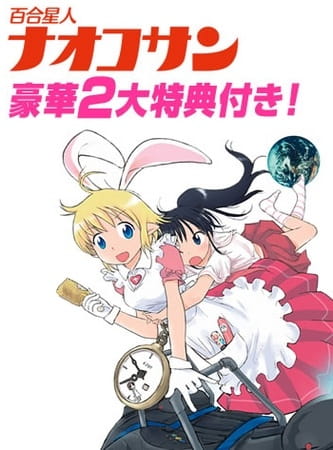
#121: Yuri Seijin Naoko-san (2010/2012)

From https://cdn.myanimelist.net
/images/anime/13/28214l.jpg


Director: Tetsuya Takeuchi
Screenplay: Tetsuya Takeuchi
Based on the manga by Kashmir
Voice Cast: Akari Harashima as Misuzu; Satomi Arai as Naoko-san; Ai Nonaka as Hii-chan; Yukari Kokubun as Ryōta; Kumi Kawai as Mother; Manabu Sakamaki as Alien
Viewed in Japanese with English Subtitles

In mind to ufotable's usual work, does this mean that Yuri Seijin, about a female alien who wants to "yurify" the Earth into a lesbian (yuri) planet, exists in the same universe as Fate/ and their other famous titles? For the uninitiated, ufotable is an anime studio whose reputation is increased by being the main adapters of the work of Type-Moon, whose Fate/ franchise and other work, originally a doujin (self-published) group who made visual novel video games and now has become a group known for having hardcore fans. Type-Moon, with ufotable being usually the studio to adapt their work, are a double-edged sword in that, with their titles interconnecting as one giant universe, to fully get the lore of their work would require reading and watching everything, coupled by the fact (whilst relevied by streaming widening access) their titles are the kind usually licensed by Aniplex, a production company whose American distribution wing in the United States can be notorious for their Japanese pricing of physical media, i.e. extremely limited editions and very expensive.

One shouldn't judge a book by its cover mind. Type-Moon also created The Garden of Sinners (2007-9), a unique theatrical film serial which, for showing their flaws, was also an incredible, grotesque and boldly unconventional genre hybrid. Likewise, ufotable adapt other titles. (They also like doing claymation sequences, which even with The Garden of Sinners they did comedy cinema ads with the cast asking patrons to not do bad things like answer phones or eat loudly, so to their credit ufotable have a charming additional bow to their cap). Yuri Seijin is not a ­Type-Moon title despite my initial joke but a curious obscurity in their filmography, but it is a curiosity.

Yuri Seijin is in fact quite a surprise, as it's something completely different, a comedy manga adaptation that gets away paradoxically with some tasteless humour yet is so whimsical and strange in its tone that I swear, even if it's merely I, it "just" gets away with it. The premise, which is only really elaborated on in the thirty minute 2012 OVA rather than the original six minute 2010 adaptation, is that schoolgirl Misuzu came home one day to be told her older sister has returned, only to meet Naoko-san, a female alien from the Planet Yuri, a lesbian planet, who is posing as her older sister. The tastelessness, implied but explicitly, is in that it has no issues with playing with taboos and strange sex jokes, like Naoko-san leaving porn magazines everywhere or the expense Misuzu's little brother Ryōta has especially in threats to his genitals, being asked to suck the snot out of her older sister's nose when its running and, despite being a young prepubescent boy, being pushed by Naoko-san in trying to pose as an adult in an adult store in a robot suit.

From https://i.ytimg.com/vi/uk82GttkBqg/maxresdefault.jpg

Also, its explicit Naoko-san likes little girls in their "cuteness", remarking on the virtues of girls playing in water any time of the year in one monologue in the 2012 OVA, or that to contact her home planet she has to pop underneath one's skirt to communicate on the receiver. Again this would be tasteless in any other context, and unfortunately anime and manga has taken this type of idea even into pornographic levels which don't help paint a good picture of Japanese pop culture even if it's merely a subculture used for unfortunate xenophobia against the Japanese. But with Yuri Seijin there's the factors that a) it's an intentionally surreal piece of weirdness in both OVAS, and b) is structured especially in the longer 2012 OVA as a whimsical, light hearted surreal comedy where these jokes are never explicit, and undercut by the sedate pleasant, brightly coloured mood of the style.

Now if this is still unpleasant to consider, don't watch these shorts, but the irony is that this is closer to an absurdist slice-of-lice tone in mood, closer to something like the high school comedy Azumanga Daioh (2002) in tone rather than a lecherous work, which is befitting as both source mangas were published in the monthly manga magazine Dengeki Daioh originally. And Yuri Seijin, even next to Daioh, where one of the female lead's father was depicted as a talking sentient cat, is deeply weird, honestly so. The six minute one, about a mysterious pervert roaming the streets that turns out to be a tentacle alien, is probably the weirdest of them whilst the 2012 one neuters this a little. It gets into slapstick where Naoko-san has succeeded the super punch further in that she can summon whole trains to run over people in the street, without killing them in cartoon logic, Misuzu is the butt of joke by being the figure on the wanted posters and thoughts in imagining who the creeper is to track them down, whilst her friend is fascinated by the aliens and relaxed about, porn mags are left on the street like leaves fallen off an Autumn tree, and the completely bizarre tangents that top what strangeness was already there before.

One the ending credits scene sat on one of those trains Naoko-san summons, and the cut to Misuzu's internal monologue which, involving a male voice in English going insane in existential despair, led to me thinking I had accidentally watched a fan re-edit for a moment like those you find on YouTube. That audio cut in particular is a bar further, in another dimensional space as height or depth are beneath it, than most anime I have covered in terms of true bloody weirdness and it was a surprise. 

From https://i.ytimg.com/vi/7Y0Pq1eMBzM/maxresdefault.jpg

The 2012 OVA builds a bit more drama and charming comedy which, yes, is strange against the deliberately provocative comedy; its candy coloured tone neuters it, adding as much a general sense of absurdist comedy in just having an eccentric new house guest in with idiosyncratic behaviour. This longer version softens the experience, making it merely eccentric, be it the subplot about Naoko-san having food from her home planet which makes all television sexier under the influence, which you never see the example of but naturally gets the interest of the entire male population in the city in earshot of this, leading to communal viewings of the Japanese morning news in droves. Young pubescent girls also apparently wander around this world in groups being paid to play in the background of festivals nonchalantly, which is part of the tasteless humour but was admittedly funny when Naoko-san has to cancel their hiring and still pay them nonetheless. In any other circumstance, this would be off putting, but there's no fan service to speak of, which a huge virtue for balancing the tone, and the show's overt strangeness makes these aspects a complete joke.

It softens the blow and a sense that the content is being written by someone who wants to take on this type of humour but is aware of the line not to cross, prodding at it on purpose, is felt throughout. If anything, the biggest surprise with the 2012 adaptation is how it even becomes sweet natured in the end, the life of Misuzu and Ryōta with a new big sister figure there for an absent one who may have accidentally been swapped onto Planet Yuri is one piece of dialogue suggests the truth. These two works also happen to be another blessing for female voice actors as even the younger brother is voiced by an actress, and everyone gets to stretch their comic timings. I'll eventually come to great examples of male voice acting roles in anime more, but especially with comedy, anime to its merit allows for this bizarre material a great range to work from, allowing actresses to be weird, to put on strange voices, and generally here get into some crass stuff on purpose, like the blasé attitude to the Misuzu's mother and Naoko-san over the porn mags starting to be left over the house. It really has grown on me how good you have to be for the work, and comedy be it improvised (which I have seen quite a bit of within only a couple of years) and normal scripted dialogue really is a pleasant challenge that helps you come to appreciate actresses' craft.

Is it any good? It's oddly charming, building from an utter non-sequitur of a first version to a lighter hearted one where you even get a skit about Naoko-san providing technology that allows people to see their fantasies; it does play to some dark comedy, but when it leads to people just sleeping through the entirety of summer, it's still whimsical of all things, like a warm hug to end the OVA on.  Neither short is better than the other, as their tones are very different, but it depends on whether you can get past some of the perverse humour and their general oddness. Between them, the first 2010 is a thing of just pure intentional madness, but it proved a virtue to have the longer, tonally different one run with the same material. It is a surprise duo that I wished had a longer form version; it might've lost its lustre but there is just the question to ask in what would've happened to try to stretch this premise out, which would've been fascinating to see.


From https://i.ytimg.com/vi/PhigifLwV_E/maxresdefault.jpg