Showing posts with label Letter: K. Show all posts

Wednesday, 31 May 2023

#253: Karas - The Prophecy and The Revelation (2005-2007)


Studio: Tatsunoko VCR

Director: Keiichi Sato

Screenplay: Shin Yoshida

Voice Cast: Asuka Shibuya as Hinaru; Kasumi Suzuki as Yurine; Keiji Fujiwara as Nue; Toshihiro Wada as Otoha; Hiroto Torihata as Kure Narumi; Hitomi Nabatame as Homura; Kiyoyuki Yanada as Suiko ; Mai Nakahara as Chizuru / Mery ; Rokurō Naya as the Chief; Saeko Chiba as Sagizaka Yoshiko; Takahiro Sakurai as Houshun'in Ekou; Tetsuo Goto as Minoru Sagisaka

Viewed in Japanese with English Subtitles


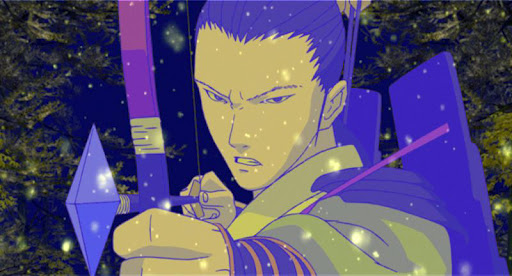
Created to commemorate the 40th anniversary of Tatsunoko studios, the best way to describe Karas is an ambitious and very interesting premise but one, including the notable delay in between releases of all six episodes, which needed time to breath, rushing with all the ambition of a debut of a man, Keiichi Sato, who started out as a character and mecha designer who finally got to direct a production. It is a simple premise at its heart combining Tatsunoko's history of superhero characters in their animation like Gatchaman or Yatterman, with horror and Japanese folklore, and then-modern CGI animation which is meant for style for the sake of style even if the premise is elaborate in lore. Considering this has sword welding armoured figures fighting in the sky of Shinjuku at Christmas at the beginning of the first episode, the style is there, as is the director Keiichi Sato spelling his own name out in episode one with ants.

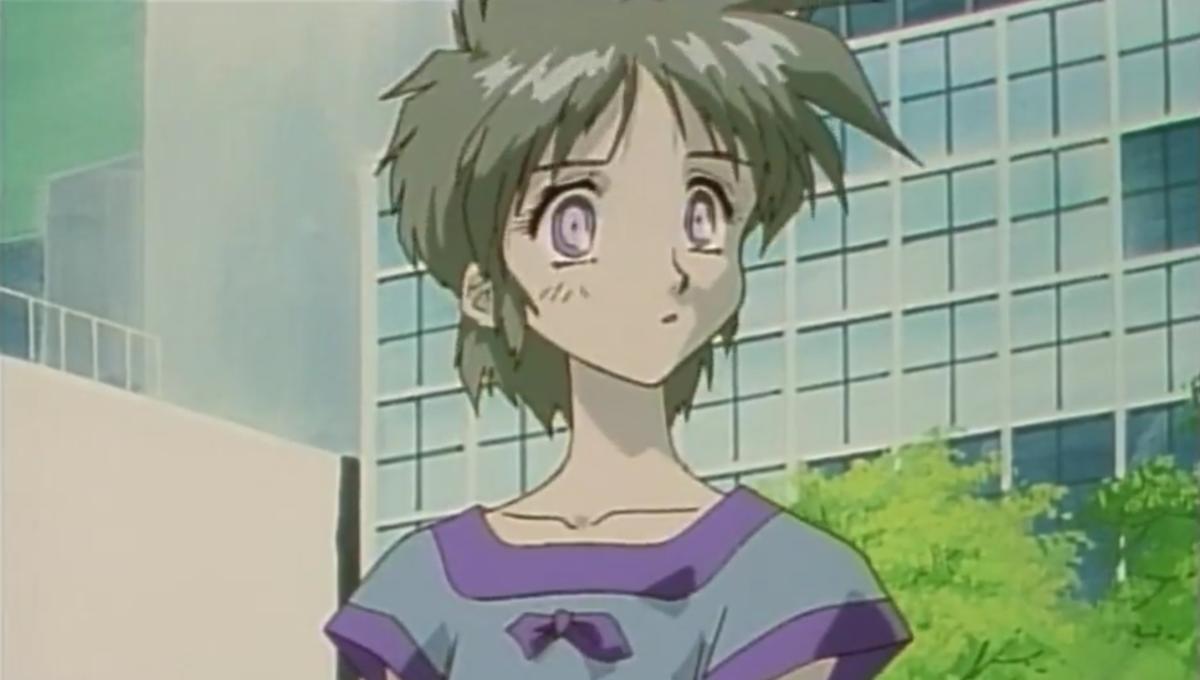
Karas is absolutely of its era, very much of the 2000s in style with the CGI and looking as expensive as possible, alongside the emphasis on a more muted art style. Voice casting for the English dub, which brought in Matthew Lillard and Jay Hernandez for key roles, definitely evokes how by the mid 2000s there was a push for making anime more mainstream, and as a straight-to-video project licensed by Manga Entertainment, this is also of the time. Whilst there were a few prominent ones at the time like this, that format was losing traction for these types of projects and TV series were easier to access on DVD finally at that point, Manga Entertainment eventually becoming less prominent as a British and US distributor, and more British one who releases mostly television series and some key films in the decade onwards. Karas however to its credit has a fascinating premise - in Shinjuku a mysterious figure known as Karas, a denoted figure meant to protect the city on behalf of the demons and the yōkai of the city from evil doers, stops demons from killing the humans and consuming their blood. The current one is Otoha, a man in a coma for the first three episodes who spends his time as a doctor for the yōkai in their world. A demon hunter about to stop time, he is under the watch of Yurine, the woman behind our lead who a) is an unexpected catgirl, and b) exists as a concept, more than one Yurine in existence as part of this lore using both Japanese mythology and various Asian disciplines of spirituality as its influence, Yurine existing for all the Karas and all looking the same, including for Eko, the former Karas of Tokyo who, having become disillusioned to its corruption, seeks to annihilate all humans there with what is effectively a plan to turn everyone into his own personal tap of human blood to be able to power his ultimate form.

The style, even under all the CGI, which is used for Karas and his opponents, mechanically altered supernatural demons, is inspired, running both with this idiosyncratic style but also melding it with ancient Japanese folklore.  The first monster emphasises this, whilst pulling no punches even if the later episodes are much gorier, with a water demon draining human blood from victims in a specific public bathroom near the subway, introducing us too to Narumi, a new police officer assigned to the one man behind their paranormal department, with his own concerns with his daughter in a mental asylum for seeing her whole classroom massacre by a demon. You however also see that Karas' first episode is arguably stylish to the point you cannot understand half of it, and also rushing through a premise which had legs for longer episodes than the thirty each gets. Effectively taking horror monsters, and having them as life draining robot ones, tackled by a doctor for good yōkai, a huma, who returns to his world to slay evil ones from a former Karas, we have a premise that is rewarding, but this show really needed to have been longer even if it was forty minute episodes. The first three episodes known as The Prophecy for Western release from Manga Entertainment feels like it is bolting through so much without explaining enough, including a demon in human disguise named Nue, after Eko and his monsters too. There are aspects you have to expect are there for the creativity of the production, like all Karas being able to turn into fighter planes for combat, but it is telling, alongside there being too many characters, that The Revelation as the last three episodes are called, all released two years after in 2007, has to start episode four with a huge amount of exposition to explain itself. Characters who barely get detail on them, like a female female Karas and her Yurine watching on as a preppy girl, get more to do, and it explains key lore points alongside Otaha's back story as a mob enforcer.

As quickly as his tortured history is disposed of, even if it means quickly getting past his crime father and an unexpected bromance that dies a quick death, The Revelation however has to quickly deal with ending the show, so even this is rushed despite explaining the premise. The rush undercuts Karas so much as by those three episodes, we are already into an apocalypse scenario where, with the notable shift in more gore and limb severing, we are in a far more violent doomsday tendril situation. As a result of the rush, even this, which is a scary and gruesome scenario, actually gets into something I have I have always hated in anime - just killing random bystanders off in vast amounts in elaborately gory scenarios as we see here. It is odd but, even with the trashiest of horror anime I have seen that are bad, they seem more justifiable even with an archetype once you known them a little, even one dimensional stereotypes, to be able to exist as a singular figure with their own existences for how long the tale is. Focusing on having their death as one person than merely part of a mass, no matter how gruesome especially with the eighties straight to video era, takes it into an exclamation mark to the scene that works. Here because you do not have enough time to digest the stakes, sadly Karas despite its moody nature even ups with randomly drawn bystanders getting horrifying ends which feels like shock value. This even makes the ending of the notorious Urotsukidôji: The Legend of the Overfiend (1989), its own world ending scenario, powerful ina horrifying way because we had more build up and warning of the threat at stake in that film in spite of its own problematic nature.

A lot of Karas'  fault is that, with this premise, Karas is an imaginative and vivid production which had so much work and production preparation clearly placed into it, but was really rushed to a scenario that, even in another slightly longer OVA work, would have needed slightly longer to reach what is this extreme an end. It is also a conventional superhero plot at its heart, despite the gore, that made a bad decision to not get the exposition out of the way or having time to slow down and let its lore sink in even if the production wanted to avoiding too much talking. What stands out in its tone, its horror-occult premise, is pushed to the backburner, which becomes its biggest sin. Particularly with how the designs are so elaborate and idiosyncratic even with clichés - there is requisite spider woman on the evil side, but her monster form and how she drains the blood for humans by hundreds of tiny spiders is entirely idiosyncratic here - it feels gauche to rush through a premise which has at its heart the additional subtext of modernisation conflicting with Japan's past. Details I can expect most will miss, such as how to activate the Karas form, Yurine chants a Shinto mantra, but there is an elaborate metaphor here that anime has tackled a lot and is worth doing so over and over, modernisation and Japan's past in conflict, the old traditions and the modernisation clashing as the demons of yore are forgotten and humanity in the city sinks into crime and corruption. Details like the mayor of Tokyo betraying humanity due to his hatred for all the crime, in another adaptation, would have become more loaded if allowed to breathe.

You can see the production value onscreen, not just in the computer effects, but costume design touches, like the Yurine all having goggles with idiosyncratic and cute markings for eyes on them, or that people cared for this work's lore, that in this world cities are still alive with the unnatural, the crows to the stray cats part of the spirits living in them that denote a human to become a Karas and keep all under control. As a result, this does have the disappointment of what could have been. For me this was always a title from this era getting into anime I wished to get around to, but never did. I am glad to see there was so much passion to the production as an original premise, which I have to admire now I have seen Karas and realised more was on its mind than presumed, but it is with the cost that, unfortunately, it missed the mark. This premise with the cost of its style clearly put on the production in time and effort did not get to the stage it needed to in being fully fleshed out, and it also needed to have been worked on more carefully before it came out. Thankfully, the epilogue of this production is that someone like Keiichi Sato, with this debut as a director, would go on to make helm more productions into the modern day, such as the first series of Tiger & Bunny (2011), so this ambition would lead onwards into other productions.

Tuesday, 12 July 2022

#218: Kimera (1996)


a.k.a. Ki*Me*Ra

Studio: Animate Films

Director: Kazu Yokota

Screenplay: Kenichi Kanemaki

Based on a manga by Kazuma Kodaka

Voice Cast: Yasunori Matsumoto / Brett Weaver as Osamu; Nobuo Tobita / Kim Sevier as Kimera; Ryotaro Okiayu / Tristan MacAvery as Jay Gibson; Juurouta Kosugi / Bryan Bounds as Kianu; Mugihito / Guil Lunde as Ginzu; Kinryuu Arimoto / Robert Peeples as Dr. Gibson


He's even worse than my haemorrhoids!

Sultry electro on the soundtrack introduces the viewer to an entity in a space pod landing on Earth. A tentacle monstrosity, to the horror of the hunter watching on in the woods, tragically kills and drains the life-force from his dog to emphasis in dangerous nature, before he is targeted off-screen. This prologue intertwines with two cornflake cereal salesmen, (yes, that is what they are), one a married American man named Jay, the other a Japanese bachelor named Osama, who together cross into the aftermath site only to get involved with an obvious cover-up.

This is where I should nod to the author of the source manga, Kazuma Kodaka, and that Kimera, despite what the ADV Films English dub tries to cover up, is explicitly an LGBTQ horror story. Kodaka, born in 1969, is known mainly for her work in the "yaoh" genre of "boy's love" manga. Different from "bara", work written about gay men by gay men in manga, yaoh is a huge genre in itself, in genre and popularity, crossing into anime with Kimera interesting as a violent horror story which is yet connected to this genre. It is a tale of Osama meeting the titular Kimera, a sensual androgynous space vampire, nude in a containment pod, one he falls head over heels with the moment he finds them. Osama, in his banter with his friend and colleague, even gets into denial about not having a girlfriend when teased about, befitting a tale which is not going to beat around the bush about its central romance. With incredible progressiveness too, it is not going to think about the two central figures' having any conflict with their desires or sexuality either, even if one is a sexually fluid space vampire, next to an apocalyptic scenario with a former lover and a group of evil space vampires are involved too, and are a significantly bigger issue.

The ADV Film English dub tried to hide this, with "Kimera" dubbed with the pronoun "she" but being an unnatural otherworldly beauty, an intersex  entity who can reproduce with women if men are not available, a figure who is unfortunately destined to destroy (feed off) the Earth which their children when birthed. In the original Japanese dub, as the manga, Kimera is explicitly male, if physically intersex, with only one minor female character in the anime at all, and the drama entirely about this physical beautiful figure. This is complicated by ADV in that the English dub has Kim Sevier play them, a voice actress who voiced Yui Ikari in Neon Genesis Evangelion (1995), protagonist Shinji's deceased mother, whilst in the original Japanese dub, they are played by Nobuo Tobita, a prolific male voice actor. In hindsight, it comes off as dubious on ADV Film's part, particularly as Sevier does use a voice that is gender neutral in tone. Beyond the idea that yaoi stories were not commonly available at the time in the West, it is a strange creative decision which barely hides what is actually happening in the anime.

And Kimera beyond this fact is fascinating. In tone, this sits nicely among the ultra-violent horror anime works from the eighties and nineties fully, with only the sense of it looking of the late nineties present for myself, with a very distinct look in simple colour tones used. It has no qualms with being grotesque even when gore is not onscreen, as one of the humans Dr. Fender, a contrast to the handsomeness in the leads, as a dated trope, of being an figure depicted ugly physically as well as his behaviour, has sided with the evil space vampires, but through one of the sloppiest methods possible of ordering fresh cadavers and organs (of the freshest quality) which can be easily tracked by his fellow scientists. When it is physically violent onscreen, it has in less than fifty minutes mutilation, death, tentacles pushing peoples' eyes out and gore, but with gender subverted, coming off as a sibling among all the violent anime that parents warned us about that came to the West on video, but with this distinct aspect to subvert things. The trope of space vampires is one I have inexplicably come across in anime a lot, as baring the Hellsing franchise there is usually a habit of them being tangibly placed near outer space if not from it, but this packs a lot that, if remade, is pretty striking and would be fascinating to see expanded out, both in subverting that trope but also what the narrative is too.

It has its quirks already, in which the vampire planet is a beautiful fantasy land of lizard birds, but even that slides next to what is an insane melodrama with potential, even those idyllic scenes, with Kimera depicted closer to the kind of elegant female leads of other work, particularly Belldandy from the famous Oh My Goddess franchise, being contrasted by the horror and tragedy of their narrative. That Kimera, having witnessed their own mother become a figure, in a tube, only to breed on their planet, biologically existed in their home world to just breed for their species, even their former lover now having come to Earth too to kill Kimera and spare them this fate. Yaoi in anime and manga, even as someone with barely any knowledge when I came to this anime, was something I still knew in mind of not being a genre, but a theme which crosses into a variety of genres (even American buddy cop tropes with Fake (1994-2000) for an example), which the authors of could take in any direction they could. With yaoi's prime audience a female one, not excluding the potential interest for a gay or bisexual male fan of this work or the manga, the idea that this is proudly a gory horror anime which is yet based on a source, also a horror story, for women with this central romance is really spectacular and something to appreciate decades on.

This manga was also published in Super Jump, which is a "seinen" work targeting young adult men  and adds an additional layer to viewing this title. In the same biweekly manga anthology with Bartender (2004-2011), adapted into an anime series and a drama about a bartender soothing customers' sorrows with the power of alcohol, and the magazine where Buichi Terasawa's legendary Space Adventure Cobra manga was partially published through, Kimera being this explicit as an anime in its gender relationship is even more fascinating, especially as playing to the trope of sex intermingling with death, there is a very explicit threesome with Kimera and two men which is long, and eroticised only until those two mortals get eaten. Considering as well those involved in the production, the legendary Toho among those involved, this is just among the many anime of a variety of types they worked with. For the central studio behind the anime Animate Films, who cut their teeth in this time on horror OVAs like Digital Devil Story: Megami Tensei (1987), but could also do the erotic OVA Kama Sutra (1991), making their day job putting Kimera together as it becomes progressive in the sense that, for them, it was as worthy for a potential audience as any of the others.

It is still a cheesy sci-fi horror narrative at its heart, even with some classier choices like In the Hall of the Mountain King on violin on the score in terms of style. It is still very conventional in terms of this type of ridiculous horror anime, in terms of the gore, the character archetypes, the aforementioned obsession with space vampires, and a lot of exposition to cover the lore in little narrative length it possesses. In the latter case, emphasising a troupe of human beings as unreliable and destructive figures which appears in a lot of anime in general, you even get the choice dialogue, alongside side this narrative being based around the real myths of vampires stemming from this alien planet, that dissecting a vampire who came for peace talks with us, and keeping their brain alive in a jar, was a bad move of ours. Even in mind to Japan's relationship to vampires, i.e. a concept alien to their mythology that, when embraced, their pulp stories have had to explain and interpret in their own ways, Kazuma Kodaka as an author herself still kept the idea of their morbid sexuality as a prime part, which shows how they have a universal quality regardless of country. Even here, the final fight takes place in a Christian church, western iconography, with someone impaled on a giant cross, so I credit even Kimera the anime nodding to the lore it is reinterpreting for its original audience.

This even has a happy ending...if John Carpenter, with one of his famous doomsday endings from his horror films, made a horror romance story with either hope or the end of the world potentially happening. Kimera is still not the greatest horror anime. It is sadly one that might be difficult to re-release too, simply because so much straight-to-video anime exists, and ones which are less than an hour long with no further episodes like this are a struggle to re-release even today. It is however fascinating, it is entertaining, and even decades later, it still stands out as being one of the gory OVA anime from this older era which was also an early LGBTQ title that we did get in the West if just in North America.  

Monday, 19 October 2020

#164: Kowabon (2015)


Director: Kazuma Taketani

Screenplay: Hiromu Kumamoto

Viewed in Japanese with English Subtitles


A micro-series, thirteen episodes that are three minutes long each, but rather than absurdist comedy as many I have seen are, this is a horror series, the likes of which are becoming as common too in Japanese animation as bite-sized length series. This one as well is very much an aesthetic experiment too with is rewarding. All the episodes are based upon a piece of technology,  be it a video call to mobile phones, being haunted by a female ghost with malicious intent, something which is very common in Japanese pop culture.

The entire series has episodes ending predictably, where eventually a wholesome start becomes creepier, until eventually no one ends their story well, including the guy in his online show stupid enough to go to the haunting site of the previous episode before him. Japan in its popular culture has been documenting how ghosts would haunt out technology for decades now, and it always feels natural from an outsider's perspective because a) the frequency to which such a modern country shows it yet is still connected to its past, meaning that the supernatural and folklore have not been alienated, and b) there is a flawlessness in how, if there ever was something cheesy about a premise, it would be for a joke unless you came across a bad work, whilst most of the time it is taken more seriously. Their ghosts and monsters are not as likely to be broad, if you are going off the biggest horror films in this area like Ringu (1998) or Pulse (2001), so nothing is out of place or gauche about the combination of the two due to cohabitation. As much of it is how matter-of-fact these stories are, that the ghosts were always there, and likewise here we never get the sensation of these episodes having to reintroduce the female ghost, but that this is always going to happen. Her existence is never even explained, and she is just a malicious figure hanging over the world.

The stories are really spooky scares, more broadly fun scary than the atmosphere of those films mentioned, but it is interesting the choices taken even for three minute narratives. A video call with parents new to the tech, where it is the caller haunted. The video camera at a front door, where another concern is people trying to sell you insurance. Selfies and online blogging of one's self, which evokes self esteem and that, even in the nineties long before a lot of this technology existed, Satoshi Kon's debut film Perfect Blue (1997) and the series Serial Experiments Lain (1998) have stayed relevant just for the fear of a doppelganger who claims to be you being online. A lot of why Kowabon works is that, whilst the show throws caution to the wind and embraces the jolts and evil looking ghosts of a haunted house ride, it still resonates with the fear that even when technology is against us, when it malfunctions or just briefly flickers, there is enough room to induce a dread.

Also, indirectly, the stories for all the ones that are pure scares, some have more to them to read between the lines. The woman at odds with her own online self, and a commenter who is likely ghost, who withers away, as much able to be held as a comment on depression and the dangers of online self image. A wannabe idol, filming a dance video in the park, who is literally corrupted by her own doubt and self-destructs. That video call with parents mutated into only one, a ghost, judging their son for not calling them before. Eerie icing on these cakes.

The other thing of note is that the series is animated with rotoscoping. Ending in the credits with behind-the-scenes footage, the production filmed live action performances at locations first and then animated over them. It has a really practical use here as, alongside not being as potentially time constraining to animate, it offers real necessary use as it means Kowabon does not have to rely on cheap looking digital effects. Instead, it can use the animation for the supernatural content with a stylistic flair. It manages, immensely so, to balance the clear reality of actors onscreen with the more fantastical images from the lack of the restrictions with animation fully.

So, as a result for me, this is as much an experimental series too which succeeded with this idea. Due to the slightness of the episodes, it is difficult to write in greater detail about work which does not have a lot of time in three minutes to work with. The aesthetics however make a huge part of the experience, a very multicoloured contrast to its fights which contrasts the horror with an intentionally cartoonish supernatural tone, especially when the end credits is set to a bouncy J-pop song and cute horror figures bouncing along. At times it even feels like a Superflat pop collage, if Takashi Murakami's work had gone for more spookiness with bouncing skulls, its plasticity against the real actors and locations animated over compelling. In another timeline, we could have easily had a sequel series with even longer episode, if only under fifteen minutes, and separate narratives. In this timeline, Kowabon works well by itself.

Wednesday, 27 November 2019

#127: Key the Metal Idol (1994-7)

From https://images-na.ssl-images-amazon.com
/images/I/51278GVX1AL.jpg


Director: Hiroaki Satō
Screenplay: Hiroaki Satō
Voice Cast: Junko Iwao as Tokiko "Key" Mima; Hiroshi Yanaka as Tomoyo Wakagi; Jūrōta Kosugi as Sergei / "D"; Miki Nagasawa as Sakura Kuriyagawa; Sho Hayami as Jinsaku Ajo; Toshiyuki Morikawa as Shuuichi Tataki; Akio Ohtsuka as Aoi; Chiyako Shibahara as Beniko Komori / Miho Utsuse
Viewed in Japanese with English Subtitles

If you look at Key the Metal Idol altogether, this was such an ambitious and peculiarly project for the better. In anime, straight to video work (OVAs) could be multiple episodes released on multiple videotapes; Key the Metal Idol took a huge risk when at over fifteen episodes, it gives me wonder on what prices the viewers would have paid for all the tapes1. Whatever the practical nature of the release, this was at least an ambitious tale of androids and robots, idol singing and conspiracy. The one catch to mention is that, after an initial set of thirteen episodes which are structured at a usual anime TV length of twenty five to thirty minutes, Key the Metal Idol eventually leads to two feature length conclusions, which meant many drastic changes.

With the time available for animation to be slicker than most television and for a more detailed plot than OVAs which have significantly less time to play with, it layers on an odd mix of science fiction, spirituality and all in the midst of a premise which initially suggests robot idol singers. Whilst there are episode directors, the chief director of the OVA is Hiroaki Sato, the animation director of the legendary Akira (1988) who sadly didn't helm much at all or even work in a lot of anime next to his peers, only directing one other thing in Yoshimune (2006), an utterly obscurity.

The titular Key herself is by all accounts, least for most of the show, a robot girl created by Dr. Murao Mima. On his deathbed, he passes on a message to his granddaughter Key she can become human by finding over 30,000 friends. Going to a metropolise, she encounters Sakura, who comes form the same rural village, but also the Ajo Heavy Industries and Production Minos led by Jinsaku Ajo, who are responsible for her grandfather's death ultimately and happen to be ran by a madman, one whose corporation is later revealed to be harvesting "gel" from unwilling victims, the homeless and their enemies, the solidified life force of human beings used to power robots which are remote controlled by people. In a curious plot choice, which is openly known before the details mentioned above in the narrative, is that their best way to test the robots is Miho, an idol singer who is actually remote controlling a robot version of herself, a pawn kept by Ajo as a pet who demonstrates some really creepy sexualised obsessions with robotics and playing God. Key herself, unaware of any of this, upon discovering Miho considers, despite being a timid and quiet figure, this the best director to find 30,000 people.

It's such an odd premise, if a compelling one, one which hangs on a huge cultural aspect that exists in Japan of idol singers. "Idols" don't necessarily have to be singers, but it's the most commonly known version, manufactured icons for managers and talent agencies. Idols have a dark underbelly too - they can be controlled by their management even to the point of any concept of romance and personal lives, not to mention that when it involves female idols (including teenagers) there's a really uncomfortable aspect to consider in this too. Satoshi Kon's 1997 film Perfect Blue was a fascinating take on this from the perspective of a member of an idol trio who, trying to grow as an actress in a new career, lead to a psychodrama which looked in the darker side of idol fan culture too. (And how fitting, without realising the connection at first, that voice actress Junko Iwao, who plays Key, also voices that idol singer protagonist in Perfect Blue). Here, there's a perverse metaphor, whatever your opinions of various idol groups and singers' managements, of a company who are literally controlling women, making robot versions of them, and with Ajo going as far as even assaulting their backup lead singers with violence or draining them emotionally until they are on death's door constantly.

Another factor of significance is that, in lieu to probably the original plan, the series until the final feature length episodes drip feeds its plot and never really explains a lot towards the final two pieces, which make up most of the OVA leaving many questions. Key when she briefly turns human throughout the series, in emotionally intense moments or in crowds, has incredible psychic powers. This leads to the introduction of Prince Snake-Eye, a cult leader whose characterisation takes a fascinating path, but to keep some secrets involves trying to sabotage Key's idol singer career, and leads to her literally healing a child from near death, which does raise some new issues at hand with who she is. The show, despite its science fiction plot, jumps fully into spiritual themes, especially in Key's back-story as a shrine maiden is a memory she has, from a curious slant as its going eventually be interpreted through science fiction details.

There's also the inherent fact that there's a very idiosyncratic attitude here to characterisation which at first requires a lot to get used to, might even be perceived as wooden or characters not actual like regular people, but I came to realise was individuals on the production staff trying to actually write characters who were more realistic even if it has to contrasts an inherently over-the-top plot. The character of Sakura is the best example of this, a figure who bites her tongue a lot despite having the brash and confidence attitude, one which leads her to conflict with Key's apparent robotic nature and nursing a growing affection for Shuichi Tataki, a handsome guy who is the head of the Miho fan club who slowly begins to realise something is very amiss with the star. Even the apparent villains have idiosyncrasies, figures having darker layers to them, where even if he is the outright villain Ajo is a former World War II veteran whose obsession with the opportunities with robotics became a violent God like mania. The dance choreographer and general artistic talent Hikaru Tsurugi, who is an abusive and cold man, is one of a figure distant to people, who attaches himself to Key when he considers her like him. Even Ajo's right hand man, a hulking former soldier named Sergi, is a man who thinks himself smarter than his employee, a man who can literally be described as superhuman but at a cost in his career of having becoming an addict to gel, which considering its solidified human life force really has a curious undercurrent meaning to it.

From https://www.syfy.com/sites/syfy/files/styles/1200x680/public/syfywire_
blog_post/2018/10/key-the-metail-idol-key1.png

Complicating the series was that, with the clear sense something happened in the production that forced the creative team to work on these and release them in 1997, which they had to have two feature length final episodes.  Before, not a lot of back story was explained, to which this means the first film is a giant exposition dump, where it becomes quite obvious the original plan had to be scrapped and this was the result. It's fascinating when you learnt the context, reaching as far back as 1950s Japan back into the story's modern setting in a web of characters like Key who get fully formed, but its sudden and involves two characters having a long conversation in a park to explain this all. A whole new character is even introduced just to add context to one side even, so I would not in the slightest hold back any person, if they go out to find this series, really has issues with episode fourteen, as it's such a sudden lunge into so much plot detail, even if it gets into a lot of fascinating material including a sub current theme of women being dominated by men and the inherently horrifying nature of it.

The final episode does do a lot though that succeeds after the fact, even against the obvious jarring change in pacing. It ultimately reveals as well how sad the story really becomes - only one major character dies in the whole OVA, but it's one you come to love, a normal person, and it's treated with the immense sadness even if the others have to move on quickly in dangerous circumstances. The result is one of the best attempts at depicting a death bed scene or a death when anime can bungle it so badly or, in the midst of an ultraviolent one, it just becomes a ghoulish background noise. The series altogether, even when it may come off as haphazard, does make the success of not pulling punches. Even when there are some contrivances when characters might've reacted fasted, most of the series thankfully has it there's a reason acts don't take place, like Sergi being too injured to actually continue, that a location when finally learnt of is immediately acted upon, or that it's known that, as the series progresses, Key's unseen abilities even scare Ajo and his lackeys. The show doesn't hide how dangerous the villain is, but there's reason to why he acts the way he does, even if the explanation like using his own scientists for gel extraction is the act of a lunatic. It is, in all honestly, a nuisance filled production that'll develop layers if I revisit the whole series.

The show is also elusive and slow burn for the better. I cannot help but think of the shadow of influence Neon Genesis Evangelion (1995-6) had on this series and others as, whilst the OVA originally started in 1994 and is its own unique creation, the ending of Key the Metal Idol when it becomes a phantasmagorical head-trip, and a concert hall is entirely filled with purple life force gel, feels like something that could only exist after Neon Genesis Evangelion, and the unleashing of The End of Evangelion (1997) on Japanese cinema goers, took such strange and surreal risks with anime. As a result of when this OVA start, it technically doesn't belong to the school of unique and risky anime productions, mostly in television, that Neon Genesis Evangelion encouraged the creation of by being so popular, from Serial Experiments Lain (1998) to argubly the original Boogiepop Phantom series from the year 2000. I'd gladly put Key the Metal Idol as a prototypical entry, not to suggest that there wasn't this type of idiosyncratic animation before the mid nineties, but that as of yet my only knowledge comes from it usually being in theatrical work or experimental anime. The OVA market, when it first started in the early eighties, really helped the encouragement of idiosyncratic productions. Key the Metal Idol is nonetheless a curious being even here as, due to the structure, it's a lot longer than most OVAs I have encountered so takes on the pacing and structure of a regular anime series2.

The OVA was created by Pierrot, a company whose track record includes a lot of huge mainstream hits in anime, some like the Naruto franchise probably known even outside of hardcore anime fan circles. A higher animation quality over TV is here as there was significantly less restrictive time scales per episode allowing for more. It also allowed for more mature content but its wisely used; there's nudity, but its matter of fact, and the violence is not always there but a sudden shock, surprising in how nasty it is whilst making sense as, if there was a super powered robot involved in a scene, it could crush a human head like a grape.

There's also a wonderful dark mood, one which is helped by the richness of the style in colour and character designs. Character designer Keiichi Ishikura's work is very idiosyncratic here, which helps provide the show its own tone, and even if there's a lot of day scenes, the style of Key the Metal Idol can definitely be seen in its very rich use of dark colours and a very slow burn pace. The main opening song is also beautiful, a jazz pop ballad whose moody female vocals about lovesickness befit the show perfectly. For a story where music is going to be of importance, it executes as well the music and the visual depictions of performances with considerable affect - the Miho performances, even the behind the scenes moments we see throughout the story, have their own strangeness to them, anything from giant unused plants to a robotic cello group among the artistic touches. And of course, for anyone who has seen the show already reading this review, a huge plot point involves a song called "Lullaby", initially a mere incomprehensible mummer when Shuichi acquires it through his sources, but is built towards with considering nuisance.

It's together a flawed but utterly admirable piece for me, where even the aforementioned flaw (mainly the fourteen episode) instead becomes part of its personality and thus no longer a detraction for me after contemplating the show. This OVA series is something definitely (sadly) not as well known despite having an English dub, licensed by a company named Viz in 2000 for the American market, although thankfully in 2017 another named Discotek released it in the United States again for DVD.

It's a series, honestly, that should be more wider known beyond this, to which why I will also give credit to Crunchyroll making the OVA series available in Britain in 2019, the time when I saw the show. To not time stamp this review, sadly a lot of Discotek titles, or older anime in general even from the 2000s, were not as easily accessible in the United Kingdom in 2019 as one would presume or hope, dominated naturally by new titles advertised to bring forth revenue. One of Key the Metal Idol's virtues is good old elegant hand drawn animation, and its time stamped by the era it comes from, just in one of Sakura's night jobs being a videotape rental store, it is nonetheless timeless because it's still a fascinating one off, something difficult to categorise in terms of genre or expectations, whose presentation is even idiosyncratic and eventually, yes, embraces the unconventional fully. That kind of work, even outside of Japanese anime, I fall hard for.

From https://i.redd.it/k56xzhgmpx331.png

=====
1) Of interest, considering how anime has notoriously been too expensive from what I have heard in terms for Japanese fans, price gouging to us Westerners if we looked at the prices and in comparison to content, Key the Metal Idol may have had its first episodes released at a significantly cheaper price if the Wikepedia page is right. Sadly this is unsubstantiated information, without a reference source, so I had to take this piece of the review out and warn you of its potential falsity.  

2) There have been longer OVA works if you are curious. Legend of the Galactic Heroes is probably the most famously long OVA work, starting in 1988 and ending also in 1997, with its main series being over a hundred and ten episodes. That's not including side stories, feature films and remakes.

Thursday, 11 October 2018

#75: Kai Doh Maru (2001)

From https://m.media-amazon.com/images/M/MV5BNjIzMTBlNTktNTNhOC00NDk0LTk0
Y2EtY2Q4NjQ5ODVhZDE1XkEyXkFqcGdeQXVyMzM4MjM0Nzg@._V1_.jpg


Director: Kanji Wakabayashi
Screenplay: Nobuhisa Terado
Voice Cast: Mitsuki Saiga as Kintoki Sakatano, Showtaro Morikubo as Raikou Minamotono, Yurika Hino as Princess Ouni/Shuten Dohji, Ai Orikasa as Douji Ibaragi, Fumiko Osaka as Fuji, Hikaru Hanada as Sadamitsu Usuino, Ikue Kimura as Yamabuki
Viewed in Japanese with English Subtitles

Synopsis: In the Heian period, a girl named Kintoki is rescued by Raikou from being killed by her uncle, who intended to take over from her family. Years later, treated as a boy as her family intended to, she is trained as a member of Raikou's band of warriors; unfortunately a figure from her past named Princess Ouni, who fell in love with her presuming her to be a boy, has come forth with vengeance in mind against all those on Raikou's side, with black magic and villains to assist her.

Kai Doh Maru was an OVA anime I once watched and had a really scathing view of; I had no idea why revisiting this years later, compelled by the work upon this revisit years later, until by the ending where the one major flaw with Kai Doh Maru appears. If anything, what likely annoyed me back long ago was that contrary to what the old Manga Entertainment UK DVD says, suggesting it is eight minutes long, Kai Doh Maru is only under fifty minutes, a usual OVA length from a decade earlier in the nineties but not obviously over feature length. Manga Entertainment's old style of anime distribution, for all my nostalgia, is also with awareness of how I despise the many things they did like "dubtitles", and how they were capable of this type of hucksterism, presuming the additional minutes are the extras, even into the 2000s, even into the 2010s when they're now respectable distributors of Pokemon films when I return to their old catalogue second hand.

Kai Doh Maru is nonetheless fascinating - long before (over) expensive Blu Ray releases for the USA, Aniplex was helping to produce what is as much a technical demonstration of new artistic flourishes as well as a very interesting and entertainment anime. Some might find it slow and dialogue heavy for an action samurai story, but for me the slow burn tone of introspection punctured by action was better in itself. Immediately intriguing, after showing Kintoki's rescue at a young age in the beginning, is that this follows a female character in the lead, raised as a boy and taught to be a soldier in a group including a former Buddhist monk who still wears the sacred garb and a cocky womaniser, treated as an equal if a younger member and once being called their princess who has teeth. Her gender is not used as a cheap emotional ploy. When it is of importance it's for more fascinating reasons - her clear unbridled love for Raikou, and the issue that the lead villainess is romantically in love with her but, rather than a homophobic slant, that its tragically a romance without her knowing Kintoki is a girl, desiring to possess the heroine as flashbacks show a naive childish love poisoned by her own clan being massacred and driving her to revenge.

From https://alchetron.com/cdn/kai-doh-maru-8cdcfaee-
3378-4406-aae6-e9ce5f6c7a1-resize-750.jpg

Action wise, when there is action, its solid and with a touch of the gorier samurai stories, where losing a hand doesn't incapacitate anyone just slows them down. The supernatural bent, veering near ninjas and other groups as supernatural beings as with the likes of Ninja Scroll (1993), is fascinating as the plot ramps this side further and further as it goes along. Kidnapping and brain washing children, using their bodies to house malicious spirits, is the start but it then turns into an entire town's population through masks becoming mindless, fire starting minions who move as if like zombies. All it is compelling, helped that, noticeably, there's a sense of the production tapping into their country's own spirituality and folklore, especially as Kintoki is a female interpretation of the folk heroine figure Kintarō. Even if, for a foreigner like me with little knowledge, this story made up details for artistic effect, there's still the better sense that the production was not pulling fantasy clichés out of their arses but using more carefully influenced supernatural and folklore material.

This drawing of culture is to be found also in the most divisive aspect of Kai Doh Maru, its art style. Washed out and light in tone, enhanced with CGI, the style is still unique for me immensely, still with a great idiosyncrasy especially in its combination with realistic character designs. It's revealed to be openly inspired by Japanese classical art, as the ending credits include tableaus, still paintings, of where the characters end up in a form of epilogue, with poetry drawn on and spoken at the same time.

From https://www.animeclick.it/images/
Anime_big/KaiDohMaru/KaiDohMaru7.jpg

The issue with Kai Doh Maru? An abrupt ending. [Spoiler Warning] now - it leads to Raikou facing one of his own, possessed by the evil group as a puppet, and Kintoki with the Princess. Even if Manga Entertainment didn't dupe me for a second time, thinking this was feature length, the conclusion is still brisk. Ironically, it didn't have to be over ten or twenty minutes longer, or feature length, just even five minutes in this case enough to have fleshed everything out. Five more minutes, in a rare case here, would've been enough for the emotional impact to fully succeed. One moment, Kintoki staggering out stabbed in the gut as she finds Raikou dead, is enough to suggest all that has taken place, but a minute longer in dramatic height for both sides, a snippet of a fight with Raikou even if its deliberately left ambiguous what happened, more weight on the Princess discovering Kintoki was a girl and the built to what happened to them inside, would've been enough. Literally, for this OVA another draft of this ending, just to clarify without even dialogue but just images, would've been enough for me to say Kai Doh Maru is a very underrated and neglected OVA from when straight-to-video anime was sadly passing out in popularity. [Spoiler Ends]

Now it's a case of a very underrated and neglected OVA from when straight-to-video anime was sadly passing out in popularity with one little caveat in terms of a vague shrug of an ending.  


From https://silentdivergence.files.wordpress.com/2012/05/121608-11.jpg

Wednesday, 20 September 2017

#48: Kekko Kamen (1991-2)

From https://images.myreviewer.co.uk/fullsize/0000213691.jpg

Directors: Kinji Yoshimoto, Koji Morimoto, Nobuhiro Kondo and Shunichi Tokunaga
Screenplay: Masashi Sogo
Based on a manga by Go Nagai
Voice Cast: Emi Shinohara as Kekko Kamen; Arisa Andou as Takahashi Mayumi; Jouji Yanami as Principal Toenail of Satan; Kazue Komiya as Gestapoko; Kikuko Inoue as Yuka Chigusa; Kiyoyuki Yanada as Mizutamari Tsuyokarou; Mika Kanai as Tanaka Hanako; Mitsuaki Hoshino as Teacher Ben Kyoshi; Tesshō Genda as Shuwarutsu Negataro
Viewed in Japanese with English Subtitles

Synopsis: At the Sparta Academy, a strict system of punishment is carried out by the head master, a masked jester known as Principal Toenail of Satan. Openly uninterested in any of the male students succeeding in life, and openly a pervert alongside his sidekick and teacher Ben, he employees bizarre punishment teachers to sexually humiliate female students who fall behind in their studies, especially drop out Mayumi Takahashi who takes the constant brunt of the staff's interest. Unfortunately for the evil school staff, or fortunately for them, there's always a mysterious female figure there to protect Mayumi. A figure named Kekko Kamen who wears a mask, a scarf, boots...and completely nothing else.

As the synopsis describes, and images of either the anime, the manga or the live action films show, this is one of those franchises which could be embarrassing to talk about. Not necessarily the salacious sexual content either but its blunt, crass surface appearance and how eyebrow raising it sounds in said synopsis. And yet one should never automatically fall into the trap of "weird Japan", that phrase in various forms which dismisses this as something normal from the country. It never factors in what pop culture bizarre to Western eyes is actually mainstream in the country. It never factors in whether certain, controversial examples are actually made for a very niche, small minority, even the most offensive. That the internet has become an echo chamber that amplifies the existence of centre works that are, and will remain, obscure in regular Japanese pop culture. It also doesn't factor in how Kekko Kamen was actually a joke Go Nagai created to send to his manga editor at the time. A parody of Gekkō Kamen, a legendary superhero figure and one of the first of Japanese superhero characters, it was meant to only get a reaction out of said editor only for that person to actually want to publish it as a continuing series. Nagai is not one to have shied away from the perverse in his time. Between becoming a legendary figure in manga and anime, including his significance in giant robot stories, his first successful manga, Shameless School (1968-1972), was a sex comedy which made him a pariah of moral standards groups. However the fact that Kekko Kamen, this joke he created, managed to last for five volumes, had a 1991-2 anime for the video market, and eleven live action films, is probably something he's still baffled about to this day.

From https://images.myreviewer.co.uk/fullsize/0000213683.jpg

Brutally, the anime of Kekko Kamen is a chore to sit through. It never drags strangely. Four episodes, twenty or so minutes long, it passes by under two hours quickly without the pain of time being lost. Instead it's really the fatal combination of how icky the premise is and how utterly lame it all is. Even the masochist in me who likes weird, crudely made anime from this era was numbed by it. Even the masochist in me who can find virtues in works with issues in gender depictions and are in poor taste cannot find a lot to defend in this anime between the crassness on display. All four episodes follow the same template exactly. A new punishment teacher is introduced, they always torment the main female character Mayumi, and Kekko Kamen eventually steps in to save the day, usually with her nunchakus and with a finishing attack that cannot be described any more politely as nude spread legged suffocation. Even with the Barbie Doll nudity, it's a fetish anime full of ripped underwear and fan service that's off putting because it's all at the expense of the female characters. It's not kinky, where kink or a fetish really denotes participation from all the individuals male and female involved. It's not like fanservice in other anime where there's a cheek, a sense of humour, and male characters being smacked in the face and being called perverts. Its harassment and its distasteful here. Even BDSM has this sense that everyone is participating in acting out a scenario they've all worked on with the desire to enjoy it equally, even if on the surface images of it might shock outside onlookers. Here its uncomfortable, like adolescent boys who've really gotten to a weird viewpoint on the opposite gender.

From https://images.myreviewer.co.uk/fullsize/0000213687.jpg

It's worse because Kekko Kamen's meant to be a comedy but dies on its arse immediately. Even if you are less uncomfortable with the sexual content than I am, the comedy will mortally wound even a viewer tolerant of bad anime. It's meant to be distasteful on purpose when the first punishment teacher is Miss Gestapoko, BDSM queen from (sic) Auschwitz Academy and ranked by fully uniformed Nazis, as offensive as you can get but (actually) dumb to witness, never followed with anything similar and quietly buried afterwards. (The other punishment teachers stay with a gay bodybuilder whose muscles are the heroine's kryptonite, a female android and a stereotypical ronin samurai). The rest of the humour is meant to be light-hearted, contradicting most of its content, and very meta. Where the villains complain about Kamen not appearing with her main super heroine theme playing in the background. The humour's more painful rather than if the show took itself seriously, the only consistency funny joke the end credit songs, usually penned by Go Nagai himself, sung in earnestness by female singers and deserving a better sex comedy anime.

From https://images.myreviewer.co.uk/fullsize/0000213704.jpg

Production wise, it's a cheap show. As much as I reveal in this type of crackerjack, cheap OVAs from this period, with Kekko Kamen the only thing of considerable interest is composer Keiju Ishikawa's score, of its time and low budgeted but still more interesting and diverse than what's onscreen1. After that it's the various little details, the rare moments where the humour work, which made the viewing experience worth it. That the Toenail of Satan has nightmares of Kamen entering his bedroom while he's sleeping to give him permanent testicular pain, or how Mayumi's friend Chigusa Yuka can break the fourth wall, aware of the viewer and able to talk to the screen away from the rest of the cast. The rest of the four episodes are full of numerous resolved questions and illogical decisions. That barring her appearance Kamen's a vacuum and utterly useless as a heroine, only there to protect Mayumi and none of the other female students in the school who are also molested by the staff. That the Toenail of Satan and his lackey Ben come up with an un-villainous and only partially perverse method to improve grades - create a charismatic and beautiful female student who'll coach fellow students - and realise that barring Mayumi the quality of the students' test scores increase far more than if they continued with their physical punishment. That hiring a gay bodybuilder un-phased by a super heroine who uses her sexuality, whilst inspired for the villains, gets whittled down into a sexist idea of Kamen being completely paralysed by his physic and that it takes an entire episode for her to realise she can close her eyes to fight him.
   
From https://images.myreviewer.co.uk/fullsize/0000213689.jpg

Coming from someone who believes that almost any idea, no matter how bad or tasteless it is, can work if the tone or point of the premise is exactly right, Kekko Kamen is completely misguided in presentation and point. It should be, even if an embarrassing anime to show others, a light hearted comedy. Without the Nazis. Without the uncomfortable harassment fetish. Without the awful jokes. Something which, even if the idea of a super heroine who parades herself completely naked barring a mask and accessories is still juvenile, was fluffy and silly, sex comedy with a farcical edge to it. Everything that this anime never was. Considering its origins as a gag, the chance of sustaining it was virtually slim from the beginning and the anime proves it.

========
1) Not the last Go Nagai anime he's composed for either. Inexplicably I've seen Iron Virgin Jun (1992), which no one talks about and is just as tasteless in places.

Sunday, 29 January 2017

#39. King of Thorn (2009)

From https://shadowofvampire.files.wordpress.com/
2013/08/156d5-kingut.jpg?w=525&h=713

Director: Kazuyoshi Katayama
Screenplay: Hiroshi Yamaguchi and Kazuyoshi Katayama
Based on a manga by Yūji Iwahara
Voice Cast: Kana Hanazawa (as Kasumi Ishiki); Akiko Yajima (as Timothy Laisenbach); Ayako Kawasumi (as Laura Owen); Eri Sendai (as Shizuku Ishiki); Kenji Nomura (as Ron Portman); Kousei Hirota (as Alexandro Pecchino); Sayaka Ohara (as Katherine Turner); Shinichiro Miki (as Peter Stevens); Toshiyuki Morikawa (as Marco Owen); Tsutomu Isobe (as Ivan Coral Vega)

King of Thorn's premise suggested a post-apocalyptic horror narrative when I first heard of it. In an alternative time line, the world is inflicted by the Medusa virus, an incurable disease which when it infects a person eventually turns them to stone, prompting a medical company during the crisis to reveal a secret project to cryogenically freeze a lottery selection of over a hundred people. The test subjects are awoken time later only for a few of them to survive, for when they wake up it's to horrifying monsters living in the facility, isolated on its own island in Scotland, and giant thorns covering everything inside and outside. The remaining individuals - including one half of a pair of female Japanese twins Kasumi Ishiki, a criminal Marco Owens, a female nurse Katherine Turner, an African-American Ron Portman and a young boy Timothy Laisenbach amongst others - are forced to flee and try to survive the monsters rampaging around the facility's many rooms and underground passages, fearing both the Medusa virus still infecting them and the secrets that reveal that not all is what it seems. As a result of this though, what I thought was going to be a post-apocalyptic story isn't that but something else melding sci-fi, horror and fantasy, a gamble but one that could've succeed exceptionally well in terms of creating its own idiosyncratic personality.

From https://download.ir/wp-content/uploads/2015/03/
king.logo_.0.www_.download.ir-5.jpg

The reality of what the premise is and how it plays out, with direct allusions to Sleeping Beauty to a conspiracy narrative, eventually undermines the film. What happens is that the plot becomes more convoluted as numerous plot twists are introduced right up to the end. An advanced computer named A.L.I.C.E. that is meant to look after the cryogenic subjects. The Medusa Virus. The shadiness and experiments from the medical company itself that has lead to imagination literally becoming real and leading to their facility being covered in giant thorns like the castle in the centre of Sleeping Beauty, told the viewer in narration ongoing as an allusion. That's not even getting to the central characters, their own stories and reveals about their characters thrown at the viewer, the most important plot thread here for the entire film that of Kasumi's, the central character, one of two female twins, whose psychological strife and a mystery surrounding her sister Shizuku becomes the central mystery. However this leads to many of them not getting any character detail for them like Ron or Timothy baring the clichés they meant to start out as. (And even a character with some noticeably grim background detail like Katherine being undercut by prioritising other events even with her onscreen, causing one to realise a lot of downsizing of the original manga's length may have been involved). It becomes difficult to filter through as having to juggle emotional back story and its various plot strands becomes a chore rather than naturally fleshed out.

From https://i0.wp.com/www.silveremulsion.com/wp-content/
uploads/2013/03/kingofthorn_1.jpg

This becomes more disappointing as King of Thorns officially counts as a horror anime, that surprisingly rare breed that I wished existed more often. It's various horrifying monstrosities suggest dark fantasy crossed with sci-fi horror - blind T-Rex like creatures with xenomorph jaws, killer bats, a monstrous entity at the bottom of an elevator shaft that swallows anything that falls down to it - but they're merely background objects throughout to trim down the cast and downsized in threat next to the science fiction story the film eventfully becomes. The genre mixing could've easily been compelling, even in terms of how the premise aesthetically mixes both high-tech science laboratories with a Scottish castle with underground sewers and spiral staircases, the sense of melding different tropes found even in the odd but eventually obvious clue of how the young boy Timothy views the monsters, even when people have died, like videogame monsters to an almost clairvoyant-like level. Because of the emphasis on countless plot stands however it never feels fully fleshed out be it as horror, fairytale, viral horror, anything, when even the Medusa Virus never gets a proper conclusion or meaning to it baring an abruptly revealed but never explained revelation of its origins. Worse, it becomes part of a convoluted plot strange only found in anime where it can be a plot Macguffin to allow other fantastical incidents to happen.  Even the most dramatically compelling with Kasumi - an uncomfortable relationship with her sister despite Shizuku loving her, the interesting denouement plot twist set out with a perspective fragmenting structure - is compromised by how ultimately clichéd it is.

Animation wise, while high budgeted, it also suffers from an ill-advised decision to mix three dimensional and two dimensional animation including for the character models for more action intense scenes. As a result, it leads to characters switching mid-scene from crisply drawn figures to a noticeable three dimensions placed on 2D backgrounds, subtle differences in how their facial features and form is altered for a few moments that is an awkward and brutally visible detail. Altogether what could've been an interesting film is one that doesn't find a clear tone for itself, one in King of Thorns which is completely remarkable after the umpteenth plot twist.

From https://i.ytimg.com/vi/XHQ3VJZnYn4/maxresdefault.jpg

Tuesday, 28 June 2016

#28: Kill La Kill (2013-14)

From http://vignette1.wikia.nocookie.net/omniversal-crosswars
/images/a/ae/Kill-la-kill.jpg/revision/latest?cb=20140111135321
Director: Hiroyuki Imaishi
Screenplay: Kazuki Nakashima
Based on an Original Premise
Voice Cast: Ami Koshimizu (as Ryuuko Matoi); Ryoka Yuzuki (as Satsuki Kiryuuin); Aya Suzaki (as Mako Mankanshoku); Toshihiko Seki (as Senketsu); Hiroyuki Yoshino (as Hōka Inumuta); Katsuyuki Konishi (as Tsumugu Kinagase); Mayumi Shintani (as Nonon Jakuzure); Nobuyuki Hiyama (as Uzu Sanageyama)

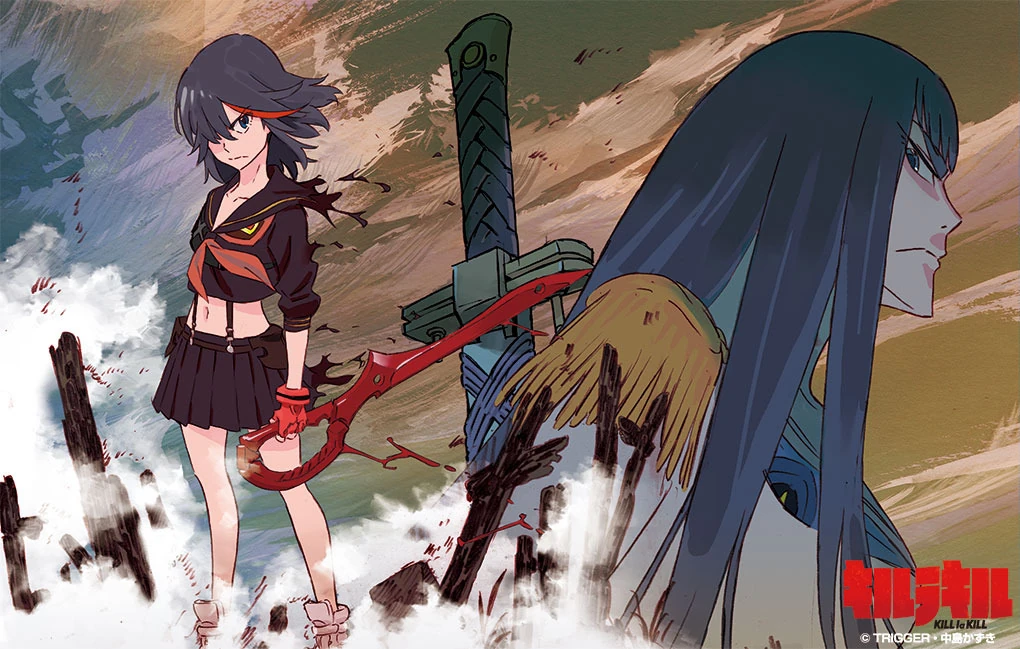
Synopsis: At Honnouji Academy, the daughter of the head of a global fashion corporation called Satsuki Kiryuuin (Yuzuki) rules the student body and even the teachers with a velvet lined iron fist; the entire island right down to the homes are set in a class structure where the highest tiers were special school uniforms lined with life fibres, living fibres which allow for growth in superhuman abilities in the wearers. With an Elite Four under her to control the students - Ira Gamagoori, Uzu Sanageyama, Nonon Jakuzure and Houka Inumuta - Satsuki hopes to dominate the entire country of Japan in terms of the school system. However there's a new transfer student to the Academy called Ryuuko Matoi (Koshimizu) out for revenge for Satsuki killing her father; armed with a giant half scissor blade, able to destroy life fibres, and gaining a living schoolgirl's outfit she calls Senketsu (Seki), a living being which gives her greater strength than regular life fibre uniforms, she will be a problem for Satsuki. Helped by the hyperactive friend and personal cheerleader Mako (Suzaki) and an anti-life fibre rebel group of naturalists called the Nudist Beach led by Aikuro Mikisugi (Miki), Ryuuko intends to cut the heads of the Academy down to size.

From http://www.anime-evo.net/wp-content/uploads/
2013/10/kill-la-kill-01-09.jpg
What exactly can be added to the opinions on Kill La Kill when everyone else has already reviewed it, drawn fan art of it, cosplayed as characters from it, drawn erotic fan art of it and much more, something that is already seeb as a cult series that people will still talk of for a few years at least? That it's in hindsight Imaishi, after setting up his own studio called Trigger after leaving Gainax, created something that for all its ridiculous gore and hyper sexuality - famously Ryuuko's super transformation which hasn't put off male and female cosplayers dressing as her and even bringing about a special form of bra padding for sale - is really a tribute to the kind of action programming usually designed for children, usually episodic and can be understood by Westerners and those who even watched live action shows like Power Rangers. The type of show where each episode threw any threat at the heroes - mind control, betrayal and plenty of super powerful minions - only for the heroes to overcome it all through passion, courage and blood-mindedness. It's the kind of thing, slightly betrayed by the J-pop but forgiven in Kill La Kill because of its good music and a great end credits song for the first half of the series, that should be scored with the most bombastic and cheesy eighties guitar rock song possible. In comparison Gurren Lagann (2007), while in the same mould, was far more complicated as it literally split in plot with a drastic time jump forward in the narrative in the centre of the series, whilst Kill La Kill does all its plot twists and dynamics in a straight forward plot, set within only a few settings and the same time frame, which is charged through in its twenty four episodes and bonus ending episode with as much adrenaline as possible.

From http://cdn0.dailydot.com/uploaded/images/
original/2014/3/31/Kill-la-Kill-header.jpg
Since Imaishi 's trademark is very fast paced and hyper in pace, this means that the episodic tone of such shows is taken to an absurd extent where a strife can be thrown at the protagonists and be dealt with in the first fifteen minutes of an episode, more strife ready immediately afterwards in constant bombardment as plot twists keep appearing. Far from becoming problematic and eventually desensitizing, the show's tone works because it fully embraces the structure of serial storytelling to an extreme, the personality from the show's quirks and peculiar plot line intertwining fashion and fascism that was the original catalyst for the show. It's helped by the fact that Imaishi has never allowed bad animation into his directorial work, nor accepted anything aesthetically ugly to appear on his animation, unless it was deliberately chunky on purpose. The same kinetic tone of (entry # 23) Dead Leaves (2004), his debut, continues all the way to Kill La Kill nine years later with incredibly ridiculous action set pieces, the tone set by how much the bold, three dimensional red text onscreen in abused to name every character and move that appears and the general sense of deliberate overkill and exhilaration in the story's presentation.

From http://cdn-static.denofgeek.com/sites/denofgeek/files/styles/
insert_main_wide_image/public/0/02//kill_la_kill_2.jpg?itok=iVDwth4Q
It depends on your personal taste whether the tone of Kill La Kill is desensitising to a major fault or whether it's incredibly energising and leaves you on a constant high from all the cliff-hangers. The personality is what helps, Imaishi deciding to create a story based on the idea of clothing representing conformity and doctrine, where the clothes literally wear the wearers rather than the other way around, running with the clothing and sewing iconography in everything from the weapons to super-moves. Within this the characters are the stereotypes of anime giving Imaishi's trademark eccentricities and energy. Ryuuko Matoi is the tomboy protagonist who is blunt and hard-headed, the kind of figure capable of learning from mistakes and weaknesses for the sake of drama and surrounded by people willing to help her in her determined goal, all of them memorable in visual appearance and personality be they the good guys or bad guys. From Mako and her monologues with choreographed hand movements and random tangents to the Elite Four, tough but also mortal with their own quirks, the characters Imaishi has in his work have been the thing that wins viewers over ultimately. This becomes a masterstroke for the plot as well when the story starts to show more sympathetic sides to Satsuki Kiryuuin, the cold figure but one with a humane view of her henchmen, foreshadowing how the show twists the initial plot on its head in the finale in terms of the span of events.

From http://media.tumblr.com/bd5ca0548a2821fcfe552ad2e3ea173b/
tumblr_inline_muz71eYotr1qzxa0m.png
If there's any issues with Kill La Kill it's only that, like Imaishi's other work, he could've easily trip over if he wasn't careful and have something in his stories which make little sense or stick out like a sore thumb if you think about it too much. Kill La Kill jumps over plot points quickly and it could've easily devolved into illogical tangents which come off as confusion rather than ridiculous in an entertaining way. Sometimes its scorched earth policy in plotting offers great moments - the cliché of the hero renouncing their position in fear of becoming a monster gets swerved in a great way here. In the opposite spectrum it could've easily fell over something incredibly stupid - the one which nearly raised an eyebrow from myself is when the real villains are revealed to be incestuous lesbians with a fetish for fabric, thankfully side stepped knowing Imaishi has always had a very liberal viewpoint of sexuality - where there is a gay side character on the heroes side of Gurren Lagann whose despite his broad personality can be serious and competent when need be - and it's one of the most kinky anime directors in terms of equal opportunity and liberal fan service and sexuality, exemplified by the fact that the rebel team helping the heroine, Nudist Beach, is literally a nudist group whose leader gladly poses bare chested during his grand speeches with abs and nipples that glow purple when air reaches them. Imaishi has always tightrope walked between being merely tasteless and being deliberately absurd; Kill La Kill gets away with some abrupt plot twists, including outright absurd science fiction by the end, because it's manic tone pulls out the least expected things possible with such a simple plot. Somehow the series starts with Ryuuko and Mako negotiating a life threatening obstacle course to school that needs to be completed in a set time limit, like a more dangerous version of a plot found in a children's cartoon, and then ends over twenty four episodes later with the Earth at risk from living fibres on an apocalyptic level, the twists about who is who, what they are and who their relatives are, piled onto each other abruptly one after another, and manages to get away with it because the tone is dealt with perfectly. Anything that could be utterly clumsy is countered by Imaishi having always been an equal opportunity individual with a taste for the insane.

Because of such virtues, it's great to see such a fun and accomplished series do so well in terms of popularity whilst still being as weird and deliberately silly as it is. The only concern left after seeing this series finally, as I said in the Dead Leaves review, is that Imaishi should consider taking a whole 180 degree turn in tone for his next few projects so that he does not need to repeat himself, Kill La Kill perfect as it is and not needing to be spoilt by something repeating it's style with less interest. Space Patrol Luluco (2016), his latest, is a very short sci-fi comedy series which is hopefully a good start but I feel his next large scale project, if it comes, should be different from the action template as well; even even Panty and Stockings With Garterbelt, whilst an action series, was more of a Cartoon Network cartoon for adults, and if anything emphasising the comedy for a while might be perfect for him unless he decides to step into uncharted territory with another genre like drama. Might be insane to imagine it, but it would also be a shame when, including its bonus twenty fifth episode which ties the show up in a perfect little bow and clears out anything that would've been loose threads in the original finale, Kill La Kill after leaving with an emotional end and a smile on your face was spoilt by a rehashing of its best aspects.