Showing posts with label Letter: V. Show all posts

Thursday, 10 October 2024

#281: Vampire Princess Miyu (1988-89)


Studio: AIC

Director: Toshiki Hirano

Screenplay: Shō Aikawa

Based on the manga by Toshiki Hirano and Narumi Kakinouchi

Voice Cast: Naoko Watanabe/Anne Marie Zola (Manga UK dub)/Pamela Weidner as Miyu; Mami Koyama/Stephanie Griffin as Himiko Se; Kaneto Shiozawa/Zach Hanner as Larva

Viewed in English Dub


If one wants a really moody late eighties anime, the original Vampire Princess Miyu stands out as one which neither gets into the gruesome ballpark of some of the more notorious from the straight-to-video era, instead a significantly more melancholic horror story. It is also a personal project for its director Toshiki Hirano, who was also the original manga author with the illustrations done by his wife Narumi Kakinouchi, prolific in both the animation industry, in manga and book illustrations. Credit to Hirano and the teams on both animated adaptations, they made sure to transfer her career designs and style to the moving image, Miyu beginning as a manga in 1988 and concluding in 2002, with additional spin-off titles. This franchise, beginning with four straight-to-video episodes, also marks as much a distinct part of Toshiki Hirano's career, an animation director who was as much one of the names part of that streak of more ghoulish and lurid anime from the eighties into the nineties, especially for the straight-to-video market, as much as for adapting giant robot stories. One adaptation which he had a firm hand in adapting all the entries for Iczer franchise, based on an hentai manga, but as an adapted in the first and most well known entry, Fight! Iczer One (1985-1987), is definitely one to cover at some point as a mecha story with explicit body horror, as a race known as the Cthulhu (in that spelling explicitly nodding to H.P. Lovecraft) are secretly invading Earth by sending down parasites which mutate human beings in horrifying body horror mutations, only for a female alien, teaming with a schoolgirl distraught from her family and friends being victims to synchronize with a giant mecha's ultimate power, to fight back with an explicit all-female yuri romance nodded to.  That is definitely as idiosyncratic as you can get for a title, though the sequels would move in their own directions, as Vampire Princess Miyu is in both forms, and as notorious his adaptation of Apocalypse Zero (1996) also was, which was not able beyond two episodes to really adapt a body horror post-apocalypse super hero with explicitly grotesque and Freudian monster designs. He has also had a remarkable comeback into consciousness with the 2021-2023 adaptation of Baki the Grappler, Keisuke Itagaki's martial arts series which was picked up for the streaming platform on Netflix and Toshiki Hirano has been a large part of the adaptation for.

The Miyu adaptations have their shared familial traits - Miyu herself is a dhampir, half-vampire and half-human, given temporary immortality and the ability to give this gift as a vampire to humans, in servitude to banishing the "Shinma", figures between the Japanese yōkai and general monsters who are terrorising the morals and not in the otherworld where they should be. After that however, there were notable revisions for the 1997-8 television series, felt with the first episode about a possible vampire stalking Kyoto, draining all the blood from female victims and terrorising the area. With the name of Shō Aikawa as the screenwriter as important to bring up, both notorious for many lurid anime straight-to-video titles from this era but also acclaimed for his later works in the decades after, you feel the pessimistic take on human beings throughout these four episodes even if there is a clear flaw to this adaptation, that at only four episodes it feels too short to stretch itself.

There is an exclusive character to this adaptation, a female spiritualist named Himiko who is introduced to a possible real possession of a girl asleep for days. Also noticeable is that, even if the English dub may complicate this, Miyu herself in this version is a very different character to the TV series, even if we learn of her tragic back-story in the last two episodes. She is more glib, happy (even gleeful) to feed off people, and has none of the melancholia of the version of her in the later series, instead a teen girl in attitude, the kind of macabre vampire who would frolic along the streets even if aware of the importance of her job, more so as she has all the advantages of being able to walk in sunlight and holy water being ineffective. The set up of the episode establishes the animosity of Himiko to her, in Himiko's own moral code seeing Miyu's glib attitude to the incidents. It also sets up this as a visually stylish work whilst also a pessimistic one about the Shinma fed by human incidents, Miyu's nonplussed way of disposing of them even if still with human causalities angering Himiko. Another prominent name, and a big get to have even if this was very early in his career, is Kenji Kawai, who would become a huge name in composing especially with his collaborations with director Mamoru Oshii, someone who would return for the 1997 Miyu series when he was a big name with a sense of respect for those involved for this production, one clearly made with love.


Episode two opens with a room of mannequins - some eyeless, some laid about like about like corpses - the result of a female Shinma who looks and dresses like a traditional Japanese doll if made flesh in her human disguise, one who at a high school turns people into said dolls as a literalisation of staying young forever, including the fact they can still bleed and are alive. This was my favourite episode as it plays with the mood and characterisation the adaptation was able to convey, in a work arguably too short to feel fully fleshed out able to have an episode here with the most complexity. Himiko is our assumed consciousness, believing Miyu (as a true anti-heroine here) is after the handsome male student the Shinma is after too just to take all his blood, only to complicate this further in that, as a teen girl, it reveals she was crushing on the mortal. He is entirely falling for a Shinma who does not realise her own love for him until the conflict hits it's fullest, and that one dynamic makes this really interesting especially with how the story ends. It is a really interesting one, [Spoiler] one where the Shinma wins but with the guy, even now as a doll as she is, finding true love dancing in the afterlife with her as sentient dolls [Spoilers End]. With a really distinct surreal style of these uncanny anatomically complex doll creatures involved and a romantic love triangle involved, this is the highlight for this adaptation.

Episode three is the team up story between Himiko and Miyu, if a begrudging one, with greater emphasis on the back story of Miyu and her friend/assistant Larva, who emphasises how, as vampires are not in Japanese folklore, many Japanese stories which have them reference their histories as foreign in origin, Larva a Western vampire part of explaining Miyu's bloodline origins, only to become her servant when she consumed his blood at a younger age, losing his voice and having to wear a mask as a result, details excised from the TV series. The last two episodes intertwine in dealing with Miyu's back-story, this surrounding Larva's brother trying to get to Miyu through a sentient suit of armour possessed by a dead soul, whilst episode four is set in Kamakura, around a story from Himiko's childhood in a strange house that turns out to be Miyu's old family home, explaining the tortured origins of Miyu becoming the Guardian whilst leaving the Himiko character, never to return, with the suggestion she may become like Miyu in a delayed reaction.

Then this version of the story was closed. The sense of this version of Vampire Princess Miyu ended abruptly cannot be ignored, still with a sumptuous mood and bittersweet attitude to humanity, but we would have to wait for the 1997 TV series to be able to try to flesh out this story. That was a reboot of this titular character in tone and details, losing the likes of Himiko as a character and replacing her with others, even a cute demonic Shinma rabbit, and using an episode tone to tell its story. My interest in both is for their ideas and their styles, something made with a distinct tone and attitude that is felt with one of its creators in the director's seat for both. Even in terms of a purely glib enjoyment, as horror anime, this wins me over for its tone, even in the fact that one of my favourite obsessions, a troupe of the straight-to-video and older anime of phantom worlds within reality characters kept ending up in which are surreal, are found in both because Miyu has her own pocket dimension she can enter on whim, which is a win on a petty level as a viewer.

Toshiki Hirano and Narumi Kakinouchi would continue, even after the end of the original manga series, to continue this franchise on in published comics to the 2020s, a beautiful collaborative life as a married couple who adored these characters and moods to these stories to continue them. Annoyingly most of this series in published form never got English translations, which is a shame as, especially with the success of Baki the Grappler under Hirano's directing hands, I would have thought a series he held so dear to him as his own creation would have caught interest. Especially in just this adaptation, its melancholic tone with a female protagonist that is noticeably in power, never sexualised in either of the adaptations in creepy ways, but in a series even known for yuri readings with certain character relationships, and this would be a franchise who would have won so many new fans in the modern era. It is a huge compliment to say that I could imagine a new Vampire Princess Miyu and, if Hirano was allowed to keep control of it, it would do gangbusters in popularity.

Friday, 31 May 2024

#276: Venus Wars (1989)


Studio: Kugatsusha

Director: Yoshikazu Yasuhiko

Screenplay: Yoshikazu Yasuhiko and Yūichi Sasamoto

Based on a manga by Yoshikazu Yasuhiko

Voice Cast: Katsuhide Uekusa as Hiroki Senō, Eriko Hara as Susan Sommers, Gorō Naya as Gary, Hōchū Ohtsuka as Will Harris, Kaneto Shiozawa as Gen. Gerhard Donner, Shūichi Ikeda as Lt. Geoffrey Kurtz, Yūko Mizutani as Maggie (Margot Nakamoto), Yūko Sasaki as Miranda Cocker

Viewed in Japanese with English Subtitles


You’re more dangerous than the tank.

Until 2015, director/animator/manga author/character designer Yoshikazu Yasuhiko retired from animation after Venus Wars. For a long time, this was his last directorial work, an acclaimed figure who is important for numerous positions in the seventies and eighties era of anime, including his involvement for the original Mobile Suit Gundam TV series in 1979. Admittedly, weirdly, despite his directorial career being straight-to-video and theatrical films that would have been seen as easier to sell at a time when TV series were not, we in Britain never get his work with great ease beyond Venus Wars itself. I can proudly say, as evidence of this, my first viewing of Venus Wars, despite being truly of the DVD generation of anime fans of the 2000s, was a Manga Entertainment videotape found in a charity shop, viewed on my grandmother old VHS player, with the stickers and catalogue of their titles all intact inside the plastic case.

This is a case of a small narrative within larger science fiction world building, how in the past established in opening narrative, an ice asteroid hit the planet Venus, changing its atmosphere into one which could make the planet habitable by Earthlings. Unfortunately, whilst civilization has developed, and in a funny touch in a background detail, is a far flung future where the musical The Wiz is still popular and performed, the habit of humanity for war is still here, as the story itself is set between a civil war between those for Ishtar and those of Aphrodita. In a world tense enough that Earth reporter Susan Sommers is given a gun alongside her camera by her contact when she reaches the planet, she and a team of battlebike racers, a motley group of punks with our headstrong lead Hiro, will find themselves dragged into total war when the Aprodita city capital of Io is taken over by Ishtarian forces entirely.

The eighties’ last year, including the weight of eighties anime production, is seen in all its splendor here alongside the synth driven J-pop, a film whose view of war really, sadly, is still relevant as the leads are forced into the front line as bystanders, the beauties of the metropolis like the shopping mall not safe from the ravages of war, and gunfights break out in the streets as Ishtar take over Io but loyal civilians are fighting to regain control. There is some humour, even Andrew the cat, the pet of Hiro’s love interest Maggie who is always hungry, especially when she forgets to get him cat food, and tries to give him a raw fish and a slice of bread in his dish, but even that joke is set in the context of her having to get shopping in a place now with curfews by the invading leaders. This is very serious action sci-fi as the battle bike team, when they decide to blow up an Ishtarian tank for revenge for parking on their battle bike stadium, kick off their involvement in the rebellion against the occupying forces as a result of this decision. Barring their one female badass named Miranda, they are guys out of their depth in a real war even if the older mechanic they are helped by is smuggling real firearms in the midst of this, Hiro himself among them a brash hothead who is stuck in the midst of this with no sense of duty until he sees the full issue of his home city being taken over.


Alongside one homophobic bit, which is out of nowhere and leaves a sour taste to a solid film, the real issue many might have is Hiro may be unlikable. He is quite angry and hostile for the sake of it most of the film, an arrogant figure even when he is entirely out of his depth, and when Susan the reporter and the battle bike team step back in the narrative, he is the figure meant to be followed as he will end up in the rebel forces hiding in the desert, forced to serve against his will initially until he realizes the severity of the situation, including Maggie’s life under threat in Io which changes his mind. This is, whilst a film with a potent theme in itself, also a work emphasizing its action scenes, which means that the plot is very simple barring the small details. It does not really even have a true antagonist – one is set up, leading the Ishtar forces, but he is just a grunt in the wider war machine for their side, out of his luck as attempting to keep Io starts to be a struggle. He is close to even being caught entirely were it not for someone not knowing how to fire a handgun, so he is as human as everyone else in the proceedings.

There is one interesting, and very curious experimental touch, a scene of real recorded footage of a vehicle of a desert location, to represent a camera strapped to one of the sci-fi monobikes, which involves animated figures drawn on the images. It is an odd but stand out attempt at experimentation, but for the rest of this theatrical feature, Venus Wars is very solid, very accomplished animation. Considering this was original a manga by Yoshikazu Yasuhiko himself, there is a sense of him really caring for bringing out its story into the other medium fully, especially as this alongside the film Arion (1986) came from writing manga first which worked as pitches for the filmic productions themselves1. The composer, to really emphasis the production’s scale, is also Joe Hisaishi, who is already at this point working on the likes of My Neighbor Totoro (1988) and Beat Takashi Kitano’s first film when he contributes to this film. Most of the potential issues with Venus Wars is general is Hiro himself, and that feels befitting if you can expect this story idea of even a punk, one who is immature and not always someone you want to hang around with, having to grow up as he will when life is under threat. It is admittedly telling the studio behind the production, Kugatsusha, only made one other production with nothing else – also directed by Yoshikazu Yasuhiko, it was The Poem of Wind and Trees (1987), a yoai straight-to-video drama, adapting a culturally significant Keiko Takemiya manga from the seventies, about a romance between two students at an all-boys boarding school in late 19th-century France. With Venus Wars produced after, there is the telling sense that, whilst an admirable production, it took so much to make the studio stopped existing afterwards.

Yasuhiko is known for being quite self defeating on his work, despite his eighties directorial work being acclaimed in the modern day, with his belief that on Arion, a fantasy epic based on Greek mythology, was made by himself “in a half-dead state”. For a time in Japan, he even kept Venus Wars off from being physically released on the likes of DVD with a very down attitude to the production1. His retirement, instead focusing on a career as a manga author in the nineties, including works based on both the life of Joan of Arc and Jesus Christ, clearly came from a sense of burn out which looked to end a short directorial career were it not for returning in 2015 with Mobile Suit Gundam: The Origin (2015-2016) as chief director. Likely to be his last film will be Mobile Suit Gundam: Cucuruz Doan's Island (2022), but that is idiosyncratic as it is an adaptation of an infamous episode of the original Gundam animated series, one which needed to be outsourced with notorious animation issues, that Yoshikazu Yasuhiko felt had themes and a story worthy of a re-adaptation. That in itself tells a lot of his attitude to his work, and whilst Venus Wars is not perfect, I already see a strong figure in Yasuhiko who has to be admired for his craft.


======

1) Interview with Yoshikazu Yasuhiko on Gundam: The Origin (Animage, June 2015/Vol. 444). Originally printed in The June 2015 issue of Animage. Translated into English translated by Hyun Park and published on Wave Motion Cannon on January 31st 2017.

Saturday, 16 October 2021

#205: Violence Voyager (2018)


Director: Ujicha

Screenplay: Ujicha

Voice Cast: Aoi Yûki as Bobby; Shigeo Takahashi as Akkun/Yakkun; Naoki Tanaka as George; Nao Hanai as Kyoko; Daisuke Ono as Takaaki; Hitoshi Matsumoto as the Narrator; Tomorowo Taguchi as Koike; Saki Fujita as Yoshiko/Sayaka

Viewed in Japanese with English Subtitles


There was a chimpanzee in the toilet!

For most, without context of Ujicha's previous film The Burning Buddha Man (2013), Violence Voyager would be a shock to witness. Available not from anime distributors, as in the United Kingdom through Third Window Pictures on Blu-Ray with the older film in 2021, this exists in a curious place as, not traditionally "anime", Ujicha creates very idiosyncratic work entirely based on the concept of "geki-mation", paper puppet stop motion. If my view of Violence Voyager somehow tones down some of the bafflement, that is only because I have been baptised in this weirdness for a longer time, due to having seen The Burning Buddha Man and witnessed how proudly bizarre the narratives of these films are too.

There is a perverse streak of a fairy tale here, despite not being suitable for children in the slightest, in which an American boy in Japan called Bobby and his friend Akkun, with his odd grilled marked forehead, do not heed the warning of the wise old man, called Old Man Lucky-Monkey, to not go up the mountain. On said mountain, they encounter a rundown and homemade amusement park called Violence Voyager in the middle of nowhere. Not realising even the name, let alone as a rundown amusement part, is something to avoid, they encounter a place which is a mock alien invasion game with killer robots, played as a water tag game where you have a variety of water pistols (replica rifles to tiny dolphin ones) to shoot robot models. Things already go south when they find a girl there who says she has not been allowed to leave. This is a film I had anticipated seeing, but I will warn viewers has pretty extreme content even if the film is done with paper cut-outs. Even if they does not look realistic in Ujicha's design, and is as much goofy and perverse on purpose as it is disturbing, Violence Voyager has some material you would not be able to get away with in live action like this.

That this passed suitable for fifteen year olds in Britain is something to admire if even for me, as a progressive individual, is dumbfounding, as a British viewer who has seen a form of progressiveness appear over the years as much as contradictions still appear within the British Board of Film Classification. They are much more lax with animation, where you can get away with content that would have gotten a higher rating in animation unless you touch on certain topics1. And trust me, as a horror narrative, Violence Voyager is a twisted little tale involving children, even if grotesque caricatures in some cases, being killed off or, if still alive or useful, being transmogrified into monsters, with corpses mutilated and fed to a figure that was once the dead son of the amusement park's creator.

Taking his influence from Kazuo Umezu's manga Cat-Eyed Boy, specifically a 1976 television adaptation which used paper puppetry too, Ujicha has no qualms with exaggerating his content, befitting a man who named himself after his birth place's green tea. More so as, for gristly effect, he uses real liquids to depict blood and other fluids, especially as transmogrification causes one's digestive system to change. He even uses real fire and firecracker explosions for the final with Chekov's lighter. You could only get away with half of this only in this paper cut-out form, and with some of it, even being paper does not hide the queasy effect, as a certain horrifying bird-mother feeding organism, which feeds the resurrected son with a spiny flesh tube, was icky even for me.

This is, however, a film involving special underwear as a plot point, as Bobby will literally change due to the trauma of this scenario, so Ujicha has a sense of humour. Like The Burning Buddha Man, the plot is depicted seriously but everything is openly bizarre. Naturally as a result of this attitude, this is the kind of one-offs which both had bodily fluid gags, and goes as far as include a troupe from fairy tales (from around the world) of Bobby's kindness to animals leading to them helping him later on, even if here it is his pet cat, a chimpanzee the old wise man keeps, and a bat (as in an actual fairy tale) he showed empathy for. Sometimes anime is bizarre out of accident or the id, combined (as with manga) of being forced to both produce something quickly and has to bring in an audience. There are exceptions, and in the few productions I have seen, Ujicha feels sincerely in touch with these bizarre premises and their idiosyncrasies despite being, as seen in interviews when he steps from behind the camera, an ordinary guy who study design in university2. Knowing his work is entirely done by himself (baring sound design, voice acting and music) emphasises this, his id freely flexed in a context, which is twisted and eyebrow rising, but tempered with a whimsy.

It is an achievement, something painstakingly made, the paper cut-out models having to be designed and drawn, cut out and even moved even in their limited form with hands being seen on camera. Baring what they are when you initially start watching the film, this feels like a handsome production which does not show a limitation from its sources, instead a unique form of animation with a deliberate artifice. So much so, I do not want to elaborate on more. Those with the stomach for this are going to experience something truly unique. Call it cult, but that should not be used to dismiss its artistic qualities, because this is still an exceptional production I was grateful to finally experience.


=========

1) Elfen Lied (2004), in the earlier days of DVD, was another example and that was both extremely violent and with grim subject matter. Nowadays you have to be far more violent even that Violence Voyager, or have certain explicit content, including anime's bad habit of sexualising teenagers, to get the eighteen certificate and even censorship nowadays.

2) Third Window Picture's 2021 Blu Ray has a short self-made interview with him which really helped grow an appreciation for a slightly awkward younger guy just painstakingly doing his work. Even when the distributor asked what he would want with a larger budget, he would still want to move the puppets himself even if he could have appreciated others to help design the backgrounds for work, which is a clear sign of someone passionate for his craft.

Wednesday, 9 December 2020

#167: The Vision of Escaflowne (1996)


Director: Kazuki Akane

Screenplay: Akihiko Inari, Hiroaki Kitajima, Ryota Yamaguchi and Shoji Kawamori

Voice Cast: Maaya Sakamoto as Hitomi Kanzaki, Tomokazu Seki as Van Fanel, Ikue Ōtani as Merle, Jouji Nakata as Folken, Jūrōta Kosugi as Dryden Fassa, Kouji Tsujitani as Jajuka, Mayumi Iizuka as Millerna Aston, Minami Takayama as Dilandau Albatau, Narumi Hidaka as Eriya, Shinichiro Miki as Allen Schezar, Toru Ohkawa as Gaddess, Yuri Amano as Naria

Viewed in Japanese with English Subtitles


For a good example of how anime defies genres in general, Escaflowne is that title to name check, from Sunrise (the handlers of the Gundam franchise), who decided to step into something different. Namely what would be a future masterpiece for many, and what predated what would be coined in the 2010s the isekai genre, where a person (sometimes by a truck-kun and dying, sometimes in less harmfully ways) would enter or be transported to an alternative world. Here, high school student Hitomi, whilst in a moment with a male Senpai she likes on the school running track, is accidentally taken to the world of Gaea when a young man named Van, heir of a kingdom, and a dragon abruptly blip into her world. Add to this Sunrise's bread and butter of mech robots as, whilst a high fantasy world based on European aesthetics, it has giant robots, powered by magical properties and gears, in capes and swords, among other tech like floating air ships. It has romance and melodrama, as between Van and Allen, a knight who seems a nobler soul, Hitomi is torn between both of them as much as having to contend of a world where one militarised nation, Zaibach, is conquering and destroying others. That their plans lead to a goal where she is of interest to literally alter fate is as much a concern.

It is a tale full of plot twists, a lot of cliff hangers to episodes, and all built around an emotional drama which is ultimate sweet and beautiful, even if the show does not hold back on death and is surprisingly bloody, even at one point envisioning a metaphor for a nuclear bomb in one of the final two episodes which, not made by Zaibach but one of the allies meant to stop them, evaporates everything on the battlefield to every side's horror in a blink of white light. Even with these serious aspects within itself, Escaflowne is a story with an emotional edge. It was geared for a "shōjo" audience of young women, which is frankly simplistic and patronising to try to target a gendered audience, but adds many new factors for this show to include in this narrative. These include an optimistic female protagonist, and the romance and melodramatic plot points, alongside the mystical and fantastical edge which are all as much part of why this television series, popular in the West, has become of great reputation in the passing decades.

It is also full of quirks, which is not surprising as it originates from when Shoji Kawamori, an important figure in anime just as a mech designer, came back from Nepal and suggested to Sunrise a giant robot show about the ideas of fate and mysticism to try something different. Fully committed to high fantasy, it is even in that genre with idiosyncrasies of its own. It is helped so much by how fleshed out the world feels even if we only have twenty six episodes to go with, a microcosm of various empires and regions here before you consider this world even has human beings but also beast people of all shapes and sizes, why we have a side character Merle, a cat girl who grew up with Van as a child and is close to him, or that later on Van himself is revealed a heir of the race known as the Draconian, originally the rulers of Atlantis who sported angel's wings and could fly. Yes, Atlantis, the Fortean favourite, is involved alongside the fact this narrative story will encompass both fate and divination too, as Hitomi was already gifted with using tarot cards, and an inheritor of a pendant with unknown origins, whose gift is amplified and becoming a curse the moment she enters Gaea. It is a world where, the titular title of the legendary giant robot Van has inherited, he will eventually not only learn divination abilities to known where he will be attack, but literally become one with the machine to the point any wounds it has will mark him. It is a world where the leader of Zaibach has experimented with fate altering machinery and with his sorcerers even dabbled into weird touches like blood, from the luckiest people ever, that gives soldiers ultra-lucky properties (i.e. causing enemies to miss or their machinery to malfunction) at the risk of drastic aging. Escaflowne is held in high regard as a sumptuous, elegant fantasy epic but thankfully upon returning to it, it is also a deeply idiosyncratic and eccentric series too, which as someone who has found Western high fantasy as bland as white bread is a godsend.

It helps that, in this little we get, the world and its cast are interesting. Baring a few characters, no one is simple or just villainous. Van is unlikable in his goal for vengeance at first, but he is headstrong and lost everything to Zaibach, capable of nobility eventually. Allen, as the show grows, is as noble as Lancelot in Arthurian legend but, like that figure, has an unfortunate real issue with attracting the opposite gender, particularly as Princess Millerna, a figure of the nation he is from, is in love with him too despite Hitomi and a previous relationship with her sister in his closet. From the villains, the calm figure of Folken, revealed to be Van's older brother, is a figure brought to Zaibach for reasons he felt were right, and even his sociopathic henchman Dilandau, as vain and sadistic figure, is revealed to have been as such due to a tangled web of issues. Even a minor gag character, a Mr. Mole, despite not having any real contributions to the plot is a figure in the little we see that he stands out, a figure first looking like a creepy thief in the woods, looking like a mole with spectacles, only to become a fun side character in the background.

It is, forgotten in its high production value and the iconic Yoko Kanno and Hajime Mizoguchi score, distinct in its many touches. The mix of fantasy and robots is actually not new at this point in the mid-nineties - Yoshiyuki Tomino helmed Aura Battler Dunbine (1983-4), based off his Byston Well narrative but with the robots added, a decade before - but this show has both an utmost poignant tone of romance and high emotion which is entirely distinct. It hits a level of absurdity that anime is blessed with even if ridiculous, next to both cat sisters on Zaibach's side being injected with that luck filled blood, but never is felt that way, but instead touching. The sides mingle which helps, Hitomi's romantic triangle even being a huge part of the narrative, as Zaibach and their leader realise that her connection to Van is to their downfall, even going as far as manipulate her towards Allen in one episode.

[Major Plot Spoiler]

One plot aspect to this day is still curious to untangle when Dilandau is revealed to be Allen's younger sister, who vanished and was transformed by Zaibach;'s sorcerers. It is never explicitly that the character is transgender, as Dilandau is masculine but is Allen's sister in truth, but decades and viewing this in the time that has passed does make it something to pause over with no real answer. It is not something to raise suspicion on, as it is instead a weird twist that to alter her fate, you do not get a psychopath character after your experiments as you might find in another story, but a complete drastic alteration, including body transformation in one shot, likely considered without thought or a yin-yang scenario of a dualism between the innocent beneath the monster. It helps, whilst Dilandau is the one truly evil character, sadistic in the truest sense, that throughout they build this character. That he is a damaged character, that he holds his personal soldiers close to the point he enters a mental breakdown when they are slaughtered, and the show does not punish but has it depicted as a psychological figure of experimentation that is reunited with Allen. Time has made it merely an odd creative choice.

[Spoilers Ends]

There is an inherent danger of just turning a review like this into a puff piece that Escaflowne is a great anime series that everyone should watch, which could put people off if the review itself is bland and copies everyone else's. So instead, the best way to describe why that is what you should do, go out and watch the series if you have not or rewatch it, is to think of how Escaflowne would have been inferior, even if it had turned out still well, if all the little creative decisions were subtracted. The show would have been different if targeted to a male audience - again, that target audience stereotype is reductive, but the divisive retelling Escaflowne The Movie (2000), for feature length, is meant as that alternative version for a male audience for a fascinating contrast. How different would the show be if Hitomi had been designed differently, as a stereotypical heroine when here she is an athletic track runner with very short hair who helps considerable throughout, or written differently, an optimistic and determined person in drastic contrast, again, to the later film version which inverted this. Or that the show never cut back to her own world at times, which adds a distinct emotional touch in seeing the world and friends she had left by accident with her absence. How different would the show had been if Kawamori had not been, at first, inclined to make the series with all the esoteric content for a robot show. How different would the show been just without its score and music, which is iconic in itself as it is from Yoko Kanno and Hajime Mizoguchi. That score, including the opening theme sung by Hitomi's voice actor in her debut acting role, is as much a weight baring load that adds as much to the show as all its other virtues and achievements.

Its overall value, and why to watch Escaflowne, is that it is a show not of any genre but all of them. The fantasy is unique; the mech design and animation is a high bar and set in a distinct context where it can stand out, and the melodrama leads to this having a tremendous heart, its real achievement in the final scenes. Any of these, done wrong, would have failed the series but none of them did, which is why it deserved its reputation especially among Western fans, including in Britain, where the show gained a love. It is orchestrated and done with sincerity perfectly, and know as well this show was originally of a different length, and tone with an entirely different director originally on board before Kazuki Akane took the seat, adding a lot of changes when he didincluding Hitomi's characterisation and targeting a female audience more, adds to the real sense of hard work that went into the show and how the production team managed to knock this project out of the park with completely success.

Sunday, 9 August 2020

#155: Virtual Stars (2002)

A short film compilation

Viewed in Japanese with English Subtitles


I'm your magnet of love, and I'm here to serve you.

The following is a very idiosyncratic release from the early years of British anime DVDs, and a return to the Virtually Real releases, a group of DVD compilations that I first came across years ago for my anime reviews with Yuki Terai - Secrets (2000), a compilation of music videos and shorts that were both tech demos and also trying to sell a virtually animated female character as a figure of affection and sensuality. Off the bat, whilst this is usually something we are meant to end a review on as the point, these six short films (usually around five minutes each) evokes for me that in so much culture in general people have attempted to capture an idealised form of femininity. This is a problematic idea, rightly challenged over the years by feminism, but it is also inherently a failed cause too. Called "computer-generated femininity" on the British DVD blurb, the six female designs here are meant to be attractive, in the same way in the modern day you have eroticised female drawings and even otaku rejecting the "three dimensional woman" for the 2D one, hug pillows and all.

This compilation, with connection to Pony Canyon, a music/anime/videogame company who I have come across for the notorious failure The Lost Village (2016), is long forgotten. In its obsession, which stems from many, of the idealised woman, an ideal which is ancient and can go as far back as fertility statues, this compilation is fascinating when you step back and take it into consideration from how it is trying to attain this inherently doomed goal as well as a snapshot of old computer animation. A form that is not appreciated, I find looking at obsolete animation strangely pleasurable and unique, even in this case too where there are complications to also bare in mind.

Hikary - A Jellyfish Day begins this with the girl next door, the notion of the idealised version of the woman you as a (male) viewer could meet in the street, here a normal young woman who, in this music video sung in English, is in a Laundromat mopping the floor singing directly to camera. The uncanny valley effect is felt here1, but with the irony knowing this idealised figure was still created by real people for her to even exist. Both by motion capture of an actor, and a real female singer recording the song, as seen in behind the scenes footage in the end credits, the vibrancy of a human being is noticeable over the equivalent of a statue made from 1s and 0s. Created by "Yamag's Garage", Ryoko - In Japan is a vast contrast. A glamorous figure - first with silver hair, silver (very) mini-skirt and top, and silver boots just walking in a corridor of silvery shapes. This music video also includes text, speculating about virtues of beauty from a perspective of a simplistic masculine view which can be brought into question. The animation for all the shorts has aged, but what is fascinating is how, having to worm with new technology, the female character designs have to pull back on aesthetic due to the materials they are working, the complexity established in how the DVD includes making of shorts going into various aspects of digital animation. Unlike the appraisable creativity I have encountered in other anime at this time, even if you cast "Ryoko" in skimpy clothes you have to deal with the fact that she has been created at a time where the animators, in their hard work, had to even attempt to bring a figure to life let alone concern themselves about aesthetic.

Misty is another character who just walks, only she is brash and confident. This if anything is a time capsule to the nineties - nineties techno music on the soundtrack and a sequence of car driving which leads me to not be surprised if any of the animators, creating the scene of a sports car speeding along to camera, worked on a racing videogame. The moon is so ominous and close to the skyscrapers in the city locations I was expecting a horror aesthetic, and that there would be tidal disruptions across the globe as a result. Yukari - Run & Run just go directly for the T&A, a figure who is insanely busty, barely kept in an insanely skimpy sci-fi bikini with giant unnatural eyes and also goggles attached to her head garment. Running in space, the jiggle physics for her bountiful bust are ridiculous though also crude; it evoked whilst I was watching the short, since we are on videogames, the beat em up videogame franchise Dead or Alive which became notorious not only for a jiggle physics for the first game in 1996, but that they kept developing it as the sequels went along. (Sometime into the mid 2000s, with a spin beach volley ball game, it was impossible not to get past the cheesecake fan service even if the main games were well regarded). Naturally this is one of the longer shorts, one where the earlier test footage showed fewer saucer eyed figures and less concerns about how one runs in heeled boots. Objectification like this, the insane exaggeration of the female body, is something you find in anime in general, this case so blatant it is frankly absurd.

Out of all the shorts, the following is the one which actually has anything explicit but also an attempt at something creative, called Super Sonic Jet Girl. It frankly becomes like a Robert Rodriguez fever dream in digital form, a director who has skirted a fine line with his super strong female characters who can yet wear fetishishtic costumes. Set in a dark dungeon that goes to a demonic nightclub, where a giant demon with a snake phallus sits watching and a skeleton band plays, an exotic danger in skimpy underwear and covered in tattoos dances until she has to right off zombies, rather than restage the Michael Jackson Thriller music video. The tattoos are a surprise as even in hand drawn animation from the nineties and eighties, even for theatrical, it would have been a nightmare to draw any character with a vast snake on their back alongside the variety on this female character's body. The joke reference to Rodriguez, and films like From Dusk Till Dawn (1996), is not out of place as this involves her acquiring a samurai sword and well as twin pistols, someone on staff for this production predating the neo-grindhouse films by a considerable time. In fact the one adult detail of this entire compilation, which is likely why it got a fifteen certificate alongside the other content in this segment, is that it ends with this figure topless covered in gore on her chest returning to dancing, which is definitely a distinction in terms of an idealised figure, closer to the alt and goth model movements in the West like SuicideGirls. It is still objectifying but it is at least fun, clearly a production where people were enjoying themselves and thus the best thing here.

Aya - Chat returns to the idea of the girl next door, an even meeker form who wears a long skirt and jumper, beginning with a montage of telephone lines set over real locations. This music video is interesting as it has the CGI character of Aya set over real standard definition shot real footage of streets and environments. It can be awkward, like when she is placed on a swing, but it is a fascinating aesthetic touch. Openly, I enjoyed the experience of Virtual Stars but with mind of how strange and frankly superfluous this entire project is, where the extra shorts, more cruder animation but with more variety, were at times more dynamic. At three of these sets exist planned, CyberVenus Fei Fei (2001) the other I am aware of. They are materials likely to be lost to time, and with good reason as for their problematic gender issues and technical obsoletion, but they would be fascinating to preserve as they raise aloft a case of attempting the idealised female figure, creating her artificially than with even an actress, that is against the reality of the vastness of human personality and individuality but is something that can be argued is an obsession the likes of even high art, painting and literature, became obsessed with for aeons, still representations to prod and scrutinise.

It has not even become aged as an idea as, in June 2020, a sci-fi production was backed with a robot named Erica as a star, an artificially created actress with artificial intelligence. Playing a robot, and a creation of Japanese scientists Hiroshi Ishiguro and Kohei Ogawa, Erica does nonetheless alongside raise the issue of an idealised female image, especially as unintentionally the fact her creators were both men does raise the concern of objectification, rather than if Hiroshi Ishiguro's own android double he has was cast instead2. That is not even including the pop culture figure that is Hatsune Miku, a Vocaloid software voice bank developed by Crypton Future Media and its official anthropomorph, who has become a popular figure or those aforementioned otaku obsessed with drawings over real women. Far from a cultural item doomed to irrelevance, Virtual Stars ironically was a good signpost, though not a trendsetter, to ideas we would be tackling with decades later, those which raise plenty of issues on the notion of representation, alongside gender politics, but still stuck ahead of us to scrutinise.

=======

1) Robotics professor Masahiro Mori coined the term in 1970, as "bukimi no tani genshō", before the term was first translated as "uncanny valley" in the 1978 book Robots: Fact, Fiction, and Prediction, written by Jasia Reichardt. It does connect back to the notion of the "uncanny", first introduced by  Ernst Jentsch and elaborated upon by Sigmund Freud, the idea of the "strangely familiar" which can cause ill-ease, something found in the likes of dolls, waxworks, and with the uncanny valley, robots and even CGI figures.

2) Source HERE.

Sunday, 28 July 2019

#110: Virtual-San Looking (2019)

From https://www.toxicer.com/storage/anime/visual_art_253n.jpg


Viewed in Japanese with English Subtitles

Virtual-San... has to be a real curiosity for anyone who's uncovered it on Crunchyroll. There's probably a lot of bafflement, but for someone like me, this is literally entering into alien territory, so much so it was.

One of the immediate interests about streaming that, whilst Crunchyroll and their ilk will never be able to guarantee their licenses with last or even get a Western release on physical media, they're access to the newest titles, streaming almost exactly the same time as the original Japanese broadcasts, for the most parts means they get everything. That means stuff that'll be forgotten soon after the season they started but it also means material like this that would've only been released in the past, if any, only in the USA when there was time almost everything got a DVD release, true died in the wool obscurities of fascination.

This is particular example existence is entirely based on an entirely Japanese pop cultural phenomenon, that of the virtual YouTuber. Imagine your usual garden variety YouTuber, who might have "Let's Plays" of videogames where you see their reactions in the midst of the games or opinion pieces, but with the figure using a digital avatar, voice acted and animated, usually as stereotypical anime girls; one of the earliest was Ami Yamato, and with Kizuna Ai the most famous. Virtual-San Looking feels like the wave is in their favour so, probably in the best metaphor to make on this loose and openly messy production, a group of some of the most popular got together and decided to put on a show.

The idea is that, yes, there are real figures behind these characters but the appearances are extensions of themselves, something this even emphasises with a reoccurring segment on fans of the show having their fifteen seconds as their Virtual personalities. In complete honesty, it's a show which can be accused for many short comings but, seeing it, I found it absolutely fascinating as a cultural artefact in the making of this niche, whether virtual YouTubers become a thing or vanish within the next few years. Whatever the case, even the moments of amateurism, for more extreme then some of the series I have covered, is charming as a seven girl group and a set of additional characters and cameos participate in sketch comedy and non-sequiturs. And these are some highly viewed figures - Mirai Akari (blonde, eccentric, one of the most popular of them all), Electric Girl Siro (blue hair, quietly spoken), Nekomiya Hinata (cat eared video game obsessive), Tanaka Hime (pink haired and over-the-top in exaggeration), Suzuki Hina (blonde, calmer minded), and Tsukino Mito (black hair, meek, politely spoken stereotype of a high school girl, has a joke from her YouTube page about eating grass return here as probably one of many references I didn't get). A lot of these hosts only came to be in 2018, so this is very much a series trying to promote them to a wider audience as much as entertain the fan base for " VTubers".

For the most part the series follows a rigid template. The early episodes follows the Game Club Project, a group in a giant spaceship who keep hatching (and botching) plans to take over the galaxy, even considering their female senior's terrible fresh baked cookies as a possible candidates for military supremacy. There's Virtual Grandmother, arguably the most rewarding and consistent segment as, rather than her lame end jokes, the real virtue here is how in her talks about growing up in the sixties, she opens up a lot about details of Japan from the era for the Western viewer of great interest. The main group always gets into a life threatening situation they are doomed within, their classroom having a bad tendency to teleport somewhere like outer space. There's Fuji Aoi Park, where another VTuber Aoi Fuji interacts with a politely spoekn gorilla who can make bananas randomly rain from the sky. Nekomiya Hinata, the avid gamer, thinks of game scenarios while walking to school and solutions to them; Electric Girl Siro, meant to be an android girl, runs a food stand (with superimposed real people in the background) where she provides nourishment through trivia than actual grub; Tsukino Mito also has a 3 pm class question with various guests, subjects varying from whether one would eat grass or something else, or whether to live being able to say some words over others. Then there's Virtual Sister, a nun who provides moral support.

From https://www.goodjobmedia.com/wp-content/uploads/2019/03/
virtualsan07_premuxv2-81830023_001_6671.png

The two most prominent segments are Kerin Slayer and Mirai Akari as an agony aunt. Kerin Slayer is a running story, (clearly parodying the controversial dark fantasy series Goblin Slayer (2018)) which is as much a piss take on bad animation as it is the cast, who are animated through motion capture technology throughout the series, to muck about with an elf able to summon missiles, various side cameos and projectile alcohol; its frankly silly and definitely feels the most amateurish of the whole series in terms of segments. The other, with Akari offering advice to listeners, is actually behind Virtual Grandmother as one of the most rewarding segments for me because a) she's inherently more interesting than everyone else, without prior knowledge that the figure is  one of the most popular of them all in this very niche subculture, for being the character who is soft spoken but has the weirdest (and even disturbing) thoughts; that b) her solutions to the questions are always over-the-top; and c) she has a literal demonic and angelic version of herself on each shoulder that argue when her thoughts wander off which adds to the comedy.

The animation is noticeably a step down from usual TV anime quality, but in a sense that it was clearly considered as much part of the humour and a form of verisimilitude, feeling from the beginning like a project put together by VTubers (including end credit cameos and characters like the titular Virtual-San, a blue suited man with a horse's head). The character designs of the main cast are good, if anything helping in my theory that even with the worst in anime, female characters get more personality just from their clothes and hairstyles, pertinent here as some of the main leads would've gotten lost in the shuffle of seven figures if they didn't have either their character designs and energised voice actresses. It also doesn't deny that how VTubers work, that they are literally actors motion captured in their movements, is a really incredible example of how advanced technology is becoming, as for all the incidents of "clipping" (a digital animation term where here long hair does and will indeed past through its owner) and crude background sets, you are arguably watching a curious modern form of rotoscoping with the added virtue that the ridiculous poses and movements come from the actors having to actually move about in such comical ways. Hell, whether staged or real, one scene of the agony aunt segment has the participants moving too much for the camera to keep track of, moments throughout the show where scenes are hastily cut down or signposted by the production as being slightly off in the improvised nature of the show. The rest of the show does in a way play off its animation style is ways more common for other shows in this mould; Kerin Slayer, in particular with the "Kerin", literally has 2D cut-out characters and stock images for statues that have a tendency to fall into the story hiding new characters. A reoccurring segment is also "Unity-Chan", a curry bouquet loving gamer who is animated with Unity and is far more fluid and better animated than the rest of the show in her segments than anyone else in the cast.

Watching Virtual-San Looking was felt entirely like an outsider, not in the least combing an entire culture's worth of in-jokes from this, numerous anime and otaku references likely lost to me through the twelve episodes. Also at times it does, but in a sympathetic way, come off as very lame, its humour corny and the show frankly silly in its hazy improvised feel, from the off-the-cuff attempts absurdity to the audible flubs in the acting. Even its epic, the bombastic opening with a giant robot and a mob of faceless figures, has a sense of the redundant in it being played out with actual dialogue halfway through the show. Sometimes to its credit it has whit, surprisingly in what turns out to be a streak of edutainment - Virtual Grandmother is always interesting as is Siro's trivia bar, the blue costumed robot girl offering the surprising fact that "ero manga" is both the term for porn manga but also "Erromango", an island in the Vanuatu archipelago that is pronounced "Eromangatou" but happens to come off as "Eromanga Island" in Japanese.

For myself, the larger issue on an artistic level is more that Virtual-San Looking doesn't challenge itself, a problem I am actually going to level to anime comedy in general, somewhat spoilt in my youth by the fact that Excel Saga (1999), the series so chaotic it infamously destroyed the vocals of the main English voice actress of the titular character and lead to her being replaced midway through, ended itself by literally throwing in a kitchen sink, a serious episode without any humour, and a post-apocalypse finale that actually had drama. (Oh, and the equally infamous bonus episode that went for as much offensive content as possible and got censored before screening). In lieu to such an example, and my general thoughts of comedy from any culture, I find comedy should try to escalate to more imaginative or crazed levels, even more bold directions if entirely stand up or word play based, which doesn't really happen with Virtual-San Looking. There is a sense that, for myself, I like my anime comedy to always be creative and at least try to end on the most inventive note possible; for all my issues with Pop Team Epic (2018) being too indulgent in the most niche of references, and being loud and obnoxious, it had more risk. Virtual-San instead feels like the shy, tentative coming out party, felt in actual truth in the final moments of the final episode where the cast address the audience hoping this is the first stepping out for Virtual YouTubbers on TV. It feels openly modest, without any cynicism like a Pop Team Epic or many micro series which feel half thought-out from those I've seen.

If anything, because of this, I have become a little obsessed with Virtual-San Looking, feeling like an anthropologist to this world and, in spite of its last episode being a complete anti-climax, wanting to revisit and explore this culture until Crunchyroll's license of the show ends. Sadly, a show like this is more than likely going to disappear in the ether of anime's prolific amount of material, felt with tragedy as I have a greater investment in wanting to explore this culture of Virtual YouTubbers. This is emphasised knowing YouTube isn't as popular in Japan as Nico Nico Douga and BiliBili as video streaming sites, making the VTubers themselves the one distinct feature to help bolster YouTube's reputation. Again, even they might vanish within a few years, with a limited lifespan, as someone with an interest with outsiders and niches I have to admit I have nothing but utter curiosity here, which brought a lot of entertainment from Virtual-San Looking alongside the moments which were legitimately funny and charming. That in itself is a success on the show's part in reeling someone with no idea on the subject into wanting to learn more.


From https://image.tmdb.org/t/p/original/
d0leR2bDpJuvceM3raZ3PPFeCnt.jpg

Friday, 24 May 2019

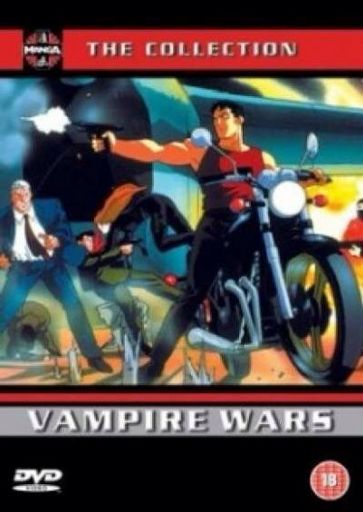
#101: Vampire Wars (1990)

From http://s2.narvii.com/image/
5akcllhpzigfdusunbdbvduw3qij5jpa_00.jpg


Director: Kazuhisa Takenouchi
Screenplay: Hiroyuki Hoshiyama
Based on a novel series by Kiyoshi Kasai
Voice Cast: Masashi Sugawara as Kōzaburō Kuki; Shūichi Ikeda as Milcea Millere; Yuka Koyama as Kiki Lamia Vindau; Kaneto Shiozawa as Muraki; Masaru Ikeda as Mirucha; Masashi Sugawara as Kuki; Takeshi Aono as Charlie Milan; Toshiya Ueda as George Lazare; Yuka Koyama as Kiki; Yūko Mita as Brigit
Viewed in English Dub

Considering the first review was an obscure OVA (Gestalt (1997)), its befitting number #101 is another obscure OVA, something ridiculous this time. Not to be confused with Psychic Wars (1991), but both were Manga Entertainment titles which were, yes, released on DVD again as part of "The Collection", likely an obsession for me because I've over watched the previews on them scored to classic music and the Mad Capsule Markets. Vampire Wars is also an example of Manga Entertainment's infamous tendencies for "15-ing", of adding swearing in the English dub to lift the age rating on their releases, but Vampire Wars is just about to hit "18-ing" in how comically potty mouthed the lead anti-hero gets to be. It does mean, whilst a fan base probably doesn't exist and reduces the chance of this ever happening, I wish I could've seen the original Japanese dub trying to be serious with this lurid material. This is an anime which tries to pack a story far too complex for less than fifty minutes without a conclusion or any major plot threads being finished, so the silliness of the expletives just makes the experience additionally absurd.

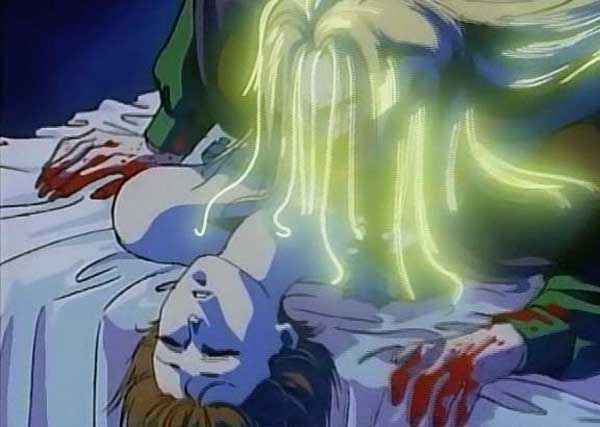
To start with, earning a MASSIVE SPOILER WARNING on the get-go, what is it with anime sometimes envisioning vampires coming from outer space? It's an obsession of mine I cannot really provide more than a handful for, but between this, Vampire Hunter D (which brought in gothic horror, dystopian sci-fi, even the western in its world) and Trinity Blood (2005) there were three titles I saw at an impressionable age that lead to this conclusion. All I can say is that, in exposition that never means anything of importance to the OVA even if a massive exposition dump near the end of its running time, we're told of two alien races, one who became our vampires, the others (who we never see) a technologically advance group who are a potential threat to Earth. None of this is worth when, truly, the plot is an utterly unlikable arsehole named Kōzaburō Kuki, a communist terrorist who has worked with figures who have killed many civilians, who is blackmailed by the French Secret Service to investigate a mysterious assault on a NASA base. This leads to vampires and a female celebrity Lamia who is being targeted by said vampires, and other human groups, who he does show some humanity to in protecting her.

Vampire Wars does belong to the even bigger phenomenon of vampires in anime in general. Vampires aren't natural to Japanese mythology or folklore unless you get to hopping corpses and Chinese vampires, so they have always had a fascinating touch in that, in some cases, they will have to explain whether in live action or animation their mythos with interesting results. Sometimes they don't bother as here. There's one great detail at first I wish vampire stories tried again, where a female vampire doesn't need to worry about being shot in the head, so doesn't wear any armour but a bullet proof vest where stakes would be dangerous to her. After that, they aren't really interesting until they're revealed to be aliens who turned to channelling their spiritual energy, anime's New Age tendencies surprisingly prominent in stories like this, to the point only blood is needed to sustain them.

From https://m.media-amazon.com/images/M/MV5BNTk1MzUwYTMtMDQ4M
i00ZjYzLTljNDEtMTVlOGJlN2YwMzI2L2ltYWdlL2ltYWdlXkEyXkFqcGdeQXVyMzM4MjM0Nzg@._V1_.jpg

That there is no ending, no follow-up as a tie-in to a novel series, means Vampire Wars does suffer from being a diversion that lacks a lot of memorable detail in aesthetic, creativity or any sense of weirdness. Its definitely nasty, with the gore, the unfortunate treatment of French sex workers as one is murdered for blackmail, another punched in the face by the evil giant henchman, the general sense of sexism which sadly permeates this type of pulp, and with a slight moment of body horror with the vampire's mouths turning into maws when they need to eat, ripping throats out. It's not possible to take seriously in lieu of, unless you want to try to justify that nasty streak which is just grimy for the sake of it rather than dramatic and not advised. Obviously, the only sympathetic figure is Lamia, who is the stereotypical damsel in distress until (thankfully) she gets to unleash carnage in an airplane mid-air with a secret about herself and random objects, a nice touch too.

Like the rest of these Manga Entertainment titles, I find myself drawn to the likes of Vampire Wars nonetheless as time capsules as well as for morbidness. A Toei production, famous for the likes of the Dragonball franchise, it's a surprise to see something this violent like many other titles from this era. Not a lot of it is pleasant as mentioned, the tendency to macho touch (but boring) male characters and every women a damsel or victim is something we thankfully got past, but at the same time the mad dash to try to cram so much plot in such little time when its ultimately a doomed decision is strangely compelling. There's a fascinating premise inside the anime that could've made an interest multi-episode OVA, when your protagonist is completely hateable but goes through a literal transformation (even begrudgingly) to someone with a heart, all whilst in this crazy violent horror-action-science fiction hybrid. What you get instead is a sketch that lunges from a to p and skips letters in pace out. The English dub, comical in the swearing, feels appropriate for the material whilst also being utterly embarrassing too. How even in 1997, when titles like this were licensed and these dubs were churned out, this was considered a wise product for Manga Entertainment has to be asked even if affectionately.

And affectionately is to still be found as, from the hand drawn grime to the synth score, notable from Kazuhiko Toyama (who worked on the likes of Cyber City Oedo 808 (1990) and Darkside Blues (1994)), there are virtues in aesthetic to these little animated nasties that I wished were re-implemented in the modern day. Moments do show this - I wished Devilman: Crybaby (2018) was more readily available to see beyond Netflix as, by all accounts, letting an auteur like Masaaki Yuasa tackle a lurid Go Nagai premise meant the lurid hyper violent content was matched by a lot of rewarding content. I wish a lot of these titles borrowed even from the aesthetic of non-adult anime from the late eighties and nineties which Manga Entertainment also licensed (and sometimes add inappropriate swearing too) as, rather than nostalgia, switching out to J-pop for synths or just embracing old art styles, in a period of remaking old properties, feels like an artistic tool of interest. If Vampire Wars ever turned out to be a property to get a remake, which would be hilarious considering what it is, hopefully it might turn out to be a better vampire anime than a lot are and elaborate on this story further than you get here.


From https://www.clubdesmonstres.com/best/img/vampirewars1990e.jpg

Monday, 22 October 2018

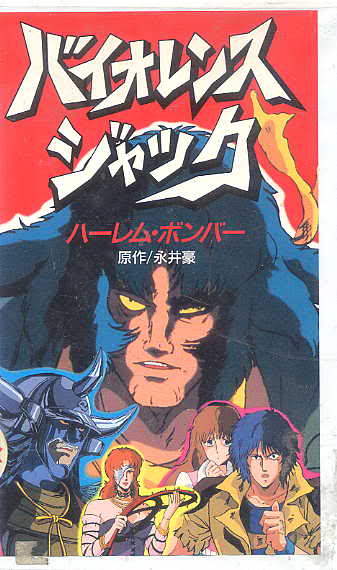
#77c: Violence Jack Part III - Harem Bomber (1986)

From https://orig00.deviantart.net/640f/f/2017/138/
6/d/violence_jack_harem_bomber_by_mdtartist83-db9mc0j.jpg


Director: Osamu Kamijo
Screenplay: Mikio Matsushita
Based on the manga by Go Nagai
Voice Actors: Julia Braams as Mari; John Bull as the Slumking; Nadia DeLemeny as Yumi; William Roberts        as Harem Bomber; Liza Ross as Rose; Bob Sessions as Violence Jack; Barbara Barnes as Sabu; Colin Bruce as Yamaguchi; David Jarvis as Kenichi

Synopsis: In the post-apocalyptic world, the Slum King rules it with an iron fist with his vast hordes; in the midst of it is Mari, captured for his vast sex slavery group, and one of his soldiers named Kenichi, who were a couple before a comet from outer space destroyed civilisation, find each other and attempt to escape the Slum King's minions like Harem Bomber. Whilst this takes place Violence Jack, the personification of death and mayhem, approaches the Slum King's territory.

[Spoilers and Trigger Warnings Throughout]

After the gruelling content of Evil Town, than the more rewarding but still tasteless Hell's Wind, there's Harem Bomber, or the Slum King as its Manga Entertainment release dubs it. By this point Violent Jack is just a personification of violence with supernatural powers, all in the shortest of the episodes, the first released and the one with the least censorship for the English release barring a minute or so. It's also so badly put together you could put it on in an art gallery and be compelled by how low a bar in terms of eighties OVA anime is in terms of quality. Revisiting these edited versions, censorship or not, it's a strange emotional trajectory when you don't dare try to marathon all of them, which I made the mistake of for the first time - Evil Town even butchered forcing one to want to take a shower notwithstanding, Hell's Wind watchable, and Harem Bomber so hellishly awful I am amazed I never noticed had bad it was until now. It's bad to the point it's amazing it ever got sequel episodes.

The script's sleazy pulp, Jack versus the samurai helmeted Slum King, all whilst a young couple find themselves in the midst of sexual slavery and Jack causing mayhem, rife in issues and not even ending with a fight against the Slum King, but one of his minions Harem Bomber, a giant nondescript man whose minions (including a bisexual dominatrix with a metal Phantom of the Opera mask who runs the sex slavery harem) are more interesting than him. It also ends anticlimactically as, to defeat the Harem Bomber, Jack throws the helicopter containing the young couple at him, killing the male love interest who decided to help. That in particular stands up as one of the more ridiculous moments of the OVAs, one of the few plot points which is closer to the absurdity found in most "bad" anime from this era rather than distasteful grim. That, and whilst its connected to the grim sexual slavery subplot and the homophobic evil lesbian figure who molests a captive to the point she has instant Stockholm Syndrome, that her male staff are all large men in really, really tiny leather briefs straight out of the infamous Frankie Goes To Hollywood "Relax" music video.

From https://i.ytimg.com/vi/5DsDxGLZFiU/hqdefault.jpg

The animation is also dreadful even by my tolerant standards, a side to myself I openly admit takes masochistic (even sadistic) delight in bad animation and production value, but even here cringed in horror. It's bad to the point that one of the truly infamous lines of the English dub, a case of verbal tourettes, was actually to cover up an animation mistake. The dub, only covered barely so far in these Violence Jack reviews, is ridiculous; whilst its totally inappropriate for the nasty material at points, intentionally and unintentionally, its ironically one of the reasons why the anime is even re-released by Discotek in the current day, its mad failure one of the few reliving aspects to sooth the septic viewing experience. This line, a stream of verbal insults at Jack's way that (in the one single amusing aspect of Violence Jack for myself) I have considered using as an alarm sound, was forced out due to the lip movements of a character being accidental, just as that young male hero Kenichi  abruptly develops a twitch in an eyeball in one shot. This amongst the general presentation is truly bottom of the barrel for anime, compelling but utter trash even technically, ending with Violence Jack not only able to regenerating a lost eye but turning into a phoenix for reasons I don't understand.

The entire Violence Jack project is an inexplicable creation that came from the eighties OVA boom. One that is morally repugnant yet developed a reputation for many to get re-released and even I would wish for a real explanation to why it even came about, the kind of details that would not be revealed by people who worked on this unless forced out of them in a very awkward conversation. Thinking of the individuals behind this, why they made the series even with the fame of Go Nagai behind it, why it took four years and was this sporadic and wildly bad in various ways. The poor female animators having to work on some of the material in the uncensored version, the poor production staff and voice actors of both genders having to work on certain scenes I thankfully never saw, how this project, clearly brought into existence because Go Nagai is an important figure in all manga and anime, blundered along, ended up taking the artistic decisions that happened.

From http://ekladata.com/zF1eojHKulnC49_tyUIHjRQ-NAc.png

And this is all with knowledge the uncut versions, especially with Evil Town, would drastically effect my opinion further, with Evil Town potentially spiritually and psychologically scarring me if it's as bad as I've read it as. If anything, Violence Jack is synonymous now with how for any good or obscure curiosity found in eighties OVAs, it let problematic and artistically incompetent material in the door too, from this to the extremes of hentai porn anime that began when straight-to-video allowed a liberation of content restrictions. The irony is that, even if it was tasteless and offensive for some still, if Violence Jack's worse moments were toned down or flat out removed it would've work provided the quality was improved artistically alongside fixing major script problems. As I'd gladly had Legend of the Overfiend (1989) without the censored sexual violence, Violence Jack even if it has far less defendable content in plot complexity could be remade into something better. Hell, a remake which didn't fall down the same pit holes this did could make sense, especially as of all people the experimental cult anime director Masaaki Yuasa was chosen to helm a Devilman remake in 2018, and that did very well. (And, not knowing enough about the material and not wishing to spoil it, I'd be reprimanded if I didn't mention Violence Jack is secretly a sequel to Devilman in story, so the remake idea isn't that weird).

Go Nagai, frankly, made some dubious creations even if you only watched the anime adaptations rather than the original source material, but it's noticeable that, for every Kekko Karman (the super heroine who wears no clothes) that was originally a joke that backfired, or a Violence Jack, he also made characters like Devilman and Cutey Honey that can thankfully be interpreted in a variety of ways, still flexible as stories and characters for a variety of tones. Nagai's reputation is too important to dismiss him, as important to anime and manga arguably as a Hayao Miyazaki or an Osamu Tezuka, and if it's unfortunate he likes extremes in gore and sex, he at least has characters and properties which can be malleable and reinterpreted in various ways in contrast to this. The same could happen to Violence Jack, the proto-Mad Max apocalypse still a profound advantage even if everyone's done this material over the decades now. Until then, Violence Jack so far is the infamous punch line that has made even the most hardened of anime fans green in the face viewing its content.


The End (Finally...)

From https://i.ytimg.com/vi/hzVIq6agNIk/hqdefault.jpg