Showing posts with label Compilation. Show all posts

Monday, 12 August 2024

#278: Cybervenus FeiFei (2001)


Studio: Blue Moon Studio

Viewed in Japanese with English Subtitles


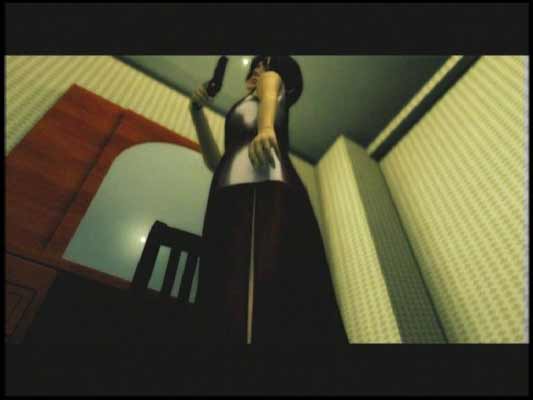
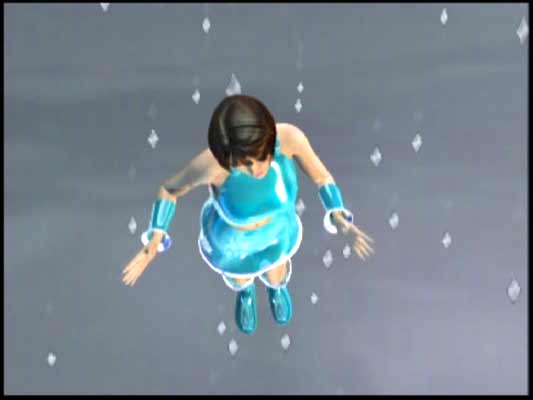
In my obsession with digging up obscurities, I finally close off the trilogy of three Virtual Idol releases which got DVD releases in the United Kingdom. They exist in an unconventional place in terms of anime, as CGI productions connected to Pony Canyon, a publisher huge in the Japanese music industry with involvement other pop culture industries like anime, but as DVD directed collections of segments which were released in the boom period of British DVD distribution when the format was new. This film in its trailers promised a fourth, which feels like it was falling back into the idea of the sexy virtual female idols of the other titles I have covered, but the three we got were Yuki Terai - Secrets (2000), Virtual Stars (2002), and Cybervenus FeiFei, which focuses on a Chinese woman who was created through motion capturing the movements of real actress. It feels like, from the three we got, this was the most ambitious in terms of ideas and artistic presentation, making the fact this was not the final one somewhat strange. Virtual Stars was really falling back into the idea of sex appeal of their virtual starlets, whilst this feels more like it should be the conclusion, where Blue Moon Studio wanted to figure out where they could go with this production concept they had, as FeiFei becomes significantly more existential in tone than appealing to a cute idol who can appear in music videos.

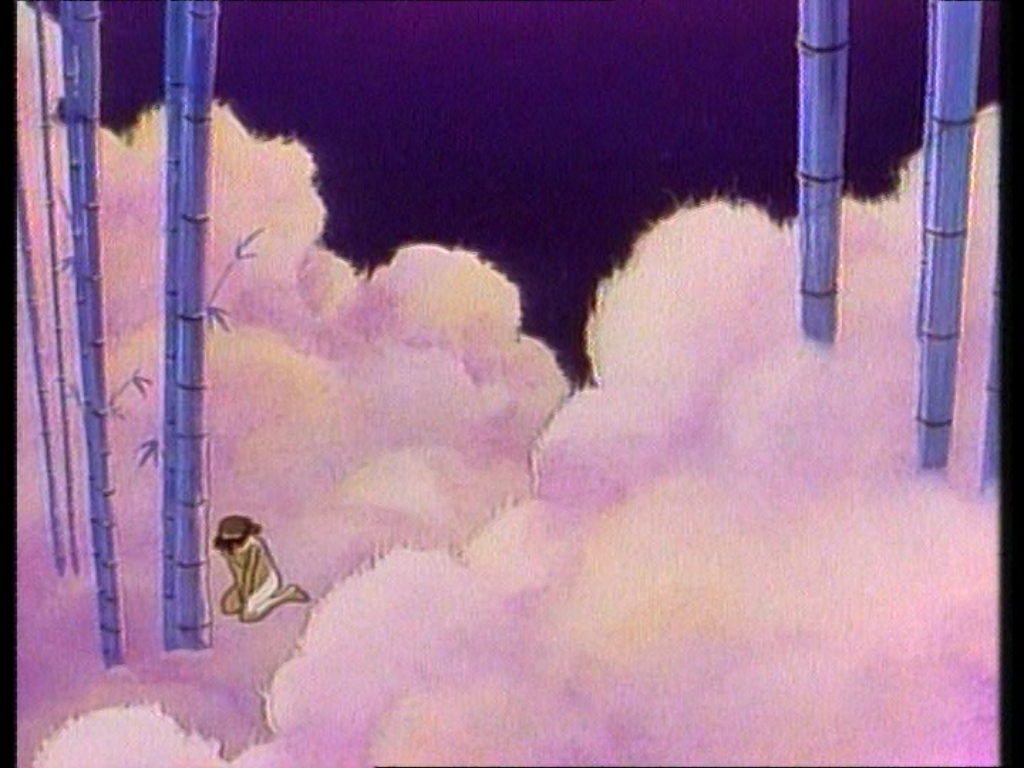
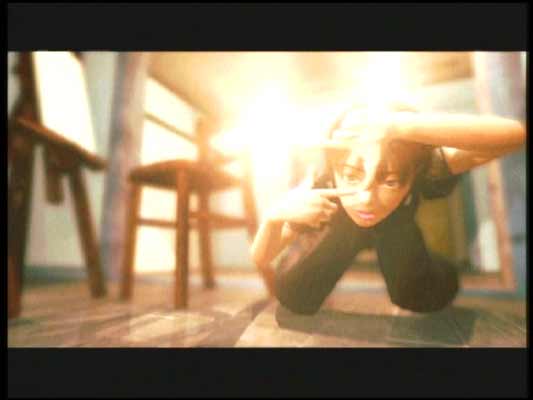
Like the others, this is a collection of shorts, beginning with Doll, where FeiFei initially is wandering through giant cogs. Ahead of time, I find the computer effects here compelling, beautifully obsolete, especially in mind that there is a clear care to make FeiFei as realistic as possible, as will be seen in the later shorts, even if prioritized over overtly detailed locations. As a result, she is a proto-virtual idol in the truest sense of pushing the realism to a quality you can admire, but aside from actual live action footage being used later on, the journey through mazes in this first short is very abstract in comparison to the person wandering them. Add the ambient techno the scores the segment as she finds feminine robots and a transparent monolith, and it is brain candy for Millennials. RGB takes this further by looking like the cool Dreamcast game we never got, FeiFei cybersurfing a spiral environment in pure white void which wandered out of the videogame Rez (2001). Even the spoken word fuzz rock that scores this segment feels like something Sega would commission whilst she is riding a metallic shark in a green sea of fish. Arguably the best thing about this entire project, as here, is how work like this can have a pretense of a plot but also be purely dreamlogic as FeiFei’s birth, as this short is meant to represent, includes all the following but also requires her gaining colour pigmentation for his body beyond grey.


These shorts all have poetic introductions to them, suggesting Blue Moon Studio were more earnest in their work with this one in terms of meaning. Voice, as FeiFei travels through a room in its own existence and learns to speak, also brings in the touch distinct to this collection of animations, blending live action with FeiFei interacting with the real world. The soundtracks are a smorgasbord of the era – whale sounds, nu jazz, ambient lounge and dub music, sometimes in the same short as with Real, focusing on more live action as FeiFei sees the world through the pieces of recorded footage, and is interacting with a real actress who can talk to her through a laptop. These shorts build a narrative over these segments, unlike the others in the series, where she is slowly growing into a real person fully immersed in our world, which also makes understanding the dialogue more a concern. “Dream and reality are the same” is spoken at one point, and whilst we are seeing the limits of the animation at times, we see something very ambitious in spite of this. By Messenger, we are definitely seeing a more New Age tone to the project too, Messenger emphasizing this as an experiment in a character as a radio host, or waiting in-between her recordings of messages from listeners.  We have moved from random zombies being fought off by a sexy dancer in Virtual Stars or music videos to more perfected movements for speaking dialogue or communicating her messages of love in turntablism.

Labyrinth is the most ambitious of them all for being seventeen minutes long. Splicing our lead into real footage of Rome, they do have to fudge around her presence around real people in the streets, like a ghost no one sees, but even in painstakingly animating her operating a phone booth, the short is trying for a more ambitious short film with emphasis on mood. It begins attempting a plot of FeiFei trying to find a man she cares for living in Italy, only for reality to start to bleed and distort in digital code, all with knowledge eventually he has disappeared. As she travels around Rome, witnessing masks with her face on them in store windows or with the walls closing in on her, it is cool to see Blue Moon Studio suddenly take the project series to this point, feeling like the last thematically in their ambition in spite of the true chronology of the releases. After FeiFei goes to a church the short becomes more abstract, a mood piece where she is transported to a tropical island, eventually to her painting herself on the moon on grassy field. It might be seen as a cop-out, but in mind that this entire product feels like the right mix of old CGI, dream logic and these moments of expanding the production with ambition, I would let Labyrinth have a pass if it was entirely just obsolete CGI being used in imaginative ways by this studio, only to also admire that they were wanting to push their interest in terms of artistry too. Sadly, this entire series of works are as obscure as you could get, and in mind that we even got DVD releases of these in the United Kingdom, I ponder whether any of this, from the films themselves to the making of documentary material also included, are even properly preserved. Finally closing the trilogy off they are a compelling dead end in the history of Japanese animation, though it is clear to see that we would have not gotten a Cybervenus FeiFei even if the project continued into the 2010s. When Virtual Stars was released, the production realized the sex appeal sold more, so even if they were able to prosper, this more esoteric tone would have likely been ditched soon after anyway.

Sunday, 9 August 2020

#155: Virtual Stars (2002)

A short film compilation

Viewed in Japanese with English Subtitles


I'm your magnet of love, and I'm here to serve you.

The following is a very idiosyncratic release from the early years of British anime DVDs, and a return to the Virtually Real releases, a group of DVD compilations that I first came across years ago for my anime reviews with Yuki Terai - Secrets (2000), a compilation of music videos and shorts that were both tech demos and also trying to sell a virtually animated female character as a figure of affection and sensuality. Off the bat, whilst this is usually something we are meant to end a review on as the point, these six short films (usually around five minutes each) evokes for me that in so much culture in general people have attempted to capture an idealised form of femininity. This is a problematic idea, rightly challenged over the years by feminism, but it is also inherently a failed cause too. Called "computer-generated femininity" on the British DVD blurb, the six female designs here are meant to be attractive, in the same way in the modern day you have eroticised female drawings and even otaku rejecting the "three dimensional woman" for the 2D one, hug pillows and all.

This compilation, with connection to Pony Canyon, a music/anime/videogame company who I have come across for the notorious failure The Lost Village (2016), is long forgotten. In its obsession, which stems from many, of the idealised woman, an ideal which is ancient and can go as far back as fertility statues, this compilation is fascinating when you step back and take it into consideration from how it is trying to attain this inherently doomed goal as well as a snapshot of old computer animation. A form that is not appreciated, I find looking at obsolete animation strangely pleasurable and unique, even in this case too where there are complications to also bare in mind.

Hikary - A Jellyfish Day begins this with the girl next door, the notion of the idealised version of the woman you as a (male) viewer could meet in the street, here a normal young woman who, in this music video sung in English, is in a Laundromat mopping the floor singing directly to camera. The uncanny valley effect is felt here1, but with the irony knowing this idealised figure was still created by real people for her to even exist. Both by motion capture of an actor, and a real female singer recording the song, as seen in behind the scenes footage in the end credits, the vibrancy of a human being is noticeable over the equivalent of a statue made from 1s and 0s. Created by "Yamag's Garage", Ryoko - In Japan is a vast contrast. A glamorous figure - first with silver hair, silver (very) mini-skirt and top, and silver boots just walking in a corridor of silvery shapes. This music video also includes text, speculating about virtues of beauty from a perspective of a simplistic masculine view which can be brought into question. The animation for all the shorts has aged, but what is fascinating is how, having to worm with new technology, the female character designs have to pull back on aesthetic due to the materials they are working, the complexity established in how the DVD includes making of shorts going into various aspects of digital animation. Unlike the appraisable creativity I have encountered in other anime at this time, even if you cast "Ryoko" in skimpy clothes you have to deal with the fact that she has been created at a time where the animators, in their hard work, had to even attempt to bring a figure to life let alone concern themselves about aesthetic.

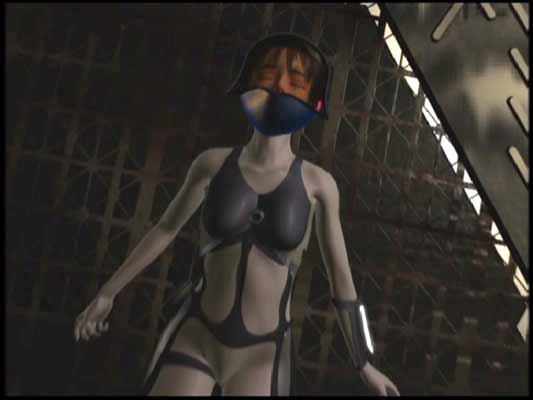
Misty is another character who just walks, only she is brash and confident. This if anything is a time capsule to the nineties - nineties techno music on the soundtrack and a sequence of car driving which leads me to not be surprised if any of the animators, creating the scene of a sports car speeding along to camera, worked on a racing videogame. The moon is so ominous and close to the skyscrapers in the city locations I was expecting a horror aesthetic, and that there would be tidal disruptions across the globe as a result. Yukari - Run & Run just go directly for the T&A, a figure who is insanely busty, barely kept in an insanely skimpy sci-fi bikini with giant unnatural eyes and also goggles attached to her head garment. Running in space, the jiggle physics for her bountiful bust are ridiculous though also crude; it evoked whilst I was watching the short, since we are on videogames, the beat em up videogame franchise Dead or Alive which became notorious not only for a jiggle physics for the first game in 1996, but that they kept developing it as the sequels went along. (Sometime into the mid 2000s, with a spin beach volley ball game, it was impossible not to get past the cheesecake fan service even if the main games were well regarded). Naturally this is one of the longer shorts, one where the earlier test footage showed fewer saucer eyed figures and less concerns about how one runs in heeled boots. Objectification like this, the insane exaggeration of the female body, is something you find in anime in general, this case so blatant it is frankly absurd.

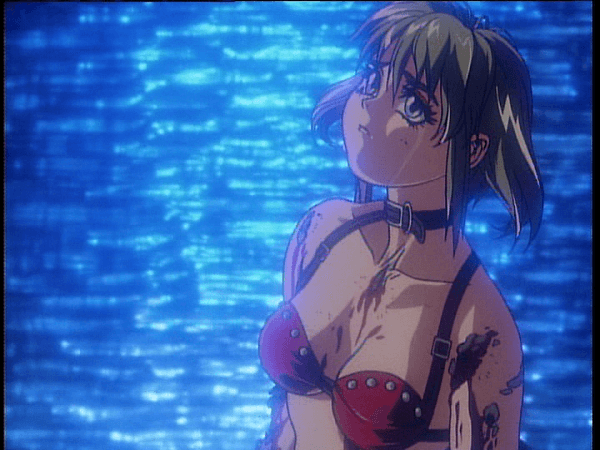
Out of all the shorts, the following is the one which actually has anything explicit but also an attempt at something creative, called Super Sonic Jet Girl. It frankly becomes like a Robert Rodriguez fever dream in digital form, a director who has skirted a fine line with his super strong female characters who can yet wear fetishishtic costumes. Set in a dark dungeon that goes to a demonic nightclub, where a giant demon with a snake phallus sits watching and a skeleton band plays, an exotic danger in skimpy underwear and covered in tattoos dances until she has to right off zombies, rather than restage the Michael Jackson Thriller music video. The tattoos are a surprise as even in hand drawn animation from the nineties and eighties, even for theatrical, it would have been a nightmare to draw any character with a vast snake on their back alongside the variety on this female character's body. The joke reference to Rodriguez, and films like From Dusk Till Dawn (1996), is not out of place as this involves her acquiring a samurai sword and well as twin pistols, someone on staff for this production predating the neo-grindhouse films by a considerable time. In fact the one adult detail of this entire compilation, which is likely why it got a fifteen certificate alongside the other content in this segment, is that it ends with this figure topless covered in gore on her chest returning to dancing, which is definitely a distinction in terms of an idealised figure, closer to the alt and goth model movements in the West like SuicideGirls. It is still objectifying but it is at least fun, clearly a production where people were enjoying themselves and thus the best thing here.

Aya - Chat returns to the idea of the girl next door, an even meeker form who wears a long skirt and jumper, beginning with a montage of telephone lines set over real locations. This music video is interesting as it has the CGI character of Aya set over real standard definition shot real footage of streets and environments. It can be awkward, like when she is placed on a swing, but it is a fascinating aesthetic touch. Openly, I enjoyed the experience of Virtual Stars but with mind of how strange and frankly superfluous this entire project is, where the extra shorts, more cruder animation but with more variety, were at times more dynamic. At three of these sets exist planned, CyberVenus Fei Fei (2001) the other I am aware of. They are materials likely to be lost to time, and with good reason as for their problematic gender issues and technical obsoletion, but they would be fascinating to preserve as they raise aloft a case of attempting the idealised female figure, creating her artificially than with even an actress, that is against the reality of the vastness of human personality and individuality but is something that can be argued is an obsession the likes of even high art, painting and literature, became obsessed with for aeons, still representations to prod and scrutinise.

It has not even become aged as an idea as, in June 2020, a sci-fi production was backed with a robot named Erica as a star, an artificially created actress with artificial intelligence. Playing a robot, and a creation of Japanese scientists Hiroshi Ishiguro and Kohei Ogawa, Erica does nonetheless alongside raise the issue of an idealised female image, especially as unintentionally the fact her creators were both men does raise the concern of objectification, rather than if Hiroshi Ishiguro's own android double he has was cast instead2. That is not even including the pop culture figure that is Hatsune Miku, a Vocaloid software voice bank developed by Crypton Future Media and its official anthropomorph, who has become a popular figure or those aforementioned otaku obsessed with drawings over real women. Far from a cultural item doomed to irrelevance, Virtual Stars ironically was a good signpost, though not a trendsetter, to ideas we would be tackling with decades later, those which raise plenty of issues on the notion of representation, alongside gender politics, but still stuck ahead of us to scrutinise.

=======

1) Robotics professor Masahiro Mori coined the term in 1970, as "bukimi no tani genshō", before the term was first translated as "uncanny valley" in the 1978 book Robots: Fact, Fiction, and Prediction, written by Jasia Reichardt. It does connect back to the notion of the "uncanny", first introduced by  Ernst Jentsch and elaborated upon by Sigmund Freud, the idea of the "strangely familiar" which can cause ill-ease, something found in the likes of dolls, waxworks, and with the uncanny valley, robots and even CGI figures.

2) Source HERE.

Monday, 3 August 2020

#153-4: Rei Rei / The Gigolo (1993)

Today we deal with an obscure double bill, two erotic OVAs both from 1993 that were released together as a DVD in the United Kingdom in the very era days of the DVD market. These types of titles are fascinating to deal with as, whether good or not, this is an entire history worthy of prodding with morbid curiosity, titles which came, few remember, disappear, but could be found by pure look in a second hand DVD store. In this case, this also means talking about a company Kiseki Films, a long obsolete company whose licences were distributed between the UK, Australia and New Zealand, and ended as a company, to some testimony, when it was bought out by the British company Revolution Films1. Titles they released included Black Magic M-66 (1987), Urotsukidoji III: The Return of the Overfiend (1992)...but also Gunbuster (1988-9), which means this is not the first time I have covered one of their licenses from the early days of the DVD era.

This however, as a double bill, are two very different titles both under sixty minutes each which few may know about, which to my surprise were not what I was expecting for good and for bad in-between them.

 *****

Rei Rei (1993)

Director: Yoshisuke Yamaguchi

Screenplay: Mitsuru Mochizuki

Voice Cast: Naoko Matsui as Kaguya; Katsuyo Endou as Satoshi's mother; Keaton Yamada as the Narrator; Kenichi Ogata as Pipi; Kumiko Nishihara as Mika; Miho Yoshida as Dr. Manami; Misa Watanabe as Tanaka (female); Mitsuaki Hoshino as Satoshi's father; Shinichiro Miki as Satoshi; Takehito Koyasu as Dr. Okabe; Wataru Takagi as Tanaka; Yuri Satou as Ikuko

Viewed in Japanese with English Subtitles


I've got two cherries for you to chew.

Rei Rei was the one I had the most interest in, and it is a compelling premise, but tragically this proved the most problematic of the duo. There are quite a few titles in anime about supernatural figures, or those who dabble in that realm, becoming involved with the lives of normal people, including for sexual issues, but this is curious as our protagonist is Kaguya, with her diminutive assisting in a fetching purple suit called Pipi, a princess from the Moon who helps mortals who are in crisis with love. She is explicitly, clearly, based on the Tale of the Bamboo Cutter, a 10th century piece of prose about a princess from the moon found as an infant in a egg, a legendary piece of Japanese folktale which was adapted countless times centuries later in anime and manga, including Isao Takahata's last project The Tale of the Princess Kaguya (2014).

That the two thirty minute episodes has issues is more annoying because I love this idea, about a literal magical being, a beauty of unearthly form, who has decided to help mortals whose souls cry out of lovesickness. The first episode initially suggests where tone is going to stay, and how this premise could be sustained as an erotic series but also effectively a form of anthology story formed around a central figure, that of a guy who tries to flirt with a girl he loves called Ikuko, only for her to reveal that she is dating an older female doctor. Unfortunately, we are taken to a deeply problematic tale in which the older woman is a bad person, actually dating a male doctor and purposely injecting raw egg into Ikuko, deceiving her into thinking that it is Vitamin C, to cause anaphylaxis. This is not the aspect of real issue, but that it is compromised by a heteronormative conclusion, that Ikuko has to renounce herself and fall in love with the male lead, a dweeb with a terrible tendency for nearly being hit by vehicles.

It hurts worse for me as I could vibe greatly with the eeriness that this episode had, even having my trope appears where people are whisked off to an alternative dream reality, usually a bridge of symbolic form they have to cross naked in this case. Considering the first episode, by itself, manages to have sensuality and a grace to it, it is sad that this interesting premise, with the art style contrasting urban Japan with a figure of pure fantasy, turns out is more conservative than its own premise is, including some gay panic humour found between episodes. If made a decade later, Rei Rei (also known as Rei Rei: The Sensual Evangelist) could have hopefully embraced a more progressive attitude, particularly as you would not need to change the protagonist in the slightest, a completely supernatural figure who who can be invisible unless she desires to and flies as an ethereal figure leaving behind purple dust. Even her dialogue is completely ethereal too in the first episode - A love lorn soul, a true heart, is calling out in pain - suggesting that even if you could have funded a more sexually explicit television, which do exist either censored or pay per view channels, you could have even made this character actually feminist and ran with a lot of more enlightened (and frankly sexier) content.

And this is stranger as there is a tantalising and subversive streak when Kaguya helps the male protagonist by turning him into a woman. Where it leads to is not exactly progressive, but it definitely touches upon something subversive - that he is going to seduce the male boyfriend of the older female doctor, which really brings about gender fluidity that the show runs the opposite way from immediately when they are in the bedroom down to their underwear. Also, whilst again not necessarily progressive either, the more rewarding ending would have clearly been this boy willing to be a woman for the rest of his life, proudly, for the woman he loves, literally dangled as a premise in front of him in a bag of magical dust. If that ending had transpired, I would have been a drastically different opinion of the OVA even if the second episode had been the same as it was.

This plot point definitely reveals to the weirder side of Rei Rei, which would have been more rewarding if so much of the show had not undercut itself. It also has a weirdness which is also perverse at times to, preparing the viewer for the second episode when about the female doctor has a nightmare about Ikuko entering her body, in a sensitive place which (tastefully but provocatively) is shown in a split second shot. It is a curious mix of a program with a greater aesthetic grace than this type of genre might necessarily have, with clearly a potential for both being bizarre but also having a sensual elegance, only to have the production hit the brakes. One, despite its pleasant comedic tone, which has to cater to heteronormative values and a plot even boring to a heterosexual male like myself in how much of a coward it turned out to be in not taking a risk.

The stranger side grows and runs rampant by episode two, which  is again about another male client, another unlikable bland male dweeb, which is something I have witnessed in other genres and continually ask of in terms of who would think such characters are interesting as male representatives in the first place. This one has an inability to be around the opposite sex without his heart racing; it is a condition so bad he can suffer from sudden collapses where he goes unconscious to the point it can look like he is death, with a comically grimace on his face. This turns into a series of vignettes, with Kaguya now becoming much less serious as a character and a lot more cartoonish, such as when his id and soul are trapped in a "Bentendo" video game which she has to get him out of it. It promises something wonderful, with a world of eye craters and tongues in clouds, only to bring out tentacles for a joke that is thankfully skipped over.

This is however also the episode where Kaguya lets him becomes his girlfriend's bathwater, which is exceptionally bizarre...except that sadly gets to Kaguya letting him become invisible like mist in the shower to her, which he with some morals even questions when she recommends feeling her up to become more comfortable with her desires. The OVA never went beyond these two episodes, which was probably for the best as, tragically, this good premise worthy of a remake was already compromised. Even if it manages a plot threat I had never considered seeing - sexual breast feeding to exorcise his emotional pain from his mother abandoning him and his father - it is more as a peculiar oddity from the nineties than a show that I thought could have actually been good. If it had lasted, we would have gotten this as it stands, which would not be fun even if like car crash television at points. All the good virtues are squandered with what clearly was a show running on fumes and unenlightened ideas for good erotic stories, strange aspects otherwise.

*****

The Gigolo (1993)

a.k.a. The Gigolo - Dochinpira

Director: Hiromitsu Ōta

Screenplay: Wataru Amano

Voice Cast: Kōichi Yamadera as Jin Kaitō; Masako Katsuki as Ai Mizushima; Naoko Matsui as Ranko; Daisuke Gouri as Hazukura Boss; Hideyuki Umezu as Hazakura Yakuza; Hiromi Yokota as Body Conscious Girl; Kaoru Shimamura as Okamoto; Kenyuu Horiuchi as Suzuhata

Viewed in English Dub


They're real bullets!

So surprisingly what I considered the trashier of the double bill, which I doubt really was even hentai but just an erotic title, turned out to be a more enjoyable experience. Simply because I expected a censored, junky hentai about a male gigolo, with an insanely deep voiced male voice actor in the English dub2, only to get a c-grade pulp pulp tale which was nonetheless entertaining, a crime narrative where a gigolo finds himself crossing paths between the mafia (yakuza), and a female hit woman out for revenge for her family being killed during an assassination attempt at a restaurant when she was just a child.

Resplendently scored to guitar riffs, this lurid macho storytelling has ebbed away for the most part from anime into the modern day, at least in terms of those found in OVAs we got over in the West sold for their violence and sex, whilst there are likely titles still in existence which tackle this tone in different ways and institutions like the Fist of the North Star franchise still get adaptations but also self referential official parodies. The Giggolo is much more subdued take on, say, the Crying Freeman OVAs, with less of the open absurdities, or an erotic version of the more explicit action melodramas of the OVA era, although this is more tasteful in context and content then I had even considered.


Here a young guy out of his element is only a stereotype of being macho due to all the sex he has, because of his ability to seduce women for work, and having a female roommate happily letting him stay and being proto-friends with benefits. Even then, he gets his head kicked in by thugs until the woman he is with pulls a gun out, and never really is the decisive factor in any for the conflicts, just able to help. He encounters a sado-masochistic client, when it's too late to pull out from the client, who likes her whips and hot wax, and the hit woman even if she feels she has "become a woman" with him is still the one out for revenge, wagering a Cobra sports car for him to win if he can be the first male to actually being good in bed. If it not feminist in the slightest, but is surprisingly more interesting in the gender context because your lead, from his initial introduction as a cool lothario, has this veneer chipped away as the plot continues.

Yes, The Gigolo is still lurid, but considering its double bill title Rei Rei on the same British DVD disc, this tacky and less well made production was actually more defendable as it was also ridiculous. It is sexually explicit, but it deviates fully into its crime drama by the end, much more interested in fully committing to being a melodrama for men, of tears of screaming passion and a sports car full of flowers pushed into the sea like a Viking funeral. The pair does raise the issue of how one tries to write a story with sex as a prominent aspect, espcially as Wataru Amano made their career with titles in hentai like Demon Beast Invasion (1990) and Venus 5 (1994), the later a pornographic parody of the Sailor Moon franchise. Both of the titles I have covered are completely alien to each other in tone and presentation, and both of them offer some curious aspects to consider in terms of how sex is depicted for better and for worse.

Stepping back to these titles by themselves, they are a fascinating pair of oddities. As I am able to dig back and find these titles, I find amusement even in the fact that, as the one person still using a DVD rental service, I am likely the first person in a decade (if anyone at all) who requested this double bill DVD to be posted to me. A title from as far back that you can legitimately fear about laser rot, that sense of investigation in it is entertaining to the point it compensates for the disappointments I did have alongside the unexpected surprises I did have.

==========

1) We have to rely on Wikipedia for that detail, so take the fact with a pinch of salt. 

2) The English is ridiculous, with additional swearing, but especially as the male voice lead (who I thought I recognised but could not tell who) is so deep voiced to a youthful lead it added a level of absurdity to the production.

Thursday, 6 September 2018

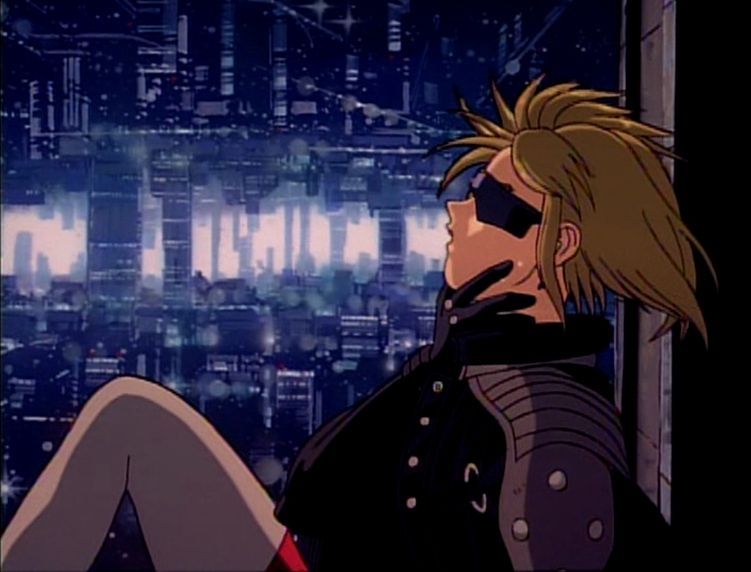
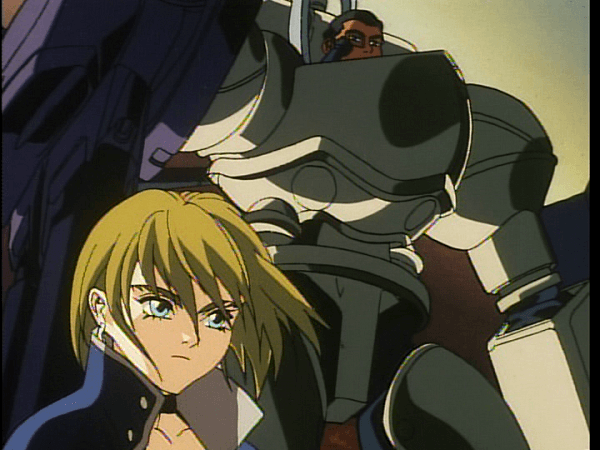
#66: Armitage III - Poly-Matrix (1997)

From https://shinden.pl/res/images/genuine/201476.jpg


Directors: Hiroyuki Ochi, Satoshi Saga, Takuya Satō and Yukio Okamoto
Screenplay: Chiaki J. Konaka
Voice Cast: Elizabeth Berkley as Naomi Armitage, Kiefer Sutherland as Ross Sylibus, Dan Woren as D'anclaude, Barry Stigler as Asakura, Bryan Cranston as Eddie, Dorothy Fahn as Kathy/Kelly McCanon, Ellyn Stern as Rosalind

Synopsis: The moment he steps into a space port on colonised Mars, a member of Earth's police force Ross Sylibus (Kiefer Sutherland) finds himself immediately involved with a conspiracy when a female country singer is not only found murdered, but revealed to be a highly advanced form of bio-mechanical robot. Amidst Mars and the growing anti-robot sentiment among the human populous, he also meets the mysterious and cocky police officer Naomi Armitage (Elizabeth Berkley), a ball of fiery energy whose emotional investment in the case, as more advanced robots are targeted by a lunatic, is of great significance.

[Major Spoiler Warnings]

Armitage III: Poly-Matrix is a fascinating curiosity of earlier Western anime fandom. This is, significantly, a theatrical re-edit of a four episode 1995 OVA series where the run time is at least over two hours, making this a ninety minute production which still works as a story but had to excise a lot to get its length. It's also very well known for the casting of known Hollywood actors in the leads. The female lead Naomi Armitage by Elizabeth Berkley, post Save By The Bell and just after the infamy of Showgirls (1995), and as male lead Ross Sylibus by Kiefer Sutherland, son of Donald Sutherland and an underrated actor in his own right. As a result, I can review the original OVA version, which was released before and after the alternative English language cut, as a separate entity. When it comes to the feature version, there's both the virtues of the original material, and their problems, which ultimately stand out the most, the decisions to make the film marketable to English speaking countries afterwards merely slurring material that is curious and not perfectly explained in this version's form.

From http://www.capsulecomputers.com.au/wp-content/
uploads/2012/07/armitage-III-review-2.png

The story of Poly-Matrix is both interesting but scuppered. It does offer a fascinating idea that there are robots in this futuristic world so advanced to the point they both have real emotions but, mostly female, they can also even conceive children in their bio-mechanical forms. This leads to the one theme which could've been more interested if dwelt more carefully on but, especially in the truncated version, has severe flaws which could be accused as problematic. Its revealed just near the end of the film, which doesn't allow enough time to delve into this, but Earth has become a feminised society, with a female leader, who in potential talks with Mars are severely concerned with how the Martians, in a decadent dystopian future-scape, have female robotic sexbots and servants everywhere, for added touch many looking like stereotypical Moe anime heroines with big eyes and multi-coloured hair in contrast to ordinary human women. It has to be asked whether it's the truncation or the original story which is an issue as, once the conspiracy is revealed, it adds an unintentionally problematic spin on feminism by accident of the theatrical version not providing enough time to clearly define its ideas.

At the same time that leads to a fascinating spin that could've worked. That even Earth, with a female leader and meant to be progressive, can yet be being a conspiracy with deeply problematic moral sliding has a darker, more poignant touch in real life when the #MeToo movement and attempts at helping women, even by other women, sadly has been punctured by issues which harm women, even has women harming other women through unintentional means. (A good example I thought of in the middle of Poly-Matrix was when Meryl Streep, Kate Winslet, Emma Thompson and Lena Dunham challenged Amnesty International to withdraw support for decriminalisation of sex work, only for female sex workers to challenge these major figures back by arguing Amnesty International's decision would actual protect them, signing their own petitions back to have Amnesty stick to their choice1).

From https://static.anarchivism.org/cyberpunkreview-
archive/www.cyberpunkreview.com/images/armitage3-13.jpg

There is also the film tackling, as many sci-fi works, the relationship between human beings and machines.  There is a sobering nature to the Martian populous massacring robots in protests, the protests done with understandable reasons of losing work to the robots, but made horrifying as humanoid figures who are built to look like them are torched alive and their machinery piled up in morbid decorations around graveyards. The added issue that the robots seen punished are all female those which are generic machines already having uncomfortable connotations before you get to those in the story with actual emotions. Their deaths makes this intentionally more mortifying, one figure shown briefly to have a life and relationships, a romance with her female model as a painter, only to be a burnt husk on a pyre next to less advanced robots regardless of her real humanity. The end, where female robots watch on at a battle onscreen between the leads and an army sent to silence them, turning their heads with their big eyed gazes despite being merely functioning machinery, has a power to it as if hinting of a potential revolution.

Unfortunately the material is not as refined and expanded upon as one would hope. It is built as well in a generic sci-fi action anime, like many from the era and not as unique as them. The issue that Poly-Matrix isn't that unique, baring it mind it was once a longer length production, is more surprising when its screenwriter is Chiaki J. Konaka. One of my favourite screenwriters, argubly an auteurist voice in his own right, who is known both for being esoteric and having frustrated many an anime fan with deliberately ambiguous endings and his work eventually undermining reality against unreality without defining which is which. For a very interesting screenwriter, a literal auteur in his penmanship, even a superfan like myself for every good idea this has confesses this is pretty conventional and sluggish by his standards. Barring an occasional taste of his unconventional style - eventually Sylibus and Armitage are in a desert compound where hulking robot-tree hybrids lumber around like gardening Ents - but he could've gone further to his weirder tendencies and especially clarified the themes he was tackling more carefully of gender politics.

From https://static.anarchivism.org/cyberpunkreview-archive/
www.cyberpunkreview.com/images/armitage3-17.jpg

There's also the elephant in the room called Ghost in the Shell (1995), which undercuts this production immensely. Mamoru Oshii's adaptation of the Masamune Shirow manga is difficult, in spite of being a seminal work in Japanese animation, long before Oshii became even more difficult and idiosyncratic with the 2004 sequel, but between hairpin turns from action to heavy philosophy he is a very good auteur when it comes to diving carefully into these type of ideas and tackling the likes of robotics and the nature of the human soul with very thoughtful ideas. Poly-Matrix relies on a lot of clichéd tropes common in sci-fi anime, such as the touch but scantily dressed heroine, and throughout you have to wade through an anime that feels significantly more dated than the two Oshii helmed Ghost in the Shell for said clichés. Oshii would've at least taken the potentially problematic gender politics and refined them to actually have a more pointed, morally thorough take with teeth. He would've even gone far, like his later work, to having an action sci-fi story abruptly stop for a long scene of characters sat down discussing gender politics and robotics, even if it enraged most anime viewers and lasted over ten minutes, just to make sure he was as thorough as possible on said subject2.

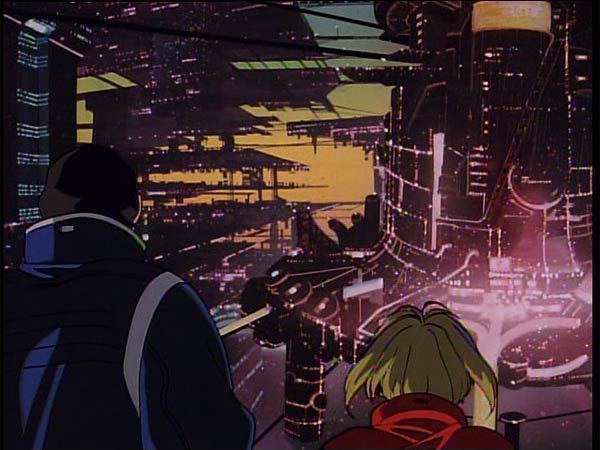
Production wise, the OVA quality artistry is good, missed dearly (when it was once so common) to have this type of insanely detailed, colourful dystopian cityscape of the future. Mars, as what we see, is already swollen with urban sprawl unless you go to a desert that has already had the atmospheric process from Total Recall taking place to allow breathable air. The lead characters are an issue though, in script, design and (English) voice acting. Not surprisingly, as individuals who work in this medium for their careers, the regulars of English anime voice acting like Steven Blum blend in perfectly. Ironically, or maybe not as they would have experience with anime voice acting, it's the regulars of a production like this like Steve Blum who blend in perfectly. Elizabeth Berkley, I confess, at least tries. We find her character Naomi in Showgirls to be ridiculous, but it suits the character of Naomi Armitage to have casted her. As with Showgirls, where Joe Eszterhas' script was as much an issue for Berkley to overcome, the same issue is here with Armitage being a paradox. Both the tough cop yet like a teenager in size and obsession with things like ice cream, a confusing figure for anyone to have to work with. The hot red leather shorts and shades are a giveaway Berkley was already dealing with the ridiculous tough yet sexy anime heroine stereotype from this era that would handicap anyone. If her performance is broad, its only because the character in spite of her dramatic narrative, being one of those bio-mechanical robots with her own consciousness, is a broad figure anyway.

From http://www.anime-kun.net/animes/screenshots/armitage-iii-3897.jpg

She at least tries. What happened to Kiefer Sutherland, and how he seems to be sleepwalking through his lines, is another thing entirely. It's an embarrassing vocal performance from an actor at this point in his career, even if he had loss his lustre of earlier work and had to wait until the 24 series to become known again, showed he was actually a great actor in oddities like Freeway (1996). For me, like his father Donald, Kiefer Sunderland has always been a character actor, the best kind who could front a major picture but like in Freeway could radiate pure, incredible acting chops in any circumstance. How lifeless his voice sounds as Ross Sylibus here is embarrassing. It neither helps his character is stricken with boring male protagonist syndrome, a plague in anime. This isn't even the worse example, when creators try to appeal more to otaku with blank and shy adolescents in the male lead roles, blank slates for viewers to place themselves as vicariously surrounded by many cute girls. But it's not a credit to Sylibus still as a lead, the stereotypical cop on edge who hates robots because one murdered his female partner, yet even with that or his growing romance with Armitage coming off as mandatory due to Sutherland's performance and the scriptwriting.  One of the most pertinent observations I've found as an anime fan that, even if it's in a fan service heavy and objectifying work, in most anime the female characters are the figures you remember with the most personality even when they are crass stereotypes, whilst the males meant to be protagonists have the personality of papier-mâché. Sylibus is effectively the protagonist, and even if Sutherland  wasn't sounding like he has dazed, that wouldn't be helped by the blandness of said character.

All in all, Armitage III: Poly-Matrix, followed by a sequel called Armitage: Dual-Matrix (2002) where Juliette Lewis took the titular role over, is fascinating as a curiosity. It earns enough to justify a revisit in terms of its ideas, but does with noticeable flaws both in its original material and the Western adaptation that cuts the legs off some of its best moments considerably. It does suffer under the weight of other anime which have tackled this material better or with more idiosyncrasies, but when there is a stand out moment, it does shine. The decision to compile it into a feature was, likely, a detriment and it's not a surprise that this is a rare case nowadays when the faithful, original versions of anime usually are released in the West too.

From http://www.capsulecomputers.com.au/wp-content/
uploads/2012/07/armitage-III-review-3.png

====

1) Whilst this strays far from this being a review of Armitage III: Poly-Matrix, and is likely to be controversial, I felt including articles discussing that example I gave will give you ideas of why I felt the comparison was apt:


2) Another tangent, but considering Oshii's own spin off of Blood: The Last Vampire (2000), a light novel named Blood: The Last Vampire: Night of the Beasts (2000), abruptly halts a vampire horror story halfway through for a prolonged, chapters long segments of characters at around  a table discussing mythology of vampires, Oshii even to the point of unintentional comedy or to deliberate screw with an audience would draw the philosophy out for a long, long period of time more than most if he felt like it was necessary.

Sunday, 24 April 2016

#24: Yuki Terai - Secrets (2000)

From https://myanimeshelf.com/upload/
dynamic/2011-11/07/211.jpg
Based on a original premise
Viewed in Japanese with English Subtitles


Yuki Terai - Secrets is an obscure compilation DVD, as obscure as you can get and probably for the better as in all honestly there's no real value to the set of shorts baring another curiosity in terms of early computer animated anime, another one covered for the blog but with an added factor that this is a portfolio for a fictitious female idol entirely created on a computer. This belongs to a series called Virtually Real that, in the weird early existence of DVD from 2000 and the first few years of that decade, was released in the UK alongside many a weird obscurity; in fact, from the trailers on the DTS sound enhanced disc, there are two more of these devoted to their own idols out there and can still be found on Amazon. Yuki Terai herself is a permanently seventeen year old girl who is brought to life by actresses in VR costumes and animators, able to star as multiple characters and show off many talents over the shorts contained in the disc. She is the titular figure of Comet the Thief, stealing a priceless guitar and fighting the owner over it in a fist fight, then a singer in a jazz club in Fly Away Home. She is trapped on a spaceship infected by a virus in Lazy Gui, the damsel whose love for an American is contrasted by being a spy in World War II in teaser Project BB-11. She sings, does her own action scenes, stars in a comedy with a cute robotic dog in Das/Chin or is terrorised by her own reflections in The Mirror.

From http://images.myreviewer.co.uk/fullsize/0000059814.jpg
Like the other proto-3D animated anime I've covered on the blog, this is another case of time being unkind to the material. A lot of it is clearly meant to demonstrate the graphical capabilities of the animators creating Terai, particularly an individual named Kenichi Kutsugi, a videogame visual effects and CGI cut scene designer, who overlooks this work altogether; unfortunately due to this emphasis, rather than plot or anything away from predictable stories, it lessens any chance for anything great to stand out now the animation is obsolete. Worse, this was released in the UK in 2002, after (entry #20) Final Fantasy: The Spirits Within (2001), making it look dated even back when it was first released. Comet the Thief, the first on the DVD menu, is a perfect warning of its lacklustre look, the fight scene in the middle between Terai and a male crime boss resulting in stilted character movements against basic backgrounds. It's detail in hindsight to viewing all these works - from this to (entry #3) A.Li.Ce (1999) - that is the ultimate crippling flaw of all the ones I've covered, the reason I have to flog a dead horse in these reviews of praising one called Malice@Doll (2001), an anime I need to review on the blog at one point,  for doing something different by melding 2D animated details on 3D models. This detail also has to be a personality too, which is why  The Spirits Within was bland even though the animation was innovative in its day on an extremely high budget. Particularly with Yuki Terai - Secrets I cannot help but compare it to old videogames, why once high calibre games which pushed graphics have mostly been forgotten but people still go back to old 2D Megadrive and SNES games, although from context its clear the compilation wasn't even the highest quality possible of its kind.

From http://images.myreviewer.co.uk/fullsize/0000059819.jpg
Most of this compilation is pretty bland, less than five minutes long a piece, which cannot get out of the mind set of test demos or plain old music videos in the case of Fly Away Home and especially My Dearest You, which is a clear music video with the model of Yuki Terai against what appears to be a lava lamp for a background. Whether it's the jazz club of Fly Away Home or the interior of a WWII battleship, there's little aesthetic style to these models or even a mood. Even in Lazy Gui when Terai is threatened by a virus that gets into the security system, cuts off her oxygen and even turns off the gravity, the short is mainly set in one corridor with a computer figure with no emotional draw or a quirk to make it stand out. Something like Dos/Chan only stands out because of the cute dog, with an iPhone for a face, which doesn't determine quality by itself. This is worse for a short like A Life, about Terai as a suicidal young woman, lacking any emotional connection especially as it ends with her shooting herself. The exception, which could've been utterly rewarding if polished and worked on by itself in terms of its visuals, maybe even animated in 2D rather than 3D, is The Mirror where there is a creative and bold story at hand about Terai being haunted by her mirror reflections. It's not a great short, but it manages to have a dreamlike tone where her doubles crawl from any reflective surface - mirrors, windows - they can and she can fell into a puddle of water into another reality. It goes as far as having countless duplicates pin her in the corner of a subway car, jumping out of it only to be hit by another train passing by and being absorbed into its reflective front window. The only real flaw with it is that, with a final rooftop battle between her and a double with a neon sign involved and a cheesy pop sign on the end credits, it does get a bit silly at the end, needing a drastic rewrite if it ever got remade.

From http://images.myreviewer.co.uk/fullsize/0000059818.jpg
Within all these shorts, Yuki Terai is a figure we're meant to emotionally engage with, created by Kenichi Kutsugi for a manga of his in 1997 and having a string of appearances by the time of this DVD. This is part of a long line of virtual idols that particularly exist in Japanese pop culture, the likes of Vocaloid, a voice synthesiser, can make possible, able to sustain a popular audience but contrasting with real female idols. It reminds me of Sharon Appleof Macross Plus (1994), a virtual pop idol who however could only exist, in that anime's plot, because a former idol has to implant her personality into its software. The virtual idol, especially when you get into the issue of virtual film actors th, is still stuck with being a figure that needs human life put into it to actually have a personality. The idea of actors being replaced by CGI ones, taken to its biggest extreme in the Ari Folman film The Congress (2013), has been brought up occasionally and was the case with Final Fantasy: The Spirits Within where the female protagonist, a mere 3D character design barring her voice actress, was meant to become a star in her own right who went on to other films in numerous roles. That never took place and it's an immensely failed idea as, not only was the "uncanny valley" as much a problem for a mega budget film like that let alone this compilation, but also there's the issue that these 3D figures can be completely bland and usually end up with tedious personalities as a result of their character designs and/or the narrative they're in.

From http://images.myreviewer.co.uk/fullsize/0000059827.jpg
Terai here is just a model of a seventeen year old as depicted by a male otaku, beyond a pretty face the kind of bland figure that'd sink a conventional anime TV series through her lack of personality. The character is meant, be it to the point of being exceptionally creepy or narrowly avoiding it, to personify a cuteness meant to attract male viewers; amongst the two other Virtually Real DVDs, one is of a stereotypical pin up with gravity defying breasts who in one of the scenes in her DVD's trailer is wearing only sexy underwear and body tattoos fighting zombies with katanas, thus showing that a fetishisation is as much part of the series as any other reason. Terai's lack of personality is also defined by her bland character design, which is ironic as she's clearly the only figure that has been giving some care of her design baring the robot dog. Like other 3D anime I've covered for the blog, the male side cast such as in Comet The Thief is comically rudimentary, like basic templates from a 3Ds Max programme, the obsession with bald heads probably better than the American soldier of Project BB-11's plastic blond hair. She herself is as much part of the problem with the whole compilation, neither protected by kitsch as early eighties and nineties CGI has been nor belonging in quality roles hiding behind a dated shell. Only the recognition of the animators pushing this animation really stands out for me, admiring their work despite the time that has passed, but for an anime of any sort it needs to actually engage beyond the technical details behind it. 

From http://images.myreviewer.co.uk/fullsize/0000059830.jpg