Showing posts with label Letter: R. Show all posts

Friday, 18 June 2021

#189: Revue Starlight (2018)


Director: Tomohiro Furukawa

Screenplay: Tatsuto Higuchi

Voice Cast: Momoyo Koyama as Karen Aijō; Suzuko Mimori as Hikari Kagura; Aina Aiba as Claudine Saijō; Ayasa Itō as Kaoruko Hanayagi; Haruki Iwata as Mahiru Tsuyuzaki; Hinata Satō as Junna Hoshimi; Kenjiro Tsuda as the Giraffe; Maho Tomita as Maya Tendō; Moeka Koizumi as Nana Daiba; Teru Ikuta as Futaba Isurugi

Viewed in Japanese with English Subtitles


[Some Overt Spoilers Throughout]

Probably the most surprising thing coming into reviewing Revue Starlight the animated series, twelve episodes long, is that this all originates from a significantly larger media project including a stage play, one which has spiralled out into an elaborate franchise which includes additional animated films, video games and a manga. This is surprising as, delightfully, this is a case of a franchise which feels very idiosyncratic and uniquely personal into itself, at least allowing this television series to grow out with its own creativity. Certainly as I will get into this series, knowing it has follow-on work, including an extended world of other schools beyond the one we have here as the main setting, it really comes to a testament of how this series, whilst very indebted to one figure I will refer to a lot throughout, works completely as its own one-off. A distinct, potent one in terms of its artistic style and using it for emotional drama that feels not like it is part of a media product to sell to an audience at all but with themes it wants to tell to said audience.

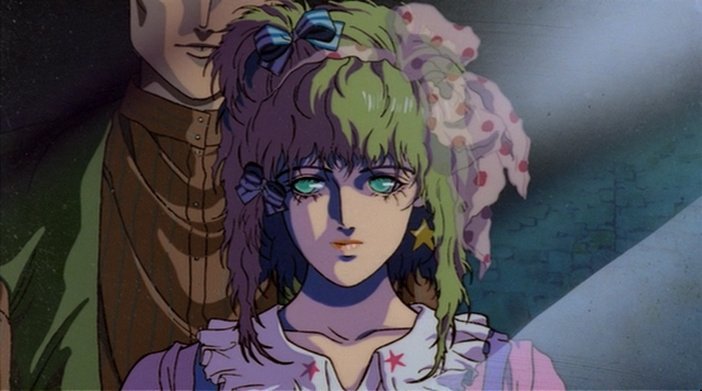
To sell the show, this exists in the world of Seisho Music Academy, a school for theatrical performers who are all trained in dance and acting amongst many skills. The 99th class here the central characters working towards another performance of the titular Revue Starlight, a play about two goddesses who are separated in a metaphorical tragedy trying to touch a star. The lead among them is Karen Aijō, a girl who coasts on by only to be given a new passion in her class when her childhood friend Hikari Kagura transfers from an academy in London in England, their childhood promise having been to perform together as great stars in such shows Revue Starlight. The show borders magical realism and surrealism as a metaphor for their emotional states, following seven other main characters involved, because of a lift in their school that transfers students to an underground environment. This is where a secret audition transpires to find the true actress among them dubbed the "Top Star". These are done in duels, musical duels with singing, where the target with your weapon of choice is to remove a badge hanging a cape off the opponent's shoulder with whichever choice of weapon you want.  

Notably, everyone one of the lead characters is female, as Seisho Music Academy is an all-girls school. The only male voice in the entirety of this show is the mysterious figure presiding over the auditions. Said figure is a cosmic talking giraffe, which may give you further emphasis that the show embraces the surreal. It is not a surprise, and is a delight, to know that lead director of the series Tomohiro Furukawa worked extensively with Kunihiko Ikuhara, the figure legendary for helming the likes of Revolutionary Girl Utena (1997) and projects Furukawa worked on like Mawaru Penguindrum (2011). I will say ahead of time, I had immediately seen that Ikuhara's influence was throughout this show aesthetically, including having an idiosyncratic animal mascot in the giraffe, so learning of the direct connection means a greater deal. It says a great deal that Furukawa actually worked with the legend and used the influence to their advantage. This is not a detraction as, for a media franchise which involves mobile phone game tie-ins, letting the director take this show into its pop surreal emotionally charged form was among the best things in Revue Starlight's favour, especially as from the get-go, this program looks and sounds exceptional, in style and music, and the aesthetic influence is for its plot's favour as well as distinct.

Particularly as this is a show about the drama, the audition duels themselves extensions of the cast's various anxieties and concerns not only in their desire to become great actresses, or even when they lose their passions, but also emotionally beyond the stage. This show does not flinch in either depicting the stress of thinking you are not good enough in your work, trying to overcome feelings of weakness. It deals with the closeness of these characters in friendship and when stress frays it. It also has no qualms in subtext and overt nods to romantic chemistry amongst the all-female cast either, even dealing with an episode entirely about Karen's roommate and fellow student Mahiru, who is explicitly with romantic longings for her only to now play second fiddle behind a childhood friend, or how sleepy headed Kaoruko and tomboy Futaba's relationship is insanely close even if merely perceived subtext from a viewer to have, riding on the latter's motorbike with Kaoruko falling asleep in motion, clearly have a chemistry beyond a friendship.

As the characters' dramas are the main core of the show, naturally with everyone getting an episode in the centre of their goals in the duels, thankfully everyone is fleshed out. Everyone is three dimensional. The best in their class, Maya and Claudine, who have a rivalry with Claudine feeling always second, are not just villains. Even curveballs are thrown in as, with spoilers warned ahead in this review, the character I immediately attached too Nana Daiba, dubbed Bannana-Chan for her fruit obsession and banana bunch hairdo, even got something out-of-the-blue and abruptly dark. That being briefly turned into a tragic villain for her episode when you realise a groundhog effect can transpire with the auditions, able to wish for anything including repeating the same year if you become Top Star, more tragic as Nana never after that is just a villain. Some anime, whilst still compelling, would have had the lovable comedic character stay the abrupt villian only, winning the auditions to keep time still, but it is a testament to Revue Starlight's craft that by the end of the series, she is just someone in fear of the future and, as another character later puts it, is a big (taller than the others) person who is yet secretly vulnerable. For a show that was clearly, with research, put of a media franchise to promote, it says something about anime in general that one series adaptation, where allowed to, can take risks and feel more personal, even the lovable comedic character based on banana puns suddenly turning into complex figures. It became a show where everyone is as sympathetic as everyone else, where abruptly it will quote Hermann Hesse, the author of Steppenwolf, within the same show that has the aforementioned talking giraffe.

Even the giraffe eventually, after coming off as a master manipulator, as the auditions have losers robbed of their "spark" of performance, gets a happy conclusion where he sees a performance that raptures him. This, to use polite language, is a show which does not kid around with pushing its emotional edge as far as it can do with the aesthetic, but all for something ultimately heart warming. Even when entirely grounded for an episode, such as Karen and Hikari reconnecting after a series of jaunts across the aquariums across the city, the drama is that to care for. When an abrupt betrayal in the final episodes feels abrupt but with meaning, with greater shock as the show to the viewer as much for a character suddenly feel a knife in the heart, but it all builds within very little time for something meaningful for the final episode. That, especially as it leads to the last episode fully in the supernatural, it leads to a strange personal purgatory of building stars out of sand to reach stars on wrecking ball chains that knock you over again, a Myth of Sisyphus scenario based on one figure not wishing to take the shine off others, or metaphorically as not wishing to take away from another and hurting them by outperforming them.

The show is not as idiosyncratic as Ikuhara's work, feeling in truth a more accessible form of his storytelling, but that again is not a bad thing, and a lot of its content for others would still be out there to be blunt about it. Key aesthetic traits from Ikuhara's work to tell stories, including repetition of symbols and literalisation of meanings, are used to a huge advantage to flesh out the cast and, ultimately, making it a success alongside the production quality. It looks exceptional, and as a show which is as much about its style, it looks distinct right down to individual end credits per episode and the character being its centre. For a show as well where the audition fights have musical numbers, based likely as much from Takarazuka Revue, an all-female Japanese musical theatrical troupe that started in the 1910s, the musical numbers sung by the cast within them are as well diverse and as good, all obviously with lyrics fitting the material of the emotional drama. That the show itself as a much a critique of ideas of such groups, the pressures of such a prestige training and wanting to be the best, intertwines with the spark of energy from such groups' influences too.  

To tell more would spoil the show when it is more intriguing to know that the series has more narrative in its whole, beyond these twelve episodes. Mentioned already, Revue Starlight the series is a fully fleshed out show in itself. It completely captivated me throughout its length, and with knowing little beforehand, it was a pleasure to have encountered.

Monday, 3 August 2020

#153-4: Rei Rei / The Gigolo (1993)

Today we deal with an obscure double bill, two erotic OVAs both from 1993 that were released together as a DVD in the United Kingdom in the very era days of the DVD market. These types of titles are fascinating to deal with as, whether good or not, this is an entire history worthy of prodding with morbid curiosity, titles which came, few remember, disappear, but could be found by pure look in a second hand DVD store. In this case, this also means talking about a company Kiseki Films, a long obsolete company whose licences were distributed between the UK, Australia and New Zealand, and ended as a company, to some testimony, when it was bought out by the British company Revolution Films1. Titles they released included Black Magic M-66 (1987), Urotsukidoji III: The Return of the Overfiend (1992)...but also Gunbuster (1988-9), which means this is not the first time I have covered one of their licenses from the early days of the DVD era.

This however, as a double bill, are two very different titles both under sixty minutes each which few may know about, which to my surprise were not what I was expecting for good and for bad in-between them.

 *****

Rei Rei (1993)

Director: Yoshisuke Yamaguchi

Screenplay: Mitsuru Mochizuki

Voice Cast: Naoko Matsui as Kaguya; Katsuyo Endou as Satoshi's mother; Keaton Yamada as the Narrator; Kenichi Ogata as Pipi; Kumiko Nishihara as Mika; Miho Yoshida as Dr. Manami; Misa Watanabe as Tanaka (female); Mitsuaki Hoshino as Satoshi's father; Shinichiro Miki as Satoshi; Takehito Koyasu as Dr. Okabe; Wataru Takagi as Tanaka; Yuri Satou as Ikuko

Viewed in Japanese with English Subtitles


I've got two cherries for you to chew.

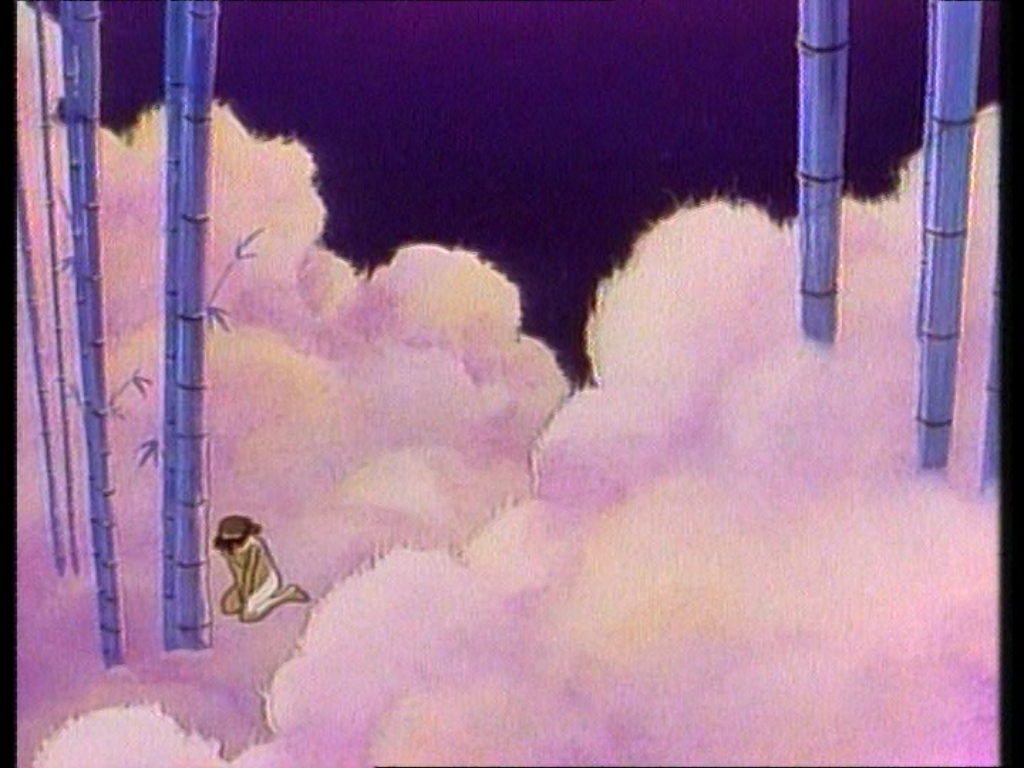
Rei Rei was the one I had the most interest in, and it is a compelling premise, but tragically this proved the most problematic of the duo. There are quite a few titles in anime about supernatural figures, or those who dabble in that realm, becoming involved with the lives of normal people, including for sexual issues, but this is curious as our protagonist is Kaguya, with her diminutive assisting in a fetching purple suit called Pipi, a princess from the Moon who helps mortals who are in crisis with love. She is explicitly, clearly, based on the Tale of the Bamboo Cutter, a 10th century piece of prose about a princess from the moon found as an infant in a egg, a legendary piece of Japanese folktale which was adapted countless times centuries later in anime and manga, including Isao Takahata's last project The Tale of the Princess Kaguya (2014).

That the two thirty minute episodes has issues is more annoying because I love this idea, about a literal magical being, a beauty of unearthly form, who has decided to help mortals whose souls cry out of lovesickness. The first episode initially suggests where tone is going to stay, and how this premise could be sustained as an erotic series but also effectively a form of anthology story formed around a central figure, that of a guy who tries to flirt with a girl he loves called Ikuko, only for her to reveal that she is dating an older female doctor. Unfortunately, we are taken to a deeply problematic tale in which the older woman is a bad person, actually dating a male doctor and purposely injecting raw egg into Ikuko, deceiving her into thinking that it is Vitamin C, to cause anaphylaxis. This is not the aspect of real issue, but that it is compromised by a heteronormative conclusion, that Ikuko has to renounce herself and fall in love with the male lead, a dweeb with a terrible tendency for nearly being hit by vehicles.

It hurts worse for me as I could vibe greatly with the eeriness that this episode had, even having my trope appears where people are whisked off to an alternative dream reality, usually a bridge of symbolic form they have to cross naked in this case. Considering the first episode, by itself, manages to have sensuality and a grace to it, it is sad that this interesting premise, with the art style contrasting urban Japan with a figure of pure fantasy, turns out is more conservative than its own premise is, including some gay panic humour found between episodes. If made a decade later, Rei Rei (also known as Rei Rei: The Sensual Evangelist) could have hopefully embraced a more progressive attitude, particularly as you would not need to change the protagonist in the slightest, a completely supernatural figure who who can be invisible unless she desires to and flies as an ethereal figure leaving behind purple dust. Even her dialogue is completely ethereal too in the first episode - A love lorn soul, a true heart, is calling out in pain - suggesting that even if you could have funded a more sexually explicit television, which do exist either censored or pay per view channels, you could have even made this character actually feminist and ran with a lot of more enlightened (and frankly sexier) content.

And this is stranger as there is a tantalising and subversive streak when Kaguya helps the male protagonist by turning him into a woman. Where it leads to is not exactly progressive, but it definitely touches upon something subversive - that he is going to seduce the male boyfriend of the older female doctor, which really brings about gender fluidity that the show runs the opposite way from immediately when they are in the bedroom down to their underwear. Also, whilst again not necessarily progressive either, the more rewarding ending would have clearly been this boy willing to be a woman for the rest of his life, proudly, for the woman he loves, literally dangled as a premise in front of him in a bag of magical dust. If that ending had transpired, I would have been a drastically different opinion of the OVA even if the second episode had been the same as it was.

This plot point definitely reveals to the weirder side of Rei Rei, which would have been more rewarding if so much of the show had not undercut itself. It also has a weirdness which is also perverse at times to, preparing the viewer for the second episode when about the female doctor has a nightmare about Ikuko entering her body, in a sensitive place which (tastefully but provocatively) is shown in a split second shot. It is a curious mix of a program with a greater aesthetic grace than this type of genre might necessarily have, with clearly a potential for both being bizarre but also having a sensual elegance, only to have the production hit the brakes. One, despite its pleasant comedic tone, which has to cater to heteronormative values and a plot even boring to a heterosexual male like myself in how much of a coward it turned out to be in not taking a risk.

The stranger side grows and runs rampant by episode two, which  is again about another male client, another unlikable bland male dweeb, which is something I have witnessed in other genres and continually ask of in terms of who would think such characters are interesting as male representatives in the first place. This one has an inability to be around the opposite sex without his heart racing; it is a condition so bad he can suffer from sudden collapses where he goes unconscious to the point it can look like he is death, with a comically grimace on his face. This turns into a series of vignettes, with Kaguya now becoming much less serious as a character and a lot more cartoonish, such as when his id and soul are trapped in a "Bentendo" video game which she has to get him out of it. It promises something wonderful, with a world of eye craters and tongues in clouds, only to bring out tentacles for a joke that is thankfully skipped over.

This is however also the episode where Kaguya lets him becomes his girlfriend's bathwater, which is exceptionally bizarre...except that sadly gets to Kaguya letting him become invisible like mist in the shower to her, which he with some morals even questions when she recommends feeling her up to become more comfortable with her desires. The OVA never went beyond these two episodes, which was probably for the best as, tragically, this good premise worthy of a remake was already compromised. Even if it manages a plot threat I had never considered seeing - sexual breast feeding to exorcise his emotional pain from his mother abandoning him and his father - it is more as a peculiar oddity from the nineties than a show that I thought could have actually been good. If it had lasted, we would have gotten this as it stands, which would not be fun even if like car crash television at points. All the good virtues are squandered with what clearly was a show running on fumes and unenlightened ideas for good erotic stories, strange aspects otherwise.

*****

The Gigolo (1993)

a.k.a. The Gigolo - Dochinpira

Director: Hiromitsu Ōta

Screenplay: Wataru Amano

Voice Cast: Kōichi Yamadera as Jin Kaitō; Masako Katsuki as Ai Mizushima; Naoko Matsui as Ranko; Daisuke Gouri as Hazukura Boss; Hideyuki Umezu as Hazakura Yakuza; Hiromi Yokota as Body Conscious Girl; Kaoru Shimamura as Okamoto; Kenyuu Horiuchi as Suzuhata

Viewed in English Dub


They're real bullets!

So surprisingly what I considered the trashier of the double bill, which I doubt really was even hentai but just an erotic title, turned out to be a more enjoyable experience. Simply because I expected a censored, junky hentai about a male gigolo, with an insanely deep voiced male voice actor in the English dub2, only to get a c-grade pulp pulp tale which was nonetheless entertaining, a crime narrative where a gigolo finds himself crossing paths between the mafia (yakuza), and a female hit woman out for revenge for her family being killed during an assassination attempt at a restaurant when she was just a child.

Resplendently scored to guitar riffs, this lurid macho storytelling has ebbed away for the most part from anime into the modern day, at least in terms of those found in OVAs we got over in the West sold for their violence and sex, whilst there are likely titles still in existence which tackle this tone in different ways and institutions like the Fist of the North Star franchise still get adaptations but also self referential official parodies. The Giggolo is much more subdued take on, say, the Crying Freeman OVAs, with less of the open absurdities, or an erotic version of the more explicit action melodramas of the OVA era, although this is more tasteful in context and content then I had even considered.


Here a young guy out of his element is only a stereotype of being macho due to all the sex he has, because of his ability to seduce women for work, and having a female roommate happily letting him stay and being proto-friends with benefits. Even then, he gets his head kicked in by thugs until the woman he is with pulls a gun out, and never really is the decisive factor in any for the conflicts, just able to help. He encounters a sado-masochistic client, when it's too late to pull out from the client, who likes her whips and hot wax, and the hit woman even if she feels she has "become a woman" with him is still the one out for revenge, wagering a Cobra sports car for him to win if he can be the first male to actually being good in bed. If it not feminist in the slightest, but is surprisingly more interesting in the gender context because your lead, from his initial introduction as a cool lothario, has this veneer chipped away as the plot continues.

Yes, The Gigolo is still lurid, but considering its double bill title Rei Rei on the same British DVD disc, this tacky and less well made production was actually more defendable as it was also ridiculous. It is sexually explicit, but it deviates fully into its crime drama by the end, much more interested in fully committing to being a melodrama for men, of tears of screaming passion and a sports car full of flowers pushed into the sea like a Viking funeral. The pair does raise the issue of how one tries to write a story with sex as a prominent aspect, espcially as Wataru Amano made their career with titles in hentai like Demon Beast Invasion (1990) and Venus 5 (1994), the later a pornographic parody of the Sailor Moon franchise. Both of the titles I have covered are completely alien to each other in tone and presentation, and both of them offer some curious aspects to consider in terms of how sex is depicted for better and for worse.

Stepping back to these titles by themselves, they are a fascinating pair of oddities. As I am able to dig back and find these titles, I find amusement even in the fact that, as the one person still using a DVD rental service, I am likely the first person in a decade (if anyone at all) who requested this double bill DVD to be posted to me. A title from as far back that you can legitimately fear about laser rot, that sense of investigation in it is entertaining to the point it compensates for the disappointments I did have alongside the unexpected surprises I did have.

==========

1) We have to rely on Wikipedia for that detail, so take the fact with a pinch of salt. 

2) The English is ridiculous, with additional swearing, but especially as the male voice lead (who I thought I recognised but could not tell who) is so deep voiced to a youthful lead it added a level of absurdity to the production.

Thursday, 23 July 2020

Bonus #12: Red Hawk: Weapon of Death (1995)


Directors: Jung Yul Hwang and Sangil Shim

Based on the original manhwa by Sang Wol Ji and Ju Wan So

Voice Cast: David Lucas as Jan Chang; Tessa Ariel as Hongylung; Dorothy Melendrez as Village Kid; George C. Cole as the Narrator; Jimmy Theodore as Liu; Jonathan Charles as Mounja; Mona Marshall as Ko Wan; Peter Spellos as Morlyung; Simon Isaacson as Lord Seobong; Sparky Thornton as Muklyong; Wendee Lee as Lunyung

Viewed in English Dub


Didn't they even give you a welcoming ceremony? How rude of them.

We return to a bonus review, a return to Korean animation, to which Manga Entertainment licensed two titles back in the era where, on VHS, they made themselves and their infamies within from the likes of The Legend of the Overfiend (1989) too. Armageddon (1996), becoming a guilty pleasure for me, and Red Hawk, in comparison a much more conventional and consistently put together production than that film or, (shudder), Blue Seagull (1994). This does raise an interesting question, in how things might have been different if Manga Entertainment, having decided to acquire these titles in the nineties, invested in others from other Asian countries beyond Japan alongside anime.

Sadly, as has been the issue with non-Japanese Asian animation and comic books, I seriously doubt they were released with any distinction of their origins, Red Hawk still finding itself in the Collection, my own personal obsession from the company, alongside Violence Jack (1986-1990) to Bubblegum Crash (1991) without any distinction. Tellingly neither Korean title even had an entry on the trailer to that Collection, burnt into my mind from playing it on their old DVDs for too long alongside Mad Capsule Market songs. Red Hawk was sold, likely, as the simple action tale it is. In period Korea in the past, a former ally of villains becomes Red Hawk, a mysterious hero for the people who is masked, wears red and has a hawk. He becomes embroiled in the death of an artisan and counterfeit money, all whilst a likable goof protagonist and a group of friends are on the same mystery. It does evoke how many of these titles were created for their own national audiences, which can be seen in the more esoteric anime which is based on lore or their history; likewise, alongside this, the English voice actors have to negotiate around Korean names as a further reminder of this.

Technically, it does feel more consistent to the other Korean animation I have seen. I will be honest that, however, whilst it is just okay, it is not really that interesting. The meat and potatoes are able to be turned into something interesting, even having a strong female lead who we are introduced to beating up a man the size of a small hill and his ninja lackeys, all of which could go to somewhere. The issue is entirely with execution, where there is a sense that Red Hawk was a production tentatively put together, possibly aware of Blue Seagull as a disaster, possibly not, but definitely cautious in its production. One of the directors made beforehand Street Fighter (1992), a knock-off of the Capcom videogame franchise with the cast now looking exceptionally cartoonish but definitely the copyrighted figures, meaning that this was definitely a foot into a different direction with higher aspirations.

There is a little spice, but this is a very basic film. It also shows that tropes do travel countries, as well as the fact that comedy and drama mix a great deal, as this has a lot of serious moments but also pure slapstick, the lead hero mostly acting like a prat, able to rescue a young girl from a bull but fleeing from being gored when she is safely out of its way. Unfortunately, the film is very predictable. The little spice is some of the few esoteric details - mainly one henchman who is a very elaborately dressed man, even designed to look flamboyant without becoming a stereotype, who deals in the likes of a "Dismal Spirit" poison down the throat that kills most people, to a dark room where spider web can be found that allows him to predict his opponents moves. He is the only idiosyncratic character on the villains' side, right down to the fact his boss still slaps him around despite being a dangerous figure, only acceptable because said leader, whilst an old man, can suddenly grow giant amounts of muscle and is clearly the final boss. It helps that, whilst the English dub is a terrible example of Manga Entertainment adding swearing to raise the age rating, this at least results with that henchman having a scathing comment when he is proved disposable.

Beyond this, sadly even Blue Seagull is compellingly awful, whilst this really does not stand out at all. This is a shame as, among the aforementioned Collection licenses from Manga Entertainment, this was the last of them for me to actually see, rather than review, tragically one of the least interesting of the lot. Beyond elaborating on the plot, which is a bad sign, even in terms of the production, it is not necessarily good or bad, just competent in context. (The only idiosyncratic touch turns out to be the nineties techno music that occasionally appears in the score.) Red Hawk leaves open the promise for a sequel which never came, as the real villain is left unscathed, but the two directors never went on to direct any more feature length anime.

Sangil Shim does have a career, which means I can at least be happy that they went on to continue working and with a lot of fascinating little tangents in their filmography, working in a lot of animation for the United States and Japan too, between Æon Flux (1991) and The LeBrons (2011) to Claymore (2007)1. If their IMDB credits are right, they have even been a "food and food stylist" which raises a fascinating little question of what that job entails, especially as it involved working on Park Chan-Wook's 2009 vampire film Thirst. Jung Yul Hwang I cannot find anything on, whilst another fascinating detail is that, for the Korean dub, the only figure who went on to greater roles is Gwang Jang, an actor who has acted in live action and for voice acting who has been prolific, especially into the 2010s, and even narrated Thomas & Friends, which means I can inexplicably end this review referencing Thomas the Tank Engine with credibility.

====

1) Also Skysurfer Strike Force  (1995-6), an American production I am amazed managed two seasons, one of the many ridiculous American cartoons that came from the nineties, though not one I watched, but trying to chase the trend for sky surfing. Yes, I would like to watch the two seasons.

Friday, 10 August 2018

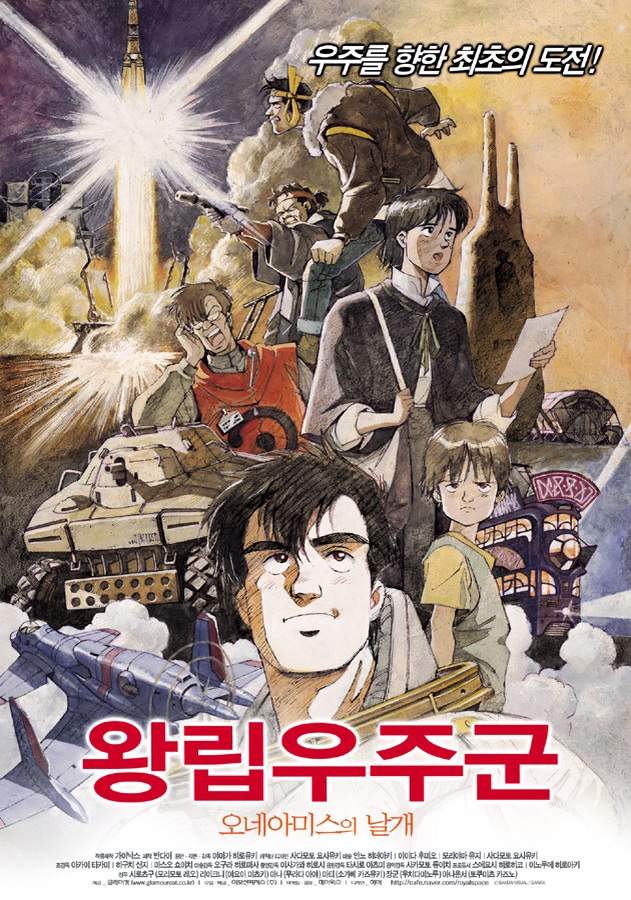
#60: Royal Space Force: The Wings of Honnêamise (1987)

From https://pm1.narvii.com/5628/06a50a48d4
626d2002b86f2ab8882362be39b45e_hq.jpg


Director: Hiroyuki Yamaga
Screenplay: Hiroyuki Yamaga
Voice Cast: Leo Morimoto as Shitotsugh Lhadatt; Mitsuki Yayoi as Riquinni Nonderaiko; Aya Murata as Manna Nonderaiko; Bin Shimada as Yanalan; Hiroshi Izawa as Darigan; Hirotaka Suzuoki as Domorhot; Kazuyuki Sogabe as Marty; Kouji Totani as Tchallichammi; Masahiro Anzai as Majaho; Masato Hirano as Kharock; Yoshito Yasuhara as Nekkerout
Viewed in Japanese with English Subtitles

Synopsis: On a planet similar to ours, the laid back slacker Shitotsugh Lhadatt works at the Royal Space Force of the Kingdom of Honneamise, seen as a joke by everyone with the kingdom as they have never succeeded in sending rockets to space. On the eve of the government finally removing their budget and ending them, the Space Force make one last ditch attempt, an ambitious and dangerous mission to send one member into orbit. Influenced by his attraction to Riquinni, a devoutly religious young woman he has met, Shitotsugh volunteers himself to be that test subject, only for the weight of his mission, the danger and the political machinations around the Royal Space Force to drastically change him as a human being spiritually.

The reputation Royal Space Force has is greater knowing of its origins. Gainax, who most will know as the studio who created the Neon Genesis Evangelion franchise, was always seen as the studio created by fans who managed to get their foot into the door of the anime industry. Figures like Hideaki Anno, before the reputation of the likes of the Evangelion series, who were just fans of anime and the likes of Ultraman who starred in their own fan films. Once they were a group whose first major animation projects, the Daicon III and IV opening films (1981 and 1983 respectively), where made for fan conventions and had to recycle animation cells by washing the paint off them after each segment. They impressed Bandai who, back when projects like this could be a worthy risk, they gave these people the chance to create a theatrical film. Even though, in the time in-between, members of the Gainax worked on big projects as animators, the group who'd become a fully fledged studio in the nineties and into the Millennium still had to hire students to help finish Royal Space Force. The company that'd eventually triumph with Evangelion, FLCL (2000) and Gurren Lagann (2007), but were also fraught with constantly financial problems, having prominent members like Anno leave, and be challenged by the likes of Studio 4°C in terms of being innovators, were a mere glint in the eye still here. And yet with Royal Space Force, you have an incredible one-off, alien to juvenile otaku fetishes and taking on such an ambitious, psychologically and morally complex science fiction story, one even spiritual and philosophical as it follows a character in an alien world through a drastic existential change.

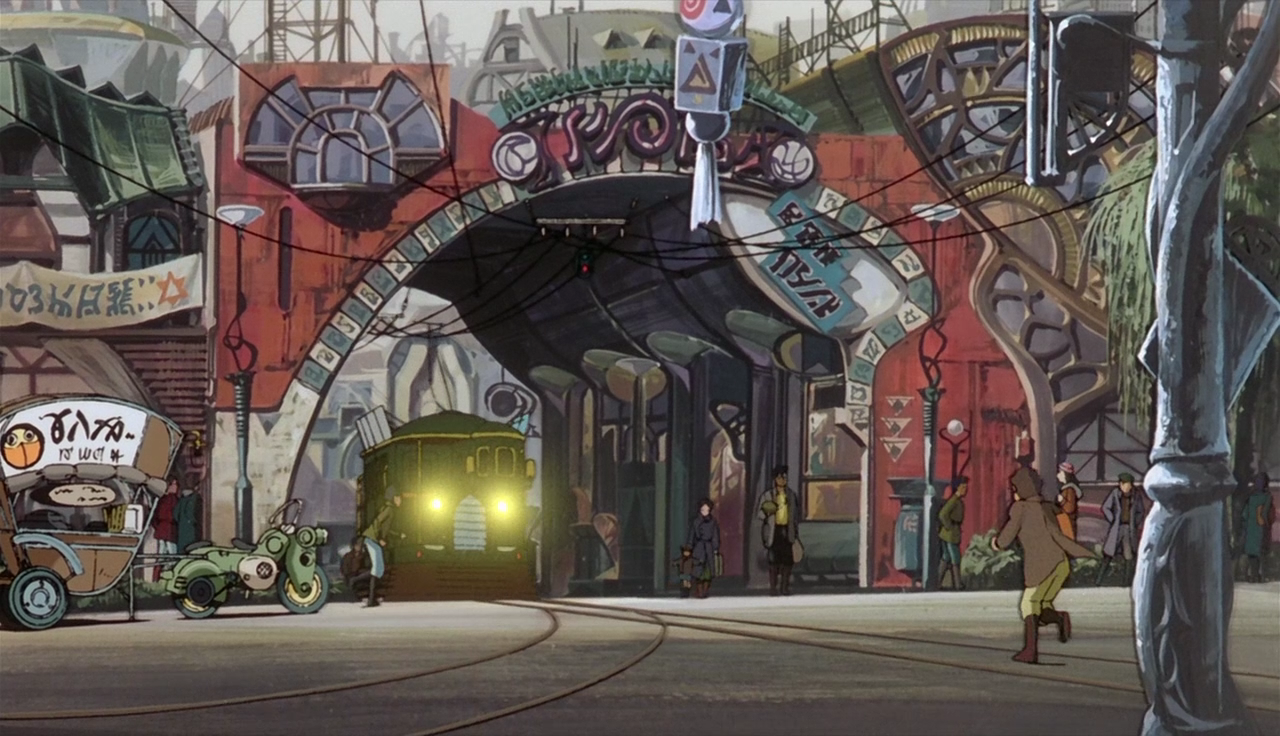
Royal Space Force exists in its own world. Like ours but fleshed out as a planet with its own fashions, languages (at least for a foreign nation who feel the space launch is a political threat), even having the cutlery on tables that's unique. It isn't exaggerated to the point of being flimsy either, worn and fully developed as a pre-fifties world, if to tie it back to our own, a form of dieselpunk sci-fi where everything is heavily mechanised, with elaborate city sprawl, but the idea of space rockets is seen as insane and has claimed the lives of the Royal Space Force many times before. Seen as embarrassments compared to the air force, closer to our own modern military airplanes, they are an absurd dream who attempt one last time. All with the knowledge, in a country with sprawling poverty and constant work strikes, that they are seen as much as a waste of money as much as a popular media event. It builds in terms of storytelling naturally, before the personal journey of Shitotsugh clashes more with political and moral issues which conflict with the dream. As their own government is purposely flexing its muscles with a rival nation, the inherent chance he could die is there too. As is the fact they might've only been allowed to go with the rocket test for military purposes.

From http://www.simbasible.com/wp-content/uploads/
2016/09/unnamed-1-10-1024x597.jpg

Whilst there are a few action scenes, the most prolonged an attempted assassination with purposely drags out into a messy, streets long scramble, this is the slowest of burns in terms of drama. Shitotsugh decides to be the pilot only because he can impress a girl named Riquinni he is attracted to. Deeply religious, she only pays interest to him baring as a friend due to her admiration of the Royal Space Force wanting to enter space rather than commit war. Through severe questions to his own moral compass, through his relationship with Riquinni as well, he is to be challenged for his decision to go into space. The level of complexity goes as far as even include religion, which is rarely done in anime or done well, usually terrible or with foreign religions like Christianity being used symbology to look aesthetically interesting rather than with context. (Something Gainax's own Evangelion has been accused of). Here the religion, even if created for this world, is visibly taking parallels from real ones. The Greek legend of Prometheus stealing fire from the Gods. Eastern beliefs and especially Christian morality, the concern of sin and redeeming oneself felt throughout. It's a film, surprisingly for the science fiction genre when it is more cerebral or action packed in anime, which gets progressively more spiritual as it moves along, following Shitotsugh's own realisation of the worst in humanity as well as wondering if his own kind, through this rocket launch, could strive for better.

It's not a simple moral film either. Shitotsugh is not a perfect, virtuous character, and likewise Riquinni is not a conventional love interest, her devotion to her faith leading her to only seeing him as a friend. Details of her are subtly hinted at, details never explained like the small girl, dressed as a boy, who lives with her like a sister, who possibly could be a daughter as its never explained where she comes into Riquinni's life. Royal Space Force is truly a film in need of multiple viewings, likely to grow for the character details told without dialogue you miss and plot details with are given more meaning with what is discovered later in the running time.

All the following could easily be superfluous if the project wasn't exceptional technically too. How beautifully made and intricate it is as an animated work. How Ryuichi Sakamoto the legendary musician and composer - alongside collaborators Yuji Nomi, Koji Ueno and Haruo Kubota - can add Royal Space Force in his unconventional and fascinating career through an atmospheric score that pushes the material to greater heights, sandwiched between his Oscar winning score for The Last Emperor from the same year and the children's film The Adventures of Milo and Otis in 19861. Finally seeing the film, in the best version possible for me for the first time, it amazes me how it manages with such subtlety to both build its world and how emotionally complex it is. Anime fans pride themselves, as I do, that our favourite work is emotionally complex and mature, but the medium can also be idiotic and trite at its worse; watching Royal Space Force is amazing when you consider how young everyone who worked on the film was, members of Gainax who were once just fans of anime and self professed otaku who decided, when given their first major project, to create a complex and even existential story.

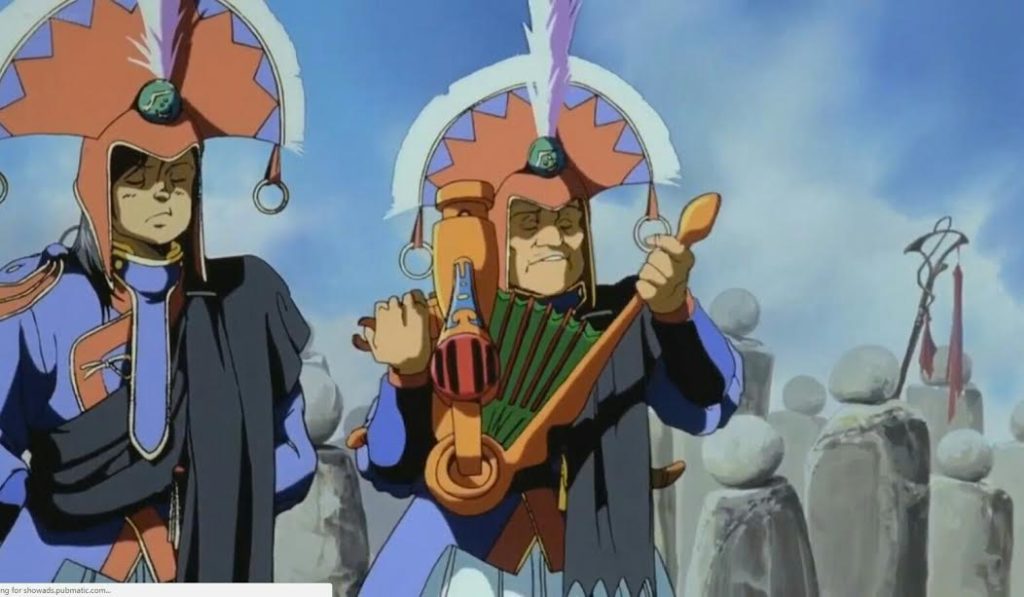
From https://i.warosu.org/data/g/img/0552/04/1466602735623.jpg

[Major Spoilers Warning]

There is one detail, justifying a Trigger Warning, however that has made Royal Space Force impossible for some to love. A sequence under ten minutes long, and it's a moment part of the moral and psychologically complexity to the film which is still talked of to this very day and members of the production consider a mistake. I'd be delusional not to deal with what has caused viewers to dismiss the film's entire series of virtues, a scene of attempted sexual violence which is deliberately more problematic as it is our protagonist Shitotsugh himself who is attempting to molest Riquinni. Abrupt, but a major plot event, one which with our liked protagonist of before dissolves the initial view of him and complicates him to a very uncomfortable territory of characterisation. 

The issue is that it is sewed carefully into the plot, as carefully done as possible, but is a major  challenge to the viewer. He pauses mid attempt, visibly regretting mid way before Riquinni strikes him in the head with an object to knock him unconscious. As much as the controversy is the aftermath and is itself even more dark, as she forgives him the next day as if nothing has happened, Shitotsugh utterly remorseful and shocked by her reaction. I will say that, if anyone is uncomfortable with the sequence, I completely understand them. It is however, whether a justifiable risk or not, as subtly and done as well as such a scene could be. It's also part of a level of moral complexity even live action films do not dare to tread into, which is why even if you ask if it is an acceptable scene there's the inherent challenge of it. A viewer tends, unless they are claimed to be a villain, to sympathise fully with a protagonist of any story, making an act like the one Shitotsugh commits, when we see him as a lovable oaf, problematic and a violation of that trust between story and viewer. For myself the film is completely succinct in dealing with the subject, and it has a purpose that is not a cheap shock tactic but part of its overall existential concerns.   

From http://www.ricedigital.co.uk/wp-content/uploads/2015/
04/the-wings-of-honneamise-thora-113010.png

On the cusp of potential legacy or death, Shitotsugh as he is already challenged by the pressures surrounding him and falls into the worse of human tendencies. His attempt at romance with Riquinni is doomed, and in his lowest moment he commits such a horrible act, one he hesitates whilst knelt on top of her when she knocks him unconscious. Aware of how horrible his act was, Riquinni's blithe reaction is also far from a deeply misogynistic reaction, and anime and manga tragically has a lot of this, but a complex and troubling one for many viewers as it deals with a religious person able to forgive even their own trespasser. (Outside of animation, Abel Ferrara dealt with this in one of his most well known films, Bad Lieutenant (1992), where to the absolute confusion and repulsion of the anti-hero played by Harvey Keitel, a nun who raped by two men and whose case is he investigating has already forgiven the perpetrators their act due to her moralistic religious beliefs, a type of belief few viewers are comfortable to even consider when, rightly, we punish those who commit sexual violence as with other crimes).

It is a dangerous moment for a very young studio to have made, and whilst Gainax have challenged their viewers in the future, none are with this type of discomforting moral greyness. For me personally it is not the moment which capsizes the film, for whilst I sympathise with those who find it offensive, it's one of the few moments that a production is tackling this type of material with the psychological complexity it requires. When anime has an awful track record of offensive and tasteless material, utterly reprehensible material even, Royal Space Force's controversial scene is in a morally higher, more artistically minded place even if some would prefer that Gainax took a different direction More so as, whilst it ends with Riquinni forgiving him, their relationship is tainted by this. It is arguably the catalyst for Shitotsugh himself, through this sin of his, to be pushed towards a spiritual change which, on the day of the rocket launch, he sees the world around and starts to question mankind's tendency to violence, the moment of his own violent behaviour among others forcing him to re-evaluate the mankind itself. Arguably the sin he has nearly committed as much infuses the haunting final monologue where he wonders if they as a species can transcend themselves, followed by the final montage of ordinary life on the planet in its variety. Again, few live action films tackle this. Sadly in cinema we have accepted moral black and whiteness, simplified, to such a point that a story which challenges this is just dismissed when it should be properly pondered as much as asked whether the scenes of controversy were acceptable.

[Major Spoiler Ends]

From https://images.justwatch.com/backdrop/8786003/
s1440/royal-space-force-wings-of-honneamise

Altogether Royal Space Force is a difficult film. A film structurally and in plot which is challenging in its slow paced character study. A challenge just for its notorious and divisive scene still talked of in the current day, but also for how the film even without that sequence is a drama about human complexity. All whilst justifying itself as being acquisitively made, utterly absorbing and one of the few anime films that is truly intelligent. It was the creation of a small group who took such a huge risk and, even if not financially successful, it was a symbol of pride for Bandai. Gainax would continue on with challenging and rewarding material with Neon Genesis Evangelion. For less sombre material, for a sense of fun and energy, no one could argue as well with the virtues of FLCL, Gurren Lagann and Panty and Stocking With Garterbelt (2010). Unfortunately Gainax also become the company who made This Ugly Yet Beautiful World (2004) and shows pass the 2000s, barring one or two, which are not held up high regard or even known in the West. Where the "Gainax Ending", where everything was turned upside down to the surprise of the viewer, can easily be viewed like M. Night Shyamalan plot twists once were as a punch line joke as it was part of their virtues. Long before this twin sided mask, this company just before they wore it however made a film like Royal Space Force which is held in high esteem even next to the incredible work also being produced in Japanese animation in the eighties. Seeing the film for the first time, I am not surprised now.

=======
1 Sakamoto's filmography as a composer is fascinating by itself. Merry Christmas, Mr. Lawrence (1983) obviously. Three films for Bernardo Bertolucci. Donald Cammell's last film Wild Side (1995). The bizarre TV mini-series Wild Palms (1993) [Which I reviewed on my other blog HERE]. Pedro Almodóvar, Brian De Palma, Takashi Miike, Alejandro G. Iñárritu...alongside video games, like the ill fated attempt at modernizing Seven Samurai (1954) with the additional help of French artist Mœbius, Seven Samurai 20XX, and  Sakamoto's first ever film score for Ryu Murakami, the famous author who Sakamoto also worked with on Tokyo Decadence (1992). A film called Daijoubu My Friend (1983) that has American actor Peter Fonda  as a space alien in Japan. That eccentric, strange list is enough to praise Sakamoto for alongside the reputation as a great musician and composer.

Wednesday, 1 August 2018

#57: Robot Carnival (1987)


Directors: Various
Screenplay: Various
Voice Cast: Various
Viewed in Japanese with English Subtitles

Synopsis: Following the theme of robots, the brightest talents of Japanese animation in the late eighties create their unique shorts based around this premise.

Anthologies, in any form, are a growing pleasure for me in cinema. Even if they have weak or bad segments, there's usually enough which stand tall and make the project worthy of its existence. In anime it makes sense to, whether they are financially viable or sadly not, as when they are brought together, they allow both veterans of anime alongside new talent to collaborate with creative control, at least in theory, on interesting results. Sometimes there is a tentative theme to the anime anthologies, and in some cases with the most successful being The Animatrix (2003), there has been a great advantage in anthologies based on Western properties. And when a segment from Short Peace (2013)  gains an Academy nomination for Best Animated Short, the existence of anthologies is something that has to be protected, especially as they are a way to allow creators to have a project when feature films or TV series are not on their schedule.

Katsuhiro Otomo, the legendary manga author and film director of Akira (1988), has plenty of experience of anthology anime, Robot Carnival one of the first he was involved with alongside Neo Tokyo the same year, collaborating into the present day on Short Peace as well. And in this fruitful period, a year before his own adaptation of his manga Akira would effectively bring anime to the West as much as resonate in the medium in general as one of its sacred texts, he among other creators, animators and character designers were allowed this project where, as long as there's robots involved, anything was on the table in what could be done in each of their segments.

From https://www.ganriki.org/media/2014/robot-carnival-172.jpg

Opening / Ending
Director and Scenario: Katsuhiro Otomo
And Otomo with his opening and ending sequences, which bookmark the anthology altogether, decides to show how sick his sense of humour is. A literal robot carnival, with the title on the front of the monstrocity, a giant fortress that is spectacular for the villagers in a post apocalyptic desert to see, with its ballerina robots and robotic orchestra. Said carnival also fires missiles, blows everything up and has explosives within those ballerinas. Especially with the ending, its Otomo being as blackly humour as he can with its unremorseful mayhem, never questioning that the humour deliberately involves scenes where character are clear turned to vapour by all of this.

You are immediately aware that the animation throughout this production, originally an OVA, is incredible throughout the anthology, awe inspiring in how pain staking it is as hand drawn, detailed work. Secondly, the music by Joe Hisaishi and Isaku Fujita, even the cheesy eighties synth rock in later segments, is also going to be excellent. Hisaishi is well known for his work with Studio Ghibli, and (surprisingly) 'Beat' Takashi Kitano, and Robot Carnival allows him to be diverse to match each of the segments'' variety of tones.

From https://i1.wp.com/psychodrivein.com/wp/wp-content/uploads/
2015/08/robot-carnival-frankens-gears.jpg

Franken's Gears
Director and Scenario: Koji Morimoto
One figure who has made his living on shorts and anthologies is Koji Morimoto, who is well regarded but through a career not made by series or television, but short length productions for the most part. His most well regarded work is a segment in Memories (1995), a more famous Otomo involved anthology, called Magnetic Rose which was written by the late auteur Satoshi Kon. Morimoto also has made his name co-founding Studio 4°C, which allowed him to make many of his own short work through them as much as bring the likes of Masaaki Yuasa into the world.

Franken's Gears is an atmospheric piece based, as you guess it, on Mary Shelley's Frankenstein where a mad scientist brings a robot to life through lightning. It's a purely mood related piece, entirely without dialogue like all but two segments, which relishes (even fetishes) the intricate and detailed animated work. Knowing every gear involved animators having to take hours, even weeks, to complete emphasises that animation, above even the best of live action cinema, is a craft in itself where even purely genre or visceral pleasures are worth framing for a gallery.

From https://www.toonzone.net/wp-content/
uploads/2015/12/RobotCarnival05.jpg

Deprive
Director and Scenario: Hidetoshi Ōmori

Likewise an action sci-fi short, in which a robot goes to rescue a human girl from another group by evil robots, gains more worth when animated with this level of quality. What loses personality if in CGI in live action, where it is now blurred into a generic template found over many films, is something beautiful when it's this vividly coloured with intricate action scenes. Ōmori hasn't directed a lot at all - barring stuff like a golfing TV series and, grimly, a piece of the Urotsukidôji franchise in 2002 called New Saga when the notorious hentai franchise finally died - but in key animation, character design etc. he is prolific and even working on favourites like Kill La Kill (2013-14) in the current decade.

Out of segments, it's one of two which feels like the eighties onscreen, but that's not a detriment as, aesthetically, it feels right to be on the cusp of cheese but awesome at the same time, working out a fine balance as a result in a short enough time for this time stamping to not be a detraction. The rock guitar soundtrack, the giant robot terrorising the hero at the end, all of which an argument that this type of escapist entertainment can be as artistically rewarding as the art house work when it's this well made. In fact, without dialogue, it both makes a great case for action as an art form and feels like the best music video in need of a heavy metal remix.

From https://pbs.twimg.com/media/DRnpZRYUMAAoiys.jpg

Presence
Director and Scenario: Yasuomi Umetsu
Voice Cast: Kohji Moritsugu as the Protagonist; Junko Terada as the Girl; Keiko Hanagata as the Granny; Kumiko Takizawa as the Daughter / Small Mecha

One of the two segments with dialogue, Umetsu takes a potentially offensive idea of a male inventor, in a steampunk future with a mix of industrial revolution aesthetic with eighties sci-fi, who decides to build a female robot as his idealised woman. It's a risky theme to tackle, as he is deliberately creating a woman in vast contrast to his career orientated wife, but thankfully even when it leads to the ending, where he disappears into his fantasy (or an actual escape into happiness) as an old man, it's done with immense psychological complexity, deliberately drawn out and slow burn. He is, visually, depicted as childish with his collection of mechanical toys, becoming disturbed when his robot woman starts to exhibit emotions, and the segment does run with the material carefully as a result.

Yasuomi Umetsu is sadly someone viewed in the notoriety of his work. He has pornographic animation in his career, but the really controversial work (and the one he is still known the most for) is Kite (1998), which is arguably notorious for problematic sexual content involving its lead female character. Material which has had the film banned in some countries. Enough for a director's cut to exist, his preferred version, which is actually shorter as it excises this problematic material. Which nonetheless, in whatever version was available, became a sizable hit in American anime culture with a bit of popular recognition, enough that out of all possible anime, it's one of the few to have a live action adaptation starring Samuel L. Jackson.

What Presence, as my first Umetsu anime, also shows however is that, if he wasn't known for Kite and other titles, he'd be known as  an incredible character designer and animator, an insane perfectionist who might've been a nightmare for some to work with but, when the results are like his segment in Robot Carnival, leads to him making one of the best segments just for how incredibly well made it is even among an anthology with exceptional animation and production quality. The look of the segment, including a little world building in its steampunk robot world. The moment of humour that cuts between its serious drama, with a robotic man getting his head stolen by kids. The intricate and realistic character designs especially of the robot girl which would have taken days if not more to perfect, Umetsu's style here that are someone who jars against tight work schedules but with wonderful results. An insane level of detail and character movement which is incredible. As a result, alongside with how well it deals with a tricky subject matter, Presence is my favourite of the Robot Carnival shorts, making Umetsu's reputation for troubling porn and transgressive material tragic when he could've spent his career more on material like this.

From https://images3.imgbox.com/6c/58/aalH1ieW_o.png

Starlight Angel
Director and Scenario: Hiroyuki Kitazume

After the severity of Umetsu's segment, the other contender for the most eighties of the segments appears, not a surprise as, known more as an animator/manga author/character designer, Hiroyuki Kitazume made his reputation in the eighties especially through the Gundam franchise. The tale of a young woman who, at a robot themed theme park, has her heart broken only for a mechanical employee to try to return her lost necklace back, it's a simple tale told entirely in visuals, again the music video style of other segments found including a virtual reality ride that is drastically effected by her emotional state. Starlight is as well made, regardless of its visible time stamping to the eighties, and is helped to stand out by its optimistic and cheery tone, infectious in the right frame of mind. If anything Joe Hisaishi's synthesizers here border the line between sweet and ridiculous the most, managing to find the right balance that it's the former instead of the later.

From https://images3.imgbox.com/a5/44/aavvY5fZ_o.png

Cloud
Director and Scenario: Manabu Ōhashi (as Mao Lamdo)

All the segments, barring one, are very accessible. Cloud is the sole exception which is an experimental animated piece. Its creator Manabu Ōhashi began all the way back in the early sixties, on the likes of Astro Boy, and continued for at least over fifty years in the industry, the kind of figure unfairly maligned (even by the likes of myself) because he is more known for working on such work not as the director or creator but someone who first started as an inbetweener and went from there.

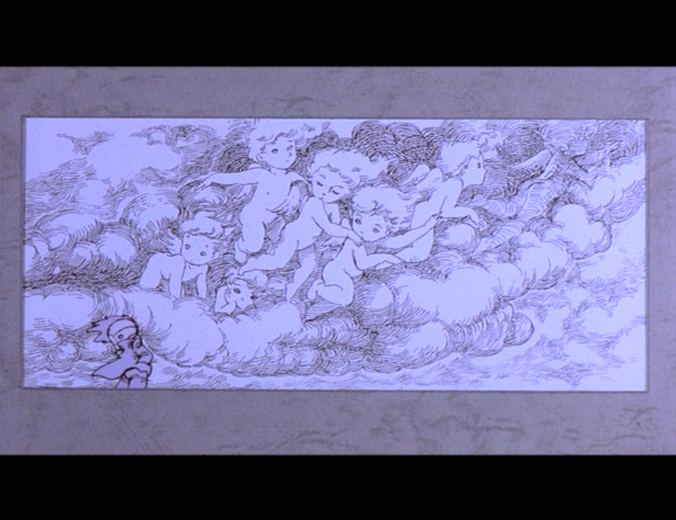
Cloud is not necessarily going to be a favourite for many, but I'm the kind of fan of unconventional filmmaking who loved this segment, my second favourite of the anthology. Cloud is tentatively a retelling of the Pinocchio story only with the entirety of the short being a robot boy walking past tableaus of elaborate, gorgeously penned scratchboard drawings of clouds, mushroom clouds of war and diving figures of the wind, one who turns him into a real boy at the ending. It is a literal experiment, in its music and in its unconventional look, of moving backgrounds as the boy is mainly walking to the left of the screen, fragmenting of the panels for dynamic close-ups used occasionally. Cloud is utterly indulgent but a beautiful, worthy inclusion. Considering the man behind it as well, its also a testament to Robot Carnival that it let many individuals not known as directors helm a piece entirely of their own tests, something that has to be praised when, problematically, the anime industry can be difficult in letting people helm their own projects or letting new talent develop.

From https://camstheothersideofanimation.files.
wordpress.com/2015/12/robot08.jpg?w=700

Strange Tales of Meiji Machine Culture: Westerner's Invasion
Director and Scenario: Hiroyuki Kitakubo
Voice Cast: Kei Tomiyama as Sankichi; Chisa Yokoyama as Yayoi; Katsue Miwa as Fukusuke; Kaneto Shiozawa as Denjirō;Toku Nishio as Daimaru; James R. Bowers as John Jack Vorkarson III

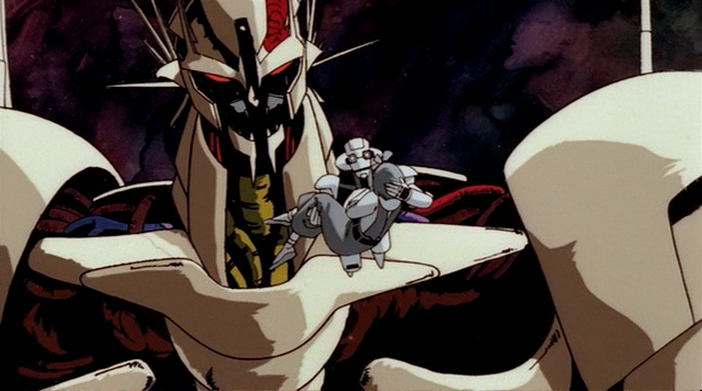
Robot Carnival, having a significantly better sense of tonal shifting than most anthologies, wisely followed the sedate, experimental Cloud with a farce. Hiroyuki Kitakubo is a fascinating figure as his directorial filmography has big and very well regarded titles within it - Black Magic M-66 (1987), Roujin Z (1991), the original 1993 animated adaptation of Jojo's Bizarre Adventure, Golden Boy (1995) - but being incredible small, finishing with his most well known project, Blood: The Last Vampire  (2000) [reviewed HERE], only to never sit in the directorial seat again past the year 2000. A shame as, able to juggle the clever and unconventional satire of Roujin Z to giving a technical experiment like Blood: The Last Vampire enough character to warrant a franchise, he is a great example of a working anime director just from those examples of drastically different genres and tones. Strange Tales of Meiji... is my third favourite entry of Robot Carnival. It's the most distinct, set in Meiji era Japan with the robots powered by steam and being built from wood and brick, itself a unique take on the material as, depicting adolescents hijacking their town's festival robot to take on an American one, it feels like it predates the tropes of anime that would grow in the nineties onwards, and could've sustained a longer work unlike the other segments.

The sense of being ahead of its time is found in the main cast, anticipating the next decade with its headstrong lead who is both noble but an idiot, the potential female love interest who slaps him about in a love-hate relationship and various miscreants in their fold who are try to defend their town in a ramshackle way, destroying as much as the invader does. The unconventionality of these robots also brings a curious spin on the mecha genre that could've been rewarding to see, as even simple things found in futuristic giant robot stories are more complicated, having to negotiate a time where firepower consists of a cannon that has to be aimed perfectly and a firework launcher. It's a comedy which is energetic and is also meant to parody its own characters' rah-rah, patriotic enthusiasm, not only in the leads destroying buildings in their mistakes but the American invading them, despite being voiced by an actor who speaks English as a first language, giving his dialogue the appropriately wooden, borderline incomprehensible "Engrish" quality for added amusement. (Controversially, hindsight that this was done decades ago in the era of anime on video, Streamline Pictures in the US decided, to contrast this, by giving the Japanese characters exaggerated "Oriental" accents). Altogether, when the rest of the anthology is not outright comedy in the slightest, this is a nice contrast to the rest which succeeds.

From https://www.ganriki.org/media/2014/robot-carnival-162.jpg

Chicken Man and Red Neck
Director and Scenario: Takashi Nakamura

Takashi Nakamura, who would go on to direct an underrated (and sadly maligned) animated feature called A Tree of Palme (2002), closes Robot Carnival, barring Otomo's closing credits animation, with this nightmarish tale of robot invasion, absorbing all machinery into a horrifying mass with a city, and the gangly man on a scooter who gets in their way. Chicken Man... is an excuse for elaborate production design, creations from ordinary objects distorted and with the time and budget available to elaborate on them into incredibly strange and imaginative scenes, mainly set up as an extended chase with a peculiar, almost Rube Goldberg levels of pointlessness and exaggeration throughout. It's a nice end to an incredible underrated production which I have waited years to see, one that lived up to my expectations. Even without the growing fondness for anthologies, Robot Carnival is an applaudable production which deserves more recognition. It is, also, a very good way to introduce people into anime, able to be separated into bit sized segments or watched all at once, the tonal and genre shifts a great advantage to it as, even if you hated or didn't like any of the segments, they are short enough to not be a nuisance and followed by others which vary in tones and style. Like the best of what anthologies should produce, it's a feast for the eyes and creativity.