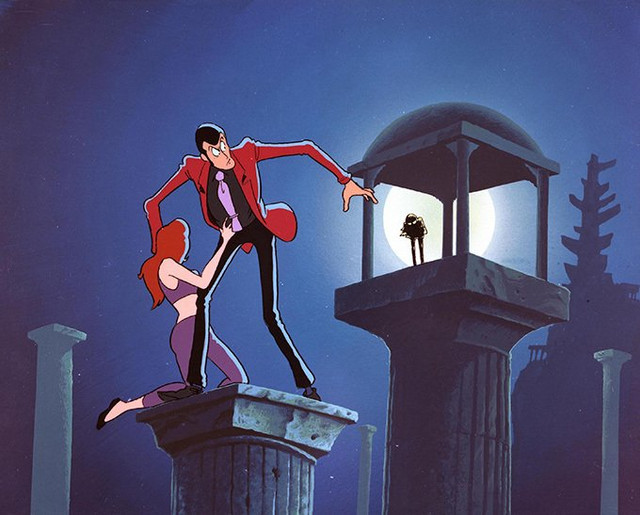
Showing posts with label Letter: L. Show all posts

Monday, 5 December 2022

#236: Lament of the Lamb (2003-4)


Studio: Madhouse

Director: Gisaburō Sugii

Screenplay: Gisaburō Sugii

Based on the manga by Kei Toume

Voice Cast: Megumi Hayashibara as Chizuna Takashiro; Tomokazu Seki as Kazuna Takashiro; Jūrōta Kosugi as Akira Eda; Kenichi Suzumura as Kinoshita; Kikuko Inoue as Momoko Takashiro; Miki Nagasawa as Emi; Satsuki Yukino as Shou Yaegashi; Shinichiro Miki as Minase; Yoko Sasaki as Natsuko Eda

Viewed in Japanese with English subtitles


In terms of an obscure title, Lament of the Lamb sticks out as a fascinating melodrama enclosed in a horror premise, which most will only know as the source manga was released by the manga publisher Tokyopop in the West. The anime however entices as it is produced by Madhouse, its female lead is voiced by Megumi Hayashibara, a mega star in the industry, and it is, whilst a more obscurer figure in comparison, directed by Gisaburō Sugii, who also wrote the scripts for all four episodes and worked on the storyboards. His career is marked with helming the theatrical film Night of the Galactic Railroad (1985), a highly regarded animated film attempting to adapt Kenji Miyazawa's post humorous novel, a challenge to adapt the un-filmable and unfinished book dealing with mortality and life for a young audience that is hugely well received, and a masterpiece of eighties theatrical anime. He also directed Street Fighter II: The Animated Movie (1994), a huge curveball in tones to these two other titles, but to consider important in showing his talents as it is one of the only well regarded fighting game anime in existence. It was a staple in the West from Manga Entertainment even if Alice in Chains and KMFDM had to be added to the soundtrack, which shows that Sugii was no slouch in terms of a director.

Kei Toume is also another case of a prolific manga artist whose work, and knowledge of her, is sadly limited in terms of English language access, Lament of the Lamb by itself having been released in the west, but also having a radio drama and a 2001 live action film to its name. Her story begins with Kazuna, who is a teenager left with his aunt and uncle by his father as a child, a famous doctor who disappeared from his life soon afterwards. Fate conspires to weave him back to his family as, whilst his father to his shock is dead, his older sister Chizuna who lived with him returns into Kazuna’s life. It is very obvious from the beginning, when the illness of the family is brought up, it is clearly a form of vampirism, a craving for the taste of blood, but this is instead a story whose horror is a psychodrama, as Kazuna, who was to be spared from the family to have a normal life, is starting to suffer the cravings for blood, as he is drawn to his sister.


With a moody electronic score, intercut with drum and bass freak outs by Ken Miyazawa, more prolific for his contributions to Detective Conan films, Lament of the Lamb stands out with interest as a macabre melodrama that enticed me with its tone and telling of this drama. The bloodlines is cursed with a craving for blood which is depicted differently to many vampire stories, including how instead of being undead or supernatural abilities, there is a greater danger of physical and/or mental damage to the family itself, something Kazuna can attest to in her memories of their late mother. The concern, especially for Kazuna is worse as it includes desiring his female student friend’s neck. Said friend, Yaegashi, is a student in love with him but feeling pushed away, as dynamic a character in her own emotional turmoil, as there is also an explicit sense of incest to the story between Kazuna and his older student. Unlike the titillation of other anime, this feels here a more potent edge to the proceedings, grave and platonic barring the neck biting sequence, which fully embraces the taboo and emphasizes how vampirism became symbolic of sexuality centuries before and is embraced here.

Even in mind of how more obscurer this is, i.e. you will likely see this as a rip, Lament also has a deliberately washed out aesthetic, of pale faces and even certain character designs (especially with Yaegashi) having a wider span between the eyes, almost more cartoonish but adding to the tone. It feels disconcerting, especially as whilst a slow burn drama, even in episode 1 blood is spilt and it is depicted in deep red. The resulting production is gothic melodrama in the modern day, especially as there is also the character of Minase, a young male doctor who is in love with Chizuna and himself has a great angst in regards to her growing platonic relationship to her younger brother, especially as despite the initial appearance she shows, she is physically being damaged by her illness, even in terms of the medication needed to control it having physical harm to her heart. The take on vampirism here, a psychological and physical craving which causes dizzy spells, physically wrecking spells and mental collapse is distinct here in terms of imaging the literalisation of this. The slower tone is a change of pace for a horror anime, and telling a whole story to its bleak end, without feeling morose in the slightest, the only real reason this likely never got picked up for the West is considering the state of anime releases at the time. The original video anime format was still viable but decreasing in number, and for everyone still released at the time, you find as many titles from the time which never came to the West as you fall over them from the eighties. It is a weird missed opportinity in terms of selling it from the back of Madhouse, who were highly regarded at the time, and on Megumi Hayashibara, a huge name to those who watched the original subbed versions of the likes of Neon Genesis Evangelion.

The only thing close, in terms of further adaptations of the manga to the West, was at the Tokyo Project Gathering on the 22nd October 2006, a segment of TIFFCOM, where Mr. Stuart Levy, CEO of Tokyopop, presented the Lament of the Lamb live-action movie project as a future plan. It was meant to begin production in 2007, and be shot in Romania1, which does emphasize how Tokyopop's reputation started to slip in the mid-2000s and hubris as well, the closest thing to a live action film from them being Van Von Hunter (2010), a low budget adaptation of a Western parody of manga, by Mike Schwark and Ron Kaulfersch, Levy helped co-write. By 2008, Tokyopop after their success had to restructure their business due to changes in the manga industry, and neither helping was that the significant licenses they made their name from - Kodansha published titles, manga created by CLAMP - were being taken away from them. Lament of the Lamb's review should focus on the material, this adaptation a little gem whose absence is sad as, in terms of a horror anime, this is very different from many as a very compelling gothic drama.


=====

1) Tokyo Project Gathering Anime Related Projects, written by Christopher Macdonald and published by Anime News Network on 23rd October 2006.

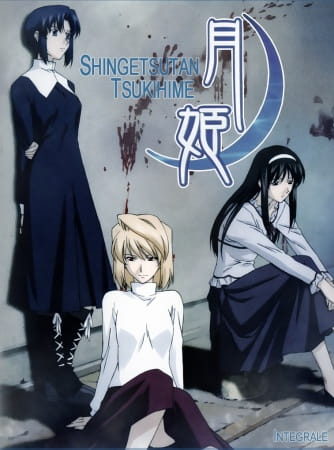
Thursday, 26 December 2019

#130: Lunar Legend Tsukihime (2003)


Director: Katsushi Sakurabi
Screenplay: Hiroko Tokita
Based on the Visual Novel by Type-Moon
Voice Cast: Hitomi Nabatame as Arcueid Brunestud; Kenichi Suzumura as Shiki Tohno; Akiko Kimura as Aoko Aozaki; Fumiko Orikasa as Ciel; Hiroyuki Yoshino as Roa; Kana Ueda as Kohaku; Kaori Tanaka as Satsuki Yumizuka; Kenta Miyake as Nero Chaos; Shizuka Itou as Akiha Tohno; Takahiro Sakurai as Arihiko Inui; Yumi Kakazu as Hisui
Viewed in Japanese with English Subtitles

Tsukihime when the opening credits animation started - what with falling maidens, falling figurines into blood wine filled glasses, and an air of sombreness suggesting something earnest scored to effectively Japanese Goth Enya - had my attention already. I had low expectations, but the interesting factor that I also had to consider is that Tsukihime is a Type-Moon adaptation. They are a company who originated from Dojin soft groups, hobbyists who created their own videogames, who then grew to be a cult organisation whose work has been adaptive into a lot of anime, a particularly significant force as the Fate series became one of the biggest franchises in the 2010s with all the prequels, sequels and spin-offs it's had.

Tsukiime was a visual novel too, actually an adult one with explicit sex scenes originally, which is a concept of story based videogames which are largely text based with images (maybe animation) where the decisions in text and dialogue choices sprawl out into multiple paths1. Interestingly even the adult background for this particular one, which was very successful for Type-Moon in 2000 when it was released, was even nodded to in one of this show's good moments, that when anime romance can be notoriously about just looking shyly to each other and little else over a season, there are two characters here who actually consummate theirs physically even if off-screen. Tsuhihime's interlocking nature with other Type-Moon titles was also another big factor for me as one particularly detail, that our meek male high school student lead has the "Mystic Eyes of Death Perception", immediately standing out as being carried over to The Garden of Sinners (2007-2010), originally an older title created by the company's co-founder and light novelist Kinoko Nasu. That was a theatrical film serial work based on a premise of a female character called "Shiki Roygi", Shiki also the name of our lead here, who gains the Mystic Eyes of Death Perception after a near death experience, able to see the lines and points on objects and living figures that went attacked destroy/maim/kill them. Type-Moon as a company is like Marvel and DC comics, where their titles interlocking in one giant world, so I was expecting a bit more than I got.

As a huge fan of The Garden of Sinners series, which does present the flaws I will get into here but overcome them into a visually stunning and narratively bold creation, I was brought to Tsukihime with some interest, which is a vampire story which probably hides lore I have no idea about not following Type-Moon titles, but I was willingly to go along with. Said plot follows Shiki Tohno, who gets into the curious scenario, more weird and questionable the longer you actually think about it, of using his mystical eyes to abruptly cut a female foreign woman to pieces, really tiny pieces, only for her to reconstitute baring some injury and proclaim herself Arcueid the vampire, who wants his help to find another responsible for disappearances in the city. That they fall in love, despite his cutting her up to bits, is a logic gap I don't know if anyone else has had, considering Tsukihime is an obscure title nowadays that was swallowed up the Geneon USA close down2. It definitely makes things potential problematic or surreal.

Apparently being shredded to pieces appealed to Arcueid, able to walk in the day light without issue and able to eat regular food, a vampire who detests drinking blood, as Tsukihime becomes more of a melodrama than a horror film, something I have to confess was a more intriguing scenario. Shiki's sister Akiha, aloof with her regal nature, and with a household with twin maids and curfew rules, has secrets about their family; his high school friend Satsuki is attracted to him but is left on the side due to Arcueid's existence; and his senior class mate Ciel, who is really good at tea ceremonies, is secretly a church warrior after vampires. If it all has a slightly absurd air in these ordinary environments for all this to transpire, then this is just traditional in anime to have high schools full of secret Vatican agents and super powered figures who still have to sleep and go about at quiet passages of time.

The result is very conventional meat and potatoes plotting, but it would still work. The only idiosyncrasy is that, able to be watched without any other context, Type-Moon still like creating a barrel full of terms and dropping them on viewers. This was negated by The Garden of Sinners, who dialogue could be very peculiar at times, because it lived up to being a hyper violent, hyper emotive tale of dark fantasy willing to get its hands dirty in full blown horror whilst having enough time to have interesting characters and be experimental, like an epilogue which is just thirty or so minutes of characters talking each other on a snowy road. Tsukihime is bit by the fact it has to be a twelve episode TV series with an end, which is waylaid by the lore. Apparently, Arcueid is of the "Moon People" for example of some of this exposition dropped out of nowhere. That particular example just evokes to me (maybe completely misinformed) another example of anime being obsessed with vampires being from outer space and near it, something probably informed by the fact Japan doesn't have a natural vampiric lore, so come to this literal foreign import to the point of shooting them out of space at themselves. Other examples of terminology just get lost or forgotten for me.


The conflict in being the melodrama and the horror action show weighed down by this lore is the real issue that takes over. Its why the best episode of the entire series, enough I admit a fondness to what was an utterly failed anime series, was the episode where all the main cast, including Shiki's best male friend and goofball, go to a theme park for the entire twenty plus minute length. Where Akiha is openly antagonistic to Ciel from the moment they meet; where Ciel and Arcueid briefly have a ceasefire from being vampire and holy warrior, riding the same Ferris wheel cart together pondering why Akiha is as odd as she is; Satsuki as the maligned girl who, possessing a magnificent set of giant twin ponytails but utterly timid aside from this, finally shows some strength in the midst of a lunch time argument to chew everyone else out for stressing Shiki out with their arguments. It's the likes of this type of episode where the reward of anime comes from, where even a show that could be seen as bland and convoluted at one moment redeems itself, all by dragging high concept stories into curious little dramas and details.

The series beyond it however is flat, handicapped in being too short for its ambition, and not pacing itself well. Barring one minion who can produce flesh eating wolves from himself, causing an entire hotel's worth of carnage3, the suggestion that this show would be a traditional action-horror doesn't happen but is a structure the show is stuck with nonetheless. A huge factor, even with my lack of knowledge of the source material, is knowing the visual novel is cut into multiple different story arches, the various layers a visual novel can possess (and with the time to tell them) difficult to reproduce in just, say, twelve episodes. (There's an entire story beat, from that source material, just on Shiki being locked in his bedroom and going mad, which might've been a fascinating tangent if this was a considerably longer production). Frankly, and this might be a controversial choice, I'd wished the melodrama had entirely taken over the show, as all the over elaborate exposition is a distraction. As a result, Tsukihime does have a flat ending, pushed with the sense (felt as I have done with these shorter series) that the production was forced to have the escalated, action orientated finales.

In terms of a production, from the early 2000s, its looks to be polite merely okay and frankly not as splendid as it should've been, more so in knowledge that the creators, J.C.Staff, have got some highly regarded work in their CV from Revolutionary Girl Utena (1997)  to the Food Wars!: Shokugeki no Soma franchise. The rudimentary, okay look really doesn't add as much dramatic heft as you want to make the show as emotional as it clearly wants to be. It also has the issue that its protagonist Shiki is violently meek to the point he's not a character you can get a lot of drama from most of the time unlike his co-stars. This has gotten to the point, even commented on in the show by his male friend, that this characterisation of affability that is extreme passive feels less like an annoying characterisation for so many anime male protagonists but a cultural concept, (quiet, affable, potentially passive to the lack of propulsion), that I suspect is a subconsciously drawn from real life. It also argues for my theory of you are likely to have more dynamic female characters, even if its objectified, just by how elaborate Satsuki's hair is before you even give her a little plot by herself, when too many times the male cast can be between average Joe as here or average grizzled cool badass.

The use of vampire lore is also worthy of mention as, because Japan doesn't have a folklore, the show innately has a European aesthetic draped over a habit I love in Japanese horror, of these types of events taking place in the most ordinary of Japanese environments, be it the countryside or city streets, even here next to convenience store and drinks machines. For all the flaws I can level at Tsukihime, letting the character of Arcueid be a vampire who gets to play in an arcade and even watch a vampire film, in the traditional Bela Lugosi look on the poster, is a lot fascinating for me than the generic action horror it eventually returns to, even going to the amusing moment of Arcueid offering the amateur film criticism about the pleasures of fake stories, as someone yet to go to one after maybe hundreds of years of existence, strangely making this amateur review blog's day  for that scene too.

People who love the original visual novel would probably hate this adaptation because it's so cut down and reduced, limited in visual style and aesthetic, but subjectively even I, who didn't really leave with high thoughts on the show, can still skim the thought out that, for what is ultimately an average show, it had quirks. I had a show more inclined in suggesting how, because she still has to pay for hotels to stay in, Arcueid has even made counterfeit money to Shiki's mortification, something I was grateful for than any of the average looking fight scenes that occasionally appear. As someone, aware that the gender politics are problematic, who actually thought the idea of the Twilight series as a melodramatic romance with Universal horror monsters was brilliant as a premise, who even found amusing to the idea of vampires playing baseball in that first film as part of its charm, it was more the fact that it became generic CGI fight scenes and lore that really irritated me if you stuck to just its storytelling. A vampire tale which is less action more drama, no matter how potentially syrupy, is more worthy of interest for me and was the more interesting parts of this particular series.

Tsukihime however has to try to be more dramatic than this, which doesn't interest as much as the little moments. The series leads to tragedy and surprises - secret siblings, Akiha being cagey for good reason because her hair turns blood red and glowing if uncontrolled, a cell inexplicably appearing and evoking H.P. Lovecraft's The Rats in the Walls in a cameo, all to a tragic conclusion to a romance that's bittersweet - but the pace was badly planned. Its slow burn tone for eight episodes, building evil henchmen and a being named Roa who is revealed to be responsible for vampires in the first place, but when there are only twelve episodes only, its hastily concluded and all rushed in the end. It's a shame as a fascinating genre hybrid between romance and horror and drama, it has its moments, only to collapse as it does.


=======
1) School Days (2007), once you get past its bland aesthetic look and occasionally leering eye, was an inspiring example of a show based on a visual novel where the worse possible ending, bad decisions and even death, was played out in gut wrenching detail.

2) Geneon, a Japanese production company, set up shop in the United States as Geneon USA and, whilst they released titles that were relicensed like Black Lagoon (2006) and Hellsing Ultimate (2006-2012), dragged many titles into out of print when they couldn't survive that market. Admittedly, a lot of them weren't released in the United Kingdom, so the likes of the notoriously awful Genma Wars (2002) series might be difficult to see let alone come to try to paint a picture of the company's personality like others.

3) If this had the carte blanche of The Garden of Sinners, trust me they wouldn't have held back on the horrors of that massacre, whilst what you get here is cut away from for TV standards.  

Wednesday, 18 December 2019

#129: The Lost Village (2016)

From https://media.senscritique.com/media/
000013231740/source_big/Mayoiga.jpg


Director: Tsutomu Mizushima
Screenplay: Mari Okada
Voice Cast: Kōdai Sakai as Mitsumune; Ai Kakuma as Lovepon; Ayaka Shimizu as Maimai; Hiromi Igarashi as Lion; Kaoru Sakura as Koharun; Konomi Tada as Nanko; Kosuke Miyoshi as Jack; Taku Yashiro as Hayato; Tatsuhisa Suzuki as Valkana; Yoshiaki Hasegawa as Yura Mikage; Yuka Aisaka as Masaki
Viewed in Japanese with English Subtitles

[Full Spoilers Throughout]

What an odd viewing experience The Lost Village turned out to be. Who was meant to be this show's target audience, and how did it end up like this? What immediately stands out, and I'll not be ambivalent about giving away spoilers or the fact The Lost Village is a perplexing creation I've had to rewrite the review of over and over again, is that unless this was meant to be funny, the result is a car crash. If it is funny, there are major flaws but it gleefully jumps on this horror premise and takes it to surreal levels.

On paper, this takes twelve episodes to tell the viewer not to try to bury their head in the sand or run away from their worst fears, which is not a bad message to retell in the slightest, but we get to this in the most prolonged and confused of ways in execution.  Even though I came into the series fully aware of its reputation, I don't exactly know where to start, especially when it's a horror series where out of an entire busload of cast, it's a story where no one actually dies, which is also not necessarily a bad thing. It is also however a premise that can be whittled down to people going to the titular village, shouting at each other, running around, some feeling sleepy, and some leaving like it was just a holiday in the countryside.

Probably of note is that the director is Tsutomu Mizushima, who has gained popular hits like Prison School (2015) over the 2010s, but is also infamously the director of Bludgeoning Angel Dokuro-Chan (2005-7) and Magical Witch Punie-chan (2006), the most misanthropic director I have seen in terms of weirdness. Also from his work on horror series like Another (2012), he is someone whose take on horror anime is probably why The Lost Village's tone is as it is, a man whose taste in extremity means subtly is lost1.

The other figure involved however is the main screenwriter Mari Okada, who is very significant and the titan whose now got The Lost Village in her CV. There are tragically still not many women in prominent roles in the anime industry, but Okada is now becoming a brand name, a prolific screenwriter who has even directed an anime herself, the theatrical film Maquia: When the Promised Flower Blooms (2018). Her output as a screenwriter however is long, which means that for every work that succeeded, even just series composition for Lupin the Third: The Woman Called Fujiko Mine (2012) for example, she now has the double edged sword of being a very busy person who works a lot and having to juggle the quality. I can see an idiosyncratic voice is behind this, one trying for something brave, but the project clearly got beyond everyone or, if you view it as a comedic gem, someone got the idea to be as absurd as possible.

Immediately, even before I get to the plot synopsis, there are excessively too many characters as we're introduced to an entire bus of them, individuals who wish to leave society on a mystery trip to a village that doesn't exist on the Japanese map. The Lost Village, technically in the horror category, is also a Lord of the Flies allegory, William Golding's novel about a group of school children stuck on an island whose fears and prejudices cause them to turn on each other; here, with adults and teenagers, the pressure exerted on this bus load of figures causes them to become paranoid, openly hysterical, and start witch hunts on certain members.

From https://manga.tokyo/wp-content/uploads/2016/05/05_01.jpg

The most prominent figures to keep track of are Mitsumune, a shy young male looking to find himself, Hayato who is another male who is very defensive of Mitsumune and believes his "friend" should just follow his opinions, and Masaki who is a mysterious young woman Mitsumune likes and becomes the target of the witch hunting when her connection to the village is expanded upon. Others are stereotypes - the plump guy more interested in food, the voluptuous woman in high heels (who is bafflingly meant to be nineteen), the bespectacled former salary man whose calm attitude is exposed as hiding a neurotic desire others around among others. Then there are the misfits and oddballs, who if anything are the only really interesting thing at hand, as even if this was a comedy is a show undermined by too many bland figures you don't care for, when these eccentrics around the edges are more compelling. Two gun otaku, male and female, who are obsessed with fire arms and making replicas; a sleazy wannabe rapper whose disappearance and return just reveals more sleaze unintentionally; a middle aged grumpy bus driver whose regrets over a late daughter do stab at drama and gets puked on in the first episode; a teenage medium named Lion who says she isn't a medium and eventually buddies up with a female sleuth in the group; a guy dressed as a pirate, including eye patch, the personification of online videogame/web forum ego with delusions of grandeur, and Lovepon.

Oh Lovepon, you are the unexpected symbolic centre of this show's issues and quirks, worthy of your entire paragraph despite being merely a hand drawn animation voiced by Ai Kakuma. To describe The Lost Village to an outsider who wants to know what this is like, just show clips of this female character whose voice actress had to do her earnest to scream "Execute!" over and over again in most if not all the episodes whilst from the get-go. A character, in the bus, being visibly disturbed when she realises various execution techniques just from the first episode despite no one batting an eyelid, a terrible depiction of mental trauma which could come off as tasteless to make light of considering her back-story is actually quite sad, her father figure a corrupt Buddhist priest who beat her mother and tormented Lovepon until she became fixated on causing suffering to others.

The character is so over-the-top however that I not only feel guilty in this writing, but also will instate the "Lovepon Award for the Most Over-the-Top and Bizarre Anime Character" after her next time I do one of my indulgent fake award shows. Thought was put into this character which failed in execution, to forgive the pun, thus feeling like the apt metaphor for the whole production. Reading Crunchyroll comments on episodes of the show, where viewers cruelly wished this fictitious character was bumped off sooner rather than later, just added to this bugnuts and failed depiction of psychological trauma I became obsessed in from how ridiculous it. The character even makes a joke about "a-gore-arable" in the final episode, this the character who has her voice actress screaming like a mad person with conviction, thus making these type of characterisations throughout the series more curious in hindsight, like having sympathy for a female gun otaku tormented by a hornet's nest by bullies as a kid but still using cat puns (in the script's odd script quirks) even at serious moments. A character like Lovepon is glorious in a bubble in a way only I could appreciate; if someone was like this in real life, I'd want to give her a hug and make sure she was okay out of empathy even if I might be stabbed in the process.

This sense of oddness is prevalent even in structure. There are very clear flaws, which even the show's defenders should be aware of, in that the pacing over twelve episodes is a mess. But in the middle of this is a show that has many curiosities, not forgetting the CGI bus that can abruptly teleport and nearly run over cast members as a memorable figure. For a show about overcoming psychological trauma, it is literalised as monsters depicted in (somewhat jarring) computer animation too, which changes the tone considerably after the initial one over the first episodes. There are too many characters, so many are ignored or barely dealt with in terms of their back stories, but the introduction of the monsters adds further complications in how to register the series. Some saddle the line fully between creepiness and absurdity - the lead Mitsumune traumatised by the death of her older brother and how her mother made him the brother, as depicted by a creepy hybrid of said brother and a plush penguin toy he had. Then there's a literal boob - a silicon implant, but not a trauma about sex, but the male gun otaku who had one placed in the top of his head to meet a height limit for a military group, which is never resolved and is as ridiculous as it sounds. Or a killer train.

It all builds to a conundrum of The Lost Village where it strives for complexity with (unintentional?) absurdity, but undercuts itself with many clear issues in the storytelling. I also suspect, as mentioned, the production was rushed; the first episodes drip feed only tiny amounts of what is to take place, merely paranoia brewing among the central group only to eventually introduce monsters. From then on, you get various character contradictions, things which don't make sense and people forgetting someone tried to drown them1, which may have worked as deliberately funny if there weren't so many pointless characters whose only jokes are stereotypes like being overweight, lazy etc. This becomes worse when the middle and final episodes hurdle along to just explaining the exposition and messily concluding with most of the cast left unresolved in their stories. Hell, one episode even ends with Masaki tied to a stake, about to confess her back-story, only for the show to abruptly cut to the end credits, as if The Lost Village is now toying with its audience, a potential joke which is undercut by the show never really playing to these kinds of games before and after.

If it any good? Who knows, as it's too unpredictable what the purpose of the series was, too many potential theories which have made this review a mess to eventually put together. Its compelling in a way I find it anime horror where it's unpredicatable, but it was also an utter chore to sit through which probably a bigger damning comment. It's definitely not worth many to see unless they, like me, wanted to see what the fuss was all about or can appreciate the "humour"; between how generic it was in aesthetic and production, to the convoluted plotting, this is the kind of anime that most would forget even if it was so bad it was good, never broadly absurd in spite of being the show where someone runs in fear from a giant train monster. Taking as long as I did to view the series didn't help, but this is as much the danger of skimming these titles which are stuck, like phantoms themselves, on streaming sites which can take far more time to sit through than marathoning episodes on second hand DVDs. Definitely there was a lot to find amusing, especially when it racks up the absurdities by the middle half, but even that was eventually undercut by increasingly perplexing plot and creative choices.

From https://geekorner.files.wordpress.com/2016/04/mayoiga-
episode-1-13-44_2016-04-02_15-32-12.jpg

=========
1) He's also someone who finds the difference between "scariness" and "funniness" not very big, as talked of in this interview, worthy of baring in mind. 

2) Which is made more bizarre when the victim is more concerned he can see the perpetrator's bra through her wet shirt whilst being drowned.

Friday, 22 November 2019

#126: Lily C.A.T. (1987)


Director: Hisayuki Toriumi
Screenplay: Hisayuki Toriumi
Voice Cast: Chikao Ohtsuka as Dick Berry; Masako Katsuki as Nancy Strauch; Osamu Saka as Mike Hamilton; Yoshiko Sakakibara as Miss Caroline; Eiko Yamada as Dorothy Van Farrah /Farrah Van Dorothy; Hideyuki Tanaka as Gott Walt Coup; Hiroshi Ohtake as Dülar Delcassé; Kōzō Shioya as Guy Alcuin; Mahito Tsujimura as Dr. Harris Mead; Masako Katsuki as Nancy Stroustrup
Viewed in Japanese with English Subtitles

[Major Spoilers]

After years of curiosity of this title, I finally come to Lily C.A.T. with disappointment to be honest. And note, this OVA feature has a handsome production team behind it, so there was hope even as a schlocky sci-fi horror film it'd have a high calibre group of names working on it. Director Hisayuki Tonuni directed the 1985 Area 88 OVA, which is still held in high regard today, and was chief co-director of crossover hit The Mysterious Cities of Gold (1982), and helmed the original Gatchaman (1972-4) series, a man who started on Speed Racer in the sixties, by the end of his life at 2009 going between helping Mamoru Oshii develop the first ever OVA in existence, Dallos (1983), and even becoming a freelance novelist.

The studio behind this film Pierrot are veterans who've been behind huge series from Urusei Yatsura to Narato, and you have two figures by the name of Yasuomi Umetsu and Yoshitaka Ameno involved. Umetsu, future director of the notorious Kite (1998), was yet a man who even on that title was known for painstaking quality of work1. Ameno, who has been covered before, eventually became so well regarded for his highly detailed illustration that he could live off being an actual artist for a career with work in galleries, cutting his teeth in the sixties too and in the eighties being a journeyman in anime, between working with Oshii on the truly under seen masterpiece Angel's Egg (1985) and random obscurities like Amon Saga (1986).

So why doesn't Lily C.A.T. work for me? Because it remakes Alien (1979) in a tired way even if it's well made. Ridley Scott's film is important but all the work that ripped it off has cast an unfortunate shadow over genre cinema when so many, for every good film that ripped it off in great or fun ways, just copied it lazily. Anime has done the same, to the point there's even multiple hentai based on this template2; Lily C.A.T's version begins with an international crew and plays off the idea of time distortion due to space travel, a theme explored later in Gunbuster (1988) in how for this crew, the Earth is left over twenty plus years whilst for them it'll only be months on their goal. One idea sadly underutilised is that, as per suspicions two of the crew have faked their identities, in this world this factor has encouraged criminals on the lam to go into space so time passes, leaving few to remember them.

Instead, we get another potentially fascinating plot in which, yes, there's an alien entity onboard but it has contaminated the spaceship's atmosphere and causes an alien version of Legionnaire's disease that rapidly harms a person's lungs, as the real life disease does as explained in the story, but also is connected to a being which absorbed all living matter. It does mean, as a warning even as an animated work, there is cat related violence along the way but also, designed by Yoshitaka Ameno, a really disturbing creature like John Carpenter's The Thing (1982) which is a mass of limbs and entities coexisting. As this is an eighties OVA too, not only is all this highly detailed animation, but this creature is really grotesque too.

However the problem with Lily C.A.T. is how bland it all becomes, when anime horror is moody, lurid and/or ridiculous. It is usually of interest to me even if it's terrible because it is unpredictable, entirely different from what this film does. The characters, a multinational cast, don't stand out even if a plot point is about two suspicious members of the crew; Umezu's character designs, very realistic, aren't as flamboyant as his work can be, he who is usually very realistic but also includes immense detail to them. This is neither helped by the cast not being written to stand out for what is initially a large one which could blend into each other, and since this desires to play Alien straight, it never has a surprise. The only quirk of the entire plot is also an incredibly silly one, imagining if Ash from Alien, the android who was secretly responsible for getting the alien to Earth, when played by an android cat. It doesn't succeed, and as a result, this was a huge disappointment as a film despite the calibre of staff behind it.

From https://fantasyanime.com/anime/images/lilycat/lilycat_shot20.jpg

======
1) Still working too, which is great, as the character designs of Kokkoku: Moment by Moment (2018) are unmistakably his, and he's been involved as the animation director for many productions, which is a damn good figure to have on staff.

2) One could even be covered as it got a butchered British DVD release, called Alien of Darkness (1996), which envisioned Alien if the entire crew were female, tentacles and a heroine with a cute ferret.

Wednesday, 10 July 2019

#108: Double Decker! Doug & Kirill (2018)

From https://i.ytimg.com/vi/KwuYDcQ6o-Q/maxresdefault.jpg


Director: Joji Furuta
Screenplay: Tomohiro Suzuki
Voice Cast: Kōhei Amasaki as Kirill Vrubel; Satoshi Mikami as Douglas "Doug" Bilingam; Atsumi Tanezaki as Yuri Fujishiro; Aya Endo as Sophie; Chika Anzai as Katherine "Kay" Rochefort; Daisuke Namikawa as Bamboo Man; Rikiya Koyama as Travis Murphy; Saori Hayami as Deana del Rio; Takuma Nagatsuka as Apple; Tesshō Genda as Brian Cooper; Tsuyoshi Koyama as Derick Ross; Yō Taichi as Maxine "Max" Silverstone; Yōji Ueda as the Narrator; Yuuki Fujiwara as Valery "Milla" Vrubel
Viewed in Japanese with English Subtitles

I wish I could like Double Decker much more, but what starts off with good humour and enough resources to work with does turn into an incredibly generic show by its ending, in thirteen episodes having a moment near the end where someone realised they wanted an ongoing story and hastily crowbarred a finale on rather than the funny sci-fi cop show that is Double Decker's better aspects. This is a shame as, from the creators of Tiger & Bunny (2011) and possibly set in the same world, Double Decker at its best feels like a piss take on American cop shows and films if Crockett and Tubbs were part of a special drugs section of the police where said drug, Anthem, if it doesn't kill you causes drastic mutation.

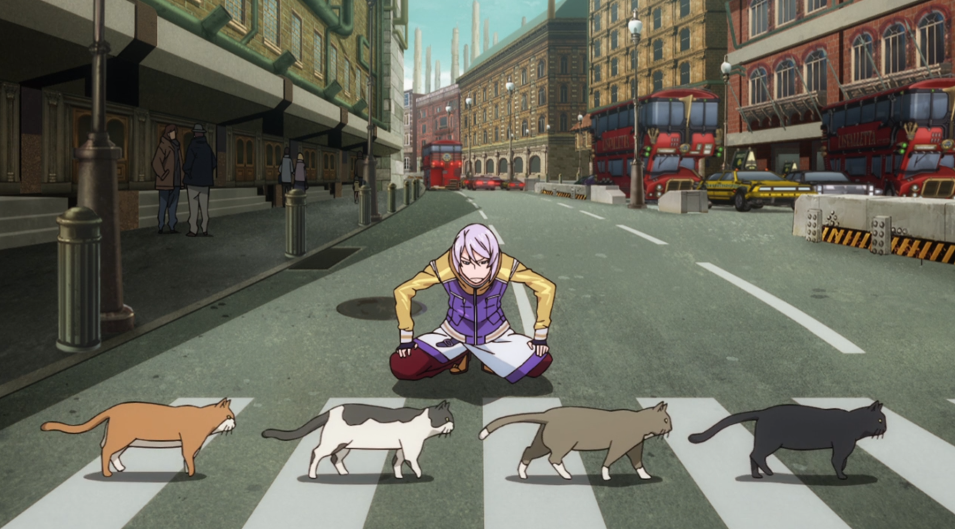
Undeniably, the show starts off on a good footing, a futuristic world which seems to have ingested British culture as there are pubs and cybernetic double decker buses on the roads, all set around the group Seven-0 who deal with Anthem cases. In the midst of this setting ordinary cop Kirill Vrubel, on his off-day looking for his landlady's cat, stumbles into an Anthem bust and, due to an embarrassing public display involving pretending to be from the future (completely naked as a result) to help a Seven-O officer named Doug Bilingam, gets fired from the police but does become a Seven-0 member on an invitation.

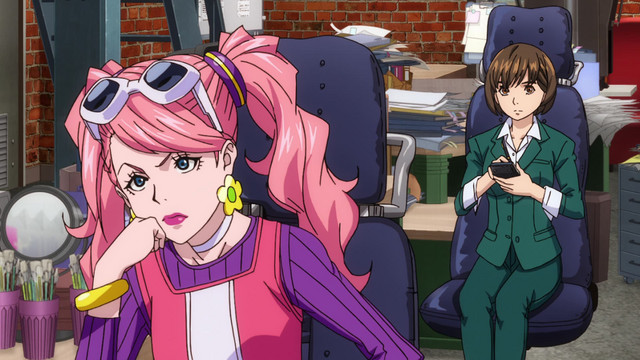
I can thankfully say Double Decker is on the side on giving its protagonists personalities alongside snazzy costumes, though the ones here are just as good. Double Decker has a lot to admire in terms of how, for its comedy and that the head of Seven-O, Travis Murphy, is portrayed as both an idiot and also a pig who tried to put together a group of "Angels" to match his "Charlie", the show has a predominately large cast of strong and memorable women set also male protagonists as goofballs, an ensemble of capable figure who yet have their quirks. Kirill, who is noble but an idiot, Doug as the laid back and at times an arse, insanely young tech head Dr. Apple, and the aforementioned Travis Murphy make up the male members of Seven-O. Then there is Maxine "Max" Silverstone, shaved head former boxer with a warm heart, partnered with Yuri Fujishiro, an actual robot who Kirill perceives he has to keep her secret for, Deana del Rio, the pink haired and fabulously dressed gun woman with a hair trigger temper, partnered with Katherine "Kay" Roshfall, meek and by the book but with the curious issue that she gets angry drunk on non-alcoholic beverages. Add Sophie Gainsbourg, Travis' mild mannered dispatcher who puts up with his lustings for her blankly, and you have legitimately entertaining figures to work from.

Hardcore references are there too but don't consist of the whole point of the show, merely that if you get them already funny jokes are funnier. The exception is that the show does reference famous album covers and band aesthetics for visual gags which don't make up the whole show (i.e. framing a visual piece of exposition around the look of the Sex Pistols' famous Never Mind the Bollocks album); the rest are about cop shows and American action cinema, which still work in that in this world, everything is over the top but the usual cop show plot points usually get punctured at the same time. An example I won't spoil, but the best example of this streak of humour, is the cliché surrounding Doug's former partner, playing up to this trope for the first few episodes only to gleefully deflate it when the truth is blithely revealed.

The show even when you don't get these references manages to spin a lot of fun from them, the best for me being Episode Six whose first half if a parody of American reality shows like Cops (1989-), with blurred faces and the look of a TV show as Seven-0 members are recorded for television dealing with a drunk, inter-spliced as part of a major plot point for one character for a clever and fluid sense of plotting. There is a larger plot, that Seven-0 are against a major Anthem smuggling group named Esperanto, and there are serious stories, like Episode Ten being about terminally ill patients suddenly becoming healthy or dying violently, but the real virtue of Double Decker is that its mainly a farcical cop action with characters who you sincerely like. The best moments of the actual show thankfully do work; it takes itself seriously when needed, but I found the most rewarding moments being those which completely undercut clichés with the slow agony of a deflating balloon. The narrator also has to be mentioned as, rather than a bipartisan figure, he will contribute his thoughts, having to constantly undercut comments onscreen and including details like Doug being an "asshole" at times without hesitance.


Which makes the fact that three episodes that should've been part of the main show came afterwards as bonus OVA episodes a bit of a creative failure; one of them, the doldrums of Seven-0's dull days with the backgrounds of the female cast revealed, should've been included, and the hot springs episode furthers the main takes a notorious cliché of an episode for an anime and least gives it some added humour as, as is becoming a peculiar discover for me, apparently murder mysteries set in hot spring resorts is a trope I have seen anime shows within the last few years. Usually to take the piss out of as it also requires dramatic exposition having to be told at a cliff side, even driving to one just to do so.

Double Decker has also been put through the ringer for how it's handled transgender politics. This segment needs SPOILER WARNINGS to discuss properly, in which the problem surrounds the plot point of Kirill having an older sister who has returned back into his life, only with the caveat that she is soon revelled to actually be his older brother, never explicitly stated as being transgender which is a detail that does have to be based in mind, more of a case here that she prefers dressing and acting as a woman in public rather than desiring to be a trans woman. The bigger issue with Double Decker is that it putts its foot in its mouth in some ill advised and tasteless jokes, plot points (like the hot springs episode) which play upon characters potentially reacting badly if they find out the woman they have a crush for is revealed to be a cis-man, and the concept of "Deadnaming" (referring to a trans person's original gendered name) which I have to be presume is more of a taboo in the West than apparently in Japan. There is a clearly an issue with cultural differences at hand; for all the progressive moments in anime and manga to do with LGBT issues, there are moments where Japan clearly has issues it still needs to go through, attested to known issues of LGBT discrimination still in the country, and with a sense that for the moments where Double Decker tries its best it also stumbles miserably.

As someone with close family who are transgender, this issue is now more pertinent for me to be aware of in art, and here its more the case that the "gay panic" jokes just come off as dumb and un-needed. Pertinently again this is an issue as the show does show when it does it well, as in an episode about Max's teenage years, where she is revelled to have been once a shy glasses wearing and long haired schoolgirl in high school who got her modern look through a far more progressive and sincere plot nuisance - that the guy she had a crush on was actually either transgendered and was someone who preferred to dress as a woman and, even if they were rejected from the school prom, went to that event with her dressed in her shaved haired masculine dressed self for the first time whilst he went as a woman in prom dress, all part of cementing her hatred of them in an episode where a school prom becomes a hot bed for potential prom Queens being deliberately attacked. It's a tender moment which shows, if the production didn't fall back on content which has become less defendable for Western anime fans, the show could've avoided this entire controversy and show this better moment of heart1.

For myself the bigger issue in terms of Double Decker in terms of quality, beyond this controversy which has undercut the view of the series for many when it premiered on Crunchroll, is that it spends half its length with its breezy mix of drama and humour that only to believe it needs to tie itself up but doing it badly, rushing forth only in the last few episodes with a plot trajectory that is completely predictable not matter how much it tried to even subvert it. Considering how slickly made the show is2, it almost felt rushed how it lead to its conclusion, an example of a show that might've actually benefitting from being over twenty four to six episodes like was a common occurrence in the past. Entering anime fandom in the 2000s, twenty plus episode long series were more common, even to the point (ironically) there were cases of shows that should've been half their length, but this is a curious case that that length of time, even if the middle episodes between episode ten to fifteen (as usually was the case) might've procrastinated with tangents, would've actually benefitted this style of show, which feels like its emphasising the comedy and character more for three-quarters of its length and leaves the Esperanto plot undernourished.  

Also, Double Decker makes a terrible decision in dropping in a plot point about another planet, and characters from it, which is distracting and obfuscates from the point of the show being about cops. Even if it leads to why Anthem exists in background narrative, it'd far and away less interesting than leaving Anthem an unknown McGuffin and letting the cop parody be taken further than it did. It also makes a problematic issue that show has been challenged about already actually more of an ill conceived creative decision the longer you think about where the plot point transpired from.

As a result, the show's an unfortunate disappointment, leaving my mind in memory in complete honesty as time passes, all with a sense that it squandered its best aspects. Even if the OVAs do temper this with a nicely needed return to the comedy, you still have the issue that, alongside containing as much of the issues the show has been accused about in the main series, they are just extra material that can't really compensate for the mistake of the finale.

From https://img1.ak.crunchyroll.com/i/spire1-tmb/
3e6324831513287cd802d554f82a07c61540112281_fwide.jpg

===========
1) There's also a potential issue of teasing characters as gay which doesn't get followed up, just for an emotional titillation, suggesting that Max is also possibly in a romantic situation with her partner Yuri, , in how their end credit moment is the pair about to embrace for a kiss. Admittedly, if the pair is meant to be romantically connected, it makes the interaction, both in a major event later on and, living together, how Max and Yuri's non work life plays out, very intriguing, between a potential romance (or at least a platonic love) regardless of one of them being a robot and that it does add layers, alongside the fact that Max the fighter is still with a flower filled home with home brewed tea, the nerdy teenager we saw in flashback becoming a brawler and providing a lot more nuisanced characterisation.

2) I admit I found the fact the character designs were in 3D dimensioned models, when I noticed it, was frankly disconcerting even if Double Decker altogether is a higher quality production. This is a more common technique but I will still have to adapt to it especially in moments like this which are very noticeable.

Friday, 17 May 2019

#100: Lupin III: The Mystery of Mamo (1978)


Director: Sōji Yoshikawa
Screenplay: Atsushi Yamatoya and Sōji Yoshikawa
Based on the manga by Monkey Punch
Voice Cast: Eiko Masuyama as Fujiko Mine; Gorō Naya as Inspector Zenigata; Kiyoshi Kobayashi as Jigen Daisuke; Kō Nishimura as Mamo/Howard Lockwood; Makio Inoue as Goemon Ishikawa XIII; Yasuo Yamada as Arsene Lupin III

Monkey Punch, the late Kazuhiko Katō, create a few characters in his career as a manga artist. Since his 2019 death, a greater curiosity has swung, thanks to the 2003 TV series adapting it was released by Discotek, to Cinderella Boy, in which due to supernatural shenanigans a male detective and his female partner end up in the same body, turning into one another and switching gender. Also, there's Musashi Gundoh (1997), which infamously had a 2006 animated series so bad the Japanese fans demanded their DVD releases to include the original TV broadcast mistakes to be intact, thus helping export irony to the country. But Monkey Punch will be known for Lupin III, a character who, since his 1967 manga debut, has become a cultural pulp phenomenon in Japan who is still having animated tales made for, like Batman to the Americans and Sherlock Holmes to the British. This is ironic knowing the character is explicitly meant to be the grandson of Arsène Lupin, the legendary French pulp character of Maurice Leblanc, which for a while was a huge sore spot in terms of copyright until recently1. Thus from one cultural institution we got another in an entirely different country.

Like Batman, various versions of Lupin exist, and it's apt in lieu to how The Mystery of Mamo, as the first theatrical animated film in the franchise, turned out how it did. Note with this that, barely knowledgeable with the franchise and with an outsider's gap, I am at least aware of these versions are divided by the colour of Lupin's jacket. As much of it is based on the various TV series - "Green jacket" the original 1971-72 series, "Red Jacket" 1977-1980, "Pink Jacket" for 1984-1985, and "Blue Jacket" for the 2015 series on. But as much of it is based on tone too even if there are examples which do affect this, a loose framework for each. The 1971-2 series is famous for Hayao Miyazaki working on it, but it was only by his own theatrical debut The Castle of Cagliostro (1979) the Green Jacket version was cemented, the more family friendly version of the character with Lupin a more serious, debonair figure. Pink jacket, emphasised by the Seijun Suzuki co-directed The Legend of the Golden Babylon (1985), was divisive in that, knee deep into the eighties, it changed the character styles and also started including explicit sci-fi and supernatural material, something to bear in mind with The Mystery of Mamo. The Blue Jacket is one I need to see to make thought of, but from the 2015 Italian-Japanese co-produced series, I am aware the 2010s Lupin III deals with new details for the character like modern technology and is in lieu to modern animation production. Again, this is from an outsider delving further into these versions, so none of this is entirely canon in the slightest.

But it's important to point out as, whilst there are possible exceptions, Red Jacket has always been connected to the original Monkey Punch creation. More slapstick, but also adult, the idea at least with The Mystery of Mamo and other depictions that the Red Jacket version of Lupin III is the darker and edgier version of the character. Lupin in the manga was a cruder figure, has been depicted in adaptations as a literal id, a thief with an obsession with sex particularly with female thief and fatale Fujiko Mine. This is poignant knowing that in terms of the seventies version of Lupin, and the version most well known of the entire franchise, it's probably Hayao Mizayaki's The Castle of Cagliostro that is the most seen, the truest gentleman thief and good guy with none of this darker content thus making the experience likely to be completely jarring to change to this version.

Basically, like Arsène Lupin, Lupin III is a thief who scours the world for valuable objects. On his team includes Jigen, a grizzled crack shot of a gunslinger, and Goemon, meant to be a decendent of the real life figure Ishikawa Goemon, who is a wandering samurai in the current day. Fujiko Mine, who has the most fascinating revision when female anime director Sayo Yamamoto and female scriptwriter Mari Okada got to create the series The Woman Called Fujiko Mine (2012), is the female thief who has Lupin wrapped around her little finger, as in Mystery of Mamo as much likely to be on the opposite side as on his, whilst finally there's detective Zenigata, who is so obsessed with catching Lupin that, as Mamo has in a subplot, the fact you learn he has a daughter but has been outside of Japan all this time shows a pathological obsession with catching his prey.

Like many other stories in the Lupin III franchise, there is a valuable object in the centre, in this case a philosopher's stone Lupin has to acquire from an Egyptian pyramid, and an antagonist but The Mystery of Mamo is an odd one in how it is, whilst a great film, a curious piece in lieu of the way the character was being adapted to animation2 and in context to over decades of the character existing. With its villain being the titular Mamo, imagine Paul Williams in Phantom of the Paradise (1974) without the glasses, the story is already a peculiar mix of slapstick but with adult content at the start, in-between Fujiko having a lot of nude scenes to scenes incredibly rare in the franchise of people being gunned down in the French streets by a helicopter, all whilst adding upon this a schism dramatically between Lupin's rational scepticism of Mamo's claims but streaks of over surrealism dominating the tone. Literally, in one case as Lupin literally flees from goons through Salvador Dali's The Persistence of Time among other famous Surrealist paintings in one sequence, melted clocks and all ran over. In the midst of Mamo claiming to be a thousand year old godhead, you have cameos by Napoleon and Hitler in the then-modern day, a subplot which never goes anywhere in which a Lupin is publically executed (in the opening shot) by hanging, and a lot of Looney Tunes cartoon physics, where a giant American truck meant to run Lupin off the road makes French cop cars look like ants and Lupin himself moves about as a perverted Bugs Bunny.

From http://img1.ak.crunchyroll.com/i/spire2/12dff1132994
5762e26bc255ffd079961500987250_full.jpg

In lieu to that plot, where a large part of the story is Lupin dismissing Mamo as a charlatan who really only uses his wealth and goons to cause strange phenomena, all as Mamo tries to claim both the philosopher's stone and Fujiko for himself, what happens in the film concludes this schism in the strangest way possible. Without spoiling the ending, the final reveal of what Mamo is after the other twists twirls over the line into the fantastical with glee, a level of ridiculousness that is to be applauded but really feels like a peculiarity, when before this franchise kept in its own grounded (but cartoonish) format. It even more so jars with the later Castle of Cagliostro, released a mere year later, and feels like a prelude to future tales having actual UFOs and magic when you get to the Pink Jacket scenarios.

The other aspect is that, until the last decade, it'd probably be a shock to see a much more violent and sexual version of the characters despite being closer to Monkey Punch's source material. One of the greatest virtues of this franchise, like Batman to Sherlock Holmes, is that these characters all have their distinct personalities but can exist in any form. Lupin III is a trickster thief, Jigan the grumpy old veteran, Goemon in this film a literal monk in attitude, Zenigata relentless and obsessive, and Fujiko the gorgeous lady out for herself. They have versions in films, TV specials and series which can vary from a more wholesome adventure, to explicit excuses to nudity, to crossovers with other famous characters or a feminist revision of Fujiko in The Woman Called Fujiko Mine which is actually even darker, more sexually explicit and nastier in tone than The Mystery of Mamo. But it is a shock if you aren't prepared for The Mystery of Mamo.

Probably one of the more fascinating things is that, despite a really uncomfortable moment of Lupin trying to "seduce" Fujiko which is of its era, a huge subplot which comes to a boil in the end is that he and Fujiko are always meant to be with each other, actually the one emotional aspect to a bizarre, psychotronic romp.  At one point, witnessing the inside of Lupin's mind, this is emphasised when his mind consists entirely of real photographs of nude women, Fujiko naked and Zenigata like a super ego constantly interrupting this by threatening to arrest him3.

As a production, The Mystery of Mamo is an impressive production, as seventies as you can get in its style alongside the clear sense, even in its ridiculous escalation, that everyone on this project was a risk. Copyrighted objects are drawn onscreen, the aesthetic and style is this aforementioned mix of cartoon logic and grittiness, and the music lays on the jazz with disco influence in a way, just for the trademark Lupin III theme, that'll melt the heart of even the detractors of this film. Even the fact the film, whilst naming them as something else in the version I watched, effectively has Henry Kissinger, in the cast, as the Americans intervene on the plot and blown everything up, has a sense of a caustic, scattergun sense of satire and playfulness on the production.

Again, it's an odd circumstance that sandwiched in a period where the franchise was gaining steam, this film was made.  Despite being originally unsuccessful, repeats of the original series allowed a second to be made and the motion to begin in continually adapting the source material; this, a deliberate attempt at briefly capturing the original source material, stands out a lot in lieu to the various versions you'd get immediately in 1979 onwards. As much, a factor is knowledge that, in the decades to pass, many TV specials and other anime productions would be made and, for every one which might be a lot more explicit, those specials up to The Woman Called Fujiko Mine became more of an institution rather than something remotely as jarring and transgressive as this. It does feel a unique premiere to have seen in the cinema and, as the first these characters will have in my writing to be talked about, aptly emphasises how much the franchise has changed over the years. Certainly, for the one hundredth review, it felt appropriate to cover this.

From http://analoghousou.com/wp-content/uploads/2014/05/mamo_bottom.jpg

======
1) The irony is not lost, referencing these characters, that Maurice Leblanc infamously wrote Sherlock Holmes into one of his Lupin stories without permission, thus for a period having to change the name barely to not get Sir Arthur Conan Doyle on his back. It's a hilarious history to have when all three (Holmes, Lupin, Lupin III) are all immortalised pulp figures in the current day.

2) That's not even mentioning the 1974 live action Lupin the Third or the 2014 live action Lupin III, which are their own entities.

3) One of the biggest surprises, uncovered after Monkey Punch's death, is that he did actually make a manga Lupin Kozō (1975-6), about the son of Lupin and Fujiko, as a spin-off that adds dimensions to the parents in their relationship (canon or not).

Friday, 21 December 2018

#80: Landlock (1995)

From https://images-na.ssl-images-amazon.com/
images/I/51AH17D1Q6L._SY445_.jpg


Director: Yasuhiro Matsumura
Screenplay: ORCA
(Voice) Cast: Ally Coyote as Agahali; Darryl Borden as Luda; Howard Chen as Nosaku; J.F. Searle as Zanark; Mike Pustil as Volk; Sarah LaFleur as Ansa
Viewed in the English Dub

Synopsis: In the world of Zer’lue, a young boy named Luda (Darryl Borden) is assigned the power of the red eye of the Wind God, only for Zanark of the Zul’earth kingdom to invade and kill his father as a plan to have the red and blue eyes of said God for himself.

[Spoilers Throughout]

Landlock? Somehow in watching this generic 90s fantasy anime, part of the Manga Entertainment DVD collection of old licenses, I pine for Violence Jack (1986-1990) again of all things. I cannot even make the comment, admittedly cruel, that I'd never thought Ghost in the Shell author Masamune Shirow could pen a bland sci-fi fantasy anime...only to learn he only contributed to the (admittedly nice) character designs and Landlock has little beyond that in notoriety.

Being able to fish virtues out of any anime, even Landlock has moments of visual vibrancy, originally a two part OVA but put together as a theatrical length one-off by Manga Entertainment, who also (unfortunately) created a terrible English dub, one of the least worthwhile in a while from The Collection series. Visually, the anime at least has a colourful, sci-fi folk world of ancient period dress but with floating sky fortresses, mech robots and the sort of visual styling you would find on a prog rock or power metal album cover, which isn't a bad thing at all. Even the decision, based on providing a contrast between two halves of a godlike power based on red light/eye or blue light/eye, has a nice aesthetic appeal as well as being for an anime (by some unconfirmed and debatable source) that was going to have a Sega Saturn game tie-in that never came to be, thus would've been part of the power up aesthetic if it came to be.

From https://www.onthebox.com/wp-content/uploads/2015/11/Landlock-1.jpg

Unfortunately this in service of the most generic of properties; Shirow merely designing the characters is a shame as, whilst by all accounts as mad as a box of frogs from what he apparently went on to (weird porn and all) in his career afterwards, he would've gone somewhere interesting in ideas even if the results were a car crash. Instead this emphasises the dangers of fantasy as a genre, its reductions of Hero's Journey plotting, and bastardising mythology and religious tales continuing until it's the flavour of cardboard.

Only that sense of visual spectacle occasionally stands out among a really generic cast of characters - standard teenage male hero, quirky anthropologist who is pulled into the tale and does little, the hero's sister and so forth. The only real drama is to be found with the villainess who kill's the hero's father, revealed to be related, thus making her decisions in murder to have a horrible new context, all whilst one of her male squad members working under her is willing to changes sides with her as he is in love with her. It is in itself a fascinating side plot that, in another context, would have been fascinating to see even if there's the absurd notion that she's managing a squad despite being a teenager. That and the fan service nudity, which is creepy when its signposted the main characters are teenagers; it is one of those constantly bizarre decisions in anime found even into the modern day that, even as a fan of anime, has always baffled me when it made far more sense to have characters in their twenties instead of, even without shifting into Hubert Hubert territory, having a tasteless choice and a clear fear of aging.

From http://1.bp.blogspot.com/_Uk-HUnWYqN4/TT-raHqW85I/AAAAAAAAAKg/
-mk54AlQugw/s1600/vlcsnap-2011-01-22-21h58m14s3.png

After that, it's low in choice to find anything to fill a review up further from. The issues with The Collection, this reoccurring series that only a madman like myself will be obsessed with, is that as with any company Manga Entertainment licensed titles to push out product, and in any era of the anime industry they'll release material that you'd look back on with bafflement if you came across old VHS and DVDs as much as hidden gems, a phenomenon that exists still in the streaming world and probably is worse now. The OVA market, which fed into much of The Collection, is one that for every compelling work (for good or bad) also includes product like Landlock which feels like it squandered artists and ideas.

And Landlock, especially if you can cut a trailer set to Mad Capsule Markets as Manga Entertainment did, would have easily worked as a curious sci-fi tale which yet emphasises a medieval/possible Mesoamerican influenced world, one of a wind god and ritual statues of deities you can use to teleport over vast distances if you have the power, evoking Dune in the blurring the fantastical and the intergalactic. Plus no one would argue with the dynamic meat of a villain, female in this case, who is scarred by what she has been tricked into doing to changing sides for a legitimately profound reason, something more morally superior (and common in anime) than the Western tendency to kill  them of in revenge. Especially more so, as the hero himself is your generic male non-entity, that the female characters have a hell of a lot more cared for it their designs than any of the male characters in their own, another peculiar trait of anime I have less concern of even if there's a fear of a creepy fetishisation in a female character's hair colour.

From https://i.ytimg.com/vi/_Af2YLu2e1k/hqdefault.jpg

Instead, it's bland, that aforementioned dub terrible and also makes me pine for Violence Jack which, for all the horrible content removed from it, at least had a memorable dub. If anything at this stage going through The Collection, the closer to the mid-nineties and onwards the more interesting observations are to be found in the tropes that'd take over, like that weird fan service, and the increasing emphasis on bland male teenage heroes over gruff men. Distinctly, in its sense of colour and style, it's of the nineties only, looking very different from the eighties but different from the modern day after the transition to digital animation techniques.

There's also the sense that, if one is going to appreciate trash or have tropes that I am immediately smitten with, Landlock's too set on telling its generic tale without any sense of surprise or the fun of slightly going insane, a killjoy stubbornly telling an obvious story straight. There's not even a scene of the protagonist ending up in a phantom realm of swirling colours and objects, whilst a supernatural entity providing an exposition dump, that became a personal obsession of mine as a result of viewing The Collection titles, all in spite of the opportunity to in a story which gives you carte blanche for it to happen, and eventually leads to giant hands being summoned that can smash whole miles of forest canopy underneath them....that it wasn't included and could've just makes me feel more disappointed.


From https://i.ytimg.com/vi/s9vQifilWqo/hqdefault.jpg