Showing posts with label South Korean Animation. Show all posts

Wednesday, 15 March 2023

Bonus #16: Wonderful Days (2003)


a.k.a. Sky Blue

Director: Moon-saeng Kim

Screenplay: Moon-saeng Kim, Michael Keyes, Jay Lender, Jun-Young Park, Sunmin Park (adaptation), Yong-jun Park, Howard Rabinowitz (English Language adaptation), Jeffrey Winter and Micah Wright

Voice Cast: Andrew Ableson as Zed / the Digger Leader; Cathy Cavadini as Jay / Young Shua / Cheyenne; David Naughton as Commander Locke / Dr. Noah; Bob Papenbrook as Goliath / Governor / Typon

Viewed in English


A Korean production, I wish I could more enthusiastic out of respect for a country's animation industry, especially as this was clearly an ambitious attempt for wider recognition. Sky Blue, as we got it called under in Britain, is as far further than you could get from Blue Seagull (1994) and Armageddon (1996), two Korean animated films which are strange and risible productions I admit were the first two from this country I had seen, which I admit I found enjoyment in but are two titles which struggled to come into existence. The former is an erotic thriller made recognisable in the internet era, the later one of two Manga Entertainment releases of South Korean animation in the VHS era that managed to get a 3DO Multiplayer Interactive game in its homeland, they are films I feel sympathy for the staffs on, especially as Blue Seagull ends with behind the scenes production footage over the end credits. They were titles which would have been dogged on by cruel reviewers, especially as Blue Seagull had some questionable content. South Korean cinema is a rich vein in itself to be admired, whether art cinema or genre pictures, and whilst there have been some prominent and well regarded animated work, such as The King of Pigs (2011), there is an entire culture of television and theatrical Korean animation which is not as readily available still. Sky Blue, or to use its original name Wonderful Days, was a prominent title to appear even in a trimmed down form with an English dub back in the 2000s, and could have been a chance for wider recognition if it had succeeded, certainly coming with a significantly bigger scope in visual design and animation than the two films I have mentioned.

There was even a theatrical push in Britain when it was licensed by Tartan Video. Tartan Video, when they existed, were a big name, especially when it came to helping the push for cult Asian cinema, the people who brought us in Britain the likes of Takashi Miike's Audition (1999), Ring (1998) and Park Chan-wook's Oldboy (2003), a huge proponent for how we learnt of South Korea's rich genre and cult cinema, introducing the likes of Park Chan-wook to us in the West. Even with the DVD release of Wonderful Days, as I acquired cheaply second hand, it was sold on two DVDs, in a deluxe set with a three hours worth of extras on another disc, in the same way they had with the likes of Oldboy, pushing it as a big title in the day. It has a premise which has been readily sold before. Still evoking uncomfortable issues about climate change, Wonderful Days is set in a post apocalypse where the environment collapsed, toxic rainfall and all. The first and only living city, the Echoban, was built to protect civilisation from this, but even as it stands proudly in the midst of this as a bastion of hope, there is rife class divide, where the elite live in the Echoban, and everyone else is outside in the slums, workers to mine resources for the living metropolis and keep it alive. It is a story told many times before, and that is not a bad thing, with class war and a romantic triangle divided between sides, as Jay, a female law enforcer, is connected from childhood to the man Shua from the slums trying to activate a secret Echoban system meant to save everyone, all whilst her male superior Cade wishes to prevent this but also loves her since they all know each other from childhood before Shua was forced out of Echoban. Add in this a kill crazy superior from the elite in the midst of this, and everything here can be made into something great.  Truthfully, the biggest problem is entirely that this is just okay, something we will get into later into this review, that this just in terms of making a lavish production, and making sure it has a story which gets from A to B well, was a goal that it cleared but Wonderful Days does not get further from.

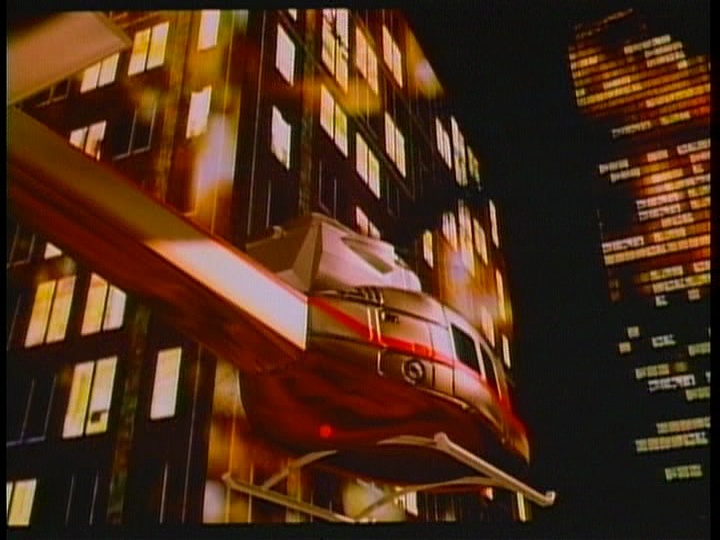
It is staying safe, so much so with its narrative it is within the slithers of this plot where you see something more dynamic occasionally appear. I find myself more concerned for the petty thieves introduced, especially when they are revealed not to be villains but merely denizens of the slum wasteland who can be sympathetic, like a tiny rat like member who I had sympathy for over the traditional leads, all because he was made less a thug but someone who can be scared, be brave, and when he went from a dubious figure to one with sympathy for when he laments for his fallen comrades. Whilst it has aged, the film's visual palette even with obvious use of computer animation is to be admired too. Attempts at blending this into interesting directions can be seen onscreen, such as a chase into the Time Capsule in the Echoban, one of the few moments where world building, which is not as fully seen as it should have been, appears; a museum presuming what has survived in human culture from before, it mixes live images with the likes of Roy Lichtenstein and Gustav Klimt's art for a set piece with idiosyncratic visual choices. The production team were clearly trying their hardest, and one sequence does suggest what could have been; in context it is still a curious choice, a nightmarish dream of biblical images and multi-eyed rams closer to a Ken Russell live action film, a British director acclaimed (and notorious) for this type of hyper intense imagery, including actual Biblical images with multi-eyed rams in Altered States (1980). That scene is disturbing and abrupt in Wonderful Days, but shows an attempt at characterisation, that for Shua it is symbolic in his fear for Jay's life, and the state of the situation for him, showing how the production team for this film, as they continued making films or animated projects in other formats, could have taken this further. In fact, prominently, the production was more than just animation of the 3D and 2D form, as additional work included filming real model sets which the animation was layered over, even using real shots of clouds and the sky, symbolically meaning for the film's story, and layering animation over them1.

Sadly, beyond two short films after this, director-writer Moon-saeng Kim has not done anything else, and there is the unfortunate sense that Wonderful Days, even with its shortened length for global release, was a production with many issues in spite of these clear visual virtues. Even in mind to Tartan Video putting their weight behind it in Britain, even the esteemed Japanese animation studio Gainax creating a dub for the Japanese market which was less "alien" rather than merely adapting it to distribute it in Japan2, Wonderful Days was always going to struggle with how conventional the plot proves to be. An expensive production1, all the problems really come from the fact that its story is quite conventional and not even that particularly idiosyncratic either. With knowledge of numerous individuals being involved with the writing process, even unaccredited work by Micah Wright, a prolific American writer for the likes of comic books, and Jay Lender, a prolific American writer especially in the Spongebob Squarepants franchise, it was clear that whilst visually the film, even with its aged CGI, was ambitious and is still to be admired, the production's story needed that much strengthening of ambition. Especially when some of the more idiosyncratic touches, like the blind girl, are clichés which really are not that distinct when they have been seen before, this film whilst having so much still I appreciated also suffers from this lack of personality. Sky Blue as we got it in the British Isles is okay, a case of a production which just goes to show how much of a struggle it is just to get an animated theatrical film off the ground, where the challenges are not just the visuals but even making sure to have something in its story to tell to last.

=====

1) Take with a pinch of salt, as it comes from one perspective for a film, but this chronicle My Beautiful Korean Movie written by Micah Wright, for his personal website on April 9th 2003, does raise some poignant aspects that, if confirmed, do raise up a lot of the issues with Wonderful Days, as an unaccredited co-writer with Jay Lender, which undermined it.

2) Gainax to Adapt Wonderful Days, written by Christopher Macdonald for Anime News Network and published on November 5th 2004.

Thursday, 23 July 2020

Bonus #12: Red Hawk: Weapon of Death (1995)


Directors: Jung Yul Hwang and Sangil Shim

Based on the original manhwa by Sang Wol Ji and Ju Wan So

Voice Cast: David Lucas as Jan Chang; Tessa Ariel as Hongylung; Dorothy Melendrez as Village Kid; George C. Cole as the Narrator; Jimmy Theodore as Liu; Jonathan Charles as Mounja; Mona Marshall as Ko Wan; Peter Spellos as Morlyung; Simon Isaacson as Lord Seobong; Sparky Thornton as Muklyong; Wendee Lee as Lunyung

Viewed in English Dub


Didn't they even give you a welcoming ceremony? How rude of them.

We return to a bonus review, a return to Korean animation, to which Manga Entertainment licensed two titles back in the era where, on VHS, they made themselves and their infamies within from the likes of The Legend of the Overfiend (1989) too. Armageddon (1996), becoming a guilty pleasure for me, and Red Hawk, in comparison a much more conventional and consistently put together production than that film or, (shudder), Blue Seagull (1994). This does raise an interesting question, in how things might have been different if Manga Entertainment, having decided to acquire these titles in the nineties, invested in others from other Asian countries beyond Japan alongside anime.

Sadly, as has been the issue with non-Japanese Asian animation and comic books, I seriously doubt they were released with any distinction of their origins, Red Hawk still finding itself in the Collection, my own personal obsession from the company, alongside Violence Jack (1986-1990) to Bubblegum Crash (1991) without any distinction. Tellingly neither Korean title even had an entry on the trailer to that Collection, burnt into my mind from playing it on their old DVDs for too long alongside Mad Capsule Market songs. Red Hawk was sold, likely, as the simple action tale it is. In period Korea in the past, a former ally of villains becomes Red Hawk, a mysterious hero for the people who is masked, wears red and has a hawk. He becomes embroiled in the death of an artisan and counterfeit money, all whilst a likable goof protagonist and a group of friends are on the same mystery. It does evoke how many of these titles were created for their own national audiences, which can be seen in the more esoteric anime which is based on lore or their history; likewise, alongside this, the English voice actors have to negotiate around Korean names as a further reminder of this.

Technically, it does feel more consistent to the other Korean animation I have seen. I will be honest that, however, whilst it is just okay, it is not really that interesting. The meat and potatoes are able to be turned into something interesting, even having a strong female lead who we are introduced to beating up a man the size of a small hill and his ninja lackeys, all of which could go to somewhere. The issue is entirely with execution, where there is a sense that Red Hawk was a production tentatively put together, possibly aware of Blue Seagull as a disaster, possibly not, but definitely cautious in its production. One of the directors made beforehand Street Fighter (1992), a knock-off of the Capcom videogame franchise with the cast now looking exceptionally cartoonish but definitely the copyrighted figures, meaning that this was definitely a foot into a different direction with higher aspirations.

There is a little spice, but this is a very basic film. It also shows that tropes do travel countries, as well as the fact that comedy and drama mix a great deal, as this has a lot of serious moments but also pure slapstick, the lead hero mostly acting like a prat, able to rescue a young girl from a bull but fleeing from being gored when she is safely out of its way. Unfortunately, the film is very predictable. The little spice is some of the few esoteric details - mainly one henchman who is a very elaborately dressed man, even designed to look flamboyant without becoming a stereotype, who deals in the likes of a "Dismal Spirit" poison down the throat that kills most people, to a dark room where spider web can be found that allows him to predict his opponents moves. He is the only idiosyncratic character on the villains' side, right down to the fact his boss still slaps him around despite being a dangerous figure, only acceptable because said leader, whilst an old man, can suddenly grow giant amounts of muscle and is clearly the final boss. It helps that, whilst the English dub is a terrible example of Manga Entertainment adding swearing to raise the age rating, this at least results with that henchman having a scathing comment when he is proved disposable.

Beyond this, sadly even Blue Seagull is compellingly awful, whilst this really does not stand out at all. This is a shame as, among the aforementioned Collection licenses from Manga Entertainment, this was the last of them for me to actually see, rather than review, tragically one of the least interesting of the lot. Beyond elaborating on the plot, which is a bad sign, even in terms of the production, it is not necessarily good or bad, just competent in context. (The only idiosyncratic touch turns out to be the nineties techno music that occasionally appears in the score.) Red Hawk leaves open the promise for a sequel which never came, as the real villain is left unscathed, but the two directors never went on to direct any more feature length anime.

Sangil Shim does have a career, which means I can at least be happy that they went on to continue working and with a lot of fascinating little tangents in their filmography, working in a lot of animation for the United States and Japan too, between Æon Flux (1991) and The LeBrons (2011) to Claymore (2007)1. If their IMDB credits are right, they have even been a "food and food stylist" which raises a fascinating little question of what that job entails, especially as it involved working on Park Chan-Wook's 2009 vampire film Thirst. Jung Yul Hwang I cannot find anything on, whilst another fascinating detail is that, for the Korean dub, the only figure who went on to greater roles is Gwang Jang, an actor who has acted in live action and for voice acting who has been prolific, especially into the 2010s, and even narrated Thomas & Friends, which means I can inexplicably end this review referencing Thomas the Tank Engine with credibility.

====

1) Also Skysurfer Strike Force  (1995-6), an American production I am amazed managed two seasons, one of the many ridiculous American cartoons that came from the nineties, though not one I watched, but trying to chase the trend for sky surfing. Yes, I would like to watch the two seasons.

Saturday, 28 July 2018

Bonus #9: Blue Seagull (1994)


Director: Jung-il Oh
Screenplay: Kyoung-woo Kim
Voice Cast: Choi Min-soo as Hail; Kim Hye-soo as Chaerin; Jeong-hwa Eom as Joshua; Yeong-guk No as Alfonso; Jo Hyeong-gi as Joey
Viewed in Korean with Subtitles

Synopsis: When an ancient sword is stolen, Hail (Choi Min-soo) is hired to travel to the USA to retrieve it back from the Mafia, finding himself against the criminal underworld.

Author Note: This review will spoil the entirety of Blue Seagull. A very difficult film to see, this decision is as much due to the negativity of the review, finding its worth just reading the entire text here rather than for you the reader to sit through the film I experienced. If you still want to see Blue Seagull, at least you was warned. Also, trigger warning for discussion of sexual violent, and also warnings in general as even a description of how bad Blue Seagull could affect you badly.

And I wish I could open the review without those notes of cautious, but unfortunately Blue Seagull is really that bad. A film halfway through, due to a certain plot event I will sadly have to discuss, where even my love technically abhorrent animation has to give over to revulsion or (in the time past since viewing the feature film) a sense of distaste and bafflement at how a production collapses to the extent it does here. Even low rent animation I have sat through over the years, like Beauty and Warrior (2002) from the producer of Ninja Terminator (1985), could look at Blue Seagull and realise it's better than it, and tragically it only takes someone to see this film and the important contributions South Korean animation studios have made in outsourcing of American and Japanese productions to be undermined in comparison. Even next to Armageddon (1996), another failed Korean animated production from only a few years later, and this attempt at an erotic action thriller looks like the Hindenburg disaster.

For three-quarters of its length, even if still an embarrassment, I was willing to still enjoy Blue Seagull as attempting to match the type of sleazy, dumb straight-to-video anime from Japanese from this era, only with a lesser animation quality and meant for theatrical release. For that length of time the film's memorable for all the wrong reasons in a way that's entertaining. At first its deceptive with its stylist opening, turning the voice actors' portraits into their animated characters, only to afterwards jumps right into the kind trashiness Japan was doing at the time too, a mass gunfight and massacre which leads to the McGuffin (a sword) being stolen and the plot to hurdle on in a ramshackle way. With a lead hero, named after a of weather phenomenon, whose only personality trait is stoicism, the film leads to a mix of violence, gore and as per the erotic genre tag sex. Obviously a question arises. Most will ask what "Blue Seagull" as a title actually means, which I have no idea how to answer unless it's an euphemism for something dodgy I have no knowledge on. The other question, more pertinent, is that as this is meant to be an erotic thriller, is it actually sensual or titillating? When the first scene, even before the film starts proper, is of a woman (whose face we never see) being leered at on a motorcycle, a purely animated figure, then the answer is no, it's just tacky and misjudged lavicious behaviour.

From http://www.hardcoregaming101.net/korea/
specials/images-lost2/blueseagull-1.jpg

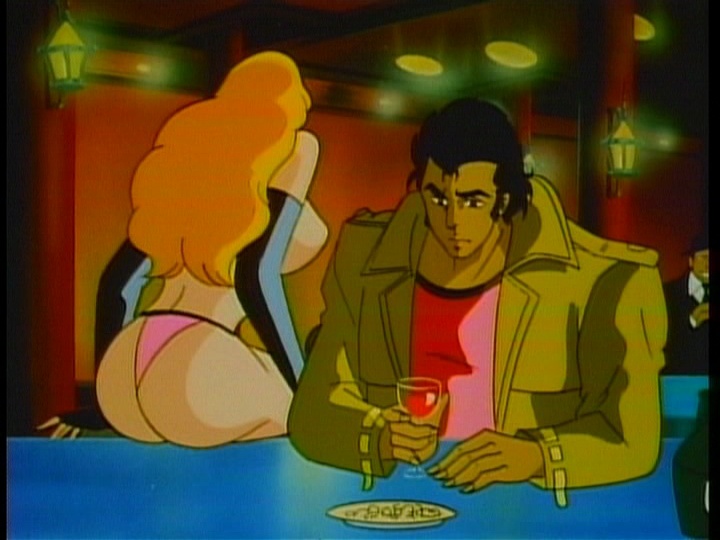
Even before the problematic scene I will eventually get to, you are watching utterly cheesy softcore images of characters than actual people. It neither helps Blue Seagull's animation is poor. It's the character designs more than the backgrounds which are the issue, alongside how their facial expressions are both between bland and becoming overtly cartoonish despite the story being gritty. One scene in a strip club, meant to be sensual, is closer to the Tex Avery cartoon Red Hot Riding Hood (1943) but crudely produced, so much so the stripper is able to use her breasts to give an over- amorous male patron a black eye as if a sentient body part, the kind of tonal shift (and body morphing) that catches you off guard in a negative way.

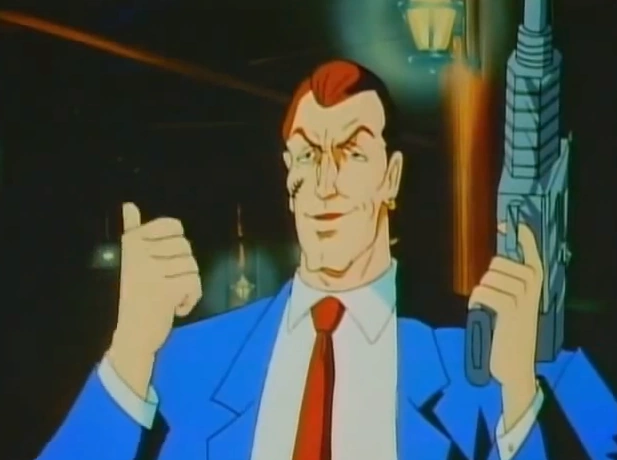
It also doesn't help when, to add to the titillation, they include a former love interest named Chaerin (Kim Hye-soo) who has no plot connection onscreen whatsoever with Hail despite sharing flashback related back story. They cross paths but she never encounters him fact-to-face even when the climatic skirmish is a floor above a car show she is part of. It's merely an excuse to draw a voluptuous female character who, bizarrely, has a comical introduction having an erotic dream on a bed  about Hail whilst her pet dog (drawn more overtly cartoonish) licks her to amplify thus fantasy. There are a lot of plot digressions like this which are to be questioned, especially as the film is only over an hour long. The sword, when found, is connected to a deity that appears and abruptly tells Hail he's the chosen one, a point never brought up again. Loose threads are found throughout, the sole fleshed out character within the entire film being Alfonso (Yeong-guk No), who with his red ponytail and facial scaring is also a racist psychopath, an issue I will get to later too.

From https://vignette.wikia.nocookie.net/villains/images/f/f0/
Alfonso.png/revision/latest?cb=20140616184031

If it was all this illogical chaos I would've enjoyed Blue Seagull. Utterly irredeemable but so absurd I would've found something to enjoy. The sort of insane material where, to chase the hero, Alfonso indiscriminately mows down a men's bathroom with a machine gun whilst, part of a tendency in South Korean cinema of all kind, it splices in comedy with a frightened attendee watching this transpire. The plot barely ties together in spite of its simplicity and even minor characters are full of quirks, like the arms dealer who sits in the same chair in the same dingy warehouse watching porn when no one's there. Blue Seagull also has CGI animation, animated scenes involving cars and vehicles entirely done in computer animation, so the environments (like an airport) are also a basic, crude digital construction around them. It's not that different, honestly, from other computer effects from the time so I can let Blue Seagull off the hook, particularly as it adds to the trashiness. Watching the film in Korean, admittedly, also adds unexpected class to material that doesn't deserve it. Interestingly despite her character Chaerin being utterly pointless, Kim Hye-soo would have a prolific career in Korean cinema, as would Jeong-hwa Eom as Joshua, an American secretary who helps Hail and more charisma as a character than many. Eom's involvement is surprising, considering how bad Blue Seagull is, as she is a prolific actress and singer/dancer. Someone of a huge reputation in Korean music who has won awards for her music, has starred in a lot of television and acted in many films, and is considered a major figure in entertainment in the country.   She is possibly recognisable for readers outside of South Korea as  well for playing the lead character in Princess Aurora (2005), a film which rode on the back of the Tartan Extreme influenced popularity for Korean cinema, a revenge film where she presides on the promotional material in a leather jacket and clinging black hair. Even the dodgiest animation gains a lot when it's not the broad, wooden English dubs you're listening to but the original language dubs with named talent, even when that might prove a poisoned chalice for said participant, when there are filmographies of Eom which don't even mention this film, showing a potential sign of utter embarrassment about it as well.  

Then the problematic sequence takes place, which is pertinent as it involves a rape scene with Eom's Joshua character. Joshua, even as a stereotypical attractive figure, is vague interesting as an African American (or mixed raced) woman with bright red hair who gladly helps Hail and introduces him to the world of the US. who becomes a romantic interest for the hero. Unfortunately, when Alfonso has her kidnapped for transgressive against his boss, it leads this scene which thankfully implies the sexual violence but is prolonged in the moments before with him chasing her, arms tied back, around the room in a way that stops being nasty but just uncomfortable in a troubling way, of how the film itself is leering at the moment. Worse, when the deed is committed he flippantly kills her with gunfire, this turning her death into a "woman in the refrigerator" moment where she is merely meant to be a figure to get revenge for, left for a long time as a bloody corpse on the bed before anyone finds her. The entire plot point sucks the life out of Blue Seagull as, alongside her life flashing before her eyes, the entire series of events is the film making a mistake too many, worse when its intercut with a helicopter versus helicopter battle with no sense of story priority involved, merely part of the action.

From http://www.hardcoregaming101.net/korea/
specials/images-lost2/blueseagull-2.jpg

It does cause me to self critique myself, having defended anime which have had similar if not worse scenes of this within them. The first answer is that I've never defended any scene of sexual violence or rape in animated or live action film, and wish they weren't included if not depicted in a way that takes the severity of such an act seriously, a problem in anime of a certain era where (like manga) where it was always meant for shock value rather than carefully thought of. Even a work like Urotsukidôji:The Legend of the Overfiend (1989), where there's the issue of the transgressive tone being deliberately, is the kind of understandably condemned animation I wish hadn't taken the route it had and avoid this leering misogyny within itself. The second answer, based on the first, is also that the context and content around the problematic scene even in a trashy work with debatable artistic value can drastically effect one's reaction to the material.  Contrast Blue Seagull to the 1988-1994 anime adaptation of Crying Freeman [Reviewed here for contrast]. Also an erotic action thriller, there is one rape scene directly taken from the manga which is worse and I wish wasn't included. It was however a single scene in a multi episode series where, whilst it's still lurid and arguably sexist, the sex within the rest of the episodes are consensual or involves characters, male and female of all shapes, inexplicably taking their clothes off even for a fight. There is the context that Crying Freeman is so absurd and ridiculous as well that, even if that scene is problematic and should be condemned, it is dampened (and practically drowned) but how utterly silly the series before and after is, to the point anyone can distance themselves from that moment1. With Blue Seagull however, from its rape scene onwards, collapses completely and wasn't even worth trying at all before the sequence even happened. In general, the moment that problematic sequence happens the film gets worse, becoming a rare example of a true trash fire as the plot starts to get more garbled and the production falls off the cliff it was barely hanging on to.

The severity of Blue Seagull, jarring against the tone, causes one to feel dirty and is visibly unintentional in desired reaction. It neither helps the perpetrator Alfonso is the only vaguely memorable figure throughout. His voice actor is the one who adds flourish to dialogue. The character has charisma barring Joshua. He gets the kind of heroic moment the hero should've, surviving being stabbed in the eye and inexplicably falling out of the window of a skyscraper at the same time, climbing up from outside by pure will power. All which is a problem as he's a sociopath who is openly racist to the Korean and African American characters with his slurs, a murderer and eventually a rapist. The worse part, which makes the use of a rape scene much worse in Blue Seagull than other tasteless anime, is that neither Hail or Joshua's brother, who gets involved are the ones who kill Alfonso despite the deliberate using of her death for cheap emotional effect. No, a mysterious bystander who is also after the sword, seen in the background of scenes, creeps up behind Alfonso whilst he's monologuing to the heroes and snaps his neck instantly. By this point the film's a mess more than before2 - what with the sword's inexplicable (and never mentioned again) mythological side and  Chaerin seeing but never talking to Hail, only adding to the distaste of these particular events. An abrupt conclusion at a gravestone with the heroes crying at Joshua's grave just adds to the horrible experience with an exclamation.

From https://i.ytimg.com/vi/f_MDntLhWWA/hqdefault.jpg

And its becomes a tragedy as the end credits are live action behind-the-scenes footage of Blue Seagull's production. There's a growing sense of despair to be found watching the creation of a film knowing said production, watched beforehand, was dreadful. The intricate illustration of animation cells. The promotional posters for Blue Seagull on the walls. The voice actors in the recording booth. Animators working hard in a small room, each side facing away from each other at their tables, all with the horrible realisation they worked on a project which fails on all levels. The kind of bleak though to possess that just confirms how utterly awful Blue Seagull was. Utterly compelling to witness, compelling to write about and perversely worth having seen, but so toxic as much of this new obsession of mine is potential psychological trauma. Its not even a case of "so-bad-its-good", a childish suggestion and an ill advised one as no one should readily want to watch a film this dreadful to sit through.

From https://s1-ssl.dmcdn.net/-V9J/x1080-04P.jpg

==
1 - When the male anti-hero decides to take revenge against the perpetrator, a wrestler, by going to a wrestling show, wearing a Lucha Libre mask, and challenge him to a match, it doesn't defend the offensive scene but it becomes bizarre in a way that diffuses the material completely.

2 - This is also when the English subtitles, fan made, started to become vaguely incomprehensible in an almost symbolic way of Blue Seagull fully collapsing into a nightmarish experience.

Wednesday, 4 July 2018

Bonus #7: Armageddon (1996)

From https://myanimelist.cdn-dena.com/
images/anime/3/8745.jpg


Director: Hyunse Lee
Screenplay: Hyunse Lee
Based on the novel by Hyunse Lee
Voice Cast: Alexis Lang as Heisung, the Delta Boy; Wendee Lee as Marie Kim/Pandora; Abe Lasser as Hades; Steve Blum as Commander Kaseros; Dougary Grant as Narrator; Gil Starberry as Tantharos; Jackson Daniels as Gamma 66-66; Melissa Williamson as Queen Hera
Viewed in English Dub

Synopsis: Heisung, a South Korean student, finds himself the one true hope for Earth's future called the "Delta Boy", part of an Millennia old tale of Earth being one of many planets created as part of an experiment. Rhose who evolved from dinosaurs on an alien world, the 'Eed', will soon to invade Earth and eliminate most of mankind in the future. Thrown into said future, when most of humanity has been wiped out, Heisung must become the chosen one to prevent this.

[Warning: This review will include a spoiler for a early plot twist. I will include a warning where it is and ends in the review so you, the reader, can skip it if you want to keep it secret to yourself.]

Cue a film that looks like a seventies rock album cover crossed with a remake of Space Adventure Cobra (1982). Yet the production is from South Korea, part of a very complicated history of the Korean animation industry. South Korea is famous for its studios which do outsourcing work for anything from anime from Japan to even The Simpsons, the later emphasised when artist Banksy's infamous couch gag, depicting their studio as a sweatshop, actually offended Akom, the Korean studio which has been helping to animate the legendary American series since 1989. This is complicated because, in spite of this or that they have created characters like Mashimaro the rabbit that are popular in other corners of the world, very little South Korean animation is known in the English language countries in the West.

Because of this, I could never give a proper history because I myself know as much (i.e. little) as many would. To however attempt to time stamp Armageddon, before its release in 1996 there have been many animated films made within that country, and not just Robot Taekwon V (1976) or the various infamous examples of studios copying directly from other sources (such as Space Gundam V (1983), a TV series which openly includes details from the likes of the Macross franchise from Japan). After Armageddon, things start to slowly expand out into the West in terms of knowledge of South Korean animation bit-by-bit to the current day. Armageddon was picked up by Manga Entertainment, alongside Red Hawk (1995), within that period. Things picked up considerably when Sky Blue (aka. Wonderful Days) (2003) was picked up by Tartan Video for Western release in the UK, which was arguably big in terms of international recognition. [Sadly Aachi and Ssipak (2006), a film included in promotional materials for the former Optimum Rising (now Studio Canal) DVD distributor, never came to British DVD]. Things picked up even more considerably in the 2010s when The King of Pigs (2011) gained critical buzz as well as international distribution. We are awaiting in terms of South Korean animation to be more widely available beyond this, the question of whether it will be as prolific in availability as with Japanese animation.

Now we return back to the nineties, when Manga Entertainment decides to acquire the licenses to a theatrical feature named Armageddon (1996), predating Michael Bay's tale of miners on an asteroid by two years. One has to be aware that, knowing Manga Entertainment's legacy for tampering with their acquisitions, such as adding gratuitous swearing to English dubs, that Armageddon as we know of it and can only really access it in the West on second hand DVD and video tape is probably different from the original version even if it terms of tone of the dialogue, so that must be in mind too. Credit where it's due, if we're talking about the production designers and background animation, they are to be applauded for at least trying their hardest with this theatrical production. Except CGI from the period, no one should complain about the elaborate intergalactic backgrounds or the details of the spaceships. Even if the dino-robot monster that appears at one-point, and the alien life forms in general, look like children's toys they have character, someone having fun designing them.

When this production is being imaginative, it musters a lot of ambition, especially as the director Hyunse Lee was also the author of the source material. It belongs to the kind of psychedelic, out there sci-fi I prefer over hard science fiction anyway, where the universe is a bizarre spiritual/gonzo reality of elaborate bright colours and strange entities. A galaxy, no matter how silly it sounds, where the main villain is ultimately revealed to be a giant brain in a jar. Even the protagonist's own brain upon entering it, when Heisung is briefly killed at one point, is a world of pulsating bio-bizarre environmental flesh and strange sights, feeding into my love even in the dodgiest of animation of whenever characters enter phantom zones, to either be instructed on their fates or because they've been trapped there, an excuse for the production designers to create the most intentionally unnatural places they can. (Usually with everything floating in the air, which sadly isn't the case here).

There is as well the deeply silly moments which also, in honestly have charm to them, this type of sci-fi being so over-the-top you have to admit it gets ridiculous too. You cannot take serious a film where said giant dinosaur robot does have a name you'd expect for a child's toy. Nor the inexplicably giant shark massacre, a pointless training scene for the protagonist which ends with him and another character getting into peril underwater, defeating the purpose of the practice, and gunning down giant sharks in gory detail for no justifiable reason.

From https://encrypted-tbn0.gstatic.com/images?q=tbn:ANd9GcQ3eKT8HupZLiSSNMhkehleFs_qoti39o95mu2f9tuprBfefGFj

However I will confess that, whilst Armageddon has charm, it's also plagued by the many traits of bad sci-fi in general. Whilst I admire its bright and colourful look, if we're talking about the humanoid characters however, stretches and limitations are there and they are awkward. Alongside the plot itself, the film stretches its limitations with some amateurish issues. The character's faces, especially their facial expressions, are just amiss even for a viewer like myself with no animation training in the slightest. This is more so as even into the final, more serious thirty minutes of Heisung going to fight an evil alien computer in a far off galaxy, there are still random slapstick comedy moments which are abrupt and, in attempting to crowbar a love story which is inherently with huge moral issues within it, enforce this problem when characters are acting comedically with exaggeration at one second and then have to be serious. The switch in plasticity in mannerisms is not well coordinated and, unlike the exaggeration in Japanese anime, a lot of it in this production (or another like Blue Seagull (1994)) feel like they're inspired by old Looney Tunes animation, which feels tonally off. The less said about your secondary villain Commander Kaseros - stoic and boring, a member of the Eed forces who starts to question his place in the world but ultimately wasting time in the plot - never being seen without his black sunglasses the better. It might work for Corey Hart to wear sunglasses at night, but here even when floating in outer space without need for suffocation, as he is at one point, its comical. More so when, due to plot reasons, he's a giant entity barechested and waving a sword, but still got to keep the sunglasses in his new state.

Baring in mind Manga Entertainment may have taken liberties with the script, Armageddon also has the script which crams so much into less than ninety minutes, that  there are plot turns which will give you whiplash. Ten minutes is all that you get for Heisung's personal life as a kid living in present South Korea. His family is briefly kidnapped early on by Eed assassins only to whisked away to safety and never seen again, likely long dead when Heisung travels to the future. Even then his mother's reduced to the Obi-Wan Kenobi state of passing on meaningful encouragement from flashbacks. Heisung's brief moments in his normal is also means he looks like a ten year old, his alien protector and potential love interest Pandora looking like an adult in contrast when she appears to protect him, which makes their romantic montage scored to K-pop weird. Even when he's fully developed into the hero with muscle and gruffness, the man-child's romance with Pandora is so limited in development that the emotional scenes can only use footage from earlier in the film for later.

[Spoiler Warning]

Which is worse when Pandora is killed half thirty minutes in. The sad montage Heisung has, when looking at a replica of her in included in her home planet's hall of heroes, involves all the footage within the previous length of the film that isn't even from romantic scenes with the hero, causing one to want to shout at Armageddon that it hasn't earned the emotional beat. Insult is added to injury when her twin sister, and ruler of her home planet, becomes the new love interest in a way inherently problematic as if one twin can replaced the other. Even her aide and guide for Heisung on his way to becoming the Delta Boy gets into the creepiness by desiring to get the two to fall in love merely to propagate a child, clearly as an alien not used to this idea that one should naturally becoming romantic at least from the beliefs of human beings.

[Spoiler Ends]

The abruptness of the plot twists is intermingled with how the inherent ridiculousness of the plot. An example of sci-fi which blurs scientism with post-New Age tone in imagining giant computers creating worlds, our true villain a literal giant brain in a jar, yet with all the cod-philosophy of such a horrible concoction and a figure literally named Gaia who is the soul of the Earth...in spite of the fact it's within the same story as Earth being micromanaged by a giant computer. If one ever wanted to see, in CGI of the time, giant sperm entering a vortex in space and (by intentional suggestion) give birth to a giant dinosaur head sticking out in space, and then a primate head, than this is the film for you, but after that its why that as much as I love out there, idiosyncratic (and sometimes utterly corny) sci-fi when its cosmic ideas and willingness to bend conventions of reality, when the tone's muddled like this I realise why I have very little interest in science fiction of any sort. Armageddon as a result is the kind of animation, if you can still appreciate some of the production, that's better with the sound turned off. This is not the horrible disaster that is Blue Seagull, just a film from some time later which is undeniably bad but one can still gain some satisfaction from in places. As a result, its definitely a guilty pleasure, as all the flaws mentioned are impossible to dismiss.

From http://www.craiglotter.co.za/wp-content/uploads/2012/02/
armageddon-korean-anime-screenshot.png