Showing posts with label Dark Fantasy. Show all posts

Thursday, 3 November 2022

#232: Shadow Skill [The OVAs] (1995/1996/2004)


Studio: Zero-G [Shadow Skill 1 & 2]; Tandm [Shadow Skill: Secret of the Kurudan Style]

Director: Hiroshi Negishi [Shadow Skill (1995)]; Yasuhiro Kuroda and Hiroshi Negishi [Shadow Skill (1996)]; Kazuya Ichikawa [Shadow Skill: Secret of the Kurudan Style]

Screenplay: Mayori Sekijima [Shadow Skill (1995)]; Masanori Sekijimo [Shadow Skill (1996)]; Kurasumi Sunayama [Shadow Skill: Secret of the Kurudan Style]

Based on the manga by Megumu Okada

Voice Cast: Megumi Hayashibara as Ella Lagu; Akio Matsuoka as Gau Ban; Bin Shimada as Rui Frasneel; Ikue Ōtani/Mikuni Shimokawa as Kyo Ryu; Yasunori Matsumoto as Scarface; Yuko Mizutani as Follymayer Razmatizer; Kiyoyuki Yanada as Koa Icks; Tamio Ohki as Jin Stolla; Yuko Mizutani as Fouly

All Viewed in Japanese with English Subtitles


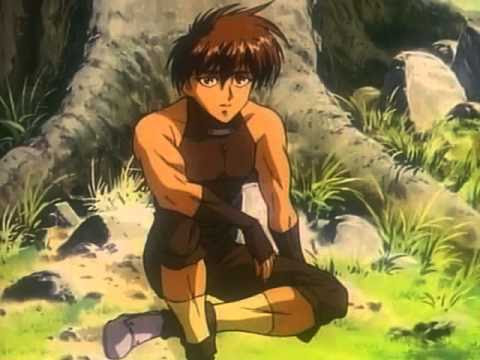
Shadow Skill was first published in 1992 as a manga. This is an interesting premise, an interesting world, but with the 1998 television series excluded from this list, for another day, the straight to video adaptations only cover a slither of something much more grander even as a martial arts action premise with a simple structure. There is also an odd chronology, in that the 1996 four part OVA is set before the first from 1995, emphasised by how Manga Entertainment makes the 1996 set "Shadow Skill the Movie", collected together as a feature as they were want to do, and the 1995 production the "Epilogue". These all set up the warrior kingdom of Kurda, part of a fantasy world where the first female "Sevaar", their title for their most powerful warriors, is Ella Lagu. A powerful figure in her "Shadow Skill" style, she is followed by her younger adopted brother Gau, who is being guided by her and Scarface, a legendary male warrior who sees he as much as her as a powerful force if nurtured. If he could ever complete the goal of defeating her in combat, Gau could become powerful, but he also loves Ella as a sister, who is just as strong and dangerous is pushed.

There is a concern that Gau, as the male character, is going to over shadow a much cooler female lead, but there is one catch which thankfully plays in to this, that she is voiced in the OVAs (and the series) by Megumi Hayashibara. Most will know her for Rei from Neon Genesis Evangelion (1995), and she is a huge figure in voice actresses, throughout the nineties, including the fact she sung many of their credit themes. She qualifies as a bonafide star in the medium in the nineties, and it helps as well as, whilst Gau is a meek figure who is tugged and pulled in emotional conflicts, still not the strongest but capable of inhuman power when pushed, Ella is memorable. There are prominent differences between the first two OVAs, one of which is that the Epilogue has her as a more serious figure for its narrative. The contrast, found in a later 2004 OVA, is better, that she is a capable figure who is serious when she needs to be, but also allowed Hayashibara, known for characters like Lina Inverse in the Slayers franchise as much as a more serious character as in Evangelion. Introduced fighting a monstrous opponent in gladiatorial combat in the Movie OVAs, an entity with acid blood and can still fight having had his head decapitated, this is contrasted by the fact she is also greedy and obsessed with boozing, the later the cause of unpaid tabs much to Faulee's disbelief.

The Movie provides the most time for the side characters too, even if sadly not as much still, not even covering a male character who briefly appears in the epilogue but never seen in any of the other OVAS. Both female, both these characters would have been more rewarding then they were if there was more stories to go with, with episodes devoted to them already in the Movie segments. There is Faulee, a former nemesis and a talisman sorceress whose intentions to kill Ella became a change to admiring her as a close friend, in spite of Ella's foibles, whilst Kyuo has a really distinct look due to the character designs by Shin Matsuo in the Movie OVAs, closer to the source manga, a Robin Hood-like green costume as the grandniece and apprentice of a beast slayer, armed with steel rings with wires that cut into monstrous flesh as well as pin them. Her episode introducing her is the best of the entire Movie OVAs, what one wished Shadow Skill as a longer tale was, as it matches its action based tone with that of high fantasy and explicit horror, of demonic entities and fighters even able to weaponize ones blood and Kyuo out to avenge her granduncle's death at the hands of the "Moon King", an awesome monster design not just for the obvious, a werewolf centaur with the ability to regenerate mortal wounds in the power of the moonlight, but because the design evokes how, like an epic high fantasy story if remade today, this world has an evocative imagination in its centre. Even as a video game with a high budget let alone as an anime, Shadow Skill has a world and style which is vivid in its imagination as it is violent and over-the-top.

Here I admit, whilst both are distinct from the pre-2000s OVA, that I prefer the Movie's look, which is very unconventional. The Epilogue looks more "conventional", whilst the Movie has more angular facial features on the characters and a costume design which, for me, befits a world that, even in very little, oozes in lore even if never seen, which neither the later 2000s OVA ever gets to. The world inherently won me over in its combination of high fantasy, even ancient Greek and Roman influence in architecture, and Japanese lore seen in slithers, and it is contrasted by the fact this is a fighting anime, where the Shadow Skill is an unnatural one of gliding in the air if however contrasted as being entirely about kicking and leg work. Said explicitly in the Epilogue anime, even the Shadow Skill as martial arts has a compelling lore as it was created by female slaves, figures tortured and raped, forced to fight with their hands bound, the show having a potent world in little details like this. Even if Gou is technically the lead, and Scarface is there in his machinations moving the players around for utopian plans, this is a violent action story dominated by women.

Combined with the action content, very well animated, both the nineties OVAs are good. In 1998, there was a television series for twenty six episodes, but unfortunately, we also got in 2004 another OVA from Tandm, a studio created to having only made this production and nothing else1. They made a very ill advised technical decision, entirely rendering it in CG created by ToonShader technology2, the technology itself and cel shading, in animation and video games, capable of incredible work, but here a huge obstacle. This is a weird creative choice and not the only time this happened, as Dominion Tank Police, another OVA franchise from the nineties based on the Masamune Shirow manga, got a one-off 2006 OVA which was designed in polygonal cel shaded animation called TANK S.W.A.T. 01,  one where looking at the screenshots alone shows it was a bad decision. In this case, the technology itself had the full potential, but in context here, the time needed to perfect it involved a budget this did not have. The follow up went the wrong direction entirely in many ways, including from the get-go with this animation change. Shadow Skill: Secret of the Kurudan Style, to give the third OVA its proper name, is an attempt to continue the franchise, with key cast members returning, and Megumi Hayashibara significantly back as Ella, but completely within an aesthetic choice that is not suitable for the production at all before you get to the plot.
A man named Death Wind wishes to acquire a MacGuffin of an unknown "Genesis technique", challenging the sevaar and her brother Gau who go to protect the land from this. Everyone looks like a doll from a different animated series I might have watched on a Saturday morning as a kid. This is not an insult to those types of shows, but here it is a really crippling creative decision, especially as you lose the elaborate onscreen world building and the character designs, alongside the fact you cannot have the elaborate fight sequences as the form makes it impossible to do. The production has its own obsolete mood, least in the environment designs evoking a Myst adventure game clone, or the music having an esoteric mix of tribal ambient and electronic noise experiments, but it comes in mind of its style being an absolute disadvantage.

There is some creativity in the art style, which shows what could be done, specifically that all the flashbacks, even if evoking graphite (or Microsoft Paint graphite) painting, are done in silhouettes with an imaginative style that I will praise. It is still an art style, with its clear budget and production restrictions, for an entirely different type of work, like a horror story with minimal kineticism and lengthy dialogue, which is pertinent as this sequel's other huge problem is that, with lengthy discussion scenes, the story even next to the simple ones of before is not good. There is interesting ideas here, such as a training golem, built with the skull of the founder to train the secret techniques, but alongside this falling into the danger of the premise's structure, of maligning Ella for the far less interesting Gau, who Death Wing wants to tempt to his side, but this became a slog. Alongside the style undercutting it, the golem not looking remotely as good as the Moon King as before, this has lengthy and tedious dialogue sequences to compensate for the restrictions, including Death Wing using arguments to win over Gau, about punishing sin before it happens, so loose a college critical thinking coarse knowledge could destroy it. This even rewrites the lore of the Shadow Skill, no longer explicitly the martial arts style created by female slaves but "slaves" in a generic way, which does fully reveal how even the simplistic plot gets everything wrong as well. The side characters only have a cameo, and even Megumi Hayashibara, the big voice actor of this production, feel maligned as well.

Sadly, this closed the book on this era of the Shadow Skill franchise, as when the manga ended in 1998, there would be no animated adaptations in the rest of the 2000s and the 2010s. Just from the OVAs from the nineties, there is a tantalising world here I wished would be remade to show its virtues. With Shadow Skill: Secret of the Kurudan Style, there is a reason few may even know it exists, and it is a damn squib to end the world on.


======

1) Tandm's Anime News Network page.

2) Shadow Skill: Secret of the Kurudan Style's Anime News Network page.

Tuesday, 16 November 2021

#208: Battle Royal High School (1987)


Director: Ichirō Itano

Screenplay: Ichirō Itano

Based on the manga by Shinichi Kuruma

Voice Cast: Kazuki Yao/Michael Granberry as Riki Hyoudo/Byoudo; Kazuhiko Inoue/Michael Granberry as Toshihiro Yuuki; Paul Sincoff as Zankan/Hideyuki Tanaka; Sakiko Tamagawa/Susan Grillo  as Youko Takayanagi; Chieko Hondo/Kristen Graf as Megumi Koyama; Mari Yokoo/Hadley Eure as Fairy Master Kain; Shin Aomori/Pierre Brulatour as Baba

Viewed in English Language Dub


Coming from Ichirō Itano, any work directed by the celebrated animator, in contrast to his work on others' projects, has however the potential to be infamous. He is rightly acclaimed as an animator and a secondary director, a man so talented that, from his work on the Macross franchise, he gained the named flourish "the Itano Circus" for just how he animated missiles. As a director however, he is notorious for the likes of Violence Jack, specifically the OVA episode he directed called Evil Town (1988), or Angel Cop (1989-94). Even his flirtations with television series led to something like Gantz (2004), which had to be censored for Japanese television and, as a violent and nihilistic work of resurrected people forced into real shooting game scenarios, hit me at the wrong time in life in its tone to the point I never finished it. Even for a work with the leads, which die easily, fighting aliens in the shapes of bird people or Buddha statues, Itano can find a way to make something feel on the edge. Considering, coming to this review, I have learnt that the Itano Circus was inspired, as a motorcycle enthusiast, by him strapping fifty fireworks onto one he was riding at a young age1, there is a sense, for good and for bad, including some of the undefendable content (Evil Town's content, Angel Cop notoriously in its uncut Japanese dub having an anti-Semitic plot twist), Itano as a young animator onwards may brought with him a nihilistic punk ethos to his work that finds its way out in the directorial work especially.

Battle Royal High School is obscure from his small directorial CV, nearly sixty minutes and cramming an entire lengthier narrative and a few genres inexplicably together for a mad roller coaster ride of tone. It is set up with a fighting genre premise, as Riki Hyoudo, a male high school student, is strengthening himself by wearing a leopard mask he found one day and getting into brawls, even managing to get an enraged female tag-along Ryouko, from the judo dojo on-campus in danger now of closing because he beat their sensei completely. He is so good, a demonic lord Byoudo enters his dimension, revealed to be his parallel self who, realising this, decides to not fight Riki as initially but occupy him in a co-operative form. Byoudo is probably with evil intent for our dimension, but one of his side, a Faerie Queen called Fairy Master Kain, has decided to commit a coup d'etat with the added threat to our side that the fairies will take over people and infect our side.

Yes, fairies are a threat here, and in one of the best ideas of this strange title, along one of the most gruesome and inspired plot points, they are explicitly compared to wasps as, like the real life and grotesque idea of the "parasitoid"2, larva which live inside a host, fairies take over a human host in this narrative. Sometimes even disguising themselves as the cute wish givers of fairytales, as happens in one case, they possess an entity to the point that, taking that person over, they take over their mind and can even transmogrify them into horrifying shapes and forms. There is content in this anime, if it had been a longer work, which could have been a compellingly dark horror anime, but here this goes further in that. Alongside this premise, and Itano's obsession with not only gore but fully detailed human biology, you also have a demon hunter but also a trans-dimensional policeman, spotting Byoudo's transition from a satellite base secretly, who is armed with sentai superhero power armour. More action than horror, it is still a strange cocktail from the eighties and the OVA boom to experience, especially as manages in less than an hour to have a full narrative of some sort with everyone involved.

Here you can have a girl, eventually possessed by the fairy which tricks her, accidentally wishing her love rival to Riki, Ryouko, to be mauled by her teddy bear, turned into a giant monstrously sized one. Or that this probably has the most lovingly (and grossly) detailed resurrection of a person by way of complete rebuilding of the human body, taking a monstrous flesh mound and sculpting it, from bone to muscle and flesh, back into a high school girl. This is all lurid and ridiculous, but the later is a huge note as this is no way near as nihilistic as the material from Ichirō Itano I have seen. This possesses so much of the dark content which made him infamous, but alongside how curious it to mix the cast it has, a sci-fi sentai hero the third wheel, it is gleefully ridiculous even if unintentional. Sometimes it feels so if awkwardly, where grotesque transformations violently juxtaposed with high school comedy as Ryouko becomes a proto- tsundere to Riki in her love-hate relationship to him.

Considering Violence Jack: Evil Town, even censored for the Western releases originally, was still gruelling, and Gantz I have mentioned felt too much at a bad time for myself to binge it, Battle Royal High School feels positively more brighter for what is still, even in context for this era of lurid eighties horror-like work for the video market, an incredibly violent and nasty work at times. Not helped (or helped depending on your opinion) by the English dub, including the crassest response after a graphic bodily resurrection just remind you this is of the time, this is of an entirely different era just in terms of anime released to the West, in the nineties, which was sold as being more adult. It is hilarious admittedly, only released in the USA, this is not an obscure title from Manga Entertainment, who released the whole of Violence Jack, or Central Park Media, but AnimEigo of all companies, who behind their utter devotion to the likes of sci-fi like Bubblegum Crisis (1987-91) are not the kind of people of this era to release titles that created the stereotype of anime being adult and violent Japanese cartoons. It is admittedly an outlier as, ironically, this is probably one of the better Itano directed things I have sat through, more so as he was the director and screenwriter and main storyboarder on the production; contrast Evil Town to the elaborate animation in just the grotesque body horror sequences here, and it is night and day in production aesthetic, yet this is an obscure title. Itano, morbidly fascinated by his directorial career as a one-off, really has not made a lot as a director since the 2000s, baring the television series Blassreiter (2006), and has been more a veteran of great talent on other productions. It says a lot for me that, in the little I have seen between them, and in mind he wrote the script for Evil Town, that Noboru "Shō" Aikawa, despite that and penning Urotsukidōji: Legend of the Overfiend (1987-89) among other notorious titles from this era of straight-to-video anime, comes off less nihilistic than Itano, a man he wrote stuff for. That is perversely hilarious to even consider.

=====

1) Recollected HERE in interview form.

2) Oh, and whilst body transmogrification does not happen with this breed, the wasps of the genus Glyptapanteles, injecting their eggs into living caterpillars, are a good enough real life horror show as the larva take over the host. You do not need lovingly animated as anything with the fairies here to have something to grimace at in nature itself.

Monday, 9 August 2021

#196 Part B: Urotsukidôji IV: Inferno Road (1993-5)


Director: Hideki Takayama (eps 1-2), Shigenori Kageyama (ep 3)

Based on the manga by Toshio Maeda

Voice Cast: Tomohiro Nishimura as Amano Jaku, Yasunori Matsumoto as Buju, Yumi Takada as Amano Megumi, Ken Yamaguchi as Münchhausen II, Masami Kikuchi as Ken, Miyuki Matsushita as Himi, Rei Igarashi as Yoenki, Takumi Yamazaki as Ruddle, Tsutomu Kashiwakura as Idaten, Yumi Takada as Yumi, Daisuke Gouri as Makemono, Ken Yamaguchi as D-9, Miyuki Matsushita as Kyō-Ō, Norio Wakamoto as Suikakujū, Tsutomu Kashiwakura as Kuroko

[Major Spoiler Warnings Throughout]

This will not be a proper review of Inferno Road. As much of this series was to cover how this notorious series, Urotsukidôji, was released in the United Kingdom as it was to get to the later seuqles, and here is the moment this is more of a scan of the period of early DVD anime releases than the former. The little we got provoked a strong reaction, enough for a semblance of review, but the elephant in the room is that, continuing as three episodes, Chapter IV in this franchise only came to us in the third episode by itself. Rather than attempting to explain this in detail without their voice, the British Board of Film Classification themselves should speak their minds on what happened when Kiseki Films tried to pass this through them for its DVD release:

"Before rejection, the Board carefully considered whether cuts would remove the dangers. However, they would have to be so extensive that no viable version of the work would remain. Indeed, it is doubtful if any version of the work would be acceptable."1

The reason why is not hard to realise, when you realise what the narrative of the two episodes were and in mind, even before the "Dangerous Cartoon Act" passed in 2010 in Britain that included non-photographic images being possible to prosecute, the United Kingdom's law has been very cautious when it comes to what it feels, to be blunt, pornographic depictions of children or anything which could be considered as such. Even in mind a lot of anime has passed unscathed through this country well off, despite one of its bad habits being having teen characters in very lewd scenarios, the narrative of the first two episodes of Inferno Road, The Secret Garden and The Long Road to God, knowing full well how explicit this franchise had been crossed the BBFC's line where the episodes could not be even have content snipped out.

From what is included in the DVD extras, the English dubbing scripts which do not completely tell the scenario of the episodes but were kindly included in the release, Inferno Road was meant to start as Part III ended with the surviving characters on a journey from post-apocalypse Tokyo to Osaka, for the Kyo-O, a magical female figure, to meet the Chōjin, a God who intends to wipe away the world of before for a new one2. The events, one plot line over two episodes, led them to a city when the children took over, ruled by two evil child brothers with magical powers whose society has their parents and adults breed to sire new children, and puberty or the desire to leave are punished by a tentacle monster. This, only going off speculation than any images, is naturally going to be a problem for the BBFC, and this review is not going to discuss the morals of art, whether defendable or not, tackling this very taboo subject of children and sexuality even in animated form. In the area where they are merely drawings, with adults voicing them, and the result when they are put together in audio and visual is where the ethical question lays, there is an even bigger moral quandary in terms of imagination and purely fictional imagery which I feel has to be raised, i.e. the human imagination when on paper than actual events, but that is as far as I will go, knowing this is a troubling subject to discuss for anyone.  

How episodes one and two are depicted on the UK DVD.
Not as elaborate as I always envisioned it.

All that will be left to say, not going into a hypothetical argument for or against, is with awareness the US release was censored too, whilst the German release was uncut3 as far as excluding the censorship you would naturally find in Japanese media as, ironically, even actual pornography in their country is blurred. The bigger issue in hindsight, with the one episode we got merely having a bit a material edited from it, comes with the stark realisation that, after Part III set up an incredibly elaborate follow up, this franchise whether due to production issues or management capsized horrifically. This review will not trivialise the circumstances of how this was censored this significantly in my country and the uncomfortable question of whether those episodes, for anyone who has seen them, can be defended or not. But good grief, I should have realised that, after Part III, three episodes for this conclusion was not a lot and, taking three years to finish, something went amiss and failed miserably.

There is a sense this project should have been longer. The subtitle script evokes, with Kyo-O (dubbed Himi) having rapidly aged and grown from the last episode of Part III to throughout Part IV, that she will have to face these various hurdles that will hurt her emotionally, on her way towards the Chōji.  Forgiving the potential tastelessness of the joke, considering the content of the first two episodes, the set up for Chapter IV is like a regular television series of the past of a merry band of misfits getting into adventures, for as long as the series last, in a variety of towns and environments, based on the McGuffin of finally meeting the Chōjin. The one story we ever get lasts two episodes, gets forced off the UK release and was censored for the American releases, and you only have one episode released after three years, in 1995, called The End of the Journey to tie this narrative up. It is not even directed by Hideki Takayama, who worked on the first chapters of this franchise, which is not a dismissal of Shigenori Kageyama, but felt with an e in hindsight that this chapter did not go the direction it was meant to.

The third episode is immediately off to a questionable start, with a flashback to a conflict from Legend of the Overfiend (1989) between Amano Jaku and a demon named Suikakujū. Only here, when Amano has been generally a good person throughout the previous chapter, he willingly kills civilians in a subway and even throws a baby in front of a subway train to get Suikakujū harmed and finish him off. One would presume this was a fabrication by Suikakujū's sister, introduced wanting to get revenge on Amano, but this is canon in this chapter, and should have been an even greater alarm bell to how tonally off this chapter would become. One of the least expected results of Inferno Road would be that the censorship this got in my country is far less concerning that a chapter managing to chuck the entire franchise's lore down the toilet.

It feels like a production stretched to a breaking point, the look and animation notably lacking in quality, as this has to quickly set up the Kyo-O encountering the Chōjin, deal with a large cast of characters wandering the wasteland in a tank, and a lot of plot points from before. Part III contained a lot of loose ends, even if it could have worked as a finale itself, such as Amano's sister Megumi having been made a conduit for the Chōjin's will, let alone splicing a new plot point, the desired revenge of Suikakujū's sister Yoenki, whose desires reintroduces Münchhausen II, returning as a major character hoping to use the Kyo-O to rule the worlds, more so now as she in her rapid aging has now entered puberty. The lack of time to tell this story is a huge handicap, even in mind that there are a few things of reward, some grotesque character and monster designs, to still keep some virtue to this entry such as a giant monstrosity whose form is built from victims forced to stay alive to sustain it within the flesh. Characters introduced from Part III will have to be hastily killed off, and unfortunately, even figures like Munchhausen II, brought into this franchise far earlier and established, have their narratives conclude in a way that is insultingly disposable.

There is no real point either to raise the concern of whether this Chapter has overcome the problems this franchise had with its transgressive content, which goes to show how hastily this is wrapped up. The little we get even censored is explicit, to the point you have actual swirling distortions in the image to hide very well defined anatomy, but with the sole exception of a female demon being able to transport people to the moon mid-sex to suffocate them, there are greater concerns to raise in how Inferno Road looks likes a cheap knock-off of this franchise and eventually finishes this entire franchise on a terrible series of conclusions.

All the lore, all the aspects of this franchise that were worth defending, are shattered in the finale after it rushes through the plot points, the spoiler warning at the beginning here for a reason. The Chōjin, when he appears in the final, as our Godlike entity that destroyed three worlds within intentions to build them, does not properly meet Kyo-o, and with the tiniest drops of menstrual blood, is evaporated within an instance. And, almost deciding to top the "this was all a dream" ending twist that is infamous whenever brought up in any media, the final shot of this Chapter, when major characters have been hastily killed and everything rushed, is Amano regaining consciousness only to realise he is back in 1988 Osaka and almost, looking to the heavens, ready to scream "Noooooooooooooooooooooooo!" if not something similar.

The sense this chapter misfired so badly as to wreck the franchise is clear with the existence of Urotsukidôji V: The Final Chapter (1996). With only one episode completed, and by accounts not even finished in animation entirely, it retcons the ending of Chapter IV, having had to tie itself in knots to explain the Chōjin we find in the previous chapters was a fake. Gone are characters from part III and IV, returning to figures from the first two instalments, and with mind The Final Chapter was never finished, left an unfinished book, there is the tragedy, for all the undefendable moments of this franchise, of arguably one of the most ambitious in its genre collapsing in a way that is frankly tragic. Chapter V was never released in the West, and the only follow up beyond this in animated form was a reboot, 2002's New Urotsukidōji: New Saga, which never got a sequel for itself as a set-up of the new narrative. It is, in its own way, sad that for all the moments that failed this franchise, one which left a lasting mark in the West in its notoriety as much as what did work ended up eventually winding down this violently itself.

I did not expect to end a review of Inferno Road to be this sad. I openly admit my interest was the morbidness of this as one of the extreme examples of anime being censored in my homeland, back in the early days of the British DVD industry at its crudest form when a glut of titles, regardless of cuts, was released. Instead, when this should have been a dissection of the censorship, we get in one episode we did get in the United Kingdom a franchise kill itself in a massive cock-up.


==========

1) As replicated and archived on the censorship documentation site Melon Farmers HERE. Search for Urotsukidôji IV: Inferno Road, and the other entries, for more details.

2) I will not say this is confirmed, but so this is on record, information does exist online, like in the following HERE, that the first two episodes were penned by the original creator Toshio Maeda as "a vestigial meander in the overall plotline", which if ever fully confirmed would fully raise issues of this chapter having hit something amiss in its production history.

3) Referred HERE, though with a warning that, just text based, Movie Censorship does go through descriptions of what was exactly cut, which may be upsetting for some to read.

Saturday, 7 August 2021

#196: Urotsukidoji III: Return of the Overfiend (1993)


Director: Hideki Takayama        

Based on the manga by Toshio Maeda

Voice Cast: Tomohiro Nishimura as Amano Jaku; Yasunori Matsumoto as Bujū; Yumi Takada as Alector; Hirotaka Suzuoki as Chōjin; Kazuhiro Nakata as D-9; Ken Yamaguchi as Münchhausen II; Kumiko Takizawa as Pedro; Miyuki Matsushita as Himi; Ryūzaburō Ōtomo as Caesar; Takumi Yamazaki as Ruddle; Tsutomu Kashiwakura as Idaten

Viewed in Japanese with English Dub1


[Some Major Plot Spoilers]

Urotsukidôji for myself was always the original Legend of the Overfiend (1989), the most known and notorious, and Legend of the Demon Womb (1990-1), which was helped considerably in the United Kingdom as Manga Entertainment also released it. However, the franchise continued on the straight-to-video format into the mid-nineties, and Kiseki Films, bought out by Revelation Films, brought the two finished sequels to the early British DVD market. This is alien, fascinating territory to get into as, whilst Urotsukidôji is a divisive and uncomfortable to watch narrative at times, here is where you get into new territory as, Legend of the Demon Womb being a side story, we are into the post-apocalypse set up after the original narrative. The prologue, set just weeks after the destruction that climaxed the original's bleak ending, is immediately alien in a tantalising way in imagining the narrative going forth, rather than just reading of this. There is a last ditch attempt to destroy Tatsuo Nagumo, a character reduced to a horrifying monster intended to cleanse the earth for the Chōjin to remake it, alongside the worlds of demons and the beast-people. There is even the sight of the US president being a lascivious tentacle demon fled in his satellite station before he buys the farm, which I cannot help but wonder was political from the part of the creators.

The narrative proper for part three is set much later on, humanity trying to pick up the pieces and a new race called the Makemono, half-beast and half demons, appearing. Caesar, a human who rules Tokyo with an iron fist, intends to take on the Chōjin with his empire, with any Makemono he could enslave becoming slaves, whilst the world around his territory has naturally descended into small communities with rampaging groups committing horrifying acts within them. In amid this, to the surprise of Amano Jaku, one of the central protagonists of all the previous chapters, the Chōjin has been born prematurely than intended in Osaku, as he has reacted to the birth of the Kyo-O in Tokyo, a figure said to be able to destroy the Chōjin. Even in mind to the narrative lore of the series so far, there is a sense that, at a huge change in the world's narrative, we get an ambitious story at hand, with four forty plus minute episodes to work with, even with censorship cuts to appease the British censors, and it does get interesting.

For part one, you do see it initially struggle with its narrative goal, that one of the Makemono raping and pillaging the environments, a giant named Bujū, is introduced as one of the new protagonists, an antihero who will transform from a brute to one with humanity. Execution is always something that has been this franchise's key issue, and this first episode does rush an attempt at complexity. Bujū, whose nickname of the Chōjin of the East leads to him being kidnapped by Caesar's empire, has an inherently interesting narrative from being a monster who escapes, taking Caesar's daughter Alector with him, to becoming a person with empathy when he finds the Kyo-O. Even under the absurd circumstances of having sex with Alector in a Buddhist temple, he finds an infant girl, the Kyo-O, and finds himself slowly developing empathy for a figure that makes him their guardian. Execution is the issue in that his behaviour, including forcing himself on Alector for payment for letting her see the world, is not elaborated on enough for the moral turn. Many will not find it acceptable still, but the idea of a monster finding humanity is a fascinating narrative strand, and for all the mistakes Return of the Overfiend still has, it makes up for this rushed first episode in doing something I never expected from this franchise. That for all its death and sexual violence, this chapter is streaked in humanity and empathy even with the villains and outright monsters.

It is all in the realm of hyper-violent pulp, which is an acquired taste. The fact the franchise has always been sold as porn, likely to get the project off the ground, has always been a cursed aspect too, even if the edgy erotic side is as much part of the franchise's themes. The plot however surprises in how elaborate and dynamic it becomes, where (almost) everyone has a trajectory of great interest. Caesar, whose back-story is told, is a fascinating antagonist to have in that, a stereotypical large man confined in a robotic chair, he was once a young cult leader who, even in another absurd moment of the narrative, trying to kill the Chōjin by way of a super computer powered by a hijacked NASA power supply, lost his daughter Alector as a result. With Alector now an android, one with a consciousness but programmed to love him, you have a suitably Greek tragedy here, with ancient Greek legends and plays happy to deal with very transgressive subject matter centuries ago, where you feel emotions for Caesar as a man literally facing a God even as a megalomaniac, and his complex relations with a daughter figure that is her own person, even if he is a monster in his own right.

There is still a lot of content which is problematic, with the added irony that large parts of the chapter, even if the sexual content is important to the franchise, really have little interest in the hentai genre it originates from before. So much is now focused as a dark action fantasy in a sci-fi world, where there is a lot at stake here in its heightened, over-the-top tone and is elaborated animated in context, making the fact this is still hentai (censored or not) really perplexing in hindsight. More so as Munchhausen II, the antagonist of Legend of the Demon Womb, returns as Caesar's aide and magician, with intentions to use the Kyo-O for dominating the world and slaying the Chōjin, which becomes the central plot point. Not even denying how ridiculous it is, they have created a monstrosity from the souls of anguished dead, in a bloody vat where the Makemono slaves keeping it topped are also thrown in, and "hyper nuclear missiles" they intend to fire at the Chōjin and Osaka, which is bonkers but cannot help but have implicit nods to Japan's real, tragic history with atomic bombs.

There are moments, even with the sense the OVA is shackled to its erotic origins, where the sexual content does actually make sense to include, Toshio Maeda in his adaptations (such as La Blue Girl) clearly fascinating with sexuality as a destructive and magical force, a concept even if unappealing for some viewers (either romanticised, humorous or grotesque) is a concept to deal with. One female demon on Caeser's side, whose real form is a humanoid cicada insect with her torso and head on top, literally traps a victim inside herself, to take as a captive prisoner, after coitus, and whilst sadly Megumi, Amano Jaku's sister, is marginalised again, she is part of a literal use of the sex act as a force, a conduit of a god where the female orgasm is weaponized, even its grotesque touch of a form made from reanimated corpses not tasteless. What is tasteless of that scene, and still mars the franchise, is when degradation, specifically of the female characters, is clearly done as a lurid selling point to sell the anime, which is merely a touch to that scene, but is found more clearly in places and has, alongside the lack of equality and subversion in its transgressive content, been the problem and why people have rightly called the franchise misogynistic. It is unfortunate monkey's paw, that it was sold on the back on this content, found at its worst when the later episodes merely introduces a female solder on Caesar's side merely for this victimisation, even if her lover, an abruptly introduced experimental cyborg, and their relationship if dealt with properly would have been another inspired dramatic beat to deal with.

This is especially a problem here for Return of the Overfiend as I was taken by surprised by how dynamic the four episode narrative got, even next to the previous ones in this cast. All of them are archetypes from the anime medium seen before - Bujū becoming a humane protector of a magical female infant, his romance with Alector, the Makemono who just want to be free and live, Amano Jaku the one man Greek chorus who gets involved to stop Munchhausen destroying Osaka - but all these dynamics work. A sense of this standing on its own feet with intent is found when Tatsuo Nagumo, only seen as the monster he turned into, is killed off in the first episode by Kyo-O unintentional, the show raising the stakes to a new narrative. Even transgressive touches dramatically make sense, such as Caesar's incestuous touches to his relationship to his daughter, and lashing out at her falling in love with Baju. The problem with such an example is when, in a sequence censored from the British release, it led to an explicit scene with mechanical tentacles; the idea of it, even if distasteful, as a dramatic and psychodrama touch, and that even this monster and she love each other as family, is dark and complex in a way that is enough in itself without pushing too far in actual explicit onscreen content. It already has its cake and eat it without these moments, with its drama and having this drama be over-the-top and Caesar even turning into something from Koichi Ohata's Genocyber (1994).

This may have just came from low expectations, but in spite of being ridiculous (those hyper nuclear missiles), being gory, being unpleasant and at times undefendable, Return of the Overfiend really packs a gut punch in its final episode where you suddenly have a lot of humanity and tragedy involved. The doomed nature of Alector and Caesar's love for each other, even if it is a sick one, the fact that Kyo-O becomes explicitly a figure of humanity as much as destruction, where her powers includes resurrecting the dead but also causing the evil to lose their minds in violence, even a scene completely unexpected in this franchise of humans and Makemono bonding in the horrible aftermath of the series where there are maimed and dead everywhere. Even the actual ending, opened for the sequel Urotsukidôji IV: Inferno Road (1993-5), is an optimistic one where the surviving cast with Kyo-O go on a road trip, a trip of heavy significance for all of them to learn their existences as they take Kyo-O towards for Chōjin for their eventual encounter. I will get to Inferno Road, or what little we got of it in the United Kingdom, and that in itself adds a bad taste in all the good will this set up. But as an ending in itself, with few of the characters from the first chapters of the franchise, and a distinct (if still evocative) change in aesthetic look, this was a perfect way to keep the franchise on with a grandiose tone and a weight to it. 

======

1) Viewed in Japanese with English Subtitles, this is inherently better without the ridiculous English dubs of the previous entries.

Wednesday, 28 July 2021

#194: Urotsukidôji II: Legend of the Demon Womb (1990-1)


Director: Hideki Takayama

Screenplay: Noboru Aikawa

Based on the manga by Toshio Maeda

Voice Cast: Bick Balse as Dr Münchhausen; Jake Lacan as Takeaki; Lucy Morales as Megumi; Christopher Courage as Amano; Danny Bush as Nagumo; Pat McGroyn as Kohoki; Rebel Joy as Akemi/Mimi; Rose Palmer as Kuroko

Viewed in the English Dub, British release of the Feature Length Cut


With Legend of the Overfiend, the previous film and the most notorious of the pair Manga Entertainment released, I did feel the need to be cautious with the production in terms of how I reviewed the anime. All the exact concerns and problematic aspects are to be found in its sequel, effectively a side story set between the first and second of the original OVA episodes, or least before the third, which has canonical importance to the later narratives. It is still a work which, desiring to be transgressive, does falter with the problematic nature of a work, entirely about combining sex and death, does use sexual violence and rape in a way that is not defendable in terms of presentation, and will be a taboo for others even in mind to transgressive, an attitude which some viewers will not find defendable to even use. This review is going to soften however, as in spite of this misguided aspect, Urotsukidôji as a premise and production is a fascinating and actually compelling work to sit through, which really was emphasised with the sequel. How ironic it is Legend of the Demon Womb which wins me over: initially two OVA episodes that were composed together as a theatrical release cut, with additional touches, this once one of the worst films I had ever seen just based on the cut we got in the United Kingdom. A lot has changed to alter this opinion, even with that same cut.

Releasing this title, let alone the first Urotsukidôji in the United Kingdom is fascinating to consider with hindsight. This in itself exists from a different time in anime production itself where, even in a small part of the industry, a lot of these violent and adult works, usually straight-to-video, were created and many were picked up for Western audiences. There is such oddness, looking at a Manga Entertainment promo I had never seen before included on the disc, at time capsules of when it is meant to be edgy and cool as a hobby to watch anime, even with Project A-Ko (1986) among the releases, all set the instrumental opening to The Heart Beneath by Celtic Frost. They are a favourite band of mine, on an underrated album, hilariously even repeating lead singer/guitarist Tom G. Warrior's trademark grunt as part of the promo, but it is strange where anime distribution into the United Kingdom went from an underground and male targeted format to where it came to decades later, the time capsules found in this promo, scoring the DVD menu to the first two Urotsukidôji to dark techno music, or that this is was a viable franchise to sell.

This is worth bringing up as a prologue as, right into the sequel's own prologue, this narrative is definitely of its era. The prologue is set in 1944 in Germany, the Third Reich conducting a freakish sex magic experiment to raise a demonic lord of darkness only for it to backfire. The son of the scientist operating the machine, presided by Hitler himself, dies and his son Münchhausen II is able to come to the then-present day Japan with a second attempt, wishing to summon the dark lord and kill the Overfiend to rule. The thing that is notorious about this entry, and is worked around in the editing for the release, is that the machine itself, and this review will have warnings for the content being discussed of, involved taking women and strapping them to it, a giant mechanised machine that sexually penetrates them until their essence is literally sucked from the victims to raise the demonic target of choice. This, in a franchise which has always had the huge flaw of its gender discrimination in terms of how to depict transgression, is the thing even among the other graphic content which makes this entry particularly infamous. 

However, whilst this franchise was never equal opportunity in transgression should be, something in the sequel in tone makes even some of its questionable transgressive content feel more tonally appropriate. For starter, whilst with the potential bad taste of involving Nazis in the lore, depending on how this is thought of it is at least attempting something more meaningful. Openly admitting this take comes from Japanese pop culture commentator and author Patrick Macias1, Legend of the Demon Womb feels less tasteless if you take a theory he had1 based on Japan's very dicey history in how it talks of World War II and the Pacific War, in their military operations in Asian countries before, and their allegiance to Nazi Germany eventually. You have to take this with a pinch of salt, as it cannot be denied, sadly, part of Legend of the Demon Womb is meant to be scintillating to its audience in its transgressive content, which is undefendable, but trying to subconsciously depict this problematic history and dealing with the atrocities committed by both sides, even subconsciously, feels apt, even in a lurid horror-action work like this, the Nazis are depicted as inhumane figures now working with sex magic and horrifying violation piston machines. The Nazis themselves in real life were occultists in key areas, their use of the swastika a bastardisation of a symbol which was used in a variety of ways including divinity and spirituality in Hinduism and Buddhism. It is not something profound, before we dive off into pretension, but alongside this, it feels like the story even for pulp storytelling is trying a lot more in terms of what its story is about, even if just to shock and repulse.

The original Urotsukidôji, which was initially set up as three short narratives, does feel more erratic for me nowadays, especially when censored and edited together, whilst the sequel feels far more precise at times, far more idiosyncratic in plot in place, and far more emotionally investable in that, for Münchhausen II's plans to work and in command of demonic forces, his eye turns to the male cousin of Tatsuo, called Takeaki, grounding the narrative to a tragedy. When Takeaki's plane is attacked by one of Münchhausen's demons, with his parents horrifically absorbed by the attackers, the cousin is the only survivor as a result, given Tatsuo's blood in a transfusion and on his way to transforming into a monster Münchhausen wants to sculpt to his uses. It is not complex, and there are still moments which are lurid and problematic with no justification, but even in mind to lowered expectations, Legend of the Demon Womb had much more to invest in. One such plot choice, which is not as well done as it could have been, is that a large part of the protagonist role goes Megumi, a beast woman who barely was in the first story, becoming romantically attacked to Takeaki and as a result embroiled in the tragedy of his downfall as his cousin is.

She is not completely depicted as one would hope, as a strong non-human figure, but a huge advantage of this sequel is that, based on a two part narrative focused on one story, almost all the content is progressing to something emotionally rich. Even the transgressions, the sexual violence even, feels narratively necessary barring at least one scene that is tasteless for the sake of it. Here you are dealing with figures driven by madness, and seeing his father die in a failed experiment, willing to destroy people to control all worlds, assisted by demons whose lusts are inhuman, and human beings (even those with demonic evil sides) trying to find humanity.

It is still hyper violent, and still with content that understandably would be viewed as sexist or even more depending on the viewer, especially with the surprise that this feels more explicitly in content even in its censored version for the British release. The one scene, however, that does feel indulgent for the sake of it, least in the censored cut, involves Kohoki, a demon under Münchhausen II's bidding who is fixated on Megumi, which in how it is depicted does return to the unfortunate nature that this was originally sold as animated pornography, which is very distasteful. That even Kohoki though has a moment later on, despite being a literal monster, refuses to work with Münchhausen on his final project, as Megumi is the planned central sacrifice, until he is brainwashed, shows however even this notorious title is going for more of worth in storytelling.

It is here, alongside Legend of the Overfiend, you have to bring up the screenwriter being Noboru "Shō" Aikawa. His eighties and nineties screenwriting includes so very notorious anime titles - Angel Cop (1989-94), Violence Jack (1986-90) - notorious in their own right, but he gained a reputation later on in Martian Successor Nadesico (1996) and Fullmetal Alchemist (2003). The later is of note as, in mind to the works where he was an episode writer or the main writer, Fullmetal Alchemist was when he was the main writer, a hit at the time but one readapted in another series more accurate to the original manga, as he took the already successful first television adaptation into a different direction with other writers, including an explicit metaphor in a fantasy world setting of the second Gulf War, with stand-ins for the United States and the Middle East which were not from memories as potentially offensive or dumb as metaphors as that could be. Knowing this, it is never simple for me to look at the younger Shō Aikawa, working behind such notorious anime narratives, and not wonder what was meant to be more to them. Seeing Legend of the Demon Womb nowadays, I can see more going on at least in terms of the drama.

And when the transgressive works, even if it still offends it reviles and captivates at the same time. It cannot be said to be progressive nor feminist, but I think of a scene where a female demon, briefly disguised as Megumi, literally screws Takeaki into becoming the Dark One, turning into a monstrosity in the work's binding of body horror and eroticism where it does work. If the franchise had found a way to deal with both the erotica and its horrifying content better would have helped considerably, as even the dark eroticism would have worked if more care had been taken. Even the more light hearted moments, when the comedy felt tonally out of place before, work a lot better, such as Tatsuo trying to help his cousin out by being a pervert and taking him to an erotic stage show. Even the moments which are shock for the sake of it, such as attack proving why you should never ask for head whilst driven, teeth clenching, feel more provocative than just discomforting to know existed.

The fact however, in spite of the prequel being more ambitious in scope, that I find myself drawn more to the sequel is a surprise. There is, however, the obvious advantage that this does not feel like multiple episodes, but one story told. Not a lot was edited out from the two original episodes, and whilst content has to be censored for the release, this feels a lot franker in content than before. The English dub is still bad; there are a couple of moments where, in context of this era of dubs to lurid anime, which are good, but one of the biggest hindrances that would be overcome would be to have these titles recut in their original Japanese dubs. Here as well I fully appreciated too the production, where after some inappropriately chintzy musical cues in the prequel, a few here by composer Masamichi Amano are incredibly evocative, whilst the animation and production design, for this urban-set dark fantasy narrative, does grow and add a lot to this narrative's uncomfortable but idiosyncratic content.

Looking at the first two Urotsukidôji films in the contemporary times, when the anime has moved on and Manga Entertainment was bought out by Funimation in 2019, does stand out more as a result looking back at the pair decades after their heyday of notoriety. Anime has not moved on as people would think, as the violence is gone but the eroticism stayed, but these are the kind of title not likely to get re-released in the modern day due to the paradox that, preferring uncensored boutique titles, this would still be censored. This franchise is more likely to thrive in the United States, even if trying to preserve high definition versions of the OVA episodic versions may be impossible to. This title, returning to it and specifically Legend of the Demon Womb over its prequel, feels of the era, with all the baggage of these notorious adult anime of yore. It however also won me over, never expecting the final scene in this film, with the perfect musical cue, to overcome a questionable English dub and some undefendable adult content, to actually be as evocative and emotionally hitting as it turned out to be when, for all the violence and sexual violence, the tragedy of Tatsuo and Megumi likely having to kill Takeaki before he slays Tatsuo is likely.

Even with reservations, to Urotsukidôji as a franchise of dark, bleak fantasy, here you see that, alongside the script, the productions were trying their best. The aspect that made this series as much as its notoriety, the lore and style, is thankfully one of its greatest virtues, and if this feels such a lighter review for a work still nasty, still violent, and still with issues of questionable content, such as its use of rape, that is because in context a lot more of this feels more precise. It feels intentional when it does something provocative, then at times with the first story being undercut by problematic long scenes which were excised in the British cut. It makes the entire saga after this more compelling as, whilst this exists in the middle of Legend of the Overfiend narratively, it makes sense as a true sequel.

Since the apocalypse stopped us from having stories after a certain part of the timeline, here what is a side story eventually builds to what would actually become important in the lore, including knowledge of the sequels that came afterwards. Manga Entertainment did not release parts three (Return of the Overfiend (1992–1993)) and four (Inferno Road (1993–1995)), but Kiseki Films (under Revelation Films) did. Infamously, to anyone aware of this, two of the three episodes of part four when not allowed on the DVD by the British censors, and there is a lot to mention, as they are set in the post-apocalypse, of alternative endings and one unfinished project ‎Urotsukidoji V: The Final Chapter (1996), which got one episode finished and is said to not even be fully finished in animation from what was made available. It fascinates me, rather than scares me, to wonder what happens next now, especially as Legend of the Demon Womb still paints the inevitable Armageddon which turns the world into the post-apocalypse the future sequels would deal with, all whilst has this narrative which finally won me over.

========

1) Very early in the podcast Anime World Order, who started in 2005/6 and are still going into the 2020s, Patrick Macias was interviewed between Episodes 5 to 8, which I will link to HERE for the first episode of these interviews. One of them has a tasteless title, but is an exact dialogue quotation from an obscure erotic anime's English dub called Gonad the Barbarian & Search for Uranus (1986). In that itself, you get however a reminder of how bad this genre can be.

Sunday, 11 July 2021

#192: Urotsukidōji: Legend of the Overfiend (1989)


The Theatrical Recut

Director: Hideki Takayama

Screenplay: Noboru Aikawa

Based on the manga by Toshio Maeda

Voice Cast: Christopher Courage as Amano Jyaku; Danny Bush as Tatsuo Nagumo; Lucy Morales as Megumi Amano; Rebel Joy as Akemi Ito; Rose Palmer as Kuroko; Bill Timoney as Overfiend/Suikakujyu; Greg Puertolas as Elder; Jurgen Offen as Suikakujyu; Randy Woodcock as Niki

Viewed in English Dub

I would not be surprised if anime fans younger than me do not know this exits, unless infamy has made Urotsukidôji something of a bogeyman that can last for an entire couple of generations of anime fandom. I myself caught the tail end of this title's initial infamy, which was in the United Kingdom in the nineties before I really knew what these animated works from Japan were beyond Pokemon. This was in the early Manga Entertainment DVD days, where of all places the first time I saw the first two film cuts of the OVAs, Legend of the Overfiend and Legend of the Demon Womb (1993), was a cheap copy bought in Blockbuster Video, a very different store than in its homeland of the United States. At the same time I would rummage for second hand copies of  titles and discover the likes of Andrei Tarkovsky's Solaris (1972) for the first time, or Playstation 2 videogames, was when after seeing the DVD advertising for this notorious title I finally witnessed it for the first time. I hated the two features on that first viewing, before the readers ask, a particularly filthy experience especially as the second film itself became one of the worst films I had seen at that time. Marathoning the pair, even in their censored British versions, as a double bill was not a particularly bright idea in one night's sitting as was the case back then.

Urotsukidôji is a pretty big title to cover, more so as whilst this had an infamy in the United States, when John O'Donnell of Central Park Media acquired the theatrical cut of the original erotic (hentai) OVAs, even released that version in theatrical screenings, in the United Kingdom this title through Manga Entertainment gained just as distinct an infamous legacy among the British anime community.  Urotsukidôji seen in the harsh light of day, for this review, is a messy work. One which is difficult, in all honesty, to defend and yet, whilst it has frankly weakened in terms of my opinion on it, has aspects which are compelling and feel the creations of a compromised work that could have been something still horrifying, transgressive and offensive, yet actually incredible.

The problem is not helped by how the title was released in Britain, as was the version reviewed for this piece, but we will get to this. Legend of the Overfiend, sticking to the original narrative than its sequels, is a curiosity in hindsight. Creator Toshio Maeda decided to create an ambitious dark fantasy whose scope expands centuries and is Lovecraftian in scope just in the version adaptive for what became Legend of the Overfiend, three original video episodes released between 1987 and 1989 whose producers includes Penthouse. Also among the production was Yoshinobu Nishizaki, a curious figure to find here, as he is important as one of the co-creators of Space Battleship Yamato (1974-5), arguably one of the hugest influences on modern Japanese and Western anime fandon, that television series created with Leiji Matsumoto a huge mythical creation (even in its Westernised Star Blazers version) in spite of it becoming rare to see here in the West for decades after. Nishizaki, among trying to replicate that formula with other space opera science-fictions stories, and getting arrested in 1999 for having various drug paraphernalia and fire arms (including live howitzer shells)1, helped produce one of the most recognised and notorious of the hentai erotic genre.

Some will already know all this, but I feel establishing all this is significant as this all leads into a title which became, especially in the United Kingdom, an albatross as much as a notorious one-off, a franchise which was probably what most people only saw, even censored, in terms of the pornographic anime genre. Whilst a lot read of being made in the eighties, when the VHS medium created them, sound as frankly unpleasant too, it is strange to know that, rather than sexy porn animation, the initial introduction would be, of all things, this attempt at a transgressive body horror magnum opus many would be introduced to, something that would have to change when more titles (from the likes of Central Park Media) released other titles or when the internet made it possible to view other titles. 

All in mind that the premise is very nineteen eighties, with large plot tropes very commonplace in the modern day and has frankly cheesy in the current day even if under such (even censored) unsettling and at points completely undefendable content. The most remarkable thing about the title was the ambition. That, in a world of three dimensions - our own, the beast people realm, and the equivalent of demons with the Majin - there is to be a messianic God known as the Chōjin to meld all the dimensions into one. I am going to spoil that, to the horror of Amano, a beast man with his sister Megumi trying to find the Chōjin on the human realm, that this will led to the worlds burning. Whilst I will keep aspects a secret through the review beyond this, I will say that at least in terms of content, narratively in its own way there is a lot of idiosyncrasy to appreciate, that in terms of sidestepping expectations it should have warmed said protagonist that, believing the star player in the school basketball team is the Chōjin, the perfect young man adored by all, he should have been paying more attention at Tatsuo, who we are introduced spying on the cheerleaders changing and explicitly masturbating in a crawlspace, unfortunately for everyone the likely messiah.

The transgressive nature of Legend of the Overfiend is not the problem in terms of intent, the horror of combining sex and violent an uncomfortable one for understandable reasons, one that many would not find palatable and avoid for good reason, especially as society has sadly disappointed us still with how grotesque people can be in their abuse of other. In the era of trigger warnings, sexual violence and rape is even more a taboo, and that is completely defendable, as it is still a real horrifying concept many of us do not realise is as prevalent in reality as it is.  As a species with conscious thought, we need transgressions of morality though, drawn to purposely repulse, for the sake of shock and thought, but in mind to what I have just written just before that sentence, the issue is within how to do so. With subjects like sexual violent, this is a subject that you cannot expect to not be uncomfortable and difficult to tackle.

You need to be offended to think, but how something is done is an issue to tackle, alongside the fact many understandably would prefer not to go through the offense. This is why I have always argued to myself, barring extreme exceptions, no concept is inappropriate to try to tell in a piece of art, but that execution is always the issue, and that certain taboos are so difficult to tackle without missing the target entirely. To dismiss Legend of the Overfiend as disgusting animated porn is dodging the point of its existence as well as dark, lurid story writing. The problem here has always been the execution, which I have always felt was the gender discrepancy, not the material. There would be no qualms with depicting the erotic grotesque if it was encompassing all gender and sexual transgressions; still repulsive, and especially now even more difficult for some to experience for complete real (and at times, tragic) reasons, but not hampered by dubious gender stereotypes. This should have been, even as a dark fantasy with characters with super powers and demons, the anime equivalent of Salò, or the 120 Days of Sodom (1975) in attitude. It would still offend many, but the equality in how to transgress would make more sense.

Unfortunately, this is a work where all the sexual violence is committed to female characters only, and continues the stereotype that rape is inherently a crime against women when it is one to men and women equally. Growing up with feminists (rightly) attacking misogyny in culture prominently, I cannot view Legend of the Overfiend without issues, the transgressions of the anime to consider without being dismissed as tasteless, but also impossible to ignore. This is not a film, unlike others, where I can defend the transgressions fully because they purposely blur the morals involved in a pronounced and purposeful way. Here, it does leave the anime with crass content which has made it infamous in a bad way and undermines its ero-guro content. Something like Midori (1992) is an anime which avoids these problems and is more striking as a result, just for the simple reason, without reducing the reason to a crass point, that in that underground production no character in that work was safe from the worse that could happen, making the transgressions centre stage, not the mistakes of victimizing only women.

Overfiend however falls into women being victimised, the male characters allowed to turn into horrifying monsters, and no balance to compensate, where the characters, male and female equally, would be shown to suffer from trauma, not just drawn dolls for lurid kicks, in a story which mixes this despairing nihilism with optimism. One too where men and women can be monsters and heroes, can all be victims of horrifying acts. Knowing what has been removed from the OVAs, which were pornographic, in text research sadly does not helped the production, which does suggest a work which was lurid in a completely undefendable way in sequences heavily censored for the theatrical cut and the version we got in the United Kingdom. It neither helps, to lighten the review's tone, that the version most known in the West, rather than the original Japanese language OVA episodes, has a terrible English dub. Full of swearing you would expect from Manga Entertainment, who used to pad out titles in cursing to get higher age ratings in Britain, it would be more comical if the unpleasant content was not there, and even then some of it returning to the anime was unintentionally funny.

Also, honestly, the original work beneath itself does not understand its own tone anyway. How do you explain the comic side kick of Amano's, Kuroko, a little elven creature there at the most inappropriate times in transgressive sequences ripped out for the British censored cut. One, for example, has him getting turned on at a scene removed, only to be slapped, which was included as newly animated content for the original theatrical release, a Japanese theatrical cut of the OVAs which removed all the pornography and included a couple of new sequences. Even the original, using that example, cannot help but have violently jarring tonal shifts into comedy for a very dark work.

The edited version takes the three OVAs - the first the initial discovery of the Chōjin, the third the apocalyptic finale, and the second the Majin attempting to bring in their own powerful figure from a human being to destroy the Chōjin. The second episode really coming off the most inbued with this work's very pulpy nature, explicitly reminding me that this and the manga were made in the eighties, especially as this is soaked in the fad of psychic powers and ESPers, a concept that was prevalent in a lot of this animation at the time, with a lot of characters flying through the air in coloured force fields and a lot of psychic powers.  

It violently contrasts the content which, even incredibly censored, is dark and unsettling, what with the female lead and object of Tatsuo's eye, Akemi, the unfortunate victim of a lot of assault, and the one scene where the Chōjin awakens which, reading into what is removed from the OVA, is frankly a really undefendable scene of rape on a female nurse, including death and humiliation, even in terms of transgressive art. In contrast to this, some of the more perverse content itself is what has always lingered with me and I will actually defend. That human figure brought in to defeat the Chōjin, a fellow classmate called Niki who likes Akemi and is a broken figure, is an already damaged figure abused by his parents and classmates, and is made a demon by way of the act of castrating himself and literally grafting on a demonic phallus to himself. It is still distasteful, but for the sake of the erotic-grotesque, content like this is not nasty and misogynistic, but actually transgressive, power fantasy literalised with phallic content, whose providers add an additional weirdness in being a demon in a trench coat and a bizarre gangly figure in a Metropolis baseball cap who huffs solvent aerosol. With the added perverseness that Niki can gain more power consuming both the blood and semen of Tatsuo, which he gets from one of the few consensual sex scenes with a premature ending, this shows what is really what ero-guro is for myself, forcing one to look at the human body and sexuality in really twisted and odd ways, and what in the perfect world would have been the greater subject chosen to make the viewer uncomfortable.

The final OVA, for the most part, even jettisons the more problematic content in favour of the one thing especially that has lasted for me and as a virtue, how incredibly dark and ambitious Urotsukidôji is in spite of making so many mistakes. It is not a spoiler to say the world is never going to be the same again, opening up the sequels in parts 3 and 4, the second a side story, into a post-apocalypse narrative centuries further on, and the end of said world is as much disturbing but without any criticisms of it being offensive. It feels surprising how it does not hold its punches and ends in a dark way, even if still with the open ending for good to happen.  It is in the final scenes that you can see more ambition here, where the animators are working at something significantly more profound than pornography, and that you can legitimately wonder whether this is subconsciously dealing with traumas, like Akira (1988) from this era using mushroom cloud imagery. That one tangent suggests the real 1923 Great Kanto earthquake, a devastating natural disaster in Japan's history, was caused by the summoning of a Leviathan-like sea creature attests to this; far from tasteless, this is not the first piece of Japanese media to suggest the real earthquake disaster was caused by supernatural means, as the live action adaptation of the novel Teito Monogatari, Tokyo: The Last Megalopolis (1988), had.

Again, it is a nightmare how bad the English dub can be, as honestly whilst the British Board of Film Classification would never make it possible to release something like "The Perfect Collection" available, the long out-of-print US release of the original OVA versions, even seeing the uncut versions would not necessary help the work's favour for me unless willing to have the full nightmarish transgression has its own artistic worth, even if the content on a moral level is objectionable in having to sit through. One of the only things I can gather of note is how, feeling a really pointless character who does nothing, the beast-woman Megumi literally sexes someone to death, which whether that is depicted with any success or not would have least been a significant juxtaposition of a woman's sexuality being powerful and destructive. Instead, upon this viewing, the dub uncuts a work that, in context of its production, does have an incredible atmosphere. Its mood with its vivid and horrifying images is distinct, even if the music at times can be tonally inappropriate and dinky in sound. The dub undercuts the mood, and this is in mind that, under pseudonyms, the original Japanese dub has prolific voice actors from this era in the roles.

The work together is in the light of day an anime compromised by its production, where you have an ending becoming a true Lovecraftian apocalypse that is truly horrifying, something that is far loftier than most anime and is completely unforgettable. This however is tragically set against the mistakes in the lurid content and the stereotypes - that, for the most part, the men are stoic, the women victims - that really cannot be defended.  The work's infamy will last in the West but, as the title is long out of print in the United Kingdom, it is a legacy in mind to a deeply compromised work, and for every image which will stick with me, it will also come off for me as the title that, if it had been rewritten drastically, could have had a greater legacy than the one it actually has.

======

1) Nishizaki was arrested in 1997 and in January 1999, before the February 1999 charge I have mentioned, for similar charges too in case you the reader wondered if this was a one-off or not.