Showing posts with label Director: Osamu Dezaki. Show all posts

Tuesday, 17 August 2021

#197: Dear Brother (1991-2)


Director: Osamu Dezaki

Screenplay: Hideo Takayashiki and Tomoko Konparu

Based on the manga by Riyoko Ikeda

Voice Cast: Hiroko Kasahara as Nanako Misonô, Keiko Toda as Kaoru "Kaoru no Kimi" Orihara, Kenyuu Horiuchi as Takashi Ichinomiya, Mami Koyama as Fukiko "Miya-sama" Ichinomiya, Masako Katsuki as Aya Misaki, Sakiko Tamagawa as Mariko Shinobu, Sumi Shimamoto as Rei "Hana no Saint-Just" Asaka, Tesshō Genda as Takehiko Henmi, Waka Kanda as Tomoko Arikura

Viewed in Japanese with English Subtitles


It is sad knowing Dear Brother is an obscure title. Thankfully, over the decades, the show has been more readily accessible in the West, but even in 2021 when they announced a Blu Ray release in the United States, classic anime distributors and restorers Discotek Media even kindly warned fans that theirs would be a limited print run due to the rights. The interesting thing is that, with fingers crossed, Dear Brother will one day become a much more talked about show, hopefully a more readily accessible one as word of mouth grew. Considering how much the industry has changed, this lavish NHK produced production by directorial auteur Osamu Dezaki and based on a work by Riyoko Ikeda, a high school melodrama, time has made this nowadays ready for an audience.

Everything, and everyone working on this thirty nine episode series, succeeded and I will say this now immediately, but since Osamu Dezaki was the figure who brought me to this series, not Riyoko Ikeda who this is my first introduction too, he warrants his own credit. A working director, prolific until his 2011 death, Dezaki worked in countless genres of anime, and he was a collaborator, especially when his work with character designer Akio Sugino is some of his most acclaimed work. Even that pair, let alone Dezaki himself, were not always successful, as whilst (especially in its English dub), the OVA Sword of Truth (1990) is not a "great" work of samurai pulp, which is funnier now knowing it was released only a year before Dear Brother. But when he succeeded, he hit it out of the park, and a huge reason why he deserves auteur status is he had trademarks, both a taste for melodrama, and also distinct artistic touches. The "postcard memory" is his most famous, uses throughout Dear Brother multiple times in single episodes, cuts to more detailed still shots at moments to heighten the drama. It is strange that, yes, due to his working style, Dezaki could have this high school drama, set at an all-girls school Seiran Academy and focused almost entirely on young women, but also have adapted Golgo 13, Takao Saito's very macho and adult assassin manga, for the sleazy and over-the-top 1983 theatrical film, but like that film being unexpectedly experimental and artistically bold, Dear Brother is as bold and dynamic in its own way. He was an eclectic figure, working on classic literature to pulp manga, even adapting Herman Melville and the Old Testament.

Whilst thirty nine episodes is a large scale to work with, the plot of Dear Brother could have been told in thirteen. Where that length comes into play, alongside being a rare experience as someone who normally does not watch long length shows frequently, is that Dear Brother is a slow burn drama which leads you to experience one school year of Nanako, a new graduate who will struggle through bullying, her conflicting relationship with the sorority she is inducted into, and the struggles of the classmates she means, including her own complicated family history as she pens letters to Takehiko Henmi, a teacher she bonded with but does not realise is her step brother. The length of the show in itself means Dear Brother will breathe, allowing you to engage with these characters, and wrench every little moment of heartbreak and angst for what it's worth.

Writing to her "brother" throughout the narrative, and also the narrator, Nanako is thankfully not a generic lead, her own conflicts and self-doubts in herself fleshing her out, but she is as much a bystander to a world where even people who do detestable things in this school environment are shown to be flawed figures you will eventually sympathise with, their bullying or even their questionable behaviour due to pressures, neurosis, or eventually causing incredible guilt. Even a stabbing in the arm becomes less a moment of someone committing a criminal act in class, but a moment of the glass ceiling finally breaking. The bleakness of the show, when it does not pull punches, is to be emphasised in how it tackles subjects like suicide, enough that for the 2021 Blu-Ray release Discotek does include messages on the discs before you reach the menus, recommending suicide help lines for any viewers affected by the content. The show drastically juxtaposes its flawed human heart with its elegance, the opening credits a montage of symbolic images pulled from Western iconography - porcelain dolls, elaborate gowns, and in mind to Riyoko Ikeda's other famous series being The Rose of Versailles, a manga adapted to anime around the French Revolution, a lot clearly indebted to that era of French culture. That will even play out in direct nods as, among the many figures we will encounter, one girl named Rei Asaka is even nicknamed "Saint-Just" after Louis de Saint-Just, a real historical figure from that time whose own tragic end in actual history shadows a metaphor for the young woman bequeathed that name.

By the fourth or fifth episode you are already aware of how heightened this show will be, when a flower arranging tool dubbed the "Spiked Frog", a literal pad with metal spikes, is deliberately dropped on someone's hand, but the show will force you to see how these characters became how they are, even those seemingly monstrous like Fukiko Ichinomiya, the head of the sorority whose cold demeanour and her sorority's draconian "dog-eat-dog" mentality of forcing girls to fighting and backstab each other for entry is inherently evil. Contrasting them are Saint Just herself, a very masculine figure Nanako becomes close to, looking in her suit clothes like the self-destructive libertine artistic of 18th century Western culture with a drug habit and death wish to match and contrast her nobility. A star who gathers other girls in the school around her in crushes of idolisation, her mirror and best friend is "Prince" Kaori, nicknamed after a character in The Tale of Genji, another star of the school, both in prescience and being a basketball star, whose severe medical issues place her in a fragile place contrasted by her strong will, antagonistic to Fukiko's sorority and a hero to Nanako in moments of danger.

Alongside Nanako's childhood friend Tomoko is also Mariko, who at first to a modern viewer, with her clingy nature, and what can only be seen as an early episode of her being obsessive in a toxic and sexual, may ring alarm bells of her being a predatory lesbian stereotype, but again this show comes from a source which is more progressive and intelligent than this. Mariko's back-story, when fleshed out, makes her a very sympathetic character, alongside the fact, knowing this is based on a 1975 manga, and an early nineties anime series, this show does not hide at all how much of the show is an LGBTQ narrative even if characters stayed heterosexual and one even marries in a Western church in the final episodes. Crushes among classmates and peers are common, and with Nanako crushing over Saint Just especially, you have an explicit narrative even if it never reveals a hand in the last scene what that influenced in the protagonist's life. That relationship even has a Freudian level of symbolism over the cigarettes Saint Just smokes, how smoking is banned off campus, and Nanako even keeping one of her cigarettes in her possession, this show not even using subtext and clearly coming from the school where subtle metaphors are for cowards.

There are moments where Dezaki is heavy handed. An episode called "Bad Apple", as the sorority is eventually challenge in the school and starts to devour itself, has shots to a literal rotten apple floating through the city river among flotsam-and-jetsam, but credit is to be given for Dezaki for being that upfront in a grandiose and artistic way, alongside the individuals who painstakingly animated those images in the first place. Dear Brother as an animated show looks sumptuous, probably not a surprise both as a production by NHK, a major television broadcaster known as much as an institution behind documentaries and highly artistic programming, and Riyoko Ikeda, a legendary figure whose control over her work is likely why they have been difficult over the years to access in the West, but again someone just from this one show who shows an incredibly storytelling hand. She belongs to the Year 24 Group, female manga artists who heavily influenced shōjo manga (Japanese girls' comics) beginning in the 1970s, a list of significant names where Ikeda herself is just one by herself of a huge reputation, let alone bringing in others1.

Belonging to the Shōjo genre, more than anything this show does suggest that, whilst it should proudly include that genre tag, it is pointless segregating it from shōnen (boy's) genre work, as Dear Brother in itself can grip anyone, regardless of genre and country of origin. In mind to how diverse Dezaki's career was and yet how they all feel of the same creator's CV tells a lot. This show's slow growth in awareness in the West is only a good thing, and once it concluded, this set a high bar in terms of just how good an anime television series is. From Dezaki this is a high quality work, which considering how good the work I have been able to see says a great deal of Dear Brother's worth.


=========

1) Aptly Osamu Dezaki's brother Satoshi Dezaki, whilst also know for directing the infamous Mad Dog 24 (1990-2) OVA, also co-helmed They Were Eleven (1986), from another pioneering shōjo author of the Year 24 group called Moto Hagio, whose work really undercut stereotypes of what comics from young girls and women were by the fact, alongside other genres she worked in, They Were Eleven is science fiction set around a group of space cadets, of various races, trapped in hazardous spaceship environment paranoid about a mysterious extra member unaccounted for among them.

Friday, 6 April 2018

#53: Sword for Truth (1990)

Fromhttps://image.tmdb.org/t/p/w600_and_h900_bestv2/
Awa1uGji7kcv3iHI1E2BYFy4Cgi.jpg


Director: Osamu Dezaki
Screenplay: Takeshi Narumi
Based on the novels by Takeshi Narumi
Voice Cast: Eric Flynn as Shuranosuke Sakaki; Alan Blyton as Kagairo; Bill Roberts as Dogen; Frank Rozelaar-Green as Marouji; Garrick Hagen as Daizen Imura; Julia Brahms as Princess Mayu; Sarah Wateridge as Oren
Viewed in English Dubbing

Synopsis: In period era Japan, the purple clad swordsman Shuranosuke Sakaki is assigned to rescue the princess of the Nakura from the Seki ninja in exchanged for a priceless sword. Things are not as simple as this especially when various monstrous and supernatural warriors get in his way.

Whilst Manga Entertainment is still the largest anime distributor in the United Kingdom, who now release the new Pokemon films and Dragonball series, I cannot help miss their old lurid side. To the point they have lost their personality nowadays. It was an awkward transition back in the late 2000s, the moment the company who released violent anime like Ninja Scroll (1993) and Urotsukidôji: The Legend of the Overfiend (1989) stepped away from their reputation when they released family friendly material like Professor Layton tie-. Yes, even in the VHS days Manga Entertainment did release great work, like Akira (1988) to Macross Plus (1994), but they were notorious for their trashy releases. For being the company who coined "beer and curry" anime, expecting young men to watch anime on Friday nights like straight-to-video Steven Segal flicks. That they relied on the OVA and theatrical market, TV series an alien term for them barring less than esteemed series like Tokko (2006) and Virus Buster Serge (1997). And I confess that, now Anime Limited exists and other companies take up the small British market, I miss this lurid side of Manga Entertainment even if I only got into it in the DVD era. Back in the early 2000s when I was getting into anime, the now defunct ADV Pictures was the other primary source for the medium, Manga Entertainment were still releasing their old catalogue titles onto DVD, including the less than spectacular evidence of their past like Sword for Truth. As much of this is nostalgia but there was at least a personality at hand too.

From https://ia.media-imdb.com/images/M/MV5BOTZlZDRm
ZWMtNTNjZi00ZjZjLWI5ZGItZTUzZmRj
Njk3ODQxXkEyXkFqcGdeQXVyMzM4MjM0Nzg@._V1_.jp

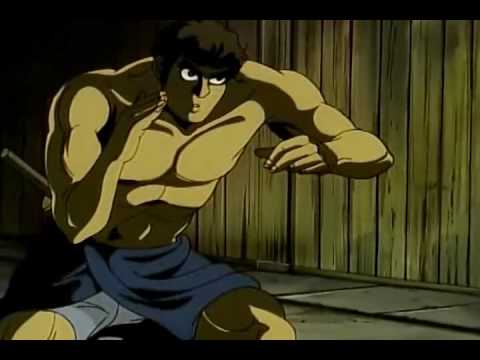
The irony is that its director Osamu Dezaki, up to his death, is one of anime's most well regarded craftsmen. A working director who yet, over his prolific career, had auteurist flourishes and was responsible for incredibly well made and beautiful projects. Paired with character designer and animator Akio Sugino, he did a lot of magic as well. Their pairing on Sword for Truth, after Dezaki's stint making American animation in the late eighties, was not one of those magic moments. It was released in the West a long while after its initial Japanese release as well. When the aforementioned Ninja Scroll became a very popular hit for Manga Entertainment  in both the United States and the UK, naturally there were attempts to capitalise on its success. ADV tried to openly promote Ninja Resurrection (1997) as a sequel by also having a protagonist named Jubei, probably less likely to anger fans than the fact of it, over the two episodes, having no ending whatsoever. Manga Entertainment itself released Sword for Truth, made in 1990, many years later.

The anime, based on the novels of Takeshi Narumi and with said author scripting the plot, has all the fantastical absurdities of the others but is more openly explicitly in its use of real Japanese history, none of which is taught in the West unless one openly studies it, and neither is explained in this anime. Set in the Tokugawa era, the villains for starters are meant to be Christians, mostly hidden in the English dub. A plot point which has a bad taste in the mouth as, depicted in Masahiro Shinoda's 1971 film Silence and Martin Scorsese's own attempt on the same material also called Silence (2016), the history of how Christianity was outlawed in Japan is not one to be proud of. This era is depicted in a lot of chambara pulp stories, like Lone Wolf and Cub, but is rarely depicted as such. It also raises questions who the big bad you only see in the last act is and never contributes anything else to the actual material. A hairless mountain of a man who worships at a burning cross whilst naked writhing women orgasm around him, it's as if the Pope was an evil warlock on steroids and best not to try and explain.

From https://i0.wp.com/operationrainfall.com/wp-content/uploads/
2013/05/Sword-for-Truth-Screen-4.png?resize=610%2C464

The history, as is common in a lot of pulp samurai tales, is background content that you do not fully need to understand. Or that would be the case were it not for how many names are badly pronounced, Manga Entertainment's dubs varying wildly in the mid-nineties, and that story still scatters in historical context and maps through its narrator, enough for a Japanese viewer to possible get in nods to, virtually nonsensical without context to Western viewers without the context. Infamously the English dub confuses things further in one scene, thus sabotaging the entire structure in places. In one of the more infamous scenes, whilst the narrator gravely talks about how opium was used to brainwash members of an assassin's cult, explicit animated lesbian sex is taking place onscreen where one of the participants is being brainwashed. That the English dubbing script confused them for the kidnapped princess causes a huge plot hole when these female ninja attack the villainous ninja at one point. If the very stern male voiceover explaining how opium was used to indoctorate assassins over a sex scene wasn't "tasteful" already, this mistake and its effect is the exclamation mark.

From https://i0.wp.com/operationrainfall.com/wp-content/uploads/2013/05/
Sword-for-Truth-Screen-5.png?resize=610%2C465

It's not a high point in Osamu Dezaki's career in the slightest. Even Golgo 13: The Professional (1983), whilst based on a manga with problematic gender depictions and a luridness to violence and sex, at least had incredible style and a nihilism that had effect on the silly material. Sword for Truth is a chambara Golgo 13, in which our anti-hero is a stoic warrior who wins every fight and has sex with a lot of women. Not well made, not helped by the significant budget limitations and few of Dezaki's artistic flourishes. It is the perfect definition of a guilty pleasure and if anything softens its tastelessness and huge problems, it's the complete lack of story context and general strangeness. These characters exist in a lot of Japanese pulp stores, but this one has the quirk of dressing in lovingly purple clothing and having, like Ninja Scroll, to fight various freakish ninjas (harpoon throwing frog men, old ghost men who skip on top paper lanterns, even a giant tiger). Where the first women he has sex with is a female pickpocket who inexplicably has a demon eating babies tattooed onto the whole of her back. Material so over the top that, because its told with such stoicism, it's ridiculous. Even the English dub helps with this, as the princess asks whether he can ever love her on a battlefield. Or when an assassin asks a target whether he has a family before suplexing him to death.

Also at under fifty minutes, there is no ending. The kidnapping plot is resolved, but it barely scrapes into this world. Especially when there is a cameo by what clearly is a character from the source material, an assassin with the potential for an afro who kills his targets with martial arts rather than weapons. The Christian Big Boss if presented as an oversexed version of Sauron, but never contributes anything to the actual material. This is testament to an issue with OVAs that, whilst missed, the straight-to-video anime industry for every great release was also notorious (especially by the nineties) of work that never had actual endings to them or were just made to encourage people to read the original manga to get the endings.

From https://i.ytimg.com/vi/-yahG7DCjkI/hqdefault.jpg

Is there any worth to Sword for Truth then? Actually yes, in the sense that, in reference to a discussion with a friend on Letterboxd that came from musicians but could also apply to cinema and anime, any great artist who never has an egregiously bad period in their career is playing it too safe. Thankfully Dezaki would go on to adapting Osamu Tezuka's Black Jack into anime throughout the nineties, given us the incredible 1996 theatrical movie that redeems for this completely. A one-off, getting back from the American animation industry can be shrugged off especially as the material is still entertaining and so bad, its compelling. Barring the music, which is actually good, this is the mad trashy side to anime which thankfully isn't the norm nowadays but whose unpredictable energy could be stolen back and applied to better written and animated productions. It is not as if we've escaped from this type of material either - and I'd argue some anime now is more insidiously worse for their gender politics and ideas especially when you get to the underbelly of Moe. If anything, as dumb as a brick and the English dub has howlers as Manga Entertainment's dubs could be infamous for, is a side of the company that should still be celebrated even if laughing at it at the same time. Manga Entertainment helped finance Ghost in the Shell (1995), so their reputation was never fully trash merchants either at the period. In fact - whilst this is possible fed on watching the old Manga Entertainment trailers scored to Mad Capsules Market too many times - the company even in the early DVD era when Sword for Truth was released at least still had a distinguishable personality unlike in the 2010s.

From https://i2.wp.com/operationrainfall.com/wp-content/
uploads/2013/05/Sword-for-Truth-Screen-8.png?resize=610%2C466

Monday, 4 December 2017

#50. Golgo 13: The Professional (1983)

From http://www.vcinemashow.com/wp-content/
uploads/2010/11/Golgo-13.jpg

Director: Osamu Dezaki
Screenplay: Hideyoshi Nagasaka and Shūkei Nagasaka
Based on the manga by Takao Saito
Voice Cast: Tetsuro Sagawa as Duke Togo/Golgo 13; Gorō Naya as Leonard Dawson; Kousei Tomita as Bob Bragan; Kumiko Takizawa as Rita; Reiko Mutoh as Laura Dawson; Toshiko Fujita as Cindy
Viewed in Japanese with Dub-titles

Synopsis: Golgo 13, codename for Duke Togo, is a mysterious hit man with his own moral code and an inhuman ability to complete every assassination mission he is paid for. When someone manages to acquire an ungodly number of resources to hunt him down and starts to pick off his contacts however, the legendary figure is backed into a corner.

The story of Golgo 13 is fascinating even from a surface knowledge of his origins. His creator Takao Saito worked on James Bond manga for the three years before he created the character in 1968, and thus it's impossible to imagine that he didn't take the concept of a figure who is a perfect killer and womaniser and adapt Duke Togo from this. However in contrast to the debonair British character capable of being exceptionally absurd in certain films as he is serious, Golgo 13 is a far more nihilistic and grimy figure befitting Japan's strong history of dark, mean crime thrillers. Even in this film, which has more outlandish aspects, this is an alien film in tone from the James Bond films made this year when the official one Octopussy fought with the unofficial one Never Say Never Again, both of which make the material in The Professional that feels like a stereotypical manga for men seem more serious in comparison.

From https://doublasmkii.files.wordpress.com/2014/10/golgo-13-
the-professional-1983-mkv_snapshot_00-11-43_2014-10-22_23-31-01.jpg

The character at this point, with stories still being published five decades on in comic book form, is a metaphysical entity rather than a human being. Practically an emotionless automaton who kills, sleeps with women, kills and so forth in repeat. In the first of only three animated adaptations - this in the eighties, a forty minute OVA also by Osamu Dezaki in the 90s and a TV series in 2008-9 - this is not necessarily a problem is you imagine not a character in the same state of pulp heroism as James Bond but a representative figure for bleak morality plays. Even if it was to still be pulp as its more exploitative end, knowing that Golgo 13 as a character has been thrown even into stories with real life politics and existing figures of the real world emphasises this, and the Angel of Death persona he effectively is in this theatrical film does allow for interesting potential. A figure to surround by characters in their own specific stories who Golgo 13, perfect and capable of impossible feats like shooting through bullet proof glass in one scene of this theatrical feature, merely intervenes with when he's got a paid contract he'll execute exactly.

The Professional compared to modern anime is absurd. There's still a lot in modern anime in depictions of sexuality and violence which still raises an eyebrow, but certainly you don't get a film like Golgo 13 a lot at all now. Beautifully animated but set in dank urban environments or idyllic environments where violence, gun battles or explosions destroy their serenity. The portrait of women is no way near as bad as other example of this macho Japanese pulp in any medium, but female characters are naked a lot and take a back seat for this story. Blood is shed and the storytelling is in the context of the kind originally for salary men to escape from their ordinary lives, still so in the modern day only now with the emphasis in a lot of anime on cute schoolgirls for male otaku to imagine as their little step sisters. Frankly though, even whilst this isn't PC in the modern day, you can make an argument there's so much worse than The Professional just in anime. Even if I have to warn of certain content, like a rape scene which will be immediate trigger warnings for some readers, such moments are no way near as explicit and frequent as some infamous and problematic examples in other anime. It can be argued James Bond has always been worse in gender politics and its chevalier attitude to violence. Golgo 13 here, even if streaked in absurd cartoonish moments, follows the bluntness that its inherited from Japanese crime and noir stories, from those made by Nikkatsu studios in the sixties to later, more grounded yakuza stories and thrillers. Actually for all its absurdity, compared to the Roger Moore era of Bond taking place as this film was released, even the snake-like mercenary named Snake, who can writhe on walls on his back and belly, is less ridiculous. Even the unfortunate English dub dialogue about a female tech wanting Togo to pull her trigger lovingly doesn't undermine Golgo 13's edge.

From https://doublasmkii.files.wordpress.com/2014/10/golgo-13-
the-professional-1983-mkv_snapshot_00-33-10_2014-10-22_23-36-14.jpg

Helping is that, for its simplicity, The Professional actually has a plot in the end that's surprisingly  moral. How, after his son is assassinated by Golgo 13, a powerful American oil baron gladly uses his power to try to take out the assassin. It's absurd as he gets the FBI, US military and CIA to help him, an evil version so corrupt its revealed he got them to assassinate JFK, but ironically the story does become about his downfall over bloody-minded revenge. Whilst lurid, he traumatises his surviving daughter-in-law, using her as sexual currency for the Snake assassin in scenes which are played as horrifying, brainwashes his granddaughter as an assassin and will gladly kill many on his side and others to get Golgo 13, which is revealed to be more complicated than it appears in his intent. As much as this is still a film which wades in with violence and sex, a machismo looked down on for some, it's interesting how those films that are still remembered like this actually have more complex moralities even if they're within exaggerated form. This is not like some of the more dubious examples in Japanese pulp storytelling in anime or manga, like the live action adaptations of Hanzo the Razor which is sumptuous to look at but disturbing in premise. This adaptation of Golgo 13 even if of its era is still actually defendable in how it emphasises a moral plot even in all its over-the-top bombast and excess. Even considering its very simplistic plot structure - a string of separate missions for Duke Togo before he deals with the actual villain of the film - it's interesting after so many viewings how actually more well put together the story is, even for something meant as pulp first and isn't trying intentionally to be profound.

What helps as well as this isn't a rudimentary animated production either. Its theatrical anime from the eighties, so a lot of hard work and budget is behind it, and its helmed by one of the best working anime directors of his era. Osamu Dezaki, who at his best before his death in 2011, was not only incredible as a craftsman but brazenly experimental. The postcard memory, a trick of stopping scenes for highly detailed still images, is one of his popular trademarks, but between Golgo 13 and his adaptation of Space Adventure Cobra in 1982 is probably some of his most out there and openly surreal productions I've seen of his work so far. His work here is dynamic, a flair with how scenes are presented and even going as far as bringing the kind of techniques more associated with live action cinema such as splitting the screen into smaller images. When he's staying within the more traditionally realistic aesthetic of this film, he alongside the production team uses colour and absences of it to a striking advantage, as can be seen within the sequence where even bullet proof glass is not a problem for the anti-hero, the vast neon and elaborate environment of the city sequence incredibly elaborate in detailed before you get to the style putting the sequence together.

From https://i.ytimg.com/vi/kQprIggtAh8/maxresdefault.jpg

The film is also willing to become overtly abstract too. The mourning of a watchmaker who worked with Togo is presented, with Golgo 13 and the man's body in a chair, not with the background or floor of the latter's work area shown but with all background between the character models being replaced with clock faces. Space can become distorted and even x-ray of a bullet entering a skull can suddenly happen for effect. It helps connect the gritty realism with its more overtly cartoonish aspects, the kind of story where Golgo 13 fights anyone from hook handed military goons to Gold and Silver, two former military mercenaries and sociopaths who dress in suits of the respected colours. It also however, taken even further with the pure aesthetic bliss of Space Adventure Cobra's depiction of outer space, emphasis a certain magic to be found in this type of anime, a creative streak in Dezaki's work that embraced the inherently flights of fantasy animation allows. This even goes as far as one of the more infamous aspects of The Professional in which, to depict a series of helicopters firing on Golgo 13 in a sequence, the production used what was state of the art computer animation at the time. Being early 1980s, this animation is so obsolete to current day work it's unfair to laugh at the green shapes floating pass representations of buildings. But, alongside my love for the weird energy of obsolete animation, it emphasised the desire to play and create within the film, beyond just telling a pulp tale to also using it as a way to stretch and manipulate animation for innovation. The opening credit sequence, also using computer animation but also live action with prop skeletons and a handgun, emphasises this creativity a lot better but also how The Professional is also tinged with the bizarre, the opening credits scene (once removed from releases) pretty unconventional and strange for what should be a conventional, lurid action anime.

And it's that which helps Golgo 13: The Professional stand up against charges of just being distasteful, dated anime from the ye old days. Compared to what would be made in the late eighties and early to mid nineties, it's actually less violence and sexually explicit. (Dezaki would sadly drop the ball in production quality with the admittedly humorous epic known as Sword for Truth (1990)). Compared to other anime the likes of Manga Entertainment also released from that later era like Violence Jack (1986-1990) or Mad Bull 34 (1990-2), the latter by all accounts directed by his brother Satoshi Dezaki, Osamu Dezaki's work is a cut above even if it's still tinged in an attitude you rarely get now, not just gross  or dumb as those later works are whether your opinion on them. The best way, actually, to think of The Professional is to compare it to the live action film Dirty Harry (1971), Don Siegel's best known film with Clint Eastwood which is un-PC in the modern day but, for a macho crime thriller, has a bit more complexity in its morals even if also black-and-white and nihilistic on the surface, both works a testament to exceptional production and technical value contributing a greater sense of class and nuance to the material. It's still saddled with a silly English dub, but considering the on-going popularity of the manga, I have to look at Golgo 13 here as being a lot more interesting than its offspring, the more bleaker and edgier work when others later (at least in anime) waded in misogyny, gore and sex without its inherently "off" and more rewarding idea, that its central pulp figure is a blank anti-hero to cheer on but one who stands by as the grim and filth is around him. One who isn't meant to be sympathetic, and is far less a problematic figure than others created in ultra-violent anime inspired by him, one they can still create so much material around as the world around him is shown as chaos he can simply overcome with the preciseness of a sniper's bullet. 

From https://i2.wp.com/www.silveremulsion.com/
wp-content/uploads/2012/12/golgo13_3.jpg