Showing posts with label Magical Girl. Show all posts

Saturday, 24 June 2023

#255: Alice in Cyberland (1996)


Studio: Vega Entertainment (Episode 1); Kyoe Sung Production (Episode 2)

Director: Kazuyoshi Yokota

Screenplay: Chiaki J. Konaka

Based on the videogame by Glams, Inc.

Voice Cast: Yoko Asada as Alice; Kae Araki as Lena; Kikuko Inoue as Rucia; Yūko Miyamura as Juri

Viewed in Japanese with English Subtitles


Once ago we envisioned entering an isolation tank full of water to enter cyberspace, to defeat hackers masquerading as monsters, as explained here in the opening credits animation to this obscure production. Alice in Cyberland in this particular case this is a tie-in to a videogame which came at the same time. With the scenario worked on by Chiaki J. Konaka, better known for his work on Serial Experiments Lain (1998) and The Big O (1999-2003), the game was a Japanese-only adventure game from Glams, Inc., who also co-produced the anime. They have unfortunately not a prolific list of titles under their belt, and I half suspect with the tale of Alice in Cyberland, just in terms of the second of the two episodes having been M.I.A. in existence, that they took a risk at a time where many groups who had never made games jumped onto the original Sony Playstation bandwagon. With the game and anime released in 1996 together, they unfortunately burnt out, not releasing a lot more else barring a couple more games including for the Sega Saturn.

Twenty years into the future, from this anime’s release, and the titular Alice is playing virtual reality games with her female friends. Establishing a multi-media franchise, the first twenty-plus episode cannot do much but establish her, that with an estranged father, she is a stereotypical anime female lead but one with a talent for computers and dealing with hackers. This is useful in a future, for all its technological advancements, that has greater concern from hackers. Ironically it is the second episode, which was once presumed lost as we get into, which explained the context to make sense of all this, that like Serial Experiments Lain, the internet has become a huge entity where people can exist within it as virtual figures, predating the reality of advancing technology in its own exaggerated way and with the potential to be relevant still. In this case, the concern for episode one is cyber-anarchists from Eastern Europe. It is an odd choice, and it does show a cartoonish air to it, where in causing anarchy to important technology in Japan, they are focused on sabotaging school pools by hacking the disinfecting system for the water, and playing music through people’s headphones to cause violent memory erasing amnesia. The other clear influence on this is clear as a magical girl story, only with an internet theme, so there is an air of complete fantasy to this premise still, trying to make a version of this genre that is decades old into a new era of technology.

There is a virtue to this, where we can literalize cybercrimes with a data eating tentacle monster, alongside providing me with my favorite trope of surreal unearthly worlds the protagonists are sucked into. With its title this is nodding to Alice in Wonderland, the later aspect could have been embraced further, as Alice has received emails from a mysterious figure name Lucia who comes to her aid and provides her the ability to freely enter Cyberland, emphasizing this as a more cartoonish take on the subject than the metaphorical and abstract nature of Serial Experiments Lain’ symbology. As with a lot of anime, it is a premise that has a lot of promised, its take on the magical girl genre of its time, especially with the crowbarring of terms like “disinfection sword” to combine the two, but lovable as an idea. Even in a work which does have fan service, such as the female leads looking like their idealized and most attractive ideals in the online world, it also has a cool female lead as for all her goofball moments this is a very smart and computer savvy protagonist able to get the hints to snoop after cyberhackers, which is progressive in its own way back at a time when the internet was a new and exciting concept alongside virtual reality in the west and the east.

It is however a teaser, which means a lot was left off the table, particularly as in the version I was able to see. Alongside the goofier slapstick in the game cut scenes you see previewing the other part of this production, there are preview to other Glams Inc. games including for the Saturn, emphasizing this anime was always going to be an advertisement for the game. It is here that there was also the issue that the second episode, previewed too, was not readily available to see. Only really becoming available online from October 20211, you become aware that something went very wrong with the production of this anime for the worse, not surprising as Glams. Inc has very few releases after this period in the videogame console generation. (According to Chiaki Konaka himself, they even went bankrupt2). The first episode is nicely animated, with original character designs by Daisuke Moriyama, the author of the original Chrno Crusade manga later adapted into the 2003 series from Gonzo. At first nothing is seemingly amiss with the second episode, starting with how episode 1 ends with repeated footage, and explaining a lot of the context of the world, only to reach its first original scene and everything to be clear. The production dropped in a way I have not seen barring some of the most notoriously disregarded anime I have gone out of my way to see.

Knowing how the later episode was seemingly lost to time, that likely explains why it has not gained the infamy for its animation quality. Starting with the amusingly dark opening where, at a children’s fantasy zone, a figure is deleting anything in his path and traumatizing them online, with no pink dragon or princess safe from disintegration, soon my attention was drawn to the animation quality even in terms of the faces of the leads being differently drawn. Animation faults, especially TV series where one has to get the episodes done quickly, have existed with similar issues, of less than stellar depictions of characters’ face, like they are melting off their necks, and the artistic quality visibly having to take shortcuts, which are usually not this frequent and are removed in the modern day for physical media releases. With absolutely respect for the animators on this, it is obvious that this was a) rushed and/or b) undermined by an unfortunate production disaster, neither helped that this is a promise of a story that is slight. There was a prominent change between two different studios for animation production between episodes; episode one was by Vega Entertainment, whose most prominent work is throughout the Doraemon franchise, a huge one in its homeland, but even with the second company hired for the second episode, Kyoe Sung Production has a prolific career into the decades afterwards3. It instead offers the sense that, having to help finish the second episode, no one is to blame but an unfortunate circumstance where people were forced to produce and release a final episode with this level of quality to it.  

With both written by Chiaki Konaka, the second episode still offers a fascinating premise, of artificial intelligence being able to blend in with humans, but with the danger that this one can replicate infinitely and will need to be deleted to prevent significant damage to cyberspace, even if through a potential skuzzy premise of a young boy one of the secondary female leads is smitten with. Alongside the sense of this being a dry run for Konaka to take this premise further, and that the ideas are simplified here through a monster of the week scenario, thus preventing it from getting more elaborate, the drop in animation quality is so surprising it undercuts the interesting ideas. Even if you do get a giant talking turtle, which is funny especially as it is a nonchalant and rude programmer named Bill in disguise online, few would get past however pointless the episode is by its end, and how you cannot get pass the quality drop in production to the first episode.

The one lasting legacy to Alice is Cyberland is the tantalizing realization this was a predecessor to Serial Experiments Lain itself directly. There were plans for a sequel to the video game with Chiaki Konaka2 which never came to be, but alongside Serial Expeiments Lain coming in its place, the protagonists of Alice in Cyberland returned in an entirely different context. There is an Alice Mizuki, one of the main characters, also voiced by Yoko Asada who plays the original Alice, in Lain as an important character to the titular lead, alongside a Juri and Reika like the two other female leads from the older work in other roles.  It is a lovely discovery that this forgotten production, the game and the anime, managed to relive again as clearly Konaka found something he wanted to push with the premise. Serial Expeirments Lain, whilst of its era, has lasted as a relevant and startling series that has lasted, whilst Alice in Cyberland is a fascinating nineties obscurity. The production problems with episode two are tragic, but even that raises so many questions to what happened to Glams, Inc., one of the many who came at both a fascinating time in Japanese videogames and in the anime industry only to disappear so quickly afterwards. Their tale would be fascinating to learn far more of, but what we got at least was this curiosity.


========

1) Quoted from the review of Alice in Cyberland, published originally on September 2nd 2018, from the blog Collectr's Blog and one of its later blog revision updates:

Update October, 2021: the complete Alice in Cyberland TV broadcast showed up on YouTube, episode 2 intact. The quality is not as good as the laserdisc, but it's good enough. Now to find a translator...

2) From the page on Alice in Cyberland 2 Seventh Protocol, from Chiaki J. Konaka's site on his career, Alice 6, written 2nd September 1999. It mentions as well that that subtitle “The 7th Protocol” was inherited by Serial Experiments Lain, which does indeed connect the two, as it becomes “Protocol 7”, a key McGuffin to the narrative.

3) Anime News Network’s page on Alice in Cyberland, which is the encyclopedic page for the anime to refer to been two animation production studios on the project, Vega Entertainment for episode 1 and Kyoe Sung Production for episode 2.

Thursday, 16 September 2021

#200: New Cutey Honey (1994-5)


Director: Yasuchika Nagaoka

Screenplay: Higashi Shimizu, Isao Shizuya and Sara Uemura

Based on the Go Nagai manga

Voice Cast: Michiko Neya as Honey Kisaragi; Junko Iwao as Natsuko; Kousei Tomita as Danbei Hayami; Rica Fukami as Daiko Hayami; Rica Matsumoto as Chokkei Hayami; Sho Hayami as Mayor Light; Taeko Yamada as Black Maiden; Wataru Takagi as Akakabu Hayami; Yusaka Yara as Dolmeck; Hirohiko Kakegawa as Peeping Spider

Viewed in Japanese with English Subtitles


I reach an iconic character in anime and pop culture, and like her persona, of a heroine able to transform her costume and persona, Cutey Honey varies per adaptation since her 1973 manga. Created by Go Nagai, a 1973 television series co-existed at the same time of this manga, to which New Cutey Honey is set a hundred years afterwards, with the character becoming flexible in the type of narrative tones you could create with her. The character is fascinating from the get-go as, with the capacity to have been sold to a female audience, a strong female heroine who can transform in a variety of costumes and personas, Honey's manga was actually penned for a young male audience originally, with mind that some of the adaptations, especially New Cutey Honey, emphasised the titillation of each transformation involving the costumes disappearing. That Honey is also an android is a weird touch, as she acts like a human being and can even feel pain, but she is a striking figure who naturally stood out. In her main form, a tomboy with vibrant short red hair who fights with a sword, this character had the potential to also be a strong female lead as much as an eroticised super heroine.

Nagai, never one to shun his kinky side, would have not minded this OVA adaptation's direction, which he had his involvement in including even hand picking the English dub voice actress, Jessica Calvello, for the ADV Films dub1. Cutie/Cutey Honey has however had multiple variations - a 2004 live action film directed by Hideaki Anno, another sci-fi live action film in 2016, a 2004 OVA Re: Cutie Honey produced by Gainax and involving Hiroyuki Imaishi, a live action television series, and in 1997 a three season series Cutie Honey Flash (1997-8) which took over the television slot the final original Sailor Moon series - so this character has sustained herself for a long time.

New Cutey Honey is a slight work, which is not an insult but in mind that this was meant to be pure entertainment. Eight television series length episodes, just over twenty minutes each, this is split into two halves with different opening and ending sequences. The first follows a narrative of a cabal of villains led by Dolmeck, desiring dominance over the main setting of Cosplay City, the last four episodic stories of Cutey Honey fighting a variety of villains, feeling like the OVA series was cut off from a grander plan to continue. The narrative's centre is Cutey Honey herself; set a hundred years after the original series, once she realises who she is, Honey is ahead with fighting villains with a new gang. A dirty old man Danbei Hayami, a returning character in the franchise whose android body however makes him a powerhouse as well as still be alive in this world, and the Hayami, the parents two former rival gang members, and their son Chokkei a teenager who develops a crush on Honey.

One of the biggest factors to bear in mind for this adaptation is that, juggling between seriousness and comedy, a lot of this includes sex comedy. As an OVA title, this can have as much female nudity as it wants, a paradox in Honey being a potentially strong character yet her gimmick involving her clothing exploding off and reforming into different costumes. The bigger concern, and what has aged, is when the comedy includes the likes of groping or trying to spy on someone in the shower. We have not really progressed decades later, and these being adults is at least more palatable is not defendable, but this in tone is something that does stand out. Thankfully it does not detract entirely, and the character's various forms over the years means that even the sexual side of her persona has been played with in very different ways. It is just that here, you will at least roll your eyes at least once or not feel happy about some of the jokes, none of which is an issue in regards to this having some much nudity and sexual humour but some of how it is dealt with.

What also stands out however is how entertaining this still was. This is a spectacle, a pure colourful piece of pop, a monster/villain of the week narrative but allowed to be more lewd and adult. The playfulness of a Saturday morning cartoon is here, with slapstick and background pedestrians that stand out against the regular characters for absurd effect, but also tonal whiplash as, due to be adult, you can still have deaths. It is somewhat alarming and unpredictable, in a positive way to the content here, that a villainess, despite playing to a dated predatory lesbian undertone, has been capturing and turning innocent young women into decorations in her lair, all preserved in a way that they cannot be brought back unless magic had existed in this world. The show does get serious at moments, but this is definitely an exaggerated fun piece but one that reminds me that this is still a Go Nagai property, the creator of Devil Man and Violence Jack. Even some of its dated content can suddenly pull out something unexpected, such as that villainess being surprised by Honey turning into a dominatrix and that clearly being played out in a way that might subvert the aged aspects greatly.

It is also well made. This is a big, bright production, even in spite of a central location of a giant grey dystopian city, where its theme tune about the lead character is a catch earworm to adore, and the show has enough behind its production to make everything shine. This is a case of spectacle taking priority, which is not really an issue here as, for the criticisms you can have especially about the dated aspects, nothing here was bad. No bad episodes, no dull patches, one episode the highlight where of a female pupper master who, whisking the cast to a feudal Japan setting and armed with human marionettes from samurai fiction, also allows for the lead to dress up as pop cultural figures of ancient Japan. That one episode has Cutey Honey dressed as Jushin Thunder Liger, a legendary professional wrestler who looks like a space alien crossed with a Power Rangers villain in his distinct horned mask with white and red aesthetic, really goes to show how much of the show is gleefully indulging itself.

That the episode where that visual reference appears is also about a prison island, where a pain fixated female leader forces gangs to fight her minions to the death for her sadist pleasures, reminds you how ridiculous this show is but knows. Go Nagai also created Kekko Kamen, which was him just wanting to create a prank character, an almost all-nude heroine, and here especially by the final episode, a children's show character of a gold obsessed female thief who stole a dimensional teleporter, you see that this franchise character is allowed to just be a playful farce. One that is as broad and exaggerated with more sexual humour than could be possible for a weekend morning television show. New Cutey Honey does have a strange structure in that its most dynamic narrative ends in episode four, only to progress with a variety of episodes which vary between the serious to this final one, ending on a gang of disgruntled police trying to force a taxi driver to ship them all back to the city.  For the DVD release in Japan, the closest thing to a continuation of this adaptation was a CD drama, effectively a Christmas based episode, which does suggest this had plans to continue at least for a few more episodes. What we got was nonetheless memorable, and again, this like many iconic characters from manga and anime manage to last due to how her world could be altered and reinterpreted, so Cutey Honey is a figure I will find interesting directions with as the adaptations continue to exist.


============

1) As referenced in the following.

Tuesday, 13 July 2021

#193: Akikan! (2009)


Director: Yuji Himaki

Screenplay: Hideaki Koyasu

Based on a light novel by Riku Ranjō and Hiro Suzuhira

Voice Cast: Jun Fukuyama as Kakeru Daichi; Sayaka Narita as Melon; Aiko Ōkubo as Yurika Kochikaze; Aki Toyosaki as Najimi Tenkūji; Aoi Yūki as Budoko; Mamiko Noto as Yell; Megumi Nakajima as Miku; Megumi Toyoguchi as Airin Kizaki; Nobuhiko Okamoto as Gorō Amaji; Ryotaro Okiayu as Hidehiko Otoyo; Ryou Hirohashi as Misaki Miyashita

Viewed in Japanese with English Subtitles


If you want to drink me, tell me beforehand, idiot.

When I initially came to Akikan, it was under the auspices of it being one of the weirdest anime premises in existence, that of anthropomorphic cans turning into women. This is not the only time then or before of objects being humanised, and whilst in an occasional while it can be gender reversed, like Miracle Train - Ōedo-sen e Yōkoso (2009) that can even include train stations as depicted as cute guys, usually this is done with cute girls and women. Be they firearms, planes, even Sega games consoles. Akikan is definitely weird, though the initial concerns were both sexualising women as literal objects, here owned by those who first bring them to life (of any gender) by finding the right can and drinking from it, and the idea of anyone wanting to have sex with a Pepsi can in the first place.

The bigger issue, and not what I was expecting, was how bad Akikan turned out to be. Still a show, in spite of content that did actually offend me, and content which was just dumb, that I could get some pleasures from, but certainly a deeply misguided production which also felt rushed and had no idea what it wanted to do. That pleasure is honed from years, including within the time I even started writing amateur reviews, of willingly suffering through the strangest of titles as I can appreciate the truly great, which is a significantly different mindset to come to the actual show with than for most readers. The part never brought up in all the weirdest anime lists Akikan gets onto is just how bad some of the ideas turned out.

Here, the protagonist is Kakeru Daichi, who finds an Akikan he will dub Melon, a melon soda that inexplicably turns into a young woman his age when he drinks from it. In this world, what the set-up is presumed to be is a secret group, part of the Department of Economy, who are staging battles between Akikan across the city, those originally aluminium and those of steel, for a very violent form of product research as these magical women have powers. None of the Akikan in the anime are any other gender than women, though the owners can vary, as Kakeru's childhood best friend Najimi accidentally gains one, during a night where her ability to get drunk just on carbonated drinks leads to a sports drink becoming the severe and tough Yell, whilst a junior high school girl named Misaki acquired Budoko, a bratty grape juice based Akikan whose inability to beat Melon is not going to stop her sling shooting exploding grapes at her. None of this, premise wise, is actually bad. It is deeply silly, with the added factor of a lot of cultural idiosyncrasies which would make this a more curious take, that Japanese vending machines and their contents can be very different from other countries, meaning that, if this went any direction, Akikan based on canned coffee could exist and the original light novels has one based on a can of sweet red bean soup. No idea is stupid if the execution is done well.  Akikan tragically does not try.

I am trying to avoid everything, from episode one, that immediately made me realise this show was going to get painful at times, though in truth after the initial few episodes it does settle down or a tolerance came to be that helped me adapt to this production. Dramatically, this review will work better if all the awful content is left to hit the viewer as a warning by the ending, whilst instead I will start here with how, in spite of itself, Akikan is definitely weird. At first, you did not expect this to suddenly have very bleakly existential angst, from the first episode, from a young woman formally a melon soda can. Having to sustain her life-force from drinking other melon soda, which is a potential nightmare if the brand was discontinued, and even having to take cold baths than hot ones, the first days with Kakeru, when he is not one of the worst and scummiest male protagonists to put with as a true sex pest, are filled with the angst of a life of a metal drinks can usually thrown out into recycling or left to rust in waste, uncared for beyond a product. This is really twisted existentialism the premise probably did not realise, all when a lot of it is really the magical girl genre if everyone owned a magical girl, able to be turned back into a can if a tab eye ring is pulled, and with a lot of fetish in its apparently wholesome veneer blatantly there, such as the transformation back into human shape drinking from the can, effectively kissing.

Like an exploding can shaken up, it is not possible to hide from Akikan's many issues, which I probably had a higher tolerance to, but Akikan itself also meanders so much. It has very conventional characters and also a lot of additional weirdness. Something truly weird is felt when you realise the back-story between Kakeru and Najimi, who has her own crush on him, involves Kakeru having protected her in their youth from a kidnapping where he got the gun and killed the criminals dead in the classroom this transpired within, something brushed over in the show's bright tone without realising how tonally out of place that is. Some of the weird in contrast is admittedly funny, the male friend who literally becomes invisible to everyone when no one talks to him, or Yurika, who until the OVA bonus did her a disservice was arguably the best character here. Openly with a huge crush on Najimi, willingly to protect her from the sex pest protagonist by throwing razor sharp tarot cards from him and, born on Halloween, literally a witch who, gets something good in the show which her riding on an actual broom on her birthday.

Even she though, in her introduction, has a weird joke for one scene of trying to sustain herself on vitamin supplements out of curiosity rather than food, or literally distracting someone with her large bust during a baseball game. Then there are moments like how Goro the invisible friend, in the witch sequence previously mentioned, is inexplicably woken up from the bed shared with his sisters in dog hat bed clothes that even baffled me. Akikan, if it was not for all the many sins it commits, would be deliciously erratic and bizarre to experience at times. Eventually even the concept of aluminium and steel Akikan fighting each other is jettisoned, as everyone merely accepts each other existing, and no other Akikan barring one in the two final episodes are introduced.

You have a lot of melodrama and sex comedy, with the added and additionally jarring tonal shift for a major plot that, when Kakeru skips out on a date with Najimi, Yell takes it onto herself to nearly disembowel him, which is the kind of sequence I would have expected from the notorious School Days (2007) or a bad ending of a Japanese visual novel instead. This entire incident is skipped over - which is not surprising, what between Najimi herself having a fixation on a "waste monster" that will get her for not hording, and hair that is literally an antenna, even Yell behaving like a cat if a shiny thing is dangled in front of her, these characters do not act conventionally in the slightest even as caricatures. It is actually a surprise, barring a joke or two, the swimsuit episode, set in an indoor swimming pool, is actually tamer than what comes before. Well, barring the moment a certain character, whose joke is to be a perverted male character in a small sparkly thong, tries to get intimate with Goro, but that character is to still be introduced later here, instead here evidence that if this had been a more sedate and weird show, I would have been a lot kinder to it.

There is even a good episode, or at least for me a breath of fresh air. Episode 10 is actually a good episode, entirely about nothing. Melon with the perils of getting the laundry done with the weather being erratic, between bathing in an ice bath with melon soda drinks; Budoko with cats attacking her hair in her sleep; and finally Yell being distracted by a dragonfly during house cleaning. Many people would not like this episode, but it was such a surprise to have an episode, contrary to others, where there were no dumb jokes, no tasteless sex humour, none of the problematic side characters eventually to introduce in the review, and at the third to last episode not making much of an issue about how little has actually transpired throughout the show. So much so the introduction of an actual antagonist is absolutely rushed. The final two are about a figure created for the anime, a mixed juice Akikan who is absorbing others as a super villainess, replicating her victims as shadow clones in two episodes that are just average. Living with the show as much as I did meant, even Akikan for all it does wrong left some emotional investment, so these two episodes did have something even if the show goes to the obvious conclusion, the power of wishing invoked and inexplicably tying in the cats you find throughout the show into a back-story.

That goes without saying Akikan was also a brutal viewing experience, in that for a late 2000s show, it was amazing how much inappropriate content and bad ideas it had to. After three-quarters of the review biting my tongue, this is where I also confess the countless times, an incredibly amount, I was also cringing throughout. Kakeru, our lead, is immediately a problem as, whilst he tones down at times, he is both one of the worst of the generic male leads of an anime I could have encountered, entirely because he is just an id who says the most inappropriate things. When your lead, meeting Budoko, a young girl Akikan, for the first time asks whether she wants to date him, saying that he will wait until she is grown up to take her virginity, it is, yes, legitimately gross even as a gag and not expected. That is not even taking into consideration a figure more inappropriate, the head of the shady Department of Economy with his female assistant called Hidehiko. Hidehiko is, to be blunt, a walking gag of a predatory gay man who lusts after young men, first introduced with a young man fleeing his office with his clothes in his arms, which would have not aged even in 2009, and upon immediately meeting was an alarm bell of how bad Akikan could get. Much of the worst of Akikan comes in knowing, with no nudity within it, it is a sex comedy when the writers thought jokes about a man trying to molest teenage boys was good, offensive in multiple ways at once. And this is neither just being politically correct or social justice warrioring, but that this is also done with complete tone deafness, nor even getting to the point of the entire premise, which is barely used. Most of this would have been average harem fantasy comedy, with a very weird premise, for the moments which are truly strange is a lot of the premise never being used because the writer was focused on jokes really off-colour and wasting time.

Particularly as, released as a separate bonus, the straight-to-video hot springs episode is a cursed item. Nothing happens - it is a hot springs episode post-series which is an excuse for a sex comedy - but how it is done, in mind there is no nudity or sex, it is a twenty plus minute barrage to suffer through. Immediately you have the two youngest girls among the group, sexualised, which is gross and would edge the border to New Zealand banning this OVA, as they have done so for other anime in this area1. Nothing within this, even in terms of the sex humour, is inherently problematic either barring that example, but again you witness how execution can be misjudged. That a strategically placed Tengu mask, with a long nose, is phallic; that there is body sushi for no reason, or that Kakeru is a perv. What happens is a barrage of bad and tasteless jokes, a lot of material which is just thrown out without though, like a joke on murder mysteries at hot spars, which, condensed into this bonus where there are not restrictions, is arguably even worse than the whole series. There is more problematic humour with Hidehiko, as a predatory gay male character, at the end, making up the foul cherry on the top, and even predatory lesbianism as a joke, for the unfortunate covering of all bases and ruining Yurika, throwing a fun over-the-top character under the bus. By the point the body sushi scene involves cats happens, that was the point, whilst you do not see anything, the OVA did slip into a rare tier for me, that of something we could have lived without the existence of from a viewer known for being able to find virtue even in the main series. When only one scene, of seeing Najimi herding cats on mass in a one scene joke, the only thing within this of interest, the OVA might be one of the worst things I have actually sat through.

Akikan was a mess to experience. Completely undefendable, and frankly not recommended unless you are willing to sit through something which is not going to be good a lot of the time. The inability to exploit the premise, the concept of soda cans as human beings and all the unintentionally dark existentialism involved, is the scathing thing above all else for me in this show never working, all its un-PC humour worse, not just out of a moral trigger, but that it wastes ideas that could have worked for jokes. You could easily remove all the jokes without ruining anything which says a lot about the work, such as another character (barely seen) that is drag queen, that runs a cafe but is also sadly painted as a broad caricature even if treated more kindly. Even little details - such as Goro not understanding that women can be gay and thinking it's wrong in his oblivious idiocy - comes off as more overtly dumb and really out of place, especially when one of the aspects of anime, in truth, was always its gleeful sense of sexiness even for the sake of titillation, be it embracing the lewdness, the playful fun, or proudly waving homoeroticism around, be it male characters or appreciating the busty gay female friend who is a hell of a lot more appreciated, especially as a witch, as a character in this strange premise than an obnoxious bland male sex pest lead.

Accidentally opening a Pandora's Box, the show is just dumb, and unfocused. To have salvaged this show, regardless of whether faithful to the source material, you would have to drastically rewrite it entirely, especially when knowing the end credits song, a silly attempt to have soda drinking as erotic analogy set to multiple vocalists and musical genres per episode, was one of the only inventive aspects2 to a show which also looks visually bland. This is worse in knowledge this is on Weirdest Anime lists online, because for all its weirdest moments the show does not live up to that reputation like it should do.

======

1) See Puni Puni Poemy (2004), which was banned in the country for sexual exploitation of children, one of a couple of anime that have been caught in the crosshairs in that country for this. And that was an OVA being tasteless to shock on purpose in the broadest and over-the-top forms, and released uncut in the United Kingdom in the day, so that attitude to the government's censorship is unwavering.

2) Every episode has a different spin on the end theme, including a guest star from artificial vocalist Hatsune Miku, which is surprising considering how generic the show is in look, and obviously how haphazard the work is in narrative and presentation.

Sunday, 30 May 2021

#188: Nurse Witch Komugi (2002-4)


Director: Masato Tamagawa, Masatsugu Arakawa, Yasuhiro Takemoto and Yoshitomo Yonetani

Screenplay: Armstrong Takizawa and Tsuyoshi Tamai

Voice Cast: Halko Momoi as Komugi Nakahara; Ikue Ōtani as Koyori Kokubunji; Yūji Ueda as Mugimaru; Ai Shimizu as Posokichi; Akiko Hiramatsu as Yui Kirihara; Atsuko Enomoto as Megumi Akiba; Ikue Ōtani as Goddess Maya; Masaya Onosaka as Shiro Mibu; Michiko Neya as Runa Tokisaka; Mitsuki Saiga as Kyousuke Date; Yukari Tamura as Asuka Sakurai

Viewed in Japanese with English Subtitles


The immediate detail about Nurse Witch Komugi, a five episode OVA release, is that it is a spin-off to a 2001 television series called The SoulTaker, a very early directorial effort from Akiyuki Shinbo, before he became more famous, which was a dark supernatural story and an attempt by the legendary studio Tatsunoko Production to create a more adult work. Ironically, the humorous tie-in following a side character, recognisable in her nurse's outfit and was a smaller character in the cast, has completely obscured the original work entirely in history. The main lead character, a bland male named Kyosuke, becomes the male love interest for the titular Komugi to become more known as a protagonist, a girl blessed with the power to become a bunny nurse themes magical girl to fight humanised viruses. If ever there was an argument that female characters are usually more interesting as leads for your show, a character that stood out in visual design, allowed to become a bumbling if lovable protagonist is a good example, more so the case as, whilst The SoulTaker vanished, Kumogi got two further straight to video episodes in 2004, and a 2016 reboot in the form of a television series.

The resulting title, which was released without context by itself in the United Kingdom by ADV Films, itself requires no previous knowledge of the original series, another in a line of madcap comedies from the time I saw a lot. This one, following Komugi with her cute bunny mascot Mugi-maru, both the poor subject of abuse but also an undefeatable pervert in certain contexts, is definitely a title that borders on a guilty pleasure, as well being a title that you need to get onto its wavelength to fully appreciate. I will say now, what was once an average OVA when I first saw it has grown on me both in nostalgia from seeing titles like this, affectively a nostalgia for an ADV Vision/Manga Entertainment world of my first anime years, but also because the world and the characters have the virtue that you could elaborate on them in a longer format and, if you kept the same absurdities and colourfulness in look, it would have been great.

It is notable a remake came a decade later, although alongside a clear sense of the character being one with fondness for, or at least the potential to return to as a magical girl parody, they have changed the character designs over time. This is a shame in a way, without wanting to dismiss the 2016 remake in case it proved great in itself, but the premise of the original if funny and open enough to work with. An evil virus has escaped an alternative world, called Vaccine World, and invades ours, using a stand-in called Magical Maid Koyori, an evil representation of maid cafe staff member with magical abilities, to find hotspots that can generate monsters, whether the tensions of a tech convention or distilling a highway's worth of road rage. Komugi is not a perfect heroine, a cosplay idol part of a talent agency called Kiri Pro that is scrapping by, with her own career kneecapped by her continually having to go in her secret persona to fight the monsters. At times greedy and egotistical, Komugi is nonetheless likable, but an added joke (and potential bit of tension) is that Magical Maid Koyori is actually her best friend Koyori Kokubunji, a likable young girl her age who however has a split personality, one she is completely unaware of, which is evil and takes over at unexpected times.

Definitely one of the factors to bear in mind with the original OVA is that, for what I enjoyed about the show, some of the humour has aged considerably. Openly, just to give you a perspective of what some of the humour is, and why the short show can be a title some readers will struggle, can be shown in how one of the most prominent changes I can glace at is that Koyori's character design is significantly less busty. There is no way to move around this, but a lot of Komugi's humour, alongside slapstick and being a Tatsunoko that can parody their back catalogue, is sex comedy, from Mugi-maru being a pervert who keeps making the mistake of being in the bathroom when Komugi bathes, but also about characters obsessing about their lack of a bust or vast amounts of on others. Again this is a title that causes me to wonder whether there is a cultural issue in Japan about the status of a woman's bust, or whether this is just a trope male writers have repeated as a gag in their expense. Particularly with Komgui and her follow Kiri Pro co-member Megumi, who derides Komugi as being as flat as an ironing board whilst she is more physically round in areas, you are going to have to put up with a lot of this humour throughout, just like the skimpy outfits, or the scenes (without actual nudity) of bathing, or a final episode villain, an alien schoolteacher who brainwashes most of Japan and has been comically over-provided in anatomy. Worse and more lasciviousness examples exist in anime I have seen from this period, but the sex humour definitely makes the OVA have some guilt to its enjoyment. More so because it is not subtle, nor really inspired, more an excuse to gander at drawn busts like young boys, which gets repetitive for ever other joke that lands.

You have to bear in mind as well many obscurer (by a Western eyepiece) anime references too, specifically among many Komugi's tendency befitting a cosplayer to suddenly appear in costume as a character from another show for a minute. It is, as a result, meant for a fan base that gets the references. It gets to the point "Nabeshin", the animated persona of anime director Shinichi Watanabe, makes a cameo a character that came to the West thanks to ADV Vision releases, especially Excel Saga (1999-2000), where his animated persona, synonymous for his red jacket with yellow tie and an afro, has an entire running side plot by himself. Merely a cameo here as a disgruntled anime director, he even name checks Puni Puni Poemy (2001), an OVA from this era which is a far more notorious work for its lewd humour and weirdness that managed to be banned in New Zealand. Some of the jokes here even had to be censored, in the Japanese dub and visually on a sign, likely because of crossing Japanese copyright, and in the first, probably referencing a real life case of an otaku who committed a horrible crime for a very sick joke.

Thankfully, within mentality of throwing anything at the wall to see what sticks, you get many which work. This mentality also makes Komugi unpredictable and, with an interest set of characters to work with, it manages to hit the mark a lot between its scattershot of jokes. You may not know about Science Ninja Team Gatchaman, the original version of the Tatsunoko animated series nor its Westernised Battle of the Planets version, but the joke where Komugi suddenly turns into a five person team and their elderly male mentor on a screen, duplicating herself, to ride in a super combat plane is still potentially funny because a) she is fighting a building, which was once for a comics convention, turned into a giant robot, b) because Mugi-maru spends the scenario completely baffled what the hell is going on, and c) with missiles on the plane too dangerous to use, this boils down to the tactic of blowing up one's plane and smashing it into one's opponent for a final move. The show is deeply silly, and for every joke which you do not get the reference for, or has not aged well, a lot are ridiculous and run for the strangest idea.

Surprisingly for an early 2000s title, it is still unfortunately relevant when the first virus monster turns people into internet forum members arguing over fetishes and getting into spats, only with less toxicity. You get a Speed Racer joke, but also a piss take of early computer animated anime where even Mugi-maru comments the frame rate has become broken mid-shot. Episode 3 devotes itself to Komugi being dead for most of it, due to truck, left to languish haunting her colleagues when they are grateful she is gone, and even having a new life become many new lives when she keeps dying. Scattershot is definitely the right choice of term for the show, among many with their manic tones I have seen over the years, but many of these titles as well have their own deliciously surreal mentalities you can easily gloss over if you watch a lot of anime. The show is aware of this as, for its end credit song, you have a bright female sung pop song but with nonsensical lyrics whose strangeness are part of its theme.

This awareness even comes with the way the show had to work around delays per episodes releasing, promising they will get the show out at a certain date or having a seventies giant robot parody with that aforementioned building-robot for an ending preview gag. There is even an Episode 2.5, which is effectively padding and its own special, an excuse for two music videos with their own distinct looks, but also in itself lovable. For what is a tangent, in terms of the show settling down and, set during Komugi and her colleagues working in a festival cafe, allowing for some character building, it adds to the unpredictable nature in its own sedateness. Eventually this is a show where every Japanese monument, set to a licensed Toho studios orchestral march, transforming into a robot or self defence weapon from a kaiju film to defeat a villain, including a scathing critique (even if fictional) of a building which collapses and is merely called a waste of tax payers' money. For ever joke which caused me to roll my eyes, so much revisiting Nurse Witch Komugi was funnier for me. Whilst as much of this is, again as mentioned, nostalgia, as much of that fondness in itself comes from this type of work, specifically as well these early 2000s OVAs, where in little time they do have their own quirks and idiosyncrasies if you were lucky to have had a good one licensed in the United Kingdom. It is with criticisms, but especially with interest in the 2016 television series, there was enough to appreciate on this return too.

Monday, 10 September 2018

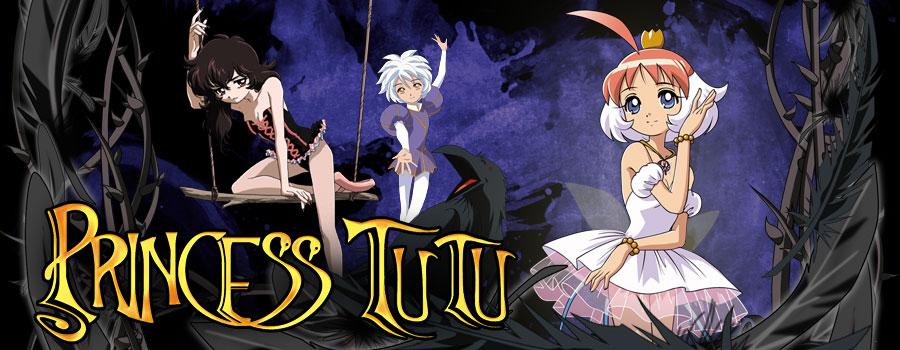
#67: Princess Tutu (2002-3)

From https://cdn.animenewsnetwork.com/thumbnails/crop900x350/
video/category/410/key_art_princess_tutu.jpg


Director: Junichi Sato (Chief Director), Shogo Koumoto (Series Director)
Screenplay: Chiaki J. Konaka, Mamiko Ikeda, Michiko Yokote, Rika Nakase, Takuya Satō
Voice Actors: Nanae Katou as Duck/Princess Tutu, Nana Mizuki as Rue, Naoki Yanagi as Mythos, Takahiro Sakurai as Fakir, Akiko Hiramatsu as Edel, Erino Hazuki as Uzura, Kyōko Kishida as The Narrator, Noboru Mitani as Drosselmeyer, Sachi Matsumoto as Pike
Viewed in Japanese with English Subtitles

Synopsis: In a fairytale town, a storywriter named Drosselmeyer, even after death, strives forward to complete the tale of the Prince and the Crow in real life. The original story, so far, had the evil crow defeated by at the cost of the Prince sacrificing his heart, shattering it into pieces and as a result losing his emotions. Becoming the emotionless Mythos, he is warded around the ballet school by Fakir, a very protective confidant, and Rue, the girl who loves him. There is also Duck, a literal duck Drosselmeyer turned into a girl with a magical necklace, one which also allows her to become Princess Tutu, a magical figure with the sole intention of recapture all of Mythos' heart shards for him.

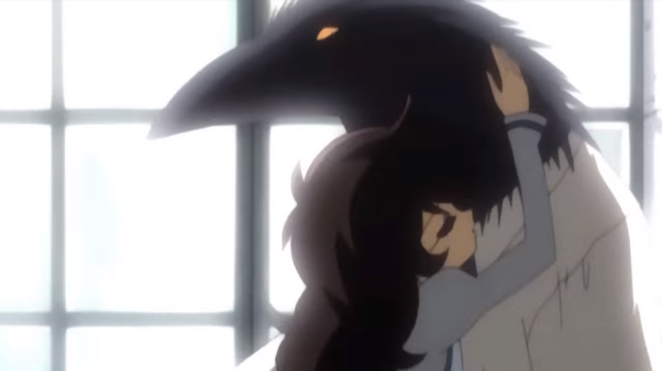
The best way to describe Princess Tutu? Magical. An obvious comment but in awareness that head writer of the two season series Michiko Yokote first came up with her premise of a fairy tale, a tribute to ballet with a girl who was once a duck, long before the series finally came to be in 2002. Encompassing ballet and fairytales, it explicitly references countless examples of both in plot and music, even referencing material outside of them like A Midnight Summer's Dream. Even Drosselmeyer, the mysterious old man beyond death living in a clockwork filled netherworld, is named after a character in the Nutcracker. As a result, its innately a commentary on itself, of these characters and this material because of all these reference, as much as it is  a sweet fantasy series of the age and gender of the viewer. Thankfully, ultimately why Princess Tutu is an underrated gem from the 2000s which deserves wider recognition, what could've gone up its own navel with trite meta commentary is more interesting than that. Instead it's a proper fairytale heard many times before, only the crux being a tale of when these characters realise their positions in the story and overcoming the archetypes they were initially written as.

From http://4.bp.blogspot.com/-KligJQXnjVs/VLL7vuq8THI/
AAAAAAAACDY/KBBisBJ-Ots/s1600/tAG_1097.jpg

Bright, elegant and using very recognisable classical pieces -  segments from Swan Lake appear in most of the episodes especially as Duck becomes a white swan in the opening credit sequence for every episode - it's also effectively a magical girl show. A subgenre which began with Mitsuteru Yokoyama's Sally the Witch, where (stereotypically) a young girl gains the abilities to transform into a magical figure, most well known even outside anime fandom through the Sailor Moon franchise. This never becomes a critique of magical girls - darker examples of that include Puella Magi Madoka Magica (2011) - instead merely a catalyst for the plot. Where, instead, a knight finds himself questioning his position to weld a sword, the villains are not doing a great job and have an existential crisis, and Duck, a squawky klutz in human form, an angelic dancer as Princess Tutu, finds herself conflicted by Mythos regaining his heart shards, the task fraught with him suffering from newly acquired emotions and the other players in Drosselmeyer's story interacting with her.

Whilst it does have the look of a 2000s production, including notable compute effects, its helped considerably by the colourful, openly fantastical world which evokes European culture right down to German translations of the episode titles. Openly fantastical too, as members of the cast are also animals. Humanoid hippo students with birds dressed and talking like schoolgirls. And Mr. Cat, one of the funniest side characters whose portrayal by Yasunori Matsumoto is above the god-awful attempt in the English dub completely, the ballet teacher and anthropomorphised cat who threatens every female student with marriage. It never becomes weird in an abstract way, honestly, but that doesn't matter. Instead everything feels appropriate for what a fairytale is, where the unpredictable happens but in a way logical to its own world.

From https://ibdp.videovore.com/video/50081810?size=600x400

Where it gets more unconventional is as much through the split between its two seasons. The first is very straight forward and could be a great series in its own right with a conclusion. After is where things become much more interesting. Noticeable, the other half was originally split into fifteen minute episodes before they were recreated for the West by ADV Films as regular twenty minute plus episodes. They're where the characters really begin to question and undercut the storytelling tropes being pushed upon them. That the writer is a character in the story, Drosselmeyer a Greek chorus in himself and already established as a bastard in the first season, desiring a tragedy with his cast, immediately raises the stakes. When characters don't follow his plans, due to being emotional complex people, the plan he has falls off the rails. The mix of drama, comedy and occasional moments of grim consequences is sustained throughout both halves but the later half gets more esoteric. When one character briefly turns into a tree, this is definitely the closest the series as a whole gets to be strange.

Especially when they hired Chiaki J. Konaka, one of my favourite screenwriters known for his unconventional storytelling, where it gets at its strangest, with puppets dancing and wormholes into the clockwork netherworld, my beloved screenwriter's touch to be found. If anything Princess Tutu proved that, whilst a distinct voice in the director's seat is still important, writers for individual episodes are as much guides for the show's personality as I learnt with this series. In general the project, whilst having to explain a lot more than usually for a show like this due to being a series for an audience of all ages, does a lot of heavy lifting perfectly, particularly  as it does have "situation of the week" style stories for single episodes, having to tie up a narrative with characters only appearing in that one story and make their contributions justifiable. In fact what I presumed, early into the second season, would dangerously become tiring actually gets to the point of the exasperation the villains eventually have with themselves as well as their task. Somehow a narcissitic lothario who feels he cannot love as many women as he'd want and has his man servant gore him with bulls continually, another of the funniest characters of the series despite being in one episode only, manages to have a vital point to him in the story of Rue, the secondary female character who's isolation away from Mythos due to Princess Tutu plays to the tragedy of her own life. This broad, conventional storytelling technique of a short story per episode is actually used in clever ways as a result, little moments having a lot of use from even its most comedic characters - one of the best little moments, from a Konaka scripted episode, has a joke of Mr. Cat trying to ward away a goat woman who likes him help two characters in their series long concerns by overhearing him at the right moment, examples like this bound to grow in rewarding upon rewatching Princess Tutu multiple times.

From https://nerdloveshop.files.wordpress.com/2017/11/tutu11.png?w=663

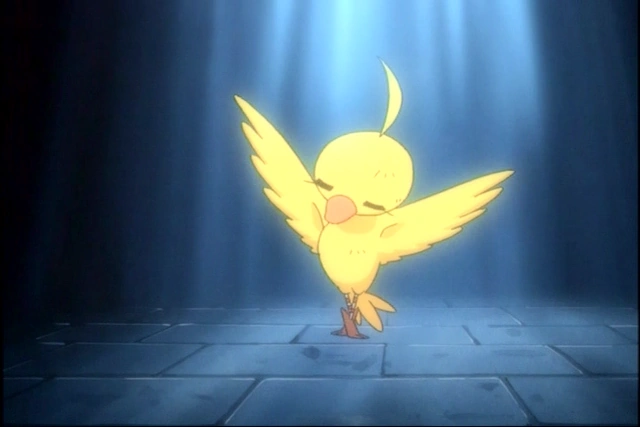
I also learnt more so with Princess Tutu an even greater appreciation of Japanese voice actors.  Snippets of the late ADV Film's English dub causes me to wonder how my younger self could stand them, a over- sugared recreation of stereotypical anime voices that feeling hollow from what I heard. Everyone in the Japanese dub however feels natural in their roles. Nanae Katou as Duck in particular is perfect, right down to a mallard's squawk to her voice. In a series like this, which is playful and still has humour even into its last episodes when the story gets serious, where it is a family friendly fairytale, there's a lot to admire in hearing characters who are taken serious, even the comedic ones having moments of seriousness to admire them. (And anyway, even that humour's to be loved, characters like Duck's best friend Pike (Sachi Matsumoto) and Lilie (Yuri Shiratori) so easy to make awful if they are played too broadly, more so when Lilie's running gag is that she is so enthusiastic about Duck constantly failing to a fetishishtic degree.)

So whilst not abstract, right from its beginning to an ending that is both bitter sweet but also joyful, Princess Tutu triumphs by being very unconventional. Where it goes to in the second half leads to so many curveballs that, as an anime series should, it feels like you've ended up in an entirely different series from the first episodes and it was built up to fully. And especially as a story that is both a fairytale children could watch, but also is a tribute to fairytales and ballet for adults to learn from, it means a lot. In the former, it's a great story. In the later, Princess Tutu also succeeded for me by introducing this particular viewer to references I hadn't known of. Each episode starts with a female narrator using an existing story, from those you'd recognise to obscurer choices like Hans Christian Andersen's The Red Shoes being twisted into unconventional direction mid-narration. As someone with no knowledge of ballet, its grown my interest considerably. If anything the success, even if as a cult series, of Princess Tutu must've be a wonderful experience for head writer Michiko Yokote and the entire production staff.


From https://vignette.wikia.nocookie.net/princesstutu/images/3/
38/Duck.png/revision/latest?cb=20120624205833

Friday, 21 October 2016

#34: Vampire Princess Miyu (1997-8)

From http://vignette2.wikia.nocookie.net/voiceacting/
images/e/e2/Vampire_Princess_Miyu
_1997_Poster.jpg/revision/latest?cb=20140626233424
Director: Toshiki Hirano
Screenplay: Chiaki J. Konaka, Mitsuhiro Yamada, Sadayuki Murai, Tamio Hayashi, Toshiki Hirano, Yasutomo Yamada, Yuji Hayami and Yutaka Hirata
Based on the manga by Narumi Kakinouchi and Toshiki Hirano
Voice Cast: Miki Nagasawa (as Miyu); Asako Shirakura (as Chisato Inoue); Chiharu Tezuka (as Yukari Kashima); Kokoro Shindou (as Hisae Aoki); Megumi Ogata (as Matsukaze/Reiha); Mika Kanai (as Shiina); Shinichiro Miki (as Larva)

There are sadly cases where, after the original anticipation is strong during the first few episodes, there's a crushing sense of disappointment. Vampire Princess Miyu is fascinating knowing that its really a personal project for director Toshiki Hirano, based on a manga co-created with his wife Narumi Kakinouchi which he brought to the screen twice, originall as a four part straight-to-video series in 1988-9, and it certainly has a fascinating premise, bolstered by my liking of other Hirano works (even Apocalypse Zero (1996) but that's another discussion entirely). Shinma (i.e. demons and various monsters that can take on human forms) plague the world but there is a Guardian selected to always deal with them, not necessarily to protect the mortal human beings killed or tricked by the shinma but to merely send the demons back to the darkness from where they came. The Guardian, a young and solemn vampire girl named Miyu, enters a town posing as a transfer student at the highschool to do her job, joined in her cause by a Western shinma named Larva who switches sides after his defeat by her, and Shiina, a demonic bunny rabbit with a giant, distorted eye that allows her the gift of foresight and the ability to see past illusions. At the school Miyu befriends Chisato, an affable classmate, and her own friends Yukari and Hisae, only with the clear issue at hand, over episodic monster of the week stories where Miyu faces a different shinma, of whether Miyu's friends will find out what her true identity is.  

From https://cracktheworldshell.files.wordpress.com/2012/01/vpm01.jpg
The episodic nature at first is not inherently a problem. The first few episodes create the equivalent of a horror themed, gothic magical girl show where Miyu, able to conjure fire to burn the shinma away, must discover the demons in the midst of committing foul actions and then dispose of them, such as a figure responsible in one of the first episodes for women disappearing on a late night subway train. The generally melancholic tone gives the show a great moodiness, even in the end theme in having Miyu as a tragic figure stuck in permanent immortality and desiring, when her task is done disposing of shinma, for Larva to end her life. Especially with Kenji Kawai's music, there's a darkness to the material compounded by the fact that rarely does anything happy happen, the characters introduced for one episode stories after the next either dying or having their pain taken away by Miyu draining their blood, left in a blank living state. Were it not for the fact Miyu doesn't really care for the mortals, only showing sympathy for one Chinese female conjurer chasing a vampire in Miyu's territory, baring her three friends and especially Chisato, it would be an utterly misanthropic show at its heart.

As a monster of the week show for the most part it tackles subjects such as a man finding a mermaid locked up in a secret aquarium or a cat being directly responsible for jealously, antagonism between couples and eventually joint murder and suicides in an apartment block, a dark morality play at times especially in the episodes where Miyu only bookends the stories or doesn't appear until their endings. Briefly the show flirts with a more complex morality with the shinma, those Miyu starts to develop sympathy for and/or promises to spare as they show kindness. An example of this is an episode about a female shinma who sincerely loves a mortal man. The complications of the shinma is emphasised by the other interesting figure of the series in Reiha, a younger female shinma who is a Yuki-onna, wearing a kimono and with a talking doll as a sidekick, possessing ice and snow based abilities, whose antagonism and willingness to even kill shinma Miyu has given mercy to causes growing friction with the Guardian. Episodes like this or Miyu having to face a doppelganger, including having to play act as a ghost to scare the local taxi services and protect herself after this event, or the sole episode written by a favourite anime screenwriter of mine, Chiaki J. Konaka, about a man obsessed with a humanoid fairy in his greenhouse, do stand out as being rewarding.

From http://v022o.popscreen.com/eG1ncWo2MTI=_o_
vampire-princess-miyu-tv-04vostfr.jpg
The problems however arise in how twenty one out of twenty six episodes are episodic stories and almost half of them are underdeveloped or just awful. The first issue goes back to how it feels like a magical girl show, almost every episode having the shinma finally reveal themselves, with text on screen in freeze frame telling the viewer their name, only to soon after be burnt to a crisp by Miyu. Especially as many of the stories are more appropriate for a slower, more psychological or visceral take of horror, these shifts in the end to fantasy action jar badly against what comes before in the episodes and also gets predictable fast. Baring the final five episodes, only a two parter about Larva changes the pace, where Western shinma attempt to bring him back to their land, but this eventually turns out the same way as everything else with no sense of progression or a change in tone for the action.

The rinse-wash-repeat mentality starts to get worse as the stories start to get bad or lazy. An episode about a demon corrupting a girl into a pop star he can control with magical red shoes takes the biscuit in terms of contrivances with having the girl introduced as a member of the classroom interacting with Miyu and her friends, a contrivance worse when she has only a few references to after throughout the rest of the series. The nadir of this, which would've been hilarious in another series, is a story about a man who loves cats who encounters a female shinma who grows demonic flowers in her garden with the souls of dead felines, something that I couldn't have made up if I tried. The flatness of these tales are compounded by the fact that, whilst it drip feds potentially interesting characters and reoccurring plotlines, they eventually are wasted. Reiha's climatic fight with Miyu isn't the conclusion of their relationship and the episode itself is lacking, whilst the schoolgirl friends are complete non-entities for the most part without an emotional bond to them. For every fascinating episode, the one with the mermaid or one about a female creator of life like dolls who ends up in a triangle with her female maid and a life sized doll she loves, so many are a waste and they outnumber the interesting ones until even the good ones start to show flaws in their script or the fact that, as a hand drawn TV animation, it lacks an appropriately macabre or imaginative aesthetic for it throughout most of the programming.

From https://cracktheworldshell.files.wordpress.com/2012/01/vpm03.jpg
[Major End Spoilers - 
Skip this paragraph is you intend to watch the series without knowledge]

The show then reaches its final five episodes and things start to completely collapse despite the fact that, on paper, what takes place would've made this a great series if it was actually set up properly. It finally tries for deeper characterisation and drama that takes place over multiple episodes, but because it's used up the twenty one episodes before, its forced to transcript the plotting in such a short amount of time and with no connection to the events of before barring the merest of suggestions. In a better structure, this finale would've been a great gut punch, and its sudden jump to a darker and esoteric tone - Miyu's back story set against a carnival in the past that evokes Shūji Terayama of all things, strange images of giant eggs sat in seats in a classrooms, Chisato being revealed to be the strongest shinma, meant to defeat Miyu, who kills her friends Yukari and Hisae - would've been wonderful and tragic, but here because of how abruptly included it is it's an utter catastrophe to sit through.  

As interesting as it is to see Miyu's back story by way of a carnival of shinma protectors, a slow paced episode also explaining Reiha's hatred of her because her magician father's final words were about the Guardian, it's useless to switch to a more arty and interesting tone knowing this episode should've happened much earlier in the series to build from, especially as its only by the end of the show true antagonists are shown in a group of "birds", suddenly introduced with no sense of threat to them. The third to final episode has Chisato's brother introduced as an evil shinma, only to be easily vanquished with the potential drama wasted, and then by the last two episodes it finally introduces what should've been the ace in its sleeve for giving the viewer heartbreak, that the sweet and likable Chisato is the final villain who, as mentioned, kills her friends when she's awoken. Sadly, when the friends are one-dimensional and Chisato's turn is abrupt, going as far as even proclaim she wanted to become her older brother's bride and never age in as drastic and inappropriate a personality 180 degree as you could get, this is squandered. That's not even mentioning the Machiavellian figure behind it is the luck charm salesman from one of the first episodes, only shown again for the final two episodes turning into a birdman and evoking the worst type of reveal for a killer from a bad slasher film than great drama. The final shot of the show is legitimately sad and haunting, Miyu forced to take Chisato's severed head to her supernatural dimension so she can live with her forever, but the utter lack of time for the material is dreadful and tarnishes the sudden spike in artistry and pathos.

[Major plot spoilers finished.]

And as a result of not setting up a story over twenty one episodes, and then attempting to in the final five and clumsily, not building up characters beforehand in titbits and no doing what fellow horror anime show Requiem From The Darkness (2003) did and make the central characters important in each episodic story,  the result beat me down until I felt numb. So much that when it finally tries to have greater character depth and a sad tragic ending its utterly absurd rather than rewarding. I still intend to see the original 1988 OVA, as it is said to have a different tone and the central character of Miyu is interesting, but the viewing of the 1997 television series was an incredible letdown. Considering as well how this is clearly a personal project for its creator, I feel legitimately sad realising how increasingly bored and hostile I was to the episodes as I got further through it.

From http://www.rightstufanime.com/images/productImages/814131017185
_anime-Vampire-princess-miyu-complete-tv-collection-dvd-altc.jpg