Showing posts with label Letter: J. Show all posts

Friday, 8 July 2022

#217: Jinki:Extend (2005)


Studio: Feel

Director: Masahiko Murata

Screenplay: Hiroyuki Kawasaki, Hitomi Amamiya and Naruhisa Arakawa

Based on a manga by Sirou Tunasima

Voice Cast: Fumiko Orikasa as Aoba Tsuzaki; Takuma Takewaka as Ryouhei Ogawara; Tomoko Kawakami as Elnie Tachibana; Yuuna Inamura as Akao Hiiragi; Ai Nonaka as Satsuki Kawamoto; Junko Minagawa as Mel J Vanette; Rokurō Naya as Genta Ogawara; Satsuki Yukino as Shizuka Tsuzaki; Yoshino Takamori as Minami Kōsaka; Yukari Tamura as Rui Kōsaka

Viewed in Japanese with English Subtitles


[Contains Major Plot Spoilers]

When I was getting into anime in the early 2000s, there were a spate of mecha shows from this time, usually from the defunct ADV Films, that we got on DVD in the United Kingdom, and with its front of the first cover of the first volume of two girls, one with black hair and the other with blonde hair, there is a telling sense that this one was trying to appeal more on these characters then the robots, something which became apparent with the titles I have finally reached only nowadays. These two are important to have on the cover however as they are central to this show's plot. The first scene of the first episode presents these two, without anyone batting an eye at teenagers piloting sophisticated robots, fighting each other in "Jinki" war robots in the centre of Tokyo. With the likes of the Roppongi district already destroyed in the conflict, the blonde girl, drawn as a more "moe" cute figure, is the villain of the conflict if clearly brainwashed, with one of the virtues of anime and manga being how they can with ease depict a character losing their sanity or moral compass with just the eyes, rather than trying to emote it as an actor in live action with a varying quality per actor. The other is the heroine, who is completely outmatched, with the series starting in media res with the intention of skipping back to before this conflict transpired. One would presume it would be when they are together in the same training camp as friends if you had no prior knowledge to this series, maybe with the pair as close as sisters, maybe with a tragic back-story involved between them. 

This is not what you will get, and the structure of Jinki: Extend is complicated, trying to adapt the manga in only thirteen episodes, and in mind that it covers two different parts of the franchise in one tale. The figure with black hair, Aoba, comes from the first of Sirou Tunasima's manga Jinki (2000-1), of her story within the country of Venezuela that opens this series, whilst the blonde girl named Akao was the central figure of Jinki: Extend (2002-6), the sequel manga, which covers the segments for this TV series with her within Japan later on in the timeline. Jinki:Extend, barring some questionable attempts at edginess, is a generic mecha show which has virtues but whose greatest issue is that it did not have the time, nor the pacing, to tell its story, an attempt to cram two parts of the manga, with its two leads, into one series with new plot changes and the issue that Aoba wil be missing for episodes, which is significant for a thirteen part series.

Jinki:Extend's  biggest issue right from the gate is that thirteen episodes are deceptively long; this length should be long enough to tell tales like the one in this series, but like other anime I have seen, this barely has enough time in reality to tell the version it wants properly. It has, because of its source material, to attempt a juggle game of two different time periods at once, but with an instant issue that you will not get context for when this series is set even if eventually reached, not giving you the scale of the world and the conflict. I have mentioned Aoba's tale is set within Venezuela, but unless you recognise the locations replicated, you get no context for this initially, nor that this is actually set in 1988 when she is introduced, with Aoba shipped off from Japan to a Jinki defence base against her will. Without the context fully established of what they are against, this show has to struggle with making its narrative, a basic one of an evil group of Jinki pilots attacking around the world, work or that this is also an alternative history narrative, where this is going into the early nineties by its end with giant robots as destructive military forces.

It has a plot in this early act to work on, even if it kept the history and context vague, that Aoba finds herself in a scenario with an almost all-male team at the defence base she comes to befriend, but a huge emotional strife with Shizuka, her mother who she does not even call "mother" and she has no emotional connection, with Shizuka herself showing none back either and with the desire instead to turn her daughter into a killing machine. Nonetheless, Aoba shows a superhuman ability, and enthusiasm, to pilot one of the Jinki, and one of the best moments of this entire series is that it takes the time to deal with this, as it needs to be honed out of the un-athletic girl who was more interested in plastic model kits before.

The lack of context, barring a few huge exposition dumps, does not help Jinki:Extend at all though, and considering the thirteenth episode was never released until OVA, this does feel like a troubled production or one which struggled to work out its world. The blonde haired girl, Akao, is introduced in the Venezuela plotline, but exists as a primary character more in the part set three years later back in Japan. A more advanced version of the Jinki defence force exists by this point, with a whole group of girls and women piloting multiple Jinki, who were introduced in Venezuela. With no memories from before those three years previous, Akao also has superhuman powers of her own which are of interest to an evil group, one behind a series of "Lost Life Scenarios" where they indiscriminately attack major locations globally. This is where the show also does show some more adult flecks to its plumage, as whilst the main villain is a rather bland masked man, his back-story of an emotionally damaged person whose goals are for pure nihilistic destruction, interested in perverting Akao from a girl with an emotional block to even pilot a robot into one who will destroy whole cities, is definitely interesting as a character touch. The plot gets into clones, with Akao connected to a woman whose decision to love another turned this villain into something desiring from then on to destroy everything with a band of even more nastier customers.

There is not a lot of time to really get into this cast with a two timeline narrative to consider, especially as the other female dominated crew of Jinki pilots do not get a lot to work with. Akao is pretty bland in truth, but considering her narrative as a figure literally created from the death of another, she could have grown. The lack of Aoba throughout halfway through is even more an issue, as she starts off as a likable figure, one who literally has to get physically competent enough to pilot a mech, and grow as a person with her own emotional barriers with her biological mother something the show tries to close out fully by the final episode. The episode entirely about Aoba trying to improve her stamina, of everyone at the Venezuelan base helping her covertly train to improve her health, in the food they make her to even a special robot training machine powered by exercise bicycle, is the best episode of the series because it is entirely about giving a character some growth. It also feels the one distinct moment for this show as a mech narrative as the one time this aspect of this genre has been examined. Her lack of involvement for a key chunk of the Japanese narrative, especially when she is aware of the machinations of the villains in one brazenly monologuing about it to her, even breaks logic let alone causes a huge issue of the most well invested into character not being available.

There are far too many characters and plot points to cram into this series, the story finished on the twelfth episode quickly whilst episode thirteen, an epilogue for the DVD/OVA era, is an epilogue for the characters themselves. Even then as well, whilst I have softened to this program considerably from my first hostile reactions a time ago, Jinki:Extend has other disadvantages. It does not get a chance to stick out as a mech show. It is a show that has Masami Obari, a well known director and a highly well regarded mech animator, as a collaborator, and has Kenji Kawai, Mamoru Oshii's regular composer, of all people scoring the series, but only little pieces of the drama stick out. Also despite a large female cast dominating the show, this has a few moments which cross a line, its attempt to be adult not working or a work being split into also trying to sell for horny male viewers, which comes off as really problematic for a show that, aside from those moments, barely makes sense for the tone.

One henchmen is explicitly a molester, with chameleonic shape shifting abilities, with a thing for little sister fantasies brought in, who targets one pilot by posing as her older brother, and Shizuka, as in the manga but in a very different context, is a rape victim, with her relationship to Aoba as the child of this complicated as a result. Hers is a really dicey plot, as she until episode twelve, when her humanity and conflict is brought in, is unredeemable, which as a rape victim, when that abruptly is introduced into her back-story, makes it really problematic. The scene, abruptly transpiring, involves the main villain, an act in his despair over not being with the woman he loved, which is far more problematic in how that just happens as a scene, even if thankfully off-screen, and in how she is, despite being the villain, clearly for a character a mentally damaged person alienated from her own child and with Stockholm Syndrome in terms of why she even stays with the perpetrator on his side. It gets weirder when a clone named Lady Shiva is brought in, a pure id of evil and Aoba's chirpy but sadistic doppelganger, with this plot back story one of the attempts at being mature which undercuts Jinki:Extend so badly, especially when this wants to riff in the era of mecha show after Neon Genesis Evangelion (1995), especially in Aoba and her mother's distance as a dynamic evoking the lead Shinji and his father (and villain) Gendo from the famous series.

Fan service creeps in slowly, for a show where it feels tonally abrupt to include in. Aoba is caught with her pants down a couple of times. Eyes roll. There is how Lady Shiva, a psychopathic clone who references Stendhal's The Red and the Black at one point, kisses even her own technical daughter, which feels like cheap and questionable fan service, and part of a dubious aspect alongside having her kiss any girl in her vicinity, among a group with that pervert Jinki pilot with a little sister interest, or the abrupt moment one briefly seen is dunking Akao into strange liquid which partially dissolves her pilot's suit. This content is the part of Jinki:Extend which I do hate, in a show which is okay and has its moments. It feels so at odds with the show it is part of, one which wants to be serious but really does not have the time to try at this, and compensating with content which has not aged well at all.

It is a show which feels at a point of trying to sell this genre to a different audience, how Godannar (2003-4) and Gravion (2002-4) have a lot of fan service in terms of titillation. You can see this, in a less creepy way, when discrete under the sheets, two female character have horseplay between themselves admiring how much they have "changed", but for the most part, this is a show with a muted tone, where the Jinki for their unnatural laser cannons and "Phantom" abilities are military machines in a grounded context. It is a series where the show redeems itself in that, when allowed to breath, the character when they are not in combat situation and bonding are a likable bunch, if really at odds to the fan service and the more problematic content.

A lot of the show does suffer in having little time to establish these figures, a series which could have benefitted from twenty six episodes. Something as simple as Aoba being a plastic robot model enthusiast, clearly for the viewers, is still a character trait that could have still found its way throughout the series, but only comes up in the bonus thirteenth episode. The character of Mel J Vanette, who is fascinating as a British character from Nottingham in England of all places, does feel like another figure of a cast that is excessively large yet takes up a whole episode for a subplot that was unnecessary. Again a character designed for fan service, who has a huge chest and a costume design that would need strategic use of tape, she is again another character who would have been interesting if fleshed out, beyond the adult loner who wears shades, in how she is a rouge, out for revenge in a Jinki she managed to steal, who joins the heroes out of her own morality.  

If this is quite a negative review at times, only the problematic content which cannot be ignored is truly bad. Jinki:Extend when it can breathe does have moments I liked, mostly all the character interaction rather than the actual narrative with the giant robots. When it works - when Aoba has her training episode, when the characters are allowed to stand out, even that the plot is centred on someone having his heart broken to the point he will massacre hundreds - it does work. The twelfth episode, with the huge hurdles to navigate in a story that was not fully covered, does well with what it can, even managing a hard turn, considering how the character of Shizuka is deeply problematic in what you learn of her, in having her have a layer brought out of complexity even if the show has clearly oversimplified and botched material it could not properly tackle without being problematic. The bonus thirteenth episode is also good, actually good  - everyone, even briefly, gets a moment, and this even has world building in how one, to her disappointment, desiring to turn the Jinki into civilian tools will have the understandable hurdle of the populous just viewing them as killing machines. It is sweet in having Aoba develop back-story from photos and unprocessed photo film found in her old home, memories once lost rediscovered. It is legitimately funny when one girl, too young to drink, still pretends to be drunk for fun with the two adults who are, one of the later fixated on old technology is firing off twenty year old fireworks that still work in a back garden. The productions' flaws do not help the show, including the attempts at plotting which add obscurity to the show, and also the tasteless moments in what the production attempted to include, but this bonus episode, despite that being what it is, manages to be a good epilogue for what is in all truth merely average to okay with deep flaws.

Studio Feel's first television show was this, so that probably explains the show's many flaws. With exceptions, they have focused more on fan service shows like Bikini Warriors (2015), or comedies like Please Tell Me! Galko-chan (2016). The Jinki franchise would continue in various forms even decades later, though it is telling to its flaws that, rebooted with visual novels from Jinki: EXTEND Re:VISION (2010), they were adult visual novels with sexual content, the PS4 and Nintendo Switch releases of the PC game Jinki Resurrection (2020) removing this content. Maybe you could have attempted a version of this world with erotic content, but in mind Jinki:Extend had issues just telling a mech drama in pacing, and that a lot of its edgier content was woefully out-of-place, there is the uncomfortable sense, alongside most of the female cast being teenagers, that this franchise has gone the wrong direction with its potential unless they really managed something of note.

 In the 2000s titles I have seen, it was clear the mecha genre was trying to find audiences in a variety of ways, including the bluntest in sex selling. The strange thing is that, from its tone to its anthemic end song Mirai to yuu na no kotae by angela, Jinki:Extend among them was a more conventional mecha narrative which was more serious in tone among those I have seen. It feels a work that was pulled in directions which made no sense, where its moments of being silly should have stuck to one other memorable sequence, robot pilot training involving dribbling a soccer ball away from another robot, than some of the stuff which, viewed now, does require a trigger warning or a lot of sighs to deal with. Those moments are abrupt in a show, for most its length, alien to them, which is strange as well, for a mech narrative set in the late eighties into the nineties, with an alternative history back-story left abandoned on the table alongside its character dramas which would have been compelling. The more I have learnt of what Jinki:Extend came from, the more the virtues stand out as much as clearly the wrong priorities were focused from even from the beginning, resulting in the mess onscreen. I once reacted negatively to this show, in terms of being average, and whilst the flaws are more striking now with new eyes, the virtues in their pieces are there too.

Sunday, 23 January 2022

#210: Jin-Roh - The Wolf Brigade (1999)


Director: Hiroyuki Okiura

Screenplay: Mamoru Oshii

Voice Cast: Eri Sendai as Nanami Agawa; Kenji Nakagawa as Isao Aniya; Kousei Hirota as Bunmei Muroto; Ryuichi Horibe as Shiroh Tatsumi; Yukihiro Yoshida as Hajime Handa

Viewed in Japanese with English Subtitles


Despite the weight of his name, a lot of Mamoru Oshii as a creator is obscurer then you would think in what most know him for. Ghost in the Shell (1995) is a significant anime film, not just for him, but by itself, it really does not contain all of the man. Few may have known he started in comedy, only growing as his work for the Urusei Yatsura franchise has been more freely available in the West, and coming back in an unexpected moment of revenge with Vladlove (2020-1), his first animated television series for decades. That he left animation, for live action films, for large periods of time is another obscurer and divisive section of his career - I hold a film like Avalon (2001) as a hidden gem, but it is a divisive area especially for fans. And, tying into this, there is the entirety of his multimedia creation the Kerberos Saga, to which Jin-Roh is probably the most well known piece of, but is written by Oshii and directed by Hiroyuki Okiura.

The Kerberos Saga feels like the world of post-Japanese culture in the sixties and seventies, of political protests and even the left wing terrorist group the Japanese Red Army, if it has extended to an extreme. The actual world building is even bleaker in how this is set in an alternative timeline when Germany won World War II, and yet the atomic bombs and post-war Japan of reality still took place with Japan finding itself at the place where the government has created a separate counter-terrorist group called Kerberos Panzer Corps. They are, as the iconic image of the entire franchise, figures as ferocious and morally dubious in their appearance as they are also seen in Jin-Roh, with their startling full body armour with red eyes, able to withstand explosions just by them, with mini-guns as standard weaponry.

The Kerberos Saga, despite its dystopia world being one you could sell, has become to Mamoru Oshii what the unfinished manga Phoenix (1955-86) was for Osamu Tezuka, what the Byston Well world is to Gundam creator Yoshiyuki Tomino, Oshii's personal obsession and "life's work" not as well regarded by the world as their best. Phoenix was simply one of many titles from the Godfather of manga, whose Astroboy alone became an institution, Tomino's Byston Well projects, because of titles like Garzey's Wing (1996) for the straight to video anime market, is divisive as much as Gundam became a legendary franchise. The Kerberos Saga is lesser known as Oshii took some frankly unconventional directions with this world, Jin-Roh as a theatrical animated film the most well known of a project which has existed in comic books, radio plays, films and even action figures and garage kits based on this dystopia.

Oshii himself adapted the world of his into low budget live action films like Stray Dog: Kerberos Panzer Cops (1991). Oshii made the live action The Red Spectacles (1987), a film I admire, but is a surreal adventure in the dystopia set around a missing woman. Oshii, to really emphasis the weird tangents you get as much as he himself is a very serious philosophical one too, the true dichotomy of the man who nearly became a Catholic priest only to become an anime/live action director, is how the one detail Jin-Roh never covers is the "Tachigui", stand up noodle shops from Japan. A reoccurring aspect of the world, in other sources, were how the Tachigui are illegal in the Kerberos world, becoming underground as is depicted in countless pieces of its own saga and characters, such as in a segment of The Red Spectacles, and being the subject of an entire experimental animated film from Oshii called Tachigui: The Amazing Lives of the Fast Food Grifters (2006).

Jin-Roh itself, baring one moment of a drunken salary man inadvertently catching a police officer's attention, is completely sombre. It is a bleak animated film, set in this alternative world dystopia, where even if it is based on fiction and lies, the one semblance of humanity is the concept of love, compromised by the cruelty of the world itself. Here our lead is Kazuki Fuse, a Kerberos member demoted back to training after an encounter with a "Red Riding Hood". The script continually refers to this fairy tale, in an alternative, in which the Red Riding Hoods are young women, in connection to real life cases of members of the public assisting terrorist groups, who transport bombs in bags for members to use against the police during riots. One is caught by Fuse and his squad, detonating herself, and Fuse's hesitance, a flicker of humanity, leaves him with nightmares and remorse expounded when a woman claiming to be her sister enters his life and love begins to bloom.

Even if it becomes a conspiracy, of those wishing to curb the Kerberos' power and the "Wolf Brigade", diehard members, this love between Fuse and the young woman Kei Amemiya is the closest thing to something meaningful even if this is a bleak film in resolution. The humanity to be found here contrasts Oshii's reputation for philosophising, especially as a very simple narrative drama is nestled within a conundrum which reflects back on his deeper thoughts. Even with context of this multimedia narrative's full back-story, the film seen by its own is one aware that its apparent heroes, the Kerberos Panzer Corps, whilst seen as ordinary people struggling through training here are still members of a military force whose basic firearms, a mini-gun, cut through people like tissue paper, and are a literal iron fist. That even their enemies, whilst in full context left wing figure fighting a fascistic world, are still locked in a war where innocent bystanders die, this is not a morally black and white world as a result. Even Fuse himself is dualistic, the soldier and the human being, as he is paired to Red Riding Hood as the wolf who devours her.

Anymore detail would not really explain what has to be seen and felt. From Production I.G., with realistic character designs from Tetsuya Nishio, this looks beautiful in its depressed urban environments. The music by composer/cellist Hajime Mizoguchi is touching and it is a film slowly paced, with moments of violence not comfortable at all to experience even if an action film in parts. Reoccurring haunting of the first Red Riding Hood, or nightmares of shooting down Kei, or his breathe of actual wolves mauling her, are a trauma Fuse has, which have a horror mood to them. The film's tone is, again, bleak and that is worth emphasising, as returning to Jin-Roh I was levelled by its virtues. Director Hiroyuki Okiura, with Mamoru Oshii and the production team all succeeded. Even if this still emphasised Mamoru Oshii as an auteur, the screenwriter and his voice still present, not only does it show the more complex nature of him as a creator, but you have seen everyone contributed their voices and turning Jin-Roh into an unsung gem as a result.

Monday, 4 January 2021

#179: Judge (1991)


Director: Hiroshi Negishi

Screenplay: Katsuhiko Chiba

Based on a manga by Fujihiko Hosono

Voice Cast: Kaneto Shiozawa as Hoichiro Ohma; Daisuke Gouri as Enma-Oh; Issei Futamata as Koji Kawamata; Keiko Yamamoto as Junko Asami; Miki Itō as Nanase; Hideyuki Hori as Ryuichi Murakami; Junko Asami as Keiko Yamamoto; Shinya Ohtaki as Susumu Yamanobe/Watanabe

Viewed in Japanese with English Subtitles


Now we have past the era when DVDs where the main source of viewing for anime fans - where streaming has taken over predominantly and physical releases are the source for connoisseurs to collect titles - I wonder what will happen to the history of the OVA (straight-to-video) market. Titles have been released again, many from upscale of video masters which adds another concern in their preservation over celluloid. The bigger concern is just the preservation of the large mass of titles created; the eighties boom which began this format into the Millennium churned out so many that, even if they still exist in some form nowadays, it is a history in itself perilous in being forgotten about. Especially as many were one-offs only around forty to sixty minutes long, fragments in themselves, with complicated rights issues as time has passed, to contend with in trying to re-sell them to an audience. It is a history for all this full of terrible work, and we will not lie to ourselves about that fact, but it is a compelling and fun history too alongside all the legitimately great titles created, especially as so much was churned out and strange concepts were explored.  Before television series were more commonly released in the West, companies like the American distributor Central Park Media made their bread and butter getting OVAs as they did theatrical work as well, even up to their closure for bankruptcy in 2009.

Also in mind to CPM's mascot, and one of the key titles, being M.D. Geist (1986), which is not a great anime in the slightest, the OVAs they released as for other companies had their own personalities and were part of their reputation, bringing up many obscurities not including their porn sub-label Anime 18 that should not be forgotten. Many OVAs, such as Judge here, were never full stories, just adaptations of manga never released in the West as tie-ins. Judge, based on a two volume manga, is such a title, of Hoichiro Oma who by day is a bumbling but charming salary man, but by night is the voice of the judges of the afterlife who, on behalf of the Twelve Gods of the Underworld, is targeting and punishing corrupt businessmen. Unlike Government Crime Investigation Agent Zaizen Jotaro (2006), a late animated series about an independent anti-corruption organisation where the titular member has the power of unlimited money to combat embezzlement, Hoichiro here would just follow the Buddhist Hell tradition of horrible torture fitting the crime followed by death. Who needs a designer black gold card as the titular Zaizen Jotaro required, saying "Da bomb!" randomly as he deals with a corrupt middle manager, when Judge's lead despite his meek normal personality dons a costume, with wig, and nails a man's tongue for perjury, whilst topping the ultimate unlimited credit card with a book made from human flesh, magical powers and just killing people.

Barely a fragment, the plot follows his next target after that, another high figure at the company he is currently working at as a lowly member, Koji Kawamata. I will say, whilst this may just be me, most premises no matter how silly always intrigue me to want to see an anime from them, this no different as a supernatural story which is yet fixated on business corruption. One which takes from supernatural lore, with loosely reinterpreted mythology, and could have been a morbid slant on a crime show from the West with trials involved. Like many OVAs, the pleasures are not found in the story, which sadly is only around forty minutes and can do little of this I imagine. Instead, it is by the little touches like the premise. Despite Hoichiro's no tolerance policy to crime, when it introduces an unnamed Defence Lawyer, who offers his services at an expensive price for anyone targeted by the underworld, you get something unconventional in this premise having an actual defence lawyer for the villain, even if he has to use magic himself or even his own magical gloves, able to slide off and choke people by themselves, also made from human flesh.

The premise in its nature has quirks. Having a defence lawyer, also a villain but still demanding a fair trial for defendants, is an interesting note as, whilst never given a name, he is clearly the mirror image to Hoichiro as in many anime. That this defence lawyer's one trademark, rather than smoking or lollipops, is that he always has children's juice boxes with plastic straws was an amusing touch. That human flesh is apparently the ultimate material needed for super-magical objects is a more gruesome, if silly touch, Judge very much part of the horror genre too as Hoichiro will terrorise the guilty with the dead they have wronged, be it a female co-worker emotionally manipulated into embezzlement who committed suicide or, for the main antagonist, a friend he has disposed of in South America in the opening scene. Even this becomes part of the humour as, used to assist him in his endeavours, Hoichiro even as a hellish demon parrot as a pet, creepily drawn with giant eyes but one scene just as capable of mimicking people's speech. Unfortunate as, with Hoichiro is in a romantic relationship with a co-worker Nanase, it can mimic sex noises from the night before for an awkward morning's breakfast.

And some touches are unexplained, like Judge's antagonist, Koji Kawamata, having giant eyes almost bigger than his head, like frog's, which is never explained or mentioned, just a curious touch to the OVA. One which, in quality and plot, is just okay in reality but sustained by a lifelong viewer of this medium because of these curious touches scattered through many titles. It would have not been able to be defended were it not for these at all aspects talked. Thankfully as well it takes a different direction with the ending that, unlike most anime, the finale is not resolved in a conflict but an actual trial with twelve gods of the underworld, witnesses from the grave, and a giant mirror at the back which cheats by having one's reflection confess your guilt if you touch or look at it.

Production wise, it was one of many titles like this made in its era, the thing of note being its director Hiroshi Negishi, someone who was very prolific in the nineties but has, despite working into the 2010s, been a forgotten man in himself. The OVAs like this are an obscurity of the past, but one of Negishi's productions was Saber Marionette J (1996), an anime series which managed to get three follow ups but has been forgotten as time went. Even in terms of history, Judge is just one of the many odd things that Central Park Media were distributing (or legitimate masterpieces like Night on the Galactic Railroad (1985)). With the manga not even a known quantity in the West due to scanlations, Judge could tragically be forgotten for simply being okay, a shame as, even if not the best, these curiosities are fascinating too.

Monday, 8 October 2018

#74: Junji Ito Collection (2018)

From https://pm1.narvii.com/6695/
a6eaeafd6acef60657dd093b81b39a10eb6e535a_hq.jpg


Director: Shinobu Tagashira
Screenplay: Kaoru Sawada
Based on the manga of Junji Ito
Voice Cast: Hikaru Midorikawa as Handsome Man at the Crossroads, Hiro Shimono as Oshikiri, Kaori Nazuka as Yūko, Mami Koyama as Fuchi, Rie Suegara as Tomie, Yuji Mitsuya as Souichi Tsujii
Viewed in Japanese with English Subtitles

Synopsis: An anthology that adapts stories from the legendary manga author Junji Ito.

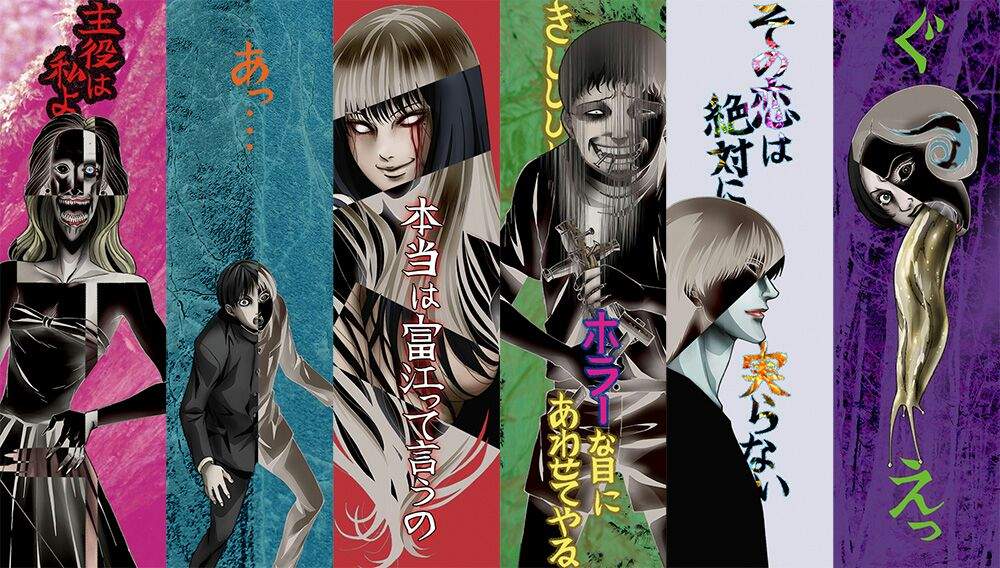
I had been prepared that the Junji Ito Collection, after the initial excitement running up to its January 2018 premier from Junji Ito fans like myself, that enthusiasm had started to drain away, finishing with a lot of disappointed viewers, one YouTube video describing how bad the series is compared to Ito's original manga, and a general air of this being one of the biggest failures of 2018 for anime. I don't think this adaptation is the worst it could've been. I will agree with this series' detractors that, production wise, Studio Deen dropped the ball horribly in visually depicting the legendary horror author's work, but even in this state, Junji Ito's work is too good to prevent this anthology from being entertaining. As a fan of even schlocky anime horror, as long as it's actually horror and not an action story with monsters, I have a high patience with this type of episode tale, my own brand of catnip.

The problem with the Junji Ito Collection is the presentation, looking like a cheap show and with moments, having collected and read the source material that's been translated in English, where the drop in style compared to Ito's original pages does sting. I think however as much of the issue is that Junji Ito's idiosyncratic style is incredibly difficult to adapt unless you have the style and budget. It is neither that all his work is too difficult to adapt. Some of it is as with Gyo (2012), the adaptation of his robo-fish apocalyptic tale which is trashy and not helped by the look of the film even as an OVA being closer to a trashy cheaper one of yore amongst its other issues. In other cases, as with the Junji Ito Collection adapting more slow burn and less ambitious stories, there was no excuse for this.

From https://www.dreadcentral.com/wp-content/uploads/2018/01/Junji-Ito.jpg

Arguably the only adaptation which has succeeded is the live action adaptation of Uzumaki (2000), because Higuchinsky in spite of not having a proper ending, still compromising the adaptation, he purposely adapted the material into his own style. Ito is an exceptional illustrator as well as a good storyteller of bizarre and freakish events, and unfortunately in terms of adaptation, one of his trademarks is reliant on how detailed he is in his shading and etching of everything from facial expressions to the monstrosities he shows on the page. This is very difficult to animate, even in live action as was the case with Uzumaki, unable on its budget to adapt the truly surreal ending of that novel, and if you are not going to provide good OVA or theatrical level quality of production for an animated adaptation, even a healthy TV anime budget, this is going to be impossible to recreate perfectly especially in a tight schedule.

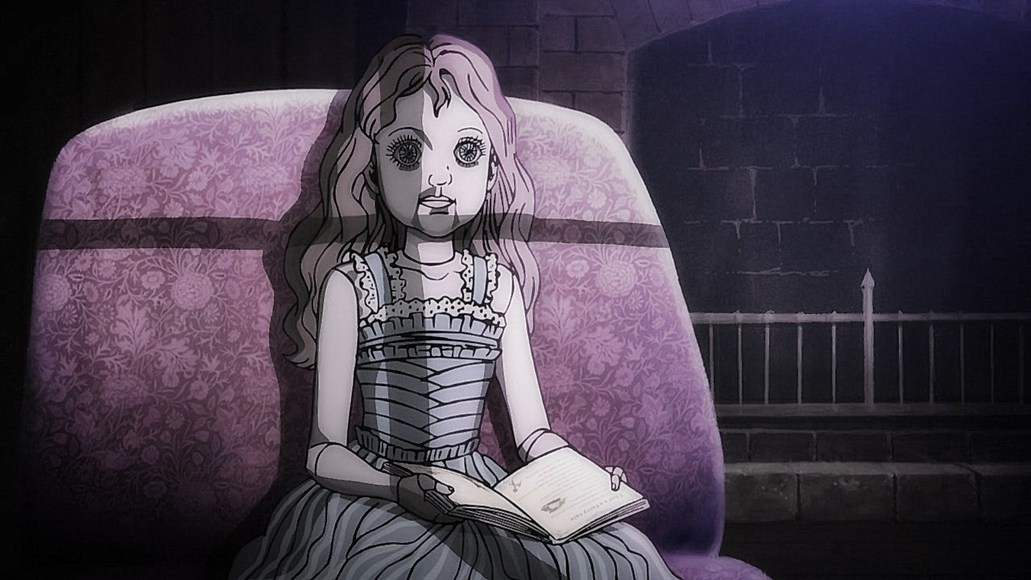
It also didn't please many that, whilst the first episode ends on a short minutes long story of a girl turning into a puppet, it is mainly devoted to a comedic story of Souichi Tsujii, a creepy boy who knows how to induce curses and hexes on his fellow school students. He is the character who appears the most in multiple episodes, even over Tomie, and is a character that hasn't to my knowledge ever been adapted into English publications, which would make this abrupt beginning in farce a jarring choice for many expecting the creepy and disturbing material Ito is most well known for. I grew to love Souichi Tsujii - a character who is lovable even though he is obnoxious and spiteful as much because he always gets his comeuppance every time he appears, the first story taken from Souichi's Diary of Curses (1997) and many others shown in this series belying that Ito has written a lot of eclectic material over his long career, only really known for us in the West through Junji Ito's Cat Diary: Yon & Mu (2009), his autobiographical book on raising cats with his wife, being released.

From https://asianmoviepulse.com/wp-content/uploads/2018/07/Juniito3.jpg

The eclectic nature of the Collection helps with the series' major flaws. When a story like Long Dream - where a patient in a hospital feels like his dreams for what can feel like days to eventually years - loses its potency due to the average art style, you are yet introduced to Smashed, a tale where a sacred nectar can only be eaten when not noticed - if you are, it's a grotesque and sickly humorous tale reminiscent to the Monty Python foot from the sky, squishing people like strawberry jam for a reason which is even more perverse when revealed. Two very sombre Ito stories appear here and they are among the best - Gentle Goodbye (available in English in the Shivers collection as Lingering Farewell) is about a family who wishes their recently deceased into copies, a story which stands strong even if seeing it in this animated version raises logic gaps in the plot twist, while Bridge is about an ill advised funeral custom of floating the recently dead under a bridge, emphasising as well Ito's really wide talent for a variety of tones. One story, Used Record, benefits from being able to hear the song on a mysterious record which causes people to go insane to try to possess it; whether the song played is actually appropriately macabre or not, it at least gives a hipster's nightmare actual sound. One other story Greased, which is entirely about the most disgusting ways Ito could talk about grease (natural in the skin or cooking oil) and even made me feel ill in this animated adaptation.

And in spite of everything, you cannot diminish the perverse imagery of Ito's work, just softening the blow enough with the production and still hooking a fan of the author's work like me regardless. Here the [Spoilers] have to be implemented to describe such nightmarish imagery such as an entire century of family continued through their brains and foreheads being connected on the next heir, or blood fruit that grows from your wounds, or the results of trying a growth serum causing a horrible elongation effect all in the midst of dealing with your doppelganger from another realm... [Spoilers End] here but that is just part of the many a horrible yet utterly imaginative thing that Ito could come up with, all of which is still grotesque even in this anime series. If anything seeing these stories, new or old material together, Ito never lost his creative juices. In fact, this anthology's one success is that the variety of Ito's world, from cosmic horror to black humour with a few morality tales thrown in-between, emphasises both his talent but also makes this one anthology work with enough different tones to never get boring. You couldn't when one episode can go from the bizarre episodes to spring up in a town when a transfer student appears, like every cliché of anime supernatural high school appearing, but also has a sombre tale of the dead being idolised by scarecrows.

From https://blogger.googleusercontent.com/img/b/R29vZ2xl/AVvXsEgwQjHbdmHsHrZoyvRznAJBbHEpFgBn7goGIRlS6ExvPAmv4XNJiHyE25UKqd4U6pazipFnE8fJ-w99M9BT3fEzCDKnXK6mxY8CVqNQjvcQ6Iy5iVvPgp9yhDICGrXks0_WRhbnpezjYGw/s1600/Junji-Ito-Collection-The-Ongoing-Tale-of-Oshikiri.jpg

The fact many of these tales, those available in the West or not in their original manga form, are not the biggest titles in Ito's career is to the Collection's advantage as well. With one exception, which is the character of Tomie, the Junji Ito Collection whilst it could've done with a lot more care in its animation and design is still a very good introduction to Ito in terms of his prolific output. Noticeably each story, always two per episode of varying lengths, is numbered but vary leaving gaps, as if this numbering is actually the real chronological order of when Ito's manga were first published. The choice in tales is enough to encourage some to take an interest in Ito's work, making this as an Ito fan still a good work to have been made. And if anything, at least the music's interesting - the opening title is good but the real standout, in front of end credits which include the figures of both tales of that episode appear together, is a fascinating and memorable little song with math rock rhythms that's wormed itself into my head.

Since it hasn't been brought up, yes Tomie is one of the stories adapted, once in the main series and with two of its tales in the OVA thirteenth episode, split into two halves strangely with the question of, if they were released separately, how much the Japanese fans were ripped off in terms of money to get those fifteen minute pieces. Tomie was one of the biggest draws in terms of promotion especially for the Western fans as Tomie is a major work in Junji Ito's career. It's also one of his best as, what could be initially a deeply misogynistic story about an evil temptress who eventually drives men to slaughter her, has a deeply complex side to it about the worst in men who obsess over her and, yes, usually kill and dismember her, only with the issue that not only does she come back to life and regenerate, but that dismembered pieces grow into their own Tomies, multiplying her over the landscape. The first story of the OVA, the first Ito ever drew, even takes the story to an entire class male or female being drawn to evil by their worst emotions. There is a potential controversy that, for an OVA, how this evil is shown is censored, obscuring what would be the most horrifying moment in the entire Collection with a disposal of a body, but there needs to be emphasis that, no matter how horrifying Ito's work can be and even gory, he has never been about splatter, not only the implied nature of the scene (with sound and dialogue) being more horrifying than drawn intestines, but actually more faithful to his source material as a result. It neither stops the final half, another Tomie story but with a reoccurring character, ending the Collection on a high if gruesome note, a head where it shouldn't be conversing with the doctors involved. That the end theme song is a one-off, a freakish electronic string piece, fits the spike the ending provides even for disappointed viewers of the series.

From https://100wordanime.files.wordpress.com/2018/03/junji10c.jpg?w=648

Altogether, I liked the Collection. In spite of the elephant in the room - that Studio Deen should've made a series with a significantly better production style if they were going to adapt Junji Ito - the material is still too rewarding despite this. As much because I lowered my expectations approaching this series, the merits outweigh the anger other fans have shown.