Sunday, 31 January 2016

#17: You're Under Arrest! - The Motion Picture (1999)

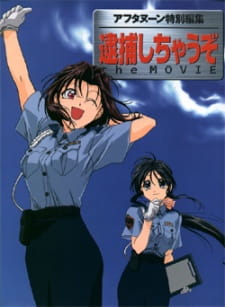
From http://cdn.myanimelist.net/images/anime/1/2134.jpg
Director: Junji Nishimura
Screenplay: Masashi Sogo and Seiji Soga
Based on the original manga by Kōsuke Fujishima
Voice Cast: Akiko Hiramatsu (as Miyuki Kobayakawa); Sakiko Tamagawa (as Natsumi Tsujimoto); Bin Shimada (as Ken Nakajima); Etsuko Kozakura (as Yoriko Nikaido); Ikuya Sawaki (as Inspector Tokuno); Issei Masamune (as Chief)
Viewed in Japanese with English Subtitles

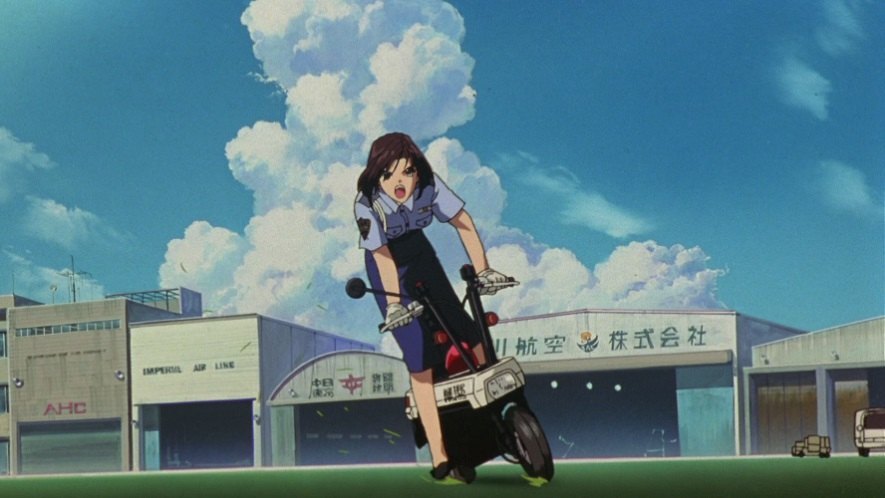
The You're Under Arrest! franchise encapsulates how a Japanese franchise is just as much, if not more, dictated by its success with its home audiences as it does Western fans. Its known in the West but it was through how well it did in its home country that, after the original 1986 to 1992 manga, there have been since 2008 four television series, one live action TV drama, straight-to-video stories and this feature films based on the antics of the Tokyo Metropolitan Police Department at the fictional Bokuto Police Precinct station. Since the manga its followed two female traffic cops. Natsumi Tsujimoto, a brash and hard-headed woman who appears at work many times with a hangover and, turning the franchise into a fantastical one, has superhuman strength with her trademark being able, without causing any permanent harm to herself barring possible shoe leather costs, to open the door of a moving vehicle she is in and, through placing her feet on the tarmac below, being able to steer/stop said vehicle as a result. Her partner Miyuki Kobayakawa is more coolheaded and collected, though her various interests including cars, computers, booby traps and firearms, both real ones and fake ones to which the later plays a major plot point for this feature film. Alongside their motley crew of colleagues and superiors, they have to tackle anything from speeding to the subject of this film, a terrorist group who start by causing traffic light malfunctions to threatening to blow up bridges, intending to actually invade the police station when knowledge is brought up of a police training scenario on disc so good that it could actually be repurposed to commit international crime.

From http://www.animeclick.it/prove/serie/YouareUnderArrest
theMovie/YouareUnderArresttheMovie4.jpg
I've seen three different pieces of the franchise including this film and I find plenty of potential in You're Under Arrest! as an entertaining franchise, something as innocuous as traffic cops a potentially fun idea. The light comedic action tone allowed, over the three entries I saw, for the stories to juggle between the film's more serious moments, as if its abruptly going to turn into Mamoru Oshii's Patlabor 2 (1993) in political subtext, to a sex comedy. The issue with the franchise however is that, while thankfully this feature film was good, the first two I saw were terrible, the length of the franchise and its presumed popularity bringing in a danger that, as long as the characters act like they are expected to, any level of quality can be accepted. This is a pulp franchise, where the characters over the three pieces I saw don't change psychologically and the plots are easy to predict in their outcomes, but this isn't an issue when that can still being imaginative and fun. The real problem is when lack of good work or storytelling is involved due to complacency. My first viewing was a series of 1999 TV mini-specials, little episodes put together on DVD which prioritised the humour more, most of it bland and suffering from the early transition from hand drawn to digitally assisted animation with atrocious 3D modelling and digitally assisted camera pans within scenes. The second was You're Under Arrest: No Mercy! (2002), where in a bizarre decision to spice up the franchise the lead heroines were inexplicably transferred to the LAPD in the US; it is exactly like the parody of spin-offs in The Simpsons episode The Simpsons Spin-Off Showcase (1997), the one within it specifically about Principal Skinner and Chief Wiggum inexplicably being detectives in New Orleans, only with Miyuki drooling over American muscle cars, the characters in skimpy bikinis on the beach, and being just as silly for only thirty minutes.
From http://www.imcdb.org/i035528.jpg
I came into this with trepidation, especially as the director of this made the mini-specials, the light and frothy nature of the franchise only over three parts already a double edged sword for me as a newcomer, where alongside being thrown into stories with the characters already established the quality could vary greatly. Thankfully, not only can you build up personalities for the characters for yourself from their quirks, but this motion feature is a bar higher in terms of quality in every way. The film's lightweight but it's still a huge leap above many anime outside the franchise for just getting a lot right. It helps, as a theatrical feature, that for a simple eighty plus minute film the animation is a high standard, making director Junji Nishimura's involvement with the mini-specials baffling but not taking away how pre-digital drawn animation had a beautiful look to it especially at this good quality. The other factor of why the film works is a personal one but one that is universal for any reader who becomes fond of an anime franchise despite the chance of entries being bad, that the characters especially the two leads of You're Under Arrest! are memorable, despite being archetypes, to the point you want to see them in more (preferably good) stories. This encapsulates a virtue of anime and manga that has been emphasised by manga writer Kazuo Koike - the writer of the original sources of Lone Wolf and Cub, Crying Freeman, Lady Snowblood and someone whose do well with this advice looking from those creations - that characters are the most important part of a story. Even less than great anime such as (blog entry #6) High School DxD (2012) have shown that no matter how lacking and dubious the stories are the characters can still be memorable, even if it's just through their designs and their charisma, to the point of wanting them to be used in better material. Even though they are simple clichés, from the police superior who is serious sometimes but would start crying if shot in the knee to the cute nerdy girl in glasses, these characters are likeable in the film, the two leads in particular managing by their own quirks to make them memorable anime protagonists that can carry a story along.

From http://pics.imcdb.org/10555/810.jpg
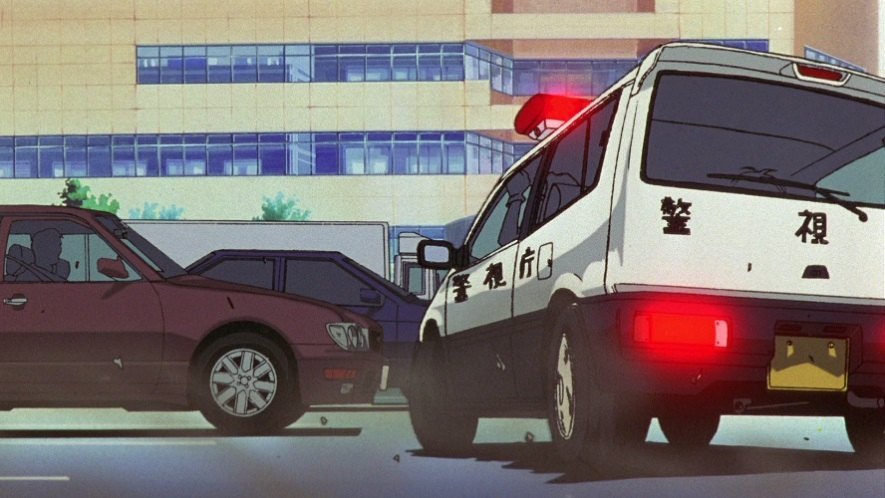
The seriousness of this entry in complete contrast to the other two I've seen was a surprise, but it thankfully isn't deathly serious which could've been mortally fatal as this isn't Patlabor II with a real depth but merely a story meant to offer thrills. Comedic characters in other parts have more seriousness here, and adds a lot to the entertainment, but the humour prevents this from becoming a slog if it failed to be a deep political drama. In fact there's a charm from how naive and light the franchise is especially when trying this serious story, where even if a bridge is blow up and the police station is threatened no one is actually killed, and the police never go as far as maiming any criminal to stop them. For one scene, the planned celebration decoration for a character for when they returned in the country proves to be a great improvised trap against an armoured grunt or two with full automatic rifle, surprisingly effective in lieu of what happens. The fact the franchise bends physics with vehicles and the strength Natsumi has means that the action scenes in these films have a movie realism that's impossible to dismiss, both the kind of spectacle of an American action film, if more sedate in tone, but also capable of ridiculous moments that can get away with what happen. There's as much a humour in witnessing a character get a perfect shot in hitting a boat from another boat with a tire as admiring how the moment itself is depicted from behind the flying tire's point of view as if flies over the body of water underneath it.

From http://image.tmdb.org/t/p/original/jsmRA0E0iKdi24sk0edB3m4h0EF.jpg
The breeziness which could be argued to make this a minor anime actually is its advantage as well, preventing the film from slogging at all in its feature length. Unlike the other two You're Under Arrest! anime I saw, this is paced well and never tedious, never weighed down with any shonky comedy or plot. That the others were short pieces is really damning of them as they didn't hold the consistency this much longer work has, and it's as much the drama being there, where a side character may have knowledge of the person causing the crime, that helps support the film by giving it a dramatic weight alongside the humour and thrills. This also makes this a great starting off point for the franchise, if you can find it, as you can quickly get the personalities of the characters because of their pulp story nature and have a well made story, in terms of animation and plotting, to begin with to introduce them. This is the template for one would hope for from You're Under Arrest!, especially for myself, even in terms of a television series within the franchise.
From http://www.imcdb.org/i035537.jpg

Friday, 22 January 2016

#16: Galerians: Rion (2002)

From http://1.fwcdn.pl/po/37/83/223783/7090428.3.jpg
Director: Masahiko Maesawa
Screenplay: Chinfa Kan
Based on the 1999 Playstation videogame
Voice Cast: Akira Ishida (as Rion); Shiho Kikuchi (as Lilia); Akira Ishida (as Cain); Kenichi Suzumura (as Rainheart); Ryoko Kinomiya (as Dorothy); Takehito Koyasu (as Birdman); Yuka Imai (as Rita)
Viewed in Japanese with English subtitles

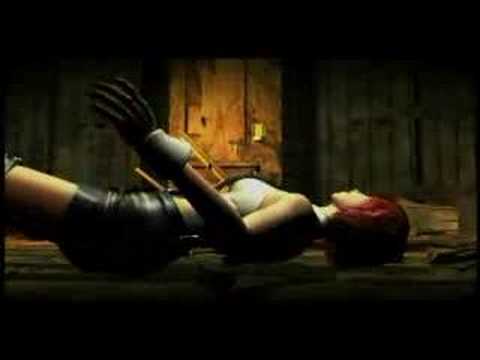
I remember a review about the original videogame. Not the most spectacular way to start a review, but back then when I used to play videogames a lot I paradoxically read more about them than actually play them. To my knowledge, and I might be sandbagged by fans of the game for saying this, it disappeared into obscurity alongside its anime adaptation, three episodes released straight-to-video and then released in the West in a truncated movie version, the later the first of many times anime's obsession with ESP in their stories will appear on the blog. Even without covering Akira (1988) or the Gundam franchise, anime (and manga for that matter) was obsessed with psychics. Probably the appeal of a teenage protagonist discovering their uniqueness helped make the trope enticing, alongside the notion of it being a good metaphor for the change a teenage goes through to become an adult. Whatever the case it also was an excuse for characters to throw objects at each other without having to lift them with their hands.

From http://www.watchcartoononline.com/thumbs/Galerians-Rion-Movie.jpg
In a dystopian city, a young teenage boy named Rion Steiner wakes up in a hospital that has been converted into a secret laboratory. A psychic, the voice of a mysterious girl in his head wakes him up, setting him off to find her, combating anyone in his way and discovering the existence of the super computer Dorothy who runs the city, learning very soon after into his new life that he is a part of a key to destroy her as other psychics are sent to dispose of him. This leads to Rion setting people alight, having to inject himself with an alarmingly diverse amount of various coloured tubes, to avoid "short circuiting" himself and to induce it to amplify his power, and in general crushing any obstacle in his way. This isn't an original plot but as other entries on this blog have shown, originality is less an issue when execution can still create a masterpiece or something entertaining. I cannot stake a claim for Galerians: Rion in this however. It's as lightweight as you can get, particularly in this case where the short length of the film version means that it lacks the detail for any of its plot points to register an emotional reaction. Anime has succeeded with shorter lengths than seventy minutes or so in entertainment but this also commits the cardinal sin of not at least making what I've described excited.

From http://photos1.blogger.com/img/36/1130/1024/PDVD_078.jpg
The really interesting part about Galerians: Rion is that it's another, if one of the last, early anime which were done with three dimensional character designs and locations. As with (entry #3) A.li.ce (1999) it was doomed to obsoletion pretty quickly because of advancing technology and how basic it was in look; even if it's a high standard with the resources it has, Galerians: Rion does show its limits even in context of its original release in its crudely simplistic locations and characters' psychic ability to float being depicted by way of not having the weight function turned on in the animation software. Released originally after Final Fantasy: The Spirits Within (2001), it was doomed next to the cutting edge, mega budget film that itself failed anyway at the box office, making Galerians: Rion's chances on video for success smaller. Released in the UK in 2005 with a new nu-metal soundtrack - Slipknot and Deftones stuck with bands like Sevendust I'd like to forget - it was further out-of-date. After 2004, in a move that is still considered ill-advised, the director of the fun anime Metal Skin Panic MADOX-01 (1988), Shinji Aramaki, decided to devote himself entirely to 3D animated works with his first Appleseed adaptation, still more advanced in appearance, whilst in 2005 was the far more success Final Fantasy: Advent Children that was also advanced in look and style with the technology. Seeing the primitives of this 3D anime is fascinating, rather than the uncanny valley of modern CGI you get instead the unreality of it, plus the factor that people like whenever they revisit the Money For Nothing video from Dire Straits. But there's still an issue about the plots and style of these works as a viewer which, unless you like to gorge of bad filmmaking, is difficult to shrug off. The reason why I like Malice@Doll (2001) from this pre-Appleseed lot is because its story is fascinating and it has a style to it that fights against the limitations, more so knowing now that like using pastels on a pencil drawing 2D hand drawn animation was used for detailed touches on the 3D character models and locations.

There is stuff that appeals to me in this anime's dated lot - many corridors set in rundown buildings and septic white labs which have a claustrophobia knowing the animators were actually limited in what they could add - but you're ultimately left with an incredibly average viewing experience with a plot put together Frankenstein-like from other, better sources. When you realise you could get more fun outside of an old Playstation videogame, for irony, for this sort of less than perfect but charming 3D animation but more entertainment, something like this is doomed. It's quite faithful to the original videogame in terms of the plot, but in anime the plot points from a super computer ruling mankind to the villains being innocents forced into being monsters has been done better in other material.The general flatness of Galerians: Rion effectively kills it's momentum from the beginning, starting off with a main male protagonist who's as blank as the scenery at points, with no threats that can viably kill him. Only his drug habit for many ESP boosting chemicals, to the point of a seller of all the drugs available to mankind makes a joke on it, seems to stand out the most even if his back-story is a tragedy of his parents dying. He's important to protecting humanity to a computer with a God complex but its the various red and blue chemical he pumps through his neck that add character, and the less about the girl he finds in her blankness the better.

From https://i.ytimg.com/vi/z-3XDio2RhI/hqdefault.jpg
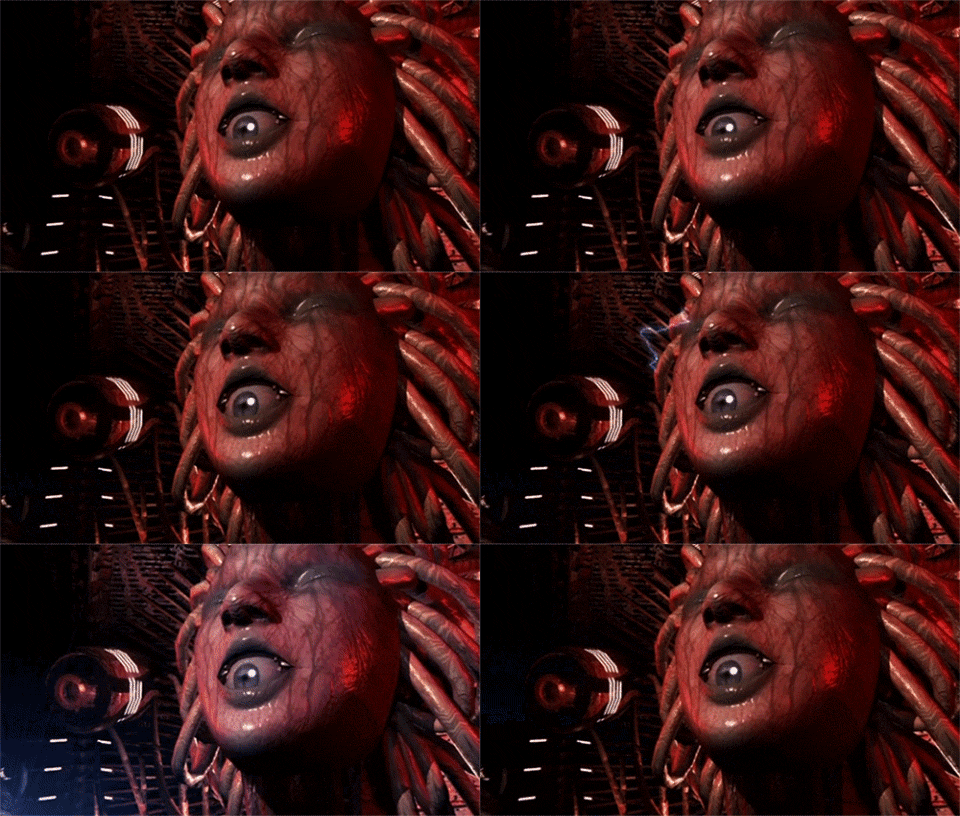
Ultimately like A.li.ce all its problems could've been overcome, even if made the exact same way, if there was a lot more personality in the content, something which the former film manages with the comedy of a spunky female android who goes through various body changes, the kind of thing you needed desperately here. Even if there were flaws in the scripts and technical qualities charisma helps greatly alongside some inspiration. Dorothy's lair inside a giant skyscraper appears way too late in the film, when it could've helped greatly, with its body horror aesthetic of birthing tubes shaped like literal wombs and Dorothy taking on the appearance of a human figure with giant, almost dreadlocked hair. Aside from this it's really only the psychic minions, her "children", who make up for the lack of personality from the heroes. The lanky, cackling Birdman and his tubby little brother who has a sociopathic and novel use of a clock, to the female member named Rita who looks like a character from a fighting game - red hair, busty figure, white tank top with suspenders and knee high boots which frankly, to be crass, could also qualify as her "fuck-me boots" in their length and style as she throws anything from tables to spoons at Rion with her telekinesis. While you couldn't sympathise with them when their tragic back stories are revelled, because little time is given to them, you can at least find them far more memorable than either male and female protagonist who you're supposed to be rooting for.

That there's none of the esoteric material you can get in these anime involving psychic powers or any supernatural/super/magical abilities is even more disappoint for me as a junky for anime's braver stabs at the unconventional and philosophical. Even if they could leave you utterly baffled with what is going on - when minds meld or people enter forth dimensions, usually with an elaborate monologue like in Akira - it's both more inventive and a lot more entertaining than with what happens in Galerians: Rion even if the preferred choice of ending risks pretentious. This does have villains in a white void confessing that they were turned into monsters due to drugs and experimentation, but in general these attempts at emotional content are non-existent without the time to set it up or anything exciting to make it all stack up. Despite my love for this kind of dated animation, after the initial viewing this does become flimsy in its quality once you beyond the original pleasures and I can't recommend it even as a curiosity piece like A.li.ce. 

Now if it had been more like this, if you forgive the use of a gif,
Galerians: Rion might've been more interesting 

(From https://45.media.tumblr.com/7ff7eac72555a837617331f1922fbb4e/
tumblr_nsq97uh2Dc1ta52dfo1_500.gif)

Tuesday, 12 January 2016

#15: Puella Magi Madoka Magica (2011)

From https://3.bp.blogspot.com
/-QFHPx_b6WMc/TlE2aTR-YJI/AAAAAAAADk0/
YMSMwrGL3Co/s1600/71W5O75ISjL._AA1349_.jpg

Director: Akiyuki Shinbo
Screenplay: Gen Urobuchi
Voice Cast: Aoi Yūki (as Madoka Kaname); Chiwa Saito (as Homura Akemi); Emiri Katō (as Kyubey); Ai Nonaka (as Kyōko Sakura); Eri Kitamura (as Sayaka Miki); Kaori Mizuhashi as Mami Tomoe and Tatsuya Kaname)
Viewed in Japanese with English Subtitles

Spoiler Warning: The paragraph explicitly dealing with major plot twists with be signposted so it can be avoided.

Madoka was an emotional rollercoaster, so to try to write about the twelve episode series is going to be difficult. It could be summed up as a deconstruction of the Magical Girl subgenre which Sailor Moon is the famous example of, where a teenage girl develops magical powers and an alternative identity to fight magical enemies, but that would be like saying Neon Genesis Evangelion (1995-6) is merely a deconstruction of the giant robot genre only. The same theme that appears in anime for decade now appears here, hope even in the worst of circumstances, even in a world that is unremittingly bleak, but what's different here is that it's through a novel, extreme concept of the magical girl stereotype character being created through a Faustian pact. Like Evangelion bringing severe emotional weight to its content, the same is found here when two fourteen year old girls, Madoka and her friend Sayaka, encounter a cute cat-like creature who says he can give them any single wish if they become magical girls and fight witches, horrible deformities of people's souls who encourage others to commit suicide and feed off this type of death.

On paper, while the suicide aspect is dark, immediately brings to mind merely a slightly more adult and serious version of Sailor Moon, at least what people think Sailor Moon is, alongside the promotional art very deceiving to me of what I was ultimately going to get. Alongside Madoka and Sayaka are Mami, a slightly older girl who takes them under her wing before they even consider becoming magical girls, Homura, an unnervingly quiet transfer student who warms Madoka continually not to become a magical girl, and Kyōko, a misanthrophic magical girl who comes later into the show who only cares for the prizes slain witches leave rather than saving lives, the only thing she cares for being the vast quantities of food she is continually munching on. I liked the first two episodes, which have a lightness to them despite the dark subject material, from the humour of Madoka's classroom teacher to scenes of her family life, her mother a huge emotional crux she continually goes to for advice throughout the series. From episode three however, when a significant tragedy happens, what I jokingly viewed as one of the most depressing anime I've seen in a while builds from this shocking and unexpected death into a drama taken to the level of cosmic implications, taking the blatant metaphor in the story of a magical girl being a teenage girl becoming an adult and, letting the complications of emotional growth and awareness that all teenagers go through, be filtered through this dark fantasy from the perspective of Madoka. As she keeps hesitating in becoming a magical girl, she bears witness to the psychological trauma that takes place for everyone else, the magical girls and the witches not what they appear as the cute cat-mascot, Kyubey, turns out to be an alien with no concept of emotions whose purpose being the magical girls is literally described by him as cattle during an ethical argument with her. The series' message is very obvious and seen many times before, sacrifice and perseverance, but why the series does succeed is that, alongside its memorable visual style, is that it completely subverts the magical girl sub-genre and also allows unsettling implications to be written into the drama, where even the act of hope for one character can literally poison their soul and eventually turn them into a monster.

From http://static.tvtropes.org/pmwiki/pub/images/sweet-dreams_3701.jpg
Magica is, openly from me, an incredibly powerful and beautiful made series, some of plotting abrupt but the bar is significantly high in terms of scope, gut impact and what quality is there. Here in particular the importance of a great voice performance really stood out. Even if I have to rely on English subtitles, unable to speak Japanese, every central performance (all done by actresses) stands out, making sure that it doesn't just become a misery fest of crying sequences and death but with sympathetic characters you care for. Even if the show sells itself on its lush character designs, bold and colour coded character designs by Ume Aoki which are memorable, a central figure like Madoka isn't just a cute pink haired teenager put in existential hell, but through the script and performances is utterly sympathetic even if the character is one in a long line of female characters who want to help everyone and will do everything to help others, a character type that could go badly wrong and become trite if it wasn't for the quality shows like this has. The visuals are also a huge factor to the show, sumptuous but helping subvert the tropes of the magical girl. Realistic city environments are contrasted by an inspired idea of the witches, far from monsters with a conventional aesthetic, being based on innocent symbolism. Their worlds within the main characters' world, called labyrinths, can be orchestral halls or full of food, whilst the witches can be drawn with crayon or cartoonish, big eyed creatures. From a circus theme to even the bottom half a giant schoolgirl who fires panties at people, they are whimsical and potentially silly monster designs from more light hearted shows given a severity when you witness the shock in the early episodes and what they represent, innocent symbols turned into the worst of humanity, made more unsettling when the cause of how the witches are created is revealed. The show uses a lot of digital layering and experiments with various animated styles, both making something as innocuous as a cotton ball with a moustache creepy but also helping with the fantastical nature of the show. While it cannot match the symbolic and surreal qualities of another show also from this year, Kunihiko Ikuhara's Mawaru Penguindrum, they both show that, whilst I miss the style hand drawn animation gave anime, that when it's at its best computer assisted animation after the 2000s, especially now, is capable of a new fantastical quality especially when the aesthetic is as bold as both of them. Like Penguindrum, Madoka shows the best quality of this new aesthetic style in that, alongside the voice acting, it allows a good script to be fleshed out with visual stimulus adding emotional importance. I could still joke about it being the meanest anime I've seen in a while, but it's not pointlessly cruel killing off characters for the sake of it, nor absurd to the point of being stupid, instead every plight felt to be poignant as much because of the production quality.

[Spoiler Warning: Skip ahead to after the next bracket if you don't want the series spoilt]

The style of the series, especially when it commits to its cosmic interpretation of its message, is ultimately rewarding after all the agony you suffer as a viewer if you can emotionally connect to it. Strangely the series ends the same way Serial Experiments Lain (1998) in some form, Madoka when all her friends baring Homura becoming witches or dead deciding to become an omniscient deity reverse this pain and save everyone else. The willingness to take risks, like killing off a central character you immediately love in episode three or the show's ending, which still is bleak as monsters still exist but means Madoka protects all magical girls from the fates they could suffer originally, is the sort of thing I love the most in anime. Its heightened and utterly melodramatic, a style close to the ridiculous that few western animated works is willing to attempt, something which appeals to me more than being safe and grounded emotionally without the fear of a beloved character dying or becoming a monster themselves.

[Spoiler Warning Ended. Read after this bracket to avoid spoiling the story]

From https://avvesione.files.wordpress.com/2011/02/
puella_magi_madoka_magica-07-kyoko-church-puppet.jpg
In a lot of ways the series isn't really a magical girl show thought. There are action scenes, and they are of importance, but most of the story over twelve episodes is concentrated on the drama itself, most of the characters soon into the show immediately dealing with the implications of being a magical girl than stumbling upon it to their horror after time fighting witches for a few episodes. It suggests a speculative "what-if", the show perfect as it is, from someone like me as an anime fan who does like a good twenty four episode show. The series is brisk in its plotting, causing me to wonder what it would've been like to have a monster-of-the week episode or two, some more comedy or more time to spread a story that takes a month chronologically into a slower pace. Episodes for Evangelion which could've been seen as filler early on proved to add important characterisation to its cast, making what happened later on more meaningful, and while Madoka works perfectly as it is, double the episode length if done well would've still worked, more time with Madoka, Mami, Homoru, Sayaka and Kyōko as the central cast would've had just as much power as the economic plotting in the series as it stand does. The only real issue with what has been done with the series for real is that, rather than additional episodes, there are now spin-offs that capitalised on its success. Like another popular franchise Full Metal Alchemist (2003), this is a potentially troublesome issue as the story for it and Madoka were final, meaning any continuation ultimately undoes the ending people liked originally. After two compilation films of the original series, this new story Rebellion (2013) was released in Japanese cinema, causing controversy for Western fans both for undoing the series' ending and a controversial plot twist using a beloved character. Rebellion looks visually fascinating in screenshots, but again the stuff that's upset peoples makes me hesitant to view, something I have to deal with when I eventually cover it on the blog. 

From https://avvesione.files.wordpress.com/2011/04/puella_magi_madoka_
magica-11-madoka-homura-hug.jpg?w=533&h=300

Sunday, 20 December 2015

#14: Gatchaman Crowds (2013)

From https://upload.wikimedia.org/wikipedia/en/thumb/4/4c/Gatchman_
Crowds_promotional_image.jpg/230px-Gatchman_Crowds_promotional_image.jpg
Director: Kenji Nakamura
Screenplay: Kenji Sugihara, Shinsuke Onishi and Toshiya Ono
Voice Cast: Maaya Uchida (as Hajime Ichinose); Daisuke Namikawa (as Jō Hibiki); Ryota Ohsaka (as Sugune Tachibana); Aya Hirano (as Paiman); Ayumu Murase (as Rui Ninomiya); Daisuke Hosomi (as O.D); Kotori Koiwai (as Utsu-tsu); Mamoru Miyano (as Berg Katze)
Based on the Tatsunoko Productions created franchise
Viewed in Japanese with English Subtitles

Remakes and reinterpretations are common in anime. Resurrecting a classic franchise or character makes practical sense - the potential nostalgia can sell it but also a complete reinterpretation can bring an old franchise back to life for a new audience. This is only a problem for me, as it has been the case for mainstream cinema, when everything is this with no original ideas. Anime follows comics books, and characters have been resurrected in manga form too, in that it's as much to bring a franchise back to relevance or appealing to an older fan base as it is to capitalise on a brand in many of the cases I've seen. Depending on what I watch for the blog, I'll end up covering multiple versions of the same character even if they're not necessarily popular in the West - Lupin the 3rd, Sailor Moon, Cutey Honey, the Dirty Pair, Golgo 13 and an entire Japanese Justice League of heroes and anti-heroes, even the villains likely to be brought back in a fresh lick of paint for a new TV show or spin-off. Gatchaman is known in the West as Battle of the Planets, with the franchise in Japan a jewel in the crown of Tatsunoko Productions,  who've specialised in superhero characters like them alongside other genres of anime. Gatchaman Crowds is pretty radical, however, in comparison to the previous version or what you'd expect for a superhero story.

From http://vignette2.wikia.nocookie.net/scienceninjateamgatchaman/images
/0/05/Gatchaman-crowds-hajime-ichinose-gatchaman-costume.png/revision/latest?cb=20131129234130
A carefree high school girl with her head in the clouds, Hajime Ichinose, is suddenly brought into secret Gatchman organisation to become the newest member. Hilariously, the series never attempts to explain why she was chosen in this season, as if the screenplay wisely decided to excise the part of storytelling which bogs it down where it has to establish the origins of a character. Some of it is missed, as I will get into later, but in cramming all the exposition of what the Gatchamen are in the first fifteen minutes of the first episode allows it to get on with the meat of the show. All that matters is that Hajime now has a special electronic notebook which is connected directly to her consciousness, able to turn her into an armoured warrior to fight aliens. Amongst this team there are three good aliens - the warmhearted O.D., the mysterious Utsutsu Miya who is melancholic and can duplicate herself amongst other abilities, and their leader Paiman, a small alien that looks like a panda - and two fellow human beings, the civil office worker Joe Hibiki and Sugane Tachibana, a fellow high school student who is continually mortified by Hajime's behaviour. When she befriends the aliens they're supposed to be killing, to the horror of almost everyone, a real threat appears in the form of the alien Berg Katze, a flamboyant shape-shifter who intends to get humanity to destroy themselves through GALAX, an elaborate community spearheaded by Rui Ninomiya which the later intends to use to make the world a better place.

From http://2.bp.blogspot.com/-9ut29gkB7dk/UhRYzXqNolI/
AAAAAAAAIWk/t618n2E_PJo/s1600/gatchamancrowds2.png
Gatchman Crowds manages to be quite a bit different in the area of superhero storytelling, where the issue of ordinary society is given greater importance than the superhero tropes themselves. How this deals with technology is a significant factor; even in western superhero films I've seen, including self-referential works like Kick-Ass (2010), you don't get as extensive a viewpoint on technology like the web in this sort of universe like in this. GALAX, which through a game-like mentality encourages the normal public to help each other in crises and offers knowledge to the populous, is both unsettling in its all encompassing nature on people's lives but also, eventually, becomes conduit to bring humanity back into technology. The series shows however the complications of social media within the exaggerated context of superheroes and aliens, ultimately about the moral issues of taking order into one's own hands when society is far from perfect. Mobile phones, discussion forums, even YouTube become preverbal minefields where a hero can become a villain, and an attempt to inform the population of a threat has to struggle against text bubbles like those on Facebook from random bystanders insulting the people making the warning.

From http://kevo.dasaku.net/wp-content/uploads/2013/07/rubixcube.png
What could be seen as a conservative message, where every Japanese citizen becomes happy and helps each other for the sake of the nation, is complicated by the fact that the technology, like governments, can be extremely flawed and its common sense that prevails if one wants to improve the world. Problems are furthered by Rui Ninomiya given certain members of the public the access to "Crowds", the ability to protect their minds into the bodies of hulking bobble headed figures meant to help in emergency situations, both able to be used for virtue and destruction depending on the individual whims of users. Gatchaman Crowd in a light hearted work is yet about the dangers of ego and abusing power, and for all its bright colours, there's unsettling moments where suddenly a random knifing spree takes place, the evil alien responsible as much a metaphor for the worse in people as well as a truly evil and charismatic villain for boo.

From http://commiesubs.com/wp-content/uploads/2013/07/
wpid-Commie-Gatchaman-Crowds-03-CFBDF788.mkv.jpg
It's a shame this particular story is only twelve episodes long. More anime series are this length now, and while this helps avoid over padding them with non-essential fluff, this particular series while it thankfully jettisons bad clichés of the superhero genre could've been fun if it had twenty four episodes. It could've done with indulging in the monster of the week episode at least once throughout its length and allowed the Gatchaman lifestyle for Hajime to been seen in more detail. At least enough to let the characters have more screen time and let the plot, where she encourages her group to leave secrecy and name themselves to the public, to have greater meaning and adding to the mellow irony of the fact her first suggestion to do this is to go to a nursery school and entertain the children with their superhero transformations. It would've been more interesting to see Utsutsu's plight as a figure whose life saps away because of her powers, as the dialogue suggests, and to see more moments of Paiman's frustrations as team leader, only shown when he decides to get drunk and chow on snacks after running away from a battle in fear previously.  

From http://animeism.org/web/wp-content/uploads/2013/08/
Screen-shot-2013-08-23-at-12.34.58-PM.png
There are clichés however I'm thankfully, as mentioned, were axed and what is put in their place are some of the best aspects of the series. While she could come off as too perfect a person, a "Mary Sue" to quote fan fiction terminology, Hajime is refreshing as a protagonist with no dark past or anxieties like so many generic heroes and heroines. Especially for a female protagonist it's refreshing to have one who is written with a traumatic past. It's not jarring for her to never cry or feel anger, completely happy even when being goaded by the villain. It's as if the anime stock character of the airheaded female character, like Osaka from Azumanga Daioh (2002), whose head is in an entirely different reality was made the heroine and turns out to be more wiser than anyone else because of this. You'd want to date a girl like this if she existed as a real person, a nerd obsessed with note books and who goes to collage session which have every civil service leader amongst the group, and thankfully she's far from the useless moe stereotype of the cute girl or a magical pixie girl who's obnoxious in her chirpiness, instead someone who can still be blunt with a smile on her face even to the villain. Also wonderful if that this is the first explicit example of gender fluidity in anime that I'll cover. Amongst other interesting character details in other areas, you find out that Rui Ninomiya is actually a young man who dresses like a woman into Gothic Lolita clothing in public, this fact brought up casually a few times but never a distinct feature of her when it's the Faustian scenario between her and Berg Katze that's the real existential crisis. Gender and sexuality has already been fluctuated in some of the anime I've already covered, but it can be more explicit in these works even in a moment of comedy. One of the reasons I still am a fan of manga and anime is because of how it subverts various things continually including issues like this.

From http://moe-alternative.net/wp-content/uploads/2013/
09/vlcsnap-2013-09-02-00h31m50s47.jpg
Gatchaman Crowds this year got a sequel series, and by all accounts it has turned out to be just as good as this was. In terms of the visuals and animation, the first series does stand out with a distinct personality, more pronouncedly colourful in its realistic city setting than other anime, with a sense of dynamic energy to the animation even in the use of 3D models that is infectious. Everything that it manages to sneak into a breezy tone in terms of story, all the commentary on technology, is a huge factor to enjoying the series as it does manage to have a great deal of insight in-between in its light-heartedness. The only thing I can grumble about is how I would've liked more than twelve episodes for this prequel's story, that it could've melded the tradition of the classic Gatchman with this new version with ideas a plenty in its head for commentary, making its ending no longer a sudden one but one with greater bombast. Everything that stands as it is, though is exceptionally watchable. That I immensely enjoyed what there was makes my criticism of its shortness actually a paradoxical compliment, wanting a lot more of the best things. Even if it could've lead to a drop in script and animation quality, it would've been a gamble worth taking to get this story in greater depth. Instead I'll wait impatiently for the sequel to get home theatre release in the UK. 

Saturday, 28 November 2015

#13: Roujin Z (1991)

From https://animechronicleuk.files
.wordpress.com/2012/06/roujin.jpg
Director: Hiroyuki Kitakubo
Screenplay: Katsuhiro Otomo
Voice Cast: Chisa Yokoyama (as Haruko Mitsuhashi); Shinji Ogawa (as Takashi Terada); Chie Satō (as Nobuko Ohe); Kōji Tsujitani (as Mitsuru Maeda); Hikojiro Matsumura (as Kijuro Takazawa)
Viewed in Japanese with English Subtitles

From http://operationrainfall.com/wp-content/uploads/
2013/07/Roujin-Z-Screen-2.png
I'll openly admit my love for Roujin Z. The story of student nurse Haruko and her elderly client being used as a guinea pig for a nuclear powered, intelligent and multi-purpose nursing bed is one of the least conventional plots you could have for an animated feature film, even when there're still robots and explosions involved, and that's something I can immediately adore. The mark of how imaginative and playful this anime is, as were many from this era or so, is that the title is shown in a black-and-white live action scene of a hand painting it in Japanese kanji on scroll paper with a brush. For only over seventy minutes, you get a fully formed and interesting story as Haruko with her friends and a trio of elderly computer hackers attempt to rescue her client Kijuro Takazawa from the research project, only for the bed to develop an intelligence of its own, taking on the personality of its occupant's late wife and deciding to take him to the beach regardless of the police or military trying to stop her.

From http://anime-focus.com/images/2012/06/1-2.jpg
A factor revisiting the film for the blog is that I now work, while in the office, for a care organisation for the elderly. Roujin Z has not dated at all in its concerns and they have a greater emotional reference for me now because of my occupation, the bed created by the Ministry of Public Welfare to deal with the increasing grey population that needs to be cared for. Japan, as my college geography lessons taught me, has suffered from low birth rates and an increasingly aging population as medicine and technology has allowed people to live longer in first world countries. Other reading points out that many Japanese women would rather have careers than marry, with gender bias still problematic especially in the work place, the amount of births as a result effected. This theme of an aging populous is an international issue as well, as the elderly live longer in countries like my own in Britain, myself working in a care function which could provide a service even up to a whole twenty four hours for one person. Neither is the idea of a bed which feeds, exercises and washes a person, and has everything from communications and games on it obsolete now. Only that the technology has advanced so much and is considerably smaller in size differs from this film's original hypothesis and the rest can be seen as an intentional broad interpretation of the dangers of this technology if mishandled.

From http://s3.amazonaws.com/auteurs_production/
images/film/roujin-z/w448/roujin-z.jpg
Great sci-fi has three options to create something that stands out, all of which can come up in the anime I cover for the blog. Number 1, like Roujin Z you deal with real life and ask an uncomplicated "what-if" like how the future would deal with the elderly crisis; number 2, you make it as exaggerated and out-there as possible, like Osamu Dezaki's Space Adventure Cobra (1982), to the point the notion of datedness means nothing; or number 3 like Neon Genesis Evangelion (1995-6), the sci-fi tropes are there to reinterpret and bring out the most important factor, the emotions and characters, of a story. As the purveyor of number 1, Roujin Z is still relevant and the concern Haruko has of the coldness of the experimental bed feels more president in general about technology for me. It dangerous puts me close to being a luddite who yet enjoys his iPod, but my hesitance with simple small boxes which give people all their entertainment and house functions are enhanced especially by how mobile phones and the internet have effect how people interact with each other. The dangers of full dependency on single pieces of technology, especially when they're dictated by organisations, may sound paranoid but when this includes the protection and preservation of life, this takes a greater magnitude, as does the concerns of how technology can make people emotionally cold despite the paradox of it allow them to interact from afar. Especially in a care function, such as treating the elderly to the point of cleaning up bladder incontinence and potential embarrassing situations, human interaction is even more of an issue. Plus, as the Ministry of Public Welfare in this film learns when its too late, as many institutions in anime and cinema fail to realise before its too late, giving a test machine advanced biomechanical A.I. and the ability to move, in this case somehow becoming a transformer to their horror, is going to be disastrous.

From http://img11.hostingpics.net/pics/543999roujinzimage.jpg
And Roujin Z is fun mashing of sci-fi action and a comedy as well. The briskness of the film prevents it from becoming sluggish, an energy that practically gallops as the experimental bed escapes its pursuers and absorbs various objects into itself to get to its destination. The film is incredibly animated, with quite a few star names who worked on the project. Director Hiroyuki Kitakubo has already been on the blog for what was sadly his last directorial work, (blog entry #2) Blood: The Last Vampire (2000); someone with a clear talent, his filmography is very small but also very diverse, the work he would go to next a sex comedy series called Golden Boy (1995). Akira creator Katsuhiro Otomo wrote the screenplay, and the late Satoshi Kon worked as the art designer. Beyond this the film is incredibly kinetic when it fully gets going, scenes such as the bed scaling along an aerial monorail with both invention and exceptional detail to them. That this is all done for a metaphor about the treatment of the elderly is peculiar, as a military conspiracy is involved and a spider robot like a Masamune Shirow design makes an appearance, but that in itself gives the film a heart as well in its centre. The message being even more relevant now helps exceptionally, and it never conveys it with a heavy handedness, instead the humour spreading the content evenly out. From the zest of the elderly hackers, who have utter disregard to acting their age, to the doomed chivalrous attempts by a suitor of Haruko's who keeps getting frisked by the cops to save her,  the characters in the film are all memorable and add personality to the central ideas. The humanity goes as far as to include the bed itself as a character, turned by accident into a loving figure who only wants to protect the frail old man held within it. How the film manages to make its explosions and action scenes fit around such a serene and peaceful the great success of Roujin Z.

From http://www.el-mejoranime.es/web/fansub/wp-content/uploads/
2013/08/EMA-Roujin-Z-BD-Esp-Cat-Jap-720p-10-bits-C4287AE8_06.jpg

Wednesday, 18 November 2015

#12: Lensman (1984)

From http://1.bp.blogspot.com/-k-6gpDtB8AI/UyHvX9veE0I/
AAAAAAAAJoY/DQrXqiKFBic/s1600/1984+lensman+a.jpg
Directors: Kazuyuki Hirokawa and Yoshiaki Kawajiri
Screenplay: Soji Yoshikawa
Based on the novel franchise by E.E. Smith
Voice Cast: Toshio Furukawa/Kerrigan Mahan (as Kimball Kinnison); Chikao Ohtsuka/Michael McConnohie (as Peter vanBuskirk); Katsuya Kobayashi/Gregory Snegoff (as DJ Bill); Mami Koyama/Edie Mirman (as Clarissa MacDougal); Nachi Nozawa/Steve Kramer (as Worsel); Seizo Katou/Tom Wyner (as Lord Helmuth)
Viewed in (a good Streamline) English dub

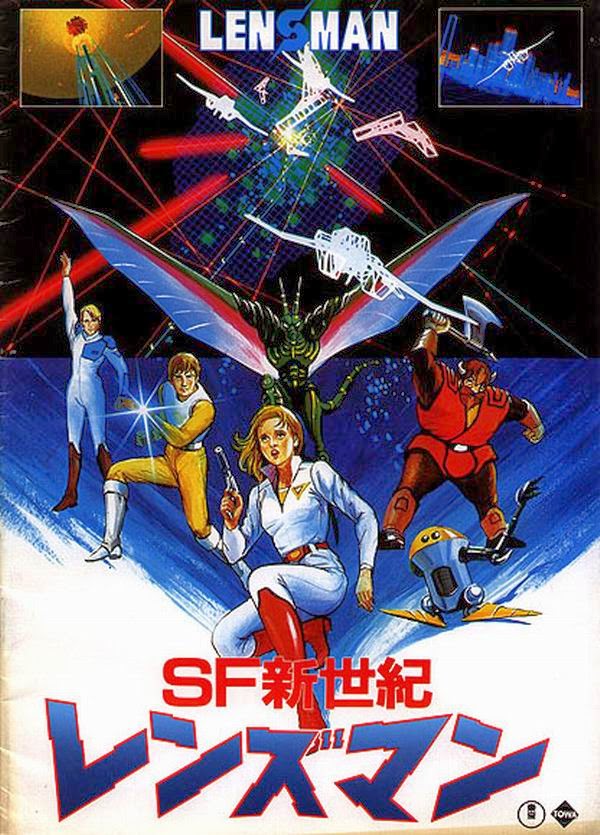
I had to cover an eighties anime. Seen as the golden age of anime, there's unfortunately a dearth of older anime in the UK that only Anime Limited and Discotek Media in the US is making amends for in a vast quantity - second hand DVDs and YouTube have had to make up for the lack of older titles for me as well as the rare release. Lensman however is a curious choice to begin the eighties on the blog however, an adaptation of a famous American sci-fi novel series that's not seen in high regard. The novels are an old statesman of sci-fi literature with a great reputation and heritage, but it's only had adaptations through anime, one this theatrical film and the other a TV series. The Lensman adaptation is about a young adolescent Kimball Kinnison becoming a Lensman by accident when a orb that imbeds itself into someone's hand transfers itself from a dying member to his after a spaceship crash on his home planet. This orb pulls him into the intergalactic organisation and embroiled in a war between the good Galactic Fleet and the evil Boskone Empire. The other aspect of this film, which is far odder, is that it's the debut of Yoshiaki Kawajiri, co-directing a film from an era before Akira (1988) that will be drastically alien to many casual anime fans, an era vastly different from the anime made after Akira, including Kawajiri's own, where you had uber-budgeted anime theatrical epics, many of which have been long out-of-print in the West.

From http://i21.photobucket.com/albums/b300/spacemonkey_fg/Blog%20Pictures%20III/Blog
%20Pictures%20III127/Lensman%201984%2012_zpsw4lnwgq0.jpg
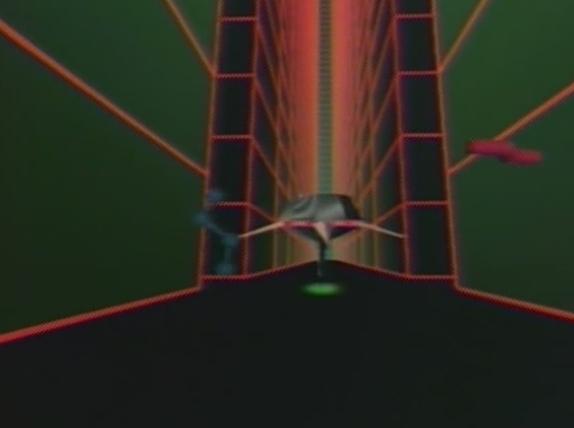
Starting with then-cutting edge 3D animation to depict spaceships fleeing a hostile environment, the Lensman adaptation is clearly indebted to the original Star Wars trilogy. This becomes a severe crutch for Lensman to hobble along on. This is far from the longest film during the pre-Akira era, when anime theatrical films could be as long as two hours and a half like with Odin (1985) or Harmageddon (1983), but it manages the paradox of barely depicting enough detail for its simple plot and also being immensely sluggish at the same time. There's not a lot of plot following Kinnison and his friend - the giant, horned Peter vanBuskirk, the frankly useless female character Clarissa and the statuesque pterodactyl  alien Worsel - baring being perused by the Boskone Empire and ending up on one of their industrial planets where a narcotic is being mined. Somehow it doesn't take advantage of what's there already to add flourishes to deepen the characters' personalities or sci-fi intrigue more. Lensman misses a lot of opportunities and considering how long and vast the back story of the original novels are, this makes the narrative confusion of David Lynch's Dune (1984) a lot more acceptable when it still tried to cram so much into its feature length. This is baffling as well considering its screenwriter Soji Yoshikawa directed and scripted the Lupin 3rd film The Secret of Mamo (1978), and if there ever was a film that could've done with that one's strangeness it'd be Lensman.

Fromhttps://thedrunkenodyssey.files.wordpress.com/2014/02/untitled-5.jpg
Unfortunately like a lot of sci-fi and fantasy, Kinnison is an incredibly bland lead. Especially as the lens which makes up the film's MacGuffin is barely dealt with, a psychic contact to a whole federation which sounds similar to the Green Lantern Core's rings in DC Comics, and the lensmen themselves are barely covered, Kinnison is as bland as you can get. Even when his father's death in the first act should start an obvious character progression, signposted by him looking out a spaceship window with a J-metal song with eighties riffs playing to emphasise the growth, he's still a non-entity afterwards. The female lead is even worse, the only female character who, despite being a medic with military training, spends most of the film screaming or in vaguely dodgy situations tangled up by furry tentacles or stretched out in tendrils. Admittedly Kawajiri's female characters can by utterly objectionable in his later films, but this somehow feels worse than someone like Kagero in Ninja Scroll (1993). The film, like many sci-fi and fantasy stories, is helped by the side characters, such as vanBuskirk as the lovable giant who is entertaining in his gentle goliath personality and prayers to give up drinking or gambling when he's in mortal danger Then there's Worsel who's part of the interesting character designs for the aliens - part hand glider, part confident gunslinger - but he does unfortunately have a name which will immediately provoke sniggers from British listeners who know of Worzel Gummidge; even if they didn't, naming your Hans Solo equivalent Worsel is still going to cause Brits to giggle because it invokes that his home planet is somewhere in Yorkshire where the spaceships are tractors and everyone is drinking cider.

From https://visocki.files.wordpress.com/2011/03/lensman_graphics4.jpg
The best part of Lensman, as can be found even in the most disappointing of works, are the visuals and animation quality. Despite the limitations of the plot and characterisation there's still a vast creativity amongst the animators and cel painters where each planet, each farm land on an alien land, even of an eighties discotheque with skyscraper sized piston light shows are lovingly created. I've yet to stumble on a bad straight-to-video or theatrical anime for this blog, and while it's still early days, only if I cover a notorious example or scrape the bottom of the barrel will either lead to a terrible mess of doodles. From the Boskone Empire's biomechanical aesthetic - their various shapes to their cancer-like, Cronenbergian spaceships - to the settings across the universe, Lensman certainly has a lot to please the eye. Even the 3D computer effects, while dated, have an immense charm. In fact, during the final confrontation with the Boskone Empire leader where Kinnison is thrown through a series of hallucinations, there's an interesting mix of a 2D character design with three dimensions that's far from a mess.

From https://i.ytimg.com/vi/KSDl_t7Lrjo/sddefault.jpg
It's just a shame how predictable and plodding Lensman is as a story. It's viewed as utterly unfaithful to the original source material, so badly that this might have affected its lack of DVD availability, and the fact the plot comes off as utter derivative and disinteresting makes the decision to have made the film as it is such a terrible idea with nearly thirty years of hindsight behind it. An anime shouldn't be stuck with a plain white meat hero fighting a generic villain, and ironically whilst the plots were still as simplistic, Kawajiri's solo work including more charismatic heroes and a series of bizarre adversaries, as if subconsciously he learnt from the mistakes here for his career. As Kawajiri's debut, this is merely a curiosity when his (usually) gorier and darker material later kept the animation quality but followed his more trademark peculiarities for better results. 

Monday, 9 November 2015

#11: Cyber City Oedo 808 (1990)

Fromhttp://undergroundanimation.com/wp-content/
uploads/2013/03/cyber-city-oedo-8081.jpg
Director: Yoshiaki Kawajiri
Screenplay: Akinori Endo
Based on an Original Idea
Voice Cast: Hiroya Ishimaru (as Shunsuke Sengoku); Kaneto Shiozawa (as Merrill "Benten" Yanagawa); Tesshô Genda (as Rikiya "Goggles" Gabimaru); Emi Shinohara (as Remi Masuda); Kyousei Tsukui (as Versus); Mitsuko Horie (as Kyōko "Okyō" Jōnouchi); Norio Wakamoto (as Juzo Hasegawa)
Viewed in Japanese with English Subtitles

With this, Yoshiaki Kawajiri debuts on this blog, a director who had immense cult fame in the West when works like Ninja Scroll (1993) were released through companies like Manga Entertainment, a household name to the point he's been hired on many US-Japanese co-productions such as The Animatrix (2003) to Highlander: The Search For Vengeance (2007). Unfortunately after 2008, though he works on productions frequently, he's never been back in the director's seat and a proposed sequel to Ninja Scroll is merely a half-whispered rumour baring a 2012 teaser trailer. The sight of his most well known protagonist fighting a female assassin who fights with razor sharp origami cranes, riding a giant one, amongst other colourful faces causes anime fans like myself to pine from his absence. Quite a few of the blog entries so far have lamented the death of straight-of-video animation from decades before, and it feels like he was a casualty of it. The drastic shift in audience and marketable preferences has also more than likely caused problems - whilst there are potential exceptions in his CV like Birdy The Mighty (1996), he was obsessed with adults, usually tough and cocky men, in something very ultraviolent works which veered sometimes into the transgressive and body horror related. Violent anime and anime which breaks from the conventions of cute schoolgirls are still being made, but not as frequently, and unfortunately this means something like Cyber City Oedo 808 feels like a creation from another time period.

From https://classicanimeblog.files.wordpress.com/2014/02/
cyber-city-oedo-808-episode-1-2.png
Cyber City Oedo is set in another dystopian city, Oedo (Tokyo), thus enforcing how much anime staff were obsessed at one point, and still are, with seeing the worse in their futures, were crime is rife and only a tougher, unpredictable choice of law enforcement is required. It isn't just an obvious metaphor now watching so many sci-fi anime like this but an entire spectrum feeding off cyberpunk or at least the notion that everything with be noir-like and blue hued in the future to match blog entry #7) Twilight of the Dark Master (1997). Riffing on Japanese history where the anti-heroes all have jitte, a weapon Edo period police had as a symbol of their position, it's been decided to reduce multiple life sentences for certain criminals if they're willing to repay for their crimes through catching other criminals. An explosive neck collar operated by their boss' lighter à la Battle Royale (2000) is the insurance policy in case any of them decide to try and con the superiors.

From https://classicanimeblog.files.wordpress.com/2014
/02/cyber-city-oedo-808-episode-1-8.png
Split into three parts, each episode specifically follows one individual character. There's the cocky Shunsuke Sengoku - pompadour, red coat, gets years onto his sentence because he doesn't follow orders - a template character for Kawajiri that especially predates Jubei in Ninja Scroll. Rikiya "Goggles" Gabimaru - orange mohawk, slightly older, a cyber hacker - a character you don't see in lead roles in anime anymore. And Merrill "Benten" Yanagawa - originally a female character design changed to a male bishonen, with long red nails and feminine features, giant white hair, pursuant to white suits - who follows the archetype of the quiet and wise individual who also uses monofilament wire straight from the short story Johnny Mnemonic. The plots for the three episodes are very basic, very action orientated with a lot of various tones and genre tropes mashed together. The first follows an act of cyber terrorism on a space scraper, a sky scraper so high its top pierces the atmosphere into outer space, by someone presumed to be already dead. The second follows a corrupt military project involving psychic test subjects in armoured suits, as problematic an idea for police enforcement as an ED-209 would if the test of targeting Goggles succeeds or not. The finale one deals with vampires, not the last time Kawajiri mixes them with sci-fi, as he'd make Vampire Hunter D: Bloodlust (2000), and the beginning on the blog of the strange obsession anime has with vampires being from outer space or being in science fiction settings.

From https://absurdandobscure.files.wordpress.com
/2008/02/cyber-city-oedo-808-ep-2-01.jpg
A lot of whether Kawajiri appeals to you or not depends if you can accept the inherent absurdity of his work even when he's deathly serious. Many of his creations adaptations, are about men fighting other men with henchmen with elaborate physical differences or weapons, from a man with a bee hive growing out of his back or the various body horror content of Wicked City (1987).  The stack has to be put up against the lead, and for Kawajiri this includes setting off a series of strange and colourful antagonists against them. Almost every Kawajiri protagonist, including all three here, have to be impaled in the gut by a villain, and many have to a moment where they overcome a task battered and almost dead. Here, during a search of a cryogenic storage area for the terminally ill in an outer orbit space station, when there's a possibility of a vampire terrorising the Earth below killing black-market biological researchers, a character cannot just fight guards here but cybernetic, laser breathing sabre tooth tigers which come out from a few of the containers. The spacescraper, who's gyroscope would have to be physically impractical to keep it in balance, is not just being hacked to get at one person, but is part of a plan involving both having hostages in an escalator, including a young female employee with a crush on Sengoku, but also activating a satellite cannon to hit the building itself if need be. Cyber City Oedo's advantage if you can accept this is that this pulp sensibility means that there's an entertaining unpredictability and creativity to the content. Kawajiri's work can be very episodic or divided by different obstacles to defeat with a simple plot to follow, so instead it's how the stories play out that's the concern with him..

From http://torfilm.ru/i/s2/07/8/27/72dc989ae592d1acd65e053a450f46c7.jpg
In this context, this seriousness to the material alongside both an unintentional and intentional absurdity is what makes Cyber City Oedo entertaining. The characters, all three protagonists, are stoic or have a tendency to make sarcastic jokes, which doesn't come off as bland due to the exaggerated character designs and how they're all depicted. This particular entry also has the scene stealing side character of Versus, a mobile robot used in the police service to help the anti-heroes, a box on wheels that unintentionally retorts to comments with sarcasm just by pointing out the illogical comments the  humans make. The episodes like many of Kawajiri's films and other project are colourful in the side characters and minor bystanders they have, from a blonde mulleted, one white paint leg wearing female assassin to a skeleton connected to a computer still able to terrorise people.

From http://torfilm.ru/i/s2/07/8/27/96a17b7ecc855e7792f4693a61d74394.jpg
I cannot comment on a Kawajiri production without mentioning his character designs, which are incredibly recognisable to the point a certain anime fan, if you put a screenshot of his work in front of them, may instantly recognise its his work. Even when he's not the character designer in the credits, even a production like Highlander: The Search of Vengeance takes a page from his character design style. Prominent facial features, realism in the character designs even for the most exaggerated and fantastical, a loving care for body shape and physical appearance. It's not a surprise that Takeshi Koike, the director of Redline (2009), is his protégée as the obsession over character design is also there. Koike also took the influence of immaculate animation design in general as what cannot also be argued against is that his mentor's work, including Cyber City Oedo, was also exceptionally well animated and good looking. The dystopia here is animated with such loving detail by Madhouse that one wonders if a loving obsession with futuristic turmoil is visible in such anime. This is far from the grimiest depiction, actually quite bright and poppy at points comapred to the bleakness of A.D. Police Files (1990), but but especially with the final episode you have moments of Kawajiri's baroque sensibilities, suddenly the finale turning into gothic sci-fi with a cryogenic mortuary that's elaborately sculpted and a mood to the work in general that singles him out as being unique.

From http://40.media.tumblr.com/d4727f4c2ffa39fa52a3f080aa9
fae62/tumblr_nrgsfpoGb31re6nxeo4_1280.png
Even with a grimmer film like Ninja Scroll, in terms of gore and shocking content, there is this balance between humour to seriousness that populates Kawajiri's work, but here in particularly it works immensely, helped especially as all three protagonists appear in all three episodes with merely who gets central attention changing. Hopefully Cyber City Oedo will get a reappraisal one day, as it manages to pack a lot of invention into itself even if its stories are very predictable in what happens. That's not the point of it, and instead one finds entertainment in the fact that, no, I wasn't lying about the cybernetic, laser breathing sabre tooth tigers and they were depicted in all their ridiculous glory amongst other things in this specific anime.