Saturday, 26 March 2016

#21: Elfen Lied (2004)

From http://stuffpoint.com/elfen-lied/image
/104515-elfen-lied-elfen-lied-cover-art.jpg
Director: Mamoru Kanbe
Screenplay: Takao Yoshioka
Based on a manga by Lynn Okamoto
Voice Cast: Chihiro Suzuki (as Kouta); Sanae Kobayashi (as Lucy / Nyuu); Emiko Hagiwara (as Mayu); Hiroaki Hirata (as Professor Kakuzawa Yu); Mamiko Noto (as Yuka); Maria Yamamoto (as Kanae); Yuki Matsuoka (as Nana)
Viewed in Japanese with English Subtitles

Out of all the anime I admire greatly, Elfen Lied is the most compellingly flawed. Out of its thirteen television episodes, and an additional one released straight-to-video later, its virtues are as much amplified by its strange production decisions as they exist in spite of them. It's a series that regardless of its weird tonal shifts manages to tap into a nihilistic teenage angst that is sincerely dark, rather than the cliché of the moody teenage angst other anime fail with. It's as appropriately ugly and messy as the emotions one feels as a young adult as much because of its strange decisions as well as the plot, tapping into something more visceral as a result. The series is still available today whilst other more famous ones have been out of print, both for its infamy through its gore but clearly because it touched viewers emotionally. Particularly, what was once clearly made for Japanese male otaku became more twisted and emotionally razored as its developed a fan base, which you can see just from looking on Deviant Art showing this hit something personal despite its erratic qualities.

In an alternative modern Japan, young girls are being born as Diclonius - genetic mutants with natural pink hair, natural pink/red eyes, two small horns growing out of their heads and vectors, usually four invisible arms alongside their own, the result of a enlarged pineal gland, which can both move objects but can also slice through any objects including flesh and bond with ease. Diclonius are seen as a threat to humanity, killed at birth or locked up to be experimented on by a secret government organisation, who can only reproduce by infecting males with the touch of their vectors and are viewed as an evolutionary stage meant to replace mankind, mostly sociopathic and even capable of murdering their parents from the age of being  a toddler in the eyes of those trying to stop them. One of the most dangerous, the "Queen Bee" who can reproduce normally and may be the origins of the Diclonius, is Lucy, a young woman who escapes confinement in the first episode in a gruesome manner. A sniper manages to hit her in the head before she flees, the trauma causing Lucy to become dormant and a new personality to take over, a child like savant completely unable to look after herself found on the beach by cousins Kouta and Yuka. Dubbed Nyuu, from the only word she can say at first, she is taken in at Kouta's new home, a former restaurant, leading to her meeting various people, and opening up many traumas and anxieties of all those involved as Lucy is still within her sub-consciousness. Kouta's amnesia especially of the death of his little sister and father, Yuka's unrequited love for him, and Lucy's conflict as a Diclonius and as traumatised young woman, all the while the scientists who had her captive use anything from psychotic soldier to her own kind to find her.

From http://i231.photobucket.com/albums/ee210/
angeltakesflight07/Elfen%20Lied/elfenlieddvd1cap006.jpg
Elfen Lied is laced, intoxicated, with very exaggerated melodrama. Everything is fraught with emotions unsaid, building up as new characters converge at the home and bring their own baggage - a young runaway called Mayu and Nana, a Diclonius sent after Lucy who is mutilated by her and had to blindly stumble into the world naively as a member of this mutation who is alien to the destructive desires of her kind and only cares to be enjoy life. This emotions, where there is an average of one scene of crying in each episode at points, are exaggerated further by the extremes of the content, warning you as a viewer what to expect when the first ten minutes of the first episode is a barrage of dismemberments and gore as Lucy escapes a government lab. This is capped by a clear message of intent as a clumsy young female secretary, cute in her habit of tripping over her feet and a likely protagonist for another anime, has her head popped off by invisible hands like a coke bottle lid in one of many moments where stereotypes of cuteness and sweetness get mangled in the series. It's amazing, based on the age ratings set in stone in Britain, that Elfen Lied has always been acceptable for fifteen year olds to see and buy. Not only is there extreme levels of gore, harkening back to the infamous examples of gory anime from the nineties, and a lot of nudity but there are some incredibly dark themes brought up throughout the narrative. Some of it could only be acceptable to depict visually animated, the Diclonius viewed as monsters yet, despite Lucy happily killing people depending on her mood, the scientists more than capable of torturing and experimenting on them even when they're children.

While its heavy handed in places, one of the most interesting creative decisions for the anime is that, even if someone like Lucy is sociopathic and murders innocent people, human beings barring sympathetic characters are actually worse than the Diclonius; the officials use their polite digression and view that they'll save mankind to hide acts of violence in the name of scientific study, like firing giant steel balls at a chained up Diclonius, adults commit sexual child abuse and even children will harm a small animal to torment a peer. An obvious idea, but alongside the possible humanity still left in Lucy as the Nyuu side blurs with her own, the idea that it may be for the better if mankind was violently replaced by Diclonius rears its head frequently even if there are human characters capable of only kindness like Mayu. This in itself probably explains the popularity of this series as I brought up in the first paragraph - adolescence angst taken on a wider scale, nihilism and hope confused with exaggeration an important part of that depiction. Alongside Lucy's back-story, there is a theme of trauma as its clear many of the Diclonius are the result of neglect, emotional and physical abuse or isolation from birth, the monsters firmly created by their apparent victims treating them like freaks. That most of the Diclonius are female and the scientists mostly male, even if it was unintentional, cannot help but bring up a theme of misogyny, as I cannot help find it blend into a theme of nature versus civilisation from the horns the Diclonius have, evoking pagan gods and vengeful natural spirits. The series, while light in tone in spots with comedy, is unbelievable grim at points as a result, comparable to (entry #15) Puella Magi Madoka Magica (2011) only with a bipolar tone and a cavalcade of decapitated heads and ketchup gore.

From http://i.imgur.com/Q90ZEhC.png
The bipolar nature of Elfen Lied is as much an added personality to the show's tone as much as it is a distraction. It suffers from a problem like many anime of it being completed when the original manga had yet to be finished, but contrary to how I first saw it, it's not as jarring in how it ends, still having a smaller and sufficient emotional one that does work as a close even if there's a lot of loose ends left. The cutting between events in the middle of scenes back-and-forth is an interesting editing style which does cause a varying emotional reaction, clearly deliberate in places even though it does lead to one moment where day and night apparently switch between each other. Character behaviour, adding to the hyper melodramatic tone, flips within the same scene, though it is possible to imagine its closer to a theatrical acting performance cycling between emotions than the leisured tones of other stories. Some continuity errors stick out and the decision in the last episode to recycle parts of Lucy's childhood back-story does come off as cheap padding.

The area where the series both has its best and worst aspects is in the work of screenwriter and series composer Takao Yoshioka. He does an admirable job with the story but significantly,  his work includes (entry #6) High School DxD (2012) and the Ikki Tousen series alongside other works with heavy amounts of fan service, not pop culture references but "fan service" in terms of nudity and sexuality, and this series shows his other work's trademarks including as a detriment. Some of it is appropriately unsettling, discretion or the act of purposely creeping out the viewer taking place as the Diclonius are treated less than experimental lab rats. Some however is pure titillation and, like with other anime with underage characters, its discomforting especially when there's a difference between tackling the awkward passions the characters would have around each other, even as a comedy moment, and just being tasteless. Particularly with Nyuu, a child savant who is yet a grown young woman, some of this is inexplicable when she starts to be able to interact with more than one word and starts behaving in odd ways along this way. Some of it works as fittingly weird - an act of dry humping, which she is perfectly with as Kouta is frozen stiff mortified during it, reminds one of a scene Lars von Trier could've added to The Idiots (1998), but having her gropes Yuka at one point for a joke is just dumb. Thankfully this isn't High School DxD but the traits Takao Yoshioka likely emphasised in that series can be found in brief flashes here. A dream involving "naked crucifixion" with sentient yen money possessing limbs and waving burning torches is as mad as a box of frogs and was probably written by one of the amphibian occupants within said box. Cumbersome attempts at humour usually in the sex comedy vibe, while some of it works, are probably the biggest potential hindrance to viewers even above the misanthropy and gore. It's both absolutely distracting and yet, depending on one's reactions, fittingly bizarre for such manic material, the whole barrel of hormones soaked into a story fitting for its young adult and teenage cast, even ones with pink hair and horns, alongside the trauma and depression, as appropriately in poor taste as it is good taste rather than sabotaging the entirety of the series.

From https://s-media-cache-ak0.pinimg.com/736x/
51/2a/41/512a416b3b659f03bc125694e5497516.jpg

In defence of Elfen Lied's tone, it knows when to be serious. As much of this is in the presentation as well as the script, and just from the opening credits one is brought into a series, despite its haphazard nature, this is going to do its best to be earnest and thoughtful. While it may seem sacrilegious, recreating the paintings of Austrian painter Gustav Klimt with the characters - The Kiss (1907-8), Portrait of Adele Bloch-Bauer I (1907) etc. - is incredibly effecting and appropriate, all the paintings referenced from Klimt's famous Golden Period which were very sensual, erotic but in cases melancholic. The titular "Elfen Lied" is a German poem, a music box version playing an important part as a plot point. Visually the series proper is the standard of digitally assisted, brightly coloured animation of the early 2000s, bolstered by its story and gruesomeness, thankfully as far away from digitally assisted camera pans and CGI vehicles as possible. Musically the series is helped immensely; baring a mandatory cutesy pop song on the end credit and surprising use of drum 'n' bass, most of the score is also coral like the opening theme and ethereal, adding greatly to the show's tone. In general, while it can be a haphazard thirteen episodes - the bonus episode trying to add more to Lucy's back-story using a subplot from the manga but jarring against her emotional trajectory at the point its set, thus making it useless - but what had kept me going back to Elfen Lied, and more than happy to defend it here, is this concoction of emotions that still feels rawer than a lot of anime, as messy as the themes its depicting and causing one to feel as messed up by the end of it as the characters themselves. It's an anime that does punch you in the gut and I access its mistakes as part of its personality, making it far more meaningful as a result.

Tuesday, 8 March 2016

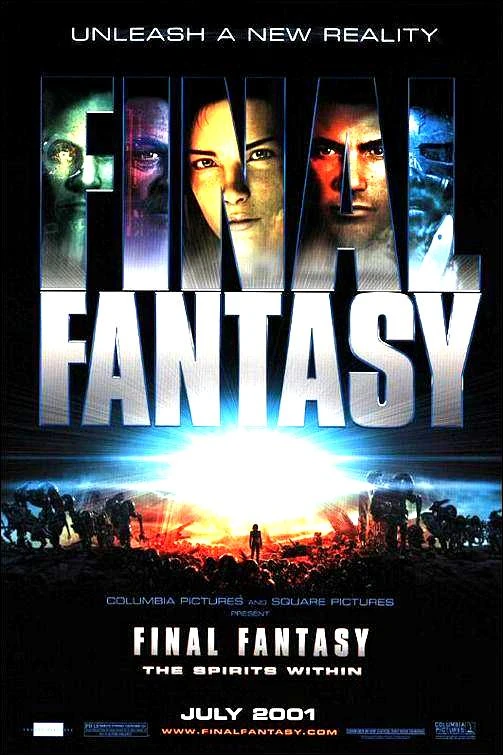
#20: Final Fantasy - The Spirits Within (2001)

From http://vignette2.wikia.nocookie.net/finalfantasy/images/4/
4a/FFTSWPoster.jpg/revision/latest?cb=20130405010722
Director: Hironobu Sakaguchi
Screenplay: Al Reinert and Jeff Vintar
Inspired by the videogame series produced by Square Enix
Voice Cast: Ming-Na Wen (as Doctor Aki Ross); Alec Baldwin (as Captain Gray Edwards); Ving Rhames (as Ryan); Steve Buscemi (as Neil); Peri Gilpin (as Jane); Donald Sutherland (as Dr. Sid); James Woods (as General Hein)
Viewed with English Dub

Over the last twenty reviews there's been an inexplicable build-up towards a review of Final Fantasy: The Spirits Within, a spin-off adaptation of the legendary RPG videogame franchise. A US-Japan co-production, it would be the only feature film made by Square Enix's film department Square Pictures before the box office failure of this film collapsed them,  only to be heard again one last time to contribute to The Animatrix (2003), an anthology tribute to The Matrix's clear anime influences. The first anime film which used three dimensional character designs and landscapes was (entry #3) A.LI.CE (1999), a brave experiment but less than the sun of its parts, whilst many films and straight-to-video works that would come after it of the same ilk would become doomed  by the hype that surrounded this big blockbuster. The likes of A.LI.CE, Malice@Doll (2001)  and (entry #16) Galerians: Rion (2002) would become immediately obsolete in comparison to this film and its than state-of-the-art and realistic character designs and budget. The hype, that I remember still to this day growing up when this film was supposed to mean something, was huge, the scope of it meant to revolutionise this type of filmmaking. Like many of hyped blockbuster before it actually gets released, the future is reaped with irony. What might've been a warning sign that this hype might've been a bit silly, if I was an adult back then, was that like anime heroines and fictitious female characters from games like Lara Croft, there was already a cheesecake shot of Professor Aki Ross, who in the film is a meek and sombre woman who is more interested in gathering plants and animals to save the Earth, in a bikini before there was proof that she'd be remembered as an iconic character. There were plans for the character design to be a reoccurring actress in more animated films like one of Osamu Tezuka's favourite roll call of characters who'd appear in multiple roles in different manga of his.

From http://theredlist.com/media/database/graphisme/3d/3d_begginings/final_fantasy_creatures
_de_lesprit/021_final_fantasy_creatures_de_lesprit_theredlist.jpg
Then it failed at the box office. With fifteen years of hindsight, it was an admirable and important push for realism and scope that shouldn't be ignored. The idea that it would lead to actors being replaced with computer generated people however is utterly comical and ironically, based around the destruction of humanity by ghost-like aliens who can literally pull the life-essence from people, the last surviving humans living in closed-off cities, it was like many videogames used to promote new graphics first than plot that's dated greatly as technology improved. Now it's as dated as a work like A.LI.CE; whilst it's still technically superior than many anime that use three-dimensional designs, its shown its age compared to how this computer animation would greatly improve over the decade in large budget cinema, and without a distinct look that wouldn't have aged it shows cracks in the sheen. You can see how few actual characters and environments there are, even a massively expensive and bold project like this limited by the practicalities of the technology, able to make realistic looking characters but not able to be ridiculously expansive in the mythology of its world. Baring the main cast, you mostly have soldiers who wear the same masks or faceless civilians, whilst locations are wasteland, an empty wasteland city and corridors only. Exactly like Galerians: Rion but on a significantly bigger budget, to fill in more detail would've cost prohibitive and more time consuming than it already would've been.

From http://i1.2pcdn.com/node14/image/article/
201506/01/20150601051532a0e40c55bwizczwv.jpg
The area which hasn't aged, and is the main draw now, is the non-human entities which populate the film; non-human characters are less problematic in animation, and not surprisingly for a work based on Final Fantasy, they're inventive from malformed humanoid grunts, flying snake dragons and strange monolithic entities with tendrils and spiders' legs straight from HP Lovecraft fan art. The bright idea to make the aliens orange and the life-force of Earth blue, the later to be collected by the heroes as a final way to end the alien threat, also helps in preventing the grey and golden brown post-apocalyptic environments from becoming drab, adding some aesthetic distinction to the proceedings. Particularly now when, for the hard work on them, the human cast shown the limits of the time badly now, these designs make up for the beginnings of trying to create realistic human beings onscreen. A lot of lavish care was put on the female lead Aki with her freckled, meek look but the rest of the cast particularly the males are as generic as you can get in this day and age. The worst offender, for example, being the main villain General Hein with permanently sinister brow line, frozen in maliciousness in his desire to use his giant space laser on the aliens by any means necessary and signposted as bad from the facial deformity before you recognise James Wood is voicing him.

From http://cineplex.media.baselineresearch.com
/images/305294/305294_full.jpg
As for the plot, this is where the film was ultimately doomed. One could immediately go to the mythology and blame it as esoteric gobbledegook - that the heroes, including the heroine and soldiers lead by an old flame, need to tap into the life-force of Gaea, Earth as a living entity, found in anything from plants to soldiers' bio-battery packs, to protect themselves from what are actual alien ghosts with no consciousness of their violence, restless and destructive - but that's the interesting part of the film that's barely dealt with. These parts are the clear influence of this being a part-Japanese production as this is the type of storytelling you find in many anime - like the failed, but admirable, attempt to make Hein and his scowling frown a more complicated character, with a moral reason behind his malice, these are admirable attempts at bringing greyness and a more interesting depth even for an action sci-fi film. The problem I'd squarely blame on the US side of the co-production, adapting the film for a Western audience. As much as a film from Japan could be just as terrible as one from the US if the script is poor, the problem exactly is an irksome tendency prevalent in American cinema, one still plaguing current blockbusters, where there's a common and over repeated through line for the plot, the repetition of the hero's journey plot with the same character archetypes and, worse, a stagnated and marketed version of the phrase "believing in yourself" rather than letting the viewers think this for themselves. When I now spot these habits, I have a Pavlovian reaction suspecting a film's going to immediately collapse in quality even after the first ten minutes.

From http://1.bp.blogspot.com/-xi59pyCjgM8/UcDf5Zy415I/AAAAAAAAI8E/
x9UPLSqEbJU/s1600/finalfantasyphantom.jpg
The interesting ideas that the film had eventually become complicit in its failure, making the obsession with Gaea theory and life force padding on the rotten structure. The characters are so generic and provided with such bad dialogue that, considering the calibre of some of the voice actors for the English dub, it becomes worse. Steve Buscemi has made a name for himself, as well as being a great character actor, for being the comedic sidekick too, the one here without any decent jokes. Ving Rhames is stuck in the background, James Wood is the aforementioned villain only defined for most of his screen time by a menacing brow, and inexplicably its Alec Baldwin who's the romantic love interest, as bland as white bread military captain Aki loves, when he should have literal brass balls in his hand as he does in Glengarry Glen Ross (1992). Slight desperation can even be found in the tough female solder (clearly copying Pvt. Vasquez from Aliens (1986) without the charisma or anything to differentiate that archetype from this version. Probably the worst thing is that, given a leading voice role for something she immediately wanted to make, Ming-Na Wen as Aki Ross, in a curious career that includes The Joy Luck Club (1993) to playing Chung-Li in Street Fighter (1994) to Mulan (1998) and voice acting, is stuck with a film around her that lets down the chance to get centre stage.

From https://galacticpillow.files.wordpress.com/
2001/07/final-fantasy-the-spirits-within_02.jpg
I had hoped to write about a folly, possibly one with virtues to redeem it or at least memorable as a box office bomb and in context of all the other three dimensional anime that faded into obscurity because of it. What I've ended up with however is a casebook example of the many flaws with English language plot writing for mainstream films.  This is not like a Battlefield Earth (2000) in collapsing spectacularly, or in context of anime a compelling example of ambition crashing and burning at the box office like Odin: Photon Space Starlight (1985), but a bland, lifeless movie that has thankfully disappeared into obscurity baring its innovation in CGI. I sadly couldn't come to this as a fan of the original games, haven't never played a whole of one, but as a videogame adaptation, as tentative a one as possible, this is the sort of thing that'd crush a fan's heart if they went to see it on its original cinema release. In general it would've been a worse sensation for a devoted fan as, with the exception of Final Fantasy: Advent Children (2005), which was a direct sequel to one of the most loved games of the series, the anime adaptations of Final Fantasy have been infamous for their lack of quality. The Spirits Within would probably be the most painful to sit through, with those other adaptations all possible to cover depending on their accessibility to me, due to the expectation and budget behind it, collapsing like many videogame adaptations have. It ends with a shot of a valley with a dreary, Lord of the Rings-light ballad, one that finishes it appropriately with a deathly wheezing. 

Monday, 22 February 2016

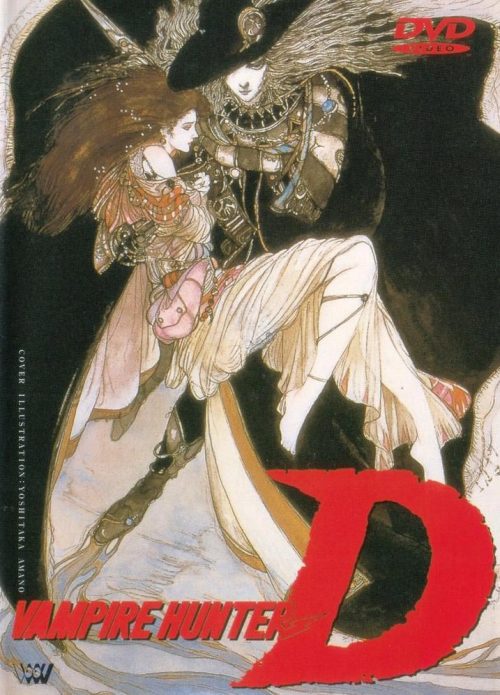
#19: Vampire Hunter D (1985)

From https://41.media.tumblr.com/c2a3162baa311844f2b7d7
c070267079/tumblr_nn6dycyAiD1spaq6ho1_500.jpg
Director: Toyoo Ashida
Screenplay: Yasushi Hirano
Based on the light novels by Hideyuki Kikuchi
Cast: Kaneto Shiozawa/Michael McConnohie (as D); Michie Tomizawa/Barbara Goodson (as Doris Lang); Satoko Kitô/Edie Mirman (as Lamika); Seizo Katou/Jeff Winkless (as Count Magnus Lee); Ichirô Nagai (as Left Hand); Kazuyuki Sogabe/Kerrigan Mahan (as Rei Ginsei)
Watched with English Dub

From http://static1.squarespace.com/static/5138a6d4e4b0908a3a990080/t/
52e435e7e4b0eeee546814ba/1390687722352/vampire-hunter-d-conde-magnus-lee.jpg
Having only known of Vampire Hunter D through its two animated adaptations, the one I'm covering today and the more critically acclaimed follow up from 2000 by Yoshiaki Kawajiri, I'm a novice in my knowledge of a momentous pop cultural franchise. Like (entry # 16) Galerians: Rion (2002), I first heard of the franchise through a videogame tie-in in one of my old Playstation One magazines, though its origin as a series of light novels would go on to spawn many a tie-in beyond that game. A huge factor to these books' reputation is the art by Yoshitaka Amano, whose work if you research him on Google is some of the most beautiful and artistically satisfying to be created for a Japanese pop cultural object. His work and Vampire Hunter D in general, including the anime adaptations, are heavily influenced by European art and genre motifs, to the point the most beloved of the two anime, Vampire Hunter D: Bloodlust by Kawajiri, was a US-Japanese co-production where the English dub came first.

From https://i.ytimg.com/vi/mPuu9HNUcN4/hqdefault.jpg
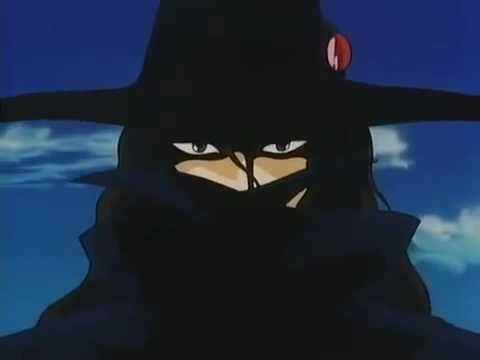
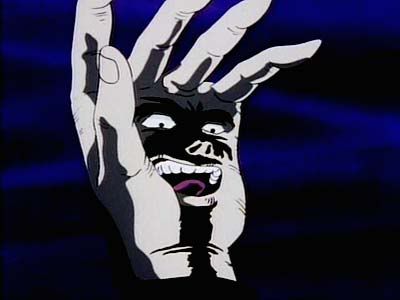
The influences and how Vampire Hunter D used them to create its unique world is ultimately the best virtue of the 1985 version alongside its OVA quality animation. Melding Gothic horror with the post-apocalyptic, with frontier western vibes crashing against post-medieval towns, it envisions a world thousands of years in the future where, after a calamity, mankind survives in a society scattered across apocalyptic wasteland where demons and mutants gladly co-exist, where werewolves prowl the lands and, in lieu of the title, vampires stalk the night and require paid vampire hunters to eliminate. A dhampir named D, half vampire and half mortal man, wanders the landscape being paid for jobs, the only constant being his left hand which, with a human face, is sentient and cannot shut up, mocking his attempts at resisting his vampiric blood. The plot is pretty basic after this established character is introduced over eighty minutes, a young woman named Doris Lang hiring D after an ancient vampire Count Magnus Less has marked her to be his bride. Like a lot of pulpy characters, as much in anime like this, its these characters including those introduced for a single story that bring out the personality, the plot thickened by a mutant who'll gladly help the Count in hope for immortality and the Count's own daughter Lamika who is appalled about both the idea of a mortal peasant joining their royal lineage and becoming her mother-in-law.

From http://img.photobucket.com/albums/v517/
richardsplash/INVASIAN/VampireHunterD2.jpg
The basic nature of said plot, where D has to repeatedly struggle against new obstacles each scene, from ghouls to the aforementioned mutant, means that the entertainment is in the world itself being depicted onscreen. Horror, as mentioned in previous posts last year for Halloween, is a surprisingly neglected genre in anime, only starting to pick up in amount within the last ten years and especially with stuff like Tokyo Ghoul (2014) getting popular in animated and paperback form. While action orientated, seeing a Japanese work entirely devout to a fetish of European horror, even in the big eyed eighties character designs, is utterly welcoming.  The melding of science fiction and gothic horror manages, despite being potentially awkward bedfellows, to work in these two anime adaptations, reined in by the general tone and looks of both. They exhibit one of the most extreme, but ultimately satisfying, examples of a genre melting pot in how many influences there are - period townsfolk and frontier western clothing against robot horses, the vampire count dressed like Bela Lugosi against the bloodier violence of straight-to-video anime - and yet because of the art style this first adaptation makes it all seamlessly work together.

From https://thomfiles.files.wordpress.com/2012/06/vampire-hunter-d.jpg
The animation style does add to the film immensely. The only real botch to this version decades on is that the female lead occasionally looks like a twelve year old in scenes, even in the context of the eighties character designs, certainly cringe worthy when you notice it when there's a scene where she melancholically tries to seduce D only for him to struggle with wanting to bite her neck. The gothic, realistic character designs of the 2000 version are the best, but as a film meant to bring the D character and his world to the video screen, the original eighties version is still handsome in quality and gets right the most important of the story in terms of the fantastical nature of it. Against anything from giants to an imp-like witch, the protagonist D exists in a world of the phantasmagoric melded with sci-fi; where the ruined castles would have to be dank and oppressive, where the pits below have the centuries old skeletons laid about from a war and snake women to seduce people, as the post-apocalyptic content is as appropriately bleak. The more unconventional aspects, such as D's talking hand, add to this is giving the film its own distinct personality. The only thing that spoils the general mood that is so well added are that, one, the original English dub is terrible with stilted line readings and, two, the end credit song is a wildly inappropriate New Wave influenced J-pop number, especially after the ending takes on both a sudden abstract series of seasonal changes and both a sombre, clean act of saying goodbye. The dub is only a problem depending on the version of Vampire Hunter D you see; now with the recent American re-release of the film, the company realising it Sentai Films had to create a new English dub due to the original dub's materials being too damaged for restoration. The end credit song however is one you're stuck with. 

Monday, 8 February 2016

#18: Wanna-Be's (1986)

From http://www.newmoviesondvd.co.uk/wp-content/themes
/newmoviesondvd/posters/wanna-be-s-334724-poster.jpg
Director: Yasuo Hasegawa
Screenplay: Toshimichi Suzuki
Based on the manga by Toshimichi Suzuki
Voice Cast: Eriko Hara (as Miki Morita); Miki Takahashi (as Eri Kazama); Akio Nojima (as Oki Sonada); Demon Kogure (as Himself); Eiko Yamada (as Bloody Matsuki); Shozo Iizuka (as Dr. Sawada); Shuuichi Ikeda (as Tetsuma Kidou); Urara Takano (as Buster Horiguchi)

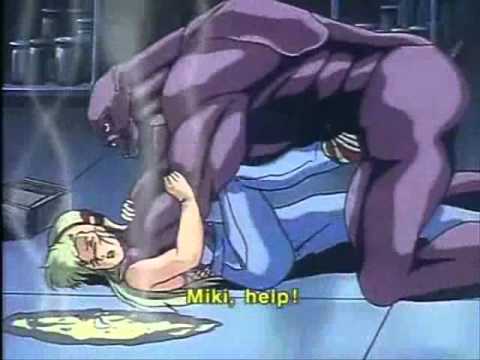
I was a devoted fan of wrestling as a kid. Still to this day I have fondness to it but, paradoxically, whilst I keep up with everything that happens I don't actually watch that many shows or matches at all. Time management is an issue alongside the fact that the main provider of wrestling, the WWE, is a rollercoaster of peaks and valleys in terms of quality that I hesitate to dive back into. This means however that I come into a one-off anime like Wanna-Be's, no matter how silly the premise is, with a great interest because of its wrestling premise. Besides, consider wrestling has had Satanic cults, men being buried alive or placed in coffins, evil Christmas trees as wrestlers and anything up to, and possibly beyond, aliens the story of Wanna-Be's, about the secret conspiracy to splice monstrous DNA into female wrestlers to test its effect, is merely a walk in the park from some of the more absurd things that have taken place in real wrestling. Stuck in the centre of this is Miki Morita and Eri Kazama, the Wanna-Be's, a rookie tag team of female wrestlers - Miki the stubbon red head, and Eri the more calmer and noble green haired partner - who have to contend both with being guinea pigs for the experiments funded by a corrupt businessman and facing the Foxy Ladies, the crooked and vicious tag team champions who destroyed their friends the Dream Angels before.

From http://www.subeimagenes.com/img/imagen4-wanna-834000.jpg
The one distinct claim to fame Wanna-Be's has is that the character designs are by Kenichi Sonoda, who'd be more well known for hits like Bubblegum Crisis (1987-1991); in fair due to this particular anime these character designs are memorable and are missed in modern anime if just for their distinctness, the feminine grace of the female characters in particular, even as tough wrestlers, and the bright colours as depicted in them and their environments appealing. It's not surprising however, while I find this anime entertaining, that this is a case of something far more fun if viewed in context of being an oddity rather than a great work, never to be held up as a lost classic but brief and incredibly silly entertainment. What's surprising about Wanna-Be's returning to it is how violent it is, especially because of how it adapts professional wrestling to anime without exaggerating it far from the real thing. If there's one legitimately good thing about the anime, it's clear someone or a few people on the production staff were clearly wrestling fans who had knowledge on it, bringing a few missed snippets of the energy of such shows when you see the hordes of fans with handmade posters cheering the teams on. Particularly when you see the Foxy Ladies, and have knowledge of real female wrestling like and know of female wrestlers like Aja Kong and Bull Nakano, it's clear fans of female wrestling, which would've been popular in Japan when this anime was made right into the nineties, were on the production. This also means that the brief wrestling matches are pretty nasty to sit through.

From http://img.animeblog.ru/data/27148/265/Wannabes_OVA_1
_of_1_ru_jp_E_Rotic_Trina_D_AnimeBlog.ru_shot_00053.jpg
Even if they are fighters  it's pretty nasty to see the heroines actually fighting the Foxy Ladies in the central scene of this short anime, with chains let alone backbreakers being used, even a fork appearing as if a character has been taken inspiration from the infamous American wrestler Abdullah the Butcher. As much of the wincing of mine I confess is due to my upbringing where, even if we live in a more progressive society where men and women are equal, we're still brought up seeing women being involved in violence as a taboo even if they are the instigators of it. In wrestling it still causes one to wince, especially when American wrestling for its attempts at making women just as strong as men is undercut by making them eye candy, has the kind of brutal matches between women that are a lot more common in Japan when such matches were taken as seriously as with those with men squaring off. Unlike other types of anime where fireballs and punches are thrown, but I never wince when a heroine is hurt during the brawl, I confess here it does hurt because the anime goes right to having character having trickles of blood come from the forehead and going for the type of moves that are done in real wrestling and, whether the participants are male or female, are meant to look nasty and down someone.

From http://www.subeimagenes.com/img/imagen10-wanna-834002.jpg
It also enforces how a female wrestling anime would be awesome to see. Anime has a few wrestling anime in existence, one so popular that its central figure Tiger Mask became a real wrestler whose lineage includes five Tiger Masks up to today. For Western fans of anime as well they might have caught up with Ultimate Muscle, aka. Kinnikuman, which I caught a few episodes of as a kid. Female wrestling stories are less common unfortunately, a shame as the legendary nature Joshi female wrestlers in Japan have is a huge one, one where incredibly dangerous and/or innovative moves were originally created by women and a serious tone existed that drastically contrasts with the glamour model template the WWE unfortunate have in the West of female wrestlers. One recent show exists called Wanna Be the Strongest in the World (2013), but by all accounts it's an anime whose existence is entirely for a limited audience whose fetish is scantily clad animated women writhing is sexualised pain as another woman applies a camel clutch or ankle lock on them. Whilst ideas of dominance and pain are a common sexual fetish, alongside women wrestling each other, it's understandable that wrestling and anime fans aren't necessarily going to like this presentation. Wanna-Be's is likely one of the only known anime about female wrestlers whether you like it or not, an irony considering its low regard.

From http://i2.ytimg.com/vi/hHG3cr-n6e0/0.jpg
The silliness of the story is another reason I like the anime too. Without spoiling it, it effectively turns into a final two-on-one brawl against a monstrous creature kept in a lab just as violent as the wrestling matches, and amongst the many things to learn from this anime, despite its minor nature, is that I come to anime as much for strange ideas like the entire of this story as I do for good stories. Wanna-Be's was as much a creation of the eighties when the Japanese economy was at its peak. Video, when it was introduced in the early eighties, needed product and like live action films so many odd anime were created back in this era that Western fans are only just learning of and placing VHS-rips of online. The amount of money in the economy allowed many peculiar creations to be animated, many I'll likely cover on the blog, as it did artistic endeavours and popular franchises.My regret with what was effectively the death of straight-to-video anime from the 2000s onwards was that, alongside the high artistic quality of many, it allowed a lot of oddities to inexplicably exist. Such absurdities that are fascinating to watch, even if they're lewd and crass, some even masterpieces, are still made today but not at the same level as when straight-to-video anime was a popular market that needed product for it. The reduction of such odd miscreants like Wanna-Be's is a sad thing worth mourning for.

Sunday, 31 January 2016

#17: You're Under Arrest! - The Motion Picture (1999)

From http://cdn.myanimelist.net/images/anime/1/2134.jpg
Director: Junji Nishimura
Screenplay: Masashi Sogo and Seiji Soga
Based on the original manga by Kōsuke Fujishima
Voice Cast: Akiko Hiramatsu (as Miyuki Kobayakawa); Sakiko Tamagawa (as Natsumi Tsujimoto); Bin Shimada (as Ken Nakajima); Etsuko Kozakura (as Yoriko Nikaido); Ikuya Sawaki (as Inspector Tokuno); Issei Masamune (as Chief)
Viewed in Japanese with English Subtitles

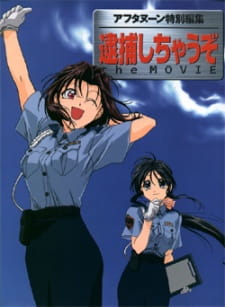
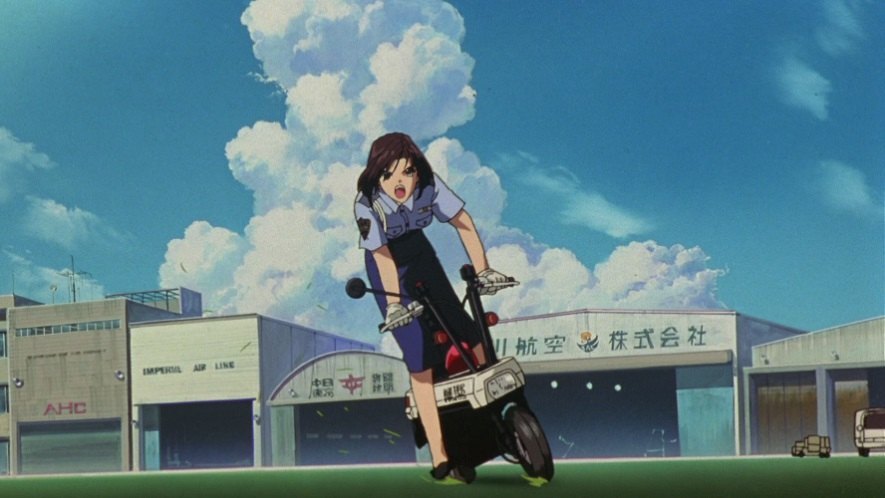
The You're Under Arrest! franchise encapsulates how a Japanese franchise is just as much, if not more, dictated by its success with its home audiences as it does Western fans. Its known in the West but it was through how well it did in its home country that, after the original 1986 to 1992 manga, there have been since 2008 four television series, one live action TV drama, straight-to-video stories and this feature films based on the antics of the Tokyo Metropolitan Police Department at the fictional Bokuto Police Precinct station. Since the manga its followed two female traffic cops. Natsumi Tsujimoto, a brash and hard-headed woman who appears at work many times with a hangover and, turning the franchise into a fantastical one, has superhuman strength with her trademark being able, without causing any permanent harm to herself barring possible shoe leather costs, to open the door of a moving vehicle she is in and, through placing her feet on the tarmac below, being able to steer/stop said vehicle as a result. Her partner Miyuki Kobayakawa is more coolheaded and collected, though her various interests including cars, computers, booby traps and firearms, both real ones and fake ones to which the later plays a major plot point for this feature film. Alongside their motley crew of colleagues and superiors, they have to tackle anything from speeding to the subject of this film, a terrorist group who start by causing traffic light malfunctions to threatening to blow up bridges, intending to actually invade the police station when knowledge is brought up of a police training scenario on disc so good that it could actually be repurposed to commit international crime.
From http://www.animeclick.it/prove/serie/YouareUnderArrest
theMovie/YouareUnderArresttheMovie4.jpg
I've seen three different pieces of the franchise including this film and I find plenty of potential in You're Under Arrest! as an entertaining franchise, something as innocuous as traffic cops a potentially fun idea. The light comedic action tone allowed, over the three entries I saw, for the stories to juggle between the film's more serious moments, as if its abruptly going to turn into Mamoru Oshii's Patlabor 2 (1993) in political subtext, to a sex comedy. The issue with the franchise however is that, while thankfully this feature film was good, the first two I saw were terrible, the length of the franchise and its presumed popularity bringing in a danger that, as long as the characters act like they are expected to, any level of quality can be accepted. This is a pulp franchise, where the characters over the three pieces I saw don't change psychologically and the plots are easy to predict in their outcomes, but this isn't an issue when that can still being imaginative and fun. The real problem is when lack of good work or storytelling is involved due to complacency. My first viewing was a series of 1999 TV mini-specials, little episodes put together on DVD which prioritised the humour more, most of it bland and suffering from the early transition from hand drawn to digitally assisted animation with atrocious 3D modelling and digitally assisted camera pans within scenes. The second was You're Under Arrest: No Mercy! (2002), where in a bizarre decision to spice up the franchise the lead heroines were inexplicably transferred to the LAPD in the US; it is exactly like the parody of spin-offs in The Simpsons episode The Simpsons Spin-Off Showcase (1997), the one within it specifically about Principal Skinner and Chief Wiggum inexplicably being detectives in New Orleans, only with Miyuki drooling over American muscle cars, the characters in skimpy bikinis on the beach, and being just as silly for only thirty minutes.

From http://www.imcdb.org/i035528.jpg
I came into this with trepidation, especially as the director of this made the mini-specials, the light and frothy nature of the franchise only over three parts already a double edged sword for me as a newcomer, where alongside being thrown into stories with the characters already established the quality could vary greatly. Thankfully, not only can you build up personalities for the characters for yourself from their quirks, but this motion feature is a bar higher in terms of quality in every way. The film's lightweight but it's still a huge leap above many anime outside the franchise for just getting a lot right. It helps, as a theatrical feature, that for a simple eighty plus minute film the animation is a high standard, making director Junji Nishimura's involvement with the mini-specials baffling but not taking away how pre-digital drawn animation had a beautiful look to it especially at this good quality. The other factor of why the film works is a personal one but one that is universal for any reader who becomes fond of an anime franchise despite the chance of entries being bad, that the characters especially the two leads of You're Under Arrest! are memorable, despite being archetypes, to the point you want to see them in more (preferably good) stories. This encapsulates a virtue of anime and manga that has been emphasised by manga writer Kazuo Koike - the writer of the original sources of Lone Wolf and Cub, Crying Freeman, Lady Snowblood and someone whose do well with this advice looking from those creations - that characters are the most important part of a story. Even less than great anime such as (blog entry #6) High School DxD (2012) have shown that no matter how lacking and dubious the stories are the characters can still be memorable, even if it's just through their designs and their charisma, to the point of wanting them to be used in better material. Even though they are simple clichés, from the police superior who is serious sometimes but would start crying if shot in the knee to the cute nerdy girl in glasses, these characters are likeable in the film, the two leads in particular managing by their own quirks to make them memorable anime protagonists that can carry a story along.

From http://pics.imcdb.org/10555/810.jpg
The seriousness of this entry in complete contrast to the other two I've seen was a surprise, but it thankfully isn't deathly serious which could've been mortally fatal as this isn't Patlabor II with a real depth but merely a story meant to offer thrills. Comedic characters in other parts have more seriousness here, and adds a lot to the entertainment, but the humour prevents this from becoming a slog if it failed to be a deep political drama. In fact there's a charm from how naive and light the franchise is especially when trying this serious story, where even if a bridge is blow up and the police station is threatened no one is actually killed, and the police never go as far as maiming any criminal to stop them. For one scene, the planned celebration decoration for a character for when they returned in the country proves to be a great improvised trap against an armoured grunt or two with full automatic rifle, surprisingly effective in lieu of what happens. The fact the franchise bends physics with vehicles and the strength Natsumi has means that the action scenes in these films have a movie realism that's impossible to dismiss, both the kind of spectacle of an American action film, if more sedate in tone, but also capable of ridiculous moments that can get away with what happen. There's as much a humour in witnessing a character get a perfect shot in hitting a boat from another boat with a tire as admiring how the moment itself is depicted from behind the flying tire's point of view as if flies over the body of water underneath it.

From http://image.tmdb.org/t/p/original/jsmRA0E0iKdi24sk0edB3m4h0EF.jpg
The breeziness which could be argued to make this a minor anime actually is its advantage as well, preventing the film from slogging at all in its feature length. Unlike the other two You're Under Arrest! anime I saw, this is paced well and never tedious, never weighed down with any shonky comedy or plot. That the others were short pieces is really damning of them as they didn't hold the consistency this much longer work has, and it's as much the drama being there, where a side character may have knowledge of the person causing the crime, that helps support the film by giving it a dramatic weight alongside the humour and thrills. This also makes this a great starting off point for the franchise, if you can find it, as you can quickly get the personalities of the characters because of their pulp story nature and have a well made story, in terms of animation and plotting, to begin with to introduce them. This is the template for one would hope for from You're Under Arrest!, especially for myself, even in terms of a television series within the franchise.

From http://www.imcdb.org/i035537.jpg

Friday, 22 January 2016

#16: Galerians: Rion (2002)

From http://1.fwcdn.pl/po/37/83/223783/7090428.3.jpg
Director: Masahiko Maesawa
Screenplay: Chinfa Kan
Based on the 1999 Playstation videogame
Voice Cast: Akira Ishida (as Rion); Shiho Kikuchi (as Lilia); Akira Ishida (as Cain); Kenichi Suzumura (as Rainheart); Ryoko Kinomiya (as Dorothy); Takehito Koyasu (as Birdman); Yuka Imai (as Rita)
Viewed in Japanese with English subtitles

I remember a review about the original videogame. Not the most spectacular way to start a review, but back then when I used to play videogames a lot I paradoxically read more about them than actually play them. To my knowledge, and I might be sandbagged by fans of the game for saying this, it disappeared into obscurity alongside its anime adaptation, three episodes released straight-to-video and then released in the West in a truncated movie version, the later the first of many times anime's obsession with ESP in their stories will appear on the blog. Even without covering Akira (1988) or the Gundam franchise, anime (and manga for that matter) was obsessed with psychics. Probably the appeal of a teenage protagonist discovering their uniqueness helped make the trope enticing, alongside the notion of it being a good metaphor for the change a teenage goes through to become an adult. Whatever the case it also was an excuse for characters to throw objects at each other without having to lift them with their hands.

From http://www.watchcartoononline.com/thumbs/Galerians-Rion-Movie.jpg
In a dystopian city, a young teenage boy named Rion Steiner wakes up in a hospital that has been converted into a secret laboratory. A psychic, the voice of a mysterious girl in his head wakes him up, setting him off to find her, combating anyone in his way and discovering the existence of the super computer Dorothy who runs the city, learning very soon after into his new life that he is a part of a key to destroy her as other psychics are sent to dispose of him. This leads to Rion setting people alight, having to inject himself with an alarmingly diverse amount of various coloured tubes, to avoid "short circuiting" himself and to induce it to amplify his power, and in general crushing any obstacle in his way. This isn't an original plot but as other entries on this blog have shown, originality is less an issue when execution can still create a masterpiece or something entertaining. I cannot stake a claim for Galerians: Rion in this however. It's as lightweight as you can get, particularly in this case where the short length of the film version means that it lacks the detail for any of its plot points to register an emotional reaction. Anime has succeeded with shorter lengths than seventy minutes or so in entertainment but this also commits the cardinal sin of not at least making what I've described excited.

From http://photos1.blogger.com/img/36/1130/1024/PDVD_078.jpg
The really interesting part about Galerians: Rion is that it's another, if one of the last, early anime which were done with three dimensional character designs and locations. As with (entry #3) A.li.ce (1999) it was doomed to obsoletion pretty quickly because of advancing technology and how basic it was in look; even if it's a high standard with the resources it has, Galerians: Rion does show its limits even in context of its original release in its crudely simplistic locations and characters' psychic ability to float being depicted by way of not having the weight function turned on in the animation software. Released originally after Final Fantasy: The Spirits Within (2001), it was doomed next to the cutting edge, mega budget film that itself failed anyway at the box office, making Galerians: Rion's chances on video for success smaller. Released in the UK in 2005 with a new nu-metal soundtrack - Slipknot and Deftones stuck with bands like Sevendust I'd like to forget - it was further out-of-date. After 2004, in a move that is still considered ill-advised, the director of the fun anime Metal Skin Panic MADOX-01 (1988), Shinji Aramaki, decided to devote himself entirely to 3D animated works with his first Appleseed adaptation, still more advanced in appearance, whilst in 2005 was the far more success Final Fantasy: Advent Children that was also advanced in look and style with the technology. Seeing the primitives of this 3D anime is fascinating, rather than the uncanny valley of modern CGI you get instead the unreality of it, plus the factor that people like whenever they revisit the Money For Nothing video from Dire Straits. But there's still an issue about the plots and style of these works as a viewer which, unless you like to gorge of bad filmmaking, is difficult to shrug off. The reason why I like Malice@Doll (2001) from this pre-Appleseed lot is because its story is fascinating and it has a style to it that fights against the limitations, more so knowing now that like using pastels on a pencil drawing 2D hand drawn animation was used for detailed touches on the 3D character models and locations.

There is stuff that appeals to me in this anime's dated lot - many corridors set in rundown buildings and septic white labs which have a claustrophobia knowing the animators were actually limited in what they could add - but you're ultimately left with an incredibly average viewing experience with a plot put together Frankenstein-like from other, better sources. When you realise you could get more fun outside of an old Playstation videogame, for irony, for this sort of less than perfect but charming 3D animation but more entertainment, something like this is doomed. It's quite faithful to the original videogame in terms of the plot, but in anime the plot points from a super computer ruling mankind to the villains being innocents forced into being monsters has been done better in other material.The general flatness of Galerians: Rion effectively kills it's momentum from the beginning, starting off with a main male protagonist who's as blank as the scenery at points, with no threats that can viably kill him. Only his drug habit for many ESP boosting chemicals, to the point of a seller of all the drugs available to mankind makes a joke on it, seems to stand out the most even if his back-story is a tragedy of his parents dying. He's important to protecting humanity to a computer with a God complex but its the various red and blue chemical he pumps through his neck that add character, and the less about the girl he finds in her blankness the better.

From https://i.ytimg.com/vi/z-3XDio2RhI/hqdefault.jpg
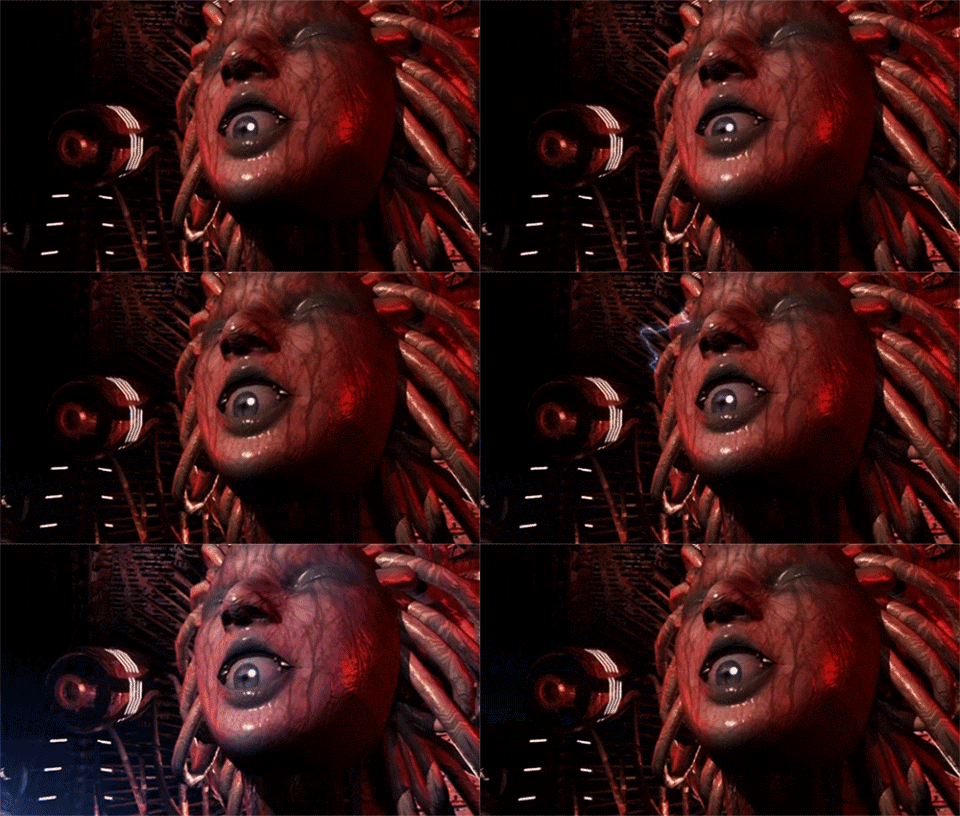
Ultimately like A.li.ce all its problems could've been overcome, even if made the exact same way, if there was a lot more personality in the content, something which the former film manages with the comedy of a spunky female android who goes through various body changes, the kind of thing you needed desperately here. Even if there were flaws in the scripts and technical qualities charisma helps greatly alongside some inspiration. Dorothy's lair inside a giant skyscraper appears way too late in the film, when it could've helped greatly, with its body horror aesthetic of birthing tubes shaped like literal wombs and Dorothy taking on the appearance of a human figure with giant, almost dreadlocked hair. Aside from this it's really only the psychic minions, her "children", who make up for the lack of personality from the heroes. The lanky, cackling Birdman and his tubby little brother who has a sociopathic and novel use of a clock, to the female member named Rita who looks like a character from a fighting game - red hair, busty figure, white tank top with suspenders and knee high boots which frankly, to be crass, could also qualify as her "fuck-me boots" in their length and style as she throws anything from tables to spoons at Rion with her telekinesis. While you couldn't sympathise with them when their tragic back stories are revelled, because little time is given to them, you can at least find them far more memorable than either male and female protagonist who you're supposed to be rooting for.

That there's none of the esoteric material you can get in these anime involving psychic powers or any supernatural/super/magical abilities is even more disappoint for me as a junky for anime's braver stabs at the unconventional and philosophical. Even if they could leave you utterly baffled with what is going on - when minds meld or people enter forth dimensions, usually with an elaborate monologue like in Akira - it's both more inventive and a lot more entertaining than with what happens in Galerians: Rion even if the preferred choice of ending risks pretentious. This does have villains in a white void confessing that they were turned into monsters due to drugs and experimentation, but in general these attempts at emotional content are non-existent without the time to set it up or anything exciting to make it all stack up. Despite my love for this kind of dated animation, after the initial viewing this does become flimsy in its quality once you beyond the original pleasures and I can't recommend it even as a curiosity piece like A.li.ce. 

Now if it had been more like this, if you forgive the use of a gif,
Galerians: Rion might've been more interesting 

(From https://45.media.tumblr.com/7ff7eac72555a837617331f1922fbb4e/
tumblr_nsq97uh2Dc1ta52dfo1_500.gif)

Tuesday, 12 January 2016

#15: Puella Magi Madoka Magica (2011)

From https://3.bp.blogspot.com
/-QFHPx_b6WMc/TlE2aTR-YJI/AAAAAAAADk0/
YMSMwrGL3Co/s1600/71W5O75ISjL._AA1349_.jpg

Director: Akiyuki Shinbo
Screenplay: Gen Urobuchi
Voice Cast: Aoi Yūki (as Madoka Kaname); Chiwa Saito (as Homura Akemi); Emiri Katō (as Kyubey); Ai Nonaka (as Kyōko Sakura); Eri Kitamura (as Sayaka Miki); Kaori Mizuhashi as Mami Tomoe and Tatsuya Kaname)
Viewed in Japanese with English Subtitles

Spoiler Warning: The paragraph explicitly dealing with major plot twists with be signposted so it can be avoided.

Madoka was an emotional rollercoaster, so to try to write about the twelve episode series is going to be difficult. It could be summed up as a deconstruction of the Magical Girl subgenre which Sailor Moon is the famous example of, where a teenage girl develops magical powers and an alternative identity to fight magical enemies, but that would be like saying Neon Genesis Evangelion (1995-6) is merely a deconstruction of the giant robot genre only. The same theme that appears in anime for decade now appears here, hope even in the worst of circumstances, even in a world that is unremittingly bleak, but what's different here is that it's through a novel, extreme concept of the magical girl stereotype character being created through a Faustian pact. Like Evangelion bringing severe emotional weight to its content, the same is found here when two fourteen year old girls, Madoka and her friend Sayaka, encounter a cute cat-like creature who says he can give them any single wish if they become magical girls and fight witches, horrible deformities of people's souls who encourage others to commit suicide and feed off this type of death.

On paper, while the suicide aspect is dark, immediately brings to mind merely a slightly more adult and serious version of Sailor Moon, at least what people think Sailor Moon is, alongside the promotional art very deceiving to me of what I was ultimately going to get. Alongside Madoka and Sayaka are Mami, a slightly older girl who takes them under her wing before they even consider becoming magical girls, Homura, an unnervingly quiet transfer student who warms Madoka continually not to become a magical girl, and Kyōko, a misanthrophic magical girl who comes later into the show who only cares for the prizes slain witches leave rather than saving lives, the only thing she cares for being the vast quantities of food she is continually munching on. I liked the first two episodes, which have a lightness to them despite the dark subject material, from the humour of Madoka's classroom teacher to scenes of her family life, her mother a huge emotional crux she continually goes to for advice throughout the series. From episode three however, when a significant tragedy happens, what I jokingly viewed as one of the most depressing anime I've seen in a while builds from this shocking and unexpected death into a drama taken to the level of cosmic implications, taking the blatant metaphor in the story of a magical girl being a teenage girl becoming an adult and, letting the complications of emotional growth and awareness that all teenagers go through, be filtered through this dark fantasy from the perspective of Madoka. As she keeps hesitating in becoming a magical girl, she bears witness to the psychological trauma that takes place for everyone else, the magical girls and the witches not what they appear as the cute cat-mascot, Kyubey, turns out to be an alien with no concept of emotions whose purpose being the magical girls is literally described by him as cattle during an ethical argument with her. The series' message is very obvious and seen many times before, sacrifice and perseverance, but why the series does succeed is that, alongside its memorable visual style, is that it completely subverts the magical girl sub-genre and also allows unsettling implications to be written into the drama, where even the act of hope for one character can literally poison their soul and eventually turn them into a monster.

From http://static.tvtropes.org/pmwiki/pub/images/sweet-dreams_3701.jpg
Magica is, openly from me, an incredibly powerful and beautiful made series, some of plotting abrupt but the bar is significantly high in terms of scope, gut impact and what quality is there. Here in particular the importance of a great voice performance really stood out. Even if I have to rely on English subtitles, unable to speak Japanese, every central performance (all done by actresses) stands out, making sure that it doesn't just become a misery fest of crying sequences and death but with sympathetic characters you care for. Even if the show sells itself on its lush character designs, bold and colour coded character designs by Ume Aoki which are memorable, a central figure like Madoka isn't just a cute pink haired teenager put in existential hell, but through the script and performances is utterly sympathetic even if the character is one in a long line of female characters who want to help everyone and will do everything to help others, a character type that could go badly wrong and become trite if it wasn't for the quality shows like this has. The visuals are also a huge factor to the show, sumptuous but helping subvert the tropes of the magical girl. Realistic city environments are contrasted by an inspired idea of the witches, far from monsters with a conventional aesthetic, being based on innocent symbolism. Their worlds within the main characters' world, called labyrinths, can be orchestral halls or full of food, whilst the witches can be drawn with crayon or cartoonish, big eyed creatures. From a circus theme to even the bottom half a giant schoolgirl who fires panties at people, they are whimsical and potentially silly monster designs from more light hearted shows given a severity when you witness the shock in the early episodes and what they represent, innocent symbols turned into the worst of humanity, made more unsettling when the cause of how the witches are created is revealed. The show uses a lot of digital layering and experiments with various animated styles, both making something as innocuous as a cotton ball with a moustache creepy but also helping with the fantastical nature of the show. While it cannot match the symbolic and surreal qualities of another show also from this year, Kunihiko Ikuhara's Mawaru Penguindrum, they both show that, whilst I miss the style hand drawn animation gave anime, that when it's at its best computer assisted animation after the 2000s, especially now, is capable of a new fantastical quality especially when the aesthetic is as bold as both of them. Like Penguindrum, Madoka shows the best quality of this new aesthetic style in that, alongside the voice acting, it allows a good script to be fleshed out with visual stimulus adding emotional importance. I could still joke about it being the meanest anime I've seen in a while, but it's not pointlessly cruel killing off characters for the sake of it, nor absurd to the point of being stupid, instead every plight felt to be poignant as much because of the production quality.

[Spoiler Warning: Skip ahead to after the next bracket if you don't want the series spoilt]

The style of the series, especially when it commits to its cosmic interpretation of its message, is ultimately rewarding after all the agony you suffer as a viewer if you can emotionally connect to it. Strangely the series ends the same way Serial Experiments Lain (1998) in some form, Madoka when all her friends baring Homura becoming witches or dead deciding to become an omniscient deity reverse this pain and save everyone else. The willingness to take risks, like killing off a central character you immediately love in episode three or the show's ending, which still is bleak as monsters still exist but means Madoka protects all magical girls from the fates they could suffer originally, is the sort of thing I love the most in anime. Its heightened and utterly melodramatic, a style close to the ridiculous that few western animated works is willing to attempt, something which appeals to me more than being safe and grounded emotionally without the fear of a beloved character dying or becoming a monster themselves.

[Spoiler Warning Ended. Read after this bracket to avoid spoiling the story]

From https://avvesione.files.wordpress.com/2011/02/
puella_magi_madoka_magica-07-kyoko-church-puppet.jpg
In a lot of ways the series isn't really a magical girl show thought. There are action scenes, and they are of importance, but most of the story over twelve episodes is concentrated on the drama itself, most of the characters soon into the show immediately dealing with the implications of being a magical girl than stumbling upon it to their horror after time fighting witches for a few episodes. It suggests a speculative "what-if", the show perfect as it is, from someone like me as an anime fan who does like a good twenty four episode show. The series is brisk in its plotting, causing me to wonder what it would've been like to have a monster-of-the week episode or two, some more comedy or more time to spread a story that takes a month chronologically into a slower pace. Episodes for Evangelion which could've been seen as filler early on proved to add important characterisation to its cast, making what happened later on more meaningful, and while Madoka works perfectly as it is, double the episode length if done well would've still worked, more time with Madoka, Mami, Homoru, Sayaka and Kyōko as the central cast would've had just as much power as the economic plotting in the series as it stand does. The only real issue with what has been done with the series for real is that, rather than additional episodes, there are now spin-offs that capitalised on its success. Like another popular franchise Full Metal Alchemist (2003), this is a potentially troublesome issue as the story for it and Madoka were final, meaning any continuation ultimately undoes the ending people liked originally. After two compilation films of the original series, this new story Rebellion (2013) was released in Japanese cinema, causing controversy for Western fans both for undoing the series' ending and a controversial plot twist using a beloved character. Rebellion looks visually fascinating in screenshots, but again the stuff that's upset peoples makes me hesitant to view, something I have to deal with when I eventually cover it on the blog. 

From https://avvesione.files.wordpress.com/2011/04/puella_magi_madoka_
magica-11-madoka-homura-hug.jpg?w=533&h=300