Saturday, 20 October 2018

#77a: Violence Jack - Evil Town (1988)

From https://images-na.ssl-images-amazon.com/
images/I/51VN4YQQX1L.jpg


Director: Ichiro Itano
Screenplay: Shou Aikawa
Based on the manga by Go Nagai
Voice Cast: Bob Sessions as Jack; Alan Marriott as Blue; John Bull as Saulus; Garrick Hagon as Tahei; Sharon Holm as Rikki; William Roberts as Kawamori;
Viewed in the English Language Censored Cut

Synopsis: After the world is decimated and Japan levelled by a mega earthquake, a post-apocalyptic society ran by marauding gangs who rape, murder and pillage have taken on whilst pockets of humanity try to survive. In the midst of them, let loose from the rubble, a mysterious and almost immortal goliath christening himself Violence Jack walks into this living hell as the personification of death.

[Due to the length these reviews would be altogether, I felt it wiser to review the three episode OVA in three small reviews. Be advised of Spoilers and potential Trigger Warnings as well]

Before I start this trip down the lurid world of Violence Jack, I'll clarify the version I watched is the censored English dub version. I did, for reference, view fuzzy clips of some of the gore scenes and read up on what was censored from the original Japanese versions of this infamous series. It does drastically change the tone of Violence Jack but that as much is an issue when dealing with these OVAs.  For starters, it was appropriate to cover the English version as, obsessed with Manga Entertainment's DVD repackage of old licenses called "The Collection", the version made available for that series was the drastically butched version clearly taken from a flickering VHS rip.

For a long time this English version was the only one available in the West - Manga Entertainment's reason for censoring the three part OVA are unknown but whatever spooked them was significant, and with good reason especially for the Evil Town episode. Another factor would have to be that, whilst this was the era of lurid and notorious anime releases like Legend of the Overfiend (1989), it was also the era when James Ferman ran the British Board of Film Classification; in this era, other areas like horror and action cinema were drastically effected by a man whose obsession with removing inappropriate material became the stuff of infamy, let alone anime which was frankly indefensible in its content. Eventually the company, known for releasing these ultraviolent and controversial anime in the nineties, would find their tactic for anime definitely not for children would bite them in the backside when La Blue Girl (1992-3) was rejected outright by the BBFC for release in December 1996, the same year they released the censored Violence Jack into the Western world.

The decisions behind releasing titles like this in the West was of the time - that with the likes of Legend of the Overfiend, for good and bad especially in the mainstream view of anime in the United Kingdom and USA, they were significant enough to warrant licensing these titles be they what the distributors thought they should sell or were selling well. And so Violence Jack, a three part Go Nagai adaptation which took over four years to be churned out, was one such title, one whose uncensored version was very elusive. For a long time the only uncensored versions was one early US VHS tape, from the same time through Right Stuff at the same time as the English dub release, for a long time only an Italian DVD afterwards, and then in the 2010s the uncut and cut versions put together by Discotek.

If I was only dealing with the episodes Hell's Wind and Harem Bomber, I might've bought that Discotek release or at least tracked down the uncensored versions. It'd still be an indefensible work, misogynistic and offensive, and especially with Harem Bomber an embarrassment to animation in general, but it would be a fascinating look at the era of eighties and nineties OVA anime which churned out so much that, for every artistic gem, there were oddities and perversities like this. Weighing on whether to track down the uncensored version was enough to even hesitate ever covering Violence Jack at all, debating whether it was acceptable to only review the cut versions,  seeing the gore scenes excised online at least even if not in the desired way (i.e. in actual sequence in the episodes). In hindsight, even the infamous necrophilic cannibalism that takes place in Evil Town, which is something I can only imagine rather have seen, wouldn't have been to too off-putting. That sort of material would just be tasteless, body horror material effected by the issue that these OVAs are excessively nihilistic in tone to be entertaining.

The problem is entirely with Evil Town, where the creators decided not only to depict lengthy rape scenes but went as far as having to have digital pixalisation, which raised alarm bells when I learnt of these excised moments originally. Having read a blown-by-blow written article of all the scenes removed described in clinical detail, which is not a pleasant activity even though I have always had a morbid obsession with the Violence Jack anime, didn't exactly defend any of this stuff for artistic value either. I fear I would feel morally disgraced inside if I watched Evil Town uncensored, a step too far and requiring a damn good argument to not stay away from it. Hence, stuck with an old DVD that will circum to laser rot, I hesitate to import that Discotek release for a very justifiable reason. There's a fine line in watching transgressive anime and that which crosses a line even for me.

From https://i.ytimg.com/vi/X7sDQnTIiJ0/hqdefault.jpg

Evil Town
is the first episode of the three chronologically...already the strange production history of Violence Jack comes to mind as, logically, you start from Evil Town, which introduces the character of Jack found underground by a group of people trying to reach the surface world again. Then tonally, it should go to Hell's Wind, then Harem Bomber, the later with an actual ending even if it makes no sense. The truth is, in the Japanese release order, it was Harem Bomber first, and then Evil Town, then Hell's Wind, the convoluted order being rearranged one of the few good ideas Manga Entertainment had.

Evil Town is the notorious one of them all, the most censorship and arguably where this series went too far even for hardened anime viewers, where for myself the version which has necrophilic cannibalism (censored for the UK cut) wouldn't be an issue, but the eroticised and pixelised rape is why this review starts with a lengthy prologue. Annoyingly it's also the most artistically distinct of the three; Violence Jack is a case of something, aesthetically, in its cheap and nasty post-apocalyptic presentation which is compelling, but the material inside the work varies in different ways per episode to why it's bad.

The issues with Evil Town are enhanced by the fact that, for an incredibly simplistic tale, the extreme content especially the sexual violence is superfluous, as evidenced by the censored version (barring the clear cutaways from minutes that were excised) still working in pace in spite of their absence. It's to debate whether Go Nagai's original manga is as to blame, despite originally being a shonen work (for children) it was notorious back then for gore and sexual content, back in an era before drastic changes in demographics refocused material like this for adults and the likes of Naruto for children. As much of it is frankly the anime episode itself being to blame above anything else, by itself feeling like it went too far in obsessing over this content to a point that it was too repugnant.

From https://i.ytimg.com/vi/gBpYz2fcghw/hqdefault.jpg

Even censored, with it very clear that material was removed in the cut version, its repugnant and against the very nihilistic view of the world on display feels uncomfortable. The cynical worldview does lead to an interesting plot based around three groups and Violence Jack - one group men proven to be hypocrites worse than the evil psychopathic gang against them, as depraved, whilst the women have decided to be their own gang after what had been done to them before - but the desire for a cross between an atrocity exhibition meant to be titillating against a Shonen Jump-like action story is a hellish combination to have to deal with. And frankly, we are dealing with a titular character who, whilst closer to a slasher movie villain than an actual hero, is also completed out of a childish power fantasy especially with his inexplicably yellow scarf, bandages around the waist and jacket combination, which raises questions of the entire premise of what the tone should've been.

If we were dealing with a Fist of the North Star tone, then things might've been different; in Evil Town, as most of it is set underground after an earthquake has levelled an entire Japanese city, children advising each other how to eat insects and a rat for dinner is the worth of gold, it's not the right time to discuss this aesthetic unlike in the other two episodes, but that tone would be acceptable here too. Even if it left grime on the viewer's eyes, there wouldn't have been an issue if it also embraced the inherent silliness of its villains being mohawk wearing gang members. It doesn't help that, in lieu of a homophobic streak a mile long throughout these episode, among them is an evil transsexual and an evil lesbian stereotype, but looking at times like outtakes from Mad Max (1979) and The Warriors (1979), especially with the figures of Mad Saurus, a behemoth, and Blue, the evil transgendered character but (if that unfortunate aspect wasn't part of him) also decked out like a bizarro Jem and the Holograms member, the materials wrong for this level of nastiness. Even reading a slither of Go Nagai's work, even if his attitude to sex and violence can be objected to, I know already his style is laced with black humour and deliberate weirdness which you definitely don't get in these OVAs.  

And tonally, the story itself falls into this as well as, suffering through even the implication of sexual depravity and gore, it's about two giant men (Violence Jack and Mad Saurus who, after eating his girlfriend blue in the aforementioned scene removed from the English release and turning into a monster) kicking the shit out of each other, which makes none of the horrifying content even in tone creatively in place. Any notion of darkness beyond this with a point, the men of Section A who are so monstrous for all their apparent civilised behaviour they'd drug and rape a group of women as told in flashback, is lost in a work where it's entirely about visceral gore and action in the first place, so expecting anything profound is lost within the sludge.  Instead it just makes things worse as the women are merely victims, left half naked and (between the script lines) more traumatised stood outside among ruined skyscrapers with no sense of real meaning.

From http://www.imfdb.org/images/thumb/5/5c/
Violence_Jack_ET_revolver_1_2.jpg/600px-Violence_Jack_ET_revolver_1_2.jpg

The blame on why Evil Town is objectionably gross, even censored, is to be debated. All the following is my pure speculation, but it's like a Rashomon scenario where we have no one willing to talk about this production in honest detail unless someone had a gun directly pulled at their head, more so as in the Japanese version you have big names in voice acting among the cast, the likes of Norio Wakamoto appearing throughout all the episodes, a production meant to go somewhere but ending like this.

One possible explanation is that screenwriter Shou Aikawa went through a very dark period in his life. Long before he became the major screenwriter for the likes of Full Metal Alchemist (2003), he wrote scripts for ultraviolent work like Legend of the Overfiend, Genocyber (1994) and, with the same director of Evil Town, the notorious Angel Cop (1989-1994). The thing is that, in lieu of a career with the likes of Full Metal Alchemist, which are so drastically different and where his own contributions separate from the source material (like overt Iraq War metaphors) were acclaimed and drastically different from the likes of Evil Town, as were later anime he worked on past his blood and guts era like The Twelve Kingdoms (2002) and Martian Successor Nadesico (1996).

So it leads the question to the infamy of Ichiro Itano. As an animator, he is one of the best, immortalised by the "Itano Circus", coined after his trademark of (painstakingly) animated missiles in a scene to moving in individual directions. As an anime director, he is panned and notorious - Gantz (2004), his most well known work, is still a divisive ultraviolent work, and he is held up by his petard for the likes of Evil Town and Angel Cop; for the latter, whilst this has never be confirmed and is pure speculation, the infamous turn to full anti-Semitism in the story alongside its fascist nationalist turn, as an ultraviolent action sci-fi, has to be taken in mind that Shou Aikawa only wrote the first few episodes, or at least the first, whilst Itano wrote the rest when that turn took place. The third potential reason, which would be the most disturbing, is that adaptation of a very violent Go Nagai work they either reproduced it or exaggerated the content to sell the material, especially as anyone who witnessed the car crash that was Harem Bomber, which I will get to later.

The episode itself, removed of its nastier material, is pretty cruddy in honesty, any sense of enjoyment from its sickly tone undermined by knowing of the content being removed. That, far less extreme but as liable to put people off from the uncensored version, this anime goes to having a villain killing children in graphic detail or someone being split in half like a wishbone. Trying to deal with the misogyny on display, the female group not complex figures in the slightest and sexually victimised twice, is not even worth wasting time on to write on, it's that bad.

Curiously this is Violence Jack at his most eloquent, a curious anti-hero who will protect people if he isn't prevented by hulking gang members, but takes his punishment of villains to sadistic and gleeful extremes which drastically contrasts this. The English dub is utterly inappropriate as, whilst I liked Bob Sessions as Jack, this begins the conversation that will carry through this three part review, the infamous dubbing of the anime where Manga Entertainment amplified the foal language to a lot of their work but here went into even ridiculous territory, the one aspect of the entire work that could ever be "fun". They decided to have this gigantic monster anti-hero use the term "Captain Buttwipe" twice, as tonally in appropriate from an anime episode obsessed with offensive material as you can get, but you are grateful for the comedy to briefly relieve the tone.  

Sadly as well, whilst I might be in a minority, this is all within an aesthetic I like. It's cheap, but thankfully isn't as bad in animation as when I cover Harem Bomber, with music (barring one or two tonally inappropriate pieces) that fits the era and a grungy colour palette which stands out. It's an aesthetic that feels dangerous and edgy but, in another work, didn't need to actually make me feel grossed out like here but could've been instead better without it. Evil Town, as much as I hate its existence, has the one artistically stylish piece of the whole OVA series with a fight scene taking place with the participants in red outline against a black screen, one of the other moments which were vaguely interesting in the midst of the mire. Unfortunately, I have to extract these little virtues from something that doesn't deserve to be defended for many reasons. Thankfully, whilst the other episodes have their share of uncomfortable material, the worst was the first episode in the Manga Entertainment release before you get to Hell's Wind...

To Be Continued...

From https://i1.wp.com/hmturnbull.com/wp-content/uploads/
2017/11/Violence-Jack_Death-of-Mad-Saurus.jpg?resize=300%2C157

Monday, 15 October 2018

#76: Litchi DE Hikari Club (2012)

From https://m.media-amazon.com/images/M/MV5BZjVmNDI2ZDMtOTM2Yy00ODViLWFkZjUtNTBjO
TRkZjY3OTNlL2ltYWdlL2ltYWdlXkEyXkFqcGdeQXVyNTk2ODMxMzI@._V1_.jpg


Director: Masahiro Takata
Screenplay: Motoichi Adachi
Based on the manga Lychee Light Club by Usamaru Furuya
Voice Cast: Akiyoshi Nakao as Tamiya, Ryou Kimura as Zera, Daisuke Hirose as Kaneda, Hisanori Satō as Raizou, Kōichirō Tomioka as Dentaku, Mao Kato as Dafu, Norihisa Hiranuma as Niko, Ore no Graffiti as Lychee, Rin Honoka as Canon , Yasuko Mitsūra as Yasuko, Yuki Tamaki as Jaibo, Yuya Miyashita as Akobu

Synopsis: Nine boys in an all-boys school create a robot that runs on lychee fruit to kidnap the most beautiful women possible...however unlike the original Usamaru Furuya manga and stage play, the Lychee Club in this world are too busy bickering about commercialising robot Lychee for profit and other tangent delaying their plan to rule the world.

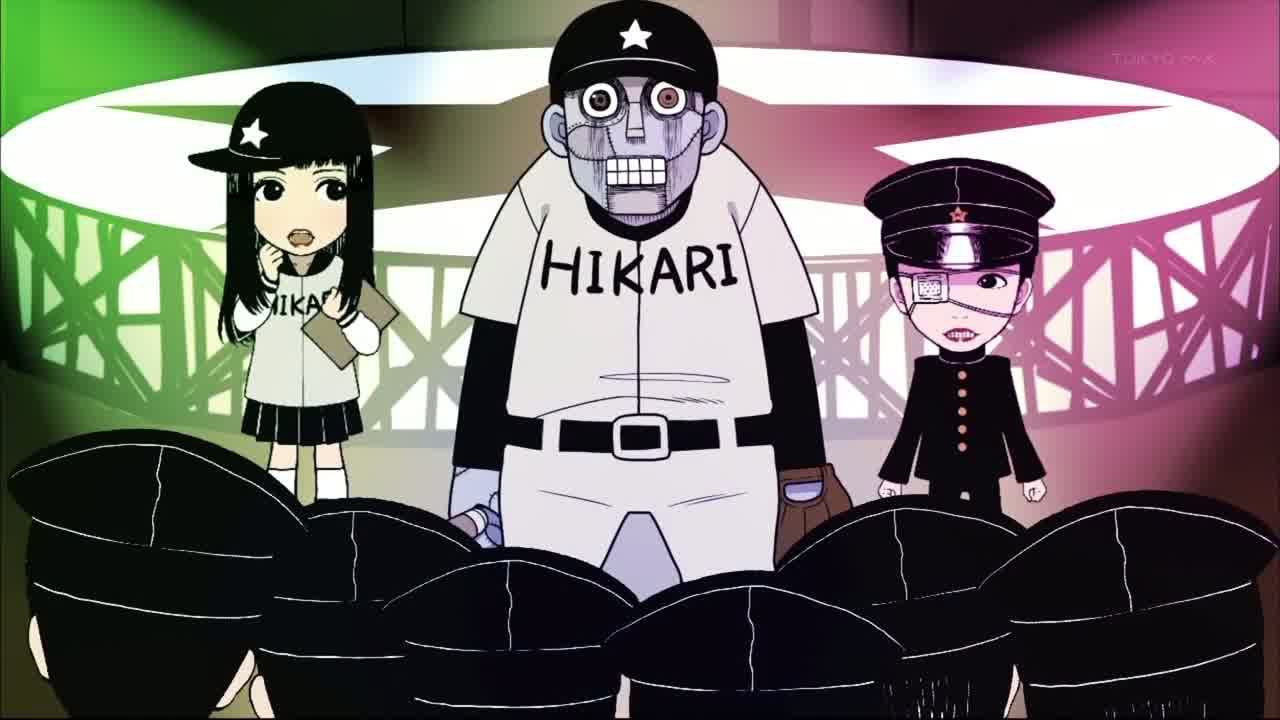
This'll be another confused review. Another micro-series, eight three minute long joke episodes, but peculiar in this case as it's based on Usamaru Furuya's controversial but acclaimed manga, an incredibly dark and disturbing manga which has yet developed a large reputation, enough that the experimental author's source material has been adapted both for this weird spin off and for a live action film. For what has been described as dealing with violence, transgressive sexual content and is generally viewed as a serious work it's managed a strong popularity or enough buzz to lead to these additions. Litchi DE Hikari Club is a perplexing little take whether you have read the manga or (as for me) haven't. Here a group of bishonen boys in uncomfortable fascist looking uniforms, (intentionally disturbing in the manga), have built a robot powered by lychees with the purpose of kidnapping girls, only for one named Kanon to undermine their plans, an important figure in the manga and here the only main female figure in the cast.

Clearly, obviously, context is lost when a gag spin-off to a serious work is watched by itself. These spin-offs are a curiosity which have a long lineage - in some context they make sense when the production staff decide to lighten the mood and have fun, be it the omake specials for serious series like Black Lagoon (2006), literally bonus material or if you have a franchise so vast like Gundam you can get away with a piss-take version with the characters out-of-context and arguing. Sometimes questions have to be asked who came up with some of these one-offs vastly different from their source. This one is still peculiar even in that context as it was made as an anime series in its own right, streamed on CrunchyRoll with the danger that people like me would've presumed it'd be a straight ahead adaptation and not a comedy.

From http://www.anime-kun.net/animes/
screenshots/litchi-de-hikari-club-97761.jpg

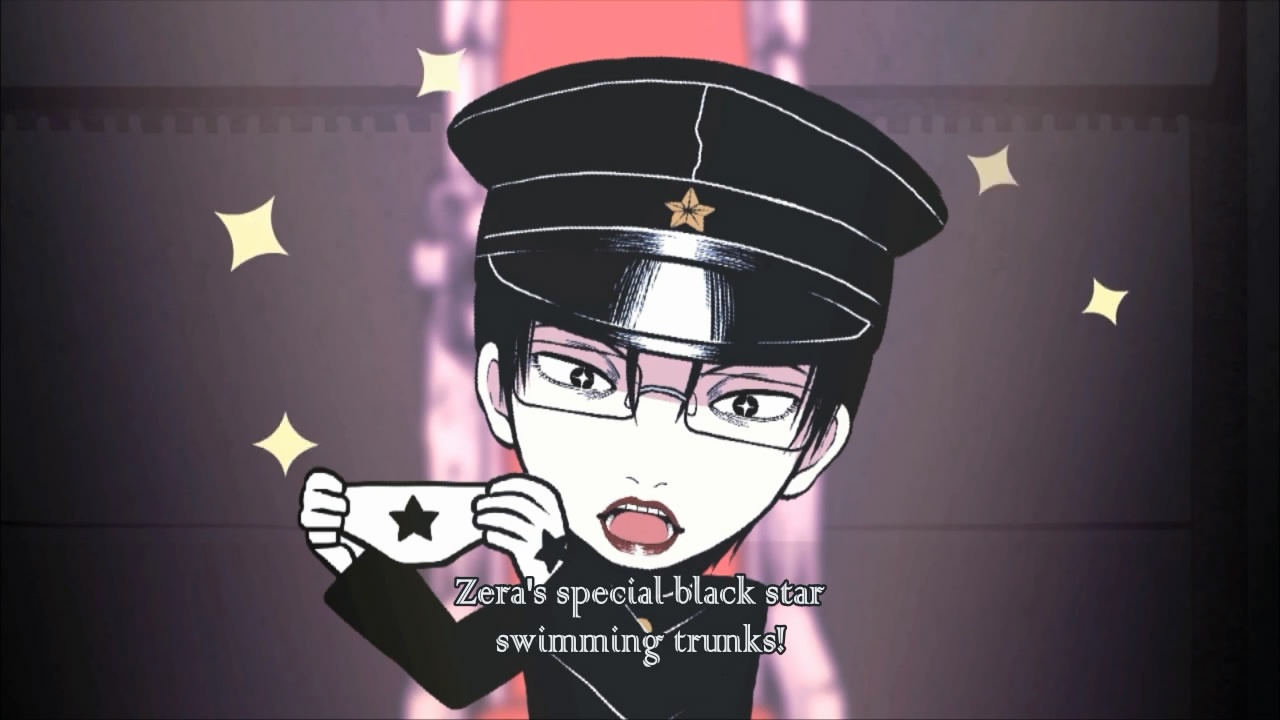
The other issue is that, even if you're going to be an in-joke leaden series for fans, like the Gundam parody, you still have to be a good series, and especially with my introduction with these micro-series, many don't even really use their three minutes or so well enough. One of the few exceptions was Gdgd Fairies (2011-13) which, despite being fifteen minutes per episode, was mainly a series of vignettes and made sure that a) the jokes were funny even if you didn't get the otaku references and b) got far more ambitious and weird over its two seasons. This anime has moments where its premise, about this serious ultra disturbing manga if the cast were mainly idiots, succeeds; in which all the cast baring Kanon and the robot Lychee, who are Best Friends Forever, are completely incompetent and spend their time on inane ideas. Ideas such as wondering if Lychee can eat anything else barring his namesake, accidentally turning him into a gourmet chef or the ill advised creative expansion into black star Lychee Club beach wear, ideas which are funny in any context especially with knowledge of the original source material. It helps that here, with simplified but distinct character designs, every member stands out vocally and in appearance, and all have idiosyncrasies that cause them to be dumber or weirder than the other, a group of immature man-boys who may want to rule the world with their violent ideas and fascist symbolism, but cannot see that sacrificing one's eye if not the same as gimmick objects from a magazine advertisement or a jar of scabs, much to the grievance of the member who sacrificed his eye for use in Lychee when every fellow underling offers the aforementioned examples.

But...it's still a slight work, and never lifts itself into something special or legitimately weird. Definitely not as strange as a band being created to interpret these characters through actual music and concerts, an idea which has all sorts of potential tastelessness behind it alongside being also of interesting or even great as a marketing scheme. This anime, rather than taking advantage of the material, or scared of trying to adapt a manga with the content it had, ended up being the least interest direction you could've gone, a shame especially as this review is another short and befuddle one, and in terms of genre its definitely not horror like its source material in the slightest, as ill-advised as the club leader's ghastly swimwear.


From https://ru.myanimeshelf.com/upload/dynamic/2012-12/19/_
DeadFish__Litchi_DE_Hikari_Club_-_07__
720p__AAC_.mp4_snapshot_01.11__2012.11.13_12.24.54_1.jpg

Thursday, 11 October 2018

#75: Kai Doh Maru (2001)

From https://m.media-amazon.com/images/M/MV5BNjIzMTBlNTktNTNhOC00NDk0LTk0
Y2EtY2Q4NjQ5ODVhZDE1XkEyXkFqcGdeQXVyMzM4MjM0Nzg@._V1_.jpg


Director: Kanji Wakabayashi
Screenplay: Nobuhisa Terado
Voice Cast: Mitsuki Saiga as Kintoki Sakatano, Showtaro Morikubo as Raikou Minamotono, Yurika Hino as Princess Ouni/Shuten Dohji, Ai Orikasa as Douji Ibaragi, Fumiko Osaka as Fuji, Hikaru Hanada as Sadamitsu Usuino, Ikue Kimura as Yamabuki
Viewed in Japanese with English Subtitles

Synopsis: In the Heian period, a girl named Kintoki is rescued by Raikou from being killed by her uncle, who intended to take over from her family. Years later, treated as a boy as her family intended to, she is trained as a member of Raikou's band of warriors; unfortunately a figure from her past named Princess Ouni, who fell in love with her presuming her to be a boy, has come forth with vengeance in mind against all those on Raikou's side, with black magic and villains to assist her.

Kai Doh Maru was an OVA anime I once watched and had a really scathing view of; I had no idea why revisiting this years later, compelled by the work upon this revisit years later, until by the ending where the one major flaw with Kai Doh Maru appears. If anything, what likely annoyed me back long ago was that contrary to what the old Manga Entertainment UK DVD says, suggesting it is eight minutes long, Kai Doh Maru is only under fifty minutes, a usual OVA length from a decade earlier in the nineties but not obviously over feature length. Manga Entertainment's old style of anime distribution, for all my nostalgia, is also with awareness of how I despise the many things they did like "dubtitles", and how they were capable of this type of hucksterism, presuming the additional minutes are the extras, even into the 2000s, even into the 2010s when they're now respectable distributors of Pokemon films when I return to their old catalogue second hand.

Kai Doh Maru is nonetheless fascinating - long before (over) expensive Blu Ray releases for the USA, Aniplex was helping to produce what is as much a technical demonstration of new artistic flourishes as well as a very interesting and entertainment anime. Some might find it slow and dialogue heavy for an action samurai story, but for me the slow burn tone of introspection punctured by action was better in itself. Immediately intriguing, after showing Kintoki's rescue at a young age in the beginning, is that this follows a female character in the lead, raised as a boy and taught to be a soldier in a group including a former Buddhist monk who still wears the sacred garb and a cocky womaniser, treated as an equal if a younger member and once being called their princess who has teeth. Her gender is not used as a cheap emotional ploy. When it is of importance it's for more fascinating reasons - her clear unbridled love for Raikou, and the issue that the lead villainess is romantically in love with her but, rather than a homophobic slant, that its tragically a romance without her knowing Kintoki is a girl, desiring to possess the heroine as flashbacks show a naive childish love poisoned by her own clan being massacred and driving her to revenge.

From https://alchetron.com/cdn/kai-doh-maru-8cdcfaee-
3378-4406-aae6-e9ce5f6c7a1-resize-750.jpg

Action wise, when there is action, its solid and with a touch of the gorier samurai stories, where losing a hand doesn't incapacitate anyone just slows them down. The supernatural bent, veering near ninjas and other groups as supernatural beings as with the likes of Ninja Scroll (1993), is fascinating as the plot ramps this side further and further as it goes along. Kidnapping and brain washing children, using their bodies to house malicious spirits, is the start but it then turns into an entire town's population through masks becoming mindless, fire starting minions who move as if like zombies. All it is compelling, helped that, noticeably, there's a sense of the production tapping into their country's own spirituality and folklore, especially as Kintoki is a female interpretation of the folk heroine figure Kintarō. Even if, for a foreigner like me with little knowledge, this story made up details for artistic effect, there's still the better sense that the production was not pulling fantasy clichés out of their arses but using more carefully influenced supernatural and folklore material.

This drawing of culture is to be found also in the most divisive aspect of Kai Doh Maru, its art style. Washed out and light in tone, enhanced with CGI, the style is still unique for me immensely, still with a great idiosyncrasy especially in its combination with realistic character designs. It's revealed to be openly inspired by Japanese classical art, as the ending credits include tableaus, still paintings, of where the characters end up in a form of epilogue, with poetry drawn on and spoken at the same time.

From https://www.animeclick.it/images/
Anime_big/KaiDohMaru/KaiDohMaru7.jpg

The issue with Kai Doh Maru? An abrupt ending. [Spoiler Warning] now - it leads to Raikou facing one of his own, possessed by the evil group as a puppet, and Kintoki with the Princess. Even if Manga Entertainment didn't dupe me for a second time, thinking this was feature length, the conclusion is still brisk. Ironically, it didn't have to be over ten or twenty minutes longer, or feature length, just even five minutes in this case enough to have fleshed everything out. Five more minutes, in a rare case here, would've been enough for the emotional impact to fully succeed. One moment, Kintoki staggering out stabbed in the gut as she finds Raikou dead, is enough to suggest all that has taken place, but a minute longer in dramatic height for both sides, a snippet of a fight with Raikou even if its deliberately left ambiguous what happened, more weight on the Princess discovering Kintoki was a girl and the built to what happened to them inside, would've been enough. Literally, for this OVA another draft of this ending, just to clarify without even dialogue but just images, would've been enough for me to say Kai Doh Maru is a very underrated and neglected OVA from when straight-to-video anime was sadly passing out in popularity. [Spoiler Ends]

Now it's a case of a very underrated and neglected OVA from when straight-to-video anime was sadly passing out in popularity with one little caveat in terms of a vague shrug of an ending.  


From https://silentdivergence.files.wordpress.com/2012/05/121608-11.jpg

Monday, 8 October 2018

#74: Junji Ito Collection (2018)

From https://pm1.narvii.com/6695/
a6eaeafd6acef60657dd093b81b39a10eb6e535a_hq.jpg


Director: Shinobu Tagashira
Screenplay: Kaoru Sawada
Based on the manga of Junji Ito
Voice Cast: Hikaru Midorikawa as Handsome Man at the Crossroads, Hiro Shimono as Oshikiri, Kaori Nazuka as Yūko, Mami Koyama as Fuchi, Rie Suegara as Tomie, Yuji Mitsuya as Souichi Tsujii
Viewed in Japanese with English Subtitles

Synopsis: An anthology that adapts stories from the legendary manga author Junji Ito.

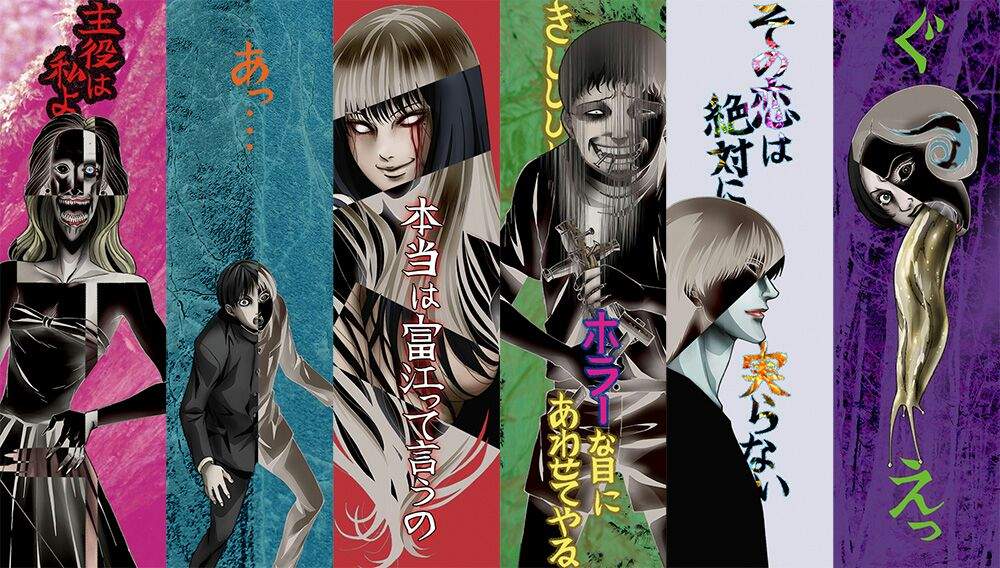
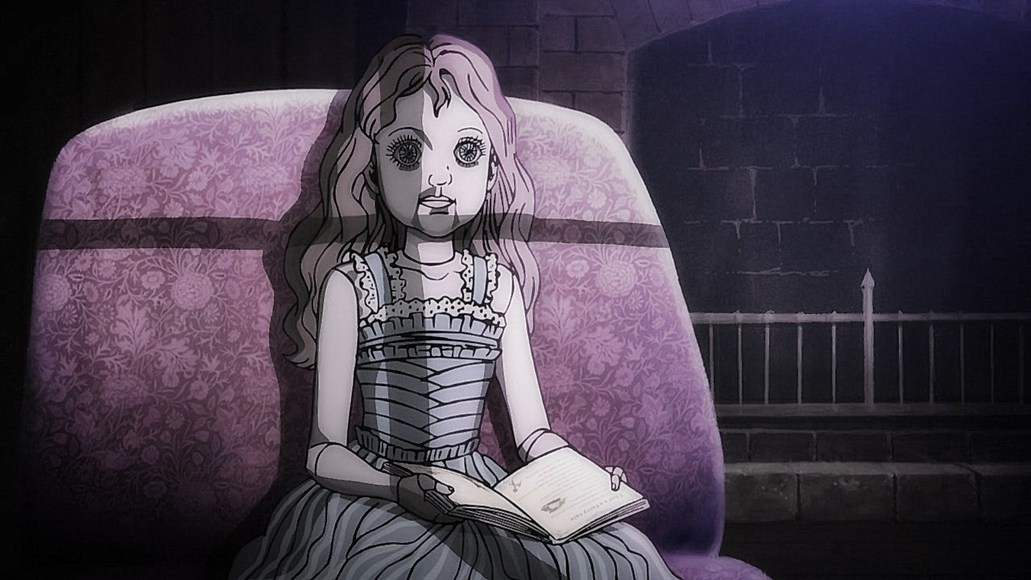
I had been prepared that the Junji Ito Collection, after the initial excitement running up to its January 2018 premier from Junji Ito fans like myself, that enthusiasm had started to drain away, finishing with a lot of disappointed viewers, one YouTube video describing how bad the series is compared to Ito's original manga, and a general air of this being one of the biggest failures of 2018 for anime. I don't think this adaptation is the worst it could've been. I will agree with this series' detractors that, production wise, Studio Deen dropped the ball horribly in visually depicting the legendary horror author's work, but even in this state, Junji Ito's work is too good to prevent this anthology from being entertaining. As a fan of even schlocky anime horror, as long as it's actually horror and not an action story with monsters, I have a high patience with this type of episode tale, my own brand of catnip.

The problem with the Junji Ito Collection is the presentation, looking like a cheap show and with moments, having collected and read the source material that's been translated in English, where the drop in style compared to Ito's original pages does sting. I think however as much of the issue is that Junji Ito's idiosyncratic style is incredibly difficult to adapt unless you have the style and budget. It is neither that all his work is too difficult to adapt. Some of it is as with Gyo (2012), the adaptation of his robo-fish apocalyptic tale which is trashy and not helped by the look of the film even as an OVA being closer to a trashy cheaper one of yore amongst its other issues. In other cases, as with the Junji Ito Collection adapting more slow burn and less ambitious stories, there was no excuse for this.

From https://www.dreadcentral.com/wp-content/uploads/2018/01/Junji-Ito.jpg

Arguably the only adaptation which has succeeded is the live action adaptation of Uzumaki (2000), because Higuchinsky in spite of not having a proper ending, still compromising the adaptation, he purposely adapted the material into his own style. Ito is an exceptional illustrator as well as a good storyteller of bizarre and freakish events, and unfortunately in terms of adaptation, one of his trademarks is reliant on how detailed he is in his shading and etching of everything from facial expressions to the monstrosities he shows on the page. This is very difficult to animate, even in live action as was the case with Uzumaki, unable on its budget to adapt the truly surreal ending of that novel, and if you are not going to provide good OVA or theatrical level quality of production for an animated adaptation, even a healthy TV anime budget, this is going to be impossible to recreate perfectly especially in a tight schedule.

It also didn't please many that, whilst the first episode ends on a short minutes long story of a girl turning into a puppet, it is mainly devoted to a comedic story of Souichi Tsujii, a creepy boy who knows how to induce curses and hexes on his fellow school students. He is the character who appears the most in multiple episodes, even over Tomie, and is a character that hasn't to my knowledge ever been adapted into English publications, which would make this abrupt beginning in farce a jarring choice for many expecting the creepy and disturbing material Ito is most well known for. I grew to love Souichi Tsujii - a character who is lovable even though he is obnoxious and spiteful as much because he always gets his comeuppance every time he appears, the first story taken from Souichi's Diary of Curses (1997) and many others shown in this series belying that Ito has written a lot of eclectic material over his long career, only really known for us in the West through Junji Ito's Cat Diary: Yon & Mu (2009), his autobiographical book on raising cats with his wife, being released.

From https://asianmoviepulse.com/wp-content/uploads/2018/07/Juniito3.jpg

The eclectic nature of the Collection helps with the series' major flaws. When a story like Long Dream - where a patient in a hospital feels like his dreams for what can feel like days to eventually years - loses its potency due to the average art style, you are yet introduced to Smashed, a tale where a sacred nectar can only be eaten when not noticed - if you are, it's a grotesque and sickly humorous tale reminiscent to the Monty Python foot from the sky, squishing people like strawberry jam for a reason which is even more perverse when revealed. Two very sombre Ito stories appear here and they are among the best - Gentle Goodbye (available in English in the Shivers collection as Lingering Farewell) is about a family who wishes their recently deceased into copies, a story which stands strong even if seeing it in this animated version raises logic gaps in the plot twist, while Bridge is about an ill advised funeral custom of floating the recently dead under a bridge, emphasising as well Ito's really wide talent for a variety of tones. One story, Used Record, benefits from being able to hear the song on a mysterious record which causes people to go insane to try to possess it; whether the song played is actually appropriately macabre or not, it at least gives a hipster's nightmare actual sound. One other story Greased, which is entirely about the most disgusting ways Ito could talk about grease (natural in the skin or cooking oil) and even made me feel ill in this animated adaptation.

And in spite of everything, you cannot diminish the perverse imagery of Ito's work, just softening the blow enough with the production and still hooking a fan of the author's work like me regardless. Here the [Spoilers] have to be implemented to describe such nightmarish imagery such as an entire century of family continued through their brains and foreheads being connected on the next heir, or blood fruit that grows from your wounds, or the results of trying a growth serum causing a horrible elongation effect all in the midst of dealing with your doppelganger from another realm... [Spoilers End] here but that is just part of the many a horrible yet utterly imaginative thing that Ito could come up with, all of which is still grotesque even in this anime series. If anything seeing these stories, new or old material together, Ito never lost his creative juices. In fact, this anthology's one success is that the variety of Ito's world, from cosmic horror to black humour with a few morality tales thrown in-between, emphasises both his talent but also makes this one anthology work with enough different tones to never get boring. You couldn't when one episode can go from the bizarre episodes to spring up in a town when a transfer student appears, like every cliché of anime supernatural high school appearing, but also has a sombre tale of the dead being idolised by scarecrows.

From https://blogger.googleusercontent.com/img/b/R29vZ2xl/AVvXsEgwQjHbdmHsHrZoyvRznAJBbHEpFgBn7goGIRlS6ExvPAmv4XNJiHyE25UKqd4U6pazipFnE8fJ-w99M9BT3fEzCDKnXK6mxY8CVqNQjvcQ6Iy5iVvPgp9yhDICGrXks0_WRhbnpezjYGw/s1600/Junji-Ito-Collection-The-Ongoing-Tale-of-Oshikiri.jpg

The fact many of these tales, those available in the West or not in their original manga form, are not the biggest titles in Ito's career is to the Collection's advantage as well. With one exception, which is the character of Tomie, the Junji Ito Collection whilst it could've done with a lot more care in its animation and design is still a very good introduction to Ito in terms of his prolific output. Noticeably each story, always two per episode of varying lengths, is numbered but vary leaving gaps, as if this numbering is actually the real chronological order of when Ito's manga were first published. The choice in tales is enough to encourage some to take an interest in Ito's work, making this as an Ito fan still a good work to have been made. And if anything, at least the music's interesting - the opening title is good but the real standout, in front of end credits which include the figures of both tales of that episode appear together, is a fascinating and memorable little song with math rock rhythms that's wormed itself into my head.

Since it hasn't been brought up, yes Tomie is one of the stories adapted, once in the main series and with two of its tales in the OVA thirteenth episode, split into two halves strangely with the question of, if they were released separately, how much the Japanese fans were ripped off in terms of money to get those fifteen minute pieces. Tomie was one of the biggest draws in terms of promotion especially for the Western fans as Tomie is a major work in Junji Ito's career. It's also one of his best as, what could be initially a deeply misogynistic story about an evil temptress who eventually drives men to slaughter her, has a deeply complex side to it about the worst in men who obsess over her and, yes, usually kill and dismember her, only with the issue that not only does she come back to life and regenerate, but that dismembered pieces grow into their own Tomies, multiplying her over the landscape. The first story of the OVA, the first Ito ever drew, even takes the story to an entire class male or female being drawn to evil by their worst emotions. There is a potential controversy that, for an OVA, how this evil is shown is censored, obscuring what would be the most horrifying moment in the entire Collection with a disposal of a body, but there needs to be emphasis that, no matter how horrifying Ito's work can be and even gory, he has never been about splatter, not only the implied nature of the scene (with sound and dialogue) being more horrifying than drawn intestines, but actually more faithful to his source material as a result. It neither stops the final half, another Tomie story but with a reoccurring character, ending the Collection on a high if gruesome note, a head where it shouldn't be conversing with the doctors involved. That the end theme song is a one-off, a freakish electronic string piece, fits the spike the ending provides even for disappointed viewers of the series.

From https://100wordanime.files.wordpress.com/2018/03/junji10c.jpg?w=648

Altogether, I liked the Collection. In spite of the elephant in the room - that Studio Deen should've made a series with a significantly better production style if they were going to adapt Junji Ito - the material is still too rewarding despite this. As much because I lowered my expectations approaching this series, the merits outweigh the anger other fans have shown.

Saturday, 6 October 2018

#73: Boogiepop Phantom (2000)

From https://www.animeprintz.com/image/cache/b/
boogiepop-phantom-106211-8271-wd-800x500.jpg


Director: Takashi Watanabe
Screenplay: Sadayuki Murai
Based on the light novel series by Kouhei Kadono
Voice Cast: Mayumi Asano  as Boogiepop, Kyo Nagasawa as Kazuko Suema, Sanae Kobayashi as Manaka Kisaragi, Jun Fukuyama as Manticore Phantom, Rakuto Tochihara as Poom Poom, Kaori Shimizu as Touka Miyashita
Viewed in Japanese with English Subtitles
A Cinema of the Abstract Crossover

Into October, and Halloween, there should be some anime horror covered and this is a series that has taken me a long while to return to. Boogiepop Phantom was a series I viewed very early into my interest in the medium, and didn't understand in the slightest, one of the more challenging and innovated anime television shows in terms of structure.

My opinion now as an adult? Follow the link HERE and find out.


From https://img.fireden.net/a/image/1518/73/1518737297545.png

Sunday, 30 September 2018

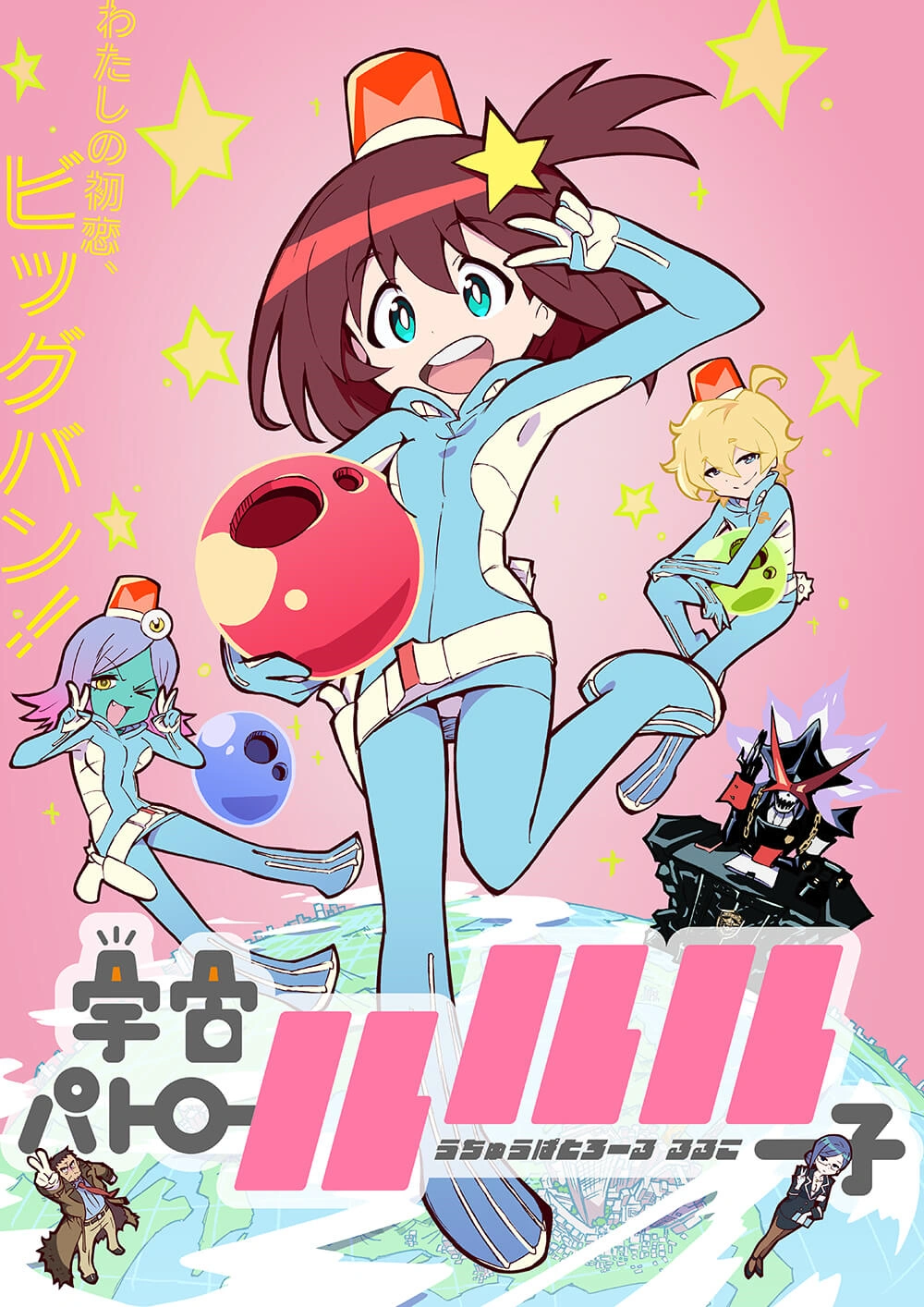
#72: Space Patrol Luluco (2016)

Fromhttps://vignette.wikia.nocookie.net/spacepatrolluluco/
images/b/b3/Cover.png/revision/latest?cb=20160409043813


Director: Hiroyuki Imaishi
Screenplay: Hiroyuki Imaishi
Voice Cast: M.A.O as Luluco, Junya Enoki as ΑΩ Nova, Mayumi Shintani as Midori, Mitsuo Iwata as Keiji, Nobuyuki Hiyama as Blackholian, Tetsu Inada as Chief Director Overjustice, Youko Honna as Lalaco Godspeed
Viewed in Japanese with English Subtitles

Synopsis: Luluco (M.A.O.) if anything is an ordinary thirteen year old schoolgirl...who just happens to live in Ogikubo, a hub for aliens and humans on the planet Earth, whose father is a Space Patrol member who accidentally freezes himself when a piece of equipment is eaten in his breakfast, and Luluco is forced to take his place in the Space Patrol. That's before you get to her mother being a space pirate, and general evil that must be defeated by justice, all whilst Luluco develops a crush with fellow recruit named ΑΩ Nova (Junya Enoki)

[Full Spoilers Throughout]

A new Hiroyuki Imaishi piece...I admit to have taken a while to finally get to Space Patrol Luluco, but I've always been up for whatever new project he helms. I admit that a lot of the delay to actually seeing this thirteen episode series is that, distributed by the streaming site CrunchyRoll, it has been an exclusive to their site and yet to be released in the UK. This way of promoting their own site, having unique titles of their own, is wise business practice.  It is baffling that an Imaishi title hasn't been released in the UK, which does provide a double edge sword when it comes to streaming - that, unless this is permanently on CrunchyRoll, there's always going to be the danger of when the license runs out. There's also the fact that, whilst there are many of us who finally got around to subscribing to the site like myself, one wonders how many people do use these sights and would be introduced to stuff like this. It needs a proper evaluation, with the likelihood as much of streaming being as successful if not more than physical media, but it does suck that stuff like this isn't on British store shelves.

Space Patrol Luluco though is peculiar and appropriate for this streaming era as, including opening and end credits, the episodes are only around seven minutes long, Imaishi's Studio Trigger having rode the wave of micro-series gladly. It's a testament to them, as this could've been a single feature length story, that the plot is incredibly economic and fleshed out in those few minutes. (In fact, in one of the more peculiar aspects, the thirteen episodes are actually meant to make up a couple of larger episodes named "Seasons", playing up to this being one large work to binge on). It helps that Imaishi has gotten down pat stories like this too - a young teenager finding him or herself and being a hero, in this case a young girl finding love in a mysterious figure known as ΑΩ Nova, whose almost blank handsomeness proves part of his plotline of being actually a villain's henchmen who literally needs a heart a la The Wizard of Oz. This type of material is the director/writer playing to deliberately ridiculous levels, sincere to the point of camp as Luluco's space pirate mother Lalaco Godspeed (Yōko Honna) ends up arguing with her husband that now's the right time in her life to start dating, all in the midst of an outer space battle where everyone's elaborate transformation is into gun shapes. If anything, "Justice" is a word you're going to have to get used to, because it's shouted off the rafters in comically dynamic ways over and over and over again...

From http://www.killahbeez.com/wordpress/wp-content/
uploads/2016/04/SpacePatrolLuluco-042016.jpg

If anything the premise is just an excuse for Studio Trigger to flex their muscles and show their animation staff is better than anyone else's, the equivalent of a little desert with this tiny series better made than longer, full length shows. With experimentation too - the end credits are a gorgeous piece, set to a dream pop track, of cut-outs of Luluco and ΑΩ Nova as tiny figures moving in stills across a real Japanese street. If this is all ego stroking, Trigger are at least backing it up with talent. Not surprising, as the series is meant to celebrate them, so that self congratulatory nature is purposeful even as being part of the plot; part of the series, "Season" three, after erstwhile villainess-turned-Space Patrol member Midori helps contribute, with the help of her quasi-legal Blackhole App, into the patrol searching outer space for the entirety of Ogikubo, is where most of the cameos from other Trigger series take place.

The one for Kill La Kill (2013-14) is merely the style - the music and the living red string - but those for Little Witch Academia and Imaishi's Japan Animator Expo short Sex&VIOLENCE with MACHSPEED (2015) involve characters from those works. Inferno Cop (2012-13), another Trigger project where they dabbled with micro-series with success, is used in a much more interesting context, the titular character officially in two roles like he's an Osamu Tezuku character template - one as the police chief of the Space Patrol, mainly stuck behind a desk wearing giant shades, and as himself offering advice to a dead and heartbroken Luluco to come back to life and pick herself up from her issues. The segments referencing the other productions, "Season" three is arguably the weakest aspect of the whole series for me, but I have to admit it's pretty hilarious the most ridiculous of all the characters is the one who has the most material to work with - who knew Inferno Cop could offer inspiration advice?

From https://vignette.wikia.nocookie.net/animevice/images/4/47/
Midori_%28SPACE_PATROL_LULUCO_Ep_3%29.png/revision/latest?cb=20160416013442

If there's a flaw with Space Patrol Luluco, it's a slight show. Even if you excise the entire third chapter, of four episodes, where most of the references come into play, there's not a lot of time to build on the material especially as the show. One of the most curious aspects about Imaishi is that, despite his almost ADD levels of exaggeration, some of his best work plays with long length series, each arch changing the tone or plot in ways which build up his premises immensely. Particularly here, as it gets ridiculous with cosmic thieves with black hole heads and a giant battle using the power of love at the end, you could've easily had a longer series from this material.

The other obvious issue, felt with Sex&VIOLENCE with MACHSPEED and now here, is that whilst Imaishi still has my respect and good will as a creator and I liked this series, he needs to try something different now. Personally, even next to his divisive debut Dead Leaves (2004), Space Patrol Luluco is his weakest work. It is still good, but it has faded from memory especially with the expectations I had. These expectations were too high considering the presentation and context for the show, but if anything, the issue is that Imaishi's style with Studio Trigger is perfect, but he needs to now stray into a different genre or story type and keep himself fresh. Hell, a story about Japanese flower arranging from him would be awesome and would be welcomed at this point in his career, because Studio Trigger's reputation is so high still for many anime fans that they could take the gamble and likely make the best looking anime with that premise or any other. There is a sense, if anything, that after Kill La Kill Imaishi's yet to actually properly follow it up, as Space Patrol Luluco shouldn't be that title, instead the brief but sweet and fun work it was. How the director and founder of Studio Trigger would follow one of his biggest works is the new question and one he needs to think about carefully now after this particular example.


From https://theanimeharvest.files.wordpress.com/
2016/07/evangelion-reference.png

Friday, 21 September 2018

#71: Black Lion (1992)

From https://m.media-amazon.com/images/M/MV5BNjMx
NWFjNjMtMTNjNy00NjE1LTg2ZjctNzJiZmY5
OTYzNWY4XkEyXkFqcGdeQXVyMzM4MjM0Nzg@._V1_.jpg


Director: Takashi Watanabe
Screenplay: Ritsuko Hayasaka and Yasunori Takagi
Based on a manga by Go Nagai
Voice Cast: Yasunori Matsumoto/David Stokey as Shishimaru, Yūsaku Yara/Jose Brown as Ginnai Doma, Ai Orikasa/Kathryn Dineen as Hayabusa, Kan Fujimoto/Robert Rudie as Momoji, Kazuyuki Sogabe/Charles Campbell as Oda Nobunaga
Viewed in English Dub

Synopsis: In feudal Japan, the legendary figure Oda Nobunaga has acquired futuristic weaponry like tanks and rifles and is dominating the country as a result. Amongst his allies is Ginnai Doma, a man whose family was killed by ninja and would've have passed on to another life were it not for Nobunaga's intervention, turning him into an unstoppable killer hell bent for revenge on all ninja. One such ninja, Shishimaru, desires revenge Ginnai Doma for the loss of his clan, begrudgingly joining another clan of ninja to stop Doma immediately before he finishes them all off.

Black Lion, a straight-to-video anime, is so ridiculously manly one enthusiastic anime podcaster for the Anime World Order podcast showed his love for the forty minute plus program by punching himself in the testicles mid-recording1. And considering this is an adaptation of a Go Nagai work, that's not surprising either. Nagai is a legendary manga author, one of the most influential in the medium whose creations - from Cutey Honey to Devilman - are still be adapted to anime today. He even challenged Osamu Tezuka, the "Godfather of Manga", at least being an influence, even if subconscious, on Tezuka going into his more adult and explicit content of the seventies alongside the other bludgeoning manga authors charting that course. Nagai, going through anime adaptations of his work and now able to start on his actual manga, is also an incredible illustrator. Also, he's as mad as a box of frogs.

It's not surprising in lieu of this he created Black Lion - part of an ongoing obsession in Japanese culture of modern technology landing in their past of samurai. Black Lion starts off abruptly with said samurai mowing down ninjas with machine guns, and even a leader of the later having a secret room to his paper wall compound with a super computer, housed behind an iron mechanical door, but it does eventually make sense of this. In this world, the legendary historical figure Oda Nobunaga has ended up encountering evil aliens, who through time travel provide him with future technology, and eventually evoking in this mere fragment of the original manga also good aliens about to take part in this conflict of anachronisms. The spaceship over period Japan that closes the OVA is itself as strange a juxtaposition as it sounds.

From https://lh5.googleusercontent.com/-rUbYpEwYAQ8/TW3CixhsiCI/
AAAAAAAAATw/tAzuJZmligk/s1600/vlcsnap-2011-02-23-21h50m16s191.png

This is also a work obsessed with Oda Nobunaga, the real life 16th warrior who was one of the first to unify Japan during a chaotic period of war through the Sengoku Period. He was very culturally minded, had little issue with interacting with Westerners (to the point he is viewed/confused as having been Christian) and took advantage of it, and is also a divisive figure for how ruthless and violent he was in war and as a ruler. In Japanese pop culture, he's been depicted as being a demon or being in the pocket of demons. He's also been gender swapped into a girl twice - The Ambition of Oda Nobuna (2012) and Sengoku Collection (2012) - and tried to control the world with a demonically possessed satellite and time travel against a heroic samurai and Jean Reno in Onimusha 3: Demon Siege (2004). In their vast and weird interpretations, his representations centuries later are so numerous he inexplicably deserves a blog tag himself as his own subgenre, only if he has a cameo here providing the mortally wounded Ginnai Doma the robotic body and murderous urge to be a threat to all ninja.

All of Black Lion is focused on Ginnai Doma being Terminator-like and ninja dying on mass trying to stop him, our cocky lead Shishimaru with his own vendetta against him established at the beginning. A parade of gore and violence takes place for the whole forty minutes which is trashy; something I openly admit is an acquired taste. It has the decency, however, to just make the entire OVA about just trying kill Doma, over that length of time actually compelling as the ninja become more and more exasperated and the maddening attempts to just him finish off lead to more of them dying, usually in horrible ways. Its sickly humorous if you feel that way inclined, but also has more interest to it than if just another ultraviolent OVA from the nineties which juggled multiple plot threads at this running time with no rhyme or meaning behind them, because at least it sticks to one idea and runs it into the ground with all the sense that it couldn't have forgotten anything that would've made it better than it is.    

From https://lh5.googleusercontent.com/-o1bcf4ZDhC4/TW2pVF8joWI/AAAAAAAAATY/
yZQKXMDduQA/s1600/vlcsnap-2011-02-24-21h52m07s156.png

Aside from this, you're enjoyment is entirely how absurd this becomes and how much you can appreciate it. Viewing the OVA in English may prove better for some viewers just for David Stokey's constantly shouted and loud performance as lead Shishimaru, as unlikable a ninja as you could get in his attitude, an obnoxious individual who refuses to play ball and gets at least one person killed if not more, adding the tone. The OVA is adequately animated, entirely more about the content itself rather than any elaborate style. Where someone is going to blow up everyone with a nuclear powered battery within himself or herself, lasers are fired from mouths, and the body count is stupidly high. Even illusions with burning marijuana used are involved and the dialogue especially in shouted English is going to add to the absurdity of it all. All of it is silly, but with Go Nagai, I realise soon into my proper introduction to his original work Nagai is both a very talented artist, but in his ability to mix wackiness with the nightmarish, he indulges to his id to conjure his stories. Even if they are potentially problematic or absurd, he writes material like this as with many manga authors to make each page compelling, which is entirely why you get stuff between this or a Mad Bull 34 (1990) which baffle and amuse decades later now we have ironic and non-ironic viewing.

Black Lion is no different, only with the issue that, merely a fragment which completes its small narrative but with an open conclusion, it's entirely about the most outlandish gore, stunts and twists rather than anything more in-depth. Its, frankly, insubstantial even next to other insane action OVAs of the time, and Nagai's work has been adapted into more memorable and batshit forms. Some were even legitimately good. It is however, if you can be enthused by it, providing enough energy to encourage other viewers to punch themselves in the crotch, so be prepared. I wasn't one such person, but I can sympathise with the masochistic energy that would encourage one to.

From https://lh5.googleusercontent.com/-ctOGZeTQgz4/TW2_FuRBVII/
AAAAAAAAATk/tuUYYSnIxR8/s1600/vlcsnap-2011-02-24-22h15m19s254.png

====
1) Episode # 54c. Not one of their usual shows, running over ten years plus, so I wouldn't necessarily choose it as your first; it is however memorable just for the Black Lion review.