Sunday, 27 October 2019

#125: Pupa (2014)


Director: Tomomi Mochizuki
Screenplay: Tomomi Mochizuki
Based on a manga by Sayaka Mogi
Voice Cast: Nobunaga Shimazaki as Utsutsu Hasegawa; Ibuki Kido as Yume Hasegawa; Mamiko Noto as Sachiko Hasegawa; Kōji Yusa as Shirō Onijima; Kyōko Narumi as Maria; Kenjiro Tsuda as Makoto Hotoki
Viewed in Japanese with English Subtitles

Concerning previous "terrible" anime I have covered, Pupa is not as bad as its reputation suggests. Unlike, say, Mars of Destruction (2005), where for my enjoyment of it the result of a technical embarrassment, Pupa was a compelling premise, one which is grotesque and likely as much to have been dismissed by many due to its offensiveness. However, there is also the issue that Pupa was compromised by the worst case scenario of how a production shouldn't have ended up.

Pupa is pure ero-guro-nonsense, in the sense of the erotic (ero) in its transgressive incest themed content, grotesque (guro) in its gore and disturbing plot details, and nonsense for how over-the-top it is, in which a virus has left two siblings, Utsutsu Hasegawa the older brother and Yume Hasegawa his little sister, mutated. Yume, inside her stereotypical cute Moe schoolgirl form, is actually a human flesh eating monstrosity that'll devour anything that moves if she gets hungry but, watched over by a shady organisation, a compromise is found in that her brother Utsutsu can regenerate grievous bodily injuries, thus decided upon himself to be the Prometheus to her crow by letting her eat pieces of him when she feel the cravings. It's made inherently sexual just in the sounds the voice actors make during the few eating scenes, chomping on her brother's stomach in the gym during physical education classes, and is more disturbing as they're mere underage teenagers and related. One scene, where they are undressed and Yume's allowed to feed on him in one of their bedrooms just deliberately evokes an even more sordid air to already provocative content. I find in this case however it's an acceptable form of transgression, as its meant to provoke with a reason, deliberately set up to be freakish and yet perversely compelling, and its set up to.

Mainly, in spite of the huge production flaw of how Pupa's structured we'll get to, because there is enough set up in terms of complexity. That these are psychologically damaged figures whose symbiotic relationship comes from the older brother wishing to protect his little sister. Their father was abusive, and the mother even before birth outright rejected to her second child as a monster, forcing the siblings in a relationship of closed in isolation where they depend on each other. Incest is, frankly, a taboo subject for a reason, and its particularly an issue as it's a common theme to be found in anime and manga even in porn, which raises an issue of when it's used at all; it's gotten so pronounced in subculture that an increasing amount of "step-sibling" plots in Western porn may be an attempt to reach a fan base that's into those Japanese works originally. Here in Pupa, in this context, it feels acceptable as a deliberate provocation trying to be more dramatically richer, and one of the virtues of Japanese horror is that, even when it's nasty and gory, a surprising amount of it has a lot of potential for nuisance than much in the West. Pupa from its tone is inherently more nuisance and even when it leads to a darkly humoured tone with how their awkward feeding relationship plays out near the end, it's with reason with context.

Probably the biggest surprise is that Pupa was directed and written by Tomomi Mochizuki, who directed Ocean Waves (1993), a Studio Ghibli project, and one of their most obscure titles, in which they let younger talent create a TV animated movie, thus (as Ocean Waves was a high school drama) you have both the abrupt change of pace and a review that can quote Ghibli and body horror in the same sentence which also happen to both be about teenage angst. Unfortunately, when Pupa was originally meant to be a full length anime TV series, the production went through a drastic choice that proves a huge issue. First, this is a micro series, twelve episodes that are four minutes long each, which is a format I have covered and come to admired, but leaves Pupa with barely the surface in terms of its plotting. It does mean you have a full narrative here of interest, but details are lost to the side, such as the character of Maria, dressed as a Goth witch that looks out of place as a costume, the villainess who is involved in the experiments on the siblings and even willingly becomes the expecting mother of another flesh eater, a plot thread we never see as that closes out her story. Likewise, the show ends with another medical group, for unknown reasons, kidnapping the pair and taking a morally dubious stance that, just because he can regenerate even amputations, cutting Utsutsu up with anaesthetic is just pure evil no matter how much good you claim to be studying for.

From https://www.fandompost.com/wp-content/
uploads/2014/02/Pupa-Episode-7.jpg

Not helping was apparently, with full knowledge this is a nasty premise, this was released censored in a comically atrocious way, as in black obscuring blood to the point the screen's black, white bars covering sibling eating to the point of almost becoming more obscene looking, even the censorship of a knife being held aloft. It's an embarrassing result, as you can see comparisons between the censored and uncensored versions, and beggars the question of why adapting horror anime like this unless you have it PPV or on the equivalent (which exists) of cable where you can show stuff like this with more ease in Japan. In general, Pupa is not an example of dreadful anime, but an example of all the production choices that can mess up a compelling work.

Visually the show is okay, the generic character designs actually helping with the luridness of the premise if you aren't going to be more ambitious, especially as the whole stereotype of the innocent little sister-figure to protect, which is a common and a problem in terms of its fetishisation in this medium, is made more interesting here when the character looks and sounds as doe eyed and soft voiced as possible before she turns into a monster reptile creature eating your leg. The emphasis on this is also decided to depict the more real disturbing content, like the abuse background to their childhood, through the motif of teddy bears representing the family, innately the bright colours of animation useful for making bright cute things more disturbing when representing the worst in humanity. The show even ends on a sweet note as, rather than horror, it's a childhood flashback to a game Utsutsu tries to win as a small boy for his sister that emphasises his love and protectiveness to her.

So there was more ambition here than some of the bad or boring anime I have encountered would never have. There's enough in just thirty seven minutes or so altogether to redeem the work from its infamy, but of course the fragmented version in existence offers barely a slither of a work that could've been more interesting. I cannot imagine fans of the original manga, by Sayaka Mogi, would be happy when the work lasted over five volumes leaving a lot on the table left to potentially cover1. It's a "what-if" instead, the chance likely to have been compromised permanently as this is an obscure work and, if Western reactions had any influence in the slightest, it's like angry peasants welding burning torches than defences for the most part. So the result is admiration for what is there, but a lot of disappointment too, which is a shame as in knowledge of how perverse, disgusting and adamant to many clichés Pupa is, I actually enjoyed it for what it was immensely.  

From https://moesucks.files.wordpress.com/2014/03/pupa-1102.jpg

=========
1) As of 2019, no English translation of this manga exists sadly, though if you can speak French, France with its healthy number of manga titles of intrigue being published there did get it.

Saturday, 26 October 2019

#124: Pom Poko (1994)

From https://posteritati.com/posters/000/000/
056/147/pom-poko-md-web.jpg


Director: Isao Takahata
Screenplay: Isao Takahata
Voice Cast: Makoto Nonomura as Shoukich; Shinchou Kokontei as Narrator; Yuriko Ishida as Okiyo; Akira Fukuzawa as Ryutarou; Beichou Katsura as Rokudaime Kinchou; Bunshi Katsura as Tasaburou Hage-tanuki; Gannosuke Ashiya as Inugami-gyoubu; Kobuhei Hayashiya as Ponkichi; Kosan Yanagiya as Tsurukame-oshou; Nijiko Kiyokawa as Oroku-baba; Norihei Miki as Seizaemon; Shigeru Izumiya as Gonta; Takehiro Murata as Bunta; Yorie Yamashita as Otama
Viewed in Japanese with English Subtitles

With this, I have my first Studio Ghibli film review on the blog. It's taken a while, but I had a sense of trepidation to tell an embarrassing truth, unsure how exactly I'd cover work from a studio many people much more professional as writers have covered in far greater detail and at length. As a result, I've sadly not watched a Studio Ghibli film in such a long time, to which this obscurer title in their back catalogue makes a nice beginning to change this.

This is important in itself in terms of what exactly I choose as, when most people think of Studio Ghibli, they're probably thinking of Hayao Miyazaki and his films, whose reputation exists outside of even anime fandom. Studio Ghibli had, to put it bluntly, tent poled itself around only two directors, a history of figures who were one offs, one in Yoshifumi Kondōwho sadly died prematurely after his film Whisper of the Heart (1995) only a year later, and even Miyazaki's own son Goro, who worked as a director at the Ghibli Museum, before he worked on two films so far. Miyazaki himself is a great film, a man whose tendency to retire only to return and his grumpy opinions not denying him as one of the great auteurs in anime behind gems like Kiki's Delivery Service (1989). The other, less praised as he should be, is the late Isao Takahata whose filmography in Ghibli is idiosyncratic. His films are much more unconventional, even Pom Poko as his most accessible for the company, and the one whose was arguably the most "adult" in that he tackled very serious themes which might have gone over children's heads even in a comedy like My Neighbour The Yamadas (1999). He's known above all else for Grave of the Fireflies (1988) as devastating as you could get live action or animated in dealing with Japan's place in World War II/The Pacific War from the innocent bystanders' place, and for myself, Only Yesterday (1991) is one of my favourite films of any country or form, an animated drama about a woman in her late twenties going back to the countryside so idiosyncratic it took until 2016 to finally get a proper American release when most of the company's back catalogue was already out.

Pom Poko envisions a premise we've probably had as a live action film in which the animals in the wild decide to protect their land from the development of human expansion. Here it takes a fascinating direction, especially as he tells this environmental message from the perspective of Japanese folklore. In Japan, foxes and tanuki (raccoon dogs) native to their land were seen as shape shifters, to which Pom Poko imagines the inevitable when said tanuki clash with the development of Japan after it grew out of the ashes after losing the war to becoming continually urbanised into the modern day. Told with a narrator, it doesn't go the direction many would expect, where these tanuki first get acclimatised to television and the joys of McDonald burgers when, to begin their war, they have to relearn their ability to shape shift and learn what the human culture is now.

That and, whilst we sympathise on their side, their first initial acts involve causing vehicular accidents with construction vehicles that lead to humans actually dying. This is taken further into a level of complexity you'd never expect as the elders, upon their first wins, still want to pray for the lost human souls that died in their war, even if the young ones want to just celebrate. Takahata, even for a film suitable for families, doesn't hide any of the issues that arise in this subject, to imagine if the beasts of his country's folklore actually exist and imagine them trying to adapt to the new era, the matter-of-factness that they are of a different dying culture, a different lore, but not negating the human characters either. Its poignant, not jumping too far ahead but wanting to still reference much later, that one of the most poignant scenes is two older men recounting drunk how they once believed in such creatures, and no longer believe in them, even when the raccoons eventually escalate to full scale yōkai mass haunting in the entire city of Tokyo just behind them.

Even Hayao Miyazaki, whilst still an idiosyncratic filmmaker, worked in territory that could gain mainstream acceptance more often, whilst it was a common habit for Takahata to tackle unconventional subject matters, the film not belying that these raccoons can be killed on the roads or being caught in traps like regular animals, even in a whimsical tone with plenty of slapstick humour. It can just also be frank; a lot of its humour managing a delicate line in terms of the adult content without being explicit, jokes about mating season and forced vows to keep the population under control the most prominent example of this. It's a film complex in its message, an environmental message thrown in the front and centre, but with a light hearted tone still streaks it in darkness. It's not a spoiler to reveal that the raccoons will not succeed, because the world has already changed, but how they adapt over the feature length to a very different, vastly growing world of human metropolis is the real story at hand, right down to the foxes having monopolised hostess bars when one is introduced. It's a literalisation that can even be found in real life in how even normal non-magical animals like crocodiles to badgers have had to adapt to human civilisation, be it in the streets or under the waterways, and have done so with success in adaptation.

From https://m.media-amazon.com/images/M/MV5BMTk
5MTIxMzMxOV5BMl5BanBnXkFtZTcwMzYxNTIyNw@@._V1_SX1777_CR0,0,1777,994_AL_.jpg

In terms of production, it's a very handsome one, contrasting beautiful idyllic countryside and urban environments with the best in elastic physics. Studio Ghibli are always held as giants for animation quality let alone the quality of their stories with very good reason, this a bar higher than most I have reviewed so far. When transformation is introduced, the raccoons already able to turn into regular raccoons are now learning to turn into almost everything, seeing the best of hand drawn animation as a result.

And of course, this film is explicitly about mythology, especially as the tanuki are lead to deciding to scare off the humans with hauntings, a new playfulness found throughout the film. The entire aspect of folklore involved is in depth, the variety of ghosts and goblins they turn into over vignettes enough to be almost horror at points, like for the poor police officer chased by faceless ghosts, whilst never becoming indulgent. It is esoteric without knowledge of the country's folklore but worthwhile nonetheless. It also has a serious edge, as mentioned, of the environmental message being intertwined in a past lost to urbanism - which might've come off as conservative weren't it not for the 2010s bringing about a lot of ideas, even fads, for past ideals in behaviour regardless of politics.

A huge aspect of the film is in knowledge, whilst made after the economic bubble crash, that this is made in a country which went through a rapid growth after World War II to a huge industrial giant, the sense here that the scenes of countryside literally being removed by god-like deities for new towers a poignant one of the potential loss at hand, or at least a coldness to the new world. It's expressed  in a scene near the end where probably the most effective thing that can be done, when a mass haunting get hijacked as an amusement park advertisement, is to conjure the past where Tokyo was more green with wooden houses, evoking a past even lost to nostalgia and distorted to it without the bustle of the current day. Even the fact the film ends with a tanuki talking directly to the audience, to not harm creatures like them, is a poignant one, coupled with a character going through a human existential crisis about urban drudgery, emphasising this nuisance with the message.  

The lack of simplistic to this message was probably why the film is much more obscure than other Ghibli titles. There was of course the entire issue that, part of Japanese folklore, that the tanuki have giant testicles, which is shown and means we have a Studio Ghibli film in existence with genital humour, as they can be expanded, inflated to gigantic proportions and at one point used to crush police during a night skirmish between the sides. It's certainly a cultural tick that doesn't translate but stands out as fascinating as everything else. In general, Pom Poko is apt for Isao Takahata's reputation, of more adult work which could still be shown to children, even if Grave of the Fireflies would traumatise adults as much, with incredible animation that could also experiment with new forms, the time My Neighbours the Yamadas took to be made from having to create a watercolour aesthetic with digital. This is neither to dismiss Miyazaki, or the rest of Studio Ghibli's output either, but in lieu to how most of the studio's work was fantasy or more adventure based, whilst Takahata baring a few exceptions was always more likely to follow drama. Even this, a fantasy film, is a very dialogue heavy, funny and methodical work.

As the first Studio Ghibli film I have covered, it offers a perfect introduction. It comes in a curious place where, as of 2014, Ghibli self-retired in a temporary way, Miyazaki claiming he was finally going to retire with The Wind Rises (2013), his dramatic film, and Takahata passing in 2018. It is on hiatus but still working on projects, connected to The Red Turtle (2016), a French-Japanese co-production and Ronia the Robber's Daughter (2014-5), 3D cel shaded animated series helmed by Goro Miyazaki. Where the future lies with the company is yet known, but as this is the first of their films I have covered, I have at least three decades or so of Studio Ghibli films to see so I have plenty of time to catch up, and a lot that I've never seen, making this a huge area now I'm finally here to cover.


From https://static01.nyt.com/images/2012/01/06/
arts/06RDPPOM_SPAN/FILM-ROUNDUP3-jumbo.jpg

Wednesday, 16 October 2019

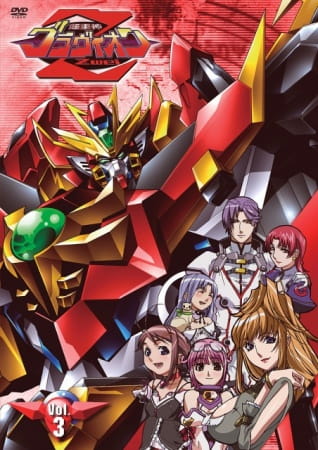
#123: Gravion Zwei (2004)

From https://cdn.myanimelist.net/
images/anime/9/21718l.jpg


Director: Masami Obari
Screenplay: Fumihiko Shimo, Kiyoko Yoshimura and Yuuji Hosono
Voice Cast: Haruna Ikezawa as Luna Gusuku; Houko Kuwashima as Leele; Jun Fukuyama as Toga Tenkuji; Kenichi Suzumura as Eiji Shigure; Mai Nakahara as Eina; Saeko Chiba as Fei Shinruu; Sho Hayami as Klein Sandman; Yuu Asakawa as Mizuki Tachibana; Hikaru Midorikawa as Raven; Kenyuu Horiuchi as Hugi Zerabaia; Michiko Neya as Ayaka Shigure
Viewed in Japanese with English Subtitles

This links to a review for Gravion, which can be read HERE.
Warning: Despite the difficulty you may have tracking this series down, the only way to properly review this series involves major plot spoilers, so be aware.

Two years after the first series, which is a surprising delay in time for a work like this, the next part of Masami Obari's super robot tribute finally answers a hell of a lot of questions and plot threads established in the prequel. The first season, which was openly a tribute to the old type of super robot genre which had to yet cater to sexual fan service for a new otaku audience, left on a very open ending following a group of pilots, all barring two female, who on have to protect this futuristic Earth from alien bio-mechanical monsters under the watchful eye of their mysterious leader Klein Sandman.

There were some abrupt swerves along the way, but Gravion Zwei did so with some success. It draws some l-o-n-g bows on how it got to some plot twists, where rewatching the prequel series adds some idiosyncratic character drama to say the least, and there's clearly a sense they had to still cater to more fan service. In fact they must've have had to do a bit more, as the first quarter of the series does touch upon fan service in lighter hearted episodes, and even has actual nudity for the second series rather than merely teasing the audience. Gravion is clearly a case of a show where it was a necessary to just sell the show; for the most part, everyone on this staff clearly wanted to create a sci-fi action melodrama, and good grief they turned that up to eleven for this finale.

Sadly, they had to sacrifice the prequel opening song for whatever reason, the musical choices curious for this series; it's still by JAM Project, de facto choices for any robot show, but no way near as good as the first, which is felt when it makes a cameo for a perfect time later in the series. The pop punk song at the end credits, about a telephone message machine, doesn't match the content at all but is admittedly an ear worm that compensates for the opening choice. Also, that thing I mentioned with the fan service is of note as, taking up an entire first disc of four episodes on the version I had to track down, Gravion Zwei starts off effectively with the mid-season filler if you view this entire project like a twenty four episode show.

There's still major developments, like an actual big baddy shown behind the aliens, but I can say "hot springs episode" and you know what I mean. To those who don't, the common trope is that there's a hot springs episode in a lot of anime, a cultural aspect in Japanese culture of bathing hot springs which people can go to, usually there for fan service but usually without actual nudity, which is an exception here. The clichés I have seen even in shows that parody it - like Double Decker (2018) in one of its OVA bonus episodes - within the last few years of writing an anime blog means that everything from the fan service to ping pong being an activity at them checks off a tick list. I will admit having your maid characters sing the giant robot transformation song to help cheer on the heroes is inspired, even if it asks some questions about the fourth wall.

I think the best way, if there is a flaw with Zwei, to describe how the escalation hits is that its episode five, beginning with a theme park island that eventually turns into a monster, only to drop a hint about the character Leele, a meek and quiet female pilot, that will eventually detonate over the next episodes of family melodrama when she realises where she comes from and who her father is. I presume the first four episodes get you back up to speed with Gravion after the season break, but we're here for the story escalation, and it drops with a bomb-like intensity soon after that does cause the first four episodes, for their good moments, to be the weaker episodes.

Gravion whilst not reinventing the genre does get interest onwards. Whilst there are multiple people writing the show, the general story composition goes to Fumihiko Shimo, who has an interesting career that is probably more well known for Kyoto Animation work like Full Metal Panic or The Disappearance of Haruhi Suzumiya (2010); I wouldn't be surprised a lot of the more pleasing character touches come as a result of this, but Shimo also makes sure to write a big epic of the tale too, especially as with a lot of characters and plot points to juggle, this is a plate spinning act metaphorically that could've been disastrous.

Interestingly our lead Eiji Shigure, who was our window to the world in the first series, is practically brushed off to the side as his story, adapting to this new role, has little to go with, even the left open issue of what happened with his older sister Ayaka more interesting from her perspective, which we'll get to soon. I think from there are only characters that gets short changed. The first is Mizuki, the only adult character on the team and who was built as a fascinating character despite her comically voluptuous character design, because it's an abrupt double cross to a return that means a little less in context, and her being isolated on a literal island for the middle of the series. Luna too, the tsundere character clearly with a growing bond to Eiji because they argue, gets a little less then you'd hope considering her character back-story. I was surprised they used Eina, the timid maid character, in the way they did for an emotional shock, the show deciding to have its cake and eat it in a mid-season tragedy but also running with sci-fi tropes with a disregard for logic that you can strangely get away with in super robot story telling. Leele is used well with her parental issues, and Touga, who was an emotionally stunted character who grew up only in Sandman's castle, is written further in this lack of emotional empathy further to an interesting existential crisis.

This however is where I get into major spoilers, because how interesting was it to find Klein Sandman, the generic mysterious leader, got an arch where he's particularly (if majorly) responsible for all that transpires, as an alien scientist on Earth, who must redeem himself by protecting Earth even if it's on a death wish. Gravion is still a cartoonish series - we need to remember a lot of anime is hyper exaggerated, in its characters' figures and costumes designs, let alone how they act, not connected to our reality in the slightest, but if you are going to try for drama, write actual drama even if its angst. It was already interesting when the prequel show prodding some light humour from his bombast; then the production went a great direction in having him even wallowing in despair when things go horribly wrong for the team and the World Government finally gets around to building their own robot team, a nice change to the pace. This is still a show where they get out of issues usually by producing a new super weapon or ability, but when Sandman cannot be proud to the point of cockiness and, in a curious twist, Raven is his emotional foundation in ways you might've not expected, thus making the mysterious leader a frail figure needing to find his courage again, it's a way to stack the cards dramatically than just producing a bigger, scarier monster to fight.

It does also lead to the curious plot point, spoiled in the Wikipedia page for me but not able to explain fully without experiencing it, when his assistant Raven is actually Ayaka. Obviously masks play to the logic in anime, like Chekov's gun, that they have to be taken off at some point, but the memories of an old ally on the face of one's own significant love interest, which obvious brings some issues of how the character design drawn for her can change as much as it does in disguise, does raise some odd touches that I actually liked the most out of the entirety of the series.

If it's a contrivance to get to this point, it compensates by leading to some curiously deep psychological licks to the material. That a) now watching this character be hard even on Eiji, and bemoan being stuck running the place when Sandman goes to the beach, now has more meaning, especially as for all my issues with the first four episodes here, the one seeing Raven and the maids get drunk on a picnic, bemoaning they get stuck running the castle, was hilarious. That and b) whilst the final scene of the series with a wedding nearly falls off into bad humour, and comments that every woman wants to get married that will cause one to roll their eyes, that it's cantered around a relationship where Ayaka/Raven is the one who runs the show and has to give their love Sandman a confidence boost every time he gets despondent is a character dynamic I legitimately loved in the series.

It does in the modern day raise issues of "trans baiting", a lot of anime and manga about cross dressing and gender disguising not considering trans culture even in the 2010s well or never considered, but more depictions of the woman in a relationship being the strong emotional arm who gets the work done is a nice subversion when giant robot shows were originally male power fantasies about male pilots in giant robots. Admittedly, back to the character designs, Ayaka is drawn like a character in a fan service heavy show, but one of the curious paradoxes that came with Gravion all this time is that, particularly because having to appeal to sex appeal, that likely influenced the need for a larger female cast, wisely here all shown to all be reliable and getting work done. It's a nice breath of fresh air even in context of an older show watched in the late 2010s.

Arguably the show could've elaborated a bit more on details, particularly as we only get a glimpse at the World Government's robot group, four men following the leadership of their female captain Faye Xin Lu, a character for this series with an axe to grind with Sandman and connected to Touga. This is probably an issue with ever having a large cast of characters but not being a show over thirty episodes - again I wish there was more done with the character Cookie, superhumanly strong lead maid, as in the last season - but in spite of this Gravion Zwei wisely drove itself entirely into its melodramatic final and went for the bombast. Some of it, as mentioned, involves some convoluted sci-fi nonsense, unarguable in how it throws twists around like a mad person, but taking the enigmatic leader of this group and making his plight front and centre with a cast with their own issues was a very good choice. It was arguably as well an important note as, whilst this is a throwback to the past in this genre, Gravion Zwei comes from a period where narrative driven tales dominated the robot genre rather than monster of the week. Whilst this type of show ran counter to Neon Genesis Evangelion (1995), and the shows influenced by it, wanting to be more serious, there was less likely chance of this genre really going back to the old weekly episodic programming of the past with some exceptions, now that this is a genre catering more to adults than to children.

In the end, whilst not perfect, Gravion proved quite a nice surprise, an argument that I can really get behind the giant robot genre as I've covered a few for the blog so far, none major titles but all (yes, even Gundam Reconguista in G (2014-15) in all its misguided, baffling glory) appealing for various reasons and showing what this genre is good at when it works. The initial template, whilst Gundam and other titles have drastically rewritten it, does openly embrace plot points likely to have been used by these titles over the decades, but the base is good enough to play with, expand and manipulate you can get a lot of combinations of worth, the idea that like the Western genre, its premise's iconography and ideas can be manipulated, toyed with or even played straight and lead to interesting results if the character is distinct. Some of the virtues of Gravion arguably even came from one of its clearest compromises, having the fanservice leading to a larger female cast, so particularly with the growth of throwbacks to the old style in the early 2000s onwards, there's a lot of interesting material to consider especially as this genre had more difficulty trying to be sold to children but could be sold to adults.

Unfortunately this is one of the latter works in Masari Obari's career as, whilst it'd go up to to 2011, mainly on robot shows, even into the mid-2000s his directorial work would become rarer and even by 2005 he stopped doing hentai either. At this point his character designs didn't look like those that became his trademark in the nineties either, accidentally a symbolic place for a man whose reputation in design and animation was unmatched but left not actually working eventually. He still works in mecha design in video games, and his reputation in this realm is held aloft, so if he has mostly retired so be it.  


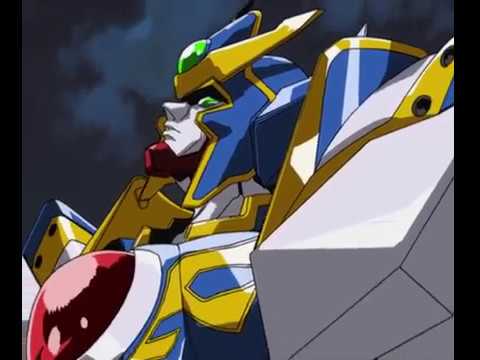
From http://2.bp.blogspot.com/_lmEo6XzFNKY/Swzda6romPI/
AAAAAAAAKgg/ZvMbvUKn8FE/s1600/ScreenShot004.jpg

Monday, 14 October 2019

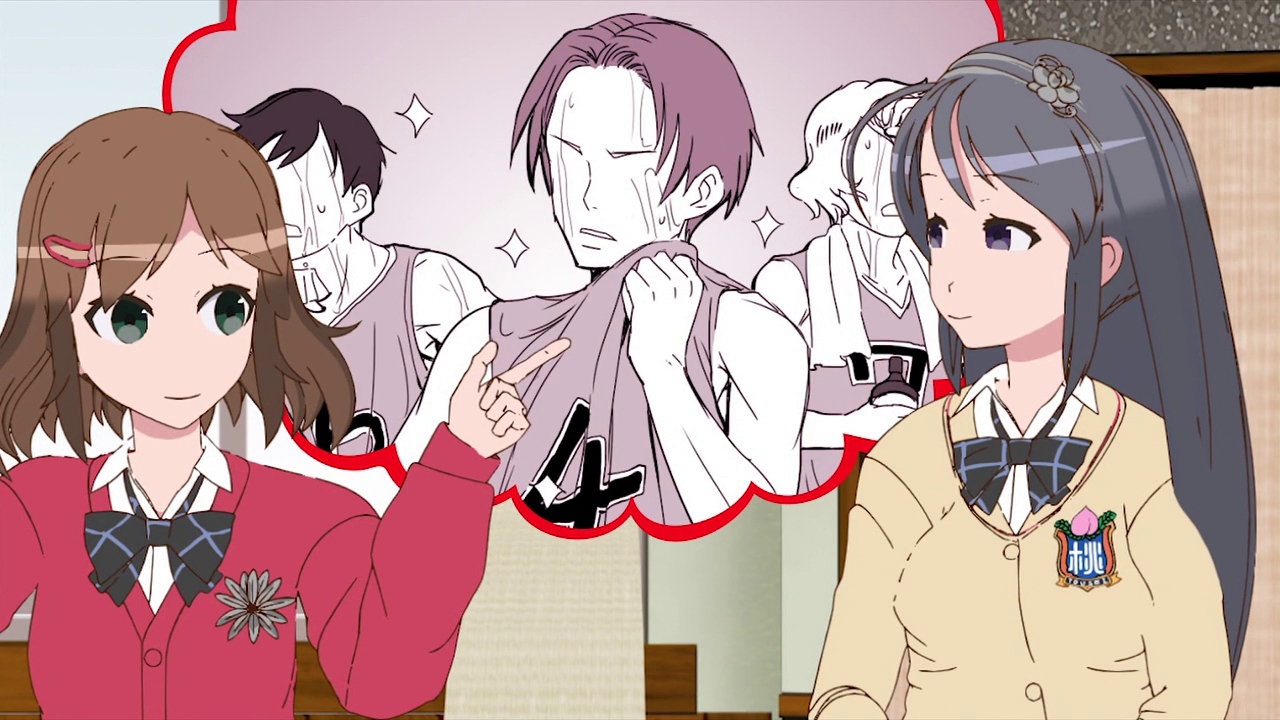
#122: Tesagure! Bukatsu-mono Encore (2014)

From https://blogger.googleusercontent.com/img/b/R29vZ2xl/AVvXsEjRxBk5VbchYNILizad0evFVeLXZWYhD1mNJLPkhyS8Tg1dkd3XM4UQF7tir7vJbkOafEtliFMeXXQAk_FIAu3Fs3KOiICTCn0eHGkLV0eM4vyh4O5fYUC8KkPrVlbXrkn1WGhUHD7u9zA/s1600/tesagure+bukatsu-mono+encore+0.jpg


Director: Kōtarō Ishidate
Screenplay: Kōtarō Ishidate
Voice Cast: Asuka Nishi as Yua Suzuki; Satomi Akesaka as Hina Satou; Karin Ogino as Aoi Takahashi; Ayaka Ōhashi as Koharu Tanaka
Viewed in Japanese with English Subtitles

This is going to be difficult to review as, following from Season 1, Kōtarō Ishidate's micro-series Tesagure... doesn't drastically change the template in the slightest. The premise is a high school club of girls that doesn't officially exist on the books, but exists regardless, devoted to entirely be about talking about other clubs and new alternatives, going through anime and manga clichés along the way. To its advantage, Tesagure... never explicitly references any other manga or anime, so even a novice to this medium could appreciate this series as you'd learn about these clichés, even for genres you've never encountered, and still find it funny. Like Ishidate's other work, improvisation where the voice actresses, who are predominantly the main leads for his work rather than voice actors, takes place where they have to actually improvise jokes even if the mistakes and embarrassment are kept in and animated around.

Here, redacting the melancholic ending of the first season, the youngest members Koharu (shy, put upon) and Aoi (the brash and energetic one obsessed with puns) decide to not follow a natural chronology and instead just repeat their original school year with their seniors Yua (the club leader) and Hina (meek, and explicitly this time uncomfortable with even saying crude things) again. It leads to more conversations about group activities and leading to the actresses involved building off the initial characterisations for further humour.

The series does even begin by breaking the fourth wall, the cast having to work around the animators being restricted in resources, even leading to what can be described as the most jarring (but funny) uses of recycled footage in even shots of the characters you could get. If anything, this season feels over the usual length of episodes, twelve that are merely eleven minutes each, as a stretching the original minimalist template to new layers, just in terms of playing with the opening credits being "sung" on the first lyric by different people to the content afterwards.

The only structural difference is there are less of the group activities this time, which ended the episodes with reinterpretations of famous games, some episodes happy to drag the conversations out for the whole episode. The few activities we get are memorable - kaiju volleyball, where you have to project model buildings on your side of the net from the giant volleyball, or a game of trying to create poetry by way of painting abstract images quickly. There's even a school festival episode where the quartet have to take over from the absent musical band meant to perform, which is also memorable.

From https://ikilote.net/Galeries/News/Anime/
#AR/Tesagure!_Bukatsu-mono_Encore_-_ep02_015.jpg

Notably as well, the characters have grown in ticks even as stereotypical figures, as little aspects of their personalities (and, frankly, their actresses' as well) grow - be it Koharu not being able to catch a break, until the one moment she succeeds by slurring her words for a joke, and getting nicknames she doesn't want, to Hina being meek to the point she doesn't like cruder topics in the slightest, the shots stretching her position as far back in the room used well. Even the running gag about "worn panties" from the first season returns, more than likely the result of letting your cast improvise and, getting a friendly banter, recollecting old jokes as friends would.

Anime clichés are still parodied, still without using examples so anyone can still learn from the joke, but more striking if you get the references. Probably the best, as it's a question I have always asked myself, is about the fact anime high school always has characters eventually going on the roof, when they should be locked; others including the oblivious male protagonist having a male friend who knows everything, and an amusing touch in this show where the apparently prolific amount of security cameras around this campus are actually modesty protectors for the female students, demonstrated to Koharu'ss chagrin.

Even the Sonata sisters, insanely numerous identical sisters introduced from the first series, looking the same as star eyed and pink haired schoolgirls all voiced by the same person, have more to do this time. Even the voice actress Reina Ueda gets a moment, getting annoying at one point when the other cast members demand her to create new family siblings, male and female, just to have her do more silly voices.

Again, they even manage to have a sweet final ending again, seeing a side of a character when they were not quite the pun obsessed figure of after. In general, its small steps taking place here, but in this context it's all very well done. This type of dialogue heavy and minimal work is becoming more common, as its likely to be a lot more easier and cheaper to produce, but alongside being a great training ground for actors, just because comedy usually demands them eventually pulling out odd voices on various ranges of the tonal and emotional scale, even helium voice here, but because even this is a fine art as a series to try to pull off. Even the limited animation quality becomes a joke in the first quarter, so the creators are even aware of how to economise their limitations and even make jokes at its expense.

From here, the final series takes a different director. A larger cast and normal twenty plus minute episodes are what are added to this franchise for Season 3, which could make or break the premise completely in execution; whatever the result, it'll be fascinating to see Tesagure... take a giant leap in structure. Certainly in terms of this type of series, when it's hard to say any particular episode stands out but the quality is so high it sticks, the greater risk does evoke questions of what to expect.


From https://3.bp.blogspot.com/-Z2lyUfVr8pU/WWYPmWv2l9I/AAAAAAAAn-0/mwdkr
A42mY4ui8TCKjcqTmzwt5A-Hnq8gCLcBGAs/s1600/tesagure%2Bbukatsu-mono%2Bencore%2B3.jpg

Saturday, 12 October 2019

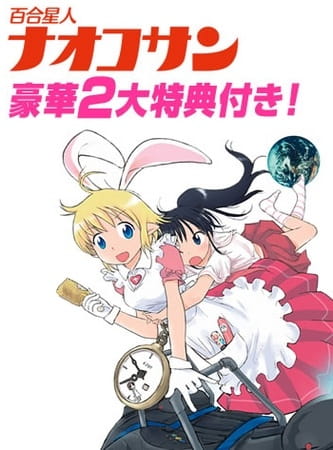
#121: Yuri Seijin Naoko-san (2010/2012)

From https://cdn.myanimelist.net
/images/anime/13/28214l.jpg


Director: Tetsuya Takeuchi
Screenplay: Tetsuya Takeuchi
Based on the manga by Kashmir
Voice Cast: Akari Harashima as Misuzu; Satomi Arai as Naoko-san; Ai Nonaka as Hii-chan; Yukari Kokubun as Ryōta; Kumi Kawai as Mother; Manabu Sakamaki as Alien
Viewed in Japanese with English Subtitles

In mind to ufotable's usual work, does this mean that Yuri Seijin, about a female alien who wants to "yurify" the Earth into a lesbian (yuri) planet, exists in the same universe as Fate/ and their other famous titles? For the uninitiated, ufotable is an anime studio whose reputation is increased by being the main adapters of the work of Type-Moon, whose Fate/ franchise and other work, originally a doujin (self-published) group who made visual novel video games and now has become a group known for having hardcore fans. Type-Moon, with ufotable being usually the studio to adapt their work, are a double-edged sword in that, with their titles interconnecting as one giant universe, to fully get the lore of their work would require reading and watching everything, coupled by the fact (whilst relevied by streaming widening access) their titles are the kind usually licensed by Aniplex, a production company whose American distribution wing in the United States can be notorious for their Japanese pricing of physical media, i.e. extremely limited editions and very expensive.

One shouldn't judge a book by its cover mind. Type-Moon also created The Garden of Sinners (2007-9), a unique theatrical film serial which, for showing their flaws, was also an incredible, grotesque and boldly unconventional genre hybrid. Likewise, ufotable adapt other titles. (They also like doing claymation sequences, which even with The Garden of Sinners they did comedy cinema ads with the cast asking patrons to not do bad things like answer phones or eat loudly, so to their credit ufotable have a charming additional bow to their cap). Yuri Seijin is not a ­Type-Moon title despite my initial joke but a curious obscurity in their filmography, but it is a curiosity.

Yuri Seijin is in fact quite a surprise, as it's something completely different, a comedy manga adaptation that gets away paradoxically with some tasteless humour yet is so whimsical and strange in its tone that I swear, even if it's merely I, it "just" gets away with it. The premise, which is only really elaborated on in the thirty minute 2012 OVA rather than the original six minute 2010 adaptation, is that schoolgirl Misuzu came home one day to be told her older sister has returned, only to meet Naoko-san, a female alien from the Planet Yuri, a lesbian planet, who is posing as her older sister. The tastelessness, implied but explicitly, is in that it has no issues with playing with taboos and strange sex jokes, like Naoko-san leaving porn magazines everywhere or the expense Misuzu's little brother Ryōta has especially in threats to his genitals, being asked to suck the snot out of her older sister's nose when its running and, despite being a young prepubescent boy, being pushed by Naoko-san in trying to pose as an adult in an adult store in a robot suit.

From https://i.ytimg.com/vi/uk82GttkBqg/maxresdefault.jpg

Also, its explicit Naoko-san likes little girls in their "cuteness", remarking on the virtues of girls playing in water any time of the year in one monologue in the 2012 OVA, or that to contact her home planet she has to pop underneath one's skirt to communicate on the receiver. Again this would be tasteless in any other context, and unfortunately anime and manga has taken this type of idea even into pornographic levels which don't help paint a good picture of Japanese pop culture even if it's merely a subculture used for unfortunate xenophobia against the Japanese. But with Yuri Seijin there's the factors that a) it's an intentionally surreal piece of weirdness in both OVAS, and b) is structured especially in the longer 2012 OVA as a whimsical, light hearted surreal comedy where these jokes are never explicit, and undercut by the sedate pleasant, brightly coloured mood of the style.

Now if this is still unpleasant to consider, don't watch these shorts, but the irony is that this is closer to an absurdist slice-of-lice tone in mood, closer to something like the high school comedy Azumanga Daioh (2002) in tone rather than a lecherous work, which is befitting as both source mangas were published in the monthly manga magazine Dengeki Daioh originally. And Yuri Seijin, even next to Daioh, where one of the female lead's father was depicted as a talking sentient cat, is deeply weird, honestly so. The six minute one, about a mysterious pervert roaming the streets that turns out to be a tentacle alien, is probably the weirdest of them whilst the 2012 one neuters this a little. It gets into slapstick where Naoko-san has succeeded the super punch further in that she can summon whole trains to run over people in the street, without killing them in cartoon logic, Misuzu is the butt of joke by being the figure on the wanted posters and thoughts in imagining who the creeper is to track them down, whilst her friend is fascinated by the aliens and relaxed about, porn mags are left on the street like leaves fallen off an Autumn tree, and the completely bizarre tangents that top what strangeness was already there before.

One the ending credits scene sat on one of those trains Naoko-san summons, and the cut to Misuzu's internal monologue which, involving a male voice in English going insane in existential despair, led to me thinking I had accidentally watched a fan re-edit for a moment like those you find on YouTube. That audio cut in particular is a bar further, in another dimensional space as height or depth are beneath it, than most anime I have covered in terms of true bloody weirdness and it was a surprise. 

From https://i.ytimg.com/vi/7Y0Pq1eMBzM/maxresdefault.jpg

The 2012 OVA builds a bit more drama and charming comedy which, yes, is strange against the deliberately provocative comedy; its candy coloured tone neuters it, adding as much a general sense of absurdist comedy in just having an eccentric new house guest in with idiosyncratic behaviour. This longer version softens the experience, making it merely eccentric, be it the subplot about Naoko-san having food from her home planet which makes all television sexier under the influence, which you never see the example of but naturally gets the interest of the entire male population in the city in earshot of this, leading to communal viewings of the Japanese morning news in droves. Young pubescent girls also apparently wander around this world in groups being paid to play in the background of festivals nonchalantly, which is part of the tasteless humour but was admittedly funny when Naoko-san has to cancel their hiring and still pay them nonetheless. In any other circumstance, this would be off putting, but there's no fan service to speak of, which a huge virtue for balancing the tone, and the show's overt strangeness makes these aspects a complete joke.

It softens the blow and a sense that the content is being written by someone who wants to take on this type of humour but is aware of the line not to cross, prodding at it on purpose, is felt throughout. If anything, the biggest surprise with the 2012 adaptation is how it even becomes sweet natured in the end, the life of Misuzu and Ryōta with a new big sister figure there for an absent one who may have accidentally been swapped onto Planet Yuri is one piece of dialogue suggests the truth. These two works also happen to be another blessing for female voice actors as even the younger brother is voiced by an actress, and everyone gets to stretch their comic timings. I'll eventually come to great examples of male voice acting roles in anime more, but especially with comedy, anime to its merit allows for this bizarre material a great range to work from, allowing actresses to be weird, to put on strange voices, and generally here get into some crass stuff on purpose, like the blasé attitude to the Misuzu's mother and Naoko-san over the porn mags starting to be left over the house. It really has grown on me how good you have to be for the work, and comedy be it improvised (which I have seen quite a bit of within only a couple of years) and normal scripted dialogue really is a pleasant challenge that helps you come to appreciate actresses' craft.

Is it any good? It's oddly charming, building from an utter non-sequitur of a first version to a lighter hearted one where you even get a skit about Naoko-san providing technology that allows people to see their fantasies; it does play to some dark comedy, but when it leads to people just sleeping through the entirety of summer, it's still whimsical of all things, like a warm hug to end the OVA on.  Neither short is better than the other, as their tones are very different, but it depends on whether you can get past some of the perverse humour and their general oddness. Between them, the first 2010 is a thing of just pure intentional madness, but it proved a virtue to have the longer, tonally different one run with the same material. It is a surprise duo that I wished had a longer form version; it might've lost its lustre but there is just the question to ask in what would've happened to try to stretch this premise out, which would've been fascinating to see.


From https://i.ytimg.com/vi/PhigifLwV_E/maxresdefault.jpg

Thursday, 19 September 2019

#120: Gravion (2002)

From https://static.tvtropes.org/pmwiki/pub/
images/Gravion_1126.jpg


Director: Masami Ōbari
Screenplay: Fumihiko Shimo
Voice Cast: Haruna Ikezawa as Runa Gusuku; Houko Kuwashima as Leele; Jun Fukuyama as Toga Tenkuji; Kenichi Suzumura as Eiji Shigure; Mai Nakahara as Eina; Yuu Asakawa as Mizuki Tachibana; Hikaru Midorikawa as Raven; Sho Hayami as Klein Sandman
Viewed in Japanese with English Subtitles

The giant robot/super robot anime was 1963's Tetsujin-28, an adaptation of Mitsuteru Yokoyama's 1956 manga Tetsujin 28-go. The concept which has become a stereotype and large part of the aesthetic of anime in general, giant robots fighting each other or monsters, would however be properly solidified in the 1970s when manga author Go Nagai created Mazinger Z, which was a manga and first adapted into anime in 1972. Over the next few decades new aspects would be created within the genre - Mobile Suit Gundam (1979-1980), whilst initially not successful, would eventually generate into a cultural institution alongside bringing more adult "realistic" world building, whilst Neon Genesis Evangelion (1995-6) in the nineties would bring further psychological depth, alongside countless other shows that'd develop and further sub-genres and styles within this type of story.

At some point, however, giant robots no longer were a major genre in the sense of selling for children - the seventies shows were as much to sell toys to children, and when they weren't the target audience it had to become the children who grew up into adults, which is why we'll get into the prominence of "fan service". That term has been used to denote sexual content, but "fan service" generally means something to appeal to fans, including references to other anime/manga or anything to denote nostalgia, all the types discussed to be brought up with Gravion. This is important as, in the 2000s, after a crop of post-Evangelion work trying to ride its wave of success, you started from the nineties too to have throwbacks to the older type of robot shows but meant more for adults. Eventually you'd also have Gurren Lagann (2007), a studio Gainax work which was arguably at the time the one giant robot show which has a greater audience appeal, but was openly taking inspiration from the old style of the genre rather than Evangelion's dark psychological tone. In the middle of this is Gravion, which immediately denotes which side of the fence it is as, bright and vivid, it's a tale of a squad of pilots who fight monsters every week, scored by JAM Project, a group whose existence in anime is to score mecha programmes. When they have a lyric here in the transformation scene of "soldier of soldier", immediately it tells you from the first episode this is a deliberately broad and bombastic show.

It's befittingly the directorial work of Masami Ōbari, a figure who to give him his due credit is a highly regarded animator and character/mecha designer. Ōbari's directorial career on the other hand is a weird and polarising one sadly; immediately recognisable for his idiosyncratic character designs, (lithe figures, exaggerated curves on female characters, pronounced noses etc.), which could however put people off, he nonetheless started off with fan favourites like two episodes of Bubblegum Crisis (1987-1991), Detonator Organ (1991) and the 1994 Fatal Fury film.

It is by 1996 where his work gets divisive and also not liked. I can attest to Voltage Fighter Gowcaiser (1996), an adaptation of an obscure Neo Geo fighting game, and Virus Buster Serge (1997), one of the first TV series Manga Entertainment released in the UK, being ridiculous. At the point he helms Gravion, the first series in this giant robot throwback series, he's already in his period of directing hentai anime like Angel Blade (2001-2003), which is another irony knowing that, in the 2000s on, one of the ways to sell these giant robot shows to a wider audience was to increase the sex appeal, with a lot of fetishes clearly chosen for this 2002 series to please potential otaku.

Having not watched a lot of this genre, I have however developed enough knowledge of how this old school type of mecha show, not the realistic ones or the likes of Gundam, practically embrace their clichés, be it the elaborate transformation sequences to a plot about a piece of an enemy controlling the robot I remember appearing in Mazinkaiser (2001-2), a spin-off Go Nagai project for OVA. Here in Gravion, in the first episode, a mysterious billionaire named Sandman informs the global government of the planet that not only is there an oncoming alien invasion but, since no one believes him, he's thankfully prepared a giant robot powered by the mysterious energy of gravity to face them, piloted by denizens living in his giant floating castle. Be it Toga who grew up there, or Luna who was orphaned, everyone has a special trait that allows him or her to undergo the stress of piloting each of the vehicles that form the ultimate Gravion robot. One last member needed to pilot one of the legs is Eiji, who comes to the castle the night of this announcement to locate his missing older sister Ayaka, only for Sandman to have deliberately gotten him there to join the team through this, the mystery of his older sister enough to keep Eiji on.

From there it's, as mentioned, a monster of the week series, brightly coloured and with a lack of pretence which is charming. The show's simple, the characters archetypes that bicker, bond and want to protect the planet, even though there are details which are drip fed throughout. Secrets are revealed, and in probably the make and break aspect of Gravion, its arguably a prologue, as Gravion (whilst it took two years to appear) would have a sequel which finished the series called Gravion Zwei. Sequel series are a curious thing for me as, in most cases, a lot of anime is one show, or has over fifty episodes is required for big scale work; some major franchises have multiple sequel series, which I have rarely watched even in leisure, and there's the issue, for this case, that whether you have a show which tells its story over a pair of series that anime's spotty history in terms of availability can be a nightmare. This poses a problem if, like me, that meant having to try to track down that sequel series for the whole story including major plot details; bizarrely, in a growing file of strange decisions ADV Films made before they went in the red financially, they only released the first season in the United Kingdom, so its notable this review is entirely going to be about the first season only.

From https://ai.fancaps.net/galleries/Gravion/
ep04/Gravion_Screenshot_0260.jpg

Immediately in the first episode the influence of trying to sell the series is felt in how Sandman's home is populated by maids, woman and young girls, including very young girls, which might be innocuous but has to be in mind, even if its kawaii (cute), such iconography is a fetish that grew in the decades for otaku. As you read that piece, that detail is understandably going to make many of you uncomfortable to consider. This is where I myself admit my discomfort with it too. Some of it is the usual absurdity - that the oldest pilot of the Gravion robot, Mizuki, has (and I apologise for the crassness) a Double F bust size which is comically emphasised by even her personal fighter plane seat involving her leaning over - but I could've done without the jokes of young (underage) maids constantly stripping Eiji naked for medical checks.

It thankfully never becomes the main point of the show, and at least we also got Cookie, a character I wish we had more of, the main maid who is an adult woman and, in this world, is so absurdly super strong she can carry five people, only one a child, on her own shoulders in the middle of a city wide evacuation. The rest is just, from the context, what was forced onto the production, as interestingly this is a female dominated show where said female cast are quite strong. There are only two male pilots of the robot, and even the techs, despite still wearing maid costumes, are women in Sandman's entourage. There are stereotypes, such as Luna having a love-hate relationship with Eiji, but Mizuki is revealed to have a back-story, in spite of her hyper sexualised character design, of being very intelligent and the friend of Eiji's older sister and no one is also incompetent. The one character, the shy glasses wearing pilot Eina, who gets flustered in fights is also painted as such without it becoming demeaning. So yeah, it is very odd that the show was stuck with some of the fan service of a sexual kind baring the usual sex comedy hijinks, the sign of how these giant robot shows were stuck having to do this in spite of strong female characters.

Not a lot is delved into in terms of the characters in general, their world almost entirely the castle and fighting robots. A lot of major plot points clearly will appear in Gravion Zwei, but titbits are given - we meet Leele, a mysterious shy girl hidden away in one of the towers in Sandman's castle, Mizuki has an episode dealing with her relationship to Ayaka, and we have an episode in Luna's home of Okinawa, which proved a great episode altogether for world building and comedy. The world Eiji left, alongside his conflict of whether to be part of this group, becomes the crux of the finale, which does end the series on a conclusion of some sort. It's here that the obvious issue, not the series' fault, that having two different seasons which were released separately will prove an issue if you cannot track Gravion Zwei down, such as when another throwback to giant robot anime which was openly inspired by Batman: The Animated Series (1992-5), The Big O had its 1999-2000 series and a 2003 series but only the first ever released in the UK on DVD. These are old series now, and realising how long it took to even get the second series finally produced, Gravion as a first season feels like merely the build, perversely like a nineties OVA which was without a conclusion and meant to sell the manga as a result.  

Animation wise, it's okay, notable a studio Gonzo show. Gonzo were another trend of the 2000s, starting properly as an animation studio making its own shows in 2000, being prolific throughout the 2000s, and thus a huge part of my life getting into anime in the early 2000s, before finding both financial problems and their notoriety for the erratic quality of their productions maiming them in the late 2000s. Nowadays they are a shell of their former shelves, even if they are still in business, no longer the polarising love-hate animation studio making a lot of noise in the early to mid 2000s.

If anything, my take from Gravion were its little pleasures. The mecha designs - held between Jin Fukuchi, Kunio Okawara, Masami Obari himself, Yasuhiro Moriki and Yousuke Kabashima - stand out as they should, JAM Project and everyone in the musical department providing appropriate rocking/bombastic music for this material. Even the fact that the monsters in this show are closer to the Evangelion "angels" is at least an idiosyncratic touch to. The strong female cast, in spite of its tone, is a compliment as is whenever the show has knowing winks to its over the top nature - particularly whenever Sandman, played as ultra serious despite his bombastic nature, becomes aware of it (bombastic proclamations during the giant robot transformation or just going to the beach), whilst his male second-in-command Raven eventually becomes the put-upon and disgruntled employee.  It's cool that the stereotypes do get undercut, and how, in terms of this being a giant robot show, its touches are novel, like a rocket punch which involved the pilot having to steer the fist into the monster herself, which is cool, alongside possibly the most logically way of getting said arm back in the physics of this world that has to be praised just for the fact someone actually thought about it.

There is now a sense, annoyingly, of both a lot to potentially like here, enough that I really enjoyed the show, but that, even if you can see the second season, it just takes one bad creative decision to mess the expectations up set by the first season. That's another issue whenever sequel series are a possibility, as attested by people, since I referenced it, that didn't like the second Big O series. Gravion itself has plot points - the mysterious figure, new characters introduced halfway through, and the season arch about Eiji, with the additional subplot that the global government trying to get involved, ending with a great cruel punch line for the final episode. But it leaves many cards on the table un-flipped, and God help Gravion Zwei if it had a joker in the deck. There's definitely the ominous sense that, after this and the porn, Ōbari's only other major work was a couple more TV series up to 2011, where he hasn't been in the director's chair. So I am left saying the Gravion was definitely pleasurable and fun whilst it lasted, but Gravion Zwei's another review entirely that could vary wildly.


From https://i.ytimg.com/vi/pxnp1DX7GhY/hqdefault.jpg

Tuesday, 17 September 2019

#119: Utsu-musume sayuri (2004)


a.k.a. Striking Daughter

Director: Takashi Kimura
Viewed in English Dub

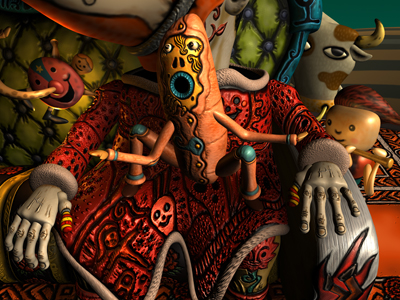
Another work in the "worst of" anime list, but unlike a Mars of Destruction (2005), which is terrible in creation but too innocuous to really hate, Utsu-musume sayuri was built up as gross and terrible. In reality, whilst a weirdo one man CGI short, Striking Daughter (as its English title is) isn't deserving of such a list accolade. It comes off instead as if a segment from a weird midnight show meant to baffle drunken viewers coming in from a night in the town, even when it comes to the incredibly broken and wooden English dialogue.

It is the initiation of a daughter of a strange family, a group of varying shaped mutants who are like the denizens of a shunting ritual from Brian Yuzna's Society (1989) if they even allowed talking cows in at the door. That reference is appropriate as, whilst sexual, the short isn't as gross as I had built it up in my mind. The ritual instead is spanking on very pronouncedly drawn buttock on a wanting, which is far from the worst thing I have heard (thankfully rather than seen) in anime. Three years earlier, the OVA/film Malice@Doll (2001) would tackle creepier, icky imagery of sexuality by way of a fascinating early CGI anime I wish was better known.

It's a maligned subgenre, usually held as terrible but for me a fascinating little corner in anime's forgotten history killed off by Final Fantasy: The Spirit Within (2001). Into the 2010s, very bad CGI animation still exists, where as I view this early period purely experimental, which leaves the likes of Striking Daughter instead equivalent to early experimentation. Certainly, this short also belongs in general to the type of experimental animation that comes from Japan.

In knowledge one man, Takashi Kimura, animated and directed this, I cannot hold it as terrible baring being a strange oddity, merely what resources he had and a clear sense of being deliberately "weird" at that. Certainly, its grotesque looking, but I'm fascinated by grotesque/obsolete aesthetics anyway, to which that is aplenty here in the bold colours and style, particularly as in context to its history, its better animated by one man in lieu to its apparent awfulness. The bigger concern is that, at less than three minutes, it's just a slight snapshot where I would always posit that something significantly longer is more likely to be dreadful.  

The thing which is likely to be the bigger issue, and definitely is ridiculous, is the voice acting. One male voice, who for all I know is the director, speaking in incredibly fragmented pronunciation of English dialogue which is roughly recorded. It's bad, but God knows in this era people would deliberately create work which had details like this on purpose; in this decade, it'd be considered ironic.

The length prevents Striking Daughter from being the worst. Three minutes is bearable if you have courage - we will wait when the equivalent of this plays over a thirteen episode anime, alongside the fact that whenever I encounter anything boring and/or offensive is when the reader will likely find me write something vicious and very negative. Nothing here is that, Striking Daughter practically a mole hill over built when you could not only see it online but YouTube reaction videos of others watching it.  

As for the director? He directed an episode Koi Koi Seven (2005), about the only boy in an all-girl's school whose wars are literal and silly, and that's it. Unless we've got a case of two Takashi Kimuras in existence, that's pretty small as careers go. 

From http://history.bifan.kr/upload/movie2004/
Film/04FTS_UtsuMusumeSayauri_1.jpg